

Healthy vegetarian recipes for every day: 10 dishes with the numbers
The essentials at a glance
This collection is structured differently from most. Each dish includes iron and protein values—not estimates, but serving values from the nutrient tables of the German Nutrition Society and the Federal Centre for Nutrition. Where no documented value is available for an ingredient, that is explicitly stated.
The shared principle of all ten dishes is a combination: grains plus legumes. According to the DGE, plant-based foods often do not contain the full spectrum of essential amino acids—this can be balanced through the targeted combination of grains and legumes.
And there is another factor throughout: vitamin C. According to the DGE, consuming foods rich in vitamin C or other organic acids at the same time improves iron availability from plant-based foods. That is why almost every dish includes bell pepper, lemon, or berries.
What to expect in this article
1. The principle behind all ten dishes
2. The nutrients that matter
3. How much you need per day
4. Five dishes for the end of the workday
5. Five dishes to prepare ahead
6. How to improve iron absorption
7. Whether a blood test belongs here
8. What this list cannot do
9. What matters in the end
Frequently asked questions
Sources
The principle behind all ten dishes
Cooking vegetarian food is not difficult. Cooking vegetarian food while ensuring adequate protein quality requires a decision—and it can be summed up in one sentence.
“
“Plant-based foods often do not contain the full spectrum of essential amino acids. This can be balanced through the targeted combination of, for example, grains and legumes, as in lentils with rice or pea stew with bread.”
German Nutrition Society (DGE)
FAQ: Protein and Essential Amino Acids, as of 2025
The reason is complementation: grains are low in lysine, threonine, and tryptophan but rich in methionine, while the opposite is true of legumes. Together, they provide what each lacks on its own. This is not a new finding but the principle behind lentil stew with bread and chili with beans and corn.
The BZfE names the same pairings in everyday language: potatoes with eggs, milk with grains—preferably whole grains—or legumes with grains, such as a lentil stew served with a slice of whole-grain bread. Each of the ten dishes in this article follows one of these patterns.
The DGE also specifies how often legumes should be on the menu: at least once a week, along with a small handful of nuts every day. A ready-to-eat serving of legumes is 125 grams—the serving size used throughout this article.
The nutrients that matter
The following overview shows the ingredients that appear repeatedly in this collection—each with a serving size and verified value. Pay attention to the “Reference” column: the difference between raw and cooked foods is considerable for legumes.
| Ingredient | Reference | Iron | Protein |
|---|---|---|---|
| Golden millet | 100 g raw | 6.9 mg—according to BZfE, the highest value among the grains | 11 g |
| Lentils | 125 g cooked | 3.3 mg | about 11 g (9 g per 100 g cooked) |
| Kidney beans | 125 g, canned | 3.3 mg | No individual value in the tables used—BZfE gives 5 to 11% for legumes in general |
| Rolled oats | 65 g or 60 g | 2.9 mg (65 g) | 8 g (60 g); 13 g per 100 g |
| Whole-wheat pasta | 125 g cooked | 1.6 mg | about 7.5 g (6 g per 100 g cooked) |
| Tofu | 100 g cooked | No value in the tables used | 16 g |
| Quark | 150 g | No value in the tables used | 21 g |
| Spinach | 60 g cooked | 2.2 mg | No value in the tables used |
| Red bell pepper | 100 g | 0.6 mg—vitamin C is more important here | No value in the tables used |
| Sunflower seeds | 25 g | 1.4 mg (plus 1.44 mg zinc) | No value in the tables used |
Iron, protein, and zinc values: German Nutrition Society (DGE), Iron FAQ, Protein FAQ, and Zinc FAQ, status 2025, based on DGExpert data. Values for golden millet: Federal Center for Nutrition (BZfE), 2024. Information on the protein content of legumes in general: BZfE, 2025. Where “no value” is stated, the sources cited contain no verified figure—this article does not include estimates.
How much you need per day
To put the serving values from the recipes into perspective, here are the reference values against which to compare them.
Source: German Nutrition Society (DGE), Reference Values for Nutrient Intake, derivation status 2017 (protein), 2023 (iron), and 2025 (fiber). Expressed in grams, the protein reference value is 57 g for men and 48 g for women aged 19 to under 51.
Compare the 16 milligrams of iron with the recipe values below, and the scale becomes clear. Depending on the combination, a single dish provides between 3 and 9 milligrams—two to three such meals a day would theoretically cover the requirement.
In brief
The principle behind good vegetarian everyday dishes is combining grains with legumes: According to the German Nutrition Society, plant-based foods often do not contain the full range of essential amino acids, and this combination makes up for that. The second key factor is vitamin C, which improves the availability of iron from plant-based foods. The reference values are 16 milligrams of iron per day for women before menopause, 11 milligrams for men, and 0.8 grams of protein per kilogram of body weight for adults up to age 65.
Five dishes for the end of the workday
These five require little preparation and can be on the table in a reasonable amount of time after work. The time estimates are based on the editorial team’s experience; the nutritional values come from the sources cited.
1. Lentil Bolognese with Whole-Grain Pasta
Simmer red lentils with strained tomatoes, onion, garlic, and carrot, then serve with whole-grain pasta. The classic example of combining grains with legumes—and the dish most people switching over start with.
Preparation: approx. 25 minutes (editorial estimate) · Iron: 3.3 mg from 125 g cooked lentils plus 1.6 mg from 125 g cooked whole-grain pasta = 4.9 mg · Protein: around 11 g plus around 7.5 g = about 18 g · For whom: beginners and anyone looking for a consistent weekly routine.
2. Millet Pan with Spinach and Lemon
Soak the golden millet, add the spinach, and season with lemon juice. The iron-rich leader of this collection—according to the BZfE, golden millet has the highest iron content among the grains, at 6.9 milligrams per 100 grams.
Preparation: approx. 20 minutes (editorial estimate) · Iron: 6.9 mg from 100 g golden millet plus 2.2 mg from 60 g cooked spinach = 9.1 mg · Protein: 11 g from the millet; no substantiated value is available for spinach · For whom: anyone with increased iron requirements. The lemon juice is not merely decorative here; it provides the vitamin C.
3. Chili sin Carne with Kidney Beans and Bell Pepper
Kidney beans, corn, red bell pepper, tomatoes, and spices. The BZfE names exactly this combination as an example of legumes with grains—the corn provides the grain component here.
Preparation: approx. 30 minutes (editorial estimate) · Iron: 3.3 mg from 125 g kidney beans plus 0.6 mg from 100 g red bell pepper = 3.9 mg · Protein: no individual value for kidney beans in the tables used; the BZfE gives 5 to 11 percent for legumes in general · For whom: anyone who cooks in large quantities—it often tastes even better reheated.
4. Chanterelles on Whole-Grain Bread with a Fried Egg
Chanterelles in a pan, served with toasted whole-grain bread and an egg. A dinner that looks more impressive than the effort it requires—and one of the richest in iron on this list.
Preparation: approx. 15 minutes (editorial estimate) · Iron: 2.9 mg from 50 g chanterelles plus 2.0 mg from 100 g whole-grain bread plus 1.1 mg from one egg (60 g) = 6.0 mg · Protein: 7 g from 100 g whole-grain bread plus around 7 g from the egg = about 14 g · For whom: anyone who has little time and little desire to deal with pots in the evening. Not vegan.
5. Tofu and Vegetable Stir-Fry with Broccoli
Pan-fry the tofu, add the broccoli and bell pepper, and season with soy sauce and sesame oil. With 16 grams of protein per 100 grams, tofu is the highest-protein purely plant-based ingredient in this collection.
Preparation: approx. 20 minutes (editorial estimate) · Iron: 0.6 mg from 100 g red bell pepper; the sources used contain no iron value for tofu and broccoli · Protein: 16 g from 100 g cooked tofu · For whom: anyone who needs a vegan option. 200 g cooked broccoli provide an additional 174 mg of calcium.
Five Make-Ahead Dishes
These five can be prepared on the weekend or the night before and keep well. The same applies here: time estimates are editorial, nutritional values are documented.
6. Chickpea Curry with Whole-Grain Rice
Chickpeas with coconut milk, tomatoes, and curry spices, served with whole-grain rice. The same basic pattern again—and a dish that usually tastes better on the second day.
Preparation: approx. 30 minutes (editorial estimate) · Iron: 1.8 mg from 60 g chickpeas plus 2.2 mg from 180 g cooked whole-grain rice = 4.0 mg · Protein: no individual value for chickpeas in the tables used · For whom: Meal prep. 125 g canned chickpeas also provide an additional 3.0 g of fiber.
7. Whole-Grain Bread with Hummus and Bell Pepper Strips
Hummus made from chickpeas, lemon, and tahini, served with whole-grain bread and raw bell pepper. The BZfE cites this exact combination as an example: whole-grain bread with hummus.
Preparation: approx. 10 minutes (editorial estimate) · Iron: 2.0 mg from 100 g whole-grain bread plus 1.8 mg from 60 g chickpeas plus 0.6 mg from 100 g red bell pepper = 4.4 mg · Protein: 7 g from 100 g whole-grain bread · For whom: Office and lunchbox. The sources used contain no nutritional value for tahini.
8. Quinoa Salad with Sunflower Seeds and Bell Pepper
Cooked quinoa with raw bell pepper strips, sunflower seeds, parsley, and lemon dressing. Just as good cold as lukewarm.
Preparation: approx. 20 minutes (editorial estimate) · Iron: 0.9 mg from 100 g cooked quinoa plus 1.4 mg from 25 g sunflower seeds plus 0.6 mg from 100 g red bell pepper plus 0.7 mg from 20 g parsley = 3.6 mg · Protein: no documented value for quinoa in the tables used · For whom: Take along. The sunflower seeds also provide an additional 1.44 mg of zinc.
9. Kale and Potato Casserole with Gouda
Layer kale with potato slices and bake with grated Gouda. The calcium-rich dish in this collection—and one that freezes well in portions.
Preparation: approx. 50 minutes including baking time (editorial estimate) · Calcium: 358 mg from 200 g cooked kale plus 287 mg from 30 g Gouda = 645 mg, or around two-thirds of the daily reference value of 1,000 mg · Protein: 9 g from 30 g Gouda · For whom: the cold season. No iron value is available for kale in the sources used.
10. Overnight Oats with Quark, Flaxseed, and Berries
Soak the rolled oats in milk overnight, then add quark, flaxseed, and berries in the morning. This breakfast reflects the milk-and-grain combination recommended by the BZfE—and incorporates the vitamin C rule as well.
Preparation: 5 minutes the evening before (editorial estimate) · Iron: 2.9 mg from 65 g rolled oats plus 0.6 mg from 60 g raspberries = 3.5 mg · Protein: 8 g from 60 g rolled oats plus 21 g from 150 g quark = about 29 g – the highest protein value in this collection · For whom: anyone who has no time in the morning. 15 g flaxseed provide 3.4 g of fiber.
How to improve iron absorption
The figures in the recipes describe what is on the plate—not what reaches the body. And with iron, the difference is significant.
The figures in the recipes describe what is on the plate—not what reaches the body.
The Verbraucherzentrale quantifies this difference: more than 20 percent of the iron from animal-based foods is absorbed, compared with barely more than 5 percent from plant-based foods. That is precisely why the DGE reference value for women before menopause is 16 milligrams rather than 5.
What helps
Vitamin C is the most effective lever. The DGE recommends eating vitamin-C-rich foods such as potatoes, bell peppers, blackcurrants, broccoli, citrus fruits, and cabbage with meals. That is why bell peppers, lemon, or berries appear so often in this collection.
Preparation also plays a role. According to the DGE, the inhibiting effect of phytates from whole grains and legumes can be reduced using suitable methods, including grinding, soaking, and fermenting. Soaking dried legumes overnight therefore does more than just shorten the cooking time.
What inhibits
The most well-known inhibitor is often right next to the plate. According to the DGE, polyphenols are found, for example, in black tea, coffee, and red wine, and can inhibit iron absorption—which is why it is recommended not to drink coffee or black tea during meals or shortly before or afterward.
This is perhaps the most practical insight of the article: Coffee with a lentil stew reduces iron absorption more than the bell pepper increases it. Leaving a 30-minute gap makes more difference than adding any extra ingredient.
Whether a blood test belongs here
One clear point up front: No one needs a test to prepare good vegetarian recipes. The dishes above work without any testing, and anyone who eats a varied diet has no action to take here.
Testing only becomes interesting when you ask a different question—namely, whether the balance holds up over the course of several months. For a vegetarian diet, the BZfE identifies iodine, omega-3 fatty acids, vitamin B12, and protein as nutrients requiring particular attention; the DGE additionally lists vitamins A, B2, and D, as well as calcium, iron, zinc, and selenium.
It may be worthwhile for you if …
… you have been following a vegetarian diet for some time and want to know whether iron and B12 are actually being absorbed.
… you belong to a group with increased iron requirements—the DGE reference value for women before menopause is 16 mg.
… you have nonspecific symptoms and want to consult a doctor with a test result rather than a suspicion.
Probably not if …
… you were only looking for recipes: No test is needed for the dishes above, and they work just as well without one.
… you have no symptoms and eat a varied diet—in that case, there is no reason to test.
… you expect nutritional counseling: A laboratory value does not tell you what should be on your plate.
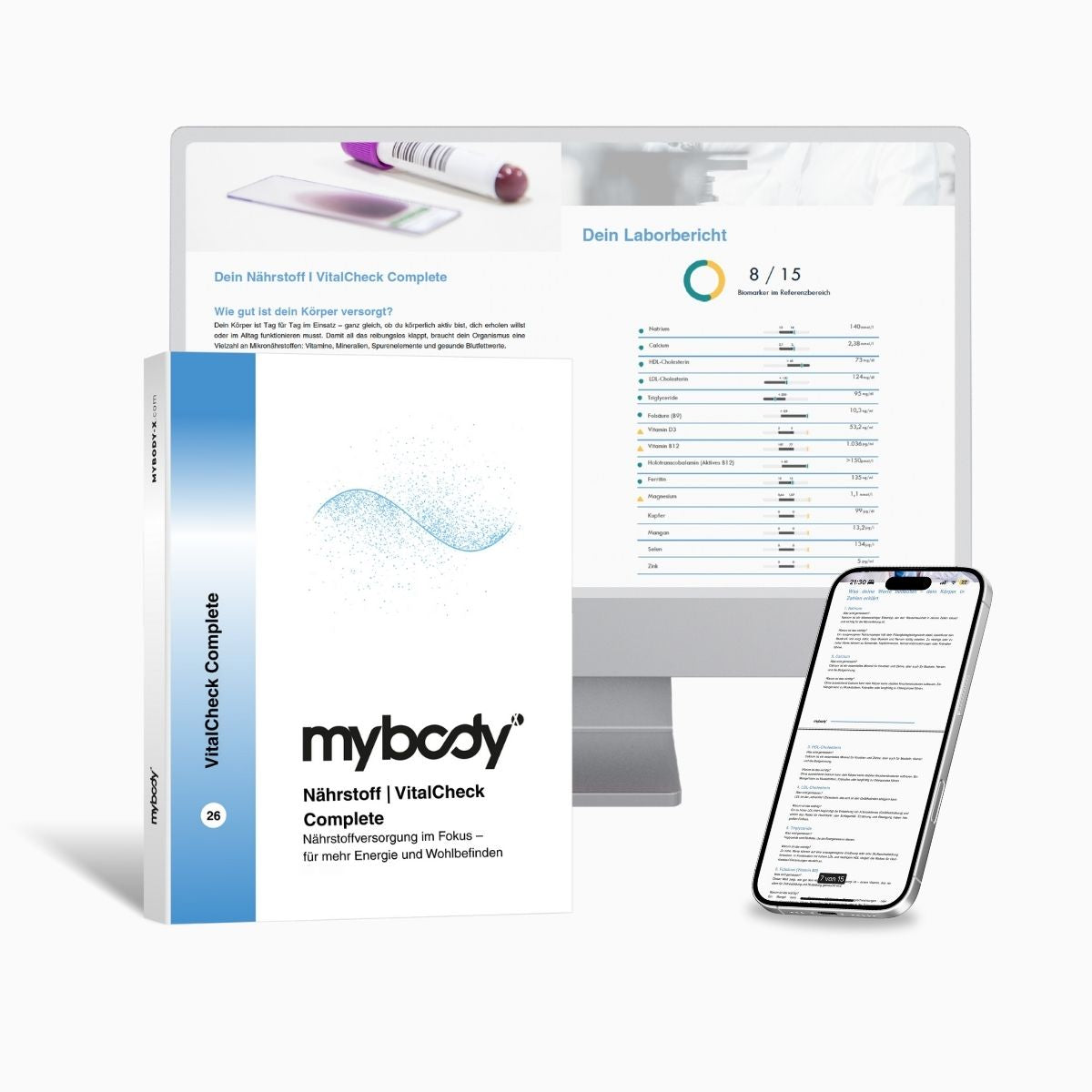
Nutrient | VitalCheck Complete
Measures 15 biomarkers from capillary blood, including several of the nutrients identified as important in a vegetarian diet: ferritin, vitamin B12, transcobalamin, zinc, selenium, calcium, and 25-OH vitamin D3—plus folate and magnesium. What the test does not do: It does not include an iodine measurement and measures neither protein nor omega-3 fatty acids. It does not evaluate recipes or replace nutritional counseling. It does not provide a diagnosis; an abnormal result is a reason to consult a doctor.
Price: €169.00 (instead of €199.00) · Sample type: Capillary blood · Processing time: Kit shipping: 1–3 business days; laboratory analysis: 3–5 business days after receipt of the sample · Laboratory: ISO-certified laboratory analysis in Germany
About the Nutrient VitalCheck CompleteAll price and service information is accurate as of August 5, 2026. Prices and the scope of services may change; the relevant product page always takes precedence.
What this list cannot provide
The first limitation is already apparent in the recipes: For several common ingredients, the cited institutions provide no documented nutritional values. Tahini, cashews, quinoa protein, broccoli iron, kale iron—in all these cases, this article says “no value” instead of giving a number.
This is unsatisfying, but it is more honest than the alternative. Figures for all these ingredients circulate online, usually without a verifiable source. In an article whose promise is documented values, they have no place.
The second limitation concerns portion sizes. All values refer to the specified number of grams, which does not automatically correspond to what ends up on your plate. Anyone who eats twice as much gets twice the values; anyone who eats half as much gets correspondingly less.
And the third: Whether they are raw or cooked makes a considerable difference for legumes and grains. Cooked lentils contain 9 grams of protein per 100 grams, while dry lentils contain considerably more—because they lack the water. Comparing two tables without checking this detail inevitably leads to misleading conclusions.
What matters in the end
Ten dishes, one principle: grains plus legumes, along with some vitamin C. That covers the part that actually matters for a vegetarian diet—and the rest is a matter of taste.
What is remarkable is how little effort this takes. The DGE recommends at least one serving of legumes per week and a small handful of nuts every day. Anyone who incorporates two of the ten dishes into their weekly routine is already exceeding that recommendation.
Your specific next step: Choose one dish from each of the two groups—one for after work and one to prepare in advance—and add them to your shopping list this week. And if you drink coffee, leave half an hour between your cup and your meal. It costs nothing and makes a bigger difference to your iron levels than adding any extra ingredient.
Frequently asked questions
Can I get enough protein from a vegetarian diet?
Yes, with the right combination. According to the DGE, plant-based foods often do not contain the full range of essential amino acids—but this can be balanced out by deliberately combining grains with legumes. The reference value for adults aged 19 to under 65 is 0.8 grams per kilogram of body weight per day.
Which vegetarian food contains the most iron?
Among the grains, according to the BZfE, it is golden millet, with an average of 6.9 milligrams per 100 grams—the highest value among grains. According to the DGE tables, 125 grams of cooked lentils and 125 grams of canned kidney beans each provide 3.3 milligrams, while 65 grams of rolled oats provide 2.9 milligrams.
Why is vitamin C so important in these dishes?
Because plant-based iron is absorbed much less efficiently. According to the consumer advice center, more than 20 percent is absorbed from animal-based foods, while scarcely more than 5 percent is absorbed from plant-based foods. According to the DGE, consuming foods rich in vitamin C at the same time improves iron availability—potatoes, bell peppers, broccoli, and citrus fruits are among those mentioned.
Can I drink coffee with my meal?
Preferably not with iron-rich meals. According to the DGE, polyphenols are found, for example, in black tea, coffee, and red wine and can inhibit iron absorption; it recommends avoiding coffee or black tea during meals and shortly before or after them. A little time between them is sufficient.
How often should I eat legumes?
The DGE recommends eating legumes at least once a week and a small handful of nuts every day. A ready-to-eat serving is equivalent to 125 grams. Anyone who regularly includes two of the dishes from this article is already above this minimum amount.
On the Plate or in the Body?
The recipes tell you what you eat. Whether your body absorbs it is another question—and one that only arises if you have been vegetarian for some time or are experiencing symptoms. No test is needed for the dishes themselves.
View VitalCheck Complete Key Nutrients at a GlanceYou might also be interested in
→ Quinoa-Stuffed Bell Peppers
One detailed recipe instead of ten at a glance—with bell peppers as a source of vitamin C.
→ Balanced Diet: Plan for the Week
When individual dishes are to become a weekly plan.
Sources
- German Nutrition Society (DGE): FAQ on iron, as of 2025, data basis: DGExpert — dge.de
- German Nutrition Society (DGE): FAQ on protein and essential amino acids, as well as FAQ on zinc, calcium, and dietary fiber, as of 2025 — dge.de
- German Nutrition Society (DGE): Reference Values for Nutrient Intake and DGE recommendations on legumes and nuts — dge.de
- Federal Centre for Nutrition (BZfE): Grain ABC: Millet (2024), Proteins (2026), Legumes: Health and Environment (2025), and Vegetarian Nutrition (2026) — bzfe.de
- Consumer Advice Centre: Iron – Quality, Not Quantity, Is the Question, as of 2026 — verbraucherzentrale.de
All iron values per serving, as well as the statements on vitamin C, phytates, polyphenols, and suitable preparation methods, come from source [1]. The protein values for lentils, oatmeal, whole-wheat pasta, whole-grain bread, tofu, eggs, and Emmentaler, the quotation on combining grains with legumes, and the zinc, calcium, and fiber values come from source [2]. The reference values for iron, protein, and fiber, the recommendation of at least one serving of legumes per week, and the serving size of 125 grams come from source [3]. The values for golden millet, the protein figures for quark and Gouda, the range of 5 to 11 percent for legumes, the examples of combinations, and the nutrients to consider in a vegetarian diet come from source [4]. The statement that the absorption rate is over 20 percent or barely more than 5 percent comes from source [5]. The preparation times are editorial estimates based on experience and are identified as such in the text. None of the five sources provides a documented value for sesame paste, cashews, quinoa protein, broccoli and kale iron, or the protein content of chickpeas, beans, and spinach; the article deliberately provides no figure for these items. Product information comes from the mybody®x product pages, accessed on August 5, 2026.

mybody®x Editorial & Expert Team
Nutritional science Micronutrients Plant-based nutrition
This article was created and medically reviewed by the mybody®x Editorial and Expert Team. The team combines expertise in nutrigenetics, microbiome and gut science, blood analysis interpretation, nutritional science, and laboratory diagnostics.
Published on August 5, 2026 · Last updated on August 5, 2026
Medical notice: This article is intended for general information and does not replace medical advice, diagnosis, or treatment. The nutritional values stated are averages and tabulated values, not analyses of individual products. In the case of existing illnesses, during pregnancy and breastfeeding, and for children, dietary changes should be professionally supervised; dietary supplements should be discussed with a doctor.




Share now:
Stuffed Peppers with Quinoa: Your Healthy Favorite Recipe
Healthy snacks for weight loss: what works and what only looks like it does