

What to Eat with Iron Deficiency – Personalized Nutrition Tips
Persistent exhaustion and concentration problems are part of everyday life for many women in Germany, Austria, and Switzerland. According to current studies, around 40 percent of women of childbearing age have too little iron in their blood. This often remains undetected, even though iron plays a key role in energy, well-being, and performance. Those who want to specifically adjust their diet and identify individual deficiencies with the help of modern analyses can learn here how personalized care can truly succeed.
Table of Contents
- Recognizing and Understanding Iron Deficiency
- Heme Iron and Non-Heme Iron Compared
- Choose foods high in iron intentionally
- Improve iron absorption: combinations and inhibitors
- Avoiding mistakes: Everyday risks and misconceptions
Key Insights
| Point | Details |
|---|---|
| Recognizing Iron Deficiency | Iron deficiency often goes unnoticed and can lead to long-term health problems. Symptoms include fatigue, difficulty concentrating, and hair loss. |
| Differences Between Types of Iron | Heme iron from animal sources has high bioavailability, while non-heme iron from plant-based foods is absorbed less efficiently. Combine non-heme iron with vitamin C to improve absorption. |
| Optimizing Your Diet | A balanced diet with iron-rich foods is essential. Avoid inhibitors such as coffee and dairy products during iron-rich meals. |
| Avoiding Mistakes | The assumption that iron supplements alone are sufficient can be risky; a holistic strategy is necessary. Keep a food diary to identify inhibitors and enhancers. |
Recognizing and Understanding Iron Deficiency
Iron deficiency is a widespread metabolic disorder that often goes unnoticed. It is a condition in which the body does not have enough iron to carry out all essential biological functions. According to current medical research, iron plays a crucial role in the formation of hemoglobin and the oxygen supply to our cells.
The symptoms of iron deficiency are often very subtle and frequently go unrecognized at first. Typical signs include persistent fatigue, declining concentration, unusual hair loss, and depressive moods. Scientific studies show that untreated iron deficiency can lead to anemia in the long term, a deficiency of red blood cells.
The causes of iron deficiency are varied. They range from insufficient iron intake and increased requirements to blood loss. Women of childbearing age, pregnant women, athletes, and people following certain diets are particularly affected. A professional diagnosis is made through blood tests, with ferritin levels playing a particularly important role.
Pro tip: Maintain a balanced diet with iron-rich foods such as red meat, legumes, and green leafy vegetables to naturally support your iron levels.
Heme Iron and Non-Heme Iron Compared
Heme iron and non-heme iron represent two different forms of iron that are essential for our bodies. According to nutrition experts at the German Nutrition Society, these forms of iron differ fundamentally in their source and absorption.
Heme iron, which is found exclusively in animal-based foods, is characterized by particularly high bioavailability. Scientific studies show that heme iron can be incorporated directly into hemoglobin and myoglobin and therefore plays a central role in oxygen transport. It is absorbed by the body much more efficiently than non-heme iron.

Non-heme iron, on the other hand, comes from plant-based sources and is absorbed less efficiently by the body. Interestingly, the absorption of non-heme iron can be improved through targeted dietary strategies. Consuming vitamin C at the same time can significantly increase iron absorption, while phytates from whole-grain products can inhibit absorption.
The following table provides an overview of the key differences between heme iron and non-heme iron:
| Characteristic | Heme iron (animal-based) | Non-heme iron (plant-based) |
|---|---|---|
| Sources | Meat, fish, liver | Lentils, spinach, whole grains |
| Bioavailability | Very high | Low to moderate |
| Inhibits absorption | Barely affected | Strongly affected by inhibitors |
| Promotes absorption | Hardly necessary | Vitamin C promotes absorption |
Pro tip: Combine plant-based foods rich in iron with sources of vitamin C, such as citrus fruits or bell peppers, to optimize the absorption of non-heme iron.
Choose foods high in iron intentionally
According to nutrition experts from the Iron Network, there are numerous foods with a high iron content. Choosing the right sources of iron is crucial for optimal nutrition, with both animal-based and plant-based foods playing important roles.
Animal-based sources of iron, such as pork liver, red meat, and fish, contain heme iron in particularly high concentrations and are absorbed very well by the body. Expert studies show that these foods provide significantly more iron per 100 grams than plant-based alternatives. For vegetarians and vegans, plant-based sources of iron such as lentils, spinach, legumes, and whole-grain products are interesting alternatives.
To optimize iron absorption, you should follow a few basic rules. Combining non-heme iron sources with vitamin C-rich foods can significantly improve absorption. Interestingly, certain foods such as coffee, tea, and dairy products can inhibit iron absorption.
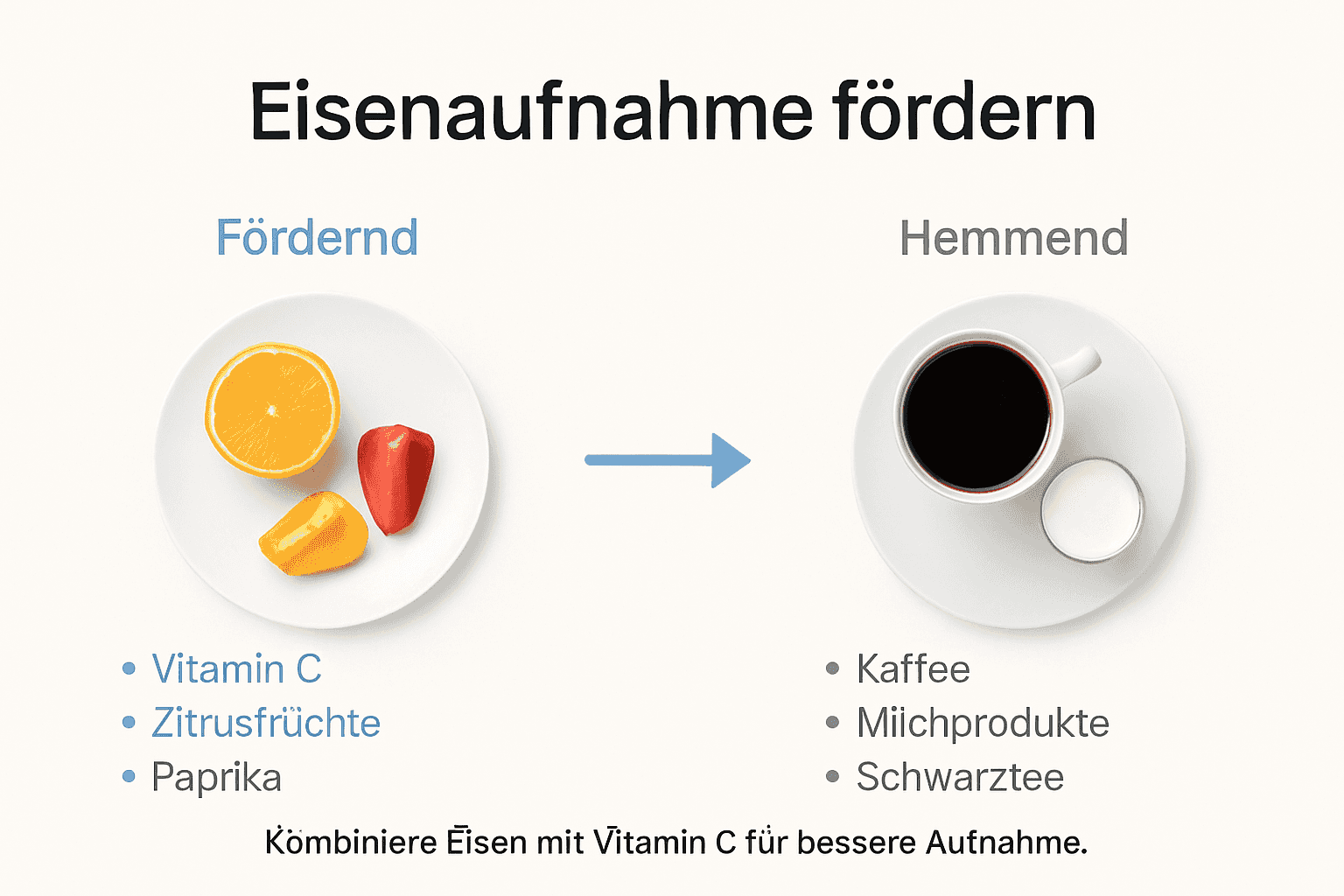
Pro tip: Pair your iron-rich meals with citrus fruits or bell peppers to naturally increase the bioavailability of iron.
Improve iron absorption: combinations and inhibitors
Scientific studies on iron absorption show that iron absorption is significantly more complex than initially assumed. The body requires specific strategies to absorb and utilize iron optimally.
There are two decisive factors that influence iron absorption: enhancers and inhibitors. Nutrition science experts recommend paying particular attention to foods that positively or negatively affect absorption. Vitamin C is considered an excellent absorption enhancer, while coffee, tea, and dairy products can significantly inhibit iron absorption.
To increase bioavailability, you should use specific combination strategies. Plant-based sources of iron can be optimized through simultaneous vitamin C intake. Interestingly, methods such as soaking, fermentation, or sprouting foods can further improve the absorption of non-heme iron.
The following summarizes the most important factors influencing iron absorption:
| Influencing factor | Effect on iron absorption | Example foods |
|---|---|---|
| Vitamin C | Improves absorption | Bell peppers, citrus fruits |
| Phytates | Reduces absorption | Whole-grain products, legumes |
| Coffee/tea | Significantly inhibits absorption | Coffee, black tea, green tea |
| Fermentation/germination | Increases bioavailability | Soaked legumes |
Pro tip: It is best to drink coffee or black tea one hour before or after iron-rich meals so as not to impair absorption.
Avoiding mistakes: Everyday risks and misconceptions
Experts warn about common misconceptions when dealing with iron deficiency that can jeopardize treatment success. The greatest risks often arise from thoughtless everyday habits and a lack of knowledge about the complex relationships involved in iron absorption.
A widespread misconception is that iron supplements alone are sufficient. Scientific studies show that a holistic strategy is crucial. It is not only dietary supplements that matter, but above all a balanced diet, avoiding iron inhibitors, and combining foods that promote absorption.
Particular caution is required with medications and dietary supplements that may unintentionally block iron absorption. Coffee, tea, dairy products, and certain calcium supplements can significantly impair iron absorption. Iron therapy can also cause side effects such as constipation, which is why adequate fluid intake and medical supervision are important.
Pro tip: Keep a food diary to identify inhibitors and enhancers in your diet and optimize it in a targeted way.
Targeted support for iron deficiency with mybody®x
Iron deficiency is a daily challenge for many people, with symptoms such as constant fatigue, difficulty concentrating, and hair loss. It is often difficult to find the right diet and suitable measures tailored specifically to individual needs. In the article, you learned how important it is to distinguish between heme iron and non-heme iron, as well as to avoid iron absorption inhibitors. This is exactly where mybody®x comes in, offering you the opportunity to analyze your nutrient intake precisely.
Benefit from professional and certified tests for detecting nutrient deficiencies and preventing them – at-home tests | mybody® – mybody®x with detailed evaluations, including personalized dietary recommendations. This helps you avoid common mistakes in everyday life and optimize your iron absorption in a targeted way. Also discover our range for detecting and correcting vitamin deficiencies | mybody®x for comprehensive nutritional support.
Take the opportunity now to take control of your health. Start with a scientifically validated test at mybody-x.com for a sustainable improvement in your iron status and more energy.
Frequently asked questions
What are the best iron-rich foods for iron deficiency?
Foods high in iron include red meat, liver, fish, lentils, spinach, and legumes. These contain both heme and non-heme iron, with heme iron being better absorbed by the body.
How can I improve the absorption of non-heme iron?
The absorption of non-heme iron can be significantly increased by combining it with foods rich in vitamin C, such as citrus fruits or bell peppers. Soaking or fermenting plant-based foods can also increase bioavailability.
What should I avoid when consuming iron?
Coffee, tea, and dairy products can inhibit iron absorption. It is advisable to consume these foods one hour before or after iron-rich meals to avoid impairing absorption.
Why is a balanced diet important for iron deficiency?
A balanced diet is essential not only for providing iron, but also for supplying other nutrients that support iron absorption and promote overall health. Dietary supplements alone are often not sufficient.
Recommendation
- A diet for iron deficiency that really helps – mybody®x
- What to eat for iron deficiency to have more energy in everyday life – mybody®x
- Understanding & optimizing ferritin levels: Your guide to normal iron levels – mybody®x
- What to do about iron deficiency? Your practical guide to more energy – mybody®x
- What Are The Most Common Nutrient Deficiencies? | Blog | UK



Share now:
New Year’s resolutions that really work: Your science-backed path to success
No weight loss despite dieting: The real reasons and what actually helps