
Triglycerides too high? Tips & strategies for lowering them
Have you received the finding “triglycerides too high”? It may initially sound like a complicated diagnosis, but above all, it is an important signal from your body to take a closer look.
In short: Triglycerides are blood fats that your body uses as an energy reserve. Whenever you consume more calories than you currently use, your body converts this excess energy into triglycerides and stores them in fat cells.
What high triglyceride levels mean for your health
Think of your body as a house with an energy account. Every meal is a deposit. When the house uses energy, it is withdrawn from the account. This is a completely normal and even vital process. It ensures that your body always has enough “fuel,” even between meals or during physical activity.
It only becomes a problem when this account permanently overflows. A chronic calorie surplus—often caused by a diet high in sugar, simple carbohydrates, and unhealthy fats—ensures that triglyceride levels in the blood remain constantly elevated. They then become silent risk factors lurking in the background.
From energy reserve to risk factor
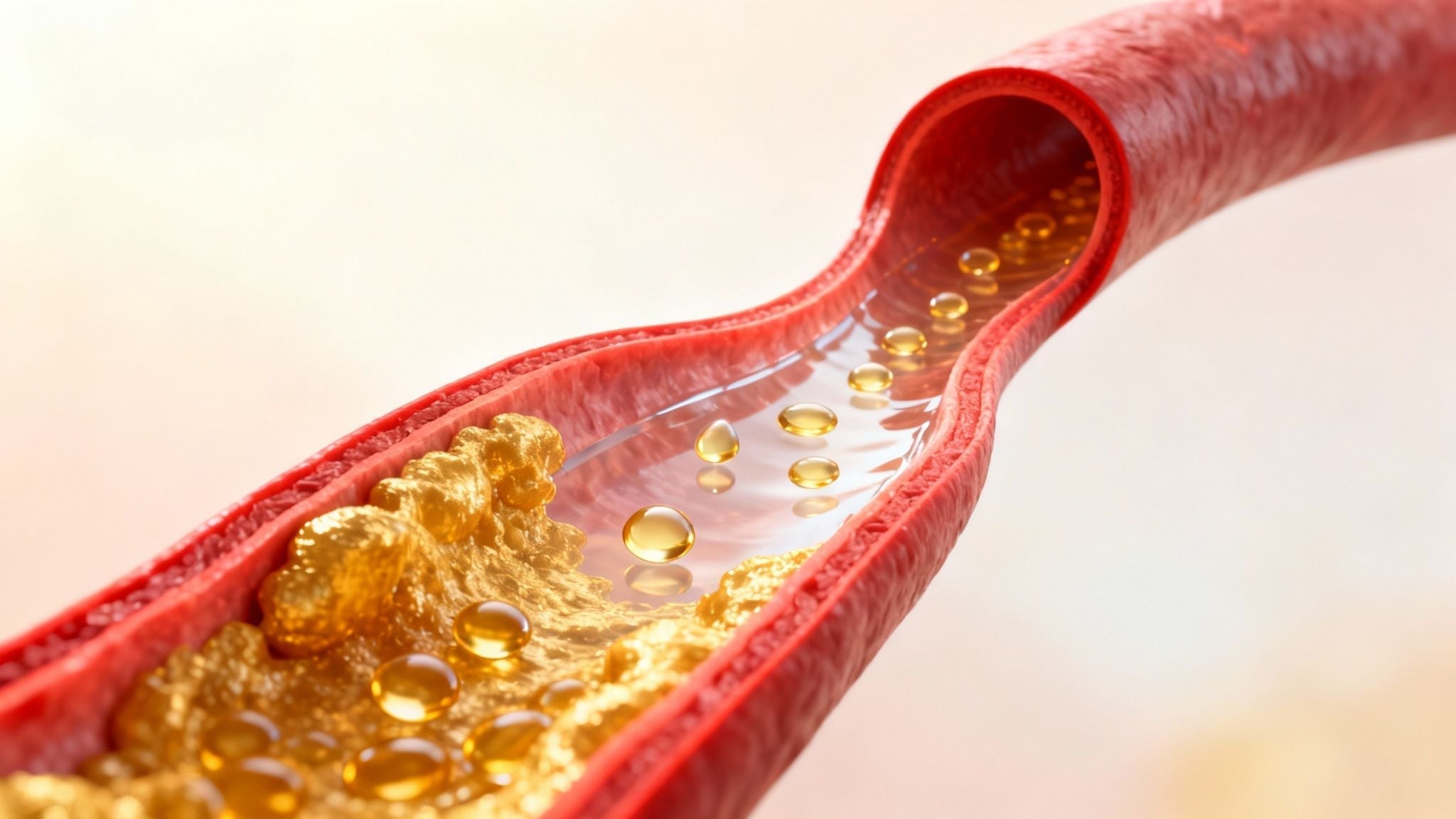
Unlike cholesterol, which primarily serves as a building material for cells and hormones, triglycerides are purely a source of energy. However, if too many of them are constantly circulating in the blood, they can accumulate on the inner walls of the arteries.
This process, which medical professionals call arteriosclerosis or, colloquially, “hardening of the arteries,” makes blood vessels narrower and stiffer. This is dangerous.
In the long term, this increases the risk of serious cardiovascular diseases such as heart attacks or strokes. The tricky thing is that you don’t feel high triglyceride levels. They cause no pain or direct symptoms and can therefore go unnoticed for years.
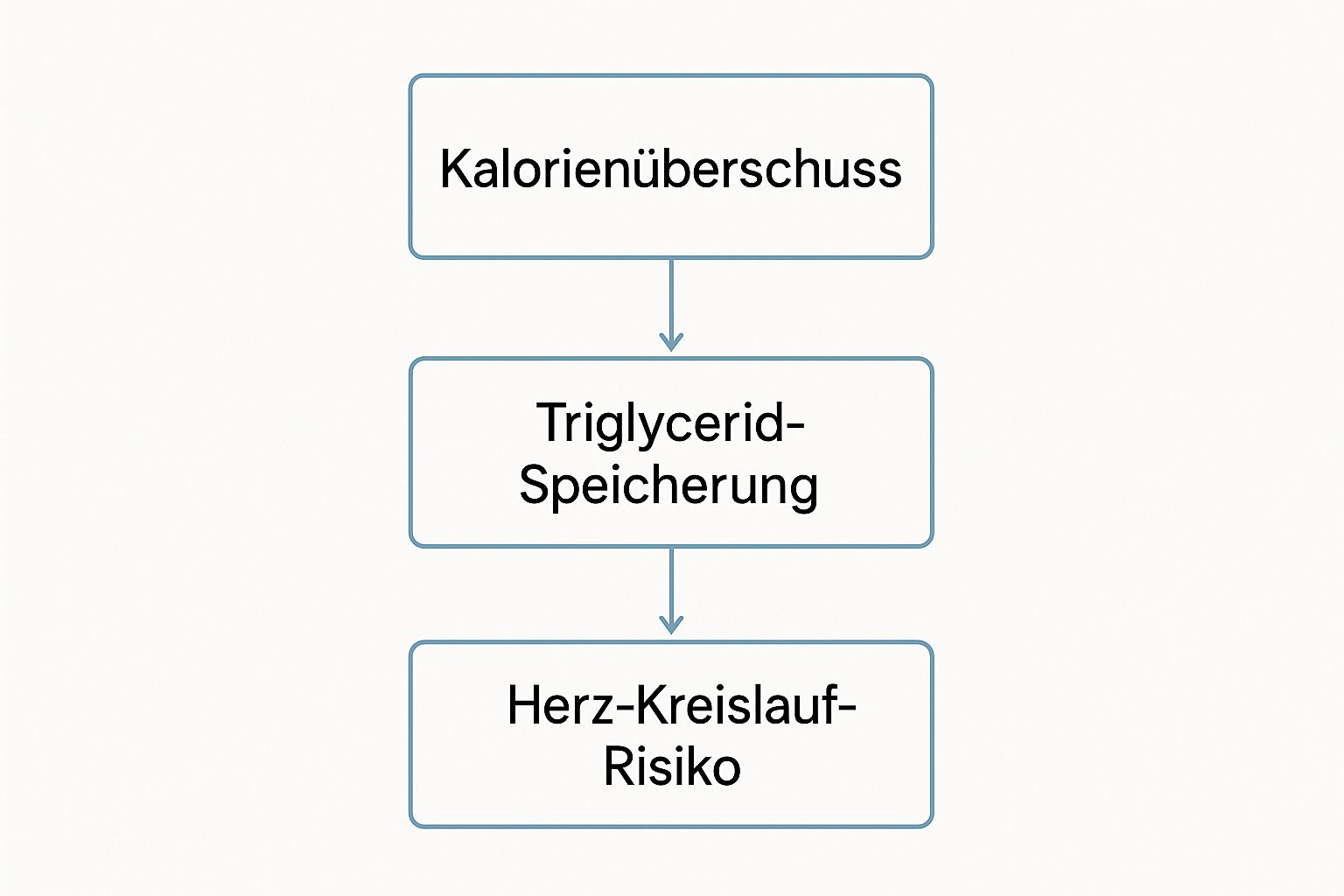
The infographic makes it clear: The cause often lies at the beginning of the chain—in your energy balance. And that is exactly where your opportunity lies to get your levels back under control.
An elevated triglyceride level is not an unavoidable fate but a wake-up call. It shows that your metabolism has fallen out of balance and gives you the opportunity to take countermeasures in time.
How widespread is the problem really?
If you’re wondering whether this affects only you: You’re definitely not alone. In Germany, around 10–15% of adults have triglyceride levels that are too high—a condition known as hypertriglyceridemia.
Even a fasting level above 150 mg/dL is classified by medical societies as a clear risk factor.
Your individual metabolism plays a decisive role in this. How well your body processes fats depends not only on your diet but also on your genetic predisposition. This is where a DNA metabolism analysis can help, showing you why your body reacts this way and how you can support it optimally. You can also learn more about how your body converts fats in our article about fat metabolism.
The most common causes of elevated triglyceride levels

If your triglyceride levels are elevated, you are probably wondering: Where did this suddenly come from? The answer is rarely a single factor. Usually, it is a combination of what ends up on your plate, how active you are, and sometimes simply your genetic predisposition.
Only when you recognize the true triggers in your everyday life can you take targeted and effective action. Let’s take a closer look at the main suspects.
Dietary habits as the main drivers
Your diet has the most direct and strongest influence on your triglyceride levels. Certain foods and habits are practically a signal to your liver to ramp up production of these blood fats.
Excess sugar and simple carbohydrates are particularly problematic. Your body is clever: it quickly converts excess sugar that is not immediately needed for energy into triglycerides—as a kind of emergency reserve for difficult times.
These food groups are often the main culprits when triglyceride levels are too high:
- Sugary drinks and foods: Soft drinks, juices, energy drinks, sweets, and baked goods provide a flood of rapidly available energy that usually goes unused and is converted directly into fat stores.
- White flour products: White bread, pasta, and white rice are broken down into sugar extremely quickly in the body. They therefore act almost like pure table sugar.
- Excess fructose: Although fruit is healthy, too much fructose can stimulate triglyceride production in the liver. This applies particularly to concentrated forms such as smoothies or juices.
But sugar is not the only issue. Unhealthy fats from fried foods, processed foods, and fatty meat also play a role. Regular alcohol consumption is likewise a known factor, as alcohol is also converted into fatty acids in the liver.
Lack of exercise and inactivity in daily life
Your body is designed to burn energy. Exercise is the most natural way to burn calories and tap into stored triglycerides as fuel.
Without this regular activity, the system becomes unbalanced. The excess energy remains, and fat stores continue to fill. You do not have to run a marathon! Even moderate but regular exercise, such as brisk walking, cycling, or swimming, noticeably stimulates your metabolism.
The role of excess weight and abdominal fat
Being overweight, and especially abdominal fat (visceral fat), is closely linked to high triglyceride levels. This fat tissue is extremely metabolically active and constantly releases fatty acids into the bloodstream, placing additional strain on the liver.
The good news: Losing just 5 to 10% of your body weight can significantly lower your triglyceride levels.
The problem is widespread: Around 20% of German adults have triglyceride levels above the recommended range. Among people with obesity, this figure rises to as much as 40%, significantly increasing the risk of cardiovascular disease. You can find more details about these connections in current studies on dyslipidemia.
Genetic predisposition and other factors
Sometimes, lifestyle alone is not the only cause of high triglycerides. Your genes play a decisive role in how efficiently your body processes fats and carbohydrates. Some people are naturally more prone to developing high levels, even when they eat relatively healthily.
This genetic component also explains why standard dietary recommendations do not work equally well for everyone. A DNA metabolic analysis can give you valuable insights into how your body responds to certain nutrients and help you tailor your diet specifically to your needs.
Certain conditions, such as undiagnosed diabetes mellitus, hypothyroidism, or kidney disease, can also drive up triglyceride levels. Some medications can also raise blood lipids as a side effect.
Risks you should know about when your levels are high

A high triglyceride level is much more than just a number on your doctor’s paperwork. See it as an important warning signal from your body. If your levels remain too high, there are noticeable consequences. It is a silent but serious risk factor for your long-term health.
Persistently elevated levels show that your fat metabolism has fallen out of balance. The excess fat particles constantly circulate in your blood and can settle on the delicate inner walls of your blood vessels.
This is exactly where a gradual problem begins—one you should definitely take seriously.
Your body’s pipeline system is at risk
Imagine your blood vessels as a complex network of pipes that supplies every part of your body with oxygen and nutrients. Ideally, these pipes are clean and unobstructed. High triglyceride levels act like debris here, slowly but surely forming deposits.
These deposits, also known as plaques, are a mixture of fats, cholesterol, calcium, and other substances. They make the vessel walls hard, inflexible, and, above all, narrower. This condition is called atherosclerosis—commonly known as “hardening of the arteries.”
The consequences of this narrowing can be serious:
- Heart attack: If a blood clot becomes lodged in a narrowed section of the coronary arteries, the heart muscle is no longer supplied with blood. This is an absolute emergency.
- Stroke: If such a clot blocks a blood vessel in the brain, it causes a stroke that can have lifelong consequences.
High triglycerides often work hand in hand with other risk factors, such as elevated LDL cholesterol. To better understand how blood lipids interact, we recommend our article on lowering LDL cholesterol. It is precisely this dangerous duo that increases your cardiovascular risk.
Remember: Atherosclerosis develops completely unnoticed over many years. By the time the first symptoms appear, the damage is often already far advanced. That’s why checking your blood lipid levels early is so crucial.
Acute danger with extremely high levels
While moderate elevations are primarily a long-term risk, extremely high triglyceride levels (often above 500 mg/dL, and in severe cases even above 1000 mg/dL) can pose a direct, acute danger.
The high concentration of fat makes the blood literally “thicker.” This can trigger a life-threatening inflammation of the pancreas, known as acute pancreatitis. This condition is extremely painful and requires immediate hospital treatment.
Fatty liver as a silent consequence
Another common consequence of high triglyceride levels affects the liver—the central organ of your metabolism. Because the liver converts excess energy into triglycerides, it is also the first place where these fats accumulate when the body’s storage capacity is full.
This is how non-alcoholic fatty liver disease (NAFLD) develops. It is a condition that remains symptom-free for a long time, but can impair liver function and lead to serious damage. This knowledge should motivate you to take action now and regain control.
How your individual metabolism affects your blood lipids
Do you follow the usual dietary advice, but your levels simply refuse to go down? Or do you wonder why your body reacts much more strongly to a piece of cake than your friend’s does? The answer often lies deeper than what is on your plate—it is encoded in your DNA.
Each of us is unique. This applies not only to our appearance, but above all to our metabolism. General advice is a good starting point, but it overlooks the most important factor: you and your unique genetic makeup.
Your genes as the directors of your metabolism
Imagine your metabolism as a complex orchestra. Enzymes, hormones, and cells are the musicians working together to produce, store, and use energy. The score they play from is your DNA. Your genes set the rhythm and determine how efficiently your body handles certain nutrients.
In very concrete terms, this means that your genetic predisposition directly affects how your body processes fats and carbohydrates. For some people, even a moderate amount of sugar or white bread is enough to make the liver significantly ramp up triglyceride production. For others, fat metabolism is naturally less efficient.
So if you tend to have high triglyceride levels despite striving to maintain a healthy lifestyle, this could be the underlying cause. This is not a personal failure, but simply your individual biological reality.
Your genes are not your destiny, but they set the rules of the game. When you know those rules, you can adapt your strategy and finally take control of your levels instead of working against your own body.
The Key Lies in Personalization
This is precisely where modern health analyses come in. Instead of continuing to feel your way in the dark and trying one diet after another, you can take a look at your personal “score.” A DNA metabolic analysis, like the one we offer at mybody-x, is exactly that: a tool to truly understand your body.
Through a simple saliva test, we analyze specific genetic variants that are important for your fat and carbohydrate metabolism. The result is not a standard plan, but a customized roadmap for your health.
The invaluable benefit of an analysis like this is the clarity it provides. For example, you learn:
- What your metabolic type is: Are you more sensitive to fats or to carbohydrates?
- Which foods are optimal for you: Which foods help your body regulate blood lipids effectively?
- Which dietary approach suits you: Is a low-carb, low-fat, or balanced diet the best way for you to lower your triglyceride levels?
From Knowledge to Targeted Action
With this knowledge, you can stop guessing. Instead of avoiding carbohydrates across the board, you will suddenly know whether that is the most effective approach for you personally. You may find that your body processes healthy fats exceptionally well and that you should focus instead on reducing sugar and refined carbohydrates.
An analysis like this marks the transition from general recommendations to a precise strategy tailored to you. It is the difference between an off-the-rack suit and a custom-made one—the latter simply fits perfectly.
If you would like to delve deeper into the fascinating world of genetics and its influence on your body, our health portal features a follow-up article about how your metabolism is encoded in your genes.
This personalized approach is the most sustainable way to get your triglyceride levels under control. You work with your body, not against it, laying the foundation for stable, long-term health.
Practical Nutrition Strategies That Really Work
Okay, now that you know how your personal metabolism works, it’s time for the next step. We’re now turning this knowledge into concrete, everyday nutrition strategies that you can actively use to counteract high triglyceride levels. This isn’t about strict deprivation, but about cleverly giving your body what it loves and what is genuinely good for it.
The key is to choose foods that take the strain off your metabolism and naturally bring your blood lipid levels back into balance. Simply imagine replacing the “fuel for the fire” behind high triglycerides with real “fire extinguishers.”
Choose the right fats and fiber
A widespread misconception is that, with high blood lipid levels, you simply need to avoid fat. Far from it! It’s much more important to choose the right fats. Unsaturated fatty acids, especially omega-3 fatty acids, are true powerhouses for your cardiovascular system.
They have anti-inflammatory effects and have been shown to help lower triglyceride levels. Consciously incorporate these power sources into your diet:
- Fatty fish: Salmon, mackerel, and herring are excellent sources of omega-3. Try putting two servings on the table each week.
- Plant-based sources of omega-3: Flaxseeds (ideally ground), chia seeds, and walnuts are fantastic everyday alternatives.
- Healthy oils: High-quality flaxseed oil, walnut oil, or rapeseed oil for cold dishes, and good olive oil for cooking, are much better choices.
At the same time, fiber is your secret weapon. It’s found in whole-grain products, legumes, vegetables, and fruit. Fiber slows the absorption of sugar into the bloodstream, which reduces triglyceride production in the liver, and also keeps you feeling full for longer. You can learn more about the targeted effects of these valuable fats in our article on omega-3 fatty acids.
Reduce sugar and simple carbohydrates intelligently
The biggest lever for lowering your triglycerides is reducing sugar and quickly digestible carbohydrates. Your body converts excess sugar directly into triglycerides—this is the main driver of high levels.
This isn’t about a radical zero-calorie diet, but about making smart swaps in your everyday life:
- Drinks: Replace sugary sodas and juices with water, unsweetened tea, or “infused water” with lemon and mint. It tastes wonderfully refreshing!
- White flour: Swap white bread, pasta, and white rice for their whole-grain versions. They also provide valuable fiber.
- Snacks: Instead of reaching for a chocolate bar, choose a handful of nuts, vegetable sticks with herb quark, or plain yogurt.
Moderation is also called for when it comes to alcohol. Alcohol not only provides empty calories, but is preferentially broken down in the liver. This blocks fat burning and further increases triglyceride production.
Being mindful about your diet and exercise pays off. In Germany, a significant decline in average triglyceride levels was observed between 1997 and 2011, underscoring how effective preventive measures can be. Learn more about the background to this positive development.
Practical tips for your everyday life
The best strategy only works if it is easy to implement. Here are a few tips to help you get started and turn the change into a habit.
When shopping:
- Read the ingredients list: Hidden sugar lurks in many ready-made products, sauces, and even savory dishes.
- Buy unprocessed foods: Focus on fresh, natural foods such as vegetables, fruit, legumes, fish, and lean meat.
- Plan your meals: A weekly plan helps you make conscious choices and avoid impulse purchases of unhealthy snacks.
When cooking:
- Cook gently: Steaming, cooking with steam, or baking in the oven instead of deep-frying saves a great deal of unhealthy fat.
- Season with herbs: Instead of using ready-made seasoning mixes (often containing sugar), add flavor to your dishes with fresh or dried herbs and spices.
- Meal prep: Prepare healthy meals for several days in advance. That way, you always have a good option ready when you are short on time.
These small, practical adjustments will help you regain control and sustainably lower your triglyceride levels—without feeling like you are following a strict diet. Think of it as an investment in your long-term health.
How to achieve a lot with simple lifestyle changes

Alongside your diet, your lifestyle is the second major lever for healthy blood lipid levels. If your triglycerides are too high, you can often achieve a tremendous effect with a few targeted adjustments to your daily routine. This is not about making radical changes overnight. Rather, it is the small, consistent steps that add up to make a huge difference to your levels and your well-being.
The most effective measure is quite clear: exercise. Your body is designed to burn energy—and triglycerides are nothing more than stored energy. Regular activity taps into these stores in a targeted way and helps break them down.
Exercise as a metabolism booster
Even moderate but regular exercise gives your metabolism a powerful boost. Combining endurance and strength training works best for achieving the best results.
- Endurance exercise: Activities such as jogging, cycling, swimming, or even brisk walking improve your muscles' ability to use fat as an energy source. This not only directly lowers triglycerides in the blood but also strengthens your cardiovascular system along the way.
- Strength training: Building muscle mass increases your basal metabolic rate. This means your body burns more calories even at rest—a real game changer. A few targeted exercises two to three times a week are already an excellent start.
You don't have to sign up for a gym right away. Even small changes in your daily routine add up: Take the stairs instead of the elevator, walk or cycle for short trips, and fit a 15-minute walk into your lunch break. Every step counts!
Your body doesn't forget what you do for it. Every conscious decision to be more active is a direct investment in your health and helps recalibrate your metabolism.
Weight management and stress reduction
Closely linked to physical activity, of course, is weight management. Belly fat (visceral fat) in particular is considered a driver of high triglyceride levels. But the good news is that you don't need to achieve ideal measurements. Even a moderate weight loss of 5 to 10% of your body weight can dramatically improve your blood lipid levels.
Don't underestimate the power of stress and sleep. Chronic stress causes the release of hormones such as cortisol, which in turn promote the release of sugar and fatty acids. This prompts the liver to produce more triglycerides. At the same time, lack of sleep throws your metabolism out of sync.
So make a conscious effort to incorporate relaxation into your daily routine, whether through yoga, meditation, or simply spending time in nature. Also aim for seven to eight hours of restful sleep per night. These measures take the strain off your entire system and support your body in finding its balance again. Often, these are precisely the adjustments that ultimately make the decisive difference.
Frequently asked questions about high triglycerides
After all this information, you may still have a few specific questions on your mind. No problem! Here I have collected the most frequently asked questions and answered them briefly and concisely, so you have complete clarity on your journey.
How quickly can I lower my triglycerides?
You determine the pace—with your consistency. If you take diet and exercise seriously, you will often see initial results on paper within just a few weeks. A reduction of 20-50 % in one to two months is absolutely realistic.
Much more important than the speed, however, is sticking with it. Lasting success does not come from a quick crash diet, but from a smart, long-term adjustment to your lifestyle.
Does stress really play a role in high triglycerides?
Yes—a huge one. Chronic stress is like fuel on the fire for high triglyceride levels. Your body constantly releases stress hormones such as cortisol, which in turn flush sugar and fatty acids into the bloodstream. The liver? It promptly turns them into new triglycerides.
There is also the psychological effect: When we are stressed, we are more likely to reach for greasy pizza, a sugary snack, or one glass of wine too many. The result is a vicious cycle of unhealthy behavior and rising blood lipid levels.
Is changing your diet alone enough?
In the vast majority of cases, making smart dietary changes combined with more exercise is the key to success. If your levels are only mildly or moderately elevated, that is often all you need. It is always the foundation.
With extremely high levels (e.g., above 500 mg/dL) or a strong genetic predisposition, your doctor may also consider medication. The main goal here is to quickly get the acute risk of complications, such as dangerous pancreatitis, under control.
The crucial key is truly understanding your body and giving it exactly what it needs. A DNA metabolic analysis can show you, like a shortcut, which dietary strategy works best for your unique metabolism to sustainably lower your triglycerides.
Are you curious about how your body really processes fats and carbohydrates? Discover with mybody-x.com’s DNA metabolic analysis which diet is perfectly suited to your genetics. Take control of your health now.



Share now:
No feeling of fullness? 7 causes and tips that really help
Antioxidant Foods: The Best Tips for Better Health and Radiant Skin