

No Feeling of Satiety? 7 Causes & Tips That Really Help
Do you know this feeling? You’ve just eaten, but the feeling of satisfaction simply doesn’t set in. Instead, hunger returns shortly afterward. If the thought “I simply have no feeling of satiety” has become your constant companion, you’ve come to the right place. This frustrating feeling is not a sign of weak willpower, but often the result of a complex interplay of hormones, habits, and even the health of your gut.
A lack of satiety can dominate your everyday life, make it harder to reach your weight goals, and take away your enjoyment of food. But the good news is that you can regain control and help your body restore its inner balance. It’s not about eating less, but about understanding what your body really needs to send and receive the right signals.
In this article, we will decode the background together and take a deep dive into the science of satiety. We go beyond superficial tips and offer you a clear roadmap. You’ll learn how proteins and fiber work in targeted ways, why the speed at which you eat is crucial, and what role your blood sugar level and gut microbiome play.
We present 7 scientifically backed, immediately actionable strategies to help you learn to correctly interpret your body’s signals again and achieve a long-lasting, pleasant feeling of fullness. It’s time to fight back against constant hunger and understand what your body is really trying to tell you.
1. Protein-rich nutrition strategy
If you are constantly hungry and know the feeling of “never feeling full” all too well, deliberately increasing your protein intake could be one of the most effective solutions. Among the three macronutrients (protein, fats, and carbohydrates), protein is the undisputed champion when it comes to satiety. It affects your body on several levels to create a feeling of fullness and reduce cravings.

The reason lies in its effect on your hunger and satiety hormones. Protein has been shown to lower levels of the hunger hormone ghrelin. At the same time, it stimulates the production of satiety hormones such as peptide YY (PYY) and GLP-1. These chemical messengers signal to your brain: “I’m full; you can stop eating.” In addition, protein has a high thermic effect, which means that your body burns more calories digesting it than it does digesting fats or carbohydrates.
Practical implementation for maximum satiety
The theory sounds good, but how can you effectively incorporate more protein into your daily routine? It is not about eating huge amounts at once, but about distributing it strategically throughout the day.
- Aim for 25–30 grams per meal: This amount has been shown in studies to be optimal for stimulating muscle protein synthesis and triggering a strong feeling of fullness.
- Prioritize breakfast: A high-protein breakfast is key to stabilizing blood sugar levels and keeping hunger at bay throughout the day. This significantly reduces cravings for evening snacks.
- Choose high-quality sources: Focus on lean protein sources such as chicken or turkey breast, fish, eggs, Greek yogurt, low-fat quark, as well as plant-based options such as lentils, chickpeas, beans, and tofu.
- Combine wisely: Enhance the satiating effect by combining protein with fiber-rich vegetables. A chicken salad or lentils with broccoli will keep you fuller for longer than the individual components alone.
Researchers have shown that increasing the proportion of protein from 15% to 30% of total calories can reduce daily calorie intake by an impressive average of 441 calories, simply because it increases feelings of fullness.
This approach is particularly effective if you notice that you become hungry again shortly after a meal or snack uncontrollably in the evening. It not only helps combat the feeling of “never feeling full” but also supports the preservation of valuable muscle mass, which is especially important for weight management. A protein-rich diet is therefore a fundamental building block for regaining a healthy sense of hunger and fullness. If you would like to explore the mechanisms of how a protein-focused diet affects metabolism in greater depth, you can find more detailed information in our guide on healthy weight loss on mybody-x.com.
2. Incorporating fiber-rich foods
Does your stomach already feel empty again shortly after eating? If the problem of “not feeling full” dominates your daily life, fiber is your secret ally. These indigestible plant fibers are true experts at naturally creating a long-lasting feeling of fullness without burdening your calorie budget. They work on both physical and hormonal levels to curb your hunger.
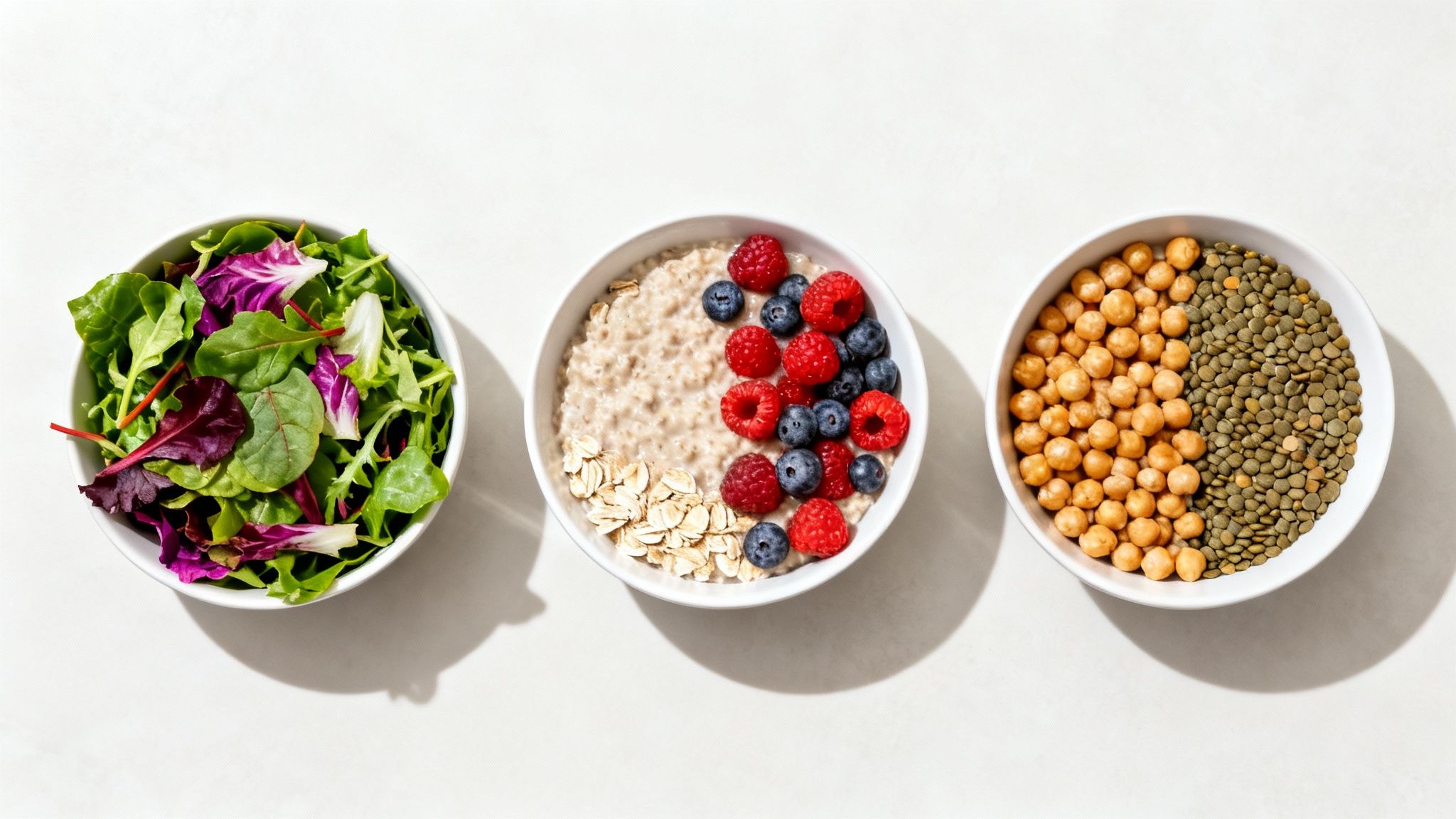
Fiber acts like a sponge in your digestive tract: It binds water, swells, and thereby increases the volume of food in your stomach. This physical volume signals fullness to your brain. Soluble fiber in particular forms a gel-like substance that slows stomach emptying. This keeps your blood sugar levels stable and prevents cravings. At the same time, fiber feeds beneficial gut bacteria, which produce short-chain fatty acids that also send satiety signals to your brain.
Practical implementation for maximum satiety
To benefit from fiber, it is important to incorporate it into your meals gradually and mindfully. A sudden, substantial increase can cause digestive discomfort.
- Aim for 30–40 grams per day: Most people do not reach this amount. Start slowly and increase your intake gradually to give your digestive system time to adapt.
- Start the day with plenty of fiber: Oatmeal, which is rich in beta-glucan, a soluble fiber, for breakfast can help you feel fuller, so you eat significantly less at lunch.
- Choose whole grains instead of refined flour: Prefer whole-grain bread, brown rice, quinoa, and oats. These contain the entire grain and therefore significantly more fiber and nutrients.
- Include legumes: Lentils, beans, and chickpeas are powerhouses that provide not only fiber but also valuable plant-based protein—a winning combination for satiety.
- Eat fruits and vegetables with their skins: A lot of the fiber is found directly in or beneath the skin, as with apples and cucumbers. Eat them with the skin whenever possible.
- Drink enough water: Fiber needs fluids to swell and work effectively. Aim for 1.5 to 2 liters of water per day.
Experts have demonstrated that a high-fiber diet directly affects feelings of hunger. Studies show that increasing daily fiber intake by just 14 grams can lead to a 10% reduction in calorie intake, simply through improved satiety.
This approach is ideal for you if you often feel that you need to eat large portions to feel full or if you constantly want to snack between meals. By deliberately increasing your fiber intake, you train your body to be satisfied with nutrient-dense, high-volume foods. This is a crucial step toward getting the troublesome feeling of “not feeling full” under control and developing a healthy relationship with food.
3. Practicing Mindful and Slow Eating
In our fast-paced world, eating is often just a side activity squeezed in between appointments. However, if you struggle with a lack of satiety, the solution may lie not only in what you eat, but above all in how you eat. Mindful and slow eating is an incredibly effective way to restore natural communication between the stomach and brain and prevent overeating.

The principle behind this is purely physiological: It takes about 20 minutes for your body to release satiety hormones after you begin a meal and for these signals to reach your brain. If you wolf down your food in five minutes, you simply don't give your brain enough time to receive the satiety signal. Mindful eating means giving the eating experience your full attention, chewing thoroughly, and eliminating distractions. This not only improves digestion but has also been shown to reduce calorie intake without requiring you to go on a diet.
Practical implementation for maximum satiety
Cultivating mindfulness while eating is a skill you can develop through simple habits. It is about consciously slowing down and re-engaging your senses.
- Take your time: Allow at least 20 minutes for each meal. Treat this time as a mindful break, not as a task that needs to be completed quickly.
- Eliminate distractions: Don't eat in front of the TV, at your desk, or while looking at your smartphone. Studies show that people who are distracted while eating tend to consume more calories.
- Put down your cutlery: Take a short break after each bite by consciously placing your knife and fork beside the plate. Take one deep breath before taking the next bite.
- Chew thoroughly: Advice you often hear but rarely follow. Try to chew each bite 20–30 times. This not only slows down your eating but also supports pre-digestion in the mouth.
- Focus on your senses: Concentrate on the taste, texture, and aroma of your meal. How does the food feel in your mouth? Which spices can you taste?
Research shows that fast eaters are significantly more likely to be overweight than those who take their time with their meals. This underscores how strongly eating speed affects body weight.
This practice is particularly valuable if you often eat without actually being hungry or if meals tend to be more mechanical for you. It helps you become aware of your body’s signals again and feel genuinely full, rather than simply stopping because the plate is empty. If you also want to support your digestion and ensure that nutrients are absorbed optimally, supplementing with digestive enzymes may be beneficial. Our myBody-X Digestive Enzymes Complex was developed to help your body break down food and promote well-being after eating.
4. Strategic water and fluid intake
The feeling of hunger can be deceptive. If you frequently feel “not full” even though you have just eaten, the cause may be simpler than you think: thirst. The hypothalamus, the control center in our brain, regulates both hunger and thirst. The signals are so similar that the body can easily confuse them. Strategic and mindful fluid intake is therefore a powerful tool for managing satiety and avoiding unnecessary calories.
Water promotes satiety in several ways. First, it physically fills the stomach and stretches the stomach wall. This activates stretch receptors, which send an early satiety signal to the brain. Water also slows gastric emptying, allowing food to remain in the stomach longer and prolonging the feeling of fullness. Even mild dehydration can impair the body’s ability to interpret satiety signals correctly. Reaching for a snack is often just a misguided attempt to compensate for a lack of fluids.
Practical implementation for maximum satiety
Drinking the right amount of water at the right time can make all the difference. It’s not about forcing yourself to consume huge amounts, but about being mindful of timing.
- Drink before every meal: Studies show that drinking two large glasses of water about 20–30 minutes before eating can significantly reduce calorie intake per meal.
- Start your day hydrated: Begin your morning with a glass of water right after getting up to compensate for overnight fluid loss and activate your metabolism.
- Water as the first response: When hunger strikes between meals, first drink a large glass of water. Wait 10–15 minutes. Often, the feeling of hunger disappears because it was actually thirst.
- Keep track of your needs: A good rule of thumb is 30–35 ml of water per kilogram of body weight per day. For a person weighing 70 kg, this is approximately 2.1 to 2.45 liters. Herbal teas and unsweetened sparkling water also count.
- Avoid high-calorie drinks: Sugary soft drinks or juices can even increase hunger because they cause blood sugar levels to rise and then fall quickly.
A landmark study showed that participants who drank two glasses of water before each meal lost 44% more weight over a 12-week period than the control group, which did not do so.
This approach is one of the simplest and most cost-effective ways to combat the feeling of “not feeling full.” It not only supports satiety but also promotes digestion and overall metabolism. If you plan your meals strategically, drinking before eating can be particularly effective. Learn more about how to optimize your meal frequency in our guide to 16/8 intermittent fasting on mybody-x.com to fully benefit from mindful hydration.
5. Choosing Foods with Low Energy Density
If your plate is full but you still feel hungry again shortly after eating, the concept of energy density could be the solution to your lack of satiety. Energy density describes the number of calories per gram of food. Foods with low energy density provide a lot of volume and weight with few calories, which is crucial for satiety. They physically fill your stomach and also satisfy the eye with large portions without blowing your calorie budget.
This principle leverages a simple human tendency: We tend to consume a relatively consistent amount of food by weight every day, regardless of its calorie content. Foods high in water and fiber—such as vegetables, fruit, broth-based soups, and whole-grain products—are the stars of this strategy. They allow you to eat until you feel full without consuming too many calories.
The following chart shows the different energy-density categories to help you make your selection.
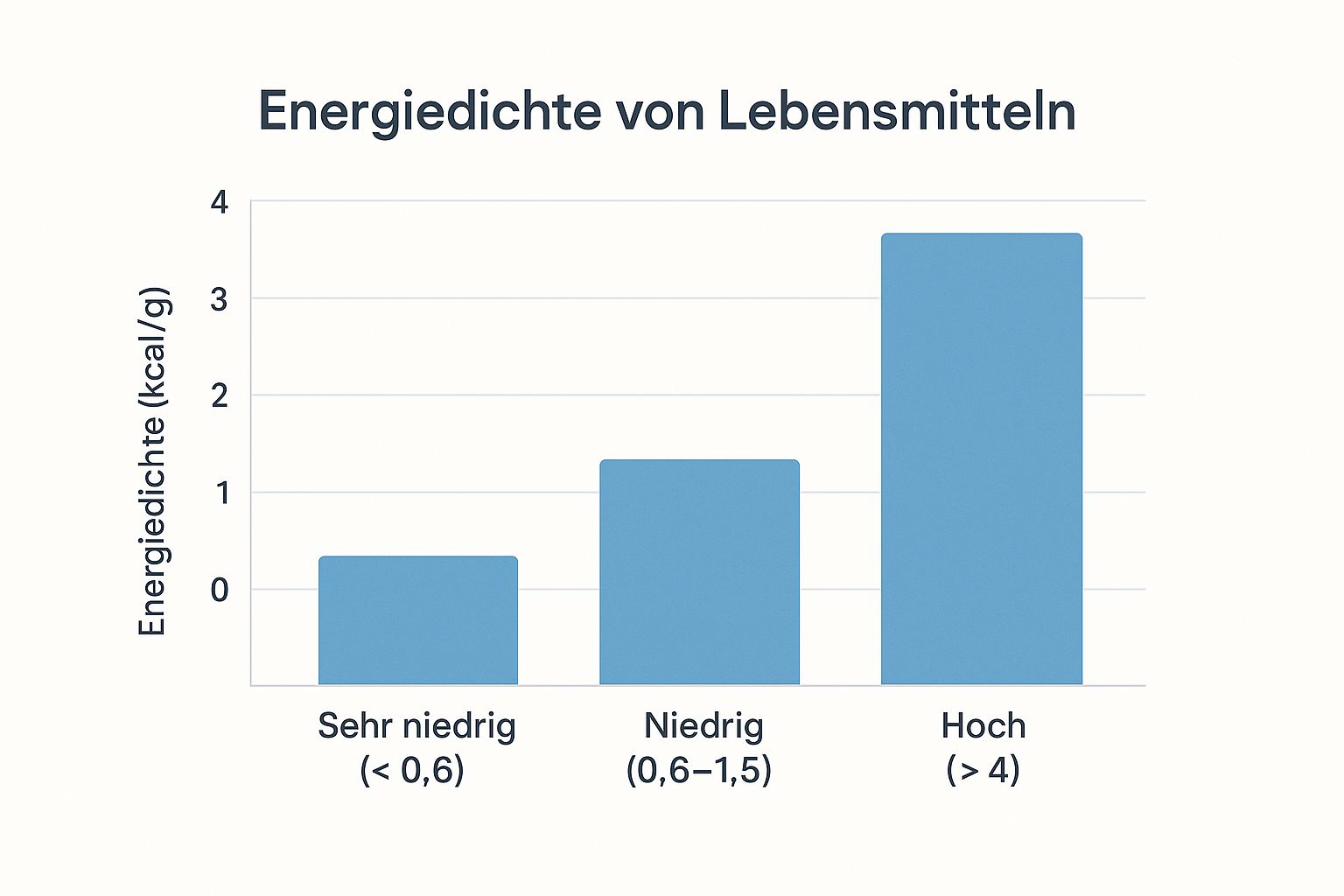
As the visualization illustrates, you can eat significantly larger amounts of foods in the “Very Low” and “Low” categories than foods with high energy density to achieve the same feeling of fullness.
Practical implementation for maximum satiety
Switching to low-energy-density foods does not require complicated diet plans, but rather smart adjustments to your daily meals.
- Fill half your plate: Make it a habit to fill half your plate with non-starchy vegetables such as broccoli, spinach, bell peppers, or cucumbers at every main meal.
- Start with an appetizer: A clear, broth-based vegetable soup or a large salad before the main meal fills your stomach beforehand and, according to studies, can reduce the meal’s total calorie intake by up to 20%.
- Choose whole fruit instead of juice: An apple is much more filling because of its fiber and volume than a glass of apple juice, which often contains more calories and sugar.
- Bulk up your dishes: Add vegetables to increase the volume. Grated zucchini in Bolognese sauce or cauliflower rice as a side dish are clever tricks that help you feel full.
- Choose water-rich foods: Cucumbers, tomatoes, zucchini, watermelon, and berries are more than 90% water and are perfect for increasing the volume of your meals without adding significant calories.
In a groundbreaking study, participants who followed a low-energy-density diet consumed an average of 1,400 fewer calories per week than the comparison group, yet reported identical feelings of fullness and experienced no hunger.
This approach is particularly effective if you feel that you need large portions to feel full. It combats the feeling of “never feeling full” by sending strong satiety signals to your brain via stretch receptors in your stomach. Such a nutrient-dense diet not only supports weight management but can also help optimize your metabolism. If you would like to learn more about how to naturally boost your metabolism on mybody-x.com, you can find further information with us.
6. Blood sugar stabilization through glycemic control
When your blood sugar is on a roller coaster, a constant feeling of hunger is often the direct result. The feeling of “never feeling full” is frequently triggered by rapid blood sugar spikes and the subsequent crashes. This cycle of cravings and constant eating without true satisfaction can be broken through targeted blood sugar stabilization. A diet based on a low glycemic index is the key to achieving this.
The glycemic index (GI) measures how quickly and significantly a carbohydrate-containing food raises blood sugar levels. High-GI foods, such as white bread or sugary drinks, cause a rapid increase followed by an equally rapid drop. This crash falsely signals to your brain that you urgently need new energy, leading to intense hunger. Glycemic control stabilizes this process, resulting in a lasting and consistent feeling of satiety.
Practical implementation for lasting satiety
Stabilizing your blood sugar level does not require a radical diet, but rather smart everyday choices. It is about choosing and combining carbohydrates in a way that allows them to be digested slowly and keep your blood sugar balanced.
- Choose whole grains instead of refined flour: Prefer foods such as quinoa, oats, barley, and whole-grain bread instead of white bread, white rice, and pasta. They contain more fiber, which slows the absorption of sugar.
- Always combine macronutrients: Never eat carbohydrates in isolation. Always combine them with protein, healthy fats, or fiber. An apple (carbohydrate) with a handful of almonds (fat, protein) has a significantly lower glycemic impact than the apple alone.
- Use the “right” order: Start your meals with vegetables or a source of protein before moving on to carbohydrates. This strategy can significantly reduce the post-meal blood sugar rise.
- Avoid liquid sugar: Sugary drinks are the biggest drivers of blood sugar spikes. Replace sodas, juices, and sweetened teas with water or unsweetened tea.
- Turn to nature’s helpers: A splash of vinegar or lemon juice in your salad dressing can reduce a meal’s glycemic response by up to 30%. Cinnamon is also said to have a blood sugar-regulating effect.
Pioneers in nutritional research have shown that glycemic control not only improves satiety, but also stabilizes energy throughout the day and prevents cravings.
This approach is particularly effective if you often feel hungry again shortly after eating or suffer from severe energy dips in the afternoon. It not only combats the feeling of “not feeling full,” but also promotes your metabolic health in the long term.
7. Optimizing the Gut Microbiome
If your feeling of “not feeling full” persists despite eating enough, the answer may lie in your gut. Your gut microbiome—the community of trillions of microorganisms—is a key player in regulating your appetite. It acts as a kind of communications hub between your digestive tract and your brain.
Beneficial gut bacteria play the decisive role here by fermenting the fiber in your food. This process produces short-chain fatty acids that act directly on your brain and hormones by promoting the release of satiety hormones and thereby reducing appetite. A disrupted gut flora (dysbiosis) can interrupt these signaling pathways, leading to constant hunger. Targeted optimization of your gut bacteria can therefore restore your natural satiety mechanisms.
Practical implementation for a healthy gut flora
Building a healthy microbiome is a matter of adopting the right dietary habits. It is about deliberately “feeding” your beneficial gut inhabitants and ensuring variety.
- Variety is key: Aim to eat more than 30 different plant-based foods each week. Each plant nourishes different bacterial strains, thereby promoting a diverse gut flora.
- Include fermented foods: Add yogurt, kefir, sauerkraut, kimchi, or kombucha to your daily diet. They provide live probiotic cultures that directly support your gut health.
- Feed your bacteria with prebiotics: Foods such as garlic, onions, leeks, asparagus, bananas, and oats contain prebiotic fibers that serve as food for beneficial bacteria.
- Choose resistant starch and polyphenols: Chilled potatoes, rice, legumes, as well as berries, dark chocolate, and green tea provide nutrients that promote the production of satiety signals.
Studies show that people with greater diversity in their gut bacteria report a significantly better sense of satiety. A targeted diet can make a direct and noticeable difference here.
This approach is especially valuable if you feel that your hunger is difficult to control, even though you believe you are eating “healthily.” Targeted care for your microbiome can address the underlying cause of a lack of satiety and restore balance to communication between the gut and brain. If you would like to learn more about how to specifically support your gut health through the right diet, you will find further detailed information in our guide on gut health and nutrition on mybody-x.com.
Your path to lasting satiety starts now
A lack of satiety is not a fate you simply have to accept. As you have seen, the feeling of being constantly hungry is often the result of a complex interplay of hormonal, physiological, and psychological factors. However, the good news is that you have the tools to actively influence this system and regain control. It is not about fighting your body, but about understanding its signals and deliberately providing it with what it truly needs.
The strategies we have explored—from a protein-rich diet and the importance of fiber to optimizing your gut microbiome—are not isolated tricks. Rather, they are interconnected building blocks of a holistic approach that targets the root causes of the problem. You have learned that not only what you eat, but also how you eat, makes an enormous difference. Mindful eating gives your brain the time it needs to register satiety signals, while strategic hydration sends initial satiety cues.
Key insights at a glance
Remember the key pillars that can help you restore your sense of satiety:
- Hormonal balance: Protein and fiber are your strongest allies for stimulating satiety hormones and keeping the hunger hormone ghrelin in check.
- Stable blood sugar: Choosing foods with a low glycemic index helps you avoid blood sugar spikes and the subsequent crashes that trigger cravings.
- Mechanical and nutrient satiety: Foods with a low energy density, such as vegetables and fruit, fill the stomach without breaking the calorie bank.
- The gut-brain axis: A healthy gut microbiome actively communicates with your brain and directly influences the production of satiety signals. Caring for your gut flora is therefore a crucial factor.
Your individual action plan
The key to long-term success is integrating these principles into your daily life as sustainable habits rather than viewing them as a short-term diet. Do not overwhelm yourself by trying to change everything at once. Instead, begin with small, achievable steps.
Start small, but stay consistent: Choose one or two strategies that feel easiest for you. Perhaps begin by adding a palm-sized portion of protein to each main meal and consciously drinking a large glass of water beforehand. Once this has become routine, tackle the next point, for example by consciously chewing more slowly.
Think of this process as a journey of discovery. Pay close attention to how your body responds to the changes. Perhaps keep a food diary for a few weeks, recording not only what you eat but also how full and energized you feel afterward. This will help you develop a finer sense of your individual needs and recognize which strategies are most effective for you personally. Your body is constantly sending you signals—it is time to listen again and learn the language of your body to finally solve the problem of not feeling full.
Are you ready to dig even deeper and personalize your journey toward healthy satiety based on your unique biological data? MYBODY Lab GmbH offers scientifically based analyses, such as the gut microbiome test or the DNA metabolism test, which provide precise insights into why you may not develop a feeling of satiety. Discover your individual needs and receive tailored recommendations at MYBODY Lab GmbH to optimally support your body.


Share now:
Test Your Microbiome: Your Step-by-Step Guide for 2025
Triglycerides too high? Tips and strategies for lowering them