

Antioxidant foods: The best tips for better health and glowing skin
Just imagine being able to give your body’s cells an ultra-strong shield against all the daily stresses they face. That is exactly the job of antioxidant foods: they are nature’s little bodyguards, protecting your cells from damage and helping you stay healthy.
What antioxidant foods can do for you
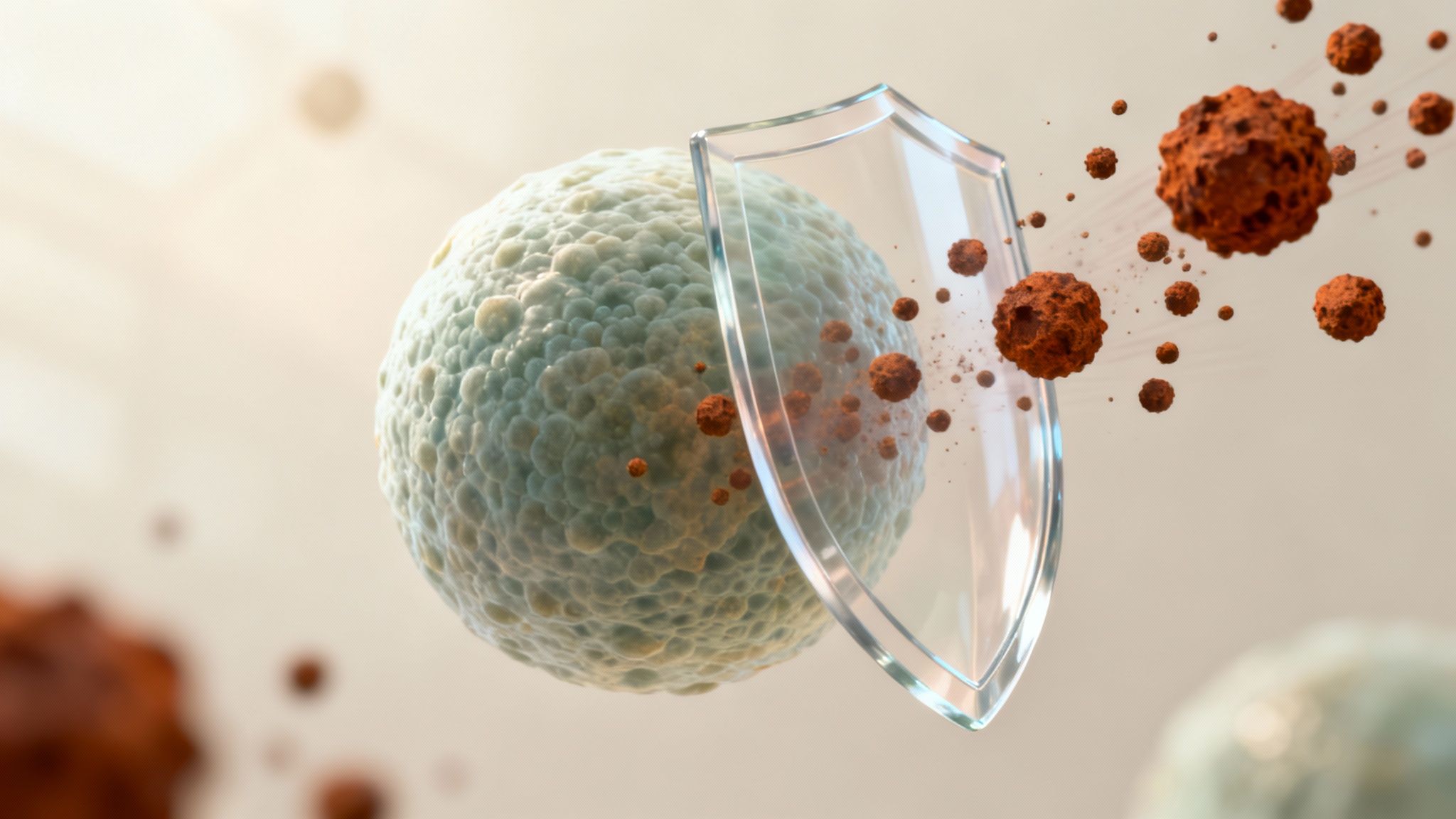
Have you ever wondered why a cut apple turns brown so quickly or why metal starts to rust? The process behind this is called oxidation—and exactly this also takes place continuously in a milder form in your body. The culprits are the so-called free radicals, tiny, aggressive molecules produced by environmental stress, an unhealthy diet, or even perfectly normal metabolic processes.
When these free radicals get out of hand, oxidative stress occurs. You can think of it as invisible rust affecting your cells. It attacks important cell structures, makes the skin age faster, and can seriously disrupt your well-being over time. Fortunately, your body has an ingenious defense strategy ready.
Antioxidants: Your personal cellular protection
And this is where antioxidants come into play. They are the natural opponents of free radicals. Their mission: to neutralize these aggressive molecules before they can cause any damage. A diet rich in antioxidant foods therefore equips your body with an entire army of tiny protectors that help keep your cells fit and healthy.
Especially in Germany, ensuring a good supply of antioxidants such as vitamins C and E, as well as the minerals selenium and zinc, is worth its weight in gold. You can find plenty of vitamin C, for example, in blackcurrants, bell peppers, and kale. Selenium is found in cabbage, garlic, and mushrooms, while zinc comes from meat or cashew nuts. Learn more about the effects of antioxidants at mhplus-krankenkasse.de.
Oxidative stress is one of the main causes of skin aging. Antioxidants from food counteract this process from within and protect the valuable collagen fibers that keep your skin firm and elastic.
The thing is, every body works differently. Your personal genetic makeup influences how well your body can utilize certain nutrients and how high your individual need for protective antioxidants really is. Maybe you need significantly more vitamin C for radiant skin than someone else.
Knowing these unique needs is the key to preventive healthcare that is truly right for you. The mybody®x Skincare DNA Metabolism Test can help you with exactly that. It examines your genetic markers and reveals which nutrients are particularly important for your skin—and which foods provide your cells with the best possible protection.
The Most Effective Antioxidants and Their Sources
Okay, so now you know that antioxidants are your cells’ bodyguards. But who exactly belongs to this protection squad? Let’s take a closer look at some of the most effective ones.
There is no single super-antioxidant. Instead, think of them as a team of specialists, each with different strengths and keeping things in order in different areas of your body. Once you know who these helpers are and where to find them, you can strategically turn your meal plan into a fortress against oxidative stress.
Broadly speaking, the variety of antioxidants can be divided into three main groups: vitamins, minerals, and colorful secondary plant compounds. Each group plays its own indispensable role in the fight against free radicals and helps keep your cells in top shape.
The following infographic gives you a quick overview of which antioxidant foods you should remember.
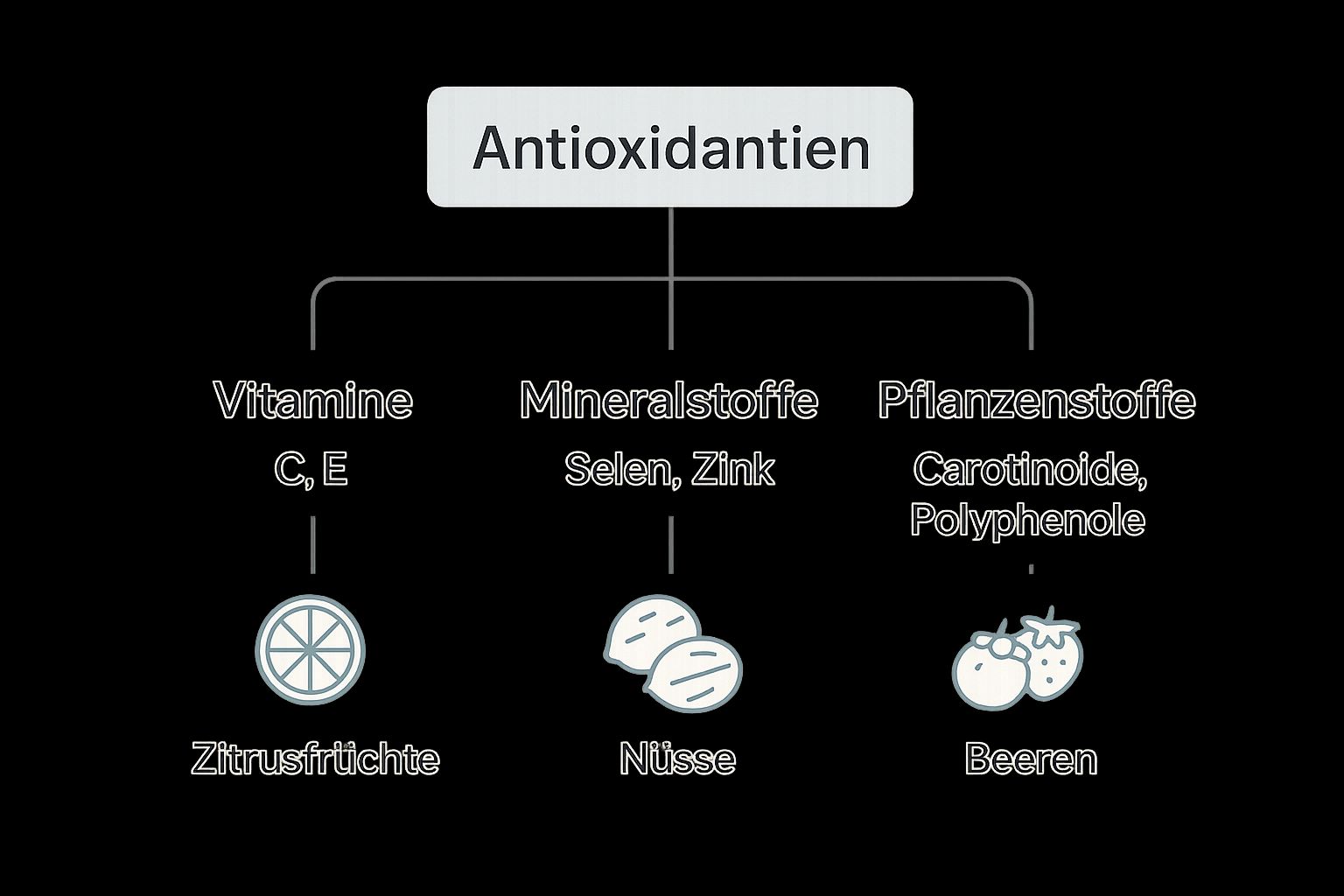
As you can see, vitamins, minerals, and plant compounds are the three pillars supporting your antioxidant defenses. You can easily strengthen all three through your diet.
The Vitamin Power of C and E
When it comes to cell protection, vitamins are true all-rounders. Two stand out in particular: vitamin C and vitamin E.
- Vitamin C (ascorbic acid): This water-soluble vitamin is a top free-radical scavenger in your blood and in all the watery parts of your cells. It is not only crucial for a strong immune system, but even recycles used-up vitamin E—making it ready for action again. Pretty clever, right?
- Vitamin E (tocopherol): As a fat-soluble vitamin, it specializes in protecting your cell membranes, which are largely made of fat. You can think of it as waterproofing for your cells, allowing attacks to simply roll off.
Both vitamins work hand in hand and are a perfect example of how nutrients work together as a team in the body. If you would like to delve deeper into the world of micronutrients, you can find even more interesting information in our guide to vitamins and minerals.
Minerals as indispensable helpers
Certain minerals are also absolutely crucial for antioxidant protection. They often do not act directly, but are instead the building blocks for the body's own antioxidant enzymes—like your immune system's special forces, so to speak.
Your body is a small factory: It produces its own antioxidant enzymes to neutralize free radicals. Minerals such as selenium and zinc are the crucial tools involved, without which these enzymes could not function in the first place.
Selenium and zinc are particularly essential here. Without them, some of your body's strongest defense mechanisms could not be activated in the first place. They ensure that your internal "free-radical scavenger production" runs at full speed.
Phytochemicals: the colorful protectors
The largest and most colorful group of antioxidants is probably the phytochemicals. These are precisely the compounds that give fruits and vegetables their vibrant colors, aroma, and flavor. In nature, they protect plants from predators or UV radiation—and they pass this protective function on to you.
The most important groups include:
- Carotenoids: These pigments create the bright yellow, orange, and red colors in many fruits and vegetables. The best known is beta-carotene (the precursor to vitamin A) found in carrots. A true insider tip is astaxanthin, a reddish pigment from algae. It is considered one of the most powerful known antioxidants and has been proven to protect the skin from UV damage.
- Polyphenols: This huge group comprises thousands of compounds, including flavonoids (found in berries, apples, and tea) and resveratrol (found in red grapes). They are known for their powerful anti-inflammatory and cell-protective properties.
The top antioxidants and where to find them
To help you keep track, we have summarized the most important antioxidants and their best sources in a table. This lets you see at a glance how you can easily upgrade your meal plan.
| Antioxidant | Effects in the body | Top foods |
|---|---|---|
| Vitamin C | Protects water-soluble areas, supports the immune system | Bell peppers, broccoli, citrus fruits, blackcurrants |
| Vitamin E | Protects cell membranes (fat-soluble) | Nuts (almonds, hazelnuts), seeds, plant oils |
| Selenium | Building block for antioxidant enzymes | Brazil nuts, lentils, mushrooms, fish |
| Zinc | Important for enzyme function and the immune system | Oatmeal, pumpkin seeds, lentils, beef |
| Beta-carotene | Precursor to vitamin A, skin protection | Carrots, sweet potatoes, spinach, kale |
| Lycopene | Protects against cell damage, especially in the skin | Tomatoes (cooked), watermelon, grapefruit |
| Flavonoids | Anti-inflammatory, protects blood vessels | Berries, apples, onions, dark chocolate, green tea |
| Astaxanthin | Very powerful free-radical scavenger, UV protection | Salmon, krill, shrimp, microalgae |
With these foods on your plate, you give your body exactly the tools it needs to effectively defend itself against the daily attacks of free radicals.
Regional powerhouses for your diet
Do you think that a diet rich in antioxidants requires importing exotic superfoods from around the world and spending a fortune? I have good news: That is a myth! The best cell protectors often grow right on our doorstep.
Regional and seasonal foods are not only fresher and tastier; they are also packed with goodness.
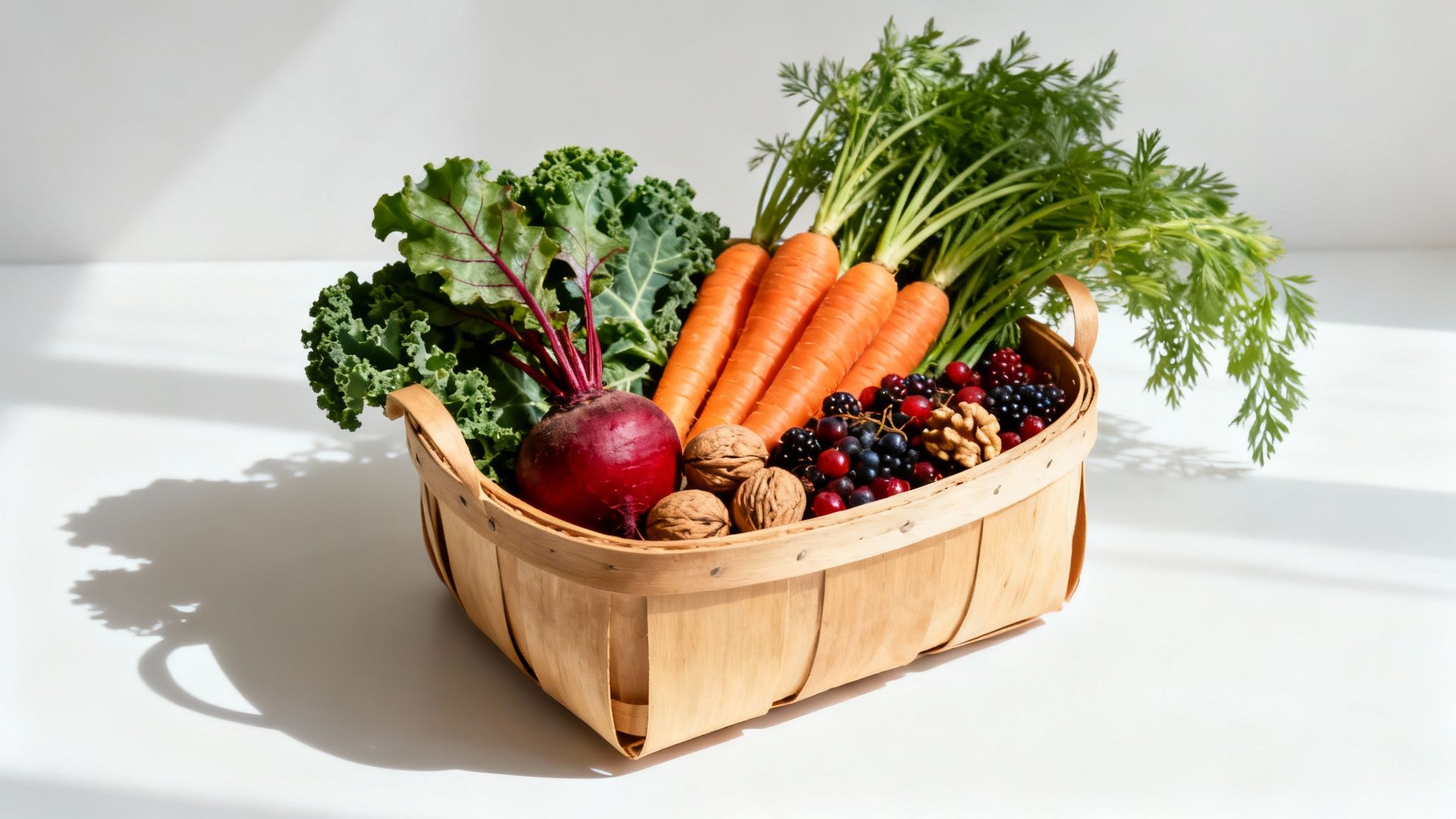
When you choose local products, you give your body exactly what it needs: maximum nutrient density. Short transport routes mean that fruit and vegetables can be harvested when ripe and lose hardly any valuable nutrients on the way to you. At the same time, you strengthen local agriculture and protect the environment. A win-win situation.
The carrot: a hidden superstar
A prime example of the power of regional antioxidant foods is the good old carrot. It is one of the most popular vegetables in Germany, yet its true strength is often underestimated. Its bright orange color gives it away: it contains plenty of beta-carotene, the precursor to vitamin A.
With annual consumption of around 7 kg per person, the carrot is a staple of our diet. In addition to plenty of beta-carotene (around 8–14 mg per 100 g), it also provides vitamin C and pectins. Eaten regularly, it helps replenish our vitamin A stores and protects our cells from oxidative stress. This makes it a true cornerstone of a healthy diet. Anyone who wants to delve deeper into the scientific details can find fascinating insights into carrots at openagrar.de.
More local antioxidant heroes
The carrot is certainly not the only option. Our regions offer an impressive variety of protective foods that can easily add variety to your diet:
- Kale: This classic winter vegetable is a true nutrient champion. It is packed with vitamin C, vitamin K, carotenoids, and flavonoids. A real immune booster, especially when it gets cold outside.
- Beetroot: Its intense color comes from betanin, a powerful antioxidant with anti-inflammatory properties. A great boost for the liver and circulation.
- Local berries: Whether strawberries in early summer or blackberries in late summer, berries are little powerhouses. They are packed with flavonoids and vitamin C, which protect your cells from damage.
- Nuts: A handful of walnuts or hazelnuts is the perfect snack between meals. They are excellent sources of vitamin E and polyphenols and strengthen your antioxidant defenses.
- Onions and garlic: They may make us cry, but their sulfur compounds and flavonoids such as quercetin have powerful antioxidant and anti-inflammatory effects. They also contain the important trace element selenium, which you can learn more about in our guide to selenium-rich foods.
Did you know? Dark and intensely colored foods often have the highest antioxidant content. Just remember the rule: The more colorful your plate, the better for your cells!
Your individual need for antioxidants
A diet rich in these regional powerhouses lays a fantastic foundation for your health. But at the end of the day, each of us is unique. Your genetics play a huge role in how your body absorbs nutrients and how well your skin, for example, can protect itself from oxidative stress.
Due to their genetic predisposition, some people simply need more vitamin C or E to optimally protect their skin cells and keep collagen production going. This is exactly where we come in with the mybody®x Skincare DNA Metabolism Test. It takes a look at your genes and gives you precise, personalised recommendations. This helps you find out which antioxidant-rich foods from your region can really make a difference for you and your skin health.
Exotic superfoods and their role in Germany
Avocados, goji berries, chia seeds—the list of exotic superfoods that have conquered our kitchens in recent years is long. They are celebrated everywhere as the ultimate nutrient powerhouses, supposedly supplying us with an extra dose of antioxidants. But what is really behind the hype? And what place do these far-travelled powerhouses have in a diet that also focuses on local products?
One thing is clear: Many of these foods contain impressive nutrients. Avocados, for example, are rich in vitamin E, a fat-soluble antioxidant that acts like a bodyguard for our cell membranes. Goji berries, in turn, provide a high concentration of zeaxanthin, a carotenoid that plays an especially important role in eye health.
The superfood trend in figures
The fact that superfoods are very much on trend is more than just a gut feeling—concrete figures prove it. Our growing awareness of healthy, preventive nutrition is reflected directly in our shopping carts. Take avocados, for example: Per-capita consumption in Germany stood at an impressive 1.33 kilograms in 2022. Imports practically exploded from 31,000 tonnes in 2013 to an impressive 157,000 tonnes in 2023. For more exciting insights into the development of the superfood market, visit statista.com.
These figures speak for themselves: More and more people are willing to actively invest in their health and are deliberately seeking foods that support them in doing so.
Exotic superfoods can be a great addition for expanding the range of antioxidants you consume. However, they are no substitute for a varied diet featuring regional products; rather, they are the finishing touch to an already healthy meal plan.
Sustainability and origin critically examined
Despite all the enthusiasm for nutritional power, we should also take a critical look at the origin and sustainability of exotic antioxidant-rich foods. Long transportation distances, high water consumption during cultivation—the avocado is a prime example—and social conditions in growing countries are important factors to keep in mind.
A smart strategy is to combine the best of both worlds:
- The foundation: Base your diet on seasonal and locally produced foods. As you’ve seen, local products also pack plenty of nutritional power.
- The supplement: Use exotic superfoods selectively to enrich your diet and perhaps fill one or two nutrient gaps.
- Pay attention to quality: Whenever possible, choose products from organic farming and fair trade.
Ultimately, it’s about finding a good balance that benefits not only your body but also our planet.
Ultimately, what matters is what your body really needs
Whether it’s a local blueberry or an exotic goji berry, which antioxidants make the biggest difference for you and specifically for your skin is entirely individual. Your genes significantly influence how well your body can utilize certain vitamins and how much protection you personally need from oxidative stress.
The mybody®x Skincare DNA Metabolism Test takes a close look at precisely these genetic factors. It gives you a clear, scientifically sound answer about which nutrients your skin really needs to maintain its elasticity and radiance. With this knowledge, you can specifically choose the foods—whether local or exotic—that offer you the greatest personal benefit.
How your diet affects your skin health
Your skin is much more than just a protective covering—it reflects your internal health. Have you ever wondered why it looks fresh and rosy on some days and rather tired and pale on others? The answer often lies on your plate. There is a direct and truly fascinating connection between what you eat and how your skin looks.
It all begins deep within the cells. Your skin is exposed to a veritable bombardment every day: UV radiation, environmental toxins, and even stress produce what are known as free radicals. These are aggressive little molecules that target your skin’s sensitive structures.
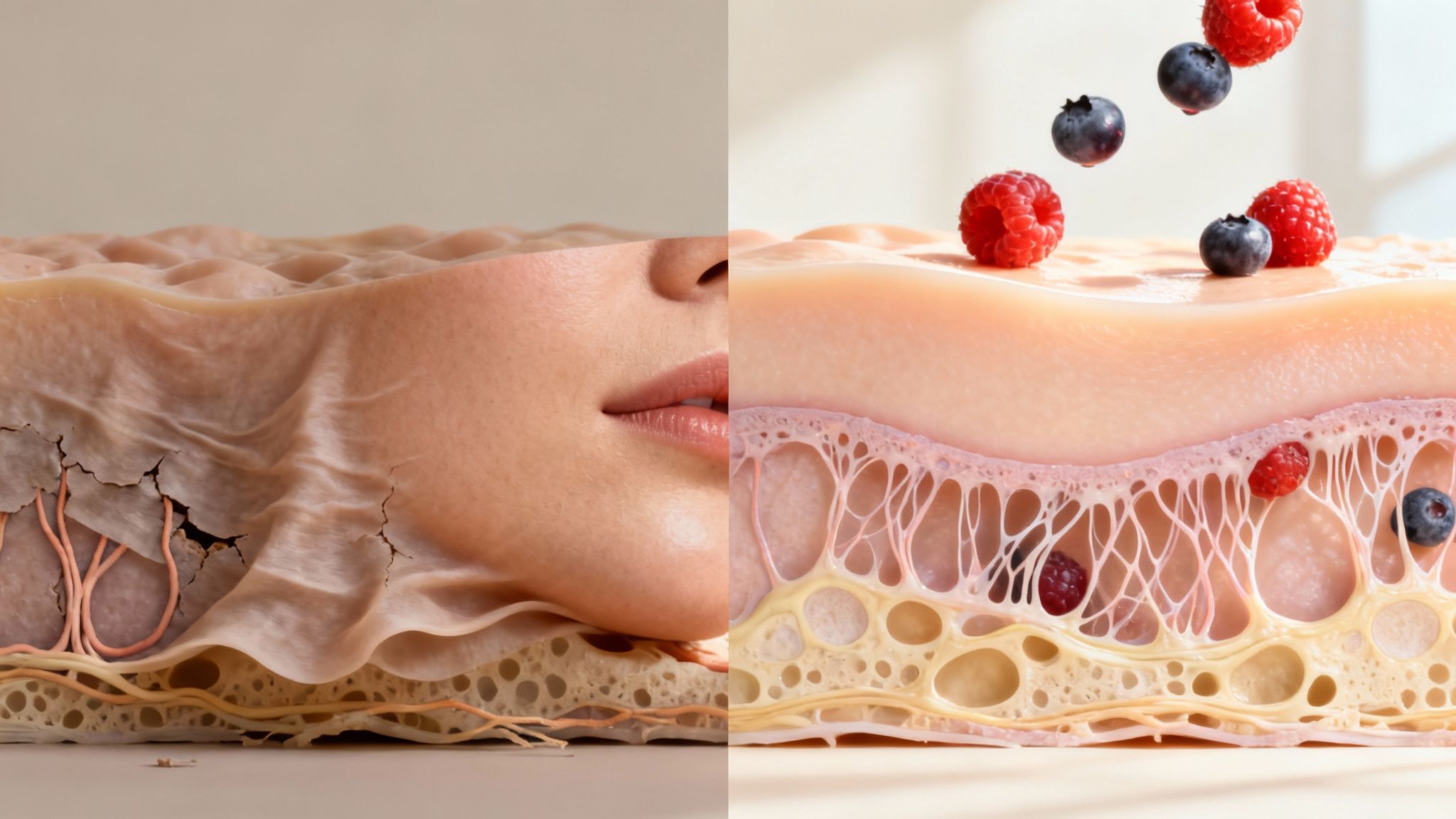
The collagen and elastin tissue in particular, which keeps your skin firm and elastic, suffers from these attacks. Free radicals can literally break down these important fibers. The result? Skin loses its firmness, fine lines begin to appear, and your complexion looks somewhat dull.
Antioxidants as an internal shield
This is exactly where antioxidant-rich foods come in. They are your strongest allies in the fight for healthy skin and tackle the aging process from within. Compounds such as vitamin C, vitamin E, and beta-carotene neutralize free radicals before they can cause any damage. They protect your collagen framework and help your skin maintain its natural resilience.
Vitamin C, for example, is absolutely essential for collagen production. Without enough of it, your skin cannot produce this important structural protein, which directly leads to a loss of firmness. Vitamin E, meanwhile, protects cell membranes from oxidative stress and keeps the skin beautifully supple.
Think of antioxidants as built-in sunscreen and a repair team in one. They protect skin cells from damage while also supporting regeneration—for a youthful, healthy appearance.
A diet rich in berries, colorful vegetables, nuts, and seeds therefore gives your body exactly the right tools to protect and nourish your skin.
Every body is different—your genetics play a role
Now comes the crucial point: What works brilliantly for one person may not be the best strategy for you. Every person is genetically unique. Your DNA determines not only your hair and eye color, but also how well your body can utilize certain nutrients and how susceptible your skin is to oxidative stress.
Some people are naturally predisposed to faster collagen breakdown. Others, due to their genes, need much more vitamin C or E to optimally protect their skin cells. So a general recommendation to eat antioxidant-rich foods is just a good starting point—not the end of the story.
This is where the mybody®x Skincare DNA Metabolism Test comes in. Instead of guessing which nutrients your skin really needs, this test provides you with a precise, scientifically backed roadmap for your skin health.
Your personal guide to radiant skin
The mybody®x test specifically analyzes the genes that play a crucial role for your skin. Among other things, it examines genetic markers that provide insight into:
- Your collagen sensitivity: According to your genes, how quickly is your skin prone to collagen breakdown?
- Your individual antioxidant needs: How effective is your body’s natural protection against oxidative stress, and which antioxidants are particularly important for you?
- Your vitamin utilization: How efficiently can your body absorb and use essential skin vitamins such as vitamins C and E?
Based on this detailed analysis, you receive personalized and, above all, easy-to-implement recommendations. You’ll learn not only which antioxidant foods offer you the greatest personal benefit, but also which nutrients you should specifically incorporate into your diet. It may turn out that broccoli and bell peppers are more important for you than for others because of their vitamin C content, or that almonds and sunflower seeds should be at the top of your list as sources of vitamin E.
This personalized approach makes it possible to tailor your diet perfectly to your skin’s needs. This way, you invest exactly in the measures that make the biggest difference for you, helping preserve your skin’s natural firmness, radiance, and health in the long term. If you want to take a deeper look at how DNA analysis can revolutionize your skincare routine, read our comprehensive article about the connection between skin health and DNA testing.
How to easily add more antioxidants to your plate
Okay, you now have the knowledge about the superpowers of antioxidants under your belt. But how do you put it all into practice in everyday life without completely turning your life upside down? Don’t worry, it’s much easier than it sounds.
With a few simple tricks, every meal can become a mini wellness treatment for your cells. It’s not about perfection, but about making mindful choices that do you good—and above all, that you enjoy.
Your antioxidant-powered start to the day
Morning is the perfect opportunity to replenish your antioxidant stores right away. Instead of just grabbing a quick coffee, you could wake your body up with a real nutrient boost.
- Berry power: How about a smoothie? A handful of frozen berries (blueberries, raspberries), some spinach, a spoonful of flaxseed, and plant-based milk—that's it. Not only does it taste great, but it also provides a concentrated dose of vitamins and polyphenols.
- Green tea instead of coffee: A cup of green tea is a great alternative. It provides valuable catechins, known for their powerful antioxidant effects.
Even these small changes can make a huge difference and give you noticeably more energy throughout the day.
Colorful meals and smart snacks
The simplest rule of thumb for an antioxidant-rich diet? Eat the rainbow! Each color in fruits and vegetables represents different plant compounds with their own protective functions. So make your plate as colorful as possible.
A large mixed salad for lunch with bell peppers, tomatoes, carrots, and dark leafy greens is a true nutrient powerhouse. For a small snack between meals, a handful of nuts or a crisp apple is the perfect choice.
My favorite trick: Simply enhance every meal with fresh herbs and spices. Turmeric, cinnamon, oregano, and parsley are not only flavor boosters but are also packed with antioxidants and effortlessly elevate any dish.
Protecting nutrients: the right preparation
Unfortunately, many valuable antioxidants are sensitive to heat. To truly get the most out of your foods, you should prepare them as gently as possible.
Steaming or gently cooking is almost always better than boiling for a long time or searing at high heat. Many vegetables, such as broccoli and bell peppers, also taste fantastic raw and provide you with their full nutrient power.
These tips are a great start to sustainably improving your diet. If you're looking for even more inspiration, you'll find 10 valuable tips for a healthy lifestyle in our health portal, which complement them perfectly. But remember: Every body is different. The mybody®x Skincare DNA Metabolism Test can show you which nutrients your body personally needs, so you can tailor your diet to your genetic strengths and weaknesses.
Still have questions? Here are the answers
Finally, we want to address a few common questions that come up again and again. This way, you can start your antioxidant-rich diet with confidence and complete clarity.
Can you consume too many antioxidants?
The short answer: practically not through food. If you eat a balanced diet and plenty of fruit and vegetables, you are on the safe side.
The issue arises with high-dose supplements. An isolated, excessive intake of fat-soluble vitamins such as vitamin E or beta-carotene can disrupt the body's delicate balance and even cause harm. Real foods are therefore almost always the better and wiser choice.
Can capsules & co. replace a healthy diet?
Absolutely not. Dietary supplements can certainly help fill a specific gap, but they will never provide what real foods can.
An apple or a handful of berries contains much more than just a single active compound. It is the interplay of countless nutrients and plant compounds that makes them so valuable. No single capsule can replicate this natural orchestra.
Think of your diet as a solid foundation. Antioxidants from food always work as a team, making them far more powerful than any isolated ingredient taken from a supplement.
Does preparation make a difference?
And how! Many antioxidants, especially vitamin C, are quite sensitive and do not tolerate high heat well. Prolonged cooking or searing at high heat can significantly reduce their levels.
In most cases, gentle methods such as steaming, poaching, or simply eating foods raw are your best options. There are exceptions, though: the lycopene in tomatoes, for example, actually becomes more available to the body after brief heating.
Each of us is different, and what is good for one person may not be equally beneficial for another. Your body has its own unique needs—even when it comes to your skin.
If you want to know exactly which nutrients your body needs to protect your cells optimally, mybody®x has the right solution. The Skincare DNA Metabolism Test analyzes your genetic predispositions and provides personalized recommendations on which foods you can use to specifically support your skin health from within.



Share now:
Triglycerides too high? Tips and strategies for lowering them
Low-carb diet for beginners: which foods provide carbohydrates