
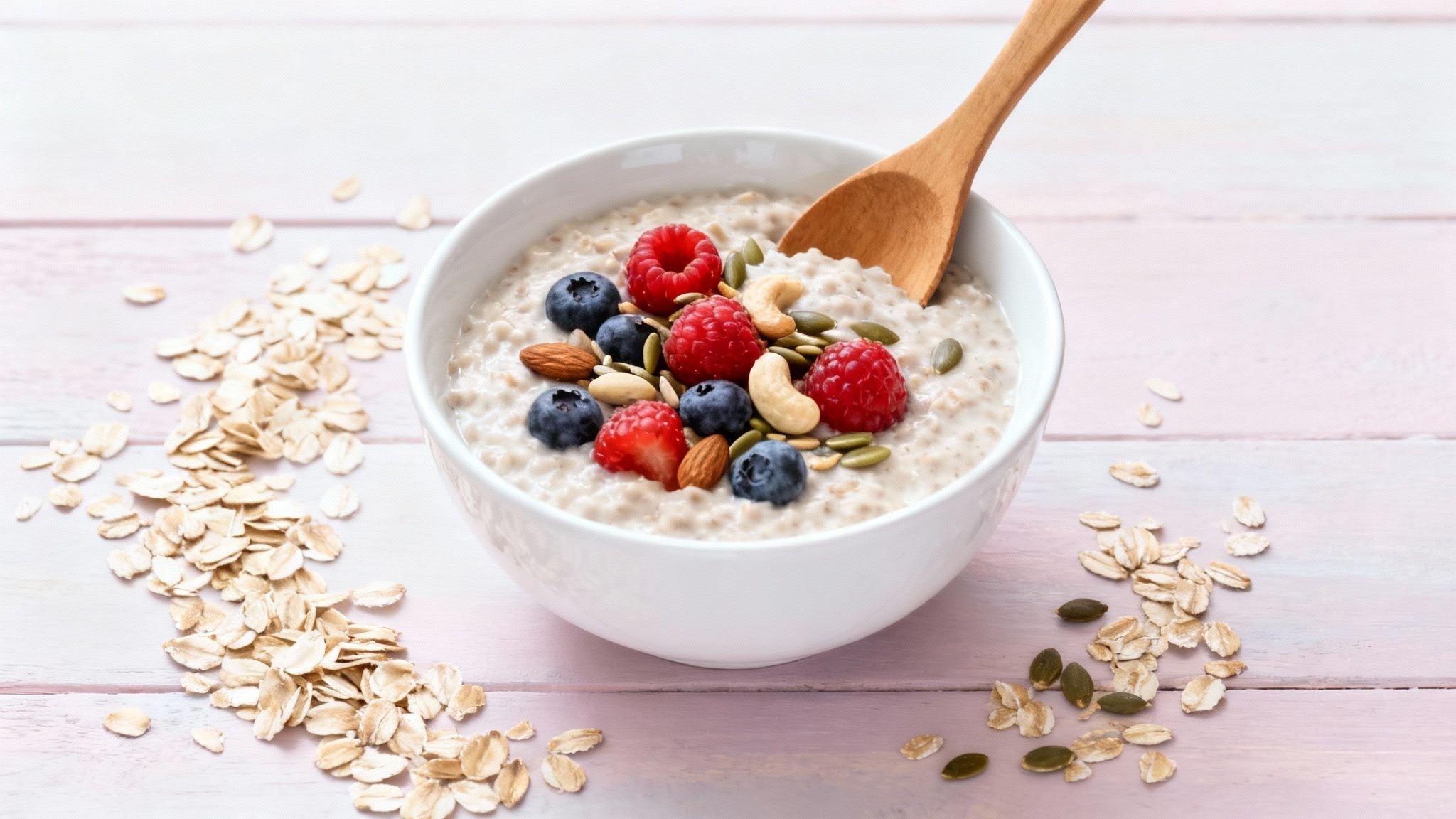
Are oats healthy? Facts, nutritional values & tips for you
Yes, oats are healthy. But what makes them such a powerhouse for your body? In short: They provide long-lasting energy, keep your blood sugar stable, and support your digestion with a generous amount of fiber.
What oats really do for your health
Oats are so much more than just a quick breakfast. Think of them as the foundation for a day full of energy—with none of the typical mid-morning slumps.
But what is the reason? The key lies in their smart nutrient composition.
Unlike sugary cereal, which first sends your blood sugar soaring and then causes it to crash, oats contain complex carbohydrates. Your body gradually and evenly converts them into energy. The result? Stable energy levels that keep you focused and productive for hours.
This infographic sums it up: A simple bowl of oats is a symbol of natural, long-lasting energy.
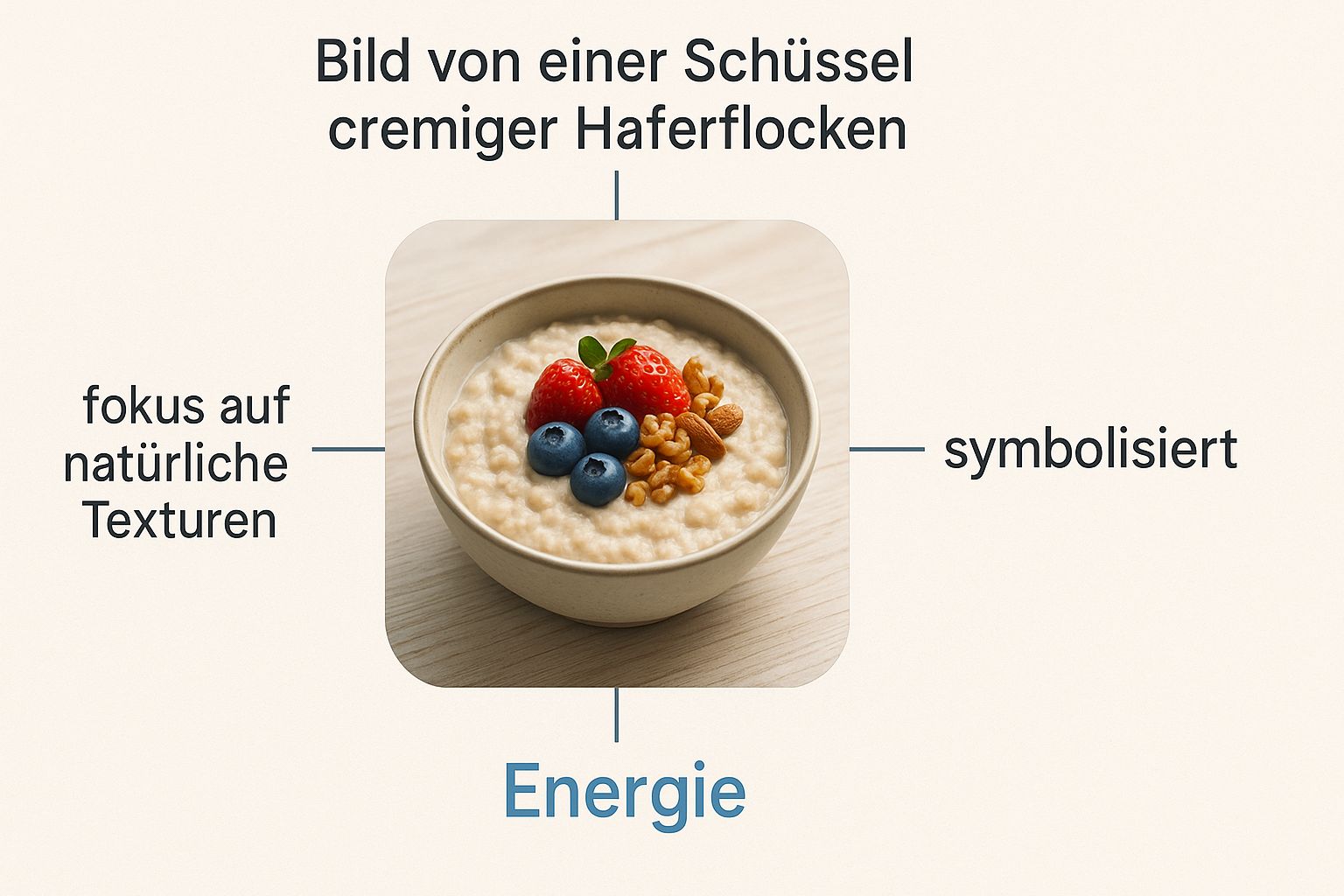
The image beautifully shows that healthy eating can be simple and delicious by placing natural ingredients and fresh preparation at the center.
The power of fiber
One crucial reason why oats are so healthy is their high fiber content. With around 10 g per 100 g, they not only stimulate your digestion but also help you feel full and satisfied for longer. This also helps you avoid cravings and skip unnecessary snacks.
Oats are the perfect example of how a simple food can have a huge impact on your daily well-being. Their strength lies in the combination of satiety, nutrient density, and blood sugar stability.
The carbohydrates—around 55 to 59 g per 100 g—are your main source of energy. The fiber ensures that this energy is released slowly. This helps you stay focused throughout the day.
Let's take a closer look at the nutritional values. This table summarizes what 100 grams of dry oats contain and how each nutrient benefits you.
Nutritional values of oats per 100 g at a glance
| Nutrient | Amount (approx.) | Your benefit |
|---|---|---|
| Energy | 370 kcal | Provides long-lasting energy for the day. |
| Carbohydrates | 59 g | Complex carbohydrates for stable energy without blood sugar spikes. |
| Fiber | 10 g | Help you feel full and support your digestion. |
| Protein | 13,5 g | Important for muscle building and maintenance. |
| Fat | 7 g | Contains valuable unsaturated fatty acids. |
| Beta-glucan | 4,5 g | A special type of dietary fiber that has been proven to lower cholesterol levels. |
| Magnesium | 130 mg | Supports muscle function and the nervous system. |
| Iron | 4.6 mg | Important for blood formation and the transport of oxygen in the body. |
| Zinc | 3.2 mg | Plays a central role in a strong immune system. |
As you can see, oats are far more than just "filler." They are a true nutrient powerhouse. If you would like to delve even deeper into their composition, you can find more insights into the nutritional value of oats. Because the better you understand how your body reacts to certain foods, the more precisely you can tailor your diet for greater well-being.
What is really in oats? Decoding the nutrient matrix
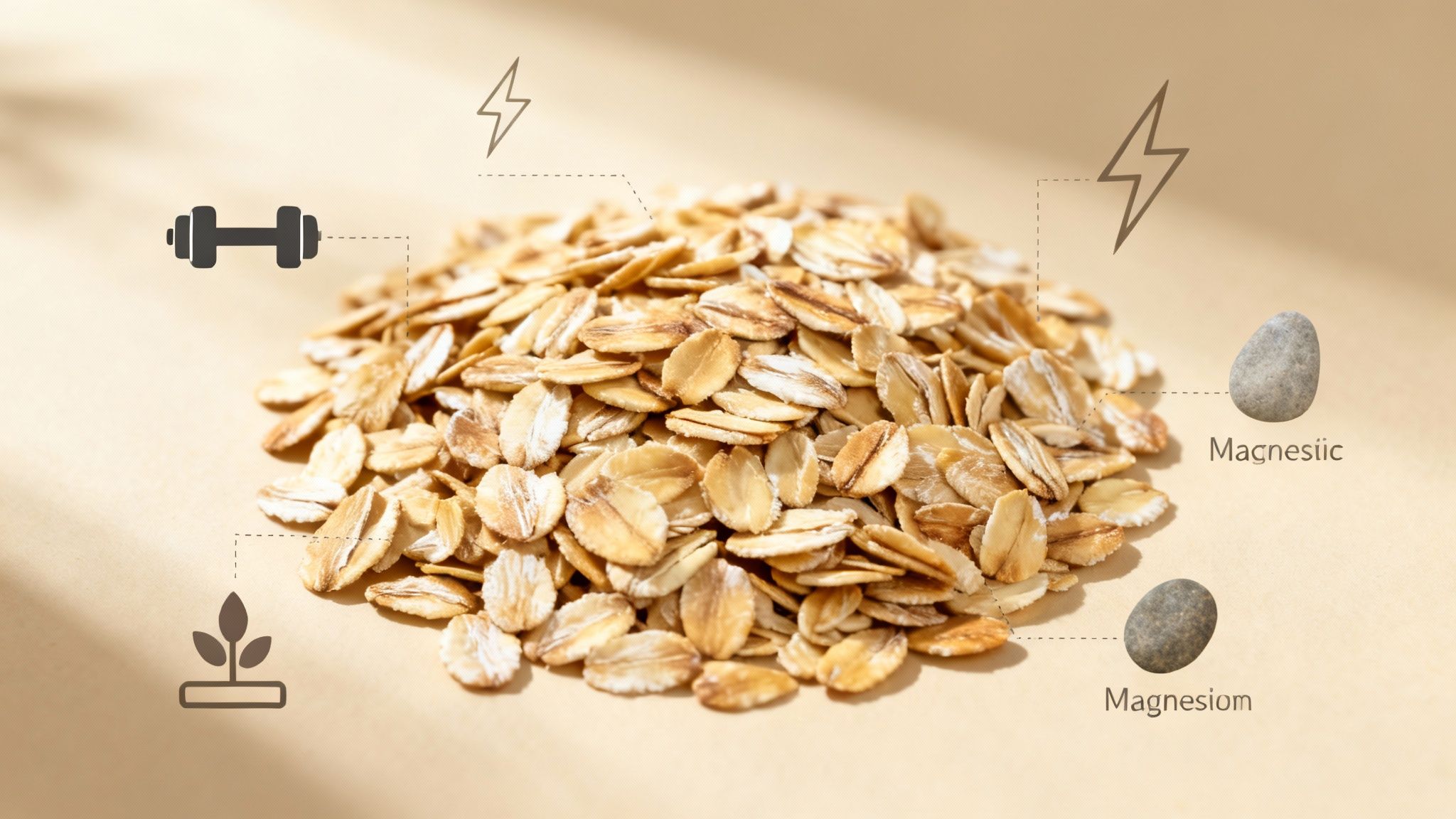
Oats are far more than just a simple breakfast ingredient. They are a true treasure trove of nutrients that work together perfectly. You could say that here, the whole is clearly greater than the sum of its parts. Let's take a closer look under the hood and decipher this powerhouse.
Instead of boring you with dry figures, I'd rather show you how these nutrients work together in your body. Think of it as a perfectly coordinated team: each player has a specific role, but only together do they unleash their full strength.
Plant-based protein for fullness and muscles
An often underestimated hero in oats is their high protein content. With 13 to 15 grams of protein per 100 grams, they are an impressive plant-based protein source. This protein is not only crucial for building and maintaining your muscles, but also provides a feeling of fullness that lasts.
That's exactly why oats are so popular with athletes and everyone who cares about their health. They are a simple and valuable addition to meeting your daily protein needs.
Complex carbohydrates as your energy source
The energy from oats isn't simply shot into the bloodstream; instead, it flows slowly and steadily. This is due to the complex carbohydrates. Think of them like a log in a fireplace: it burns slowly and evenly, providing cozy warmth for hours. A match, on the other hand, flares up briefly and is immediately extinguished.
This mechanism is precisely what keeps your blood sugar level stable. The result? Sustained energy without the dreaded afternoon slump and nasty cravings.
Would you like to know which foods have a similarly positive effect on your blood sugar? In our article about the glycemic index, you’ll find a helpful table that will help you make the right choices for stable energy levels.
The hidden powers of micronutrients
But that’s not all. Alongside the major players, oats also contain countless micronutrients—in other words, vitamins and minerals that are crucial for your performance and immune system. Each of them has a very specific role:
- Magnesium: Essential for your muscle function and nervous system. It helps prevent cramps and supports you in managing stress more effectively.
- Iron: Absolutely essential for transporting oxygen in the blood. Good iron status is the foundation for your endurance and concentration.
- Zinc: A true key player for a strong immune system and healthy skin. It helps your body fight off pathogens.
This combination of macronutrients and micronutrients makes oatmeal an incredibly smart choice for every day. It provides not only pure energy, but also all the important building blocks your body needs to function optimally.
How beta-glucan supports your health
Have you ever heard of the little superhero hiding in your oatmeal? Its name is beta-glucan. This special soluble fiber is the secret ingredient that makes oats a true powerhouse for your health. But what exactly does this substance do when it enters your body?
It’s best to think of beta-glucan as an intelligent sponge. As soon as you eat oats, this fiber swells in your gastrointestinal tract and forms a gel-like mass. And this very mass has several ingenious effects that you can feel directly.
Your cholesterol levels in balance
One of the best-known benefits of beta-glucan is its ability to regulate cholesterol levels naturally. The gel-like “sponge” binds bile acids in the intestine, which your body produces from cholesterol. Instead of being recycled, they are simply excreted.
Your body naturally notices this and has to produce new bile acids. To do so, it uses the cholesterol circulating in your blood. The result? The level of “bad” LDL cholesterol can naturally decrease in this way.
This is not mere speculation but is strongly supported by scientific evidence. Even the European Food Safety Authority (EFSA) has officially confirmed that regular consumption of oat beta-glucan helps lower cholesterol levels. You can learn more about the properties of oats at kaufland.de.
Stabilizing your blood sugar
This same gel-like consistency has another crucial advantage: It slows the absorption of sugar from food into the bloodstream. This prevents the dreaded blood sugar spikes after eating, which are often responsible for cravings and sudden energy slumps.
Because of this delayed absorption, your blood sugar level remains much more stable. This not only gives you long-lasting energy but also eases the strain on your pancreas. A simple trick to keep your body in balance.
Food for your beneficial gut bacteria
But beta-glucan’s journey does not end here. Once it reaches the large intestine, it turns into the favorite food of your beneficial gut bacteria. This is also called a prebiotic—it specifically promotes the growth and activity of good bacteria.
A healthy and diverse microbiome is the basis for countless processes in your body:
- A strong immune defense: A large part of your immune system is located in your gut.
- Smooth digestion: Healthy bacteria help you make optimal use of nutrients.
- Your overall well-being: Through the gut-brain axis, your gut even influences your mood.
With every bowl of oatmeal, you are actively supporting your gut flora. If you want to delve even deeper into the topic, our guide explains how you can build a healthy gut flora. So it is clear: The question “Is oatmeal healthy?” can be answered with a resounding yes—they support your body from within in an impressively diverse range of ways.
Using oats strategically to achieve your goals
Healthy eating is never a one-size-fits-all solution that works the same way for everyone. It is much more exciting to use the right foods strategically to support your personal goals. Oats are an incredibly versatile tool for this—if you know how to use them correctly.
Whether you want to manage your weight, build muscle, or simply have more energy in everyday life, how you incorporate oats into your meals makes all the difference. Your body is unique, which is why an individual approach is the key to success.
Using oats for weight loss
If you want to lose weight, a lasting feeling of fullness is your greatest ally. This is where oats truly shine. The fiber they contain, especially beta-glucan, swells in the stomach and keeps you full for hours. It is the best weapon against cravings and helps you effortlessly save calories throughout the day.
For maximum satiety, the right combination is key:
- Combine them with protein: Adding a spoonful of low-fat quark, Greek yogurt, or a handful of nuts to your oats slows digestion even further. The result: You stay full and satisfied for even longer.
- Avoid sugar traps: Stay away from ready-made mixes! They often contain a lot of hidden sugar. It’s better to prepare your porridge yourself and sweeten it smartly with fresh berries or a pinch of cinnamon.
- Drink enough water: For fiber to develop its full effect and swell properly, it needs liquid. So a large glass of water with your oat-based breakfast is essential.
Oats as fuel for athletes
For anyone who enjoys staying active, oats are a real energy powerhouse. Their complex carbohydrates provide your body with a steady, long-lasting supply of energy, making them the perfect companion for your training.
Imagine your body as a high-performance engine. Oats are the high-quality, slow-burning fuel that gives you the endurance for long training sessions without a sudden drop in performance along the way.
- Before training: Eating a bowl of oats about 60–90 minutes before exercise optimally replenishes your energy stores (glycogen stores). This gives you the power you need for your workout.
- After training: After exercising, the focus is on stimulating recovery. Combined with a source of protein, for example in a post-workout shake, oats help quickly replenish depleted glycogen stores and support your muscles as they repair themselves. This way, you’ll be fit again sooner for your next session.
Your individual path with mybody-x
Every metabolism works differently. While one person burns carbohydrates efficiently, another may need more protein to achieve their goals. Knowing how your own body works is the decisive advantage.
This is exactly where a mybody-x lab test comes in. It gives you precise insights into your individual nutrient requirements and metabolic type. With this knowledge, you can tailor foods such as oats perfectly to your needs. You may find that oats are ideal for you at lunchtime, or that a particular nutrient combination is most effective for you.
This is how a healthy habit becomes a personalized strategy for your health.
Creative recipe ideas and practical preparation tips
Okay, now you know everything oats can do for your health. But let’s dispel the old myth that oatmeal is boring. It’s time to rediscover this powerhouse grain in your kitchen—because it’s so versatile that it goes far beyond breakfast.
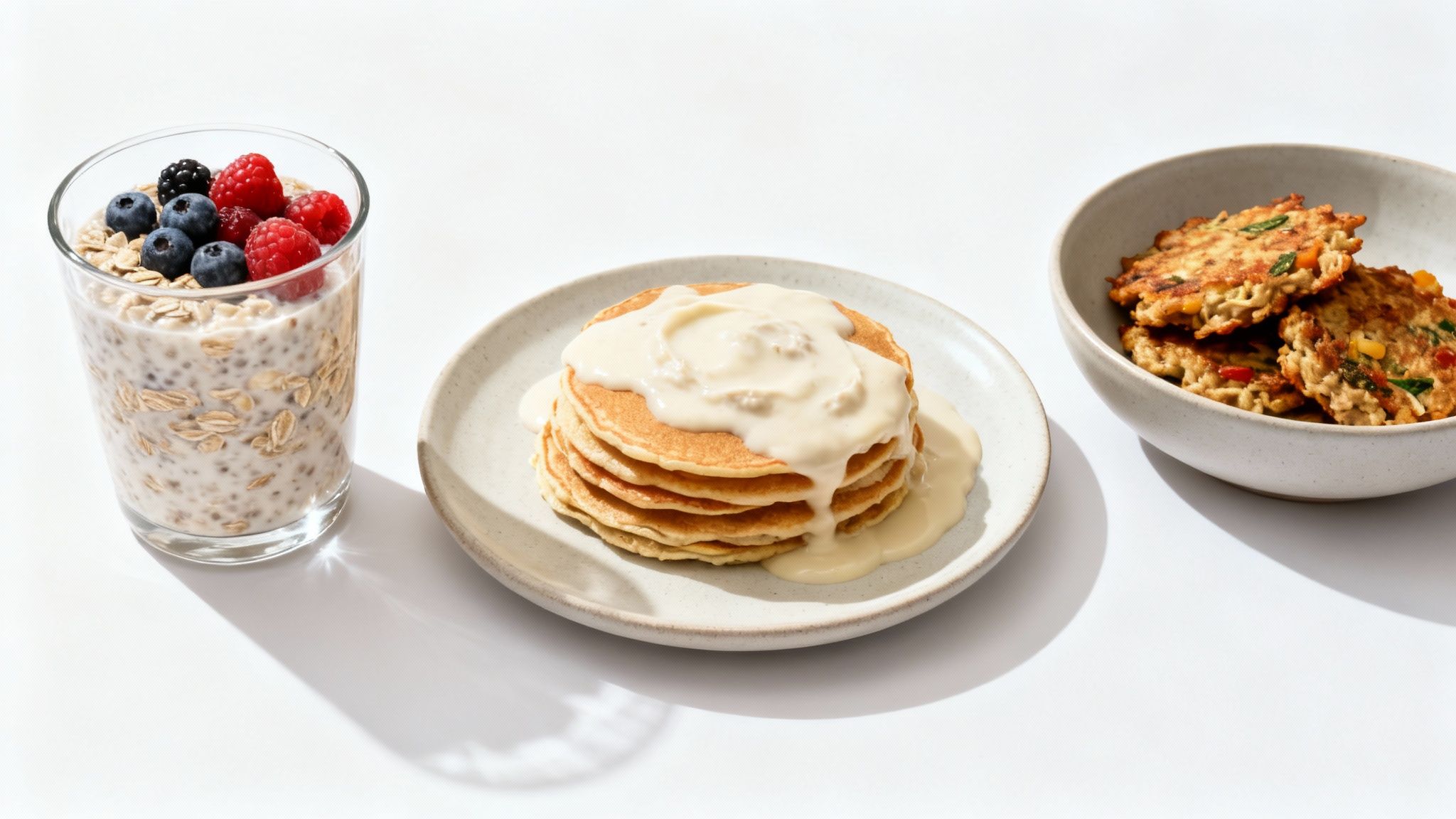
Forget monotonous meals! With a few simple tricks, you can transform oats into incredibly delicious dishes for any time of day. Whether creamy, crunchy, sweet, or savory—the possibilities are practically endless.
The right flake for every dish
Not all oat flakes are the same. It may sound obvious, but choosing the right variety is often half the journey to the perfect dish. Each type has its own texture and is better suited to some preparations than others.
The small but significant difference lies in the production process. The more the grain is broken down, the faster it swells and the creamier the end result becomes.
Before you get started, here’s a quick cheat sheet on which flakes are best suited for what.
| Type of oat flake | Properties | Perfect for |
|---|---|---|
| Tender flakes (small-flake) | Very fine, swell quickly, and become very creamy. | Creamy porridge, shakes, for thickening sauces, baked oats. |
| Hearty flakes (large-flake) | Firm to the bite, retain their structure even after cooking. | Muesli, granola, overnight oats, cookies, fritters. |
| Melt flakes | Powdered, dissolves immediately in liquid. | Baby food, for thickening soups, or for especially smooth shakes. |
You can see that with the right choice, you can deliberately control the consistency of your food—from meltingly tender to hearty and chewy.
More than just porridge: creative recipe ideas
Ready to take your oat routine to the next level? Here are a few ideas that show just how incredibly versatile this superfood really is.
For an energy-boosting start to the day:
- Overnight Oats: Probably the easiest breakfast preparation of all. Simply mix rolled oats with milk, yogurt, or plant-based milk the night before, add chia seeds, and place everything in the refrigerator. The next morning, you’ll have a perfect, satisfying breakfast.
- Baked oatmeal (Baked Oats): It’s essentially porridge in cake form. All the ingredients go into a blender and are then baked in the oven. The result is a warm, nutritious breakfast that’s also great for preparing several days in advance.
Savory dishes for lunch or dinner:
- Oat patties: Mix rolled oats with grated vegetables such as zucchini or carrots, an egg, and seasonings. Shape the mixture into small patties and fry them until golden brown. A fantastic vegetarian alternative to meatballs that is filling and packed with fiber.
- Crispy coating: Schnitzel with a twist? Use fine oats instead of breadcrumbs to coat chicken, fish, or tofu. This creates an extra-crispy yet healthier crust.
If you’ve developed a taste for them and are looking for even more inspiration, take a look at our collection of nutritious recipes and snacks. There you’ll find more simple ideas for keeping your meals varied.
Your questions about oats—answered briefly
After all that information, you may still have a few detailed questions on your mind. Perfect! The more you know, the more confidently you can shape your diet. Here are the answers to the most frequently asked questions we receive about oats.
Can you really lose weight with oats?
Yes, absolutely! Oats are a fantastic ally when you want to get your weight under control. Their secret? Their high fiber content, which keeps you feeling full for an incredibly long time. This is the best weapon against cravings and also means you consume fewer calories throughout the day.
At the same time, the complex carbohydrates help maintain stable blood sugar levels. This not only protects you from the dreaded afternoon slump but also makes it harder for the body to store fat. For the best effect, however, preparation matters: combine your oats with a source of protein such as quark or nuts, and leave out the sugar.
Are oats naturally gluten-free?
This question often causes confusion. In fact, oats naturally contain only negligible amounts of gluten and are not a problem for most people with mild gluten intolerance. The real challenge lies elsewhere: so-called contamination.
During cultivation, harvesting and processing, oats often come into contact with gluten-containing grains such as wheat. If you have coeliac disease, this is a real risk.
If you rely on a strictly gluten-free diet, you must choose oats explicitly labelled “gluten-free.” Only then can you be sure that their cultivation and processing are strictly controlled and carried out separately.
You can find more information on this important topic in our detailed article about coeliac disease and gluten intolerance.
Should you eat oats raw or cooked?
Both have their advantages, and the best choice depends entirely on your goals and digestion.
- Raw oats (for example, in muesli or a smoothie) have the advantage of preserving heat-sensitive vitamins that could be partially destroyed during cooking.
- Cooked oats (i.e. porridge) are much easier to digest. Heating makes the nutrients more available to the body because it breaks down so-called phytic acid. This acid can slightly inhibit the absorption of minerals such as iron and zinc.
A great compromise is overnight oats. The oats soak overnight, which also reduces phytic acid and improves digestibility—all without the vitamin loss caused by heat. However, if you have a sensitive stomach, the cooked version is usually the safest choice.
Every body is different and responds individually to foods. If you really want to understand what your metabolism needs to achieve your health goals, laboratory tests can provide valuable insights. At mybody-x.com, you’ll find scientifically backed analyses that help you tailor your diet perfectly to your needs. Discover the right tests for you now at https://mybody-x.com.

Share now:
Low-carb diet for beginners: which foods provide carbohydrates
Vitamin C for the skin and your radiant complexion