
Microbiome Testing: Your Step-by-Step Guide for 2025
More and more people want to take charge of their health and better understand their own microbiome. Surprisingly, more than 70 percent of all diseases may be linked to the composition of the gut flora. Yet hardly anyone knows that choosing the right microbiome test provider often has a greater influence on the results than the test itself. Making this decision wisely lays the foundation for genuine insights into your gut health.
Table of contents
- Step 1: Choose the right test provider
- Step 2: Order your microbiome test kit
- Step 3: Follow the sample collection instructions
- Step 4: Ship your sample to the laboratory
- Step 5: Analyze your results and draw conclusions
Quick summary
| Important point | Explanation |
|---|---|
| 1. Choose a reputable test provider | Use providers with ISO certifications and medical expertise for reliable results. |
| 2. Order your test kit carefully | Check your details when ordering to ensure smooth delivery and analysis. |
| 3. Ensure hygienic sample collection | Follow the test kit's instructions carefully to protect the sample from contamination. |
| 4. Send your sample promptly | Send the sample within 24–48 hours of collection to ensure the quality of the analysis. |
| 5. Interpret the results patiently | Take the time to understand the results and consider personalized health advice. |
Step 1: Choose the right test provider
When it comes to analyzing your microbiome, success begins with choosing the right test provider. The first step of your microbiome assessment is crucial, as it significantly influences the quality and reliability of your results. A reputable, scientifically grounded provider can give you valuable insights into your gut health.
When searching for the perfect microbiome test, you should first pay attention to several essential criteria. Certifications and laboratory standards play a decisive role. Look for providers that have ISO-certified laboratories and whose analyses are conducted by medical experts. According to research findings from the Robert Koch Institute, the quality of microbiome analysis is crucial for meaningful results.
When choosing a test provider, also pay attention to the scope of the analysis. A good test should not merely provide a snapshot of your gut environment, but also include detailed information about the composition of your bacterial population, possible imbalances, and personalized recommendations. Tests that:
- Offer a comprehensive analysis of bacterial strains
- Provide personalized nutrition recommendations
- Generate clear and understandable result reports
- Guarantee data protection and confidentiality
In addition to scientific quality, user convenience is also important. A helpful comparison of different microbiome test providers can help you find the best provider for your individual needs. Make sure the test can be performed easily and conveniently at home and includes professional analysis and personal consultation.
Those who have found the right test provider can confidently take the next step. A carefully selected test provides the foundation for valuable insights into your gut health and can help you take targeted measures to improve your well-being.
Step 2: Order your microbiome test kit
After selecting the right test provider, the next step is to order your personal microbiome test kit. This step is crucial for beginning your journey toward a deeper understanding of your gut health. The ordering process should be straightforward and transparent, allowing you to focus fully on your health analysis.
When ordering your microbiome test, you should first ensure that all the necessary information is correct. Carefully check your personal details, such as your name, delivery address, and contact information. Accurate registration is important to ensure smooth delivery and evaluation of your test kit.
The ordering process itself is generally designed to be very user-friendly. You will usually go through an online ordering process in which you provide basic health information. This information helps experts interpret your test results more effectively later. Be sure to answer all questions carefully and honestly.
Important aspects of ordering include:
- Review of shipping conditions
- Selection of the desired analysis option
- Ensuring data privacy
- Clarification of payment methods
After completing your order, you will generally receive a confirmation email with all the relevant information about your microbiome test kit. Keep this email in a safe place, as it will contain important instructions for collecting and returning your sample.
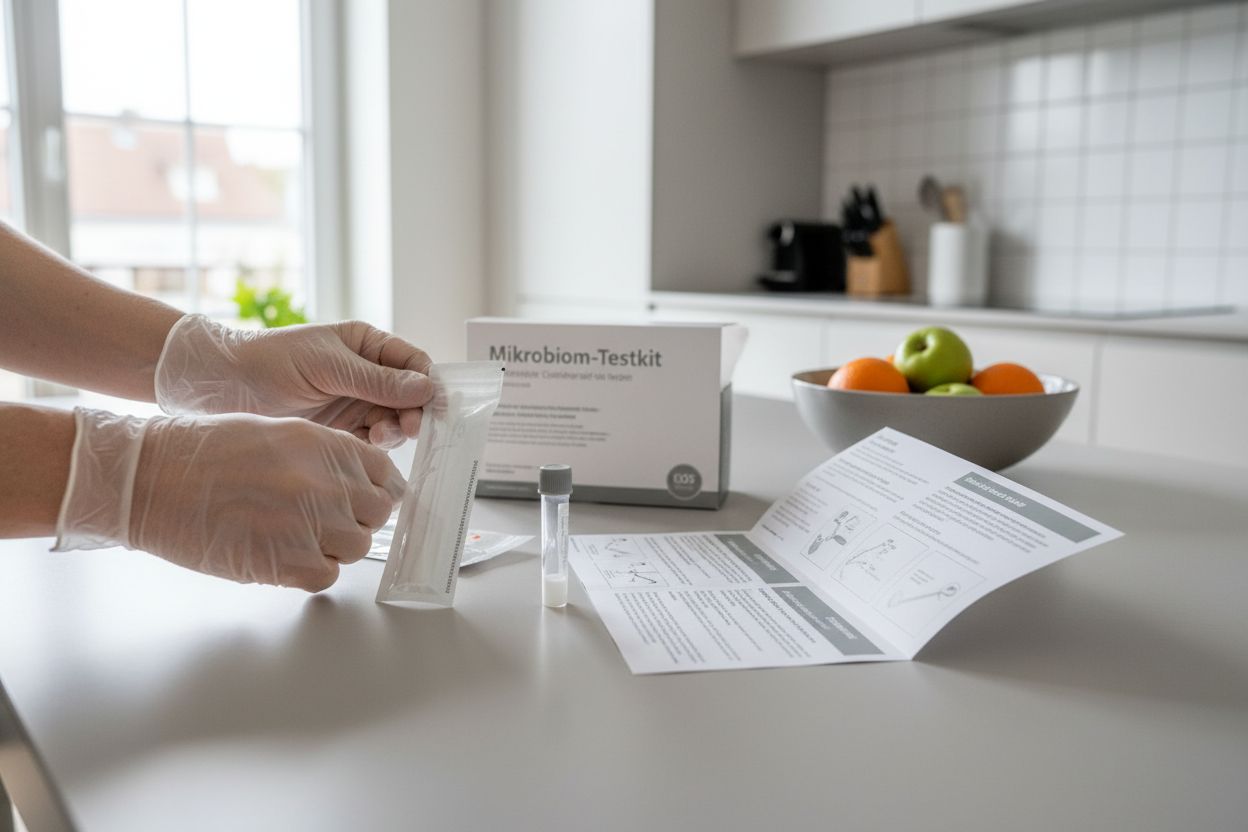
The test kit is generally shipped discreetly and confidentially directly to your delivery address. As soon as the package arrives, you should open it immediately and read the instructions carefully. The packaging usually contains all the necessary materials for hygienic and simple sample collection.
By ordering your microbiome test kit, you are taking the next important step toward a deeper understanding of your gut health. You are now ready to collect your sample professionally and accurately.
Step 3: Follow the sample collection instructions
Now comes the decisive moment of your microbiome test: collecting the sample correctly. This step is crucial because the quality and accuracy of your sample directly affect the analysis results. How to perform a stool test at home requires precision and care.
Preparation is the key to success. Read the included instructions in full before beginning sample collection. Prepare all necessary materials—the sample collection kit, collection container, gloves, and transport container. Make sure your work area is clean and well lit. It is also important to perform the sample collection under hygienic conditions.
The sample collection itself requires your full attention. Follow the instructions for your test kit exactly. Typically, this means collecting a small stool sample with the provided tool and transferring it to the designated collection container. Avoid contamination from water, toilet paper, or other foreign substances.
Pay particular attention to these points:
- Collect exactly the specified sample amount
- Use the included transport containers and preservatives
- Seal the sample immediately after collection and label it correctly
- Store in a cool, dark place if recommended by the provider
Some test providers recommend additional precautions. This may involve avoiding certain foods before sample collection or following a special diet. You can find such specific instructions in the user manual for your test kit.
After completing the sample collection, carefully check that you have performed all steps correctly. Check that the documentation is complete and seal the sample according to the instructions. The included return packaging protects your sample during transport to the laboratory.
The following table provides you with a concise overview of the most important materials and tools you need for successful microbiome sample collection.
| Materials/Tools | Purpose/Use | Usage instructions |
|---|---|---|
| Sample collection swab | Collection of a small stool sample | Use only the enclosed swab |
| Collection container | Transport and safe storage of the sample | Close immediately after filling |
| Gloves | Hygienic protection during sample collection | Use before and after contact |
| Transport container | Safe shipping to the laboratory | Close securely and follow the instructions |
| Accompanying form | Documentation of important sample information | Complete and fill out legibly |
| Cooling material (optional) | Temperature control during shipping | Place in the package if recommended |
| Shipping packaging | Protect the sample during shipping | Use the original packaging |
By carefully collecting the sample, you have completed the most important step in analyzing your microbiome.
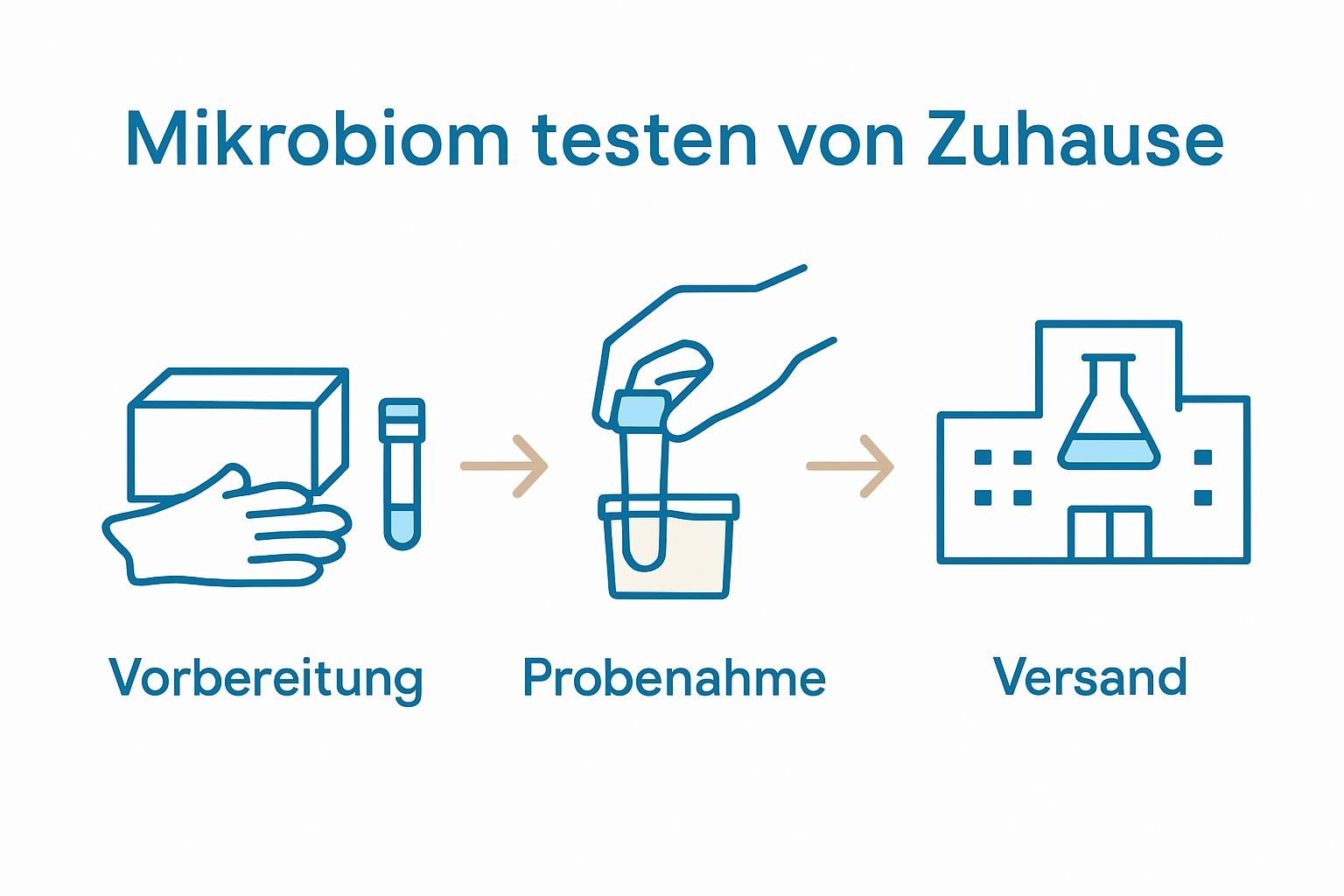 Your accuracy and care provide the foundation for precise and meaningful results.
Step 4: Ship your sample to the laboratory
After carefully collecting the sample, it is time to ship it to the laboratory. This step is crucial for the quality and reliability of your microbiome analysis. Proper handling and timely shipping are essential for accurate results.
Our tests are this easy to use—every step is designed so that you can complete it without difficulty. First, check all the materials included in your test kit. Typically, you will find a prepaid return envelope or a special transport box specifically designed for biological samples.
Timing is crucial: Most laboratories recommend shipping the sample within 24–48 hours of collection. Do not wait too long, as the bacterial composition may change over time. Plan the shipment so that your sample reaches the laboratory quickly and directly.
You should pay attention to these aspects when shipping your sample:
- Package the sample according to the instructions
- Complete all accompanying forms
- Seal the shipping box or envelope
- Keep the tracking number
Make sure to keep the sample cool if recommended in the instructions. Some test kits contain special ice packs or insulating materials. Avoid direct sunlight and extreme temperatures during transport.
When handing your sample over to the shipping service, it is best to document the time and shipping confirmation. Most reputable providers offer tracking, allowing you to follow your sample’s journey to the laboratory. Keep all shipping documents—they may be helpful later if you have any questions.
Once your sample reaches the laboratory, you will generally receive an email notification.
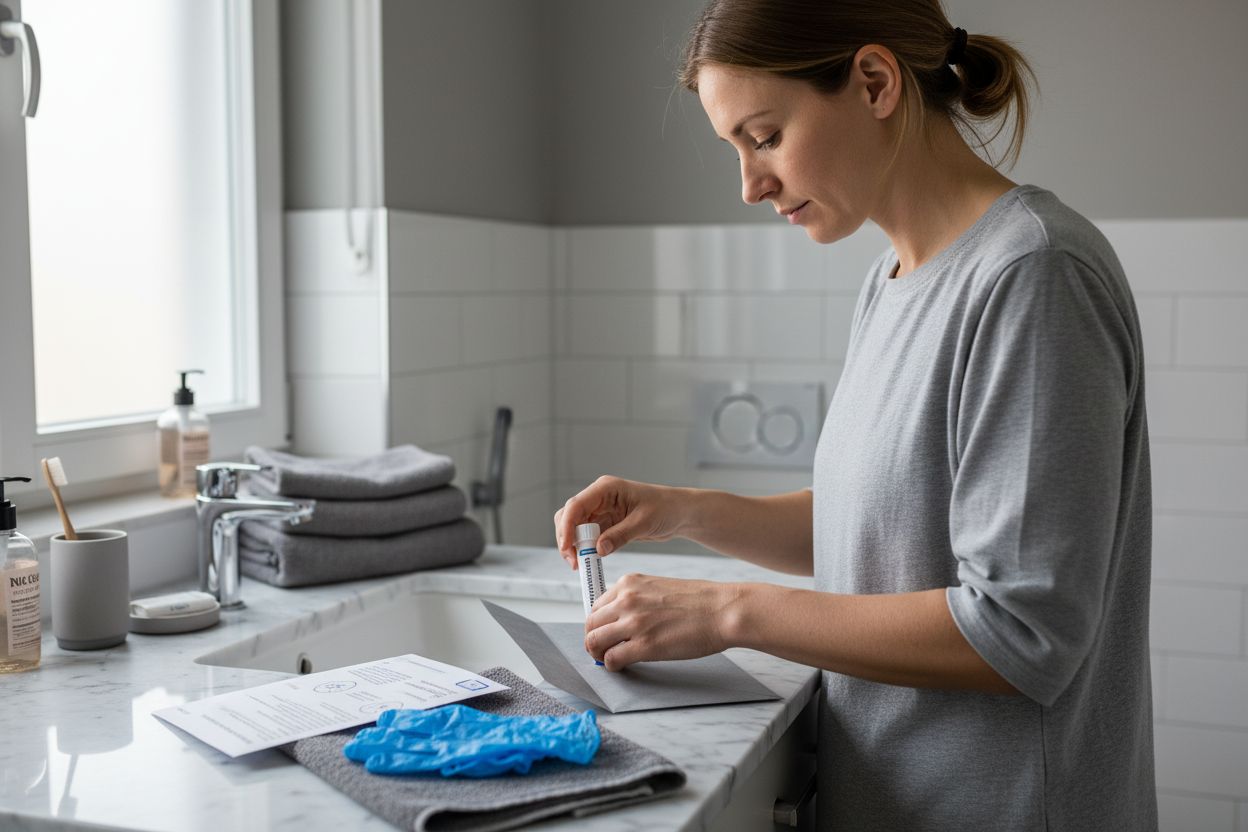 This moment marks the transition to the most exciting phase: analyzing your individual microbiome. By sending your sample correctly, you have completed another important step on the way to gaining valuable health insights.
Step 5: Analyze your results and draw conclusions
The moment of truth has arrived—your microbiome analysis results are ready. This step is crucial, because the focus now is on understanding the complex information and translating it into concrete recommendations for action. For digestive problems such as irritable bowel syndrome, such results can be particularly valuable.
Interpreting the results requires patience and attention. Take sufficient time to study the detailed analysis carefully. Most microbiome reports contain charts, percentages, and comparisons with reference groups. First, focus on the overall composition of your gut bacteria.
Pay particular attention to aspects such as bacterial diversity, the ratio of beneficial to potentially harmful bacterial strains, and possible imbalances. A balanced microbiome is characterized by high diversity and a balanced ratio of different bacterial groups. Imbalances may indicate digestive problems, metabolic disorders, or inflammatory processes.
Focus on these key aspects when analyzing the results:
- Proportion of beneficial bacterial strains
- Potential inflammatory markers
- Recommended dietary adjustments
- Individually tailored supplementation suggestions
According to research findings from the Robert Koch Institute, microbiome analyses are complex and should always be considered in the overall context. Do not hesitate to seek professional advice if anything is unclear. Many providers offer personal results consultations in which experts explain your individual findings in detail.
Draw concrete conclusions about your health from the results. This may mean adjustments to your diet, supplementation, or lifestyle. Consider the analysis a guide, not an immutable law. Individual factors such as genetics, lifestyle, and environmental influences play a decisive role.
A successful analysis process ends with a concrete action plan.
The following overview summarizes the most important key aspects of the results analysis for you, so that you can identify the central points at a glance.
| Analysis section | What you should consider | Possible significance |
|---|---|---|
| Bacterial diversity | Is the diversity high or low? | High diversity as a sign of health |
| Beneficial bacterial strains | Are there sufficient amounts? | Positive impact on digestion/immunity |
| Potentially harmful bacteria | Are there abnormalities in the proportion? | Indication of an imbalance or disease |
| Inflammatory markers | Are elevated levels present? | Indicator of inflammatory processes in the gut |
| Dietary recommendations | Are individual tips provided? | Practical approaches for improvement |
| Supplementation suggestions | Are targeted product recommendations available? | Can individually address deficiencies |
Turn your microbiome knowledge into action—with mybody®
Would you like to find out specifically how your individual microbiome affects your health, digestion, and well-being? In this article, you learned how important reliable analyses, personalized recommendations, and easy handling are. Many people interested in this topic fail precisely because of these points: unclear instructions, impersonal results, or a lack of confidence in choosing the right test often lead to frustration and uncertainty.
With a scientifically sound gut flora analysis from mybody®x, you benefit from state-of-the-art, ISO-certified laboratory diagnostics and receive clear, personalized recommendations delivered directly to your home. The simple sample collection and easy-to-understand evaluations help you overcome uncertainty and take concrete steps toward better health. Discover our full range for your digestion and well-being now at mybody-x.com, or learn more about other at-home health tests to actively work toward your lifestyle goals. Choose now to truly understand your microbiome and benefit from exclusive advantages for your health.
Frequently asked questions
What is a microbiome test, and why should I take one?
A microbiome test analyzes the composition of bacteria in your gut. The results provide valuable insights into your gut health and can help you take targeted measures to improve your well-being.
How do I choose the right test provider?
Look for certifications, laboratory standards, and the quality of the analysis. A reputable provider should use ISO-certified laboratories and offer detailed results along with personalized recommendations.
How does sample collection work for the microbiome test?
The sample is generally collected by taking a small stool sample with a special tool from the test kit. It is important to proceed hygienically and carefully to avoid contamination.
How long does it take to receive my results?
After shipping your sample to the laboratory, it usually takes anywhere from a few days to a week for the analysis to be completed and for you to receive your results. Some providers notify you by email as soon as your sample arrives at the laboratory.
Recommendation
- Microbiome test explained: How gut flora analysis works – mybody®x
- Gut analysis test: Find your path to better gut health – mybody®x
- Build up your gut flora: Your nutrition guide to a healthy feeling in your gut – mybody®x
- Microbiome test: Your guide to better gut health – mybody®x
- Improve gut health: Simple ways to greater well-being
- Your immune system: The marvel we have forgotten how to appreciate - uwesujata.ch



Share now:
Selenium-rich foods: Top 8 for your health in 2025
No feeling of fullness? 7 causes and tips that really help