
DNA analysis: Your personal guide to health and nutrition
A DNA analysis is essentially a personal instruction manual for your body. It decodes the information stored in your genes, giving you deep insights into how your metabolism works, which nutrients you utilize best, and which nutritional or fitness strategy best suits you.
What a DNA analysis really reveals about you
Have you ever wondered why the same diet works wonders for your friend but does absolutely nothing for you? Or why some people seem to build muscle effortlessly, while others have to struggle for ages? The answer often lies hidden in our genes.
A DNA analysis is your key to finally understanding these individual differences.
Imagine your DNA as a giant cookbook containing countless recipes for your body. These genetic "recipes" determine, for example:
- Your metabolic type: Do you process carbohydrates, fats, or proteins particularly efficiently? This knowledge is the perfect basis for a diet that truly propels you forward instead of holding you back.
- Your athletic predisposition: Are you better suited for endurance sports or for short, intense strength training sessions? Your genes provide clear clues about your muscle fiber type and how quickly you recover.
- Your individual nutritional needs: Are you perhaps prone to a deficiency in certain vitamins or minerals? An analysis can reveal what you should pay particular attention to in your diet.
The precision of modern genetics
The accuracy of genetic analyses is impressively high today and has become the absolute standard in many fields. A good example of this is the DNA analysis database (DAD) of the German police authorities. Since its introduction in 1998, it has grown to approximately 1,217,000 records and is considered a cornerstone of investigative work.
This very technology, which creates highly precise individual profiles, is also the basis used by reputable providers like mybody® Lab GmbH for their ISO-certified saliva tests, enabling them to give you personalized recommendations for metabolism and nutrition. You can learn more about the scientific background of this technology in Germany on Wikipedia .
A DNA analysis doesn't provide you with rigid rules, but rather a strong foundation. It gives you the chance to finally leave general advice behind and instead make decisions perfectly tailored to your unique body.
This knowledge empowers you to proactively shape your health instead of continuing to grope in the dark. It's about no longer seeing your body as an adversary, but as a partner whose needs you now understand much better.
You'll learn what your body needs to function optimally – whether it's for weight loss, exercise, or simply for more energy in everyday life. If you'd like to delve even deeper into the fascinating world of genes, read our article about what genes are and the role they play in your health .
The science behind genetic testing explained
How can a simple saliva sample reveal so much about you and your body? It sounds almost like magic, but it's the result of years of research. Behind it lies a precise technology that reads your genetic code and reveals exactly the information that is crucial for your health and lifestyle.
To understand how DNA analysis works, we need to take a closer look at two common methods. Imagine your entire DNA as a huge, multi-volume encyclopedia. Each individual letter in this encyclopedia is a building block of your genetic code.
SNP genotyping: The targeted reading of key sites
The first method is SNP genotyping . SNPs (pronounced "snips") are tiny variations in your genetic code—essentially individual letters that differ from person to person. These small differences are often responsible for why you react differently to certain foods or have a different athletic predisposition than others.
SNP genotyping works like looking up keywords in our dictionary. Instead of reading the whole book from cover to cover, we only look at the pages that are relevant to our questions – for example, the chapters on metabolism, fat burning, or vitamin utilization.
This method is extremely efficient and precise for everyday and lifestyle questions. It focuses on well-researched gene variations that have a proven influence on nutrition, fitness, and your overall well-being.
For providers like mybody®, whose focus is on actionable recommendations for your everyday life, SNP analysis is therefore the method of choice. It provides you with precisely the data you need to meaningfully adjust your diet and training, without overwhelming you with information that is irrelevant to you.
The following graphic shows what specific insights such a targeted analysis can provide into areas such as metabolism, nutritional requirements and athletic predisposition.
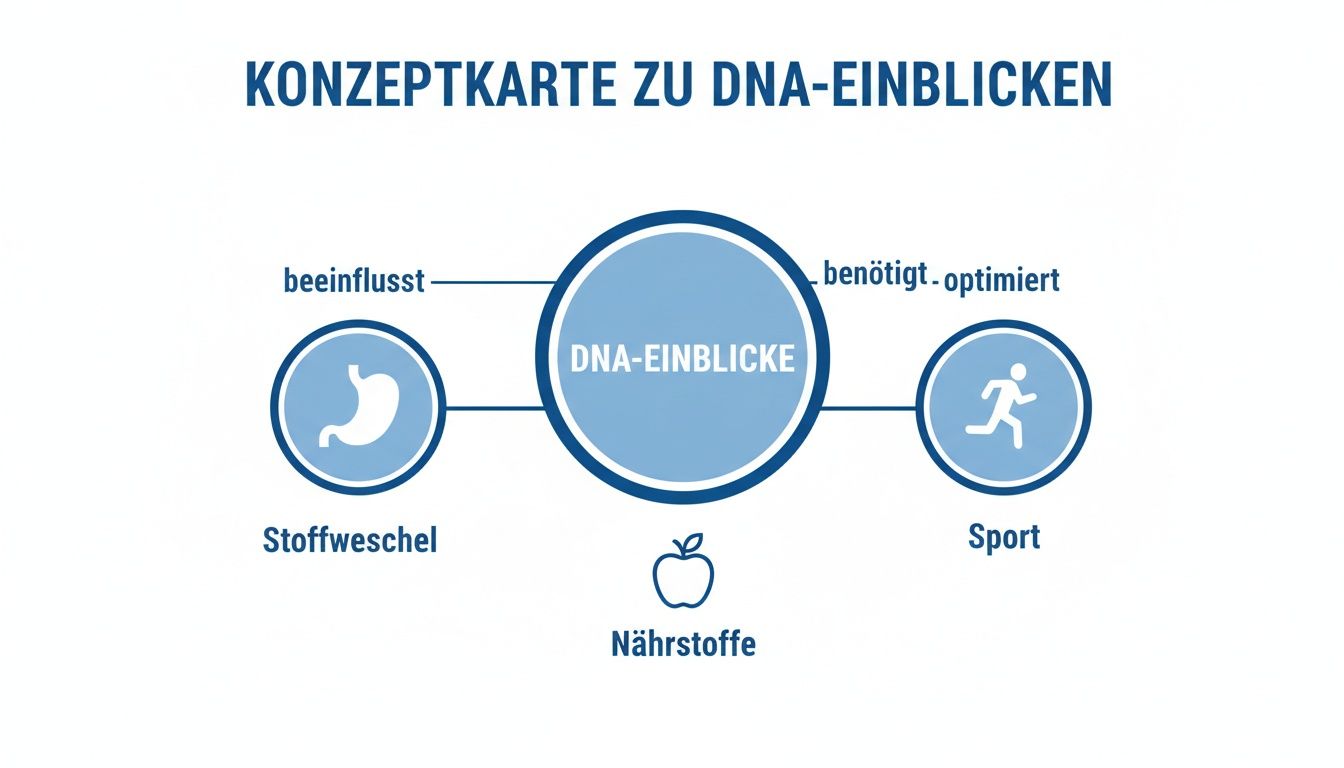
You can see how the different areas interlock and paint a holistic picture of your physical predispositions.
Complete gene sequencing: Read the entire book
The second method is complete gene sequencing . To continue our analogy, this would mean reading the entire encyclopedia word for word from cover to cover. This approach captures absolutely every piece of genetic information – even information whose meaning is not yet fully understood.
Sequencing is an extremely complex and expensive procedure. It is primarily used in medical research and for diagnosing rare, genetically determined diseases. In these cases, it is crucial to find even the smallest deviation in the genetic code. However, this enormous level of detail is usually unnecessary for lifestyle-related questions.
A comparison of two DNA analysis methods
This table shows the main differences between SNP genotyping and full gene sequencing to help you choose the right test.
| feature | SNP genotyping (for metabolic tests) | Complete gene sequencing |
|---|---|---|
| Analysis method | Targeted selection of known gene variations (SNPs) | Complete reading of the entire DNA sequence |
| scope | Lifestyle, nutrition, fitness, personalized prevention | Medical diagnostics, research, rare diseases |
| focus | Practical insights for everyday life | Comprehensive data collection, including for unknown genes |
| Cost | More cost-effective and accessible | Significantly more expensive and complex |
| Result | A clear, focused report with recommendations for action. | Huge amount of data, often difficult to interpret. |
| Ideal for | People who want to optimize their diet or adjust their training | Patients suspected of having a specific hereditary disease |
Both methods have their place, but for completely different goals. While sequencing provides the complete picture, SNP genotyping gives you a clear and actionable roadmap for your health goals.
DNA analysis technology has long been established as a reliable tool in Germany. This is also demonstrated by the impressive growth of the DNA analysis database (DAD) for forensic purposes, which has expanded to over 1,217,000 entries since 1998. Providers like mybody® Lab GmbH now utilize this proven German expertise to make precise tests accessible to everyone and to help people who want to understand why generic diets often fail for them.
If you want to delve deeper and understand exactly how your genes influence your diet, then be sure to read our follow-up article and learn what nutrigenetics is and how it determines our lives .
How to use your genetic data in everyday life
A DNA analysis is much more than just a fascinating glimpse into your genetic predisposition – it's a concrete guide that you can implement immediately. The results aren't theoretical knowledge to gather dust in a drawer, but a practical roadmap to achieving your health goals more effectively and, above all, more sustainably.
Let's take a look at the three most important areas and how you can use your genetic data specifically for yourself.

Nutrition and weight loss according to your genetic blueprint
Do you feel like you're constantly trying new diets without seeing any lasting results? This is often because standard nutrition plans ignore your individual metabolism. A DNA analysis reveals your metabolic type and how your body truly processes the three main nutrients – carbohydrates, fats, and proteins.
Depending on your genes, you are more likely to belong to one of these types:
- Carbohydrate type: Your body handles carbohydrates relatively well. A balanced diet with a healthy proportion of whole grains, fruits, and vegetables could be ideal for you.
- Fat type: You process fats particularly efficiently. Healthy fats from avocados, nuts, and high-quality oils should be a regular part of your diet, while you should perhaps be a little more careful with easily digestible carbohydrates.
- Protein type: Your metabolism is designed for a protein-rich diet. Sufficient protein from lean meat, fish, legumes, or dairy products keeps you feeling full for longer and optimally supports muscle growth.
By tailoring your meals to your genetic metabolic type, you work with your body instead of fighting against it. This not only makes weight loss easier but can also noticeably improve your energy levels and overall well-being.
The precision with which such genetic profiles are created is impressive. It has long been standard practice in forensics: In 2021 alone, the German DNA Analysis Database (DAD) enabled the identification of over 19,000 traces and their originators. mybody® Lab GmbH utilizes precisely this accuracy for its DNA metabolism tests to uncover genetically determined metabolic deficiencies – a valuable aid for anyone frustrated by diets.
Targeted optimization of fitness and muscle building
Even in sports, the knowledge contained in your DNA can make all the difference. Your genes reveal important factors that directly influence your athletic performance. These include your muscle fiber type (are you better suited for endurance or strength training?), your ability to recover , and even your susceptibility to injuries .
Imagine discovering you're genetically predisposed to endurance training. Instead of continuing to torture yourself with heavy weights at the gym, you could focus on running, cycling, or swimming – and make much faster progress. Or the analysis might show you need more time to recover. In that case, you consciously schedule more rest periods, thus avoiding overtraining and injuries.
Specifically, you can optimize your training like this:
- Adjust your training type: Focus your training plan more on strength or endurance sessions, depending on what your genes tell you.
- Plan your recovery: If your genes indicate a slower recovery, incorporate active recovery days, sufficient sleep, and targeted stretching exercises.
- Reduce the risk of injury: If you have a genetic predisposition to weaker ligaments or tendons, you should place particular emphasis on stabilization exercises and a thorough warm-up.
Proactively shaping prevention and longevity
A DNA analysis is also a powerful tool for your long-term health care. Your genes can give you clues about a potentially increased need for certain vitamins and minerals – long before a real deficiency becomes noticeable through symptoms.
Does your body, for example, tend to store vitamin D less efficiently or absorb iron poorly? Knowing this allows you to adjust your diet accordingly and focus on foods rich in these nutrients. This way, you can actively prevent deficiency symptoms such as fatigue, a weakened immune system, or concentration problems.
This knowledge is key to proactive health management. Instead of reacting when problems arise, you act proactively and give your body exactly what it needs for a long and healthy life. For detailed guidance on how to adjust your diet after a genetic test, also read our article on nutritional optimization after a test result .
Your path to at-home DNA analysis
Are you curious and wondering how a DNA analysis actually works? The good news is: it's much simpler and less complicated than you might think.
The entire process is designed so that you can complete it conveniently and safely from home. No doctor's visit, no complicated procedures.

Here we guide you step by step through the journey your sample takes – from your living room to the laboratory and back to you as your very own results report.
Four steps to your genetic insights
The process at reputable providers like mybody® is clearly standardized to guarantee the highest quality and ease of use. Essentially, the entire process can be divided into four clear phases.
1. Order and activate your test kit. It all starts with ordering your DNA test kit, which will be delivered directly to your home. The box contains everything you need: a sample tube with a swab, simple instructions, and a prepaid return envelope. Before you begin, it's important to activate your kit online with a unique code. This is crucial for data privacy, as it pseudonymizes your sample. This means the lab only receives the code, never your name or any personal information.
2. Sample collection – simple and painless. Collecting your DNA is completely painless and only takes a few minutes. Simply rub the enclosed swab firmly against the inside of your cheek for about a minute. This will collect enough cells from your oral mucosa to contain your complete genetic information. Then, place the swab into the sample tube, which contains a special stabilizing fluid. This ensures that your DNA remains undamaged during shipping.
3. Off to the specialist lab for analysis. Once your sample is securely packaged, you send it off in the enclosed return envelope. Upon arrival at the certified lab, the DNA is extracted from your cells. Specialized machines then perform the actual DNA analysis – usually using precise SNP genotyping. This method specifically examines those genetic markers that provide relevant information about your metabolism, nutrient utilization, or athletic predisposition.
4. Your personal results report. After a few weeks – the exact duration varies depending on the provider – the analysis is complete. You will then receive a notification that your personal report is available online. A good report doesn't bombard you with incomprehensible raw data. Instead, it translates the scientific findings into clear, understandable language and, most importantly, into concrete recommendations for action .
What makes a good results report
A high-quality report is more than just a collection of data. It's your personal guide, showing you how to implement the new insights in your everyday life.
A truly valuable results report provides you not only with the "what" (e.g., "You are a fat type"), but also the "why" (which genes are responsible) and, most importantly, the "how" (specific nutrition and lifestyle tips that build upon this).
Make sure the report contains the following elements:
- A clear summary of your most important genetic predispositions.
- Personalized dietary recommendations, broken down by macronutrients.
- Practical tips for your training and recovery.
- Indications of a potentially increased need for certain vitamins and minerals.
This turns your DNA analysis into a powerful tool that allows you to take control of your health instead of continuing to search for general advice.
Finding reputable providers and avoiding pitfalls
The market for DNA analysis is booming, and with it, the number of providers is growing. But how do you find out who you can truly entrust with your sensitive genetic data? Choosing a test should be a well-considered decision, as there are significant differences in quality, data protection, and scientific basis.
An unscrupulous provider, in the worst-case scenario, will not only deliver inaccurate results but also handle your data carelessly. It's therefore crucial to separate the wheat from the chaff. A few targeted questions will quickly reveal what's important.
What you need to pay attention to when making your selection
The most important step is choosing the right partner for your DNA analysis. You can recognize a trustworthy company by its transparency, scientific standards, and uncompromising protection of your privacy. The following points will help you make an informed decision.
Pay particular attention to these quality features:
- Certified laboratories: The laboratory analyzing your sample must be certified according to recognized standards such as ISO 15189. This is the only way to guarantee that all processes adhere to strict quality and safety standards.
- Scientific basis: Look closely to see if the provider discloses which scientific studies their analyses are based on. Vague claims without solid evidence are always a warning sign.
- Clear communication: A reputable provider will explain honestly and understandably what the test can achieve – and where its limitations lie. Exaggerated promises of cures or guaranteed success are absolutely unethical.
Data protection as a top priority
Your genetic data is the most personal information we have about you. Its protection is therefore non-negotiable. In the European Union, the General Data Protection Regulation (GDPR) sets an extremely strict legal framework for this. Every reputable provider must comply with it – no ifs, ands, or buts.
A key aspect is pseudonymization . This means that your sample is not linked to your name in the lab, but to a random code. This prevents anyone from directly identifying you. Providers like mybody® go even further: After analysis, your biological sample is professionally and completely destroyed. Better safe than sorry.
Trust is built through transparency. A reputable provider will always clearly explain how they protect your data, where it is stored, and that it will never be shared with third parties without your explicit consent.
Understanding the limits of expressive power
A DNA analysis for lifestyle-related questions is a fantastic tool for self-optimization, but it is not a diagnostic instrument. This is a crucial point that reputable companies always communicate clearly.
A genetic test can show you that you have a predisposition for a certain metabolic type or that you might have an increased need for vitamin D. However, it will never give you a medical diagnosis , such as diabetes or heart disease. Such diagnoses belong exclusively in the hands of medical specialists.
You should always understand the test recommendations for what they are: evidence-based lifestyle tips. These are scientifically sound suggestions for your diet and exercise. If you'd like to read more about the practical experiences others have had, you'll find fascinating insights in our article about the DNA test for weight loss and the experiences associated with it .
Checklist for selecting a reputable provider
Use these criteria to assess the quality and trustworthiness of a DNA analysis provider. They summarize the most important points to consider when making an informed choice.
| criterion | What you should pay attention to | Example at mybody® |
|---|---|---|
| Laboratory standard | The laboratory should be ISO certified. | Analysis performed in ISO-certified specialist laboratories in Germany. |
| Data protection | Strict compliance with the GDPR, server location in the EU. | Pseudonymized processing and destruction of the sample after analysis. |
| scientific rigor | Results are based on validated, published studies. | The evaluations are based on a broad scientific database. |
| Meaningfulness | Clear distinction from medical diagnoses. | Focus on lifestyle recommendations for nutrition, exercise and prevention. |
| transparency | A clear and understandable privacy policy and clear communication. | Detailed information about the entire process can be found on the website. |
Ultimately, it's about finding a partner you trust. This checklist provides you with a valuable tool to make informed decisions and get the most out of your genetic analysis.
Your genetic knowledge – the key to a better life
We've reached the end of our journey through the fascinating world of DNA analysis. If you take away only one thing, let it be this: your genes are not a rigid destiny. Rather, they are a personal map to greater well-being.
A DNA analysis gives you an incredibly powerful tool. It helps you understand your body on a fundamental level and finally make decisions that truly suit you . Instead of continuing to follow generic advice and hoping that something works, you can specifically personalize your strategies.
Your genetic code isn't the end of the story, but the best possible starting point. It provides you with the scientifically sound foundation to finally optimize your diet, training, and preventative healthcare.
Your starting point for a self-determined life
Whether you want to lose weight, improve your athletic performance, or simply age healthily – understanding your genetic predispositions helps you achieve these goals much more effectively. The crucial point is: you work with your body, not against it.
Imagine giving your body precisely the nutrients it can best utilize. Or designing your training exactly as your muscles naturally prefer. This becomes possible when you stop guessing and start knowing.
This scientifically grounded approach is an invitation to take responsibility for your own health. Use the insights from a DNA analysis as a starting point for a more conscious, healthier, and self-determined life. Your personal instruction manual is waiting for you to read it.
Still have questions? Here are the answers.
You've already read a lot about the exciting possibilities of DNA analysis. But perhaps you still have a few specific questions swirling around in your head. That's perfectly normal! Here we answer the most frequently asked questions so that you'll have complete clarity by the end.
Is my genetic data safe with you?
Absolutely. With such personal information, the security of your data is our top priority. Reputable providers like mybody® not only adhere to this, but actively implement the strict European General Data Protection Regulation (GDPR) . This isn't just an empty promise; it means concrete protective measures.
Your sample is immediately pseudonymized in the lab. This means your name disappears and is replaced by a code. No one in the lab knows who the sample belongs to. After analysis, the biological material is destroyed completely and in accordance with regulations. And most importantly: your data will never be shared with third parties such as insurance companies or employers without your explicit permission. When choosing a provider, always look for transparent data protection policies and a server location in Europe.
Can a DNA analysis tell me if I will get sick?
This is a crucial point to understand: there's a huge difference between the lifestyle genetic tests we're discussing here and medical diagnostic tests. A DNA analysis for nutrition, fitness, or wellness reveals your predispositions and potential . For example, it tells you which metabolic type you are or whether you might have an increased need for certain nutrients.
However, it never makes a medical diagnosis and cannot predict diseases. Its goal is prevention – it gives you the knowledge to optimize your lifestyle based on your genetic makeup. If you want to have specific disease risks assessed, the right person to contact is always a specialist in human genetics.
My DNA is changing, isn't it?
Your genetic blueprint, the code in your DNA, remains stable throughout your life. That's precisely why you only need to have an analysis for traits like your metabolic type done once – the result is valid forever.
What is changing, however, is what's called epigenetics . Imagine it like tiny switches on your genes that are flipped by your lifestyle. These switches determine which genes are currently "on" or "off." DNA analysis provides you with the perfect foundation to flip precisely the right switches for your health through your behavior—that is, your diet and exercise.
For whom is such an analysis even useful?
Essentially, DNA analysis is interesting for anyone who wants to better understand their body and take control of their health. However, people in certain situations often benefit particularly:
- If you're frustrated with weight loss: You've already tried countless diets, but nothing has worked in the long run? This analysis explains why that was and finally shows you a path that truly suits your metabolism.
- For athletes and fitness enthusiasts: Optimize your training, recovery, and nutrition specifically according to your genetic strengths. This way, you'll get the most out of yourself.
- For all health-conscious individuals: Use these insights to fine-tune your diet, prevent nutrient deficiencies, and set the course for a long, vital life.
Ready to unlock your body's personal user manual? At mybody® you'll find scientifically sound DNA analyses that will finally help you achieve your health goals.


Share:
Weight loss with vitamin D as a clever metabolism booster
Take a DNA test: Here's how to easily unlock your genes