

B vitamins: Understanding the complex, optimizing health
TL;DR:
- B vitamins are a group of eight water-soluble nutrients that work synergistically in the body. A deficiency, particularly of B12, can develop slowly and be difficult to detect because standard blood values can often be misleading. A healthy diet, gut health, and targeted testing are essential for optimal intake.
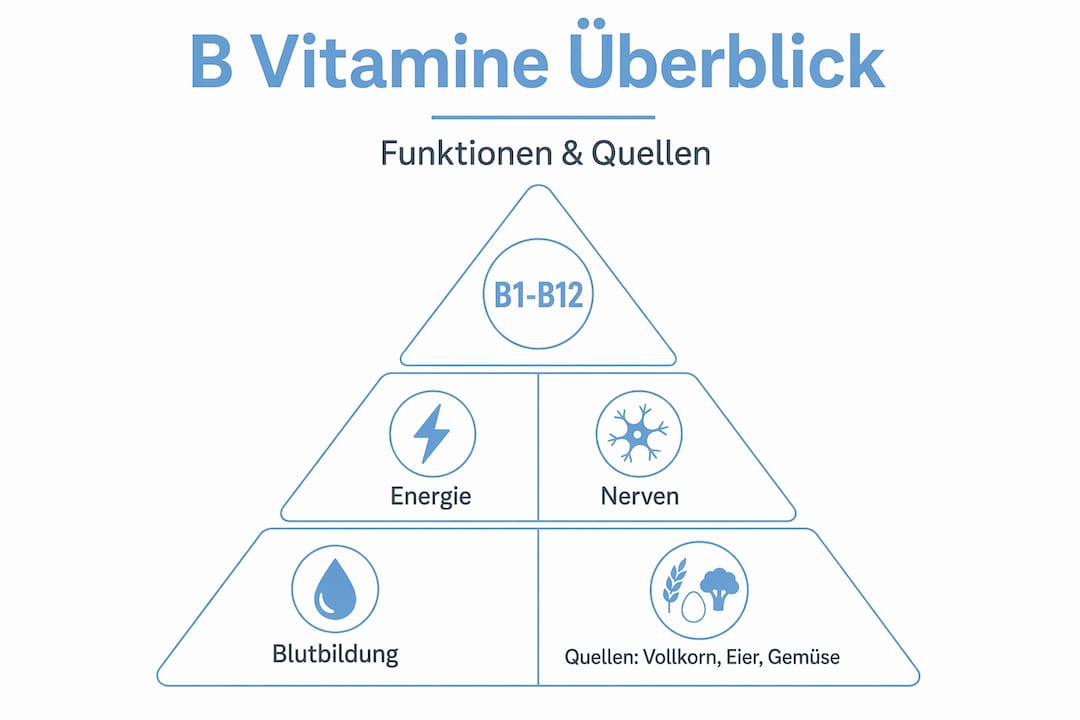
Many people think of B vitamins as a single vitamin. In fact, they comprise eight different water-soluble nutrients that work as a team in the body. The catch: If even one is missing, the whole system can slow down, even if your diet appears balanced at first glance. B vitamins regulate your energy metabolism, protect your nervous system, support blood formation, and are involved in DNA repair. This article explains which B vitamins there are, how to recognize a deficiency, and how to truly ensure adequate intake.
Table of contents
- Key findings
- The eight B vitamins at a glance
- Recognizing the symptoms of vitamin B deficiency
- Gut health and B vitamins
- Practical guide to good B-vitamin intake
- What I have learned about B vitamins in practice
- Analyze your health with Mybody-x in a targeted way
- FAQ
Key findings
| Point | Details |
|---|---|
| Eight vitamins, one complex | B vitamins are a group of eight nutrients that work synergistically in the body. |
| Deficiency is possible despite a good diet | A B12 deficiency in particular can develop over years before symptoms appear. |
| Know the risk groups | Vegans, older adults, and pregnant women have increased needs and should get tested regularly. |
| Gut health affects absorption | An imbalanced gut microbiome can significantly impair the synthesis and absorption of B vitamins. |
| Diagnostics are crucial | Standard blood tests are often insufficient. Specific markers such as holotranscobalamin provide more meaningful results. |
The eight B vitamins at a glance
The B-vitamin complex consists of eight water-soluble vitamins that are closely linked and support each other’s effects. Here is a concise overview:
| Vitamin | Main function | Important sources | Recommended daily allowance |
|---|---|---|---|
| B1 (Thiamine) | Energy metabolism, nerve function | Whole-grain products, legumes | 1.1–1.3 mg |
| B2 (Riboflavin) | Energy production, cell protection | Dairy products, eggs, mushrooms | 1.1–1.4 mg |
| B3 (Niacin) | DNA repair, energy metabolism | Meat, peanuts, whole grains | 13–16 mg |
| B5 (Pantothenic acid) | Fat metabolism, hormone production | Almost all foods | 5 mg |
| B6 (Pyridoxine) | Protein metabolism, immune system | Poultry, potatoes, bananas | 1.3–1.7 mg |
| B7 (Biotin) | Fatty acid and sugar metabolism | Eggs, nuts, lentils | 30–60 µg |
| B9 (folic acid) | Cell division, DNA synthesis | Leafy greens, legumes | 400 µg |
| B12 (cobalamin) | Nerve health, blood formation | Meat, fish, seafood | 2.4–4 µg |
Why synergies are so important
B1, B2, and B3 work together to produce energy from carbohydrates and fats. B6, B9, and B12 share the work of homocysteine metabolism. An elevated homocysteine level in the blood is considered a risk factor for cardiovascular disease and dementia. If one of the three is lacking, the level rises, even if the other two are present in sufficient amounts. This explains why a synergistic B complex is often more useful than supplementing a single vitamin in many situations.
Another difference from fat-soluble vitamins such as A, D, or E: your body can barely store B vitamins. B12 is the exception. It is stored in the liver and, with an adequate supply, lasts for several years. All other B vitamins must be obtained daily through food.
Pro tip: When cooking, keep in mind that heat-sensitive B vitamins such as B1, B9, and B12 are partly lost during prolonged heating. Brief steaming instead of prolonged boiling helps preserve the vitamin content.

Recognizing the symptoms of vitamin B deficiency
Vitamin B deficiency often develops gradually. The symptoms of vitamin B deficiency are often nonspecific and are therefore misinterpreted or simply ignored.
The most common warning signs are:
- Persistent fatigue for no apparent reason, especially in the morning after getting enough sleep
- Difficulty concentrating and mental exhaustion that cannot really be remedied with caffeine
- Tingling or numbness in the hands and feet, a classic sign of B12 deficiency
- Inflammation of the oral mucosa or cracks at the corners of the mouth, often an indication of a B2 or B3 deficiency
- Mood swings, irritability, or depressive moods due to reduced neurotransmitter production
At-risk groups and their specific challenges
B6 deficiency and cognitive risks affect up to 13 percent of adults. Low B12 levels are even associated with a fourfold increased risk of dementia. These are not marginal phenomena.
The following groups should be particularly attentive:
- Older people aged 60 and over: Stomach acid production decreases, making B12 absorption more difficult.
- Vegans and vegetarians: B12 is found almost exclusively in animal-based foods.
- Pregnant women: The need for folic acid (B9) increases significantly. A deficiency in early pregnancy increases the risk of neural tube defects in the baby.
- People who take certain medications: Metformin (for diabetes) and proton pump inhibitors (acid blockers) have been shown to impair B12 absorption.
Why standard blood tests are often misleading
Here is something many people do not know: A normal total B12 level in the blood does not rule out a functional B12 deficiency. The body may have enough B12 in the blood, but in a form it cannot use. Holotranscobalamin (an early marker; below 35 pmol/l is considered deficient) and methylmalonic acid are more informative. The latter rises when B12 is lacking at the cellular level, even when the conventional blood value appears normal.
Pro tip: At your next blood test, specifically ask your doctor for holotranscobalamin rather than just total B12. The difference in diagnostic value is significant.
Gut health and B vitamins
Here is a connection that receives little attention in everyday nutrition: your gut produces certain B vitamins itself. Gut bacteria primarily synthesize B2 (riboflavin) and B7 (biotin). If your gut microbiome is out of balance, this endogenous production can decline sharply.
Current research shows that Parkinson’s patients with dysbiosis have significantly fewer genes involved in riboflavin and biotin synthesis, suggesting a connection between the gut microbiome and neurological health.
This does not only mean that you need to consume enough B vitamins. You must also ensure that your gut can absorb and produce them itself. Disrupted gut flora, whether caused by antibiotics, chronic stress, or a low-fiber diet, hinders both.
Practical steps for better gut flora:
- Eat fermented foods daily: yogurt, kefir, sauerkraut, kimchi
- Aim for at least 30 grams of fiber per day, preferably from vegetables, legumes, and whole grains
- Reduce antibiotic use where possible and then specifically supplement with probiotics
- Actively manage chronic stress, as it directly reduces the diversity of the gut flora
If you want to know how your gut flora is doing, you can learn more in The Role of Gut Bacteria about what your microorganisms do every day and how to support them specifically.
Practical guide to good B-vitamin intake
Good B-vitamin intake starts on your plate, not at the pharmacy. Dietary supplements can complement your diet, but never replace a poor nutritional foundation. Swiss experts emphasize that a healthy diet remains the most important foundation.
Step by step toward better nutrition
-
Build a nutritional foundation: Incorporate a variety of foods rich in B vitamins into your daily diet. Animal products for B12, legumes for B9 and B1, nuts and seeds for B6 and B7, and whole grains for B1, B2, and B3.
-
Identify risk groups: Are you vegan, over 60, pregnant, or taking medication regularly? Then targeted testing is advisable before you simply turn to supplements.
-
Check blood levels specifically: Standard checkups are not always sufficient. Ask for holotranscobalamin, serum folate, and active B6 levels.
-
Choose a supplement if necessary: For B12 deficiency in vegans, 250 to 500 µg of cyanocobalamin or the bioactive form methylcobalamin daily is recommended. If an intrinsic factor deficiency has been confirmed, it may be necessary to administer B12 by injection, as oral intake simply does not work in that case.
-
Weighing a combination supplement against an individual vitamin: A B-complex supplement makes sense if you want to supplement several B vitamins, as they work synergistically. Individual vitamins are more appropriate when there is a specific, confirmed deficiency.
-
Keep dosage in mind: High-dose B6 exceeding 100 mg per day can cause nerve damage. Niacin at very high doses can also cause side effects. Particular caution is advised with dietary supplements from abroad, some of which contain extremely high dosages.
Comparison: Combination Product vs. Individual Vitamin
| Criterion | B-complex supplement | Individual vitamin |
|---|---|---|
| Useful for | General nutritional gap | Confirmed individual deficiency |
| Synergistic effects | Yes, all B vitamins work together | No, isolated effect |
| Risk of overdose | Low at normal dosages | Higher, especially for B6 |
| Cost | Less expensive per vitamin | More expensive for individual vitamins |
| Flexibility | Limited individual adjustability | Can be targeted precisely |
Pro tip: If you take supplements, choose products with bioactive forms such as methylcobalamin (B12), methylfolate (B9), or pyridoxal 5-phosphate (B6). The body does not need to convert these first, and they are particularly more readily available for people with certain genetic variants such as the MTHFR polymorphism.
The B vitamins for energy and nerve health can be managed much more effectively through targeted diagnostics and tailored supplementation than many people realize.
What I have learned about B vitamins in practice
I see the same pattern again and again: people with an apparently balanced diet, regular exercise, and blood work within the normal range who nevertheless feel chronically tired, sleep poorly, or struggle with concentration. In a surprisingly large number of cases, the cause is a functional B-vitamin deficiency that simply does not show up in standard laboratory tests.
What continues to surprise me is the role the gut plays in this. You can eat as well as possible, but if your gut flora is disrupted, less reaches the body than you might think. This applies just as much to B vitamins as it does to minerals and secondary plant compounds.
My honest advice: Before you blindly reach for high-dose supplements, get properly tested first. Not with a standard blood count, but with specific markers. And take a look at your gut as well. The combination of targeted diagnostics, a good diet, and tailored supplementation delivers better results than any combination product from a discount store.
Informed action always beats blind hope.
— MYBODY
Analyze your health with Mybody-x in a targeted way
If you know that you belong to a risk group or simply want to make sure that your B vitamin intake is adequate, Mybody-x offers the right tools. With certified laboratory tests that you can conveniently perform at home, you receive specific information about your nutrient status, including B vitamin markers and microbiome analysis. The evaluation provides not only numbers but also personalized nutrition recommendations and clear next steps. No more guesswork. Just well-informed decisions based on your own data. Visit mybody-x.com to find the right tests for your situation.
FAQ
What are B vitamins, and why are they important?
B vitamins are a group of eight water-soluble vitamins that are essential for energy metabolism, nerve function, blood formation, and DNA synthesis. Since the body stores very little of most of them, daily intake through food is necessary.
How can I recognize a B vitamin deficiency?
Typical symptoms of a B vitamin deficiency include persistent fatigue, concentration problems, tingling in the extremities, and mood swings. Since these symptoms are nonspecific, a blood test with specific markers is the most reliable way to diagnose a deficiency.
Who needs B12 supplements?
Vegans and older people should take targeted B12 supplements, as the body’s stores last for about three to four years, after which the risk of deficiency increases significantly. People with certain stomach conditions or those taking metformin should also have their B12 status checked regularly.
Can you take too many B vitamins?
Yes. Particularly high doses of B6 can cause nerve damage when taken continuously at more than 100 mg per day. Although water-soluble vitamins are mostly excreted in the urine, extreme doses can cause side effects.
Which foods contain particularly high amounts of B vitamins?
The best foods rich in B vitamins include meat, fish, and eggs for B12; legumes and leafy greens for folate; whole grains for B1, B2, and B3; and nuts and seeds for B6 and B7. A varied diet provides most B vitamins, except for B12 on a vegan diet.



Share now:
Yogurt with Bifidobacteria: Your Guide to Gut Health
Food Intolerance Test: Find Clarity in 2026