

Have Your Metabolism Tested: Your Genetic Code as the Key to Greater Well-Being
Would you like to have your metabolism tested to finally understand why you often feel tired, your weight has plateaued, or certain diets simply don’t work for you? You’re not alone in asking these questions. The good news: A targeted analysis can provide the crucial answers. In particular, a DNA metabolism analysis gives you, so to speak, the genetic user manual for your body—and is often the key to more energy and a better sense of well-being.
Why standard diets simply don’t work for you
Do you sometimes feel frustrated because you seem to be doing everything “right,” but the scale doesn’t budge or you constantly lack energy? This is a common problem. Many of us follow general advice intended for the masses, but it completely ignores the most important factor: your unique genetic predisposition.
Your metabolism is as individual as your fingerprint. It determines how efficiently your body converts the three main nutrients—carbohydrates, fats, and proteins—into energy. A blanket “low-carb” or “low-fat” diet may work wonders for one person, but have exactly the opposite effect on another.
The genetic user manual for your body
The desire to have your metabolism tested often arises from the feeling that something isn’t right. Perhaps you’ve noticed that you feel extremely tired after a serving of pasta, while your friend is full of energy afterward. That’s no coincidence, but a clear indication of your individual metabolism type.
A DNA metabolism analysis examines exactly that. It doesn’t prescribe a short-term diet, but rather a kind of user manual for your body that remains valid for life. You find out whether, for genetic reasons, you:
- Metabolize carbohydrates efficiently or rather poorly.
- Should be more inclined toward a high-fat or low-fat diet.
- Have an elevated or completely normal protein requirement.
Imagine trying to charge a device with the wrong charging cable. That’s exactly what happens when your diet doesn’t match your genetic metabolism type. You’re giving your body the wrong “fuel,” which can lead to fatigue, cravings, and weight problems.
This knowledge is the key to finally understanding your body properly. It is not about completely banning food groups, but about setting the right priorities. When you know which nutrients your body processes best, you can adjust your diet accordingly and feel fitter and more energized. Learn more about why a metabolic analysis can be beneficial for your health in our related article.
Official data also shows that metabolic problems are widespread. In Germany, metabolic and digestive diseases were among the common reasons for rehabilitation measures. In 2020, there were around 300 rehabilitation services per 10,000 insured people. You can find more about these findings on metabolic diseases on statista.com.
The different methods of metabolic analysis
If you want to have your metabolism tested, you have several options. But not every method provides answers to the questions that really concern you: Why am I not losing weight even though I’m making an effort? And where does this constant fatigue come from?
There are three common methods: breath gas analysis (spiroergometry), the traditional blood test at the doctor’s office, and modern DNA analysis. Let’s take a close look at what each test can—and cannot—do so that you can make the right decision for yourself.
Snapshots versus genetic blueprint
A breath gas analysis (spiroergometry) measures, through your exhaled gases, how much oxygen your body takes in and uses during exertion. This is particularly valuable in competitive sports for precisely defining training zones. The drawback? It is only a snapshot of your current fitness and says little about your fundamental genetic predisposition.
Then there is the blood test at the doctor’s office. Important values such as thyroid hormones (TSH, fT3, fT4) and blood glucose and insulin levels can be checked. This is extremely important for ruling out medical causes such as an underactive thyroid. What it does not tell you, however, is whether you are naturally more of a carbohydrate or fat type.
And this is exactly where the DNA metabolic analysis comes in. It is not a snapshot, but reveals your genetic predisposition—so to speak, your very own, unchangeable instruction manual. It analyzes specific gene variants that have a major influence on how your body processes fats, carbohydrates, and proteins.
From my own experience, I can say that the biggest aha moment from my own DNA analysis was realizing that my body is genetically predisposed to metabolize carbohydrates less efficiently. Since I started focusing on high-quality fats and proteins, the post-lunch slump has disappeared. A small adjustment with a huge impact.
This genetic blueprint helps you understand which type of diet not only helps you lose weight but also sustainably improves your overall well-being. If you want to delve deeper into the subject, our guide to DNA metabolism analysis explains all the details you need to understand.
The following infographic clearly shows the typical results that such a genetic analysis and the subsequent dietary changes can produce.
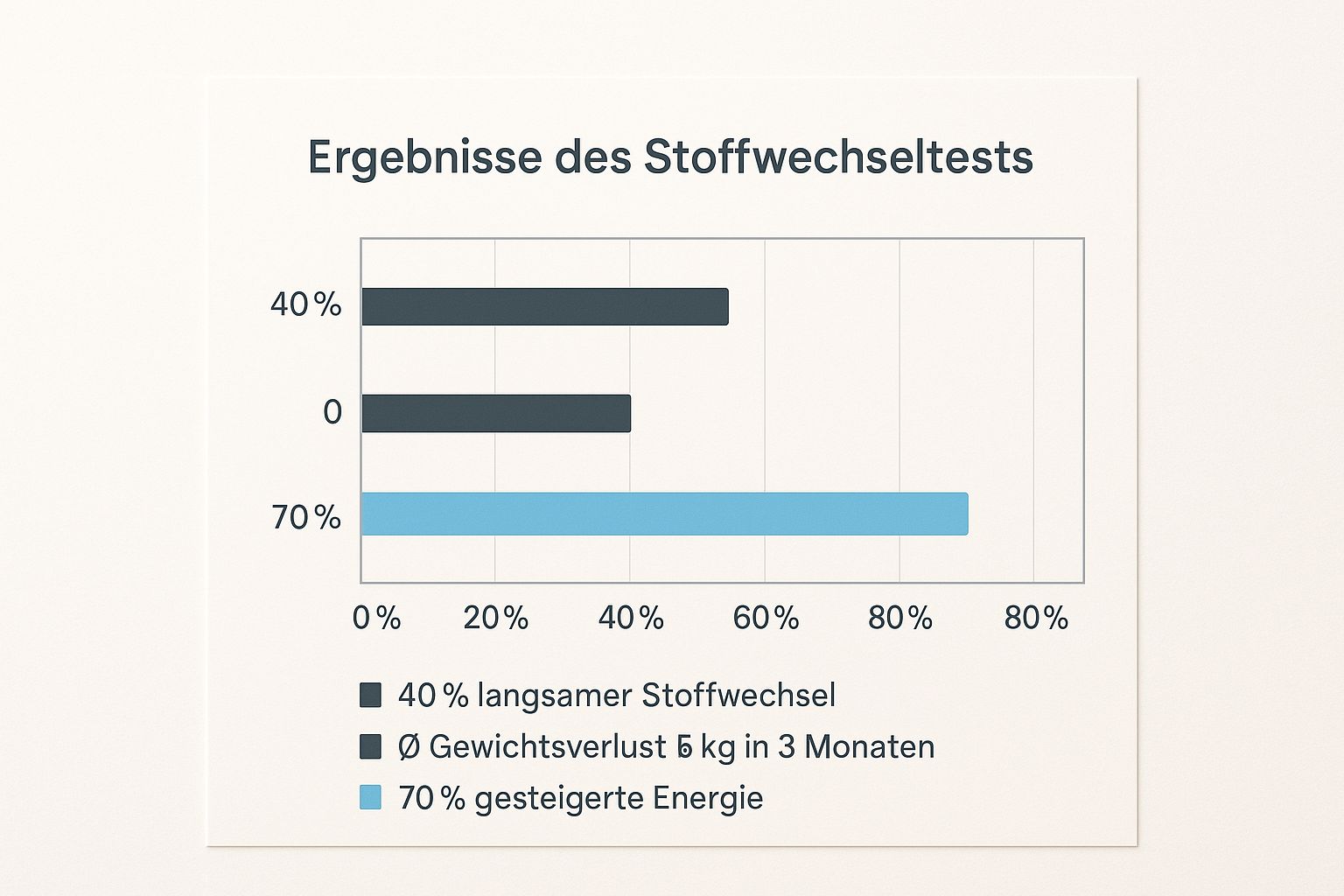
As the data shows, knowing your personal predisposition can lead to very concrete results, such as significant weight loss and a noticeable boost in energy.
Which test matches your goals?
To make the decision easier for you, I have compared the most common methods in a table. This table helps you find the right testing method for your personal goals by comparing their significance, purpose, and target group.
Comparison of common methods for metabolic analysis
| Test method | What is measured? | Suitable for | Main advantage |
|---|---|---|---|
| DNA analysis | Your genetic predisposition for metabolizing macronutrients (fat, protein, carbohydrates). | Anyone who wants to lose weight sustainably, increase their energy, and optimize their diet over the long term. | Provides a personalized “user manual” for nutrition and exercise that remains valid for life. |
| Blood test | Hormonal and physiological values (e.g., thyroid function, blood sugar) that influence metabolism. | People who suspect a medical cause for issues such as fatigue or weight problems. | Rules out medical disorders as a cause and is clinically established. |
| Respiratory gas analysis | Oxygen uptake and energy expenditure during physical exertion (e.g., on a treadmill). | Athletes who want to specifically improve their endurance performance and precisely control their training intensity. | Provides a highly accurate snapshot of current physical performance. |
Ultimately, the choice depends on what you really want to know. If you suspect a medical problem, a doctor should always be your first point of contact. But if you want to fundamentally optimize your diet and lifestyle based on your genetics, then a DNA analysis is by far the most insightful tool available to you.
How does a DNA metabolism analysis work in practice?

Great, so you have decided to have your metabolism tested and want to use a DNA analysis for this. That is a strong decision! You may now be wondering exactly what lies ahead. Don't worry, the entire process is surprisingly simple and can be completed conveniently from home. I'll show you how it works, so you know exactly what to expect and can put any concerns to rest.
Your journey toward genetic insights begins with choosing the right provider. And honestly, this is the most important step, because you are entrusting this company with your personal data.
Finding the right provider for your analysis
Choosing a provider is about far more than just the price. Trust, scientific credibility, and above all, data protection are the focus. When I did my research back then, I paid particular attention to these points:
- Laboratory location: A laboratory in the EU (e.g. Germany) or Switzerland operates according to very strict quality and data protection standards. Look for certifications, such as an ISO standard, which indicates high laboratory standards.
- GDPR-compliant data protection: Your genetic data is extremely sensitive. The provider must communicate clearly how it handles this data. Reputable companies use pseudonymization, meaning that your sample carries only a code in the laboratory, never your name. The biological samples must be destroyed after analysis.
- Scientific background: Who developed the test? Is there a team of scientists and nutrition experts behind it? A good provider transparently explains which genes it analyzes and why.
- The results report: Be sure to look at sample reports. Are they easy to understand, or just a pile of technical jargon? Do you get concrete tips for everyday life, or just dry laboratory values?
Take your time with this check. Think of it as an investment in your health that you can 100 % you should feel comfortable.
How the test works: From ordering to collecting the sample
If you have chosen a provider such as MYBODY Lab GmbH, the rest really is a piece of cake. The process usually looks like this:
Order online & get started You order the test kit online, and a few days later it arrives in your mailbox. Everything you need is included.
Saliva sample – easy to do at home The central part is collecting the sample, which usually involves a simple saliva sample. You simply rub a cotton swab against the inside of your cheek for about a minute. This collects enough cells for the analysis, is completely painless, and takes less than two minutes.
The only important thing is: do not eat or drink anything (except water) for 30 to 60 minutes beforehand. This ensures that the sample remains clean.
Activate it and send it off Then activate your kit online using a personal code. Put the sample in the enclosed return envelope, seal it, and send it back to the lab free of charge. Done.
I still remember the moment when I took my package to the post office. The feeling of curiosity and anticipation about the results was incredibly exciting. It feels like the starting signal for understanding your body on a completely new level.
Now a little patience is required. The laboratory analysis can take several weeks because your DNA is carefully decoded and evaluated. As soon as your report is ready, you will receive an email and can access your results in a secure online portal. And then the truly exciting part begins: finally putting your new insights into practice.
Understanding and applying your results report in practice
At last, it has arrived: you are holding your results report in your hands—a deep insight into your very own genetics. But instead of clear answers, you may initially see only technical terms, charts, and tables. Don’t worry, that is completely normal. I’ll show you how to turn this report into your personal roadmap to greater well-being and better fitness.
If you have had your metabolism tested, the report is not the end but the truly exciting beginning. I still remember my first report. Discovering that I was genetically a “mixed type” with a slight tendency toward better fat utilization changed everything. Suddenly, it made sense why I felt full of energy after eating an avocado, while a large portion of pasta left me feeling rather sluggish.
Decode your metabolic type
Most DNA analyses summarize the results into easy-to-understand metabolic types. This categorization is brilliant because it gives you clear direction for your diet without immediately getting lost in scientific details.
The most common types are:
- The Carb Type (Carb Type): Your body is a master at converting carbohydrates into energy. A diet with a higher proportion of whole grains, potatoes, and legumes may be ideal for you.
- The Protein Type (Protein Type): Your genes signal a higher need for protein, which you metabolize especially well. High-quality protein sources such as fish, lean meat, eggs, and plant-based alternatives should form the basis of your meals.
- The Fat Type (Fat Type): Your genes are designed to use fat as your primary energy source. Healthy fats from nuts, seeds, avocados, and high-quality oils are particularly beneficial for you.
- The mixed type: You are an all-rounder and can process all three macronutrients relatively well. The focus here is on a balanced mix, often with slight tendencies toward one of the other types.
Think of this classification as your personal compass. It does not tell you that, as a carbohydrate type, you can never eat fat again. Rather, it shows you which fuel is most efficient for your engine. If you want to delve deeper into the science behind it, you will find more fascinating details in our guide to the genetic nutrition test for losing weight based on DNA.
From knowledge to practical implementation
Now comes the most important question: How do you incorporate these insights into your everyday life without immediately turning everything upside down? The answer lies in smart adjustments, not radical prohibitions.
A guiding principle that has always helped me: “Progress, not perfection.” It’s not about following a 100% perfect plan overnight. If you manage to align 80% of your diet with your genetic type, you have already done a great deal for your well-being.
Imagine your report shows that you are a protein type. A simple but extremely effective adjustment could look like this: Instead of cereal with fruit for breakfast (very high in carbohydrates), try Greek yogurt with berries and a few nuts. This is a small change that keeps your blood sugar stable and keeps you feeling full much longer.
The high acceptance of such tests among the population shows how valuable they are. As part of Germany’s national health monitoring, almost nationwide 770.000 Initial screening examinations conducted—with an impressive completion rate of 97,58 %. This approach not only ensures high test quality but also optimizes treatment for potential metabolic disorders. If you are interested in the systematic analyses, read the complete findings in the screening report at dgns.de.
Ultimately, your results report is an incredibly powerful tool. It gives you the scientifically sound recommendations you need to finally stop working against your body and start working with it.
What a genetic test can—and cannot—promise

A DNA test is an incredibly powerful tool for understanding your body better. But—and this is important—it is not a magic pill that solves all problems overnight. To avoid disappointment, it is important to remain realistic and understand what you can expect from genetic analysis and where its limitations lie.
Your genes are essentially the instruction manual for your body that you received at birth. They provide valuable clues as to why you may be more sensitive to carbohydrates than others or why your body may be particularly good at using fats as an energy source. This insight alone can be a huge step forward.
Your genes are the blueprint, but you call the shots
Here’s the crucial point: Your genetics are only one piece of the larger puzzle. Your lifestyle, sleep habits, stress levels, and above all your daily choices have just as much, if not an even greater, influence on your well-being. The test does not relieve you of this responsibility.
A DNA test is your personal compass, not your autopilot. It shows you the direction, but you take the steps yourself.
In very practical terms, this means that the best genetic predisposition for a fast metabolism won’t do you much good if your diet consists mainly of fast food and you hardly exercise. Conversely, even with a “less favorable” predisposition, you can achieve fantastic results if you learn to adjust the right levers in your diet and physical activity.
This honest perspective helps you use the results for what they are: valuable guidance, not an excuse.
The importance of such targeted analyses is also demonstrated by newborn screening in Bavaria. Between 1999 and 2022, a total of 2,357 cases of congenital metabolic disorders were detected among around 2.7 million newborns—cases that might otherwise have gone unnoticed. Consistent follow-up ensured that over 99% of all necessary tests were actually carried out—an impressive testament to the value of such analyses. You can find out more about the successes of Bavaria’s newborn screening program on lgl.bayern.de.
A DNA test is therefore not a free pass for unhealthy habits. Instead, see it as the starting point for a more mindful journey. Use the results to make smarter decisions and finally work in harmony with your body instead of against it.
Frequently asked questions about metabolic analysis
Okay, now that we’ve delved deep into the world of DNA analysis, there are often still a few very practical questions. That’s completely normal. After all, anyone who wants to have their metabolism tested wants to be sure they’re making the right decision. Here, I answer the questions I’m asked most frequently in this context.
Does health insurance cover the cost of the test?
One of the first and absolutely legitimate questions. The short and honest answer is: unfortunately, generally not. A DNA metabolism analysis for optimizing nutrition and fitness is considered an individual healthcare service (IGeL), not a medically necessary measure for an existing illness.
This means you bear the cost as a private investment in your health and well-being. Health insurers only cover the cost when a test is used to diagnose a specific illness. However, this test is intended for prevention and personal lifestyle optimization.
How secure is my genetic data?
This is probably the most important point of all, and you should really look very closely here. Reputable providers, especially those with laboratories in Europe (such as Germany or Switzerland), are subject to the extremely strict General Data Protection Regulation (GDPR).
What this means for you specifically:
- Pseudonymization: Your sample is assigned a code number at the laboratory. No one can directly link it to your name.
- No sharing with third parties: Your data may never be used for research or other purposes without your explicit consent. Never.
- Destruction of the sample: After the analysis, your biological sample is securely and completely destroyed.
Personally, I chose only a provider that communicates these points completely transparently on its website. That was the basis of trust for me.
Don't view the results as a rigid set of rules, but as your personal compass. It points you in the right direction, but you remain the captain of your own health journey.
Do I now have to strictly align my life with the results?
Absolutely not! That would be not only unrealistic but also counterproductive. Your genetic report is not a dogma but a guide. It shows you your personal tendencies—for example, that your body processes proteins particularly well or that you should be a little more careful with carbohydrates.
It's about smart adjustments, not obsessive perfection. If you align your diet approximately 80 % align your diet with your metabolic type, you already have the greatest leverage for your well-being in your hands. The remaining 20 % are there for flexibility, enjoyment, and everyday life.
Are you ready to decode your body's instruction manual? At MYBODY Lab GmbH, discover how a scientifically grounded DNA analysis can help take your nutrition and fitness to a whole new level.
[Start your personal analysis now at https://mybody-x.com]



Share now:
Lower LDL cholesterol: Your practical guide to healthy levels
Understanding & Optimizing Ferritin Levels: Your Guide to Normal Iron Levels