

Nutrigenetics for Your Personalized Diet
Imagine knowing exactly which foods your body processes optimally—based on your unique DNA. That is the essence of nutrigenetics, a fascinating field of science that finally explains why general dietary trends may simply not work for you. It is about adapting your diet to your genes to genuinely improve your well-being in the long term.
What Nutrigenetics Can Mean for You

Have you ever wondered why your best friend loses weight so easily on a low-carb diet, while nothing happens for you despite all your efforts? Or why you feel nervous and shaky after a coffee, while others can casually drink several cups? The answer often lies hidden in your genetic code.
Nutrigenetics uncovers precisely these secrets. It specifically analyzes gene variants that influence how your body responds to nutrients such as fats, carbohydrates, vitamins, and minerals. Essentially, it is like a personalized instruction manual for your body, which you can decode through a genetic test.
Your Genetic Blueprint for Nutrition
Each of us carries a unique genetic blueprint. And it can tell us a great deal about our metabolic processes. A genetic test can show you specifically how your body responds to certain dietary components and where your genetic predispositions lie.
Let's look at a few examples:
- Fat metabolism: Do you tend to gain weight more quickly when eating a high-fat diet? Your genes can provide insight into whether you process saturated fats well or less effectively.
- Carbohydrate sensitivity: Does your body react sensitively to carbohydrates, directly affecting your blood sugar levels? This knowledge helps you find the right amount of pasta, bread, and sugar for you.
- Vitamin requirements: Might you have a genetic predisposition to a deficiency in certain vitamins, such as vitamin D or B12? A test can help you optimize your intake in a targeted way.
This understanding goes far beyond general advice. While blanket recommendations often miss the mark, a genetic test as part of nutrigenetics gives you a scientifically grounded approach tailored directly to you. You learn how to support your body instead of constantly working against it.
A genetic test is not your destiny but an opportunity. It reveals your predispositions so that, through targeted decisions, you can take control of your health and well-being.
The following table illustrates how the recommendations can differ:
Comparing General and Nutrigenetic Dietary Recommendations
This table shows the key differences between traditional, general advice and a personalized approach based on nutrigenetics.
| Aspect | General dietary recommendation | Nutrigenetic approach |
|---|---|---|
| Fat intake | “Reduce saturated fats and favor unsaturated fats.” | “Your genes show that you metabolize saturated fats well. Moderate intake is not a problem, but make sure to consume omega-3 fatty acids.” |
| Carbohydrates | “Eat whole-grain products and limit simple sugars.” | “You have increased carbohydrate sensitivity. A low-carb diet best supports your blood sugar levels and weight management.” |
| Caffeine consumption | “Drink coffee in moderation.” | “As a slow caffeine metabolizer, you should limit your consumption to a maximum of one cup per day to minimize cardiovascular risks.” |
| Vitamin D requirements | “Make sure you get enough vitamin D in winter.” | “Your gene variants indicate an increased risk of vitamin D deficiency. Regular supplementation is recommended year-round.” |
As you can see, nutrigenetic recommendations are far more specific and can make a real difference in everyday life. They give you the tools to make informed decisions about your health.
The growing importance of this approach is also evident in practice. Nutrigenetics is increasingly recognized in Germany as an important component of personalized nutrition. A leading laboratory has already performed more than 200,000 genetic analyses in this field, with modern genetic tests examining more than 50 relevant genes to provide individualized recommendations.
Ultimately, this knowledge enables you to shape your diet in a way that boosts your energy, promotes your health, and helps you achieve your very personal goals. You can also find more comprehensive information about what nutrigenetics is and how it shapes our lives in our detailed article on the basics.
Finding the right genetic test for your nutrition
So you’ve decided to delve deeper into the world of nutrigenetics and are considering taking a genetic test? Great—that’s a huge step toward truly personalized nutrition. But with so many providers out there, you’re probably wondering: Which test is right for me, and what should I look out for? Let’s go through it together.
Fortunately, the path to your genetic results is remarkably simple today and begins right at home. Most genetic tests use a simple saliva sample. So you don’t need to make a special trip to the doctor; everything you need arrives conveniently by mail in a test kit. Collecting the sample itself takes just a few minutes and is completely painless.
Once you have collected your sample and sent it back in the enclosed envelope, the laboratory gets down to the actual work. There, your DNA is isolated and your genetic predisposition is analyzed using modern technology.
The following graphic shows how straightforward the entire process is—from the test kit to your very personal recommendations.
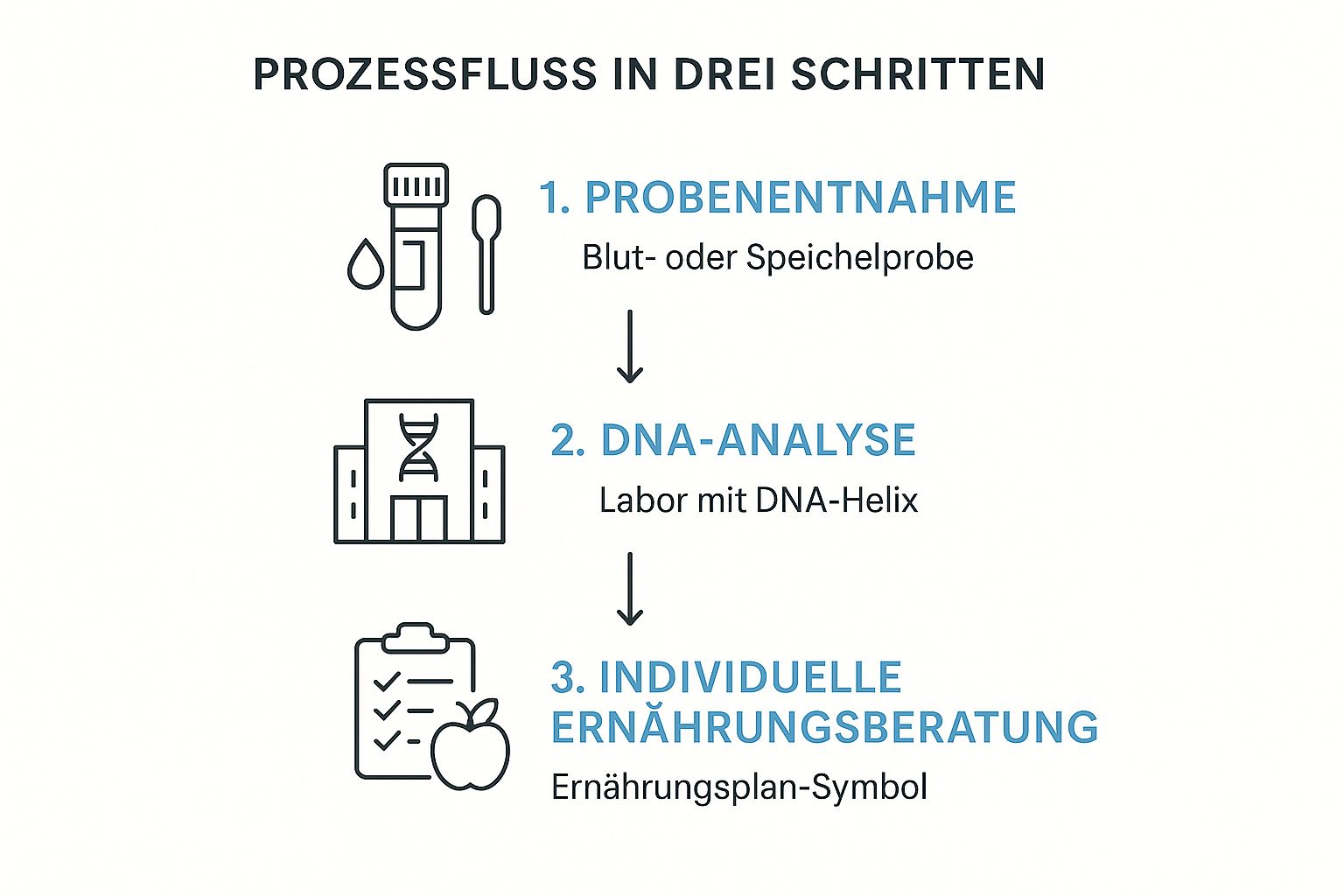
As you can see, the process is clearly divided into three phases. You collect the sample, the laboratory performs the analysis, and in the end you receive personalized nutritional advice based on your genetics.
What to look for when choosing a provider
Choosing the right partner for your genetic test is truly crucial. After all, it concerns your sensitive data and how reliable your results are. You can recognize reputable companies by a few clear characteristics.
The most important thing first: Transparency. A good provider should tell you clearly and precisely which genes are examined and why these in particular are relevant to your diet. A high-quality report explains not only what your results are, but also what they mean for you and your everyday life.
Pay attention to these points:
- Scientific basis: Are the analyses conducted in certified laboratories, for example according to ISO standards? Are the recommendations based on current scientific studies?
- Scope of the analysis: How many genetic variants are actually tested? A comprehensive test should cover dozens of genes involved in metabolism, vitamin requirements, or intolerances.
- Clarity of the results: Do you receive only a pile of raw data, or a detailed, easy-to-understand report with specific tips you can put into practice immediately?
Data protection is not a nice extra but an absolute must. Your genetic data is extremely personal. A trustworthy provider must have strict data protection policies—no ifs, ands, or buts.
Protecting your data is non-negotiable
In Europe, the General Data Protection Regulation (GDPR) sets the gold standard. A provider that knows what it is doing will always disclose how your data is protected.
This means, specifically:
- Pseudonymization: Your sample is analyzed in the laboratory without your name, meaning it is pseudonymized.
- Secure storage: Your data must be encrypted and stored securely.
- No sharing with third parties: Your genetic information must never be shared with third parties—such as insurance companies or pharmaceutical companies—without your explicit consent.
- Sample disposal: After the analysis, your biological sample should be destroyed.
Before deciding on a test, take the time to read the privacy policy carefully. If anything is unclear, ask customer service. A provider that evades the issue or remains vague is not a good partner. The question of whether a DNA test can improve your diet also depends heavily on the quality and trustworthiness of the test. With these criteria, you’ll be well equipped to make a safe and informed choice on your journey toward personalized nutrition.
Putting your genetic results into practice

You’re finally holding your nutrigenetics report in your hands. Your genetic test results are here, in black and white—but what do you do with all this information now? This is where the most exciting part begins: translating the theory into your everyday life.
Your report isn’t a rigid instruction manual, but rather a personal map of your body. It shows you where your genetic strengths and weaknesses lie and finally gives you answers as to why you react to certain foods the way you do. Now it’s about using this knowledge cleverly without turning your life completely upside down.
From knowledge to action: Two practical examples
Let’s walk through two typical examples. This isn’t about rigid rules, but about understanding what’s behind your genetic test recommendations and how to adapt them to suit you.
Example 1: You metabolize caffeine slowly
Your test shows a specific variant in the CYP1A2 gene. Put simply, this means your body takes longer to break down caffeine. While your colleague may sleep like a baby after a late espresso, you might lie wide awake in bed, feeling restless or nervous.
- What does this mean for you? Caffeine stays in your system longer and can not only disrupt your sleep, but also increase your long-term risk of heart palpitations or high blood pressure.
-
Your next steps could be:
- Adjust the amount: Instead of your usual three cups of coffee a day, try having one or two. That alone often makes a huge difference.
- Optimize the timing: Set yourself a personal “coffee deadline,” such as 2 p.m. Anything after that could affect your sleep.
- Discover alternatives: In the afternoon, reach for decaffeinated coffee, a delicious herbal tea, or a glass of water with lemon and mint. Sometimes, all you need is the ritual.
Example 2: You have a genetic predisposition to lactose intolerance
In your report, you’ll find a reference to the LCT gene. This suggests that your body is no longer producing the enzyme lactase, which is responsible for breaking down milk sugar, as efficiently. Perhaps you know the feeling: After a milky coffee or yogurt, your stomach rumbles or you feel bloated.
- What does this mean for you? Your body has difficulty digesting milk sugar (lactose).
-
Your next steps could be:
- Find your tolerance threshold: Not everyone needs to avoid lactose completely. Some people can easily tolerate a splash of milk in their coffee but react to a glass of milk. Find the amount that feels right for you.
- Switch to lactose-free products: There’s a huge selection available today! From milk and yogurt to cheese, you can find almost everything in a lactose-free version.
- Try plant-based alternatives: Oat, almond, or soy milk isn’t just a substitute—it can genuinely enhance your muesli, coffee, or cooking.
Your genetic report is not a verdict, but a tool. It provides the “why” behind things, so you can make conscious decisions and support your body in the best possible way instead of working against it.
Connect the data with your life
The most important thing to remember: It’s not about perfection. You don’t have to eliminate everything that your genetic test says is “suboptimal” for you overnight. The real benefit lies in skillfully integrating this new knowledge into your habits.
You love cheese but have a slight lactose issue? Then choose hard cheeses such as Parmesan or aged Gouda—they naturally contain very little lactose. You simply don’t want to give up your morning coffee? Then enjoy it mindfully and skip the second one in the afternoon.
Nutrigenetics provides the scientific foundation. But you remain the expert on your own life. With these insights, you can develop a way of eating that is based not only on your DNA, but also tastes good and makes you feel good. If you want to take a deeper dive, you’ll find more valuable tips in our guide to personalized nutrition.
How to stay one step ahead of disease with nutrigenetics
Nutrigenetics is so much more than just a nice tool for optimizing your lifestyle. Its true power lies in health prevention, especially when it comes to the typical diseases of civilization that cause us so many problems today. It gives you the opportunity to finally take proactive action instead of always just reacting to problems.
Once you know your genetic predispositions through a genetic test, you can take highly targeted action to reduce certain disease risks. The goal is not to blindly fight general health risks. Rather, you learn about your own personal vulnerabilities and can address them precisely to strengthen them. This gives the entire concept of preventive health a new, highly personal dimension.
Targeted management of risks for lifestyle-related diseases
Many of the diseases that are so widespread today are closely linked to our lifestyle and diet. These include cardiovascular diseases, chronic inflammation, and, above all, type 2 diabetes. Your genes play a significant role in how susceptible you are to them.
Imagine that your genetic test shows that your body cannot process saturated fatty acids particularly efficiently. This does not mean that you will inevitably develop heart problems. It does mean, however, that a diet full of burgers, sausages, and ready-made meals poses a significantly higher risk for you than for someone with a different genetic makeup.
Your genetic profile is like a built-in early warning system. It highlights where you should take a closer look and adjust your diet to stay healthy in the long term.
Armed with this knowledge, you can take active steps to counteract it. Instead of avoiding fats across the board, you suddenly understand which fats are good for you—such as the omega-3 fatty acids found in fish or flaxseed—and which ones you should enjoy only in moderation.
A closer look at diabetes risk
One area in which nutrigenetics particularly shines is the prevention of type 2 diabetes. Your genes have a major say in how your body responds to carbohydrates and keeps your blood sugar levels under control. A genetically determined tendency toward lower insulin sensitivity can significantly increase your risk of diabetes.
Just how urgent the issue is can be seen in the latest figures: In Germany, at least 8.9 million people are living with diagnosed type 2 diabetes, and the number of unreported cases is at least two million more. These statistics practically cry out for individualized approaches to prevention. You can find more information in the 2024 health report from the German Diabetes Association.
A nutrigenetic analysis can show you whether a reduced-carbohydrate diet is the key to keeping your blood sugar stable. This allows you to take targeted action long before a problem even manifests.
Make your genes your ally
Nutrigenetics puts you in the driver’s seat. You no longer have to wait for fate; you can shape your own health by using your diet as your most powerful tool for prevention.
- Understand your tendency toward inflammation: Some genetic variants promote low-grade inflammation in the body. A targeted anti-inflammatory diet rich in vegetables, berries, and healthy fats can work wonders here.
- Promote heart health: Do you know your genetic risk of elevated cholesterol levels? If so, you can consciously choose soluble fiber from oats or legumes to counteract it.
By tailoring your diet to your genes, you are actively building a healthier future. This proactive approach is a central pillar of a long, vital life. Learn more in our article about how you can use preventive health and longevity to your advantage.
What nutrigenetics can do for you—and where its limits lie

There’s no question that nutrigenetics opens the door to a completely new understanding of your body. The opportunity to fine-tune your diet so that you have more energy, reach your athletic goals more easily, or take preventive action for your long-term health is enormous.
But despite all the excitement, we should remain realistic: A genetic test is not a cure-all, and your DNA is not your unchangeable destiny.
So let’s take an honest look at both sides of the coin—the impressive possibilities as well as the clear limitations. This is the only way you can make full use of the potential of personalized nutrition without falling for unrealistic promises.
Your genes are only one piece of the puzzle
Your genetic report is an incredibly valuable treasure map. It shows you your genetic predispositions. But it is only one piece of the larger picture of your health. Other factors have at least as great, if not an even greater, influence on how you feel and how fit you are.
Think about these three important areas:
- Your lifestyle: How much you exercise, whether you smoke, and how well you sleep—all of this has a massive impact on your health.
- Your environment: Air pollutants, the quality of your food, and even your social environment all play a role.
- Your mind: Chronic stress can change the way your genes are read. This fascinating field is called epigenetics.
A nutrition plan tailored to you will have little effect if you are constantly stressed, hardly exercise, and sleep poorly. Nutrigenetics only truly unfolds its power when you view it as part of a holistic approach.
Your genes load the gun, but your lifestyle pulls the trigger. This quote sums it up perfectly. You are in control of whether a genetic predisposition actually manifests itself or not.
What science can—and cannot—do today
Nutrigenetics is a relatively young but incredibly fast-growing field of research. Its enormous economic potential and growing interest are reflected in impressive figures. The global nutrigenomics market, which includes nutrigenetics, is expected to grow by around annually until 2028 15,5 % will grow.
In Germany, too, demand for genetically based nutritional counseling is steadily increasing, driven by the desire for a healthier, more conscious life. You can read more about this exciting development in a current industry report on nutrigenomics.
Despite this growth, it is important to assess the scientific evidence realistically. The connections between individual genes (such as the caffeine gene CYP1A2) and the body's response are often very well established. However, for complex topics such as the ideal ratio of macronutrients (fat, carbohydrates, protein) for weight management, the findings from your genetic test are more likely to indicate tendencies than absolute truths.
So be skeptical of providers who promise guaranteed results or even cures for diseases. Reputable nutrigenetics gives you scientifically grounded probabilities and tendencies to work with—but it does not provide rigid dogmas. It is a compass, not the map itself.
Your most frequently asked questions about nutrigenetics
Finally, I want to address the questions we are most frequently asked about nutrigenetics and genetic tests. Here you will find quick, clear answers to resolve common uncertainties.
Is a nutrigenetics test a one-time thing?
Yes, and that is precisely one of the biggest advantages. Think of it this way: Your genes are the foundation of your body—they do not change. A genetic test of your predispositions is therefore a one-time investment that gives you insights valid for a lifetime.
What is constantly evolving, however, is science and thus the interpretation of these genes. That is precisely why reputable providers like us may offer updates to your report as soon as new, relevant scientific findings emerge. This keeps your report up to date.
How secure is my genetic data, really?
A completely valid and extremely important question. Providers in Europe that take their responsibilities seriously are subject to the strict General Data Protection Regulation (GDPR). You should always make sure it is explained transparently how your data is anonymized, encrypted, and processed.
These are the points you should keep an eye on:
- Pseudonymization: Your sample is analyzed in the laboratory without being linked to your personal data.
- Data ownership: Your data belongs to you. It must never be shared with third parties, such as insurance companies or pharmaceutical companies, without your explicit consent.
- Destruction of the sample: After analysis, your biological sample is safely and completely destroyed.
My advice: Always read the provider’s privacy policy carefully before deciding to take a genetic test. It builds trust.
Does a genetic test guarantee that it will help me lose weight?
A genetic test is not a magic weight-loss pill, but it can be an incredibly powerful ally. It shows you why you may have struggled in the past and gives you crucial insights—for example, whether your body is genetically more responsive to a low-carbohydrate diet or a diet lower in fat.
A genetic test is like a compass: It shows you the most effective direction for your goals. But you have to walk the path yourself—through consistent implementation in your diet and with the right exercise.
With this knowledge, you can finally develop a strategy that is sustainable and truly suits you and your body.
Does the test replace a visit to the doctor?
No, absolutely not. This needs to be stated clearly. A nutrigenetics test is a preventive tool for a healthier lifestyle, but it does not provide a medical diagnosis. It never replaces the professional expertise of a doctor or a qualified dietitian.
If you already have health problems or chronic illnesses, or regularly take medication, be sure to discuss your genetic test results with your doctor. Only a medical professional can assess genetic information professionally in the context of your overall health and help you draw the right conclusions.
Are you ready to take your health into your own hands and put your nutrition on a scientifically sound footing? Discover the secrets of your DNA with MYBODY Lab GmbH and receive a personalized roadmap to your well-being. Find out now which test is right for you: https://mybody-x.com.



Share now:
Genetics explained simply for beginners
Testing for intolerances: which method answers which question