
Dietary treatments for iron deficiency that truly help
Do you constantly feel tired, unfocused, and generally drained? Then a conscious diet to address iron deficiency might be exactly what your body needs. It's about consciously choosing the right foods and combining them cleverly. This way, you can maximize your intake of this essential trace element and replenish your energy reserves.
Why iron is crucial for your energy
Imagine iron like the spark plug in an engine. You can have the best fuel in the world in your tank – without the spark, the engine won't start. It's the same in your body: iron is the crucial factor that gets oxygen to where it's needed: to every single one of your cells, so they can produce energy.
This trace element is the central building block of hemoglobin, the red blood pigment. Hemoglobin captures oxygen in your lungs and distributes it throughout your body via the bloodstream. If you lack iron, your body can't produce enough hemoglobin. The logical consequence? Your cells receive too little oxygen, which directly affects your energy levels. You feel weak, tired, and can barely concentrate.
The creeping signs of a deficiency
The insidious thing about iron deficiency is that it often creeps up slowly and unnoticed. Your body is quite clever and first draws on its emergency reserves, which are mainly stored in the liver, spleen, and bone marrow. Only when these stores – the so-called ferritin – are depleted do you experience the first symptoms.
These warning signs are often so nonspecific that you can easily dismiss them as everyday stress or lack of sleep. But if several of these points occur together, you should pay attention.
- Chronic fatigue: You constantly feel exhausted, even when you've actually had enough sleep.
- Concentration problems: Suddenly, it becomes difficult for you to think clearly or focus on a task.
- Pale skin: A quick glance in the mirror or at the inside of your eyelids can provide an initial clue.
- Hair loss & brittle nails: Is your hair getting thinner or are your fingernails constantly splitting? This could be a sign.
- Constantly ill? A weak immune system and frequent colds can also indicate depleted iron stores.
- You get out of breath quickly: You start panting even when climbing stairs, although that wasn't a problem before.
Who is particularly at risk?
Certain life stages or dietary habits significantly increase the likelihood of iron deficiency. It's therefore no coincidence that some people are affected more often than others. Women of childbearing age are particularly at risk, as they regularly lose blood and thus valuable iron through monthly menstruation.
Untreated iron deficiency can have far-reaching consequences, ranging from a weakened immune system to iron deficiency anemia. Understanding the causes is the first and most important step in actively counteracting it.
Pregnant and breastfeeding women also have a significantly increased need for iron, as they have to nourish not only themselves but also their child. Vegetarians and vegans should also keep a close eye on their iron levels, since plant-based iron is not absorbed by the body as well as animal-based iron. Even ambitious endurance athletes can be affected, as they lose iron through heavy sweating and simultaneously have a higher demand for it in their muscles.
This knowledge is your foundation. It helps you understand what is happening in your body and is the basis for a targeted diet for iron deficiency , which will help you regain your energy and vitality.
The best iron sources for your diet
Okay, now you know how to recognize an iron deficiency. Time to fill your plate with real powerhouses! A targeted diet for iron deficiency is the most direct way to replenish your stores and regain lost energy.
And while we're at it, let's dispel a myth: No, meat isn't the only source of iron. It's a bit more complicated – but also more interesting.
The key to success lies in understanding that there are two different types of iron in our food, and your body processes them very differently.
Heme iron vs. non-heme iron: Express ticket or regional train?
Imagine the train journey like a train ride. There are two tickets: an express ticket for the direct, fast connection and a regional train ticket that requires a few changes.
- Heme iron (the express ticket): This type of iron is found exclusively in animal products – meat, fish, and poultry. It's already bound to the red blood pigment (hemoglobin). This makes it incredibly easy for your body to absorb directly. It essentially has a reserved ticket and speeds right through.
- Non-heme iron (the regional train ticket): This form is found in all plant-based foods such as legumes, nuts, and whole grains, but also in eggs and milk. It is not bound to hemoglobin, which is why its absorption is somewhat more complex. It essentially has to "transfer" and is much more strongly influenced by other foods you eat at the same time.
What does this mean for you? Your body can absorb heme iron from animal sources about two to three times better than non-heme iron from plants. However, this absolutely does not mean that a vegetarian or vegan diet automatically leads to a deficiency. It simply means that you need to combine plant-based sources cleverly. I'll tell you how to do that in a moment.
Top iron sources at a glance (per 100g)
To save you time searching, I've compiled a list of the foods richest in iron. This way, you can see at a glance which powerhouses you should add to your shopping list more often.
| Groceries | category | Iron content (mg per 100g) |
|---|---|---|
| Pig liver | Animal | 18.0 mg |
| pumpkin seeds | Vegetable | 12.1 mg |
| sesame | Vegetable | 10.0 mg |
| linseed | Vegetable | 8.2 mg |
| Dried lentils | Vegetable | 8.0 mg |
| Dried chickpeas | Vegetable | 6.1 mg |
| oatmeal | Vegetable | 5.8 mg |
| tofu | Vegetable | 5.4 mg |
| chanterelles | Vegetable | 5.2 mg |
| Cooked spinach | Vegetable | 3.4 mg |
| Beef (fillet) | Animal | 3.2 mg |
| tuna | Animal | 1.0 mg |
As you can see, many plant-based foods are top contenders. Pumpkin seeds, lentils, and rolled oats are true iron champions and a fantastic foundation for an iron-conscious diet.
And how widespread is the problem really?
Iron deficiency is not uncommon. It's a widespread issue that affects far more people than you might think – often without them even realizing it. The figures speak for themselves and show that certain groups are particularly at risk.
Let's take a closer look:

It is clear: women have a much higher risk of iron deficiency than men or children due to menstruation.
Current estimates suggest that around eight percent of the population in Germany suffers from iron deficiency. Your individual needs vary considerably: women of childbearing age require approximately 10 to 15 milligrams of iron daily, while men usually manage with around 10 milligrams . For pregnant women, the requirement skyrockets to at least 30 milligrams per day .
It's not just the amount of iron in food that matters, but also how well it's absorbed. Animal-based iron is absorbed by the body at a rate of about 20% , while plant-based iron is absorbed at a meager 5% . You can find more details about these figures in this article on iron deficiency from DAK .
It's important to understand that an iron deficiency doesn't just make you a little tired. It can affect your overall well-being and severely limit your performance in everyday life. Often, it's a silent nutrient thief that lurks behind unexplained fatigue.
So if you often feel tired and unmotivated, it's worth taking a closer look. Find out in our article which nutrient deficiencies might also be playing a role in fatigue and lack of energy.
Knowing the right foods is the first important step. In the next section, I'll show you how to use a few clever tricks and combinations to ensure that the valuable iron actually reaches where your body needs it.
How to maximize iron absorption from food
You've now filled your diet with iron-rich foods – great, that's the first important step! But now comes the really crucial part: ensuring that the iron actually reaches your body. Because just because a food contains a lot of iron, unfortunately, doesn't automatically mean that your body can fully absorb it.
Imagine it like a bouncer system. The iron is standing in front of the club (your body) and wants to get in. Whether it gets in depends heavily on who else is there. Some companions flash a VIP pass and get the iron straight past the queue. Others, however, make sure the door stays firmly closed to the iron.
Your task, therefore, is to become a clever event manager for your meals and to provide the iron with the right companions.
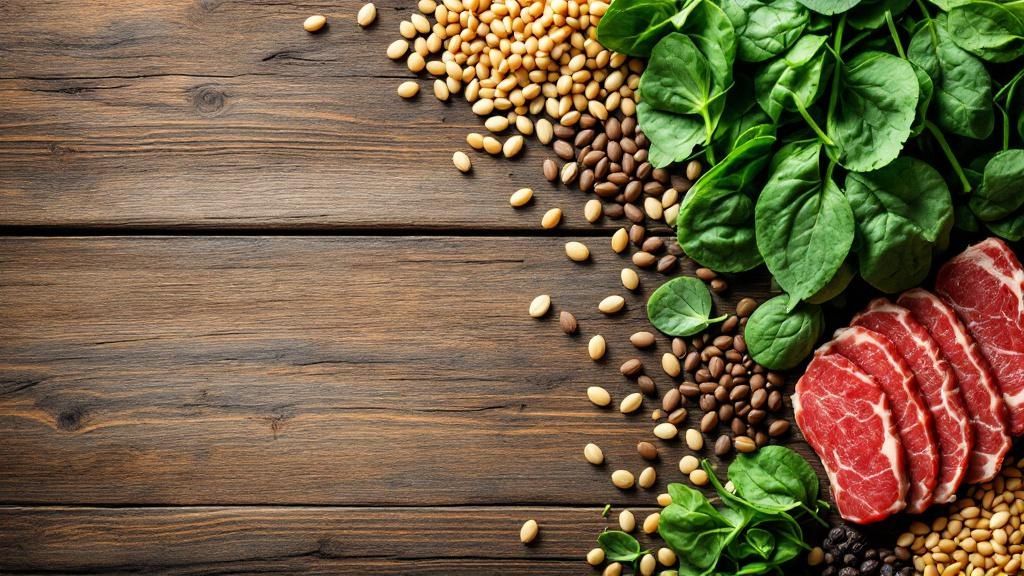
Vitamin C: the ultimate VIP pass for your iron
The undisputed superstar among iron-supporting nutrients is vitamin C. It is by far the most powerful promoter of iron absorption. Vitamin C converts the plant-based non-heme iron, which is difficult for the body to absorb, into a form that your intestines can absorb much more easily. It's practically your personal VIP pass, granting iron immediate access.
A squeeze of lemon juice over your lentil salad, a glass of orange juice with your oatmeal, or a few strips of raw bell pepper with your wholemeal bread – even small amounts of vitamin C can increase iron absorption from plant sources three to four times .
This is the most important trick for your diet if you have an iron deficiency : Combine every iron-rich meal, especially plant-based ones, with a fresh source of vitamin C. This way, you turn a good meal into an excellent source of iron.
Practical examples of such power combinations:
- Oatmeal with fresh berries or a small glass of orange juice.
- Lentil soup with a generous squeeze of lemon juice and fresh parsley.
- Wholemeal bread with hummus and a few crisp strips of red bell pepper .
- Tofu stir-fry with broccoli and a squeeze of lime juice to finish.
The robbers: Whoever blocks iron uptake
Just as there are helpers, there are unfortunately also antagonists that prevent iron from being absorbed. These substances bind to the iron in the intestines, causing it to be excreted unused. It's therefore quite wise to be aware of these "robbers" and avoid consuming them at the same time as your iron-rich main meals.
The critical period is considered to be approximately 30 minutes before to two hours after your meal.
Here are the most important iron blockers:
- Tannins (in coffee and black/green tea): Unfortunately, the classic coffee drink right after lunch is a real iron killer. The tannins it contains can reduce absorption by up to 60% .
- Calcium (in dairy products): Calcium is of course important, but it competes with iron for the same absorption pathways in the intestines. Therefore, cheese on whole-wheat bread or yogurt with muesli isn't the best idea if you're aiming for maximum iron absorption.
- Phytates (found in whole grains, legumes, and nuts): Phytic acid is a natural plant compound that can bind minerals like iron. But don't worry: Soaking, sprouting, or fermenting (e.g., sourdough bread) significantly reduces phytic acid levels.
- Oxalic acid (found in spinach, rhubarb, and chard): This substance can also inhibit iron absorption. Therefore, it is all the more important to always combine spinach with vitamin C (e.g., a squeeze of lemon).
Simple rules for your everyday life
That might sound like a lot, but in practice it's quite simple. Basically, you just need to remember a few basic rules to get the most out of your diet.
- Always include vitamin C: Add a source of vitamin C to every main meal. That's the most important rule of all.
- Take a coffee break: Ideally, drink your coffee or black tea at least one hour away from your iron-rich meals.
- Place dairy products strategically: Eat yogurt, cheese, and the like as a snack and not directly alongside your main source of iron.
The bioavailability of iron is the crucial factor here. Iron absorption from animal sources is around 20% , while it's often only about 5% from plant-based foods. However, you can significantly increase this value through clever combinations. The West German Blood Donation Service also emphasizes that combinations like whole-grain products with vitamin C-rich fruits are ideal, while dairy products, coffee, and tea should be avoided with iron-rich meals. You can read more about these recommendations on the West German Blood Donation Service website .
By applying these simple principles, you optimize your diet far beyond simply choosing foods. You create the best conditions for your body to actually utilize the iron. If you're unsure whether you have a deficiency, it can be helpful to learn more about how to test for a nutrient deficiency .
An exemplary daily schedule full of iron and energy
Theory is all well and good, but how do you fit an iron-rich diet into real, sometimes hectic, everyday life? The best intentions are useless if implementation becomes too complicated. That's precisely why I've created a complete daily plan for you. It's designed to show you how easy – and above all, delicious – it can all be.
Think of this plan as a blueprint or inspiration. I'm deliberately combining iron-rich foods with their key "helpers" (hello, vitamin C!) while keeping the pesky "iron robbers" at bay. You'll see: it doesn't take hours of cooking to optimally nourish your body and recharge your batteries.
Your energy start to the day
A good breakfast is the foundation for the whole day. It should not only fill you up, but ideally also provide you with your first dose of iron. A classic like porridge is simply brilliant for this, because it's so versatile and can be perfectly customized.
-
Recipe idea: Creamy oat porridge
- The base: Boil 50g of rolled oats (which provide approximately 5.8mg of iron per 100g) with water or a plant-based milk alternative until creamy.
- The iron booster: Stir in one tablespoon of pumpkin seeds (a whopping 12.1 mg per 100 g) and one teaspoon of flax seeds (approx. 8.2 mg per 100 g).
- For a vitamin C boost: Top it all off with a handful of fresh berries (raspberries or strawberries are great) or a few juicy orange segments.
- A very important tip: Leave out the milk in your porridge and wait at least an hour before drinking your coffee or black tea. This way, you give the iron free rein and don't block its absorption.
This breakfast not only provides you with a good portion of plant-based iron, but thanks to the fruit, it also gives you the perfect "VIP pass" for absorption. The fiber from the oats will also keep you feeling full for longer and prevent that typical mid-morning slump.
Light lunch for an energy boost
At lunchtime, your body needs a boost of energy without leaving you in a food coma afterward. A colorful, crisp salad is the perfect solution. Legumes like chickpeas are a fantastic plant-based source of iron and make a great base.
-
Recipe idea: Colorful chickpea salad
- The basis: A can of chickpeas (drained, in dried state approx. 6.1 mg iron per 100 g) will make you full and happy.
- Vegetable power: Mix in finely chopped red bell pepper (a real vitamin C bomb!), cucumber and red onions.
- Herbs & seeds: Fresh parsley (which itself contains iron and vitamin C) and a few roasted sunflower seeds add flavor and the necessary crunch.
- The dressing – the key trick: Prepare a dressing with olive oil, a generous amount of freshly squeezed lemon juice , and herbs. The acid from the lemon acts like a turbocharger for the iron absorption from the chickpeas.
This salad is quick and easy to make, perfect for taking with you, and provides you with a powerful combination of iron, plant-based protein, and a large dose of vitamin C. It's an active way to combat the classic midday slump.
A nourishing dinner to recharge your batteries
In the evening, a warming, filling meal is ideal to replenish your iron stores for the night. A curry is perfect for this, as it combines wonderfully with iron-rich vegetables and a good source of protein.
-
Recipe idea: Lentil and spinach curry (or with chicken)
- The base: Simmer red lentils (approx. 8.0 mg iron per 100 g) in coconut milk and vegetable broth until they are nice and soft.
- The protein source: Lentils are already perfect for the vegetarian version. If desired, you can also fry diced tofu (approx. 5.4 mg iron per 100 g) or lean chicken breast fillet (provides readily available heme iron) and add it.
- The green gold: Shortly before the end of the cooking time, stir in a large handful of fresh baby spinach (approx. 3.4 mg iron per 100 g) and simply let it wilt.
- The key: Serve the curry with a squeeze of lime juice and fresh coriander. It goes well with brown rice or iron-rich quinoa.
This daily plan is just one example, but it beautifully illustrates that an iron-rich diet is full of enjoyment and variety. It's not about strict deprivation, but about cleverly and consciously combining foods to give your body exactly what it needs for more energy and well-being.
When a dietary supplement can be beneficial
A conscious and well-planned diet is the absolute foundation in the fight against depleted iron stores. It's your daily strategy for providing your body with everything it needs. But let's be honest: sometimes even the best diet simply isn't enough.
During certain phases of life, iron requirements are so greatly increased or absorption capacity so limited that it becomes almost impossible to restore iron stores to optimal levels through diet alone. In precisely these cases, targeted supplementation can be an incredibly beneficial and necessary support.
When food reaches its limits
Imagine your iron stores as a large tank. You replenish them a few liters daily through your diet. With normal consumption, that's more than enough. But what happens when the tank is almost empty, or you suddenly have to power a much larger engine?
That's precisely where targeted supplementation comes into play. It acts like a fast tanker truck, raising the fill level much more quickly than you could ever achieve with your daily "fuel pump" of food.
Especially in these situations, the need is often critically high:
- In cases of severe, proven deficiency: If your ferritin levels are already severely depleted, it can take months or even years to replenish them through diet alone.
- During pregnancy and breastfeeding: Your body performs incredible feats and has to nourish another living being. Your iron requirements skyrocket – often to at least 30 mg per day .
- For competitive athletes: Intensive training, especially in endurance sports, increases the need for iron due to high muscle strain and iron loss through sweat.
- In certain diseases: Chronic inflammatory bowel diseases such as Crohn's disease or ulcerative colitis can massively disrupt iron absorption in the intestine.
- After surgery or in cases of severe blood loss: Anyone who has lost a lot of blood has also lost a lot of iron. This deficiency must be replenished quickly.
What you should look out for in an iron supplement
If you decide to take a dietary supplement, don't just grab the first product you see on the shelf. Quality and composition are absolutely crucial for effectiveness and, above all, for how well you tolerate it. Many people are familiar with the typical side effects of high-dose supplements, such as stomach aches or constipation.
It's important to note: Iron supplements should always be taken after consulting a doctor and based on your blood test results. Self-medication without a confirmed diagnosis is not advisable, as too much iron can also harm your body.
You can recognize a high-quality supplement by its well-thought-out formula. Iron never works alone in the body. It needs specific co-factors to support its absorption and utilization. This is precisely the key to better effectiveness and tolerability. In our article "What to do about iron deficiency," we delve deeper into various strategies.
Therefore, look for products that combine iron with essential vitamins. A good example is our "Iron Plus" from mybody-x.com . It not only provides highly bioavailable iron but also vitamin C, which has been proven to significantly improve absorption in the intestines. Additional B vitamins support blood formation and energy metabolism. This creates optimal conditions so that the iron you take in actually reaches where it's needed – helping you achieve your goals faster and with fewer side effects.
What your blood test results really say about your iron status
A blood test at the doctor's office finally brings clarity – but then you're holding the lab report and it's all Greek to you. Sound familiar? Let's change that. Because to truly manage your diet effectively when dealing with iron deficiency, understanding the most important values is invaluable.
The crucial indicator is not just the iron in your blood, but above all your ferritin level . Think of ferritin as the fill level of your body's iron reservoir. It shows how well your emergency reserves are actually replenished. A normal hemoglobin (Hb) level can be misleading, because the body keeps it stable for as long as possible – often by secretly depleting ferritin stores.
Why standard values are not always optimal
You look at your test results and your value is "within the normal range." Great, right? Not necessarily. The official normal ranges are often extremely broad and don't automatically mean you'll feel well. Many experts consider the lower limits to be far too low.
A look at the figures in Germany makes this clear: For women (18–45 years), the normal range for ferritin is 6.5 to 131.0 µg/l . However, many women report constant fatigue even with values below 50 µg/l . At least 15 µg/l is necessary for healthy blood cell production, and values above 100 µg/l are even recommended for heart patients.
Your ferritin level is the most accurate indicator of your iron status. A value in the lower third of the normal range is already a clear signal to adjust your diet – ideally before the first real deficiency symptoms appear.
With this knowledge, you can interpret your lab results much better and ask the right questions when speaking with your doctor. If you want to delve even deeper, read our article about meaningful ferritin levels and what they really mean for your energy.
Frequently asked questions about iron deficiency and nutrition
So, to conclude, I'd like to address a few frequently asked questions regarding iron deficiency and nutrition. Here you'll find concise and to-the-point answers so you can get started with confidence.
How quickly can iron stores be replenished through diet?
Above all, patience is required here. Replenishing iron stores through diet alone is a marathon, not a sprint. This can easily take several months, in some cases even up to a year. Exactly how long it takes depends heavily on how depleted your stores are, how well your body absorbs iron, and how consistently you adjust your diet.
A conscious, iron-rich diet is invaluable, especially for preventing a deficiency or maintaining stable levels after iron supplementation. However, if the deficiency is already severe, high-quality iron supplements – after consulting a doctor, of course – are usually necessary to replenish iron stores more quickly and effectively.
Do vegetarians and vegans automatically develop iron deficiency?
No, that's one of the most persistent myths of all. A well-planned vegetarian or vegan diet can absolutely meet your iron needs. The key, however, lies in the word "planned"—it simply requires a bit more know-how.
It is important that you consciously include iron-rich plant-based powerhouses such as lentils, chickpeas, tofu, pumpkin seeds and whole grain products in your diet.
And here's the most important trick: Consistently combine these foods with a source of vitamin C in every meal. A simple squeeze of lemon over your lentil salad, a few strips of bell pepper with your hummus on bread, or a glass of orange juice can significantly improve the absorption of plant-based iron. This is an effective way to prevent a deficiency.
Which symptoms most strongly indicate an iron deficiency?
If iron deficiency is already advanced and develops into anemia, there is a classic triad of symptoms that should really make you sit up and take notice: a combination of persistent fatigue and leaden exhaustion , noticeable paleness (which is often clearly visible on the mucous membranes in the mouth or on the inside of the eyelids) and shortness of breath even with slight exertion such as climbing stairs.
But there are also many earlier, often nonspecific warning signs that you should take seriously:
- Concentration problems or the feeling of thinking through "fog".
- Unexplained hair loss that is worrying you.
- Brittle nails with ridges.
- Recurring cracked corners of the mouth.
- A noticeably high susceptibility to infections.
If several of these points sound familiar, going to the doctor for a blood test is the only way to finally get clarity.
Do you want to know exactly how your nutrient levels are without months of guesswork? With the scientifically based tests from mybody-x.com , you can precisely determine your individual needs. Take control of your health and find out what your body truly requires. Discover the right analyses for you now at mybody-x.com .


Share:
Is your C-reactive protein level too high? Here's how to effectively lower it.
Your iron deficiency test: Everything you need to know