

C-reactive protein too high? Here’s how to lower your CRP level effectively
An elevated CRP level is more than just a number on your lab report—it is a clear warning signal from your body. You could think of it as a kind of silent alarm indicating inflammation. When your C-reactive protein is too high, it simply means that an inflammatory process is currently taking place somewhere in your body.
C-reactive protein: Your body’s silent alarm
You may have heard the term “C-reactive protein” before, but what exactly does it mean? C-reactive protein, or CRP for short, is a protein produced mainly in the liver. Its concentration in the blood shoots up as soon as your body has to fight inflammation.
Think of it as your immune system’s fire department. As soon as a “fire”—whether an infection, an injury, or other tissue damage—breaks out, the liver sends out large amounts of CRP. That is why this value is an extremely sensitive, though nonspecific, marker of inflammation.
What is the difference between acute and silent inflammation?
The word “nonspecific” is crucial here. It means that the CRP level alone does not reveal where the inflammation is located or what its exact cause is. It only signals that something is happening. It is important to distinguish between two types of inflammation:
- Acute inflammation: These are the ones we all know. A cut that becomes red and throbs, or the flu that sends us to bed with a fever. The body reacts quickly and clearly, which can cause CRP levels to rise dramatically.
- Silent or chronic inflammation: These are far more insidious. They often go unnoticed for a long time, entirely without classic symptoms such as pain or fever. They smolder beneath the surface, so to speak, and can place a burden on the body for years.
It is precisely with these silent inflammations that CRP levels become an incredibly important tool for preventive healthcare. A persistently mildly elevated CRP level can indicate exactly these hidden processes, which are often closely linked to our modern lifestyle.
Your body is constantly communicating with you. An elevated CRP level is not a definitive diagnosis, but rather an invitation to take a closer look and investigate the causes. See it as an opportunity to take proactive action before subtle signals develop into serious health problems.
To better understand this important health marker and correctly interpret your personal values, a basic understanding is essential. If you would like to explore the topic in greater depth, you will find much more useful information in our article on CRP levels and what they mean.
Knowing your own CRP level is the first step toward taking control of your health. A simple test, such as the mybody-x inflammation test, can quickly provide clarity. This test measures not only CRP but also other relevant values, giving you a comprehensive picture of your inflammatory status. Your hormone balance may also play a role. Imbalances that you can uncover with a mybody-x hormone test are also associated with inflammatory processes in the body.
The real causes of silent inflammation in everyday life

Does this sound familiar? You do not feel truly ill, perhaps just a little run-down or stressed, but the lab report tells a different story: Your C-reactive protein is too high. How can this be? The answer is often not an acute infection, but the hidden sources of inflammation in our modern lives that quietly but persistently fuel inflammation in the body over the years.
These so-called “silent inflammations” are particularly insidious because they occur without typical warning signs such as fever or swelling. Instead, it is our everyday habits that put the immune system into a subtle but permanent state of defense. It is not a shrill fire alarm, but a quiet, constant hum that gradually takes a toll on the body.
Lifestyle as a source of inflammation
The reasons for a persistently slightly elevated CRP level are varied and often interconnected. Let’s take a closer look at the most common factors—you may recognize yourself in one or another of them.
One of the biggest culprits is undoubtedly our modern diet. Foods full of sugar, refined carbohydrates, and unhealthy trans fats act like fuel on the fire in our system. Picture a typical week: a quick croissant on the way to work, a frozen pizza in the evening, and sugary drinks in between. Each of these meals can trigger a minor inflammatory response. When this happens day after day, a chronic state develops.
Another decisive factor is chronic stress. Whether it stems from work, family obligations, or constant availability, ongoing pressure triggers the release of the hormone cortisol. In the short term, cortisol helps reduce inflammation. However, with chronic stress, the body becomes less responsive to its effects, allowing inflammatory processes to continue unchecked.
Your body does not distinguish where stress comes from. An approaching deadline at the office can trigger a similar biochemical inflammatory response to a physical injury. The difference is that work-related stress often does not end.
Sleep, exercise, and body fat
Poor or insufficient sleep is another major driver. During the night, your body repairs and regenerates itself. Without this important recovery phase, the immune system falls out of rhythm and the production of pro-inflammatory messengers is stimulated. Just a few nights with less than six hours of sleep can measurably increase CRP levels.
Lack of exercise should not be underestimated either. An inactive daily routine characterized by prolonged sitting harms not only the muscles and joints but also the metabolism. In contrast, regular, moderate exercise has been proven to be anti-inflammatory and helps restore balance to the immune system.
An often-overlooked but highly active source of inflammation is excess abdominal fat, known as visceral fat. This fatty tissue, which surrounds the internal organs, is extremely metabolically active. It continuously produces pro-inflammatory messengers that enter the bloodstream directly and systematically raise CRP levels.
These factors often reinforce one another and form a vicious cycle:
- Stress leads to unhealthy eating habits (“stress eating”) and poor sleep.
- Lack of exercise promotes the accumulation of abdominal fat.
- A sugar-rich diet disrupts sleep and provides no nutrients to help manage stress.
This creates a spiral that can go unnoticed for a long time until a blood test provides clarity. If you suspect that your lifestyle is contributing to elevated inflammation levels, it is crucial to understand these connections. Would you like to explore the topic in greater depth? We recommend our in-depth article, which explains in detail what you should know about C-reactive protein levels.
The long-term risks of high CRP levels

A C-reactive protein that is too high is far more than just a measurement that happens to be out of range. Imagine it as a smoke alarm that beeps quietly but incessantly. You could ignore it for a while, but the fire it is warning you about continues to smolder beneath the surface. The same applies to a chronically elevated CRP level—it is a clear signal of silent inflammation in the body.
So the real problem is not the level itself, but the story it tells: an ongoing, low-grade inflammatory process. This state can continue in the background for years, causing serious damage long before you notice tangible symptoms. The good news? Knowledge is your most powerful tool. Those who understand the risks find the motivation to take control and act proactively.
The connection between silent inflammation and cardiovascular disease
One of the best-researched and most serious consequences of chronic inflammation affects our cardiovascular system. Silent inflammation is like a constant, quiet attack on the sensitive inner walls of our arteries, known as the endothelium. Over time, this persistent irritation makes the vessel walls rough and permeable.
Cholesterol and other substances then accumulate much more easily at these roughened areas. The result is the formation of plaques—the core process of atherosclerosis, better known as hardening of the arteries. These plaques not only narrow the blood vessels and impede blood flow, they are also unstable. When such a plaque ruptures, a blood clot forms in an instant, which can block a blood vessel and trigger a heart attack or stroke.
A chronically elevated hs-CRP level (high-sensitivity CRP) is considered in modern medicine to be just as important an independent risk factor for cardiovascular disease as high cholesterol levels or high blood pressure. It gives us valuable insight into what is happening at the cellular level in the blood vessels.
Research also provides compelling support for this connection. A large German population study (the Heinz Nixdorf Recall Study) involving more than 4,800 participants showed that higher CRP levels are significantly associated with an increased risk of cardiovascular disease. This makes it clear: CRP levels provide crucial information beyond the traditional risk factors.
Other systemic health risks
Unfortunately, the harmful effects of silent inflammation do not stop at the heart. They can throw the entire body out of balance:
- Insulin resistance and type 2 diabetes: Chronic inflammation disrupts the ability of the body’s cells to respond to insulin. This insulin resistance forces the pancreas to produce more and more insulin until it eventually becomes exhausted. This paves the way for the development of type 2 diabetes.
- Autoimmune diseases: A constantly alarmed immune system can, so to speak, “overreact” and begin attacking the body’s own healthy tissue. This can contribute to the development or worsening of autoimmune diseases such as rheumatoid arthritis or Hashimoto’s thyroiditis.
- Neurodegenerative diseases: A growing body of research suggests that chronic inflammatory processes also play a role in the brain and could increase the risk of conditions such as Alzheimer's and Parkinson's.
- Cancer risk: Persistent inflammation can cause cell damage and create an environment that promotes the development and growth of tumors.
This overview is not intended to alarm you, but to highlight why an elevated CRP level deserves your full attention. Think of it as your personal early warning system. It gives you the opportunity to take timely corrective action through targeted lifestyle adjustments. To learn more about the first steps, see our guide on what to do about an elevated CRP level. The best part is that you are in control.
Measuring and interpreting your CRP level correctly
Knowledge is the first step toward change. If you feel that silent inflammation could be lurking behind your constant fatigue or feeling unwell, you need reliable data. But how do you find out your personal inflammation level? And more importantly: How do you use this information to take an active role in managing your health? It is actually easier than you might think.
The path to this clarity leads through a specific blood test. However, there is a crucial difference you should know.
Standard CRP vs. high-sensitivity CRP (hs-CRP)
When your doctor performs a CRP test, they usually measure standard C-reactive protein. That is absolutely the right approach when it comes to detecting acute and severe inflammation—for example, after surgery or in the case of a bacterial infection. In such cases, levels often shoot up above 50 or even 100 mg/L and fall just as quickly once the cause has been resolved.
For the hunt for subtle, chronic inflammation, this standard test is simply too imprecise. Imagine it as a coarse fishing net that only catches the big fish. What we are looking for, however, are the small but persistent fish that often go unnoticed in the system.
This is exactly where the high-sensitivity CRP test (hs-CRP) comes in. It is, so to speak, the fine-mesh net specifically designed to precisely measure even tiny but persistent increases in CRP levels in the low range (that is, below 10 mg/L). A consistently slightly elevated hs-CRP level is the key indicator of silent inflammation and the associated long-term health risk.
Your path to clarity with a home test
The thought of a doctor's visit involving waiting and a blood draw discourages many people from seeking clarity. Fortunately, modern diagnostics now offer discreet and convenient alternatives. With a home test such as the mybody-x inflammation test, you can have this important value measured easily and reliably from home.
The process is remarkably simple:
- Order: Order the test kit conveniently online and have it delivered to your home.
- Perform the test: Using a tiny, almost painless lancet, collect a few drops of blood from your fingertip yourself—whenever and wherever it suits you best.
- Send it in: Send the sample in the enclosed return envelope to a certified partner laboratory.
- Receive your result: After a few days, your personal digital report will be sent to you. It is presented clearly and understandably, so you can immediately put your value into context.
A home test puts you back in control. You are no longer just a passive recipient of laboratory values, but become an active participant in managing your preventive healthcare. A reliable baseline value is your personal compass, showing you where you stand and whether your efforts to change your lifestyle are really bearing fruit.
How to correctly interpret your hs-CRP value
As soon as you receive your result, the most important part begins: understanding it. The table below will help you with this. It refers to the risk of cardiovascular disease, as this association has been studied most extensively scientifically.
CRP reference values and their significance
This table helps you classify your hs-CRP value and understand the associated risk of cardiovascular disease.
| hs-CRP value (mg/L) | Risk assessment for cardiovascular disease | Possible interpretation |
|---|---|---|
| Below 1.0 mg/L | Low risk | Ideal. A sign of a low-inflammation state in the body. |
| 1.0 to 3.0 mg/L | Moderate risk | This indicates mild but relevant low-grade inflammation. This is the range in which you should take proactive steps. |
| Over 3.0 mg/L | High risk | A clear sign of chronic inflammation that should be taken seriously. Discuss this value with your doctor. |
| Over 10.0 mg/L | Indication of acute inflammation | Values at this level usually indicate an acute infection, an injury, or another acute illness. The test should be repeated after the symptoms have subsided (approximately 2 weeks later). |
However, bear in mind that a single measurement is only a snapshot. To get a truly meaningful picture, it may make sense to repeat the test after a few months—especially if you have deliberately taken steps to lower the level.
The growing importance of CRP testing is also evident in the business world. The European market for these tests alone was estimated at around 1.4 billion US dollars, with major providers such as Roche and Siemens Healthineers setting the pace. This growth underscores the increasing demand for reliable and rapid testing methods—both in clinics and for home use. You can read more about these developments on grandviewresearch.com.
The Connection to Your Hormone Balance
Inflammation rarely exists in a vacuum. An important but often overlooked factor is your hormone system. Hormones such as the stress hormone cortisol and thyroid hormones can directly influence inflammatory processes. An imbalance, for example due to chronic stress or an underactive thyroid, can therefore further fuel silent inflammation.
For this reason, it can be very informative to monitor not only your inflammation status but also your hormonal balance. A more comprehensive test like the mybody-x Hormone Test can show you whether another cause of your discomfort may lie here and help you understand your health in a more holistic way.
How to Lower Your CRP Level with Natural Strategies
An elevated CRP level is not an unavoidable fate. On the contrary, you have a great deal of control over fighting the silent inflammation in your body. The key lies not in complicated diets or strict prohibitions, but in conscious, sustainable lifestyle adjustments.
Think of it like a sturdy house resting on four pillars: nutrition, exercise, stress management, and sleep. If you take good care of each pillar, you create an environment in which your body can regenerate and inflammation barely stands a chance. Every small step you take is a direct investment in your long-term health.
The Power of an Anti-Inflammatory Diet
What you eat probably has the most direct and immediate impact on inflammation levels in your body. Every meal is a turning point: are you fueling inflammation or fighting it? The good news is that an anti-inflammatory diet is incredibly delicious and anything but boring.
At its core, it’s about fresh, unprocessed foods packed with valuable nutrients.
- Healthy fats are your allies: Above all, omega-3 fatty acids are true powerhouses against inflammation. Put fatty cold-water fish such as salmon, herring, or mackerel on your plate more often. Plant-based alternatives include high-quality flaxseed oil, chia seeds, and walnuts.
- Eat the rainbow: Colorful vegetables and fruit are packed with antioxidants and polyphenols that neutralize free radicals. Dark leafy greens such as spinach and kale, all kinds of berries, broccoli, and tomatoes should be included every day.
- Spice up your life (and your food): Turmeric (with its active ingredient curcumin), ginger, cinnamon, and garlic not only add flavor, but are also powerful anti-inflammatory agents. A pinch of turmeric in your morning smoothie or fresh ginger in your tea are simple habits with a big impact.
- Know the “fire starters”: Avoid foods that really fuel inflammation. These include, above all, sugar and white-flour products, highly processed ready-made meals, trans fats (in fried foods and many baked goods), and an excess of omega-6-rich oils such as sunflower or safflower oil.
The path to a lower CRP level follows a clear logic—from identifying the causes to making targeted lifestyle adjustments.
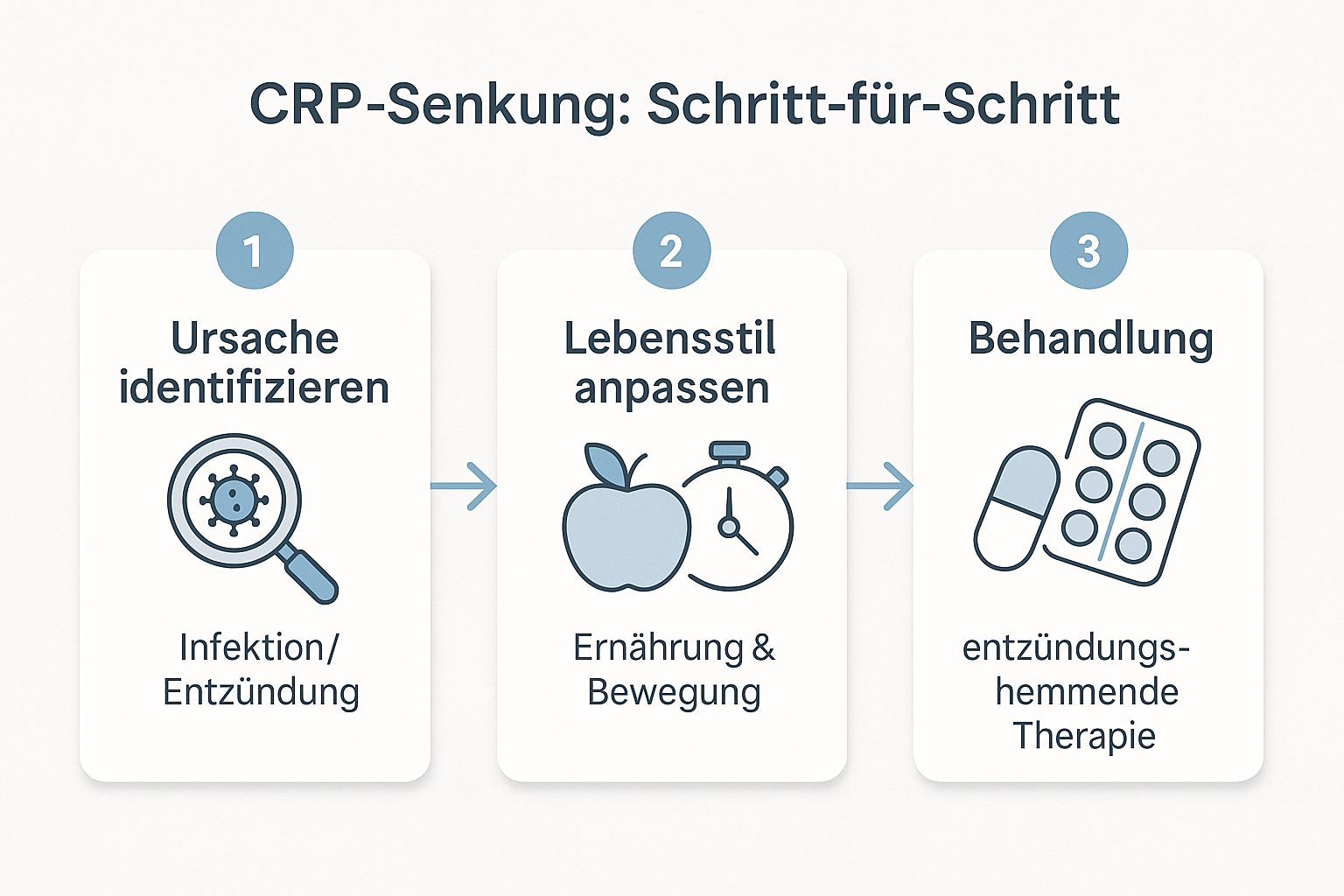
This graphic makes it clear: Nutrition and exercise are key, proactive steps you can take yourself to effectively combat inflammation.
Movement that feels good and works
Regular physical activity is another powerful tool. This is not about peak athletic performance, which can even stress the body, but about moderate, consistent movement that you genuinely enjoy.
A combination of endurance training and light strength training is ideal. Find something that fits easily into your daily routine: brisk walks, cycling, swimming, or yoga. Just 30 minutes on five days a week can make a noticeable difference. Exercise not only directly reduces inflammatory markers, but also helps break down abdominal fat—one of the main sources of inflammation-promoting messengers. A welcome side effect: it can also help you boost your metabolism naturally and improve your overall well-being.
Stress management and the power of breathing
Chronic stress is an invisible but extremely powerful driver of silent inflammation. The constant flood of stress hormones such as cortisol throws your immune system off balance. That’s why active stress management is not a luxury, but a key part of your health strategy.
Fortunately, there are simple and incredibly effective techniques for everyday life:
- Conscious breathing: Take a few minutes several times a day to practice deep abdominal breathing. The well-known 4-7-8 technique is perfect: inhale through your nose for 4 seconds, hold for 7 seconds, and exhale audibly through your mouth for 8 seconds. This immediately calms your nervous system.
- Mindfulness and meditation: As little as 10 minutes of daily meditation has been shown to reduce stress levels and inflammation markers.
- Get out into nature: A walk in the woods ("forest bathing") lowers cortisol levels and has been shown to strengthen the immune system.
Your body does not distinguish between the stress of an approaching deadline and the stress caused by a saber-toothed tiger. The physical response is the same. Learn to consciously send your system signals of safety and relaxation.
Sleep your way to better health
We often underestimate how important sleep is for our health. While we sleep, essential repair and regeneration processes take place in the body. Chronic sleep deprivation severely disrupts these processes, raises inflammation markers, and weakens the immune system.
Try to get seven to nine hours of good sleep per night. Good sleep hygiene is crucial: maintain consistent bedtimes, keep your bedroom cool, dark, and quiet, and avoid screens (blue light) during the hour before going to bed. A relaxing evening routine, perhaps with a cup of herbal tea or a warm bath, can work wonders.
Frequently asked questions about elevated CRP levels
When you start looking into your CRP level, a lot of questions often come up. That is completely normal and shows that you take your health seriously. We have collected the most frequently asked questions for you here and provide clear, easy-to-understand answers.
Can my CRP level also be elevated by a simple cold?
Yes, absolutely. An acute infection, such as a cold or flu, is actually one of the most common reasons for a temporarily elevated CRP level. Your immune system is working at full capacity to fight off the pathogens and prompts the liver to release large amounts of C-reactive protein.
This is a completely normal and even necessary reaction of the body. However, it is important that the level returns to the normal range once the infection has subsided. So, if you want to test your level with regard to chronic, low-grade inflammation, you should definitely take the test when you are healthy—ideally at least two weeks after recovering from an illness.
How quickly can the CRP level be lowered?
The speed at which your hs-CRP level falls depends entirely on the cause and your commitment. If the elevation is attributable to lifestyle factors, consistent changes can often lead to a noticeable improvement in your blood after just four to six weeks.
The key to success, however, is sustainability. An anti-inflammatory diet and regular exercise must become established habits. If you fall back into old patterns, your level may unfortunately rise again just as quickly. Think of it as a marathon for your health, not a short sprint.
Is changing my diet enough to lower my CRP level?
An anti-inflammatory diet is undoubtedly the most important pillar for lowering your CRP level. It provides exactly the nutrients your body needs to downregulate inflammatory processes.
However, you should not lose sight of the bigger picture. It is an interplay of several factors. Regular, moderate exercise, restful sleep, and, above all, good stress management are at least as important.
Think of it this way: With the right diet, you are trying to put out a fire. But if you keep adding oil through stress and lack of sleep at the same time, you will not get very far. You achieve the best and most sustainable results when you work on all fronts simultaneously.
Do I always need to see a doctor if my CRP level is high?
A slightly elevated hs-CRP level, as is typical of silent inflammation, should primarily be understood as a wake-up call to reconsider your lifestyle. A home test, such as the one from mybody-x, can provide valuable guidance and serve as a useful monitoring tool.
However, if your level is significantly elevated (usually above 10 mg/L), you feel acutely ill, or notice other unexplained symptoms, you should discuss the result with a doctor as soon as possible. A home test is a great tool for prevention and monitoring your progress, but it can never replace a medical diagnosis in the case of acute symptoms.
Are you ready to take the first step and gain clarity about your personal inflammation status? With mybody-x test kits, you can easily and conveniently measure your levels from home. Find out whether silent inflammation also plays a role for you or whether your hormone balance may have become disrupted. Take control and actively shape your health.



Share now:
Elevated CRP level: causes and tips for lowering it
Your iron deficiency test: Everything you need to know