

Swiss health portals: understanding opportunities and limitations
TL;DR:
- The official Swiss health portal is the government-regulated Electronic Patient Record (EPR). Alternative offerings such as private platforms and at-home tests provide additional functions but are subject to different regulations. For secure health management, combining the EPR with carefully selected preventive tests is recommended.
In Switzerland, many people are looking for a central digital location for their health data. However, those searching for a “health portal” encounter a broad spectrum, ranging from the government-regulated Electronic Patient Record to private providers promising DNA analyses or microbiome tests. None of these offerings is identical, and none is equally suitable for everyone. This guide explains what lies behind the term, which systems actually exist, and how to make the right decision for yourself.
Table of contents
- The term health portal: definitions, examples, and role in Switzerland
- The Electronic Patient Record (EPD): How it works, security, benefits
- Alternative health portals and at-home tests: Opportunities, hurdles, and expert assessment
- Comparison: Official health portals vs. alternative tests and providers
- Practical tips: How to use health portals effectively for your well-being
- Our perspective: Why evidence, data protection, and individuality matter
- Discover Personalized Health Solutions with mybody®x
- Frequently Asked Questions
Key findings
| Point | Details |
|---|---|
| The term is broad | In Switzerland, “health portal” refers to various official and private platforms, not a single portal. |
| EPR as the standard | The Electronic Patient Record is the government-regulated, secure core portal for your health data. |
| Caution with alternatives | At-home tests and private platforms are popular, but often lack sufficient scientific evidence. |
| Data protection is key | Official solutions such as the EPR give you maximum control and security for sensitive health data. |
| Informed decision | Combine medical advice with personal responsibility to find the optimal health portal for your needs. |
The term health portal: definitions, examples, and role in Switzerland
The term “health portal” sounds official, but it is not necessarily so. There is no legally defined standard stipulating what a health portal must be. Instead, government agencies, health insurers, hospitals, and private providers use the term for very different platforms. This makes it difficult to find your way around, especially when you want to make specific decisions about your health.
A health portal can mean the following in the Swiss context: a government platform for managing clinical data, an information portal operated by a health insurer, a private platform for prevention services, or a provider of at-home tests. This diversity is a strength because it addresses different needs. However, it also carries the risk of confusing reputable and less reputable offerings.
Typical functions covered by health portals:
- Storage and management of medical documents (findings, medication plans, vaccination records)
- Communication between patients and healthcare professionals
- Information on diseases, prevention and lifestyle
- Access to laboratory and test results
- Booking doctor’s appointments or telemedicine consultations
- Offers for home tests and personalised analyses
Here is an overview of the most important platforms and their core functions:
| Platform | Type | Main function | Target audience |
|---|---|---|---|
| EPD (patientendossier.ch) | Official, government-run | Clinical data management | All residents of Switzerland |
| well.ch | Private, health insurer | Health information, services | CSS-insured persons |
| mybody-x.com | Private, preventive | DNA, microbiome, home tests | Health-conscious individuals |
| ch.ch Health | Official, informational | Government information | General population |
As the central digital health dossier, the EPD is the only government-regulated system. All other platforms operate outside this framework, with their own data protection rules and quality standards. For health-conscious individuals, it is therefore crucial to know the difference between an official portal and a commercial offering.
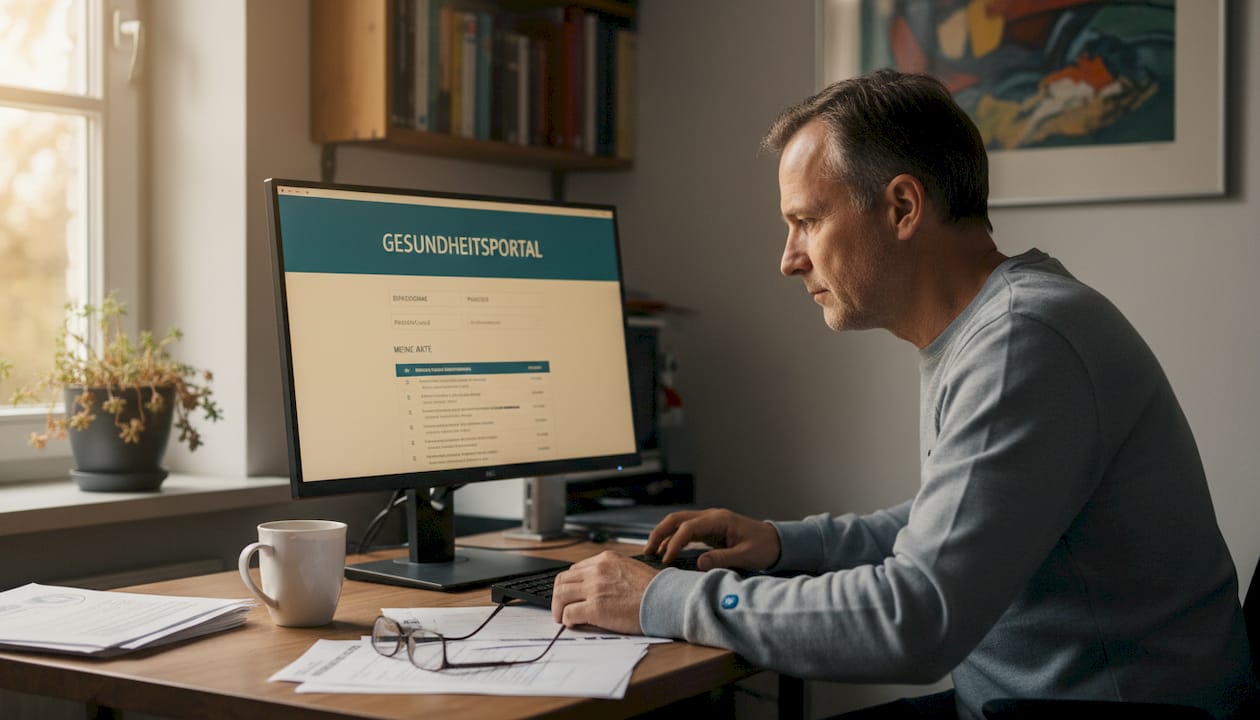
EPD Explained provides a good introduction for anyone who wants to understand the official system. Now that it is clear how multifaceted the term is, let us look at the role of what is probably the most important system in Switzerland.
The Electronic Patient Record (EPD): How it works, security, benefits
Once you are familiar with the range of services, we delve into the most widely used and official system. The EPD is a digital dossier in which clinically relevant health data can be stored and shared securely. It was introduced by the federal government to improve the quality of care and facilitate communication between healthcare professionals.
This is how the EPD works:
- You open a dossier with a certified provider of a community of reference.
- You grant healthcare professionals access rights to specific documents.
- Doctors and hospitals can store findings, medication lists and reports.
- You retain full control over your data at all times.
- You can upload or view documents yourself.
The EPD is government-regulated and meets high security standards. Data is transmitted and stored in encrypted form. You alone grant access rights. Insurers, employers and other third parties have no access whatsoever.
| Criterion | EPD || |—|—| | Regulation | Government-run, established by law | | Data protection | Encryption, user-controlled access | | Content | Clinical documents, findings, medications | | Use | Voluntary, free of charge for private individuals | | Integration | Hospitals, medical practices, pharmacies |
The EPD standards and technology are coordinated and continuously developed by eHealth Suisse. The system is designed to improve clinical processes, not primarily to promote personal prevention.
One important point that many people overlook: The EPD does not cover alternative or preventive at-home test data. DNA analyses, microbiome tests, and nutrient checks have no official place there. This is not a weakness of the system, but a deliberate distinction from clinically validated data.
Pro tip: Use the EPD as a reliable foundation for your clinical health data. For preventive analyses and personal responsibility, you need complementary solutions tailored to your personal goals.
An overview of health data helps you understand how different data categories can interact.
Alternative health portals and at-home tests: Opportunities, hurdles, and expert assessment
Anyone considering alternative options alongside the EPD should carefully weigh the opportunities and risks. The market for private health platforms and at-home tests is growing rapidly. DNA tests, microbiome analyses, hormone profiles, and nutrient checks can be carried out conveniently at home. This sounds appealing, especially to people who want to take an active role in managing their health.
Alternative options at a glance:
- DNA metabolism tests: Analyze genetic variants that influence nutrition, weight management, and fitness.
- Microbiome analyses: Examine the composition of gut bacteria and provide dietary recommendations.
- Nutrient and mineral checks: Detect deficiencies early that affect energy, the immune system, and mood.
- Hormone tests: Provide insights into hormonal balance for men and women.
- Intolerance and allergy tests: Identify intolerances that affect everyday life.
The question is: What do experts say about this? Opinions are mixed. On the one hand, these tests offer genuine benefits for informed users. On the other hand, there is justified criticism.
“Experts often regard microbiome tests as expensive and of limited clinical value because interpreting the results without medical guidance is difficult and clinical evidence for many recommendations is still lacking.”
This does not mean that all at-home tests are worthless. It means that you should critically assess the provider’s quality, laboratory certification, and the scientific basis of the recommendations. An ISO-certified laboratory with clearly documented methods is a good sign. Vague promises without sources are a warning sign.
You should know the benefits and limitations of home tests before investing. And if you are wondering which test is right for you, helpful guidance is available.
Professional tip: Always consult a doctor before self-diagnosing. At-home tests can provide valuable insights, but they do not replace a medical diagnosis. Use the results as a basis for discussion, not as a definitive answer.
Comparison: Official health portals vs. alternative tests and providers
After evaluating individual alternatives, the question remains: How do the approaches differ in concrete terms, and which one is right for you? A direct comparison can help with the decision.
| Criterion | EPD (official) | Alternative at-home tests |
|---|---|---|
| Data protection | Government-regulated, highest standards | Varies by provider |
| Clinical validity | High, medically recognized | Varies, often limited |
| Integration into the healthcare system | Fully integrated | Not integrated |
| User convenience | Moderate, bureaucratic | High, convenient from home |
| Cost | Free for private individuals | Paid |
| Prevention focus | Low | High |
| Personalization | Low | High |
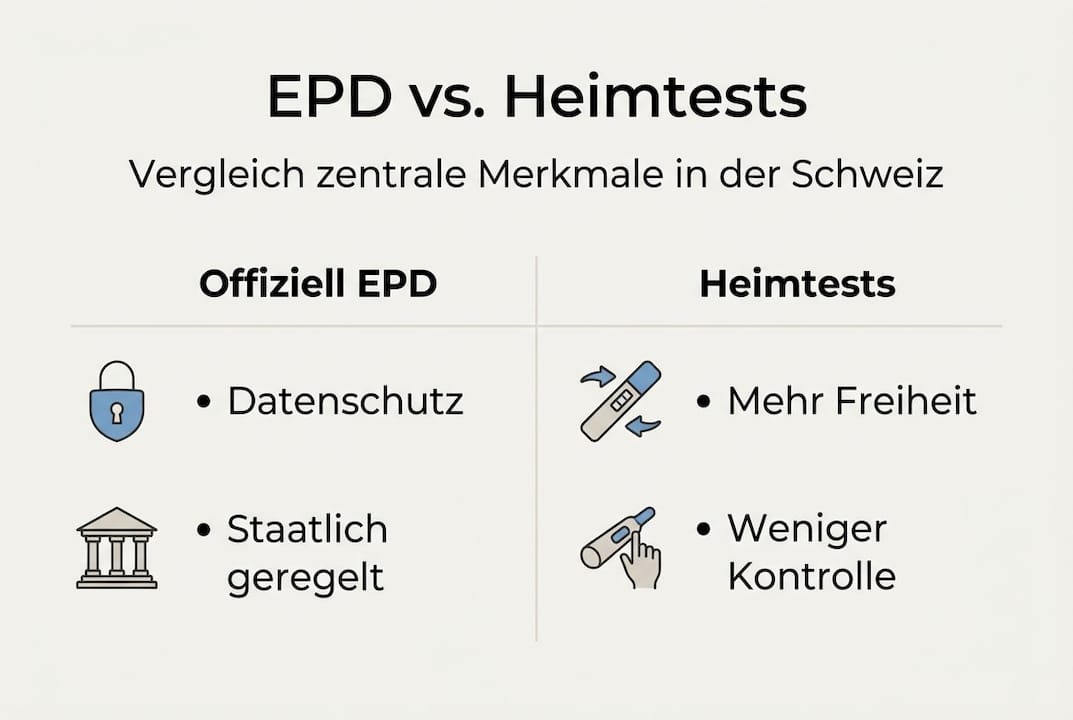
The EPD guarantees data protection and government oversight, while alternative tests offer more freedom but may have less evidence to support them. Both approaches have their merits, depending on the context and personal goal.
Future trend: The EPD plans expansions intended to enable greater interoperability. Private providers, for their part, are working to provide stronger scientific support for their tests and integrate them into existing systems. The boundaries between official and alternative approaches will become more fluid in the coming years.
How do you make the right decision? These guidelines can help:
- Define your goal: Is it clinical documentation or preventive insights?
- Check the laboratory certification: ISO standards are a minimum requirement for reputable providers.
- Ask about the scientific evidence: Which studies support the recommendations?
- Compare the differences between microbiome tests from different providers.
- Discuss the results with a healthcare professional before taking any action.
Practical tips: How to use health portals effectively for your well-being
After seeing the differences and opportunities, let us turn to specific recommendations for your everyday life. The best strategy combines the best of both worlds: government-secured data and personalized prevention.
Step by step to a secure start with official portals:
- Open an EPD with a certified provider. The information about the EPD on ch.ch explains the process clearly.
- Upload existing health documents: vaccination record, allergy list, important medical findings.
- Share access rights selectively with your general practitioner.
- Regularly check who has access to your data.
- Use the EPD as a central repository, not as your only tool.
How do you assess the medical value of alternative services? Pay attention to the following points:
- Is the laboratory ISO-certified?
- Are the methods explained transparently?
- Are there independent scientific publications supporting the methodology?
- Does the provider offer personal consultation?
- Are your data pseudonymized and destroyed after the analysis?
The digitalization goals for healthcare emphasize patient safety and voluntariness. This also applies to alternative services: No one is forcing you to take every test available. Choose selectively what fits your health goals.
Pro tip: The strongest combination is evidence-based medicine plus informed personal responsibility. Use the EPD for clinical data and supplement it with high-quality preventive analyses based on the scientific basis of microbiome analysis. This way, you retain control without giving up valuable insights.
Our perspective: Why evidence, data protection, and individuality matter
In closing, we would like to share what we believe truly matters. Health data is not just any data. It is your most personal asset, and handling it deserves the utmost care. Anyone who treats data protection as a minor matter risks more than just data leaks: they lose control over their own health history.
Clinical validity is not a marketing term for us, but a quality criterion. A test without a solid scientific basis can be misleading and, in the worst case, lead to wrong decisions. This is not criticism of innovation, but an invitation to greater transparency in the industry.
At the same time, we firmly believe that informed personal responsibility creates real added value. Those who understand how their body works make better decisions. That is why it is important to inform yourself by taking a critical look at home tests and not to trust offers blindly. Freedom of choice is valuable. But informed, critical decisions protect your long-term health better than any trend.
Discover Personalized Health Solutions with mybody®x
If you are critically evaluating alternatives and value individualized healthcare, we recommend mybody®x as your next point of contact. mybody® Lab GmbH offers ISO-certified analyses of DNA, the microbiome, nutrients, and hormones, all conveniently performed at home. With more than 11,300 satisfied customers and a rating of 4.77 stars, mybody® stands for scientifically sound quality and transparent data protection. Samples are pseudonymized and destroyed after analysis. Personal consultation, free shipping from 49 euros, and a money-back guarantee make getting started easy. Discover the testing options that match your health goals at mybody-x.com.
Frequently Asked Questions
What is the official health portal in Switzerland?
The Electronic Patient Record is the official Swiss portal for health data, with access through certified providers. It is regulated by the state and voluntarily available to all residents of Switzerland.
Can microbiome and DNA test results be uploaded to the EPR?
The EPR focuses on clinical data and currently does not officially integrate private at-home tests. Uploading data is technically possible in principle, but is not предусмотрено.
How secure is my health data in the EPR?
The EPR offers users a high level of security and control through encryption and individualized access rights management. You decide who may view which data.
Do insurers or employers have access to my data in the health portal?
Insurers and employers have no access rights to the EPR. Access is restricted exclusively to healthcare professionals you authorize.
What alternatives to the EPR are available for taking personal responsibility for your health?
Private health portals and at-home tests offer opportunities for personalized data collection, but their scientific evidence should be evaluated. ISO-certified providers with transparent methods are the more reliable choice.



Share now:
Optimize Your Nutrition: The Guide for Your Body
Good Nutrition: The Ultimate Guide for Your Body