
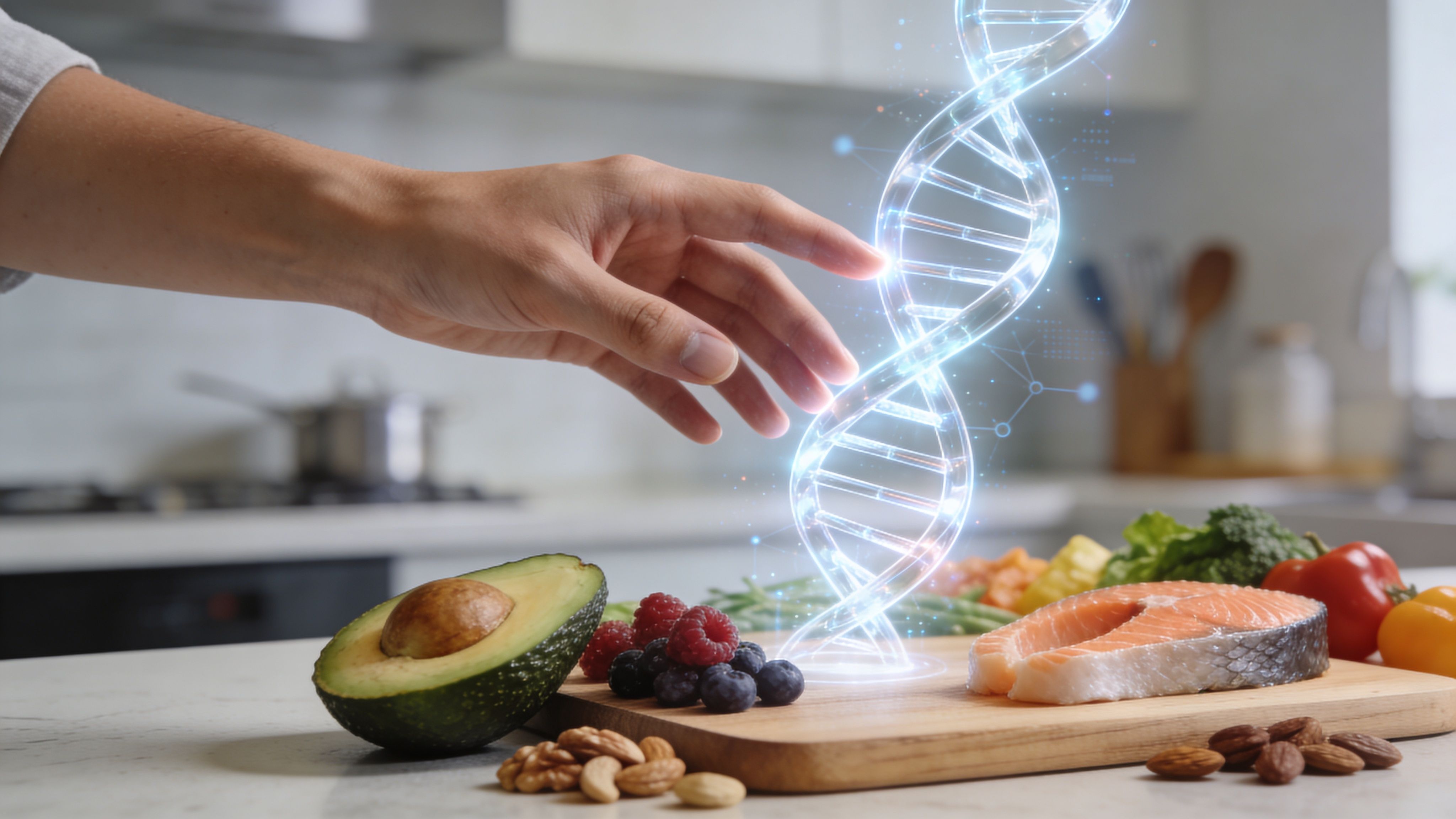
DNA Test Nutrition Experiences: Is the Analysis Worth It?
You've tried a lot. Sometimes fewer carbohydrates, then more proteins. Maybe intermittent fasting, maybe calorie counting, maybe just "eating healthier." And yet, there's often this feeling: I follow the rules, but my body isn't cooperating.
This is exactly where many people look for DNA test nutrition experiences. Not because they hope for magic. But because they finally want to understand why the same diet works for a friend but barely changes anything for them.
The underlying idea is logical at first. If your body processes nutrients slightly differently than someone else's body, then general diet plans might not work for you. A DNA nutrition test therefore promises not a new diet trend, but rather a more personal look at your metabolism.
Nevertheless, skepticism is warranted. Because with this topic, there's only a fine line between a clever tool and exaggerated marketing. Some people experience more orientation and a better body feeling. Others expect measurable miracles in weight loss and are disappointed afterward.
If you want to know what such tests can really do, where their limits lie, and how to meaningfully translate the results into everyday life, you don't need advertising language. You need an honest classification. That's exactly what this is about.
No More Diet Guessing: That's Why You're Looking for Answers
Many people start a diet with motivation and a few weeks later find themselves back at the old question: What actually suits me? The problem is rarely a lack of will. Often, what's missing is a system that fits one's own daily life and one's own body.
The nutrition market is full of contradictions. Some say fat is the problem. Others say carbohydrates are the real trigger. Then there are topics like blood sugar, gut health, genetics, sleep, and stress. No wonder you eventually feel like you're navigating in a fog.
Why Standard Plans Often Frustrate
A general diet plan works well for some people. For others, it doesn't. This can be because daily life, hunger, preferences, digestion, and eating behavior vary greatly. And this is where the idea behind DNA tests becomes exciting.
Imagine two cars that look similar on the outside. Both drive. But one engine runs more smoothly with a certain fuel, and the other reacts more sensitively. This is similar to how DNA nutrition is thought of. Not as rigid fate, but as an indication of how your body is likely to tick.
You're usually not just looking for a test. You're looking for an explanation that finally matches your experiences.
What You Can Realistically Expect From It
Most people don't just want to know if they should eat "more protein" or "less pasta" with such a test. They want clarity. They want less puzzling when shopping, cooking, and planning.
A DNA nutrition test only becomes helpful if it gives you answers to everyday questions:
- For breakfast: Does a carbohydrate-rich breakfast make you tired, or do you cope well with it?
- For weight loss: Do you find a more fat-focused or more carbohydrate-reduced structure easier?
- For intolerances: Are there genetic clues that make certain complaints more understandable?
- For routines: Can you finally build solid, simple habits from the results?
If you approach the topic this way, a hyped topic becomes something useful. Not "the perfect diet," but a compass.
What a DNA Nutrition Test Really Measures
A DNA nutrition test does not read your entire DNA like a complete book. It looks at selected passages. This refers to certain gene variants, known as SNPs, which can be related to metabolic processes.

If you want to delve deeper into the basic topic, you'll find a good overview of related analyses in the DNA Test Knowledge Area from mybody.
It's About Predispositions, Not Predictions
This is where many get confused. A test doesn't tell you: "You have to eat exactly like this, otherwise nothing will work." It rather says: "Your body might tend to process certain nutrients differently than an average model."
Typical areas include:
- Macronutrients: How your body tends to deal with carbohydrates, fats, and proteins
- Digestion topics: For example, clues around lactose via genes like LCT
- Micronutrients: For example, genetic variants like MTHFR, which can be related to folate metabolism
- Individual reaction patterns: For example, with caffeine or certain foods
This is not a judgment about "good" or "bad" genes. It's about differences in the biological starting point.
What's Up with Meta-Types
Many providers classify results into so-called meta-types. According to the mybody article on testimonials, people are often classified into four types: Alpha for optimal protein utilization, Beta for fat and protein utilization, Gamma for carbohydrate affinity, and Delta for balanced utilization. It also states that 40 to 70 percent of weight differences between individuals could be genetically determined. This underscores why such analyses are interesting, even if they don't explain everyday life alone (classification of meta-types and genetics).
A simple analogy helps: Your body isn't a bad engine if it reacts better to a different mix. It's just tuned differently.
| Area | What the test is more likely to show | What it does not show |
|---|---|---|
| Carbohydrates, Fats, Proteins | genetic tendencies in utilization | exact food quantities for each day |
| Lactose, Folate, Caffeine | possible sensitivities or specificities | certain diagnosis of all complaints |
| Metabolic type | a simplified working model | your entire health reality |
Key takeaway: A DNA test is more like a map than a navigation system. It shows directions, but you still walk the path yourself.
Your Personal Nutrition Blueprint Decoded
When people search for DNA test nutrition experiences, they usually want to see how a result looks in everyday life. Not as laboratory jargon, but as a tangible plan. This is exactly what determines whether such a test later disappears into the kitchen drawer or is actually used.

If you want to understand beforehand how nutrition types are practically classified, the article Which Nutrition Type Am I will also help you.
How Results Read in Real Life
A useful report translates genetic clues into everyday language. So, not just "Variant XY present," but questions like:
- Which macronutrient distribution might suit you better?
- Which foods should you rather plan regularly?
- What is more for occasional exceptions?
- Are there any hints on topics like lactose or certain micronutrients?
The Spiegel report on DNA diets describes that providers sometimes analyze 50 to 100 SNPs and derive concrete macro recommendations from them, for example, 60 percent carbohydrates, 22 percent proteins, and 18 percent fats for weight loss goals. Foods are often divided into categories such as "daily," "2-3x/week," or "max. 1x/week." Butter or pasta, for example, are mentioned as rather rare options. The report also describes practical experiences with subjectively improved well-being, but no weight change after 4 weeks. At the same time, meta-analyses on long-term effectiveness are lacking (Spiegel classification of DNA diets).
Data Must Become Decisions
The big mistake is to read such a report like a list of prohibitions. This way of thinking is more useful:
-
Orientation instead of obedience
If your profile shows that you probably cope better with a certain macro distribution, then that's a starting point. Not a cage. -
Food patterns instead of individual products
Not "never pasta again," but rather: pasta less often, but more frequent meals that keep you full longer. -
Repeatable meals instead of perfection
Whoever puzzles anew every day rarely keeps it up for long. Good reports help to find standard dishes for weekdays.
A strong report doesn't just answer what you could eat. It simplifies the question of what you should buy tomorrow and cook on Tuesday evening.
Why the Cookbook and Recipe Book Are So Important
This is where it gets practical. Data alone doesn't change nutrition yet. Only when recommendations become concrete recipes, shopping logic, and meal ideas does habit emerge.
With the DNA Test Nutrition product from mybody®, exactly this step is included: an individual cookbook and recipe book that translates the genetic results into everyday dishes. This is objectively the crucial added value. Not the pretty graphic in the report, but the feasibility in real life.
An example: If your profile is more suited to protein-rich and balanced meals, the information alone is of little use. A recipe book turns this into breakfasts, lunches, and dinners that you can repeat without constant thought. This is how analysis becomes routine.
The Honest Truth About Scientific Validity
When we talk fairly about DNA nutrition, we have to tolerate two things at once. First: the topic is scientifically interesting. Second: the data does not justify expectations of miracles.

Those who want to better classify scientific statements will find a useful background in the explanation of reliability and validity in science. Especially with health tests, the difference is important: a test can measure cleanly and yet only predict to a limited extent how strongly a behavior will ultimately work.
What the Criticism Specifically Says
The Consumer Advice Center NRW writes that DNA tests for nutrition, despite big advertising promises, are scientifically insufficiently validated. After 20 years of research, there is no evidence of superior effectiveness compared to general diets. They also refer to a meta-analysis of 23 studies with over 1,000 subjects, which showed only minimal differences in physiological reactions. Furthermore, the Consumer Advice Center emphasizes that 70 to 80 percent of the influence can be shaped by environmental factors. At the same time, mybody® is reported to have over 11,300 users and a rating of 4.77 out of 5 stars. In addition, 70 to 80 percent of users report subjectively improved well-being. The data therefore speaks more for motivation and orientation than for a clearly proven biological advantage in weight loss (classification of the Consumer Advice Center NRW).
This is uncomfortable, but important. A test can feel helpful and still not prove that it automatically improves weight loss.
What the Stanford Study Really Shows
A frequently cited study comes from Stanford University. There, 609 overweight subjects were randomly divided into groups. One group received diet plans with genetic consideration of variants in carbohydrate and fat metabolism, while the control group received standardized recommendations. After 12 months, both groups achieved similar weight reductions of an average of 2.6 to 2.9 kg. The genetic adaptation brought no measurable advantage, the differences were barely significant (p > 0.05) (Description of the Stanford Study in the Science Portal Context).
A DNA test is not proof that your body needs special rules. It is a tool that can help you experiment more meaningfully.
The Fair Classification
If you expect a DNA test to make the pounds suddenly drop off, disappointment is inevitable. If you use it as an aid for self-observation, it looks different.
The test becomes truly useful in three situations:
- You are diet-weary and finally need a plausible framework instead of constantly new trends.
- You want to recognize patterns, such as why certain meals keep you full longer.
- You need motivation because a personal report makes your behavior more tangible.
The honest message is therefore: Nutrigenetics does not replace lifestyle changes. But it can make these changes more structured.
Real DNA Test Nutrition Experiences from Practice
The most exciting DNA test nutrition experiences rarely happen on paper. They happen during weekly grocery shopping, at dinner after a long day at work, and in moments when you realize whether a plan is truly sustainable.
Anna Didn't Want to Start Another Diet
Anna had had enough of rigid rules. She could be disciplined for a few weeks, then the typical relapse would come. What helped her was not the idea of a perfect diet, but a simpler logic.
Her report didn't tell her "never eat carbohydrates again," but made it clear that she stayed full longer with differently composed meals. So she didn't change everything at once. She only modified her breakfast and two standard dinners. For her, the biggest experience was not the quick effect on the scale, but that she felt less helpless.
Markus Sought Performance, Not Prohibitions
Markus exercises regularly and primarily wanted to better understand his recovery. Before, he ate healthily, but quite randomly. Sometimes very carbohydrate-rich, sometimes hardly any protein, depending on what was available.
The value of the test for him lay in the structure. He got a comprehensible framework for how he could structure his meals throughout the day. His feedback was, in essence: less overthinking, more consistency. For athletes, that's often exactly what's crucial. Not the spectacular individual meal, but the repetition.
Some of the best experiences with DNA nutrition are surprisingly unspectacular. More clarity, less chaos, better routine.
Sabine Finally Wanted to Read Her Body Better
Sabine didn't primarily have a weight loss goal. She wanted to understand why she felt sluggish after certain foods and others suited her well. The test didn't give her a definitive diagnosis, but it helped her to look more targeted.
Instead of randomly cutting out foods, she systematically tested certain recommendations in her daily life. This made her eating behavior calmer. She reacted less to trends and more to what worked for her personally.
These examples show something important: Good experiences with DNA tests are often not miracle stories, but learning processes. People are more likely to report better body awareness, more practical decisions, and greater confidence in their eating habits. That's precisely why you should look for benefits there.
From Knowledge to Action: How to Use Your Report Correctly
The most common mistake happens after the test. The report is read, found interesting, and then filed away. This nullifies almost everything that could be helpful about it.

This is where practical implementation is crucial. Mybody's experience report describes that only about 28 percent of users stick to personalized plans for longer than 6 months. It also emphasizes that mere information from a genetic test is often not enough for a long-term change and that a personalized cookbook can integrate recommendations directly into everyday life (Instructions for implementation after the test result).
Three Rules to Prevent Your Report from Becoming Useless
-
Start with one meal a day
If you change everything at once, it quickly becomes complicated. First, choose breakfast or dinner and build a routine there. -
Work with repetitions
Find a few dishes that fit your profile and that you like. Nutrition often fails not due to lack of knowledge, but due to decision fatigue. -
Use recipes instead of theory
Reading tables briefly motivates. Cooking changes behavior. That's why concrete recipe suggestions are often more valuable than additional explanations.
How to Recognize a Good System
A meaningful approach not only answers "What should I avoid?", but most importantly:
| Question | Useful Answer |
|---|---|
| What do I eat in the morning? | concrete, repeatable ideas |
| What do I buy? | simple food patterns |
| What do I cook under time pressure? | quick standard dishes |
| How do I stay on track? | fixed routines instead of a daily fresh start |
If you take a DNA test, use it like a personal cheat sheet for your everyday life. Not as an identity. Not as an excuse. But as a decision-making aid.
Frequently Asked Questions about DNA Nutrition Tests
Are my data safe with such a test?
Reputable providers work according to GDPR-compliant processes. The information from the NRW consumer center describes that providers can pseudonymize samples and destroy them after analysis. If data protection is important to you, always examine this point carefully before purchasing.
Is such a test useful for everyone?
It is especially useful for people who want to approach their diet in a more structured and personalized way. This means not just for weight loss, but also for everyday life, sports, satiety, well-being, and a better understanding of one's own body.
It is less suitable if you expect a magical answer. In that case, almost any test will promise too much.
Am I on my own after the test?
That depends heavily on the offer. A bare laboratory report is often only of limited help. Much more useful are understandable evaluations, concrete food categories, recipes, and clear instructions for everyday life.
Does a DNA test replace nutritional counseling?
No. A DNA test can provide clues and help you orient yourself better. However, it does not replace individual medical clarification or personal support if you have complex complaints or strong uncertainties.
What is the most reasonable expectation?
Don't expect a miracle. Expect more clarity. If you use the test as a tool for better habits, that is the most realistic and sensible perspective.
If you want to base your diet not on trends, but on comprehensible personal insights, a structured test can be a sensible starting point. MYBODY Lab GmbH offers DNA analyses with understandable reports and practical implementation, so that genetic information can be translated into concrete decisions for shopping, cooking, and everyday life.



Share:
This is how individual tests measurably improve your own health
Leaky Gut Diet Plan: Heal Your Gut & Boost Vitality