
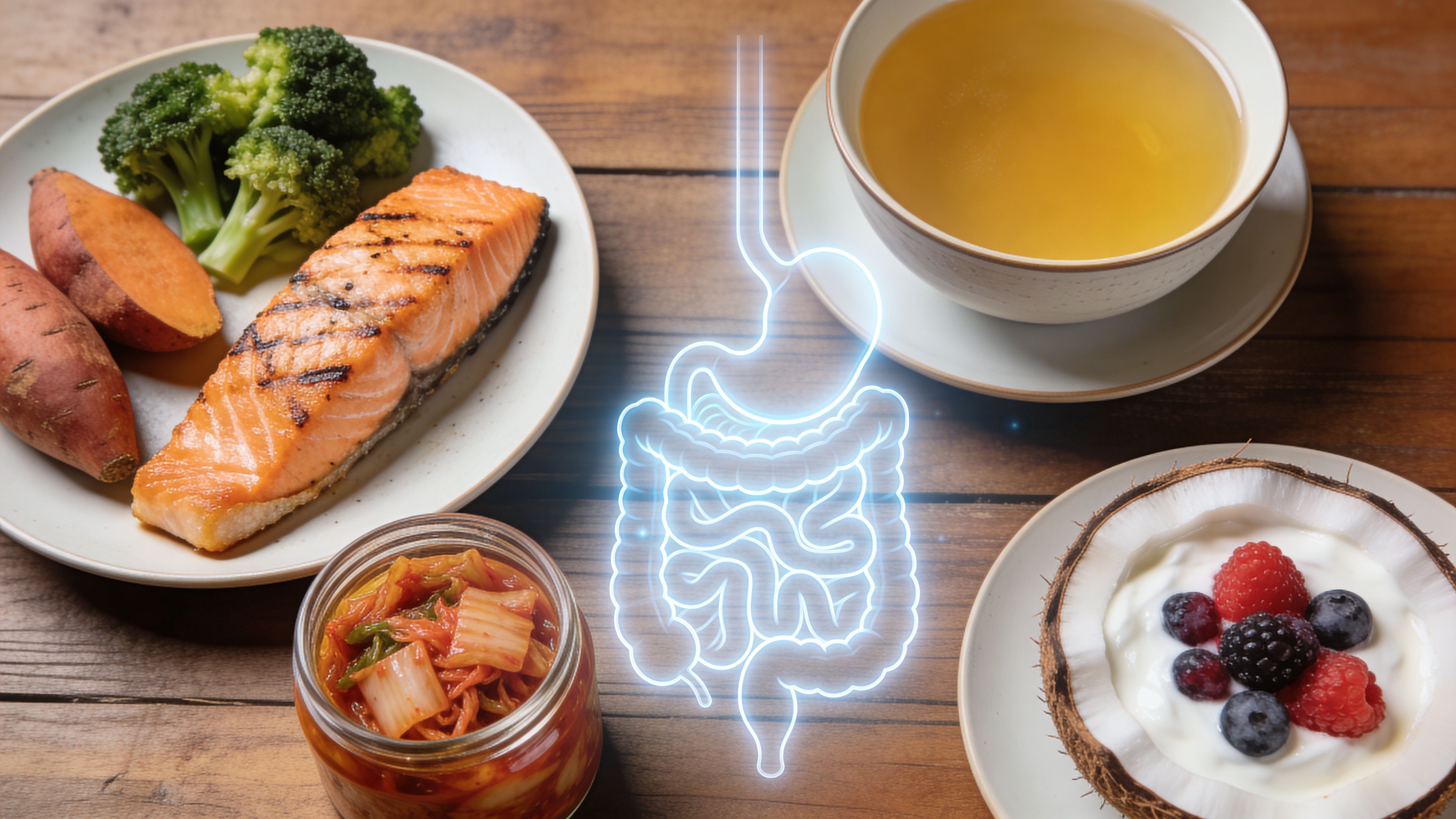
Leaky Gut Nutrition Plan: Heal Your Gut & Boost Vitality
You are already eating cautiously. You may have cut out sugar and still find that you can no longer tolerate certain foods, feel bloated after eating, and are also tired, unfocused, or irritable. This exact combination unsettles many people because it is not clear-cut, yet feels very real.
If your body is becoming sensitive to more and more foods, it is worth taking a closer look at your gut. A good leaky gut nutrition plan is not simply a list of permitted and prohibited foods. It is a structured approach that helps you reduce triggers, support your intestinal lining, and then determine clearly which foods work for you personally and which do not.
What your gut feeling is really trying to tell you

Many people describe it similarly: Their abdomen often feels tense, pressure or fatigue sets in after eating, and suddenly foods that previously caused no problems at all seem to trigger symptoms. That is usually when the guesswork begins. Was it gluten, dairy, stress, coffee, or something else entirely?
With leaky gut, the intestinal barrier is impaired. You can think of the intestinal wall as a fine-mesh filter. It is meant to let nutrients through while retaining anything that does not belong in the bloodstream. When this filter becomes too permeable, the body reacts more sensitively.
What happens in the gut
An important factor here is zonulin. A sustained increase in zonulin release opens the connections in the intestinal wall, increasing permeability. As a result, according to the specialist information on impaired intestinal barrier function from IMD Berlin, up to 30 to 50% more bacterial metabolites can enter the bloodstream.
This explains why symptoms often affect more than just the abdomen. If the barrier is not functioning properly, the immune system may react more strongly. For those affected, this rarely feels clear-cut. It is more a pattern of digestive problems, exhaustion, intolerances, and a feeling that your body is no longer stable.
A sensitive gut barrier does not make you “complicated.” It makes you more reactive. That is precisely why you need less guesswork and more structure.
How to recognize that a plan makes sense
A targeted nutrition plan makes particular sense when you identify with several of these points:
- Recurring bloating after meals, even though you are not eating noticeably “badly”
- Fatigue or lightheadedness after eating
- Multiple suspected triggers instead of one clear cause
- Unpredictable tolerance, meaning something is fine today but not tomorrow
- Uncertainty when shopping, because almost everything seems potentially problematic
A well-designed leaky gut diet plan takes the pressure off. You do not need perfection. You need a sequence. First calm things down, then rebuild, then personalize.
Your 3-phase path to gut healing

People who try to change everything at once when experiencing digestive issues often fail not because they lack determination, but because everything becomes confusing. The gut rarely responds well to hectic experimentation. A clear three-phase model works better.
Phase 1: Relieve
In the first phase, you reduce everything that is likely to worsen your symptoms. This includes typical irritants such as highly processed products, alcohol, and foods you personally do not tolerate. The idea is simple: Less irritation, less overwhelm.
A low-FODMAP diet can be useful during this phase, especially if bloating, cramps, or alternating stools are the main concerns. According to the overview of the low-FODMAP strategy for leaky gut and irritable bowel syndrome, it has been scientifically shown to be effective in people with IBS, but should be used only temporarily during the elimination phase so that the gut microbiome is not burdened in the long term.
This is an important point. Many people make the mistake of turning an elimination diet into a permanent solution. In the short term, this can help. In the long term, food often becomes unnecessarily restrictive.
If you want to understand more deeply how the intestinal lining can be supported alongside your diet, the article on building the intestinal lining is a useful practical supplement.
Phase 2: Repair
Now it is no longer just about leaving something out. Your gut now needs the materials to regenerate. During this phase, the focus is on well-tolerated meals, sufficient protein, anti-inflammatory fats, and a simple kitchen routine.
A clear daily routine is helpful:
-
Simplify meals
Fewer ingredients per meal make reactions easier to identify. -
Choose cooked rather than raw
Steamed vegetables are often better tolerated than large portions of raw vegetables. -
Eat regularly
Constant snacking often keeps the digestive tract unnecessarily busy.
Practical rule: When your stomach is sensitive, simplicity usually wins. A simple meal is often better tolerated than a “healthy” bowl with ten ingredients.
Phase 3: Rebuilding
The third phase is often underestimated. This is exactly where your personal long-term plan takes shape. You reintroduce foods step by step and observe patterns. Not every reaction is immediately severe. Sometimes an intolerance only becomes apparent through fatigue, bloating, skin reactions, or changes in stool.
What matters is:
- Only one new food at a time
- Test in a normal portion size
- Record reactions instead of guessing
- Do not immediately allow everything again after one good day
This phase makes the difference between a short-term diet and a sustainable way of eating. You are not building toward a perfect list. You are building an everyday system that your body can genuinely cope with.
What you should eat and what you need to avoid
A good leaky gut meal plan is not based on prohibitions, but on function. In your daily life, each food tends to have either a calming or an irritating effect. What matters is whether it relieves strain on your intestinal lining, keeps digestion manageable, and provides you with enough nutrients.
The basic idea behind food selection
Meals that combine three things usually work particularly well: easily digestible protein, well-tolerated fats, and gently prepared vegetables. This keeps blood sugar more stable, puts less strain on digestion, and creates a good foundation for regeneration.
By contrast, foods that are highly processed, contain many additives, or reliably trigger symptoms for you are problematic. Even if a product sounds healthy in theory, it is often not automatically suitable during a sensitive phase.
According to the information on leaky gut and nutrition on nahrungsmittel-intoleranz.com, bone broth, rich in collagen, and L-Glutamine at 5 to 10 g per day can support the regeneration of the intestinal lining up to 40% more effectively. At the same time, avoiding gluten leads to significant symptom relief in over 60% of those affected.
Leaky Gut Foods in Direct Comparison
| Food group | Recommended (healing & anti-inflammatory) | To avoid (irritating & inflammation-promoting) |
|---|---|---|
| Proteins | Fish, eggs, well-tolerated poultry, tofu if tolerated | Sausage products, breaded products, highly processed meat products |
| Fats | Olive oil, omega-3-rich fish such as salmon, avocado if tolerated | Fried foods, highly processed fats, industrially blended products |
| Vegetables | Steamed zucchini, carrots, pumpkin, well-cooked side dishes | Very large amounts of raw vegetables, heavily seasoned ready-made meals |
| Carbohydrates | Simple, well-tolerated side dishes such as rice or potatoes, depending on tolerance | Sugary snacks, sweets, highly processed baked goods |
| Gut-supporting basics | Bone broth, simple soups, mildly prepared foods | Alcohol, fast food, products with many additives |
| Common triggers | Test individually during the rebuilding phase | Temporarily assess gluten and dairy products critically |
Why this selection often works better
Protein is important because your body cannot build repair processes out of thin air and hope. Good sources of protein are therefore a fixed part of every meal.
Foods rich in omega-3 are also beneficial. In the available data, a diet plan including omega-3-rich foods such as salmon at least twice a week and 1 to 2 g of EPA/DHA is associated with a reduction in inflammation. In practice, this means: Fat is not your problem. The quality of the fat is crucial.
Steamed vegetables are often easier to tolerate than raw vegetables because your digestive system has to do less mechanical work. Especially during a sensitive phase, this helps many people more than large salads.
What often doesn’t work well
Many people start out too strictly or too “healthily.” Then chia seeds, raw vegetables, protein bars, smoothies with five superfoods, and too many supplements are all on the plan at once. That sounds committed, but for an irritated gut it is often too much.
These are the mistakes I see particularly often:
-
Eliminating too many things at once
Then food variety decreases faster than the symptoms. -
Persistent fear of foods
The plan is meant to provide guidance, not restrict your life. -
Ready-made “free from” products as substitutes
Gluten-free or lactose-free does not automatically mean gut-friendly.
If you feel unsure after a meal, don’t ask first: “Was that allowed?” Ask: “How did my body react to it?”
Your sample 7-day meal plan

This plan is intended as a simple template for the elimination phase. It is meant to make your daily routine easier, not more perfect. If you tolerate something well, you can keep it. If something does not work despite being on a “good list,” remove it for now.
Seven days as a practical guide
Day 1
Breakfast with steamed berries and unsweetened coconut yogurt. Chicken, zucchini, and rice for lunch. In the evening, a clear vegetable soup with egg or fish.
Day 2
Scrambled eggs with cooked zucchini in the morning. Salmon with carrots and potatoes for lunch. In the evening, bone broth and a small portion of steamed vegetables.
Day 3
Warm porridge made from a well-tolerated base for breakfast. Turkey strips with pumpkin for lunch. In the evening, a simple bowl of rice, steamed vegetables, and olive oil.
Day 4
Unsweetened coconut yogurt with a few berries in the morning. Chicken and vegetable soup for lunch. Roasted vegetables with fish in the evening.
Day 5
Breakfast with egg and soft vegetables. For lunch, a small, well-tolerated salad with a warm protein component. In the evening, have sweet potato with salmon.
Day 6
Leftovers from the previous evening in the morning. That is perfectly fine. For lunch, have a rice skillet with vegetables and tofu if you tolerate soy well. In the evening, have broth and steamed carrots.
Day 7
Keep breakfast simple. Have poultry with pumpkin and herbs for lunch. In the evening, have a light soup or a baked dish with just a few ingredients.
How to adapt the plan to your daily routine
Everyday tip: Feel free to repeat gentle meals several times a week. Variety is nice, but tolerability is more important during the initial phase.
A few simple substitution ideas can help you stay on track:
-
If you do not like anything hot in the morning
Have some plain coconut-based yogurt or a mild egg dish. -
If cooking is difficult for you
Cook ahead for two days. Soups, roasted vegetables, and rice dishes work well. -
If you travel for work
Choose simple plates instead of mixed dishes. Protein plus vegetables is usually the safer choice. -
If you get hungry quickly
Plan small, well-tolerated snacks, such as olives, a small portion of nuts if you tolerate them well, or leftovers from lunch.
Targeted support through nutrients and supplements
Supplements can be useful. However, they do not replace a solid nutritional foundation. If you continue eating irritating foods and simply hope that capsules will help, you are making things unnecessarily difficult for yourself.
Foods that are often the focus
L-Glutamine is often mentioned in connection with leaky gut because it is closely linked to nourishing intestinal cells. However, it is important to put this into perspective: According to the AOK article on the causes, symptoms, and treatment of leaky gut syndrome, glutamine is one of the most frequently studied substances, but the scientific evidence for its use alone is limited. In practice, a three-month course of combination therapy with glutamine and additional micronutrients has proven more effective.
Zinc is also relevant because the mucous membrane depends on an adequate supply. The same applies to selected vitamins and, for some people, digestive enzymes or probiotics. But this is exactly where the problem begins: Many people take five things at once and ultimately do not know what actually helps.
What Often Works Better in Practice
A targeted approach makes more sense:
-
First Calm Your Diet
Otherwise, it is difficult to determine the effect of a supplement. -
Then Assess Your Needs
A vitamin and mineral test can help systematically assess potential nutrient deficiencies. -
Only a Few Changes at a Time
How to recognize whether a supplement is really right for you.
Supplements should be a tool. Not a collecting hobby.
If you use glutamine, it is best integrated into an overall approach rather than treated as a miracle cure. The same applies to probiotics. Some people benefit, while others are initially sensitive. What matters is not what is popular, but what is appropriately dosed and well tolerated for your current condition.
Personalize Your Plan with Smart Tests

A general plan is a good starting point. In the long term, it is often not enough. Especially with leaky gut, people react very differently to the same foods. What soothes one person may cause bloating, pressure, or cravings in another.
Why Standard Plans Often Reach Their Limits
According to the SIBO Academy article on personalized leaky-gut nutrition plans, up to 68% of people with digestive problems do not tolerate standard diets well and require personalized approaches based on stool tests. It also points out that a general low-FODMAP approach can even harm the microbiome in the long term if it is not individually adapted.
This is where many people get stuck. They already eat “clean,” but it is still too general. Without data, all that often remains is trial and error.
Which tests can specifically help you
A microbiome test can show the current state of your gut. This is helpful if you want to know whether an imbalance in your gut flora, low diversity, or certain patterns may be behind your symptoms. Such results make your nutrition plan much more precise.
An intolerance test can answer a different question: Which foods might you regularly react to without clearly recognizing the connection in everyday life? This is particularly useful if you suspect vague reactions to products you eat frequently.
A sober, data-based approach could look like this:
-
Implement the baseline phase properly
Start with a simple diet, then test. -
Identify patterns instead of individual reactions
Do not just observe “stomachache, yes or no,” but also your energy, skin, bowel movements, and satiety. -
Connect data with everyday life
Test results only help when they lead to real food choices. -
Fine-tune your plan instead of starting over
Usually, you do not need a complete overhaul, but targeted adjustments.
mybody x Gesundheit may also be relevant for this step if you would like to use a gut microbiome analysis or a suitable self-test at home and derive specific dietary advice from it. If you would generally like to explore the topic, you can find a good introduction in the article Get your microbiome tested.
Personalization is not more complicated. It often simply saves you unnecessary detours at last.
In the end, it is not about eliminating as many foods as possible. It is about understanding your body well enough to eat more relaxed again. That is exactly when a general leaky gut nutrition plan becomes a plan that truly suits you.
If you no longer want to merely guess about your symptoms but would rather understand them better, take a look at the self-tests from mybody x Gesundheit. Depending on your situation, microbiome, nutrient, or intolerance tests can help you create your nutrition plan on a more informed and personalized basis.



Share now:
This is how personalized tests measurably improve your own health
Genetic predisposition: Your code for better health