
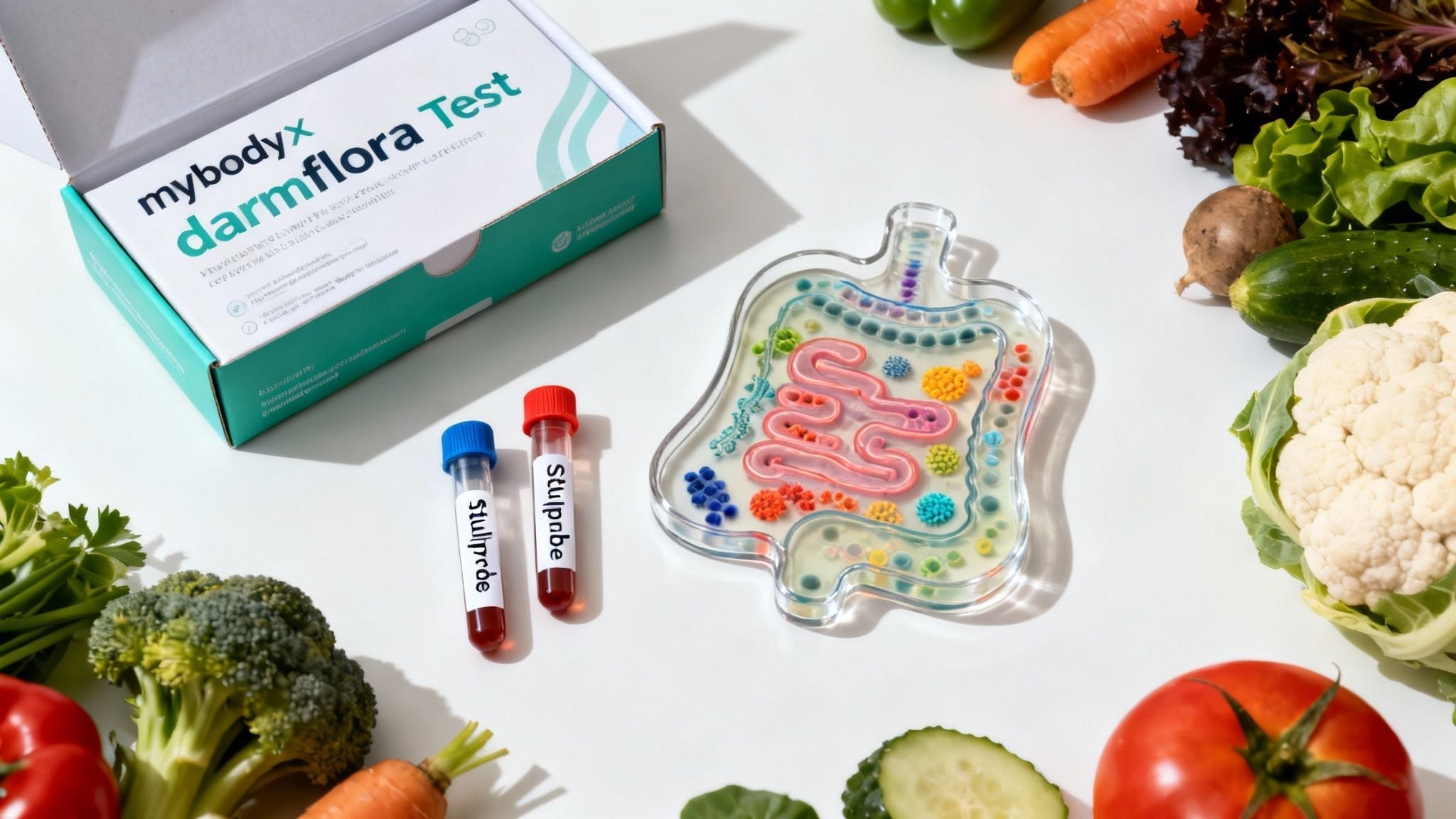
Learn everything about gut flora analysis: tests, results and health
An analysis of your gut flora is essentially an inventory of your internal ecosystem. It provides insights into your digestive health, your immune system, and your overall well-being. It is often the most valuable first step toward finally understanding what is truly behind complaints such as bloating, irregular digestion, or general discomfort.
What your gut flora reveals about your health

Imagine your gut flora as a vast, living garden. This internal ecosystem, also known as the microbiome , is home to trillions of microorganisms – primarily bacteria, but also viruses, fungi, and other tiny organisms. This community is far more than just a passive inhabitant; it's an active partner in your health.
These tiny helpers work for you around the clock. They break down food components that your body couldn't digest on its own, produce vital vitamins like vitamin K and B vitamins, and train your immune system, about 70% of which resides in the gut. Your gut microbiome even influences your mood through the production of neurotransmitters.
Balance is crucial
A healthy gut microbiome is characterized by a great diversity and a balanced ratio of beneficial and potentially harmful bacteria. When this balance is disrupted—a condition experts call dysbiosis —it can have far-reaching consequences.
Dysbiosis is associated with a whole range of health problems, from digestive issues and food intolerances to fatigue, skin problems and a weakened immune system.
An examination of the gut flora serves as a kind of inventory of this complex ecosystem. It provides you with a snapshot that can help you uncover the true causes behind your symptoms.
These insights allow you to take targeted steps to improve your gut health. Whether through a tailored diet, targeted nutrient intake, or small lifestyle changes – understanding your gut flora gives you back control. You can also find more in-depth information in our article about the importance of the microbiome for your health . The mybody®x gut flora test is designed precisely for this purpose: to give you an understandable and directly applicable insight into your inner garden.
When a gut flora analysis makes sense for you
Does this sound familiar? You constantly struggle with bloating, your digestion is acting up, or you simply feel like certain foods don't agree with you. Many of us are all too familiar with these kinds of symptoms, but often attribute them to stress or a temporary sensitivity. However, these are frequently the first subtle signs of an imbalance in your gut bacteria – a condition known as dysbiosis .
When your internal ecosystem becomes unbalanced, it can manifest in countless ways. While an analysis of your gut flora isn't a miracle cure in such cases, it's an incredibly valuable first step. It provides concrete insights into your body without making a medical diagnosis and helps you finally understand the connections.
Signs of a possible imbalance
An analysis can shed light on the situation, especially if you recognize yourself in one or more of the following points:
- Persistent digestive problems: You regularly suffer from bloating, constipation, diarrhea or an irritable bowel syndrome-like feeling, but simply cannot find a clear cause.
- Suspected intolerances: You notice that your body reacts sensitively to certain foods such as gluten, lactose or fructose, but you are unsure.
- Unexplained fatigue: Despite getting enough sleep, you often feel tired, unmotivated, and simply not at your best.
- Skin problems: Blemishes, eczema, or other recurring skin irritations may also be closely linked to your gut health.
A test like the mybody®x gut flora self-test is like a snapshot of your microbiome. It helps you recognize patterns and finally establish a connection between your diet, your lifestyle, and your gut feeling.
It's important to understand that these tests serve as a guide to your lifestyle and are not intended for medical diagnoses. The scientific and clinical relevance of commercial gut flora analyses is a subject of debate among experts. For example, health insurance companies point out that the results are heavily influenced by daily routines and only represent a snapshot in time. Their significance is therefore often limited to use in cases of specific suspected infections or for research purposes. You can read more about this assessment in the Barmer health information .
Your path to making informed decisions
Despite this classification, a thorough analysis of your gut flora offers you a unique opportunity. Instead of groping in the dark and trying one diet after another at random, you gain a data-driven foundation. You see in black and white which bacterial groups in your gut might be deficient or overpopulated.
This information is key to making targeted and, above all, personalized health decisions. Based on your individual profile, you can adjust your diet to specifically "feed" beneficial bacteria or promote the diversity of your microbiome. The mybody®x test provides you with precisely this clarity and paves the way to greater well-being by helping you identify and finally implement the right strategies for your gut health.
How a self-test at home works
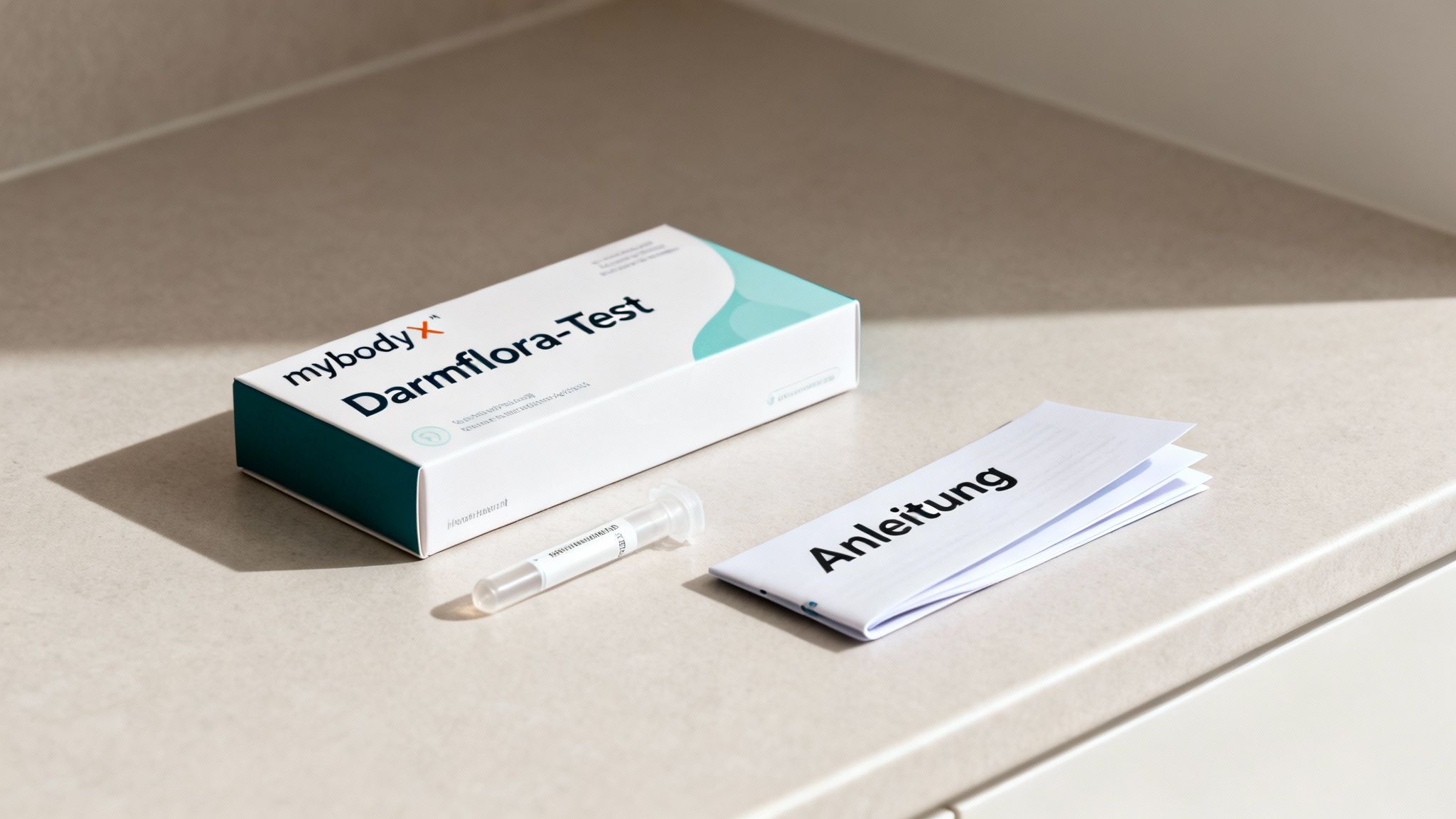
The mere thought of a stool sample deters many from taking a closer look at their gut flora . But the days of cumbersome and unpleasant procedures are long gone. Modern self-tests, like the one from mybody®x, are designed to make the entire process simple, discreet, and completely hygienic – all from the comfort of your own home.
So you don't need to make a doctor's appointment or sit around in a clinic. Instead, everything you need for the analysis arrives at your home in a discreet package. This takes all the stress out of the process and gives you complete control.
Your test kit step by step
As soon as you open your mybody®x gut flora test kit, you'll find clear and easy-to-understand instructions that guide you through every single step. We've designed the process so that absolutely no questions remain unanswered.
The kit contains everything you need:
- A hygienic stool collector: This clever paper aid is simply placed in the toilet. It prevents any contact between the sample and the toilet water, thus ensuring a clean, unadulterated result.
- The sample tube: It already contains a stabilizing liquid that protects your sample on its way to the lab. The integrated spoon in the lid makes taking a tiny amount – often the size of a grain of rice is enough – incredibly easy and hygienic.
- A protective bag and a return box: After taking the sample, you securely pack the tube in the bag and place it in the pre-paid return box. Done!
The entire procedure takes only a few minutes. The kit's thoughtful design ensures that you barely come into contact with the sample itself. This makes the process simple and pleasant for everyone.
Discreet and easy access to the laboratory
Once the sample is securely packaged, simply drop the return box into the nearest mailbox. Shipping to our certified German laboratory is, of course, free of charge. There, your sample will be analyzed using state-of-the-art methods.
Shortly after, you'll receive a notification that your results are available in your personal, secure online portal. So you not only gain deep insights into your gut health, but the whole process happens effortlessly, without waiting times, and in complete privacy.
For even more detailed preparation tips, we have also compiled a guide on how to properly take your stool sample .
What testing methods are available and what you should pay attention to
If you decide to have your gut flora analyzed , you'll face an important question: Which test is right for me? Not every test provides the same level of detail. Analyzing your microbiome is a highly complex process, and the methods vary considerably in their accuracy and level of detail.
Imagine it like two different research tools. One gives you a rough overview, like the "family names" of your gut bacteria. The other provides a complete "phone book" with all the names, addresses, and even the occupations of its inhabitants. Both approaches have their merits, but for a truly precise and actionable picture of your gut, the level of detail is crucial.
16S rRNA sequencing: A magnifying glass for bacterial families
16S rRNA sequencing is a widely used and often more cost-effective method. It focuses on a very specific gene – the 16S ribosomal RNA gene. This gene is present in almost all bacteria, but differs slightly between species. It can be thought of as a barcode that allows bacteria to be roughly classified and assigned to specific genera.
This method is well-suited to gaining a general overview of the composition of your microbiome. It primarily answers the question: "Who is actually there?"
- Advantage: Faster and cheaper than other methods.
- Disadvantage: It only provides a rough classification and no information about the specific functions of the bacteria. Fungi, viruses, and other important microorganisms are not even included.
Shotgun metagenomics: The complete ecosystem in view
In contrast , shotgun metagenome sequencing analyzes not just a small gene segment, but captures the entire genetic information of all microorganisms in your sample – including fungi, viruses, and archaea. It's like not just reading the table of contents of a book, but analyzing the entire book word for word.
This method answers not only the question "Who is there?", but also the much more important question "What can they do?". It provides extremely detailed information about the specific bacterial strains and their functional potential. You'll learn which metabolic pathways they possess, which vitamins they can produce, and how they interact with your body.
The mybody®x gut flora test uses scientifically sound shotgun metagenome sequencing. We deliberately chose this state-of-the-art method because it provides you with the most precise and informative insights. Only on this basis can you take truly targeted measures for your health.
Choosing the right testing method is therefore crucial for the quality and validity of your results. A simple overview can be a first step, but only an in-depth analysis like shotgun metagenomics allows you to truly understand the complex interactions in your gut and make informed decisions for your well-being.
Comparison of test methods for intestinal flora
This table compares the two most common methods for analyzing intestinal flora to highlight their differences in accuracy, information content, and scope of application.
| feature | 16S rRNA sequencing | Shotgun metagenome sequencing |
|---|---|---|
| What is being analyzed? | A specific marker gene (16S rRNA) | The entire DNA of all microorganisms in the sample |
| Result | Broad classification (genus level) | Precise identification (down to the root level) |
| Organisms detected | Mainly bacteria | Bacteria, viruses, fungi, archaea |
| Functional analysis | No information about functions | Detailed insights into metabolic pathways and potentials |
| accuracy | Lower, since only one gene is considered. | Very high, since the entire genome is captured. |
| Cost | Cheaper | More expensive, but significantly more informative |
| analogy | Table of contents of a book | Read the entire book word for word |
| Answered question | "Who 's there?" | "Who is there and what can they do?" |
In summary, while the 16S method provides a first, rough impression, shotgun metagenomics delivers the complete and detailed picture necessary for personalized recommendations.
How to correctly interpret and use your results
You're holding your results in your hands – a detailed insight into your very own gut microbiome. But what do all the graphs, technical terms, and numbers really mean? Don't worry, we'll help you shed some light on it. Together, we'll decipher what your results mean for your health and your everyday life.
Your results are not a diagnosis, but a valuable snapshot and a personal guide. They reveal the strengths and potential weaknesses of your microbiome. Instead of continuing to grope in the dark, you now have a data-driven foundation for making informed decisions about your well-being.
Key terms from your report decoded
In your results report, you will encounter some key terms. Understanding these is the first step to recognizing the connections:
- Microbial diversity: Imagine your gut as a vibrant rainforest. The greater the biodiversity, the more stable and resilient the entire ecosystem. High diversity is therefore generally a great sign of a healthy, resilient gut flora.
- Firmicutes/Bacteroidetes ratio: These are the two most dominant bacterial strains in the human gut. Their ratio to each other is often linked to body weight and metabolism, although the scientific interpretation is very complex.
- Butyrate-producing bacteria: Butyrate is a short-chain fatty acid that serves as the main energy source for your intestinal lining cells. A sufficient number of these beneficial bacteria is crucial for a strong intestinal barrier and also has anti-inflammatory properties.
Your result is the starting point, not the destination. It empowers you to act proactively instead of just reacting to symptoms. You learn which "gardeners" in your gut might need a little support.
From knowledge to action
The true strength of your gut flora analysis lies in the fact that it shows you concrete next steps. Your individual profile is the key to specifically optimizing your diet and lifestyle.
A deficiency in butyrate-producing bacteria could, for example, indicate that you should consume more resistant starch. This is found in foods such as cooled potatoes, slightly green bananas, or legumes. If your test results show a low diversity, you could specifically incorporate various fermented foods such as yogurt, kefir, or sauerkraut into your diet.
The importance of these analyses is constantly growing, as research in Germany also demonstrates. For example, the National Decade Against Cancer is funding the "Mi-EOCRC" project, which investigates the role of the microbiome in the early detection of colorectal cancer. You can learn more about this exciting research project here .
Keeping the big picture in mind
Sometimes gut flora analysis provides important pieces of the puzzle, but the picture isn't quite complete. If your results indicate possible imbalances that might be related to certain foods, a supplementary test can be extremely helpful.
A mybody®x intolerance test can, for example, clarify whether your body reacts to certain foods such as gluten or lactose. This allows you to combine insights into your gut health with precise information about your metabolism, creating a comprehensive picture of your overall well-being. Based on this, you can then make truly informed decisions.
How to specifically strengthen your gut flora through diet
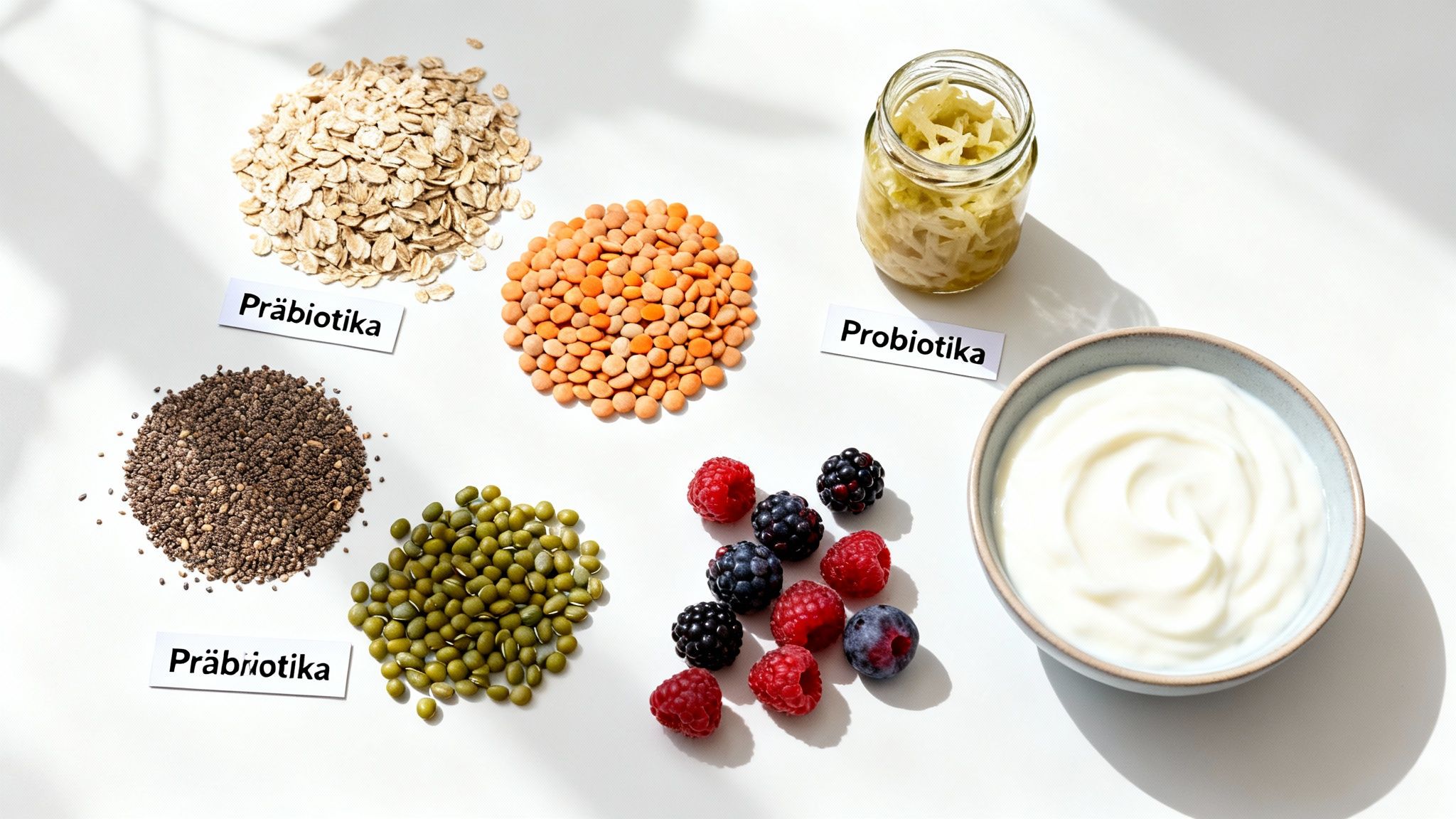
What ends up on your plate doesn't just fill your stomach – it's food for trillions of microorganisms in your gut. Every single meal is a chance to directly influence the balance of your microbiome and give your beneficial bacteria a boost. The good news: it's much easier than you might think.
The key lies in two terms you should remember: prebiotics and probiotics . Think of them as the ultimate dream team for your gut.
The best food for your gut bacteria
Prebiotics are essentially nothing more than special, indigestible fiber – the absolute favorite food of your good gut bacteria. If you "feed" these little helpers well, they multiply diligently and produce valuable substances like short-chain fatty acids. These, in turn, strengthen your intestinal lining and can help keep inflammation in check.
You can find plenty of prebiotics in foods such as:
- Vegetables: chicory, artichokes, onions, garlic, leeks and asparagus.
- Fruit: Slightly green bananas and apples.
- Legumes: lentils, chickpeas and beans.
- Whole grain products: oat flakes, barley and rye.
Your diet has a direct and measurable impact on your microbiome. Even small, conscious changes to what you eat can positively alter the composition of your gut flora within a short time.
Probiotics, on the other hand, are live microorganisms that enrich your gut flora with new, beneficial inhabitants. You'll find them primarily in fermented foods, which are produced through a natural fermentation process using bacteria or yeasts.
How to strengthen your gut diversity
A diverse gut flora is a resilient gut flora. In addition to a diet rich in prebiotics, you can also specifically promote greater diversity with probiotic foods.
Classic probiotic powerhouses are:
- Dairy products: natural yogurt, kefir and buttermilk.
- Fermented vegetables: sauerkraut (important: not pasteurized!), kimchi and pickled cucumbers.
- Drinks: Kombucha and water kefir.
Science repeatedly confirms how strongly diet influences the gut flora. For example, a study coordinated by Charité showed that even a short-term, severely calorie-restricted diet significantly altered the composition and number of microbes in the gut.
By regularly incorporating these foods into your daily routine, you create the best conditions for a balanced microbiome. To delve even deeper into this topic, our guide explains how you can naturally build up your gut flora . A targeted analysis of your gut flora can provide you with the perfect, personalized starting point.
Your questions about gut flora analysis – answered briefly and concisely
Do you still have questions about your microbiome analysis? That's perfectly normal. Here we clarify the most common points and uncertainties – without any technical jargon, so you can make an informed decision about your gut health.
How often should I have my gut flora tested?
An initial analysis is like a snapshot – it gives you an invaluable overview of the current state of your gut. If you then make targeted changes, such as altering your diet, a second analysis after three to six months is ideal. This way, you'll see in black and white what your efforts have achieved.
After that, an annual check-up is sufficient for most people. This helps you keep track of long-term developments and ensures you stay on the right track to sustainable gut health.
Do medications like antibiotics distort the test result?
Yes, absolutely. Antibiotics are a real blow to the gut flora. Unfortunately, they don't distinguish between "good" and "bad" bacteria and can massively disrupt the balance in your gut – sometimes for an extended period.
Therefore, our clear advice is: Wait at least four to six weeks after a course of antibiotics before having your gut flora analyzed . This gives your microbiome a fair chance to recover, at least partially, and the result will reflect a more realistic picture.
Is a gut flora analysis also useful if I have no symptoms at all?
Absolutely! Prevention is the best medicine, after all. Even if you feel perfectly healthy, an analysis can give you deep insights you would otherwise never get.
You'll learn about the strengths of your microbiome and see where untapped potential might still lie. This allows you to proactively make small adjustments to optimize your gut health and secure your well-being for the future.
Are you ready to better understand your body's signals and take control of your gut health? Discover what your microbiome truly reveals about you with the scientifically based self-tests from mybody®x . Start your journey to greater well-being here .



Share:
Get your microbiome tested easily at home
Microbiome Test Comparison: How to find the right gut test for you