


At-Home Rapid Tests: Everything You Need to Know
ca. 8 Minuten
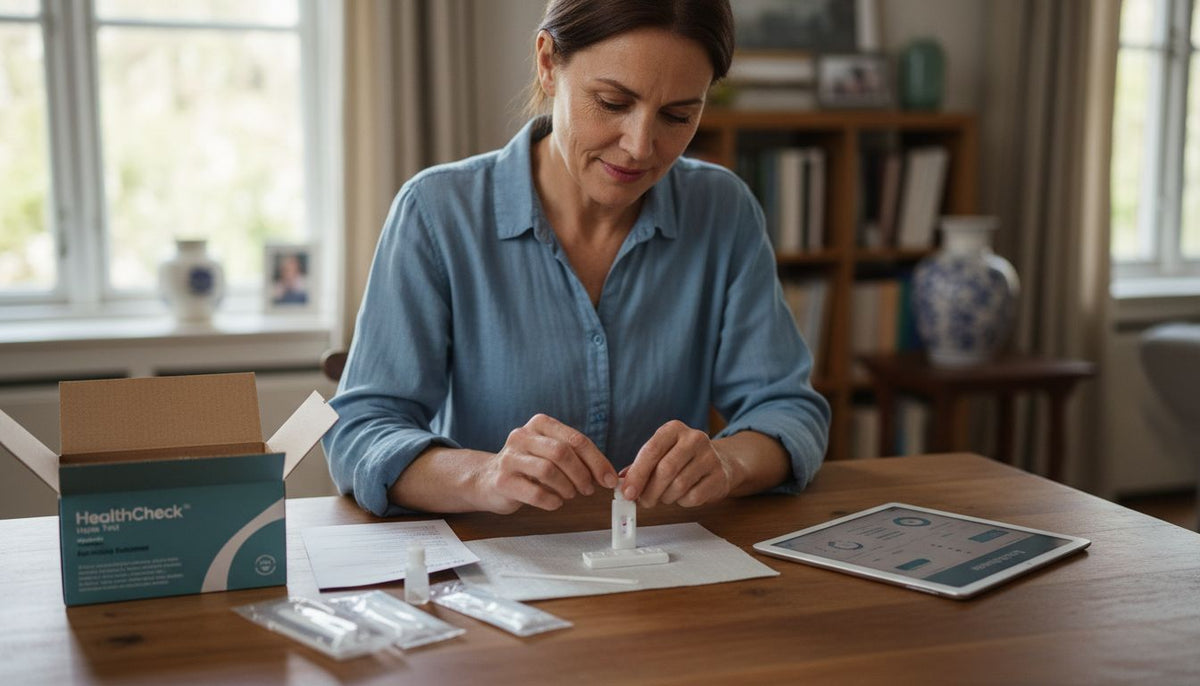
Over 60 percent of people in Germany want more control over their health without having to book a doctor's appointment straight away. Especially when time is limited or they're unsure, at-home rapid tests offer a practical way to check important health indicators themselves. Modern self-tests provide quick answers and increase awareness of your body, making it easier to make informed decisions in everyday life.
Table of contents
- What are at-home rapid tests?
- Popular test types and their uses
- How it works: The home test
- Reliability and scientific validation
- Legal Framework and Data Protection
- Costs, alternatives, and practical tips
Key findings
| Point | Details |
|---|---|
| At-home rapid tests | Modern self-tests let you conveniently check health indicators without a doctor's visit. |
| Benefits of rapid tests | The tests save time, offer convenience and provide accurate results to support informed health decisions. |
 | | Scientific validation | Reliability depends on strict quality controls and correct sample collection.| | Data protection | Personal data is pseudonymized and securely protected in accordance with the GDPR.|
What are at-home rapid tests?
At-home rapid tests are modern diagnostic tools that allow you to conveniently and quickly check various health indicators yourself. Unlike traditional laboratory tests, which require a doctor's visit, you can carry out these medical self-tests right in your own home.
The tests cover a broad range of health analyses - from vitamin and mineral metabolism to hormone tests and allergy tests. Typically, you only need a small sample, such as blood, saliva or stool, to get meaningful results.
 At-home health self-tests give you the opportunity to proactively monitor your health and detect potential imbalances early.
The benefits are many: time savings, convenience, and the ability to check your health discreetly without long wait times. Modern rapid tests are analyzed in certified laboratories and provide accurate results that can help you make informed decisions about your health. They are an ideal complement to preventive medical care and help you gain a holistic view of your health.
Popular test types and their uses
There is an impressive variety of home rapid tests aimed at different areas of health. Gut health tests are particularly popular and play an important role in analyzing the microbiome. For example, with the Microbiome Test, you can gain detailed insights into your gut flora and potential imbalances.
In addition to gut tests, there are other important rapid tests. Hormone and metabolic tests help you identify imbalances in your hormone system, while nutrient tests provide information about vitamin and mineral metabolism. Specific tests are also worth considering, such as the Helicobacter pylori rapid test, which can identify inflammation in the stomach.
For a comprehensive health analysis, more complex tests that cover several areas are recommended. These include tests to check thyroid function, allergy tests, sex-specific hormone checks, and immune system tests. The benefits are many: you can quickly and easily gain important information about your health, identify risks early, and take timely action if needed.
How it works: The home test
Home rapid tests are now accessible to everyone thanks to how easy they are to use. The first step is careful preparation: read the instructions thoroughly and make sure you have all the materials ready. As Focus reports, correct use is essential for a reliable test result.
Sample collection requires precision. Whether it’s blood, saliva, or stool, each test has its own specific requirements. For example, with a capillary blood test, you need to take particular care. First clean and disinfect the collection site, then gently prick your fingertip and collect the required amount of sample.
After the sample is collected, it is analyzed. Most home tests have a specified waiting time during which you handle the test kit according to the instructions. As Camper.help explains, the process includes steps such as preparing the test kit, taking the swab, and reading the result after a specified time. Important: Follow the timing instructions exactly to ensure an accurate reading.
Reliability and scientific validation
Scientific validation is key to the trustworthiness of home tests. Modern rapid tests undergo strict quality controls and are developed in certified laboratories to ensure the highest precision. For example, hormone level tests must produce precise, reproducible analyses to provide reliable health information.
The accuracy of a home test depends on several factors. Sample collection, laboratory analysis, and the diagnostic methods used are all crucial. Professional providers use state-of-the-art molecular biology and immunological techniques to achieve high test accuracy. It is also important to take individual health parameters into account, as with the irritable bowel syndrome test, which uses complex microbiological analyses.
Beyond technical accuracy, factors such as sensitivity and specificity play a crucial role. A valid test must minimize both false-positive and false-negative results. Reputable providers therefore give transparent information about test accuracy, detection limits, and potential influencing factors. Results should always be interpreted in the context of the individual’s health situation, and unusual findings should be followed up with professional medical advice.
Legal Framework and Data Protection
Data protection is of the utmost importance for self-administered health tests. Modern providers are subject to strict legal regulations, in particular the General Data Protection Regulation (GDPR), which requires sensitive health data to be handled securely and confidentially. As the German Confederation of Skilled Crafts (ZDH) emphasizes, test results may be shared only under certain clearly defined conditions.
For home tests, this means that your personal health data is pseudonymized and used only for its intended purpose. After analysis, the samples are destroyed to ensure maximum confidentiality. No company may share information with third parties without your explicit consent - not with employers, insurance companies, or other institutions.
The legal framework comprehensively protects your privacy. Reputable test providers not only guarantee compliance with data protection regulations but also keep you informed about every step of data processing. You retain control over your sensitive health information at all times and can decide how it is used and stored.
Costs, alternatives, and practical tips
The costs of rapid home tests vary depending on the test type and the complexity of the analysis. As a study of blood test costs shows, prices can range from 15 to 150 euros depending on the scope of the test. Home tests are an important alternative to conventional laboratory tests and are often cheaper and save time.
As Chip reports, it is essential to follow the instructions exactly when using self-tests to get accurate results. Practical tips for successful home testing include:
- Stay calm and read the instructions carefully
- Keep your work area clean and well lit
- Have all materials ready before starting the test
- Allow enough time to carry out the test
For a comprehensive health analysis, it is recommended to combine different types of tests and seek medical advice if in doubt. The costs should always be weighed against the health benefits.
Check your health and understand it yourself
Many people want to take an active role in managing their health and detect imbalances early. At-home rapid tests offer a simple way to check, for example, hormone levels, nutrient deficiencies, or gut health. However, using and interpreting them can seem complicated and unsettling. That’s where we come in, with our wide range of At-Home Health Tests – Discover All Tests - mybody®x. Our certified laboratory analyses provide you with precise, scientifically validated results, and you can conveniently take the tests at home.
Take the opportunity to understand your health comprehensively and optimize it individually. Whether you’re looking for at-home gut health screening and intolerance test – mybody®x or specialized At-Home Intolerance Tests | mybody®x, we offer modern tests with personalized analyses and actionable recommendations. Start your journey to greater well-being and control with mybody® today – get your testing experience directly at mybody-x.com and benefit from precise analyses and the highest standards of data protection.
Frequently asked questions
What are at-home rapid tests?
At-home rapid tests are diagnostic tools that let you conveniently and quickly check various health markers yourself without having to see a doctor.
How are samples collected for at-home tests?
Depending on the type of test, samples are collected in different ways, often using blood, saliva, or stool. It is important to follow the instructions carefully to ensure reliable results.
Are at-home rapid test results reliable?
Yes, modern rapid tests are analyzed in certified laboratories and undergo strict quality controls. However, their accuracy depends on correctly performing and analyzing the test.
What types of at-home rapid tests are available?
There are many types of at-home tests, including gut health tests, hormone and metabolic tests, as well as specialized tests such as the Helicobacter pylori rapid test. These tests provide insights into various aspects of health.
Recommendation
- At-home stool test: How to check your gut health | MYBODY-X – mybody®x
- Irritable bowel syndrome test: How to finally get clear answers about your gut – mybody®x
- Get your testosterone tested: Easy and discreet from home – mybody®x
- Hormone balance test: How to get clear answers easily and simply – mybody®x
- 6 types of household batteries explained simply for consumers - accu.blog
- 7 tips for emergency batteries for every home - accu.blog


