

Testing your hormone levels: How to gain clarity simply and easily
If you feel that something is wrong with your body but simply can’t put your finger on it, a hormone test is often the first step toward greater clarity. Do you feel constantly tired, are you moody for no reason, or simply no longer feel like yourself? Your hormones could be the key, and a targeted test will give you the facts.
Why a hormone test can provide the crucial clue
Do you know the feeling of fighting against invisible walls? That constant fatigue, unexplained mood swings, or feeling like a stranger in your own body—all of these can be quiet signals of a hormonal imbalance. Hormones are essentially the conductors of your well-being. Even the slightest deviations can throw your body’s entire symphony out of tune.
Many people live with such unexplained symptoms for months or even years without finding the real cause. They try different diets, change their lifestyle, and still don’t feel any better. This is exactly where a hormone test can make all the difference.

When your body sends quiet signals
Your body is constantly communicating with you. But often, the signs that point to hormonal chaos are subtle. Some of these may sound familiar:
- Constant exhaustion: Are you always tired and lacking energy despite getting enough sleep? An imbalance in thyroid hormones or too much cortisol could be behind it.
- Mood swings & irritability: Do you often feel down or anxious for no reason, or are you quick to fly off the handle? Fluctuations in estrogen and progesterone have a huge impact on your emotional balance.
- Unexplained weight problems: Are you gaining weight even though you watch your diet? Or can’t you lose a single gram, no matter what you try? Hormones such as insulin, cortisol, and thyroid hormones are the key players in your metabolism.
- Skin and hair problems: Sudden acne, very dry skin, or hair loss may indicate an imbalance of androgens (such as testosterone).
- Sleep problems: Difficulty falling asleep or constantly waking up at night is often linked to low progesterone or high cortisol levels.
A hormone test from mybody-x turns these vague suspicions into concrete data. Instead of continuing to grope around in the dark, you get a clear insight into what is really going on in your body.
A test result is much more than just a number. It is your personal starting point for understanding your body better and taking charge of your health.
With a reliable result, you no longer have to guess and can finally take targeted action. Instead of following general advice, you can tailor your diet and lifestyle precisely to your individual needs. mybody-x’s at-home hormone tests have been specially developed to make this process as easy as possible for you—conveniently from home.
Which hormone test is really right for you?
You have decided to get to the bottom of your hormones—a very important step! But now you are faced with the question: Which test is right for you? Don’t worry, it doesn’t have to be complicated. It is simply about finding the test that fits your current situation and questions exactly.
Imagine you are planning to start a family but are unsure about your fertility. Or perhaps you have been dragging yourself through the day for months with unexplained fatigue that leaves you completely drained. Maybe you are also noticing the first signs of menopause and finally want some clarity.
There is a suitable mybody-x hormone test for each of these situations to shed light on the matter. Our tests provide targeted answers to your personal health questions.
Blood test or saliva test—which is better for you?
Whether a blood or saliva test is more useful depends entirely on which hormones you want to examine and what exactly you want to find out. Both methods have their strengths and provide valuable pieces of the puzzle for understanding your overall hormonal profile.
-
Blood tests are the gold standard when it comes to measuring total hormone levels. They also measure hormones bound to proteins, giving you a stable overview of your long-term hormone supply. This is especially important for values such as thyroid hormones or the fertility hormone FSH.
-
Saliva tests, on the other hand, are perfect for measuring free, active hormones—the ones currently available to your body. This is particularly useful for checking the daily pattern of hormones such as cortisol. For example, a cortisol daily profile from saliva can show you how your body responds to stress in everyday life.
This infographic gives you a quick overview of when each method is used:
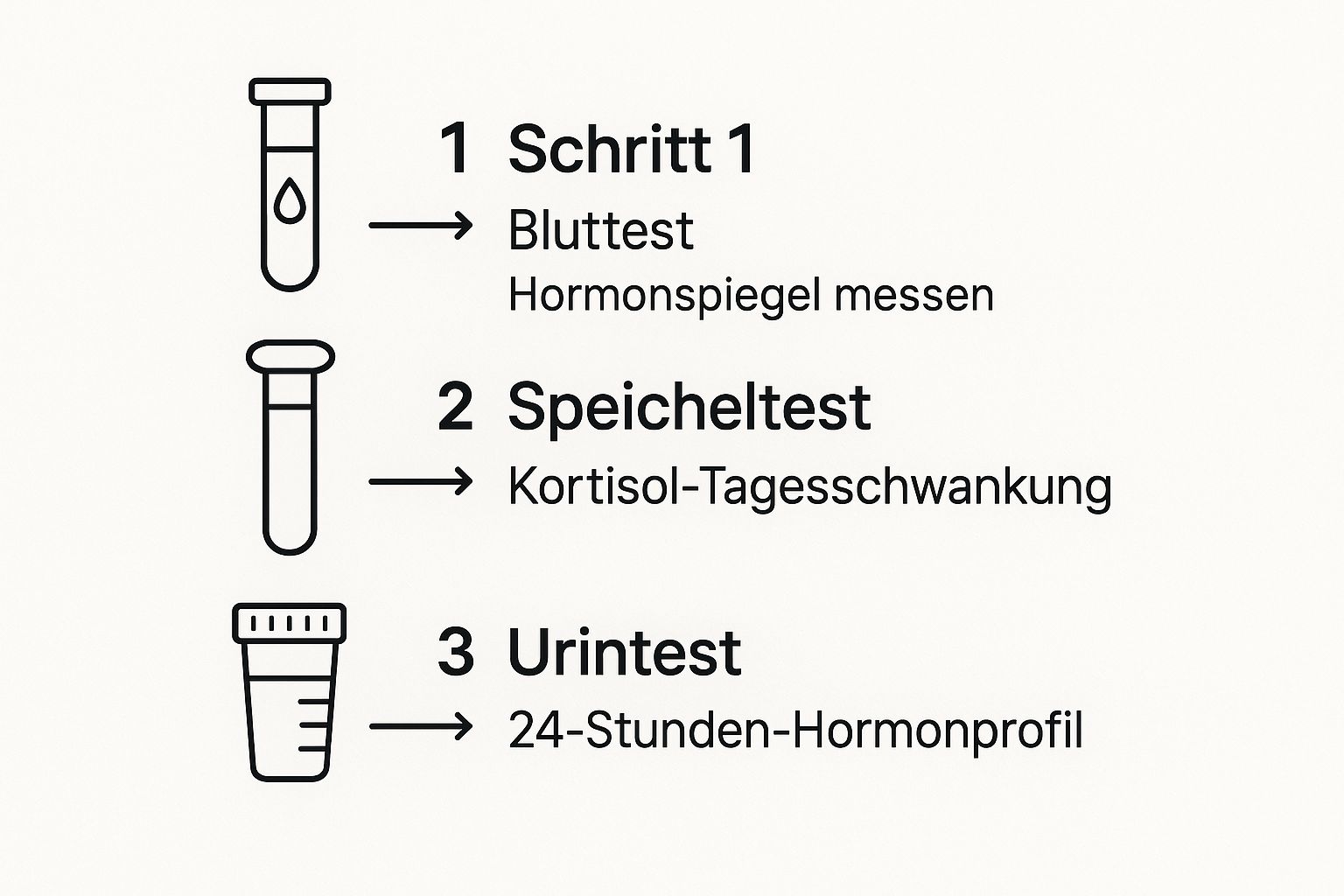
So, as you can see, the choice of sample depends directly on what you want to know. This is the only way to get a truly meaningful picture of your hormone status.
Your life goal is your compass
Your personal goals are the best guide when selecting a test. If you are actively trying to conceive, for example, anti-Müllerian hormone (AMH) is a crucial value. In Germany, the AMH test is a key tool for assessing a woman’s ovarian reserve.
A level between 0.7 and 3.5 ng/ml is considered normal. If the level falls below 1 ng/ml, this may indicate declining ovarian function. With this knowledge, women can assess their fertility much more accurately and make more informed decisions about family planning. You can also find more information from experts such as those at kinderwunschaerztin.de.
Choosing the right test is not a guessing game. It is a conscious decision based on your symptoms, goals, and stage of life, designed to provide you with the clearest answers.
Whether it’s about fertility, stress, your energy levels, or menopause, the first step is always to ask the right questions. Based on this, you can then choose the mybody-x test that provides the most relevant information for you.
To make your decision easier, we have compared the most important mybody-x hormone tests for you.
Which mybody-x hormone test is right for you?
A direct comparison of the mybody-x hormone tests for easy selection based on symptoms and life goals.
| mybody-x Test | Focus / Hormones measured | Ideal for these situations | Sample type (blood/saliva) |
|---|---|---|---|
| Hormone & Vitality Check for Women | Estrogen, progesterone, testosterone, DHEA, cortisol, thyroid hormones (TSH, free T3, free T4) | General fatigue, cycle problems, unexplained weight gain, mood swings, early signs of menopause. | Blood |
| Fertility Check | AMH, FSH, LH, estradiol, prolactin | Actively trying to conceive, irregular cycles, assessment of ovarian reserve, family planning. | Blood |
| Stress Profile Plus | Cortisol (daily profile), DHEA | Chronic stress, exhaustion, sleep disturbances, burnout symptoms, concentration problems. | Saliva |
| Thyroid Test | TSH, free T3, free T4, TPO antibodies | Fatigue, weight fluctuations, hair loss, sensitivity to cold, suspected Hashimoto’s disease or underactive/overactive thyroid. | Blood |
This table is intended to provide you with an initial overview. Every body is unique, and sometimes symptoms overlap.
If you would like to delve deeper into the subject and better understand the differences, take a look at our detailed guide to hormone testing for women. There you will find even more details and background information.
Collecting samples at home – easy as can be
A test you can take at home sounds very convenient, but the thought of a small finger prick or providing a saliva sample can be off-putting at first. But do not worry, the whole process is much easier and more straightforward than you might think.
We will guide you through everything important so that you can collect your sample safely and correctly – because this is the only way the laboratory can ultimately provide you with truly meaningful results. The mybody-x test kits are designed so that you have everything you need right at hand. You do not need to obtain anything extra, and the instructions are clear and easy to understand.

Proper preparation is everything
Before you get started, one thing is absolutely crucial: the right timing. Hormone levels are not fixed figures; they naturally fluctuate throughout the day and month. To get reliable results that can also be compared effectively, you should keep a few small things in mind.
Especially for hormone tests related to the female menstrual cycle, the timing within the cycle is crucial. Hormones such as estrogen and progesterone fluctuate significantly. If you have a regular cycle, sample collection for such tests is usually recommended between the 19th and 21st day of the cycle. This is during the second half of the cycle, known as the luteal phase.
The time of day also plays a major role, especially for hormones such as cortisol. Our “stress hormone” follows a clear rhythm: levels are highest in the morning and then decline throughout the day. A saliva test for cortisol is therefore often carried out at several times during the day. This creates a true daily profile of your personal stress level.
Blood or saliva – collecting your sample made easy
Depending on which mybody-x test you have chosen, you will either provide a small blood sample from your fingertip or a saliva sample. Both methods are safe and really easy to carry out.
My tips for taking a blood sample:
- Warm your hands first: This is the most important trick! Wash your hands with warm water or shake them vigorously. This stimulates blood circulation, making it much easier for the drop of blood to come out.
- Choose the right finger: The middle or ring finger is best. The skin there is usually a little thinner. Ideally, prick the side of your fingertip, not the center—it hurts less.
- Be patient when collecting: Don't press wildly on your finger, otherwise the blood will mix with tissue fluid and make the sample inaccurate. It's better to gently massage your finger from the base toward the tip.
My tips for collecting a saliva sample:
- Stay fasting: Before collecting the sample, you should not eat, drink anything (except still water), smoke, or brush your teeth for about 30 minutes.
- No chewing gum: Even sugar-free chewing gum can alter the composition of your saliva and distort the result.
- Collect comfortably: Simply sit back and let the saliva slowly flow into the tube. No stress.
The accuracy of your test result starts right at home. Take a quiet moment, breathe deeply, and follow the instructions in the kit carefully. This ensures the quality of your sample and, consequently, the reliability of your results.
Once you have collected the sample, place it in the enclosed return envelope and send it to our certified partner laboratory in Germany. There, experts will evaluate it.
By the way, did you know that a saliva sample can even help you lose weight? If that interests you, take a look at our article about losing weight with a saliva sample.
Interpreting Your Hormone Status Correctly
Finally, it's here: Your mybody-x results report is in front of you. Now comes the really exciting part—finding out what all those numbers and values reveal about your body. Don't worry, we won't leave you alone with it. Together, we'll decode your results, without any complicated jargon.
Don't see your report as just a collection of data, but as your personal guide to greater well-being. It shows you in black and white where your body is in balance and where it might need a little support.
What Reference Ranges Really Mean
In your results report, you will find a so-called normal or reference range for each hormone. This range serves as a guide and shows which values are measured in most healthy people in your age group.
But remember: Your body is unique. A slight deviation from the normal range is not immediately a reason to panic. Hormones naturally fluctuate, influenced by your stress levels, how well you slept, or what you ate on the day of the test. It is much more important to look at the bigger picture and see how the results match your symptoms.
A single result that falls outside the expected range is often just one piece of the puzzle. The real insight lies in how the hormones interact and the story they tell together about your body.
Key hormones and what they tell you
To help you better understand your results, let's take a look at some of the most important hormones and what they typically tell us. This will make it much easier for you to connect the figures on the page with how you feel in everyday life.
- Estrogen & progesterone: Think of these two as a team. They should work together harmoniously. If progesterone is too low compared with estrogen—a situation known as estrogen dominance—it can lead to PMS, water retention, or restless sleep.
- Testosterone: Yes, it's important for women too! A slightly elevated level may show up as blemishes or hair loss. If it is too low, however, you may feel unmotivated or have a low libido.
- Cortisol: Your body's own stress hormone. If your level is rock bottom in the morning, you can barely get out of bed. Persistently high levels, on the other hand, can lead to exhaustion, weight gain, and sleep problems. Do you suspect that your stress levels are getting out of control? Find out more in our article about the symptoms of high cortisol levels in women.
- FSH (follicle-stimulating hormone): This hormone becomes particularly relevant in midlife. If FSH levels rise, this may be an early sign that menopause is beginning.
Especially for women in their mid-40s and beyond, these figures are often a real eye-opener. Hormonal changes are a major issue in Germany, as the average age for menopause here is around 52 years. And up to 75% of women struggle with symptoms such as hot flashes or sleep disturbances during this time.
A hormone check can help you better understand this phase and correctly interpret your body’s signals. Your mybody-x report is your tool for getting to the bottom of the causes of your discomfort and planning the next steps.
Practical tips for your hormonal balance
Your test results are in—great! You’ve taken the first and most important step toward understanding your body better. But what comes next? Don’t view your results as the finish line, but as the starting point. Now you finally have the facts you need to work specifically on your hormonal balance.
Here are some very concrete, practical tips to help you take an active role in your well-being. Often, even small adjustments can have a huge impact.

Nutrition as a hormone booster
What ends up on your plate has a direct impact on your hormones. Your body needs the right building blocks to produce them in the first place. That’s why a balanced diet is the absolute foundation.
-
Healthy fats are your friends: Hormones are made from cholesterol. So make a conscious effort to include healthy fats in your diet. Great sources include avocados, nuts, seeds (such as flax, chia, or hemp seeds), and high-quality oils such as olive or flaxseed oil.
-
Fiber for estrogen breakdown: Fiber-rich vegetables, legumes, and whole grains help your liver and gut eliminate excess estrogen. Cruciferous vegetables such as broccoli and kale are particularly powerful helpers here. Read more about the important role of this hormone in our comprehensive article about estrogen.
-
Keep an eye on your blood sugar levels: Major fluctuations in blood sugar can also seriously disrupt your hormones. It’s better to choose complex carbohydrates and ideally always combine them with proteins and fats. This slows the rise and keeps you feeling full and stable for longer.
Stress management and lifestyle
To be completely honest: Chronic stress is one of the biggest enemies of balanced hormone levels. When your body is under constant strain, it continuously produces cortisol, which can in turn suppress other important hormones. So be sure to find ways to consciously relax.
Just 10-15 minutes a day can make a huge difference. Whether it's meditation, a short walk in nature, yoga, or simply taking a few deep breaths by an open window—find out what makes you feel good. Good sleep is just as crucial, because at night your body regenerates and brings your hormones back into balance.
Your lifestyle is the most powerful tool you have. Every healthy snack, every moment of relaxation, and every night of good sleep is a direct investment in your hormonal balance.
When you should see a doctor
A mybody-x at-home test gives you valuable insights and the opportunity to take a proactive approach to your health. However, if your results differ significantly from the reference ranges or you are suffering from severe symptoms, it is important to discuss this with a doctor or therapist.
It's best to prepare for the appointment: Write down your symptoms, make a note of your questions, and bring your results report with you. This will help your doctor put the values into the broader context much more effectively and plan the next steps with you. Your test is the perfect basis for an informed, equal discussion.
Your questions about at-home hormone tests
Do you still have questions or are you unsure whether an at-home hormone test is right for you? That is completely normal. When it comes to your own health, you want to know exactly what is going on. Let's clarify the most frequently asked questions so that you can get started with confidence.
Are at-home tests just as reliable as tests performed by a doctor?
That is probably the most important question of all. The answer is: It depends on the laboratory. A test's reliability stands or falls with the quality of the analysis.
The mybody-x hormone tests are analyzed in the same certified medical laboratories in Germany that are commissioned by doctors and clinics. This ensures the highest precision in accordance with established scientific standards.
But we have to be honest: The market for self-tests is huge, and so are the differences in quality. The German Society for Endocrinology (DGE) rightly warns that not all commercially available tests are reliable because hormone levels depend on many factors. Professional laboratory analysis, such as the one we guarantee at mybody-x, is therefore essential to avoid drawing false conclusions. If you would like to explore the topic in more depth, you can find the DGE statement here.
How often should I have my hormone levels checked?
That depends entirely on your personal situation and your goals. There’s no right or wrong answer.
- For an initial assessment: A single test is perfect for giving you a comprehensive overview. Where do you stand right now?
- To track your progress: If you’re actively making changes—whether to your diet, stress management, or training—taking another test after 3 to 6 months can be very insightful. This lets you see in black and white what your efforts are achieving.
- To understand your cycle: Would you like to get to know your cycle patterns better? Then it may make sense to test certain hormones regularly to identify the connections.
Ultimately, you decide how often you want to gain a better understanding of your body.
A hormone test isn’t a one-off thing but a companion on your journey toward greater well-being. It gives you the data you need to make informed decisions about your health.
Are there things that can distort the results?
Yes, definitely. Your body isn’t a machine, and hormones respond to many influences. The most important factors that can interfere are:
- Medications: It’s clear that hormonal contraceptives such as the pill or hormone replacement therapy directly affect your system. But other medications can also influence your levels.
- The right timing: As mentioned, the time of day and the day of your cycle are absolutely crucial. Without the right timing, the results are hardly meaningful.
- Acute stress or illness: If you’re coming down with the flu or feeling extremely stressed, your hormone levels can temporarily go on a roller coaster ride.
That’s why it’s so important to always be honest in the mybody-x questionnaire about which medications you take. This is the only way our experts can correctly interpret your results and give you genuinely suitable recommendations.
Are you finally ready to gain clarity about your hormones? Discover the right blood test for your needs at mybody-x and start your journey toward greater balance and well-being. Find your test now at https://mybody-x.com



Share now:
Gluten intolerance and rice: How to enjoy rice safely and symptom-free
Spelt for gluten intolerance: A good alternative or a health risk?