

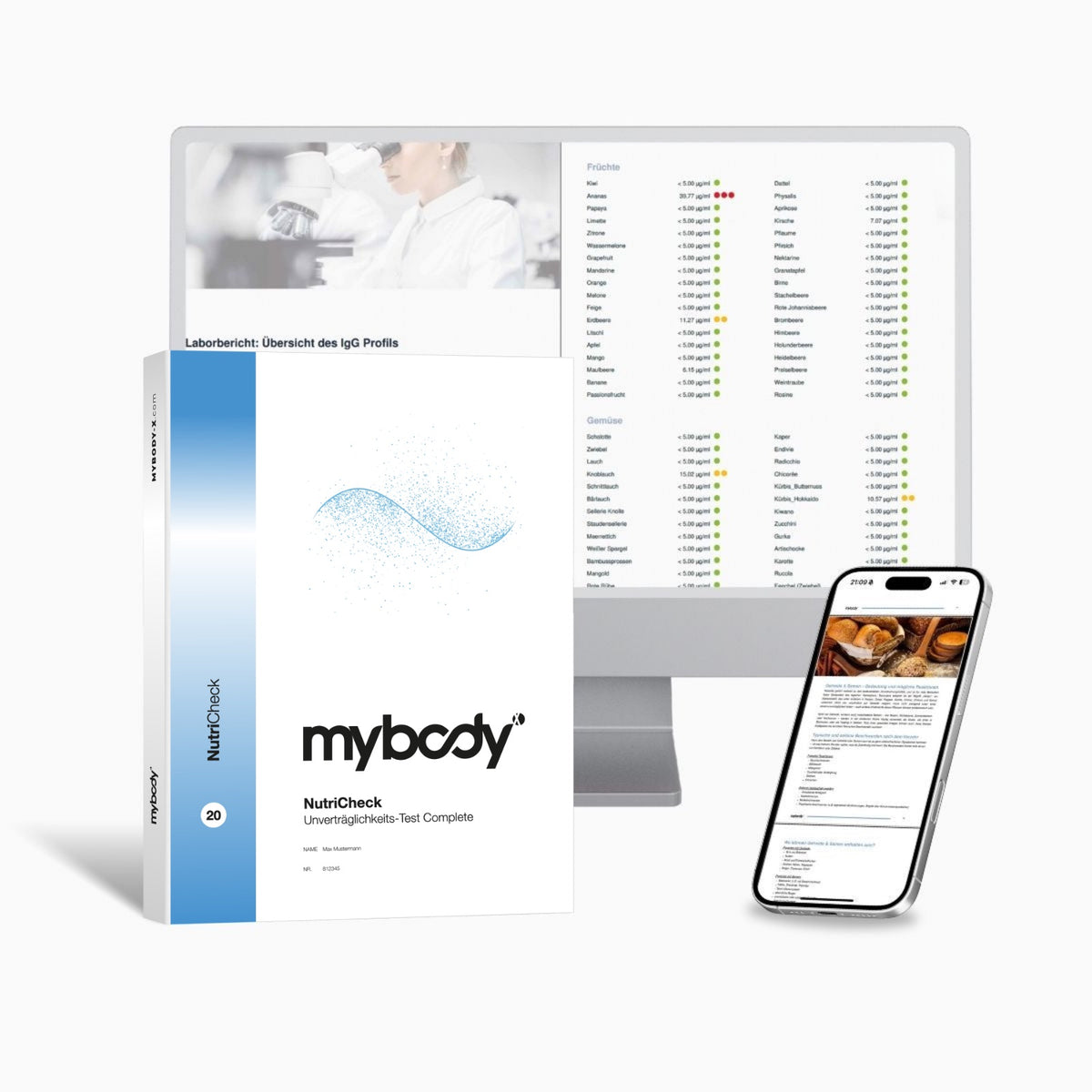



NutriCheck I Complete Intolerance Test







You keep feeling:
Unsure which intolerances your body actually has?
Intolerances and individual reactions to certain foods play a crucial role in personal well-being.
Identifying such intolerances can provide valuable insights into health-related connections. An IgG antibody test can determine how your body reacts to a wide range of foods. This helps you adjust your diet strategically and reduce symptoms.
A deeper understanding of your individual intolerances is essential for sustainably improving your well-being. Genetic differences can also influence how medications work—a targeted analysis can help find the best treatment for you.
mybody® gives you valuable clarity
Highest quality standard
Our analyses are not only ISO-certified, but are also recognized as medical self-tests.
Personal customer service
You will receive a free consultation and discussion of your results reports from us.
Scientific analyses
Our detailed reports are based on your information and analysis results.

What is an intolerance test?
An intolerance test helps you find out whether your body does not tolerate certain foods. It often checks for reactions to proteins or enzymes that can cause symptoms such as bloating, abdominal pain, or skin problems.
How does an intolerance test work at home?
An intolerance test at home usually involves a simple blood or saliva sample. You collect the sample yourself and send it to the laboratory. There, it is analyzed, and you receive an easy-to-understand result with clear recommendations.
Which foods does an intolerance test cover?
A modern food intolerance test can analyze a wide variety of foods—from gluten, lactose, and fructose to nuts, soy, or eggs. Depending on the provider, more than 80 to 200 food groups are tested. This gives you a comprehensive overview of which products may be triggering your symptoms.
Who would benefit from taking an intolerance test at home?
A food intolerance test at home is particularly helpful for people who suffer from recurring symptoms such as stomach pain, bloating, headaches, or skin problems and do not know the cause. The test can also provide valuable initial clues in cases of chronic fatigue or digestive problems.
Can an intolerance test help with weight loss?
Yes—indirectly. If an intolerance goes undetected, your body responds with stress symptoms that can strain your metabolism. The results of a test can help you identify which foods you should avoid. This can not only alleviate symptoms but also ease the burden on your digestion and support you in healthy weight loss.
I suspect a genuine allergy; what do I measure then?
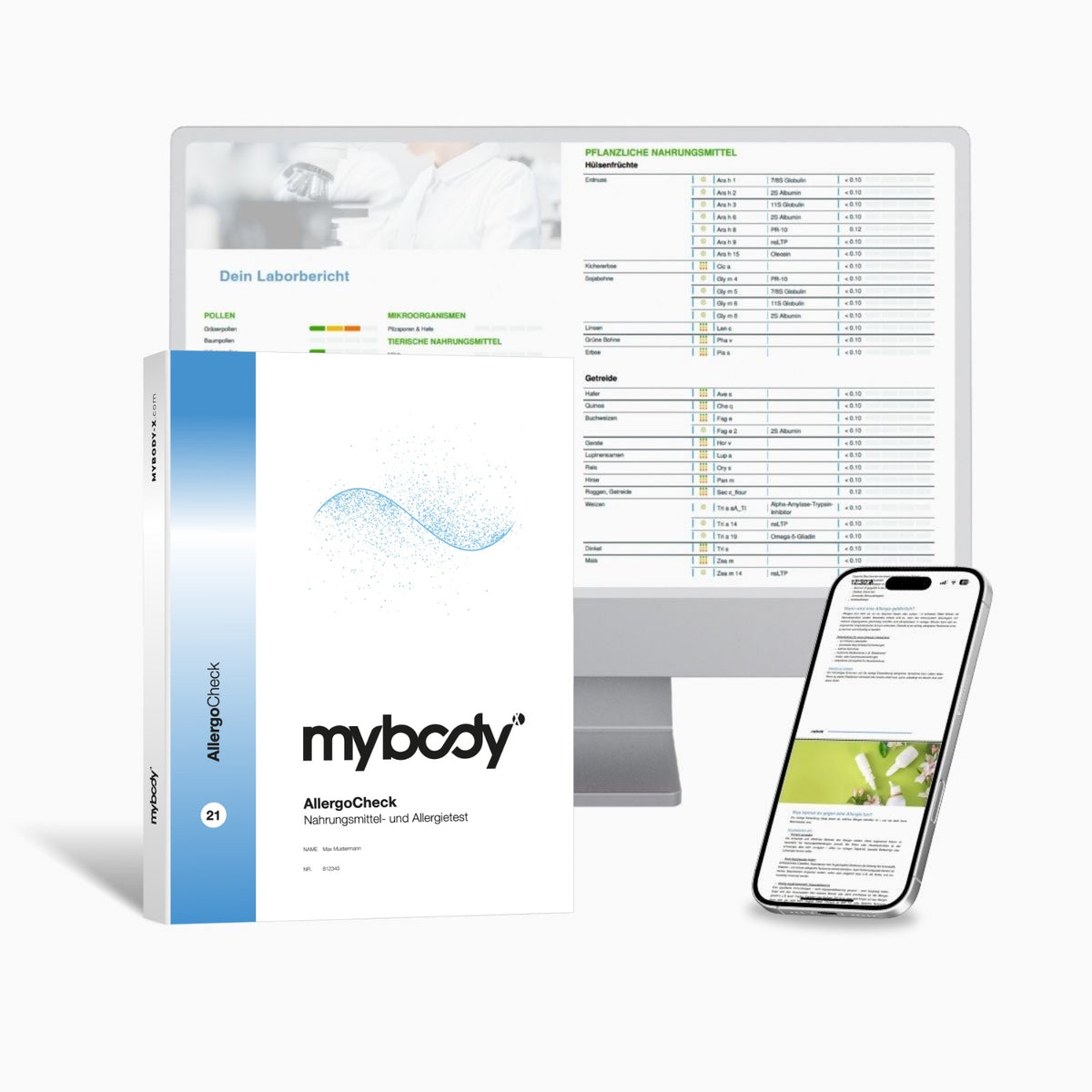
Then it’s about IgE antibodies, and that’s what the AllergoCheck Food and Allergy Test is designed for. It measures IgE against up to 54 of the most common allergens, including pollen, house dust and animal dander. This means it answers a different question from the other tests in this category. If reactions occur quickly and severely, the next step is to see a doctor, not to use a home test.
The DNA analysis is intended for nutrition and lifestyle advice. It is not a diagnostic procedure, does not predict diseases, and does not replace a medical examination or consultation. Genetic variants describe probabilities in population groups, not fixed outcomes for individuals.
The content is intended for general information and does not replace medical advice, diagnosis, or treatment. Reference ranges depend on the laboratory, method, and age - the information in your report is always authoritative.
Allergology professional societies do not recommend IgG tests for diagnosing food intolerances. Elevated IgG levels indicate contact with a food, not necessarily an intolerance.
Intolerance Test – Clarity About Your Symptoms
An intolerance can take many forms: abdominal pain, bloating, skin rashes, or constant fatigue. It often takes a long time to find the cause. An intolerance test can provide clarity. It examines how your body reacts to certain foods and shows whether you have, for example, lactose, gluten, or fructose intolerance. The result provides an individual overview of possible triggers of your symptoms. With this knowledge, you can adjust your diet specifically and sustainably alleviate symptoms. This saves you from lengthy guesswork and helps you return to greater well-being more quickly. It is important to choose tests that are evaluated in a laboratory to obtain reliable results.
If you frequently suffer from bloating, skin irritation, or discomfort after eating, an at-home intolerance test can finally give you clarity. The self-tests are easy to use: collect a sample, send it to the laboratory, and receive your results digitally—including personalized recommendations. This way, you can quickly find out which foods your body does not tolerate well and how to adjust your diet specifically.
Many nonspecific complaints, such as abdominal pain, fatigue, or bloating, can be attributed to food intolerances. Since the symptoms often develop gradually, the cause frequently remains undetected for a long time. With a targeted test, you can reliably identify problematic foods and finally adjust your diet. The result: more energy, better digestion, and a significant improvement in your overall well-being.
If certain foods regularly cause you problems, an intolerance test is the best way to identify the triggers. The laboratory analysis shows you exactly which foods your body has difficulty processing. With this information, you can specifically address symptoms such as bloating, fatigue, skin problems, or headaches—and tailor your diet to your personal needs.
Skin irritation, headaches, or digestive problems after eating? These symptoms may indicate a food intolerance. Our self-tests provide scientifically backed results and show you what doesn’t agree with your body. This allows you to reduce symptoms, actively manage intolerances, and improve your diet sustainably – quickly, discreetly, and from the comfort of your own home.