
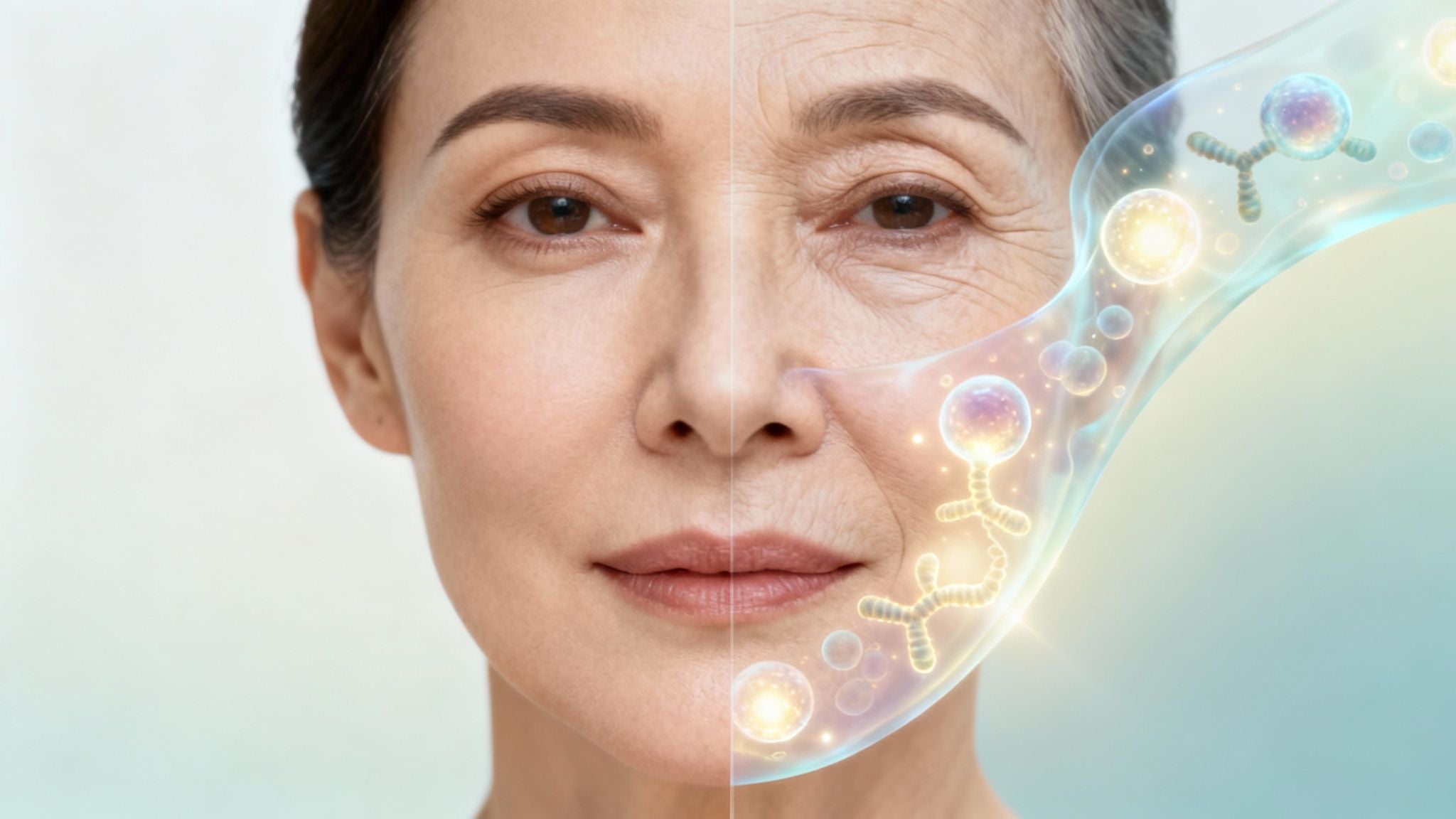
Understanding the aging process and shaping it positively
Aging is more than just a few wrinkles in the mirror. It is a profound biological process that takes place in every single cell of your body. The good news? It is not determined solely by your genes but is influenced significantly by your lifestyle. That means you have control over it.
What really drives the aging process
We all know the experience: Looking in the mirror reveals the first wrinkles, perhaps a few gray hairs, and skin that is no longer quite as firm as it used to be. But what we see is only the surface. Aging itself is a gradual process that begins deep inside us as early as our youth.

You could compare it to a house: The visible signs are like cracks in the facade, but the true substance lies in the foundation—and those are your cells. Each of your trillions of cells goes through its own life cycle. How smoothly it all proceeds determines how quickly and how healthily you age.
The two sides of aging
To understand what happens in our bodies, it is worth distinguishing between the visible and invisible processes. Both are closely linked, but they have different causes.
| The two sides of aging |
|---|
| An overview of the visible and invisible aspects of the aging process. |
| Aspect |
| Description |
| Examples |
| Main influencing factors |
Ultimately, the visible signs only reflect what has been happening inside for a long time. So if you really want to influence the aging process, you have to address the invisible processes—the root of it all.
The secret lies in understanding and specifically supporting the invisible processes taking place within. Instead of merely combating symptoms on the surface, you tackle the problem at its root.
Why the topic is more relevant than ever today
We live in a society that is growing older. In 2025, half of Germans will be over 47 years old. At the same time, life expectancy has increased by more than ten years since the 1960s. Today, almost 19 million people in Germany are over 65—that's around 22 percent of the total population. You can find more details about demographic trends in Germany here on innovations-report.de.
These figures show that it is no longer just about living longer, but above all about enjoying those additional years in good health and with plenty of energy. The key is to understand your own body and give it exactly what it needs.
This is where your genetic blueprint comes into play. It determines how well your body handles the challenges of aging. A self-test such as the mybody®x Skincare DNA Metabolism Analysis gives you direct insight into your personal strengths and weaknesses. Instead of fumbling in the dark, you can base your healthy-aging strategy on solid facts.
A look inside your cells as you age
To truly understand why we age, we need to take a short journey inside our bodies—directly to the level of our cells. Imagine each of your trillions of cells as a tiny yet highly complex factory. They produce energy, repair damage, and ensure that everything runs smoothly. As long as these factories work efficiently, we feel vital and our skin looks fresh.
But, as in any factory, wear and tear and minor “operational disruptions” occur over the years. These very disruptions are the reason for what we perceive as aging. It is not a single process, but an interplay of several processes in our cells.
The three main drivers of cellular aging
Three key processes significantly drive aging at the cellular level. They often go unnoticed for a long time, but their cumulative effects become visible and noticeable over time.
-
Oxidative stress: Imagine this process like rust forming on a metal chain. In the body, it is caused by so-called free radicals—unstable molecules that are produced during normal metabolic processes, but also by UV radiation, smoking, or environmental toxins. They attack our cellular structures—DNA, proteins, and fats—and damage them. A certain level is normal, but when free radicals gain the upper hand, the cell’s own repair systems can no longer keep up.
-
Telomere shortening: Your chromosomes, which carry all your genetic information, have protective caps at their ends called telomeres. You can think of them like the small plastic caps on shoelaces that prevent them from fraying. With each cell division, these caps become slightly shorter. Once a critical length is reached, the cell can no longer divide and dies—or it becomes a “zombie cell” that promotes inflammation in the tissue.
-
Glycation: This process is also known as “sugarification.” Sugar molecules from the blood attach themselves to proteins and fats, making them stiff and immobile. Long-lived proteins such as collagen and elastin in your skin are particularly affected. Through glycation, these important structural components lose their flexibility, which directly leads to wrinkles and sagging skin.
The following graphic clearly summarizes these three central pillars of cellular aging once again.
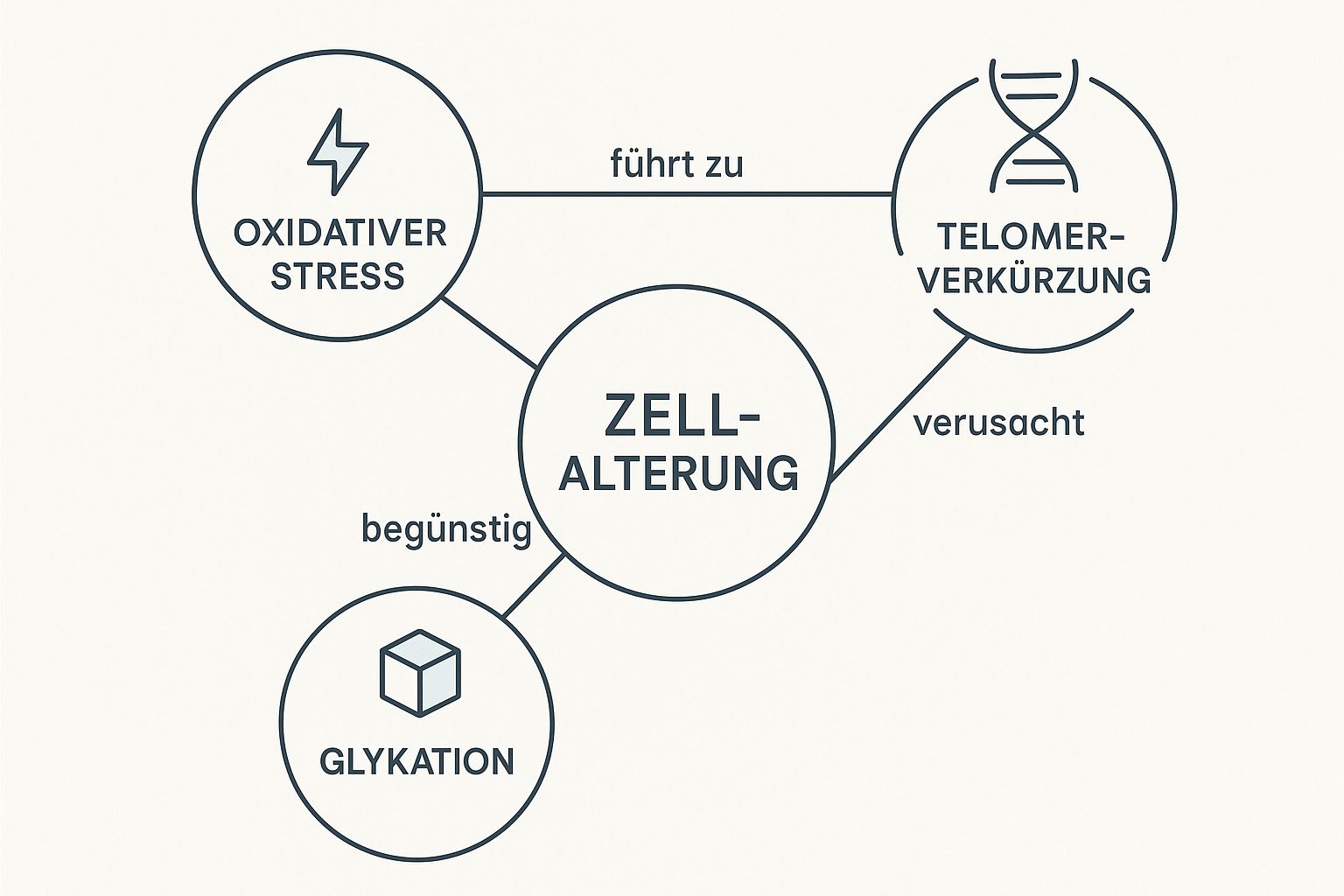
This clearly shows how these three different mechanisms interact and together drive the aging process at the most fundamental level of our bodies.
Your DNA as the key to understanding
These cellular processes occur at different rates in each of us. The reason lies deep in our genetic code. For example, your DNA determines how efficiently your body produces antioxidant enzymes to combat free radicals.
Your genetic predisposition determines the individual sensitivity of your cells to the main drivers of aging. It is the blueprint that determines how well your cellular protection and repair systems function.
They also determine how quickly your telomeres shorten and how susceptible your skin is to glycation. Understanding this individual genetic profile is the first crucial step toward not simply accepting the aging process, but actively shaping it.
This is exactly where targeted analysis comes in. The mybody®x Skincare DNA Metabolism Test deciphers these genetic factors. It shows you how your genes influence your tendency toward oxidative stress, collagen breakdown, and other important aspects of skin aging.
Instead of following general advice, you get a personalized guide tailored directly to your body's needs. You learn which nutrients and active ingredients your cellular factories really need to effectively get “operational disruptions” under control. This creates the foundation for long-lasting vitality—from the inside out.
How your genes influence skin aging
Have you ever wondered why some people look much younger than others despite having the same lifestyle? The answer usually lies deep within us—in our DNA. Our genes are, so to speak, the personal blueprint for our bodies, and they set the direction for how our skin ages over time.
They establish the basic rules for the aging process: how quickly your body breaks down the important structural protein collagen, how well your natural protection against UV radiation works, or how effectively your cells cope with oxidative stress. This exact genetic predisposition is why a standard cream cannot work for everyone. What works wonders for a friend may have little effect on you.
Your personal blueprint for your skin
Imagine your DNA as a unique handbook for your body. It contains precise instructions for countless processes that are essential for healthy, radiant skin.
Some of the most important factors determined by your genes are:
- Collagen breakdown: Your genes determine how quickly your skin's collagen framework loses stability. A predisposition to faster breakdown can lead to wrinkles and a loss of elasticity at an earlier age.
- Antioxidant capacity: Your body's ability to neutralize free radicals is genetically determined. Naturally weaker protection makes your skin more susceptible to cell damage caused by stress, poor nutrition, or UV light.
- UV protection: Your skin's natural protection against sun damage is also influenced by your genes. This determines how sensitive you are to photoaging—that is, premature skin aging caused by light.
- Hydration: Whether your skin can retain moisture effectively is also genetically determined. Good moisture retention is the foundation of a plump, healthy complexion.
These genetic differences make it clear why blanket beauty tips often fail to deliver the desired results. What you need is a strategy tailored precisely to your personal skin profile to effectively counter the aging process.
End the guesswork with DNA analysis
And this is exactly where modern at-home self-tests come in. Instead of continuing to guess which products and nutrients are right for you, you can take a direct look at your genetic code. The mybody®x Skincare DNA Metabolism Test was developed specifically for this purpose. It analyzes the genetic markers responsible for the key factors in skin aging.
It's as if you're finally opening the missing chapter in your personal skin handbook. This chapter shows you, in black and white, your individual strengths and weaknesses. This gives you a scientifically sound foundation for managing the aging process in a targeted and effective way.
The following image gives you a small glimpse of the results report you receive after taking the test.

The report not only provides you with understandable insights into your predispositions but also gives you very specific recommendations for your skincare, diet, and lifestyle based on them.
With this knowledge at hand, you are no longer dependent on empty marketing promises. Instead, you make informed decisions that are perfectly suited to your skin’s needs. You invest your time and money selectively in measures that have been proven suitable for your profile.
Your genes are not your destiny but your personal guide. When you understand what is in your blueprint, you can adapt your lifestyle and skincare routine to compensate for your genetic weaknesses and make the most of your strengths.
The Difference Between Genetics and Epigenetics
It is important to understand that your genes only form the foundation. You can think of them as a computer’s hardware. However, whether and to what extent these genes are “switched on” is controlled by epigenetics—the software, so to speak, that you rewrite every day through your lifestyle, diet, and other environmental factors.
Your DNA may predispose you to rapid collagen breakdown. But that does not mean you are helplessly at its mercy! Through a protein-rich diet, targeted nutrients, and the right skincare ingredients, you can actively slow this process down. If you would like to explore this fascinating topic in greater depth, read our detailed article on longevity and epigenetics.
The mybody®x Skincare DNA Metabolism Test gives you the key information about your “hardware.” This allows you to choose the right “software”—that is, your daily habits—to shape the aging process as effectively as possible. You take control and act proactively instead of merely reacting to the first signs of aging.
The Biggest Everyday Accelerators of Aging
While your genes are something like the basic blueprint for your aging process, your daily lifestyle in particular determines how quickly time leaves its mark. Many factors that cause our cells to age are deeply rooted in our habits—often without us even realizing it.

But this is precisely where the good news lies: Unlike your genetic predisposition, you have these external influences in your own hands. Being mindful of them is the most effective way to protect your cellular health in the long term and actively slow down the aging process. Let’s take a closer look at the biggest time thieves.
UV radiation and the so-called “photoaging”
The sun is essential to life, there is no question about that. At the same time, however, its UV radiation is by far the greatest external factor contributing to premature skin aging. Experts also refer to this process as photoaging. UV rays penetrate deep into the skin, damaging the collagen and elastin tissue there and leading to wrinkles, loss of firmness, and pigmentation spots.
This factor is so significant that estimates suggest that up to 80 % of the visible signs of aging on the face can be attributed to the sun. Consistent sun protection is therefore not a matter of age, but the most important preventive measure of all.
Dietary sins that leave their mark
What you eat goes directly into your cells. A diet high in sugar and highly processed foods fuels a process known as glycation—a kind of “sugaring” of your collagen fibers, which we have already discussed. This makes the tissue stiff and inflexible, visibly accelerating wrinkle formation.
At the same time, this type of diet promotes chronic, low-grade inflammation in the body, also known as “inflammaging.” This process accelerates aging at the systemic level. Unsure which diet is right for you? In our article about skin aging and proper skincare, we explain the connections between diet and skin health in greater detail.
Stress and sleep deprivation as cell killers
Chronic stress is pure poison for your body. When you are constantly under pressure, your body releases more of the hormone cortisol. Consistently high cortisol levels can not only accelerate collagen breakdown but also impair the skin’s natural ability to regenerate.
The same applies to sleep deprivation. While you sleep, important repair and regeneration processes are working at full speed in your cells. If your body consistently gets too little sleep, it lacks the time to repair damage—and the aging process accelerates.
Your lifestyle is the most powerful lever you have. Every conscious decision to adopt a healthy habit is an investment in the longevity and vitality of your cells.
This knowledge is more important than ever today. In 2023, the average age in Germany was already 44.6 years, and the trend is rising. So it is time to take action yourself.
External Aging Factors and Their Effects
The three main drivers—sun, diet, and stress—are the biggest, but not the only, accelerators. To give you a better overview, we have summarized the most important external factors and their effects here.
| Factor | Primary effects on the skin | Systemic effects on the body |
|---|---|---|
| UV radiation | Destruction of collagen and elastin, wrinkles, age spots | Increased risk of skin cancer, weakened immune system |
| Unhealthy diet | Glycation (sugarification), accelerated wrinkle formation | Chronic inflammation (“inflammaging”), increased risk of metabolic diseases |
| Stress & lack of sleep | Collagen breakdown, slower cell repair, dull complexion | Elevated cortisol levels, weakened immune system, hormonal imbalance |
| Smoking | Poor circulation, dull skin, deep wrinkles (especially around the mouth) | Severe oxidative stress, damage to the lungs and cardiovascular system |
| Lack of exercise | Reduced oxygen supply, less firm-looking skin | Slower metabolism, muscle loss, increased risk of chronic diseases |
| Environmental toxins | Oxidative stress, weakened skin barrier, inflammation | Strain on the detoxification organs (liver, kidneys), systemic stress |
This overview makes it clear how closely your daily life is linked to your cellular health. Each of these pillars offers an opportunity to make a positive change.
What Else Makes Your Body Age
In addition to the major factors already mentioned, there are other habits that can accelerate the aging process:
- Smoking: Nicotine constricts blood vessels, drastically reducing the supply of oxygen and nutrients to the skin. At the same time, large amounts of free radicals are released, causing oxidative stress.
- Lack of exercise: Regular physical activity stimulates circulation and supplies cells with fresh oxygen. Without it, cell renewal becomes sluggish and the skin appears less firm.
- Environmental toxins: Air pollution and other environmental toxins can also cause oxidative stress in the skin and weaken its natural protective barrier.
All these points show how much control you have yourself. But which factors are personally most important for you? A mybody®x Skincare DNA Metabolism Analysis can help you identify your individual genetic vulnerabilities. This way, you know exactly which lifestyle factors you should pay particular attention to in order to optimally support your body.
Develop Your Personal Anti-Aging Strategy
Okay, you now know the internal and external drivers of aging. Time to finally put this knowledge to use! Instead of continuing to rely on general advice that may not work for you at all, you can now develop a highly targeted, personal strategy—and actively shape the aging process.
The key to success is personalization. Your body is unique, and your strategy should be too. It is not just about combating superficial symptoms, but about addressing the causes at their root. And the foundation for this is your completely individual genetic profile.
Your DNA as a Personal Blueprint
Imagine having a detailed guide to your body in your hands—one that shows you exactly where your weaknesses lie and how best to compensate for them. That is precisely what the mybody®x Skincare DNA Metabolism Test is. It is your personal blueprint, showing you the way to a truly effective anti-aging strategy.
Instead of blindly guessing what might help, the test provides you with clear, scientifically sound facts about your predispositions. This finally makes your approach precise and effective.
The best strategy against the aging process is always the one that starts with you. Know your genetic vulnerabilities so you can specifically promote your strengths and consciously compensate for weaknesses.
From Analysis to Concrete Action
The test results are not dry data, but direct, actionable recommendations for your everyday life. This means you can tailor your skincare, diet, and lifestyle precisely to your body's needs.
-
Example 1: Collagen Breakdown
If your analysis shows a genetic predisposition to rapid collagen breakdown, you know exactly where to start. Skincare ingredients such as retinol and vitamin C are particularly valuable for you because they stimulate collagen production. At the same time, you benefit from a protein-rich diet that provides your body with the important building blocks. -
Example 2: Antioxidant Protection
If your inborn shield against oxidative stress is somewhat weaker, you can take targeted countermeasures. Your skin can then benefit enormously from serums containing vitamin E and ferulic acid. Your diet should now include more foods with high antioxidant effects—think berries, dark leafy greens, and nuts. You can also learn more about how to use antioxidant effects to support your health in our in-depth article.
This personalized approach ensures that you invest your time and energy precisely in the measures that make the biggest difference for you. No more one-size-fits-all approach!
More than just personal health
Taking a proactive approach to your own aging process is not only good for you; it also has a societal dimension. In Germany, the share of the population of working age fell from 68.7% to 63.6% between 1991 and 2023. At the same time, the number of older people is increasing, putting greater pressure on our social systems. By taking your health into your own hands, you actively help secure your quality of life in the long term. The Federal Employment Agency provides further insights into demographic development.
Take full control
The mybody®x Skincare DNA Metabolism Test gives you the tools you need to take control. You are no longer passively at the mercy of the aging process. Instead, you can actively shape it based on scientific insights into your own body.
Instead of chasing every new trend, you follow a plan based on your unique biology. This is the decisive step from reactive to proactive healthcare. You shape your future yourself—one cell at a time.
Frequently asked questions about the aging process
You have now learned a great deal about the aging process. To make sure no questions remain unanswered, we have collected the most frequently asked questions we receive time and again to give you even more clarity on your journey.
Can I really stop the aging process?
To be completely honest: Stopping the aging process entirely is biologically impossible. It is part of life. What you can definitely do, however, is noticeably slow it down and minimize its undesirable side effects.
A healthy lifestyle is essential. If you also know your genetic makeup—for example, through the mybody®x Skincare DNA Metabolism Test—you can take targeted, genuinely effective measures to support your cells’ health. In a sense, you take the wheel and determine the pace yourself.
When should I start thinking about anti-aging?
The best answer is: as early as possible. When it comes to aging, prevention is the key to success. For example, many people do not know that the skin’s natural collagen breakdown begins as early as your mid-20s—long before the first wrinkle is visible.
So it is worth incorporating smart habits into your daily routine early on, such as consistent sun protection or a nutrient-rich diet. A genetic test like the Skincare DNA Metabolism Analysis is beneficial at any age because it helps you find the right strategy for you from the outset, rather than merely reacting to damage later on.
The best time to invest in your cellular health was ten years ago. The second-best time is today.
Does nutrition play a greater role than skincare?
This question cannot be answered simply with “yes” or “no.” Think of it this way instead: the two are partners that work hand in hand. Nutrition works from within and provides your cells with the building blocks they need for repair and renewal.
Skincare protects your skin from harmful environmental influences externally and delivers concentrated active ingredients exactly where they are needed. The most successful approach is always a holistic strategy that takes both into account. Our mybody®x test also provides you with specific recommendations for both areas. If you want to take a deeper dive into how to calculate your biological age and influence it, take a look at our blog article on the subject.
Is the Skincare DNA Test complicated?
No, not at all! We designed the test specifically so that it can be carried out at home with ease and completely painlessly.
Simply use a cotton swab to collect a sample from the inside of your cheek, send it back to us free of charge, and shortly afterward receive your detailed yet easy-to-understand results in your online account. It is the simplest way to gain deep insight into your skin’s needs.
Are you ready to take your aging journey into your own hands and base your strategy on scientific facts? Discover with mybody®x what your genes really have in store.



Share now:
What are trans fats, and how do they really harm you?
Healthy Vegan: Your Guide to a Nutrient-Rich Diet