
Coffee or Tea: Which Is Better for Your Metabolism?
Coffee or tea? This question seems almost as old as humanity itself. Yet the answer is surprisingly personal and has less to do with the drink than you might think. The truly decisive question is: What does your body say?
Your reaction to caffeine and other ingredients is as individual as your fingerprint. General advice often misses the mark here, because the answer lies deep in your DNA. This article aims to show how important it is to understand your own metabolism—because every body functions differently. Only when you know which metabolic type you are can you make the decisions that truly suit you. Whether coffee or tea—your body responds uniquely.
Why Your Body Knows the Answer
Every morning, the same decision: Do you reach for coffee for a quick boost, or would you rather have tea for a gentler start? We all make small health decisions like these every day. But have you ever wondered why your friend can sleep soundly after three espressos, while you lie wide awake in bed after just one cup?
This is no coincidence. These differing reactions are rooted in your genes and show how uniquely your metabolism works.
The Limits of Blanket Recommendations
Of course, we love our coffee in Germany. Statistics show that almost 90 percent of the population reach for a cup every day—on average, around 3.5 cups per day. Among 56- to 65-year-olds, consumption even rises to 3.8 cups. If you want to take a deeper dive into the figures, you can find some fascinating insights here.
These figures show how deeply coffee is rooted in our culture. But they reveal nothing about whether this habit is also the right choice for you personally.
Your body is not an average. It is a highly complex system that operates according to its own rules—and those rules are encoded in your DNA.
Blanket recommendations, no matter how popular they are, overlook this crucial point. They treat every body the same, even though we all process nutrients, stimulants, and foods completely differently.
What Your Metabolism Reveals
Your metabolism is the key to truly understanding your body. It determines not only how you obtain energy or regulate your weight, but also how you respond to caffeine. So the question is not which drink is generally better, but which one works best for your unique metabolism.
This is exactly where a DNA metabolism analysis comes in. Instead of relying on general advice that may suit others, you can find out precisely what your body really needs and which nutrients, drinks, and dietary approaches best support your energy, concentration, and well-being.
- Energy: Which drink gives you steady energy without causing you to crash later?
- Concentration: What helps you stay focused without making you nervous?
- Well-being: Which drink supports your digestion and overall balance?
When you learn how your body works, you make decisions that truly suit you. This helps you discover what your body really needs instead of relying on general advice that may work for others but not for you. If you would like to take a deeper dive into how your metabolism is encoded in your genes, you will find valuable information in our article on metabolism and genetics.
The key ingredients in direct comparison
For most of us, coffee and tea are simply hot drinks meant to keep us awake. But anyone who looks more closely will discover a fascinating world full of bioactive substances that can do far more than just drive away fatigue. Your choice between a cup of coffee and a mug of tea directly affects which of these substances enter your body – and how they act there.
Both drinks are packed with ingredients that influence your energy, focus, and even your mood. But the crucial difference lies in their chemical composition and the subtle interplay of their individual components. This unique profile explains why coffee may make you nervous, while tea can leave you feeling clear-headed and focused.
Caffeine is not just caffeine
The star in both drinks is, of course, caffeine. In tea, it is often also called “theine,” although chemically speaking, it is exactly the same substance. The real difference lies in how your body absorbs and processes it.
In coffee, caffeine is present in its free form, which is why it enters the bloodstream incredibly quickly. The result is that typical “coffee kick” – a rapid, powerful boost in energy and concentration. But as quickly as it arrives, it can also disappear again, often ending in a small energy slump.
Tea is quite different: here, the caffeine is bound to tannins. This binding causes it to be released much more slowly and evenly over a longer period. The effect is therefore gentler, longer-lasting, and usually comes without the typical highs and lows.
The caffeine in tea is like a long-distance runner—it releases its energy gradually and steadily. The caffeine in coffee is more like a sprinter: a faster start, but it also wears off more quickly.
This infographic provides another useful summary of the different effects and origins of coffee and tea.
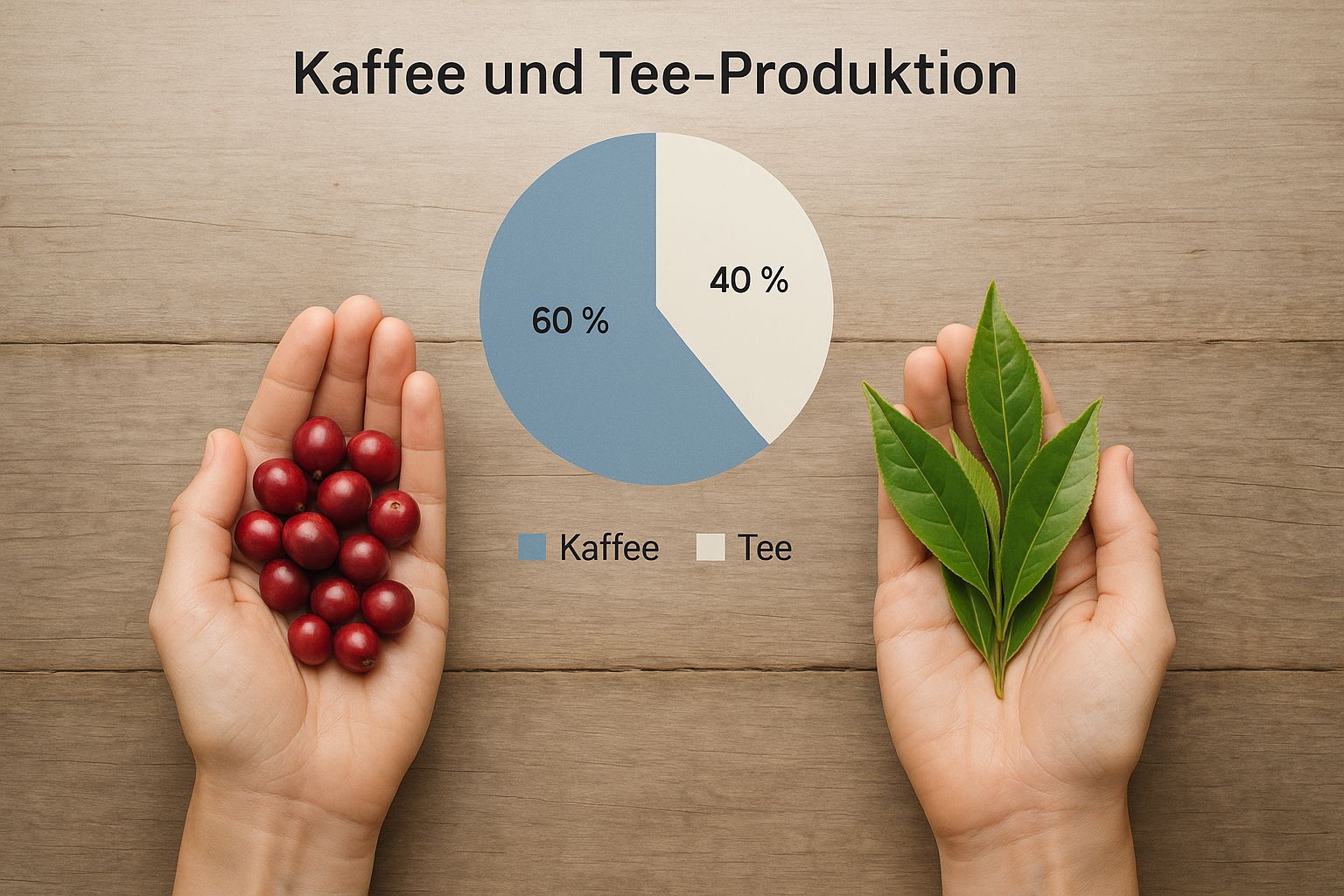
While the coffee cherry provides the basis for a quick energy boost, the leaves of the tea plant offer a gentler but longer-lasting effect.
The power of antioxidants
Both coffee and tea are true powerhouses when it comes to antioxidants. These protect our cells from oxidative stress, but here too, there are important differences you should know about.
- Coffee and chlorogenic acid: Coffee is particularly rich in chlorogenic acids. These powerful antioxidants may help regulate blood sugar levels and have been shown to have anti-inflammatory effects.
- Tea and catechins: Green tea stands out above all for a group of antioxidants called catechins. The best known and most potent of them is epigallocatechin gallate (EGCG). Many of the health benefits of green tea are attributed to this powerhouse compound.
Other key players in tea
But tea has another ace up its sleeve that makes it truly unique: the amino acid L-Theanine. It is known for its relaxing yet concentration-enhancing effect.
L-Theanine can cross the blood-brain barrier and promotes the production of alpha waves in the brain. This puts us in a state of relaxed alertness. This very combination of L-Theanine and caffeine is why many tea drinkers feel more focused and less jittery than after drinking coffee.
Coffee and tea at a glance
To see the differences at a glance, I’ve compared the most important ingredients and their primary effects for you.
Comparison of the bioactive compounds in coffee and tea
A clear comparison of the most important ingredients in coffee and tea and their primary effects on the body.
| Ingredient | Coffee (per 200 ml) | Tea (green/black per 200 ml) | Primary effect |
|---|---|---|---|
| Caffeine | 80–120 mg | 30–70 mg | Fast, intense stimulation (coffee) vs. gentle, long-lasting stimulation (tea) |
| Antioxidants | Mainly chlorogenic acids | Mainly catechins (EGCG) & flavonoids | Cell protection, anti-inflammatory effects, support for metabolism |
| L-theanine | Not present | Clearly present | Promotes relaxation and focus, moderating caffeine’s stimulating effect |
| Theobromine | Small amounts | Present (especially in black tea) | Mildly stimulating and mood-enhancing, with a gentler effect than caffeine |
The table makes it clear: Choosing between coffee and tea is about much more than taste. It is about the effect you want to achieve for yourself and your body. The question “Coffee or tea?” can therefore only be answered individually—because how your body responds to these substances is unique and ultimately determined by your genes.
How your body really processes caffeine
Why can your colleague seemingly drink five cups of coffee a day effortlessly, while you already feel restless and get palpitations after just one? The answer has nothing to do with willpower or habit. It is much simpler and, at the same time, more fascinating: it is in your genes.
Every body has an individual blueprint that determines how efficiently it processes certain substances—and caffeine is a prime example. Whether coffee or tea is the better choice for you therefore depends largely on how quickly your body can break down the caffeine.

The key enzyme in your liver
At the center of caffeine metabolism is one particular gene: the CYP1A2 gene. This gene is, so to speak, the blueprint for an enzyme that is also called CYP1A2 and works mainly in your liver. Its job is to break down caffeine and other foreign substances and prepare them for excretion.
This is where the crucial difference lies. Genetic variations cause this enzyme to work at different speeds in different people. That is why there are “fast” and “slow” caffeine metabolizers. Your personal metabolic type is therefore not a matter of lifestyle, but a direct consequence of your genetic makeup.
Fast or slow metabolizers—which are you?
Depending on which variant of the CYP1A2 gene you carry, you belong to one of two groups. And this classification has far-reaching consequences for how you consume coffee or tea every day.
Fast caffeine metabolizers: People with this genetic variant produce a highly efficient CYP1A2 enzyme. Their liver breaks down caffeine extremely quickly, so the stimulating effect lasts for less time and the body is exposed to the substance for a shorter period.
- They can often drink several cups of coffee throughout the day without becoming nervous or experiencing sleep problems.
- For them, moderate coffee consumption even appears to have positive effects, such as a lower risk of certain cardiovascular diseases.
Slow caffeine metabolizers: In this group, the CYP1A2 enzyme works significantly more slowly. Caffeine remains in the bloodstream much longer, which means its effects are stronger and longer-lasting.
- Even small amounts of caffeine can cause restlessness, a racing heart, or sleep problems in them, even if it has been hours since they had their cup of coffee.
- Studies suggest that high coffee consumption among slow metabolizers may increase the risk of high blood pressure and heart problems because the body remains exposed to the stress for longer.
Your genetic predisposition determines whether caffeine is a friend or a potential enemy for you. It is the most important factor determining how your body responds to your daily cup of coffee or tea.
This genetic component is precisely why blanket recommendations often fall short. Once you know which type you are, you can make conscious decisions that support your health instead of unknowingly burdening it. Learn more about how your genes also influence your sleep and your response to caffeine in our in-depth article on genes, sleep, and caffeine.
What this means for your cup of coffee
Against this backdrop, the question “Coffee or tea?” takes on a whole new dimension. It is no longer just about taste, but about making a conscious decision for your well-being. For a slow metabolizer, one cup of coffee in the morning may still be fine, but a second cup in the afternoon could already seriously disrupt sleep.
Your genetic predisposition is the decisive compass. Only when you know how your body processes caffeine can you make the right choice for yourself. This ensures that your favorite drink gives you energy instead of unnecessarily putting your body under stress. A DNA metabolism analysis can provide clarity and point you toward a better understanding of your body.
Health effects on the cardiovascular system and brain

When it comes to the question “Coffee or tea?”, countless health myths persist. But what does science really say about their effects on your body? One thing is clear: Both drinks can do much more than simply wake you up—they directly affect your cardiovascular system and brain function.
However, the effects are far from universal. Whether your morning drink protects your heart or temporarily raises your blood pressure depends largely on your individual predisposition. It is time to dispel the myths and look at the facts that really matter for your health.
The impact on your cardiovascular system
Both coffee and tea are packed with antioxidants that are generally beneficial for your heart and blood vessels. They help reduce inflammation and protect your cells from oxidative stress. However, the key difference lies in the types of compounds they contain—and above all, in the caffeine.
Coffee can cause blood pressure to rise temporarily. Although regular consumption often leads to tolerance, this effect can be stronger and last longer in sensitive individuals or “slow” caffeine metabolizers.
Green tea, on the other hand, is rich in catechins such as EGCG and is often associated with improved vascular function. The flavonoids it contains may help keep blood vessels more elastic and thereby stabilize blood pressure over the long term.
It is not about labeling one drink as “good” or “bad.” What matters is how your individual body responds to the respective ingredients. For someone predisposed to high blood pressure, tea could be the better choice.
Another important point is blood lipid levels. Unfiltered coffee, such as French press coffee, may contain substances that affect cholesterol levels. With filtered coffee, however, this risk appears to be minimal. Tea generally has a neutral to positive effect in this regard. If you want to learn more about the importance of balanced cholesterol levels, read our article on what to do if your HDL cholesterol is too low.
Protection and performance for your brain
Your brain also benefits from the bioactive substances in coffee and tea, but here too, they work in very different ways. The key question is what kind of mental performance you want.
Coffee is known for its ability to quickly boost cognitive function. Caffeine blocks the fatigue-signaling neurotransmitter adenosine while simultaneously stimulating the release of dopamine and noradrenaline. The result:
- Improved alertness: You quickly feel more awake and attentive.
- Increased concentration: In the short term, you may be able to focus better on a task.
- Faster reaction time: Your mental and physical reflexes may improve.
Tea, and green tea in particular, offers a different but equally valuable benefit. The unique combination of caffeine and the amino acid L-Theanine creates a state of relaxed alertness. L-Theanine promotes the production of alpha waves in the brain, resulting in a feeling of calm and focus without the typical nervousness.
In the long term, studies suggest that regular consumption of both beverages may reduce the risk of neurodegenerative diseases such as Alzheimer’s and Parkinson’s. Antioxidants play a key role here by protecting the brain from cellular damage.
Blood sugar and the risk of type 2 diabetes
An often-overlooked but important point is the effect on blood sugar levels. Coffee, or more precisely the chlorogenic acid it contains, may help improve insulin sensitivity. Long-term, moderate coffee consumption is therefore associated with a reduced risk of type 2 diabetes.
Green tea also has positive effects in this regard. Its catechins can slow the absorption of carbohydrates, helping to moderate blood sugar spikes after a meal.
The final decision between coffee and tea is therefore a very personal one. It depends on which health aspects you prioritize and how your body—guided by your genetics—reacts to the respective compounds. Only by understanding your body can you make the choice that best supports you.
How DNA analysis can bring clarity to your everyday life
General health advice is often well-intentioned, but it puts everyone in the same box. Yet you are not like everyone else. The previous sections made that clear: How your body reacts to the compounds in coffee and tea is highly individual—and is largely determined by your unique genetic makeup.
Instead of continuing to guess which drink is really good for you, you can finally gain certainty. A DNA metabolism analysis from mybody-x is the most direct way to understand your body's language and build your diet on a solid scientific foundation.
Your personal guide to the right diet
You may be wondering how such an analysis actually works. The process is surprisingly simple and designed so that you can do everything conveniently from home. It is an uncomplicated path to profound insights about yourself.
-
Step 1: Simple sample collection You receive a test kit with everything you need. A simple saliva sample, collected with a cotton swab, is all that is required. The whole process takes just a few minutes, is completely painless, and saves you a trip to the doctor.
-
Step 2: The laboratory analysis Your sample is sent to an ISO-certified specialist laboratory. Here, experts decode the genetic information that is crucial to your metabolism. Data protection and anonymity are the top priority: Your sample is pseudonymized and destroyed after the analysis.
-
Step 3: Your detailed results report Once the analysis is complete, you receive a comprehensive, easy-to-understand report. No medical jargon, but your very own guide to an optimized diet and a healthier lifestyle.
This scientific foundation gives you a powerful tool. It replaces mere guesswork with hard facts and allows you to finally make informed decisions.
Concrete answers instead of general tips
The results report is much more than just a collection of data. It provides you with concrete, actionable recommendations tailored directly to your genetic needs. You learn not only whether you are more of a coffee or tea person, but also gain a comprehensive picture of your metabolism.
Some of the most important insights include:
- Your caffeine metabolism type: You find out whether you are a fast or slow metabolizer. This information alone can revolutionize your energy, sleep, and overall well-being because you can precisely control your caffeine intake.
- Your individual nutrient needs: The analysis shows how well your body processes important vitamins and minerals such as vitamin B12, folic acid, and vitamin D. You can see where potential genetic weaknesses lie and tailor your diet accordingly.
- Responses to food groups: You’ll learn how your body responds to carbohydrates and fats. This insight is invaluable for finding the eating pattern that suits you—whether low-carb, Mediterranean, or another strategy.
A DNA analysis is like looking at the manual for your own body. It reveals the rules governing how your system works, so you can finally stop working against your own biology.
Instead of relying on advice designed for the masses but that may not suit you at all, the analysis puts you back in control. You’ll learn to correctly interpret your body’s signals and tailor your diet—including your choice between coffee and tea—precisely to what truly makes you strong.
These personalized insights are the key to more energy, better concentration, and lasting well-being. If you’d like to explore the possibilities offered by such a test in greater depth, you’ll find plenty of additional valuable information in our detailed article about the DNA test for nutrition. It’s the first step toward taking responsibility for your health—based on what really matters: your own DNA.
Your questions about coffee, tea, and genetics—we have the answers
You’ve now read a lot about how individually your body responds to coffee or tea and how your genes can be the deciding factor. Even so, very specific questions often come up. Here, we clear up the myths and give you clear answers.
Is green tea automatically healthier than coffee?
This idea persists, but it isn’t actually correct. The truth is that both drinks have their own distinct strengths. Green tea stands out for its EGCG, one of the most potent antioxidants of all, which protects your cells from stress. Coffee, on the other hand, contains other valuable compounds such as chlorogenic acid and can temporarily take your concentration to a whole new level.
At the end of the day, your body decides what is “healthier” for you. A key factor is your personal caffeine metabolism.
For someone who breaks down caffeine very slowly, green tea is often the much smarter choice. The caffeine has a gentler effect, and the lower content helps prevent restlessness or sleepless nights. So it’s not about what is generally better, but what works best for your genetics.
Can I drink coffee at all if I’m a “slow caffeine metabolizer”?
Yes, absolutely! It all comes down to the right amount and a good awareness of your body. If your genes cause you to metabolize caffeine more slowly, it simply stays in your system longer. As a result, the effects are more intense and last longer.
Here are a few practical tips that can help you:
- Limit the amount: Often, a single cup in the morning is perfectly fine. Pay attention to how you feel and avoid coffee in the afternoon.
- Listen to your body: Signs such as nervousness, a racing heart, or trouble falling asleep are clear signals from your body that the dose was too high.
- Discover alternatives: Decaffeinated coffee or teas that are naturally low in caffeine are great options. This way, you do not have to give up the enjoyment, but you also avoid overloading your metabolism.
A DNA analysis gives you a specific recommendation tailored to you that goes far beyond such general advice.
How quickly will I notice the effects after a DNA analysis?
Adjusting your lifestyle based on your genetics is a process—but many people feel the first positive changes surprisingly quickly. Customers often tell us that after just a few weeks they experience more stable energy levels throughout the day, a better feeling in their gut, or deeper sleep.
Long-term goals, such as weight management or sustainable performance enhancement, are naturally a journey. Your DNA analysis serves as your scientifically grounded roadmap—the time it takes you to reach your destination depends on how consistently you integrate the recommendations into your everyday life.
Coffee is deeply rooted in Germany’s culture. A 2022 study shows that around 90% of Germans drink coffee every day, while tea plays a smaller role. However, this habit, which is part of everyday life for many people, does not necessarily have to be the best choice for everyone. You can read more about coffee culture in Germany in this article.
Your genetics give you the opportunity to look beyond cultural influences and make the choice that truly suits you and your body.
mybody-x.com knows that true health and well-being come from within. Instead of relying on general advice that may not work for you, a DNA metabolism analysis gives you the tools to truly understand your body. Find out what you really need and make informed decisions for more energy and quality of life.



Share now:
Alcohol intolerance test: Finally, clear answers for you
Lose belly fat: Why your metabolism is the key