

Epigenetic analysis: The key to personalized health
Making healthy choices often feels like a guessing game when results fail to appear. Anyone who wants to improve their diet and daily life intentionally quickly encounters the limitations of one-size-fits-all advice. Epigenetic analysis provides personalized insights into your genes' activity without altering your DNA and shows how your environment, diet, and lifestyle truly affect your body. Here you will learn what modern epigenetic tests offer and how they can make a lasting difference.
Table of contents
- What exactly does epigenetic analysis mean?
- Key mechanisms: methylation and histone modification
- Methods and Procedure of Modern Epigenetic Tests
- Influence of lifestyle and environment on the epigenome
- Applications ranging from anti-aging to prevention
- Limitations, data protection, and costs of epigenetic tests
Key findings
| Point | Details |
|---|---|
| Epigenetics enables personalized health | Epigenetic analyses provide you with tailored information about your gene expression and recommendations for optimizing your health. |
| The environment and lifestyle influence the epigenome | Diet, exercise, stress, and sleep determine which genes are active and how you can specifically influence them. |
| Epigenetic analyses are valuable for prevention | These analyses can identify risk factors for chronic diseases at an early stage and help implement preventive measures. |
| Results should be reviewed regularly | Since the epigenome is constantly changing, it is important to repeat the tests regularly to measure progress and make adjustments. |
What exactly does epigenetic analysis mean?
Epigenetic analysis is not a mysterious process to begin with, but rather a precise examination method that shows how your body actually uses its genes. Imagine your DNA as a vast music library containing millions of notes. You do not alter the genetic material itself, but you can decide which songs are played and which remain silent. That is exactly what epigenetics is: biochemical processes that regulate gene activity without changing the DNA sequence itself. Epigenetic analysis examines these switches and regulators to understand which genes are active and which are currently dormant.
The analysis focuses on three main mechanisms: DNA methylation, modifications of histone proteins, and so-called chromatin remodeling. These are your body’s biological “bookmarks.” In DNA methylation, chemical groups attach to specific sites on the DNA and influence whether a gene switches “on” or “off.” What is interesting is that these changes are not set in stone. Environmental factors, your diet, stress levels, and lifestyle constantly influence these patterns. In concrete terms, this means you have far more control over your gene expression than you may think. An epigenetic analysis captures these changes and provides insight into biological aging and your current state of health, helping you optimize strategically instead of guessing.
In practice, an epigenetic analysis works as follows: A laboratory takes a sample, usually saliva or blood, analyzes specific positions in the genome, and measures how heavily they are methylated. These data are then compared with reference databases to identify patterns associated with age, health, metabolism, or chronic diseases. The result is not a simple “good” or “bad,” but a detailed picture of which genes are currently overactive, which are working too little, and how you can counteract this through targeted changes to your diet, exercise, and stress management. Some analyses even provide an “epigenetic age,” indicating whether your body is biologically older or younger than your actual age. This is where personalized healthcare becomes real: You receive information tailored specifically to your body, rather than general recommendations for everyone.
Pro tip: If you are considering an epigenetic analysis, make sure the laboratory provides the results together with specific recommendations for action—not just numbers and charts, but also personalized tips on nutrition and lifestyle changes to put the insights gained into practice.
Key mechanisms: methylation and histone modification
The body does not need major genetic changes to take fundamentally new paths. Instead, it uses elegant biological switches that can turn your genes on and off. The two most important of these switches are DNA methylation and histone modification. These mechanisms are at the heart of any epigenetic analysis because they show you which genes are currently active and which are being blocked. The fascinating thing is that these processes are constantly taking place in your cells, and you can influence them through your lifestyle.
DNA methylation is the first major mechanism. In this process, small chemical groups called methyl groups are attached to specific sites on DNA. These positions are usually so-called CpG islands, regions with a high concentration of certain base pairs. When this methylation occurs, the corresponding gene is effectively “switched off.” Imagine sticking a label over a page in your music book so that you can no longer read that page. That is essentially the principle. DNA methylation suppresses gene activity and plays a central role in controlling which genetic information your body uses. The important thing here is that this methylation is not permanent. Through diet, exercise, and stress reduction, you can change these patterns. This is why “your genes are your destiny” is not true.

The second major mechanism is histone modifications. Histones are proteins around which your DNA is wrapped. They function like a kind of spool: The more tightly the DNA is wrapped around them, the less your body can read these genes. The more loosely it is wrapped, the more access your cells have to them. Histone modifications are reversible chemical changes such as acetylation or methylation that alter this wrapping. When a histone acetyltransferase (HAT) adds acetyl groups, the structure becomes looser and genes become more accessible. Conversely, histone deacetylases condense this structure again. These enzymes are like the screw on your music box: You tighten or loosen it to control what can be read and what cannot.
An epigenetic analysis measures precisely these methylation patterns and histone modifications. The laboratory examines where your DNA is methylated and how your histones are modified. This produces a picture of your current epigenetic status. The good news: These patterns are not unchangeable. They are highly responsive to your diet (certain vitamins and minerals directly influence enzyme activity), your physical activity, your sleep, and how you deal with stress. If the analysis shows that important genes are underactive, you can take targeted measures to reactivate them. This is what makes epigenetic analyses so valuable for personalized health: They show you not only where you currently stand, but also where the levers are to make a change.
Here you can see the key differences between the main epigenetic mechanisms at a glance:
| Mechanism | Effect on genes | Influenced by | Typical effect |
|---|---|---|---|
| DNA methylation | Switches genes off | Diet, lifestyle | Genes are silenced |
| Histone modification | Regulates accessibility | Exercise, stress, vitamins | Genes are more or less usable |
| Chromatin remodeling | Alters chromatin structure | Environmental influences, metabolism | Genes can be read more or less easily |
Pro tip: If you receive an epigenetic analysis, ask for specific recommendations regarding nutrients such as folate, vitamin B12, and polyphenols, which have been shown to influence methylation patterns and histone modifications.
Methods and Procedure of Modern Epigenetic Tests
If you take an epigenetic test, you are probably wondering exactly what happens to your sample in the laboratory. The good news: The process is much less complicated than it sounds. Modern epigenetic tests follow a standardized procedure that begins with a simple sample and ends with detailed insights into your genes. The most important thing to know upfront: You do not need to go to a hospital. Most tests use saliva or a small blood sample that you can conveniently collect at home.
The process begins with sample collection. For a saliva test, you simply fill a small tube with your saliva. For blood tests, you prick your finger and let a few drops fall into a collection container. The sample is then sealed and shipped to the laboratory. In the laboratory, the actual technical process begins with DNA isolation. Laboratory specialists extract your DNA from the cells in the sample and purify it of contaminants. This is comparable to extracting a valuable stone from a mountain of rock. The crucial phase follows: preparing the DNA for methylation analysis. The DNA is treated so that the epigenetic patterns become visible. Modern epigenetic tests use technologies such as PCR and methylation arrays to measure these patterns precisely. The polymerase chain reaction (PCR) amplifies specific regions of your DNA so that they can be detected. Methylation arrays are like huge network diagrams that can analyze thousands of positions simultaneously.
After amplification comes data analysis. The computer compares your measurement results with reference databases from healthy people and people with various diseases or at different stages of life. The system recognizes patterns and identifies which genes are overactive or underactive. Experts then analyze this data and translate it into an easy-to-understand report. The entire process, from sending in the sample to completing the analysis, usually takes two to four weeks, depending on the laboratory and the scope of the analysis. This is significantly faster than just a few years ago, when such tests took months.
The end result is not just a list of numbers, but a personalized report that shows you where you currently stand epigenetically. The report often also includes what is known as an “epigenetic age value,” indicating whether your body appears biologically older or younger than your actual age. Even more important, however, are the actionable recommendations. A good test not only highlights the problems but also provides concrete solutions: Which nutrients could help, which movement patterns, and which stress-reduction techniques. How to influence your genes through nutrition is a central aspect of this. Certain foods contain compounds that directly affect your methylation patterns. Broccoli, for example, provides sulforaphane, which may promote histone modifications. Green tea, berries, and turmeric contain polyphenols that influence epigenetic switches.
Comparison of epigenetic analysis types and their areas of focus:
| Type of analysis | Primary focus | Recommended use | Example result |
|---|---|---|---|
| Basic epigenetics test | Methylation patterns | Prevention, routine monitoring | Biological age overview |
| Comprehensive profile analysis | Methylation + histone status | Anti-aging, individual optimization | Detailed intervention profile |
| Specific risk analysis | Individual disease patterns | Family history, oncology | Disease risk assessment |
Pro tip: If you take an epigenetics test, choose a laboratory that provides not only raw data but also personalized nutrition and lifestyle recommendations with specific foods and dosages.
Influence of lifestyle and environment on the epigenome
Here is the most important insight that could change your life: Your genes are not your destiny. Your lifestyle writes on your epigenome every day. The environment you live in, the foods you eat, your physical activity, your sleep, and even your stress level continuously influence which genes are active and which remain silent. This is not meant metaphorically, but literally. You make thousands of epigenetic decisions each day without realizing it. Every meal, every hour outdoors, and every walk changes the biochemical switches in your cells.
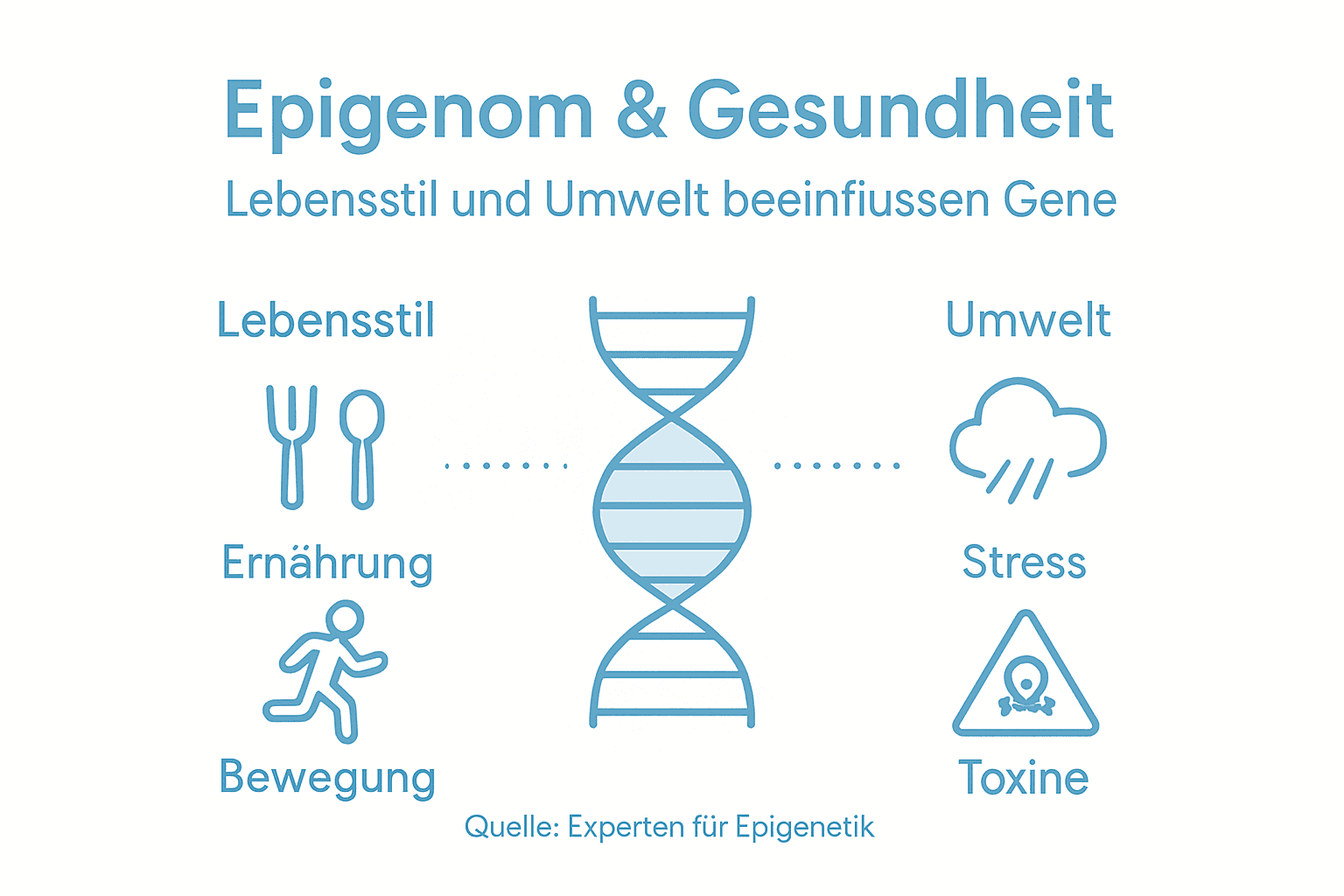
Diet is the most powerful lever you have. Certain nutrients directly affect your methylation patterns. Folate and vitamin B12, for example, are essential cofactors for DNA methylation. If you don’t get enough of them, your methylation patterns can become chaotic, leading to gene expression that does not align with your goals. Specifically, when you eat broccoli, spinach, kale, or avocado, you provide your body with the building blocks it needs to regulate your genes optimally. Quercetin from apples, catechins from green tea, and curcumin from turmeric are not random compounds from nature, but biologically active substances that directly influence the epigenome. These polyphenol-rich foods act on your histone acetyltransferases and histone deacetylases—the very enzymes that determine whether your DNA is loosely or tightly wrapped. This is not a marketing promise, but biochemical reality.
But it’s not just about what you eat. Your overall lifestyle is writing on your epigenetic code. Regular exercise activates genes associated with muscle growth, endurance, and metabolism, while inactivity increases the methylation of other genes linked to inflammation and degeneration. Getting enough sleep is important not only for your recovery, but also to allow your cells to clear away and reorganize yesterday’s epigenetic patterns. Chronic stress? It floods your system with cortisol, which has been shown to alter epigenetic patterns and activate genes associated with anxiety and overreaction. Conversely, meditation and regular breathing exercises reduce stress-related epigenetic changes. These effects are not marginal. Studies show that intensive training programs can produce measurable changes in your epigenome within weeks.
The environment around you also plays a role that is often underestimated. Fine particulate matter, pesticides, certain chemicals in plastics, and other pollutants can alter epigenetic patterns. Particularly noteworthy is that these changes do not affect only you; they can also be passed on to your children. This may sound dramatic, but it is scientifically documented. A mother exposed to chronic stress during pregnancy can leave epigenetic patterns in her child that influence the child’s stress response throughout life. This is why generations of trauma or prosperity continue to affect the body. The good news is that these patterns can be changed again. You can program your epigenome differently today than it was yesterday. That is the powerful promise of epigenetics: the past does not equal the future.
Pro tip: Focus on three concrete changes: Add a folate- or B12-rich food to your daily diet, exercise for at least 30 minutes a day, and reduce screen time two hours before bedtime to deliberately reprogram your epigenetic code.
Applications ranging from anti-aging to prevention
Epigenetic analyses have a wide range of applications that go far beyond mere curiosity. Practical uses range from your personal anti-aging plan to the early detection of disease risks. The exciting part is that it is not about optimizing your appearance, but about genuine biological rejuvenation from within. An epigenetic analysis shows you your “biological age” and enables you to take targeted measures to lower it. If your biological age is five years below your chronological age, that does not just mean you might look younger—it means your cells are actually aging more slowly. This has concrete effects on energy levels, susceptibility to infections, memory performance, and your chances of avoiding chronic diseases.
In the area of anti-aging, epigenetic analyses are becoming increasingly popular because they show exactly where your body is aging the most. Some people have highly aged skin at the epigenetic level, while others have problems with joint degeneration or cognitive function. A good epigenetic analysis identifies these individual weaknesses and then provides you with specific recommendations: Which nutrients might your body need, which movement patterns would support your specific situation, and which sleep improvements would be beneficial. This is much more precise than following generic anti-aging tips that are the same for everyone. Healthy aging requires an individualized approach based on your specific epigenetic profile. If the analysis shows that your methylation patterns indicate rapid cell division, you need different interventions than someone whose patterns indicate chronic inflammation.
In the area of prevention, epigenetic analysis is a game changer. Chronic diseases such as diabetes, heart disease, and even certain types of cancer do not develop overnight. They arise from years of unfavorable epigenetic patterns that fuel a silent fire in the background. Epigenetic analysis can often identify these patterns years before symptoms appear. This gives you a window of opportunity to take corrective action. If the analysis shows that genes associated with insulin resistance are abnormally methylated, you can adjust your diet immediately, before developing diabetes. That is real prevention, not just hope. Anti-aging also includes preventing chronic diseases through targeted measures. The two are inseparably connected: If you avoid chronic diseases, you automatically age more slowly.
There are also specific clinical applications. Oncologists increasingly use epigenetic analyses for the early detection of cancer risks. Cardiologists examine epigenetic patterns associated with the risk of heart disease. Neurologists investigate whether epigenetic changes indicate neurodegenerative diseases. In sports medicine, epigenetic analysis is used to optimize training responses and prevent overtraining. In weight management, the analysis helps explain why some people gain weight easily while others do not, and how to readjust the epigenetic switches of metabolism. This is personalized medicine in its most practical form. The results are often surprising: People often think they have a “slow-metabolism gene,” but in reality, it is an epigenetic methylation that can be changed.
Pro tip: If you undergo an epigenetic analysis for anti-aging or prevention, choose a laboratory that not only identifies risks but also defines specific, measurable milestones so that you can check in three to six months whether your interventions are actually lowering your biological age.
Limitations, data protection, and costs of epigenetic tests
Before you dive into the world of epigenetic analyses, you should know the reality: These tests are not a miracle cure, and there are important limitations you need to understand. Epigenetic analyses show you patterns, but they are snapshots. Your epigenome is constantly changing based on the decisions you make today. This means that a test’s results may be partly outdated in six months if you fundamentally change your lifestyle. That is actually a good thing because it shows that your body is adaptable. But it also means that the tests should be repeated regularly to measure real progress. Another important limitation: Epigenetic analyses cannot always predict disease. An abnormal methylation pattern increases the risk of a disease, but it does not guarantee that you will develop it. Many people with unfavorable epigenetic patterns remain healthy throughout their lives because they have other protective factors.
The issue of data protection must be taken seriously. Your genetic and epigenetic data are extremely sensitive. They contain information about your health, heredity, and potential future diseases. If this data falls into the wrong hands, it could be misused. Insurers could reject you, employers could discriminate against you, or your privacy could be violated. The processing of genetic data is subject to strict data protection regulations such as the GDPR, but not all laboratories are equal. Higher standards are applied in Germany than in many other countries, which means that you are better protected with Swiss or German laboratories. Always ask how your data is encrypted, how long it is stored, whether it is pseudonymized, and what happens to it after your analysis. A good laboratory will answer these questions openly. A red flag should go up if a laboratory is vague or says that your data “may” be used for research.
The cost is a major practical factor. Epigenetic tests are not cheap. Depending on the scope, laboratory, and type of analysis, costs range from 150 euros for basic tests to more than 500 euros for comprehensive analyses. Some tests cost even more when detailed consultation and follow-up tests are included. The cost of epigenetic tests depends on the laboratory, scope, and consultation services. It is important to know that these costs are often not covered by health insurance because the tests are preventive rather than curative. This means you have to pay for them yourself. There are exceptions: If your doctor considers the test medically necessary, for example, for diagnosis or risk assessment due to a family history, your insurer may sometimes pay. But relying on that is unrealistic. On the other hand, if you compare the cost with the expenses that would arise if you developed a chronic disease years later that could have been prevented, 300 euros for a test is a very worthwhile investment.
There are also limits to interpretation. Not every laboratory offers analyses of equal quality. Some examine only a few hundred epigenetic positions, while others analyze millions. Some labs provide generic dietary recommendations, while others offer truly personalized advice. The quality of the guidance you receive after the analysis is often just as important as the analysis itself. A test is only as valuable as the recommendations for action that follow from it.
Pro tip: Choose a laboratory with a transparent privacy policy, GDPR compliance, and pseudonymization, and ask before ordering whether follow-up tests are available at reduced cost so you can measure your progress over time.
Shape Your Health with Epigenetic Analysis and mybody®x
Epigenetic changes have a lasting impact on how your genes function and which health potential you can realize. This is where the challenge begins: You want to understand how diet, lifestyle, and the environment regulate your genetic activity so you can intervene strategically to lower your biological age and minimize health risks. Terms such as DNA methylation and histone modification provide insight into the switches your body flips every day. However, these insights alone are not enough when specific, personalized recommendations are missing.
At mybody®x, you’ll find not only scientifically based DNA Metabolism Tests for Your Optimal Nutrition – mybody®x, but also comprehensive solutions to help you actively influence your epigenetic patterns in a positive way. Our personalized health tests provide precise analyses with clear, actionable tips for nutrition and lifestyle. Take the opportunity now to shape your path toward greater well-being and sustainable vitality with state-of-the-art, ISO-certified laboratory testing that can conveniently be carried out from home. Discover your personalized health strategy and take the first steps toward a healthier life today at mybody®x.
Frequently Asked Questions
What Is an Epigenetic Analysis?
An epigenetic analysis is an examination technique that shows how your body uses its genes without changing the DNA sequence. It examines biochemical processes that regulate gene activity and provides insight into your health.
How Does an Epigenetic Analysis Work?
In an epigenetic analysis, a sample, usually saliva or blood, is collected and examined in a laboratory for DNA methylation patterns and histone modifications. The results are compared with reference databases to determine the current epigenetic status.
Which Factors Influence the Epigenome?
The epigenome is influenced by various factors, including nutrition, exercise, stress, and sleep. These lifestyle factors can significantly alter gene activity and, consequently, health.
Why Is Data Analysis Important in Epigenetic Analyses?
Data analysis is crucial for identifying patterns associated with age and diseases. It provides not only information about current health status but also specific recommendations for optimizing your lifestyle.
Recommendation
- Understanding Genetic Analysis: Your Personal Compass for Health – mybody®x
- DNA Analysis for Weight Loss: Find Your Path to Your Feel-Good Weight – mybody®x
- Your Personalized Nutrition: Why a Diet Doesn’t Work – mybody®x
- What Is Epigenetics? 6 Mechanisms That Control Your Genes – mybody®x
- Technology in Fertility Clinics: Transforming IVF Outcomes



Share now:
What is DNA metabolism? Genetic influences decoded
Genetic testing experiences: what the test shows and what it doesn’t