
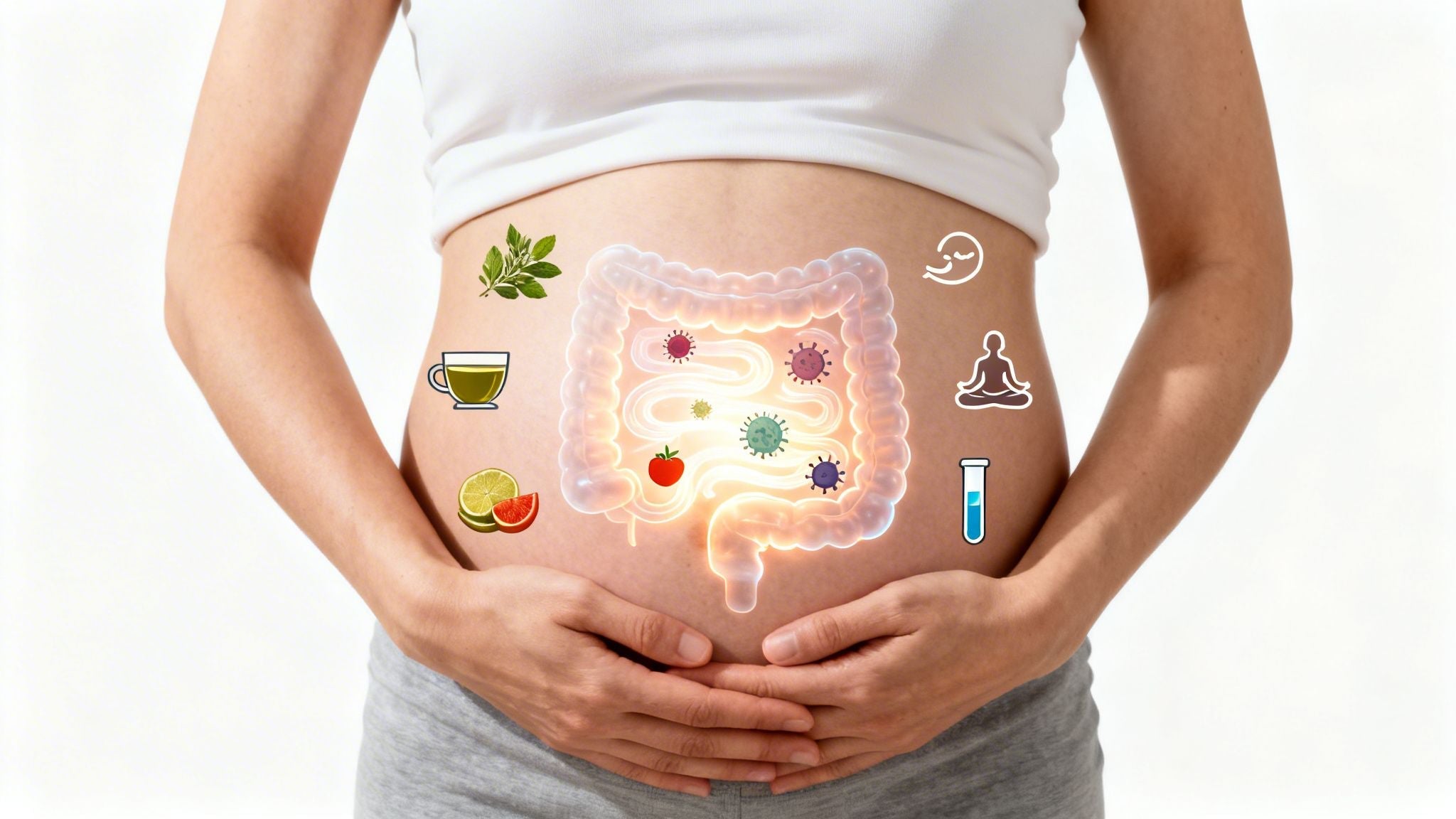
What is irritable bowel syndrome, and what really helps?
Imagine your stomach has a mind of its own. Sometimes it rumbles, then it cramps, and the next moment it feels like a tightly inflated balloon. For millions of people, this is everyday life with irritable bowel syndrome (IBS)—a disorder in which the gut reacts extremely sensitively, even though everything appears to be structurally in perfect order.
What exactly is irritable bowel syndrome?

If you are asking yourself, “What is irritable bowel syndrome?”, you are not alone. An estimated 12% of the population in Germany struggles with these symptoms, which can vary completely from person to person. Irritable bowel syndrome is not a passing fad, but a serious burden that can severely limit your enjoyment of life.
This is what is known as a functional disorder of the gut. That sounds complicated, but it really just means that during examinations such as a colonoscopy, the doctor finds no visible damage or inflammation. Your gut is therefore structurally healthy, but its function is impaired. The sensitive communication between the gut and brain, intestinal movements (motility), and the way you perceive pain have become unbalanced.
Imagine your gut as a highly sensitive alarm system. For most people, it only goes off in response to genuine danger, such as a gastrointestinal infection. With irritable bowel syndrome, however, this system is set far too sensitively. Completely normal digestive processes, certain foods, or even emotional stress are suddenly misinterpreted as threats and trigger an exaggerated reaction.
An overview of the typical symptoms of irritable bowel syndrome
The symptoms are often so varied and unpredictable that identifying them can be difficult. This table summarizes the most common symptoms and helps you quickly classify your symptoms.
| Symptom | Description |
|---|---|
| Abdominal pain & cramps | Often described as stabbing, pulling, or pressing pain. They frequently occur after meals and sometimes improve after a bowel movement. |
| Flatulence & bloating | A troubling feeling of fullness or a visibly bloated abdomen that often gets worse throughout the day. |
| Altered bowel movements | It can manifest as diarrhea (IBS-D), constipation (IBS-C), or as a constant, unpredictable alternation between the two (IBS-M). |
| Feeling of incomplete evacuation | The feeling of not being truly “finished” after using the toilet, leading to repeated straining. |
| Mucus in the stool | Whitish or yellowish mucus may accompany the stool. |
Although the symptoms can be very distressing, it is important to know that irritable bowel syndrome is not dangerous and does not cause permanent damage to the intestines. However, it is a chronic disorder that affects your life day after day.
The key is to identify and understand your personal triggers. Instead of merely fighting the symptoms, the goal is to find the cause of your bowel's overreaction.
And this is where things get interesting. Instead of stumbling in the dark and eliminating foods at random, you can finally gain clarity with targeted tests. A mybody-x self-test, such as a food intolerance test, gives you concrete clues. Such analyses can help you identify potential trigger foods that may be irritating your hypersensitive system. This is often the first crucial step toward regaining control and finally calming your gut.
The Most Common Symptoms and Their Impact on Your Daily Life
Irritable bowel syndrome is so much more than occasional stomach rumbling. It is more like an invisible roommate who dictates your entire daily life, plans, and social life without being asked. The symptoms are often as unpredictable as the weather in April—sometimes stormy and severe, sometimes oppressive and persistent.
Imagine sitting relaxed with friends in a restaurant. As soon as the main course is served, you feel that all-too-familiar tugging in your lower abdomen. What begins quietly quickly intensifies into cramp-like pain that ruins your appetite and brings cold sweat to your forehead. Your thoughts no longer revolve around the conversation, but only around one question: Where is the nearest restroom?
More Than Just Abdominal Pain
These very cramp-like pains, which often strike unexpectedly after eating, are one of the main characteristics. For many people affected, it feels as though their intestines are twisting into knots. Sometimes the pain eases after a bowel movement, but the constant fear of the next attack remains an exhausting companion.
Another extremely distressing symptom is bloating (flatulence). Your stomach not only feels uncomfortably full and tight, but can also visibly swell, so that the trousers that fit in the morning simply no longer fit by evening. This is not only painful, but also affects your self-image and dictates your choice of clothing. Loose tops and elastic-waist trousers become your standard wardrobe—not for fashion reasons, but out of sheer necessity.
The worst part is the unpredictability. You lose trust in your own body and begin avoiding situations that could potentially become embarrassing or painful.
Social plans, long car journeys, or important meetings become a mental ordeal. For many, the fear of losing control leads to a gradual withdrawal from social life.
The unpredictable change in bowel movements
What is particularly burdensome is the constant and often abrupt change in bowel habits. Most people affected struggle with one of three main forms, which can also gradually transition into one another:
- Diarrhea-dominant type (IBS-D): You are struck by sudden, unstoppable urges to have a bowel movement. A trip to the cinema or a long train journey without a toilet readily available becomes an unpredictable risk.
- Constipation-dominant type (IBS-C): You suffer from constipation for days, constantly feel full and bloated, and have the feeling that you can never fully empty your bowels. Every trip to the toilet is strenuous and unsatisfying.
- Mixed type (IBS-M): Perhaps the most exhausting form, in which phases of stubborn constipation and sudden diarrhea alternate without warning. Your digestive system is pure chaos, making any planning impossible.
This constant struggle consumes an incredible amount of energy. Physical discomfort is often accompanied by deep mental exhaustion. You feel misunderstood because your problems are not visible from the outside. Phrases like “It’s just stress” or “Just relax” can be deeply hurtful and further intensify the feeling of being alone.
But you do not have to walk this path alone. The first and most important step is to finally take your body’s signals seriously and actively investigate their causes. Instead of merely managing the symptoms, you can specifically look for your personal triggers. A food intolerance test from mybody-x, for example, can provide valuable clues as to whether certain foods are aggravating your symptoms. Such insights are a powerful tool for regaining control and shaping your everyday life yourself again, rather than letting your gut dictate it.
Possible causes: Searching for clues in your gut
The question “Why me?” probably crosses the mind of everyone living with an IBS diagnosis. But there is almost never a single, crystal-clear answer. Rather, your IBS is the result of a complex interplay, like a puzzle in which many different pieces must fit together. Let’s go on an exciting search for clues inside your body together.
A prime suspect is almost always your gut microbiome. The best way to picture it is as a flourishing, diverse garden. A healthy gut is home to trillions of beneficial bacteria living in perfect harmony. They look after not only your digestion, but also your immune system and even your mood.
For most people with IBS, however, this sensitive ecosystem has fallen out of balance. This imbalance, also known as dysbiosis, is like weeds taking over a garden. Bacterial strains that produce excessive amounts of gas or cause low-grade inflammation in the intestinal lining can multiply. This is precisely why you often feel so bloated or why your gut reacts extremely sensitively to minor things.
The gut-brain axis: Your emotional hotline to your gut
Another absolutely crucial factor is the gut-brain axis. This is not imaginary, but a real, direct nerve connection between your abdomen and your brain—think of it as an information superhighway. Have you ever noticed how you feel “sick with nerves” before an exam or an important conversation? That is the gut-brain axis in action.
With IBS, this connection is often highly sensitive. Stress, anxiety, or emotional strain are communicated directly from the brain to the gut, which promptly responds with cramps, diarrhea, or constipation. The reverse is also true: An irritated gut sends stress signals back to the brain, which can in turn lead to tension and low mood. A real vicious cycle.
Irritable bowel syndrome is not purely a psychological disorder, but the mind is a powerful amplifier. Stress management is therefore not a nice extra, but a key component in regaining control over your symptoms.
Additional factors and possible triggers
In addition to the microbiome and the psyche, there are other pieces of the puzzle that play a major role in identifying the causes. This variety also makes diagnosis and treatment so individual.
-
After-effects of a gastrointestinal infection: Sometimes, a recovered infection is the actual trigger. Studies show that previous viral or bacterial infections can increase the risk of developing irritable bowel syndrome by two- to fourfold. This “post-infectious irritable bowel syndrome” develops because the immune system remains overactive even after the infection and continues to irritate the gut.
-
Leaky gut (increased intestinal permeability): Normally, your intestinal lining is an extremely strong barrier. With “leaky gut,” however, this protective layer becomes permeable, like a sieve full of holes. Undigested food components or bacteria can suddenly enter the bloodstream. This alerts your immune system and can lead to low-grade inflammation and new food intolerances.
-
Food intolerances: Many people affected react to certain foods with severe symptoms. Often, however, these are not classic allergies but delayed IgG4 reactions that only become noticeable hours or days later, making them difficult to identify.
-
Small intestinal bacterial overgrowth (SIBO): Sometimes bacteria from the large intestine stray into the small intestine and settle there incorrectly. They then begin fermenting food far too early. The result: severe bloating, abdominal pain, and sometimes even nutrient deficiencies. If you suspect this could be the case for you, be sure to read our detailed article on SIBO.
This graphic clearly shows how the core symptoms interact as a result of this complex interplay.

It is clear that the central symptoms, such as pain, bloating, and digestive problems, are directly linked and shape the typical picture of irritable bowel syndrome.
As you can see, there is no single cause. Finding your very personal triggers is real detective work. A test from mybody-x can help you finally shed light on the situation instead of simply continuing to guess. It gives you a clear, scientifically sound foundation to build on.
How irritable bowel syndrome is diagnosed
The path to an irritable bowel syndrome diagnosis often feels like a marathon, not a sprint. Since there is no single, definitive test that simply indicates “irritable bowel syndrome,” the entire process is like careful detective work. Your doctor must first make sure that no other organic diseases are behind your symptoms.
This is called a diagnosis of exclusion. Think of it this way: There is a long list of suspects—from chronic inflammatory bowel diseases such as Crohn's disease to celiac disease (gluten intolerance). Your doctor works through this list point by point in order to say with a high degree of certainty at the end: It is irritable bowel syndrome.
Medical examinations as the first step
To rule out truly serious illnesses, your doctor will suggest a series of standard examinations. These steps are absolutely necessary to provide clarity and reassurance. Don't worry—we'll explain what to expect.
Typical initial measures include:
- Detailed medical history: Your doctor will ask you very specific questions about your symptoms, medical history, and lifestyle. A symptom diary that you may have kept beforehand is worth its weight in gold here.
- Physical examination: This includes palpating your abdomen. This can reveal areas of tenderness or hardening.
- Blood test: A blood count provides information about inflammatory markers (such as CRP), which could indicate chronic inflammatory bowel disease. It is also possible to test for antibodies associated with celiac disease or for certain nutrient deficiencies.
Depending on your symptoms, additional examinations may be needed. These may include an ultrasound examination of the abdomen (abdominal sonography) or a stool sample to test for blood or infectious pathogens. If so-called warning signs such as blood in the stool or significant weight loss occur, a colonoscopy may also be necessary.
A medical diagnosis is the foundation for every subsequent step. It rules out serious illnesses and gives you reassurance that it is a functional disorder.
Take control yourself with targeted tests
While this medical process of differential diagnosis is underway, you don't have to sit passively and wait. You can take action yourself and provide your doctor with crucial pieces of the puzzle. This is where modern at-home self-tests come in, giving you deeper insights into the function of your gut—precisely the area where things have become out of balance with irritable bowel syndrome.
Instead of simply guessing which foods cause you problems, you can collect hard data. Medical diagnostics ensure that nothing serious is overlooked, while a home test helps uncover the individual triggers and imbalances driving your symptoms.
A irritable bowel syndrome test from mybody-x is designed specifically for this purpose. It examines IgG4-mediated reactions to a wide range of foods. Unlike classic allergies, these reactions often occur with a significant delay, making them difficult to associate with specific foods in everyday life. The test provides you with a clear, personalized list of potential “troublemakers” that you can deliberately eliminate from your diet and test again later.
Another valuable analysis is the gut microbiome analysis. It provides a detailed picture of your inner ecosystem. You learn whether you have a healthy balance of bacteria or whether dysbiosis is present, which can contribute to bloating and inflammation. With these results, you can adjust your diet specifically to nourish the beneficial gut bacteria and keep the harmful ones in check.
By collecting this personal data, you move from being a passive patient to an active partner of your doctor. You bring concrete facts to the table that go far beyond what standard examinations can show. This not only shortens the agonizing period of guesswork, but also lays the foundation for truly effective treatment tailored to you.
Your path to greater well-being through nutrition and lifestyle

You have been diagnosed with irritable bowel syndrome—what now? Many people initially feel alone and overwhelmed afterward. But here is the good news: You have plenty of tools at your disposal to reclaim your quality of life.
Think of this section as your starting point for taking back control of your gut. It is about understanding your body better and finding out what it really needs to feel comfortable. The key lies in a holistic approach that combines nutrition, lifestyle, and your personal gut feeling.
Identify trigger foods with the low-FODMAP approach
You may have already heard of the low-FODMAP approach. It is one of the most effective methods for finding out which foods aggravate your irritable bowel. Most importantly, this is not a permanent diet, but rather a clever detective game to uncover the real culprits.
FODMAP is an abbreviation for fermentable oligosaccharides, disaccharides, monosaccharides, and polyols. This may sound complicated, but it simply refers to certain short-chain carbohydrates. In a sensitive gut, they are poorly absorbed and end up undigested in the large intestine, where they are fermented by bacteria. The result is the typical discomfort: gas, bloating, pain, and diarrhea.
The whole process works in three clear phases:
- Elimination phase (approx. 2–6 weeks): During this period, you avoid all foods high in FODMAPs. The aim is to give your gut a complete rest so that your symptoms noticeably subside.
- Reintroduction phase: This is where it gets interesting. You systematically test individual FODMAP groups again. For example, you eat foods high in fructose for a few days and carefully observe how your body reacts. This allows you to identify your personal triggers and individual tolerance threshold systematically.
- Long-term diet: Using what you learned during the testing phase, you create a diet that is not only well tolerated, but also varied and enjoyable—completely tailored to you.
Think of the FODMAP diet as an investigation. First, you arrest all the suspects (FODMAPs) and then interrogate them one by one to identify the real culprits.
This process can take some time. A mybody-x food intolerance test can give you a significant shortcut by providing you with a list of foods your body reacts to with an IgG4 response from the outset. This allows you to approach the testing phase much more strategically and find your feel-good diet more quickly. Many people ask: What is IBS, and how is it connected to diet? In our guide to diet for IBS, we explore this topic in even more detail.
More than just diet: your holistic approach
Even though diet is a major factor, it is often not enough on its own. IBS is heavily influenced by what is known as the gut–brain axis. Your gut reacts directly to stress, lack of sleep, and emotional strain. That is why taking a holistic view of your lifestyle is so crucial to achieving success.
Stress management: Whether it’s yoga, meditation, autogenic training, or simply a long walk in the woods—find out what helps you unwind. Just 15 minutes of mindful relaxation a day can calm the stress signals from the brain to the gut and thereby relieve cramps.
Gentle exercise: Regular, moderate exercise such as cycling, swimming, or Nordic walking stimulates digestion, reduces stress, and can work wonders, especially for constipation. However, avoid extremely strenuous workouts, as they put the body under stress and may worsen symptoms.
Get enough sleep: Your entire body regenerates during sleep—including your digestive system. Aim for 7–8 hours per night. A consistent sleep schedule and a relaxing evening routine help your body switch into rest mode.
Here too, a gut microbiome analysis from mybody-x can provide valuable insights. It not only shows you the state of your gut flora, but also provides targeted recommendations on how to support your beneficial gut bacteria with prebiotic foods or the right probiotics. A healthy, strong microbiome is more resilient to stress and forms the foundation of your overall well-being.
The most important questions about irritable bowel syndrome—and honest answers
You’ve already read a great deal about what irritable bowel syndrome is, how it can feel, and the complex causes behind it. But in the end, the very personal, nagging questions often remain—the ones that cause so much uncertainty in everyday life. That’s exactly what we want to answer here—directly, with genuine understanding and clear advice to help you regain a greater sense of security.
Is irritable bowel syndrome dangerous? Can it lead to cancer?
This is probably one of the biggest concerns, and it’s completely understandable. Fortunately, we can reassure you here: No. Although irritable bowel syndrome is extremely distressing and can severely limit your quality of life, it is not a malignant disease.
It does not increase the risk of colorectal cancer, nor does it cause permanent damage to the intestinal wall, as is the case with chronic inflammatory bowel diseases such as Crohn’s disease. The best way to think of it is this: with irritable bowel syndrome, the function is impaired—the way your bowel works—not the organ itself.
Even so, it is absolutely essential to have your symptoms medically evaluated. This is the only way to ensure that no other organic diseases are overlooked. This certainty is the foundation for then being able to focus fully on the right strategies for managing your IBS.
Which test is right for me if I have IBS symptoms?
This is a key question, because the right test can be the starting point for targeted improvement. The answer depends entirely on what troubles you most and where you suspect the cause lies.
- Do you have a wide mix of symptoms and finally want to understand what's going on in your gut? Then the gut microbiome analysis from mybody-x is ideal. It shows you in black and white whether your gut flora is out of balance (dysbiosis) and gives you very specific recommendations for how to support your beneficial gut bacteria.
- Do you suspect that certain foods are triggering your symptoms? In that case, a food intolerance test (IgG4) can provide valuable insights. It tests your reaction to a wide range of foods and can also detect delayed reactions that you would hardly be able to identify on your own in everyday life.
Often, combining both tests provides the most revealing insights. An imbalanced gut microbiome and undiagnosed food intolerances can negatively affect and intensify each other. The tests give you a comprehensive picture and enable you to develop a precise strategy tailored to you.
If you're unsure which approach is best for you, our personal consultation is available to help you find the right analysis for your needs.
Do I have to follow a strict diet forever now?
No, absolutely not! This is a very important point that often leads to frustration and a feeling of deprivation. Concepts like the Low-FODMAP diet are incredibly valuable tools, but they are intended as a temporary detective-work phase, not as a lifelong solution.
The goal of this first phase is to calm your irritated gut down. Then comes the exciting part: You systematically find out which food groups and quantities you personally tolerate well. Everyone has their own individual tolerance threshold.
A mybody-x food intolerance test can speed up this process enormously. Instead of avoiding countless foods for weeks, you receive a clear list of potential triggers right from the start. This allows you to begin the testing phase much more systematically and quickly return to a varied and enjoyable diet that is good for you and your gut.
What provides immediate relief for acute abdominal cramps?
When cramps suddenly strike hard, every minute feels like an eternity. Fortunately, there are a few tried-and-tested home remedies that can provide initial relief quickly and relax tense muscles.
Quick relief for acute cramps:
- Heat works wonders: A classic hot-water bottle or a warm cherry-pit cushion on your abdomen is an absolute classic—and for good reason. The warmth relaxes the muscles and can noticeably ease the pain.
- Drink soothing teas: Tried-and-tested herbal teas such as fennel-anise-caraway, peppermint, or chamomile have antispasmodic and de-bloating effects. Drink the tea slowly and not too hot.
- Gentle abdominal massage: Gently massage your abdomen with the flat of your hand in a clockwise direction. This follows the natural course of the large intestine and helps release trapped gas and harmonize intestinal movement.
- Breathe mindfully: Stress is a real pain amplifier. Focus on deep, calm abdominal breathing. Slowly inhale deeply into your abdomen through your nose, then exhale through your mouth.
These measures are your first aid in the acute moment. In the long term, however, the key is knowing your personal triggers so that such painful episodes do not arise in the first place. A symptom diary combined with the scientific results from your mybody-x tests is the most effective tool for this.
Do you finally want to gain clarity about your digestive symptoms and find out which individual triggers could be behind them? At mybody-x, you’ll find scientifically backed at-home self-tests that provide valuable insights into your gut health and possible food intolerances. Discover the right analyses for you at mybody-x.com now and take control of your well-being.



Share now:
Strengthen and understand your gut microbiome
What is personalized nutrition? DNA, microbiome & success