

What is personalized nutrition? DNA, microbiome & success
Personalized nutrition improves blood sugar control by over 20% compared with standard diets. This approach combines genetic, metabolic, and microbiological data to create tailored recommendations. Below, you will learn how personalized nutrition works and how to sustainably integrate it into your daily life.
Table of contents
- Introduction: What does personalized nutrition mean?
- The role of genetics in personalized nutrition
- The microbiome and its influence on nutrition and health
- Scientific studies and evidence for the effectiveness of personalized nutrition
- Common Misunderstandings and Misconceptions About Personalized Nutrition
- Comparison: Personalized Nutrition vs. Standard Diets
- Practical implementation and integration into everyday life
- Discover personalized nutrition with mybody®x
- Frequently asked questions
Key takeaways
| Point | Details |
|---|---|
| Data basis | Personalized nutrition combines genetic, metabolic, and microbiological data to provide individualized recommendations. |
| Genetics | Genetic variations influence how your body processes nutrients and responds to food. |
| Microbiome | The gut microbiome plays a major role in digestion, nutrient absorption, and immune functions. |
| Research findings | Clinical studies demonstrate significant benefits for blood sugar, weight management, and cardiometabolic health. |
| Long-term sustainability | Success requires continuous adjustment and monitoring to achieve sustainable health goals. |
Introduction: What does personalized nutrition mean?
Personalized nutrition integrates individual biological data to create recommendations tailored to your personal health profile. Unlike general dietary guidelines, this approach considers three central data pillars: genetics, metabolism, and the microbiome. Everyone processes nutrients differently, which explains why one-size-fits-all diets do not work for many people.
Personalized nutrition goes far beyond simple DNA tests. It combines scientific findings from various fields into a comprehensive concept. Your genetic code, metabolic processes, and gut microbiome composition together provide a detailed picture of your nutritional needs.
The advantages over standard diets are clear:
- Precise recommendations based on verifiable biological factors
- Higher success rate through individual customization
- Better adherence because the diet suits your body
- Long-term optimization of health markers
- Avoiding intolerances and deficiency symptoms
To benefit from personalized nutrition, you do not need any prior medical knowledge. What matters is your willingness to understand your body and undergo the appropriate tests. Investing in analyses pays off through targeted optimization of your diet. You receive specific recommendations for action instead of general advice.
The role of genetics in personalized nutrition
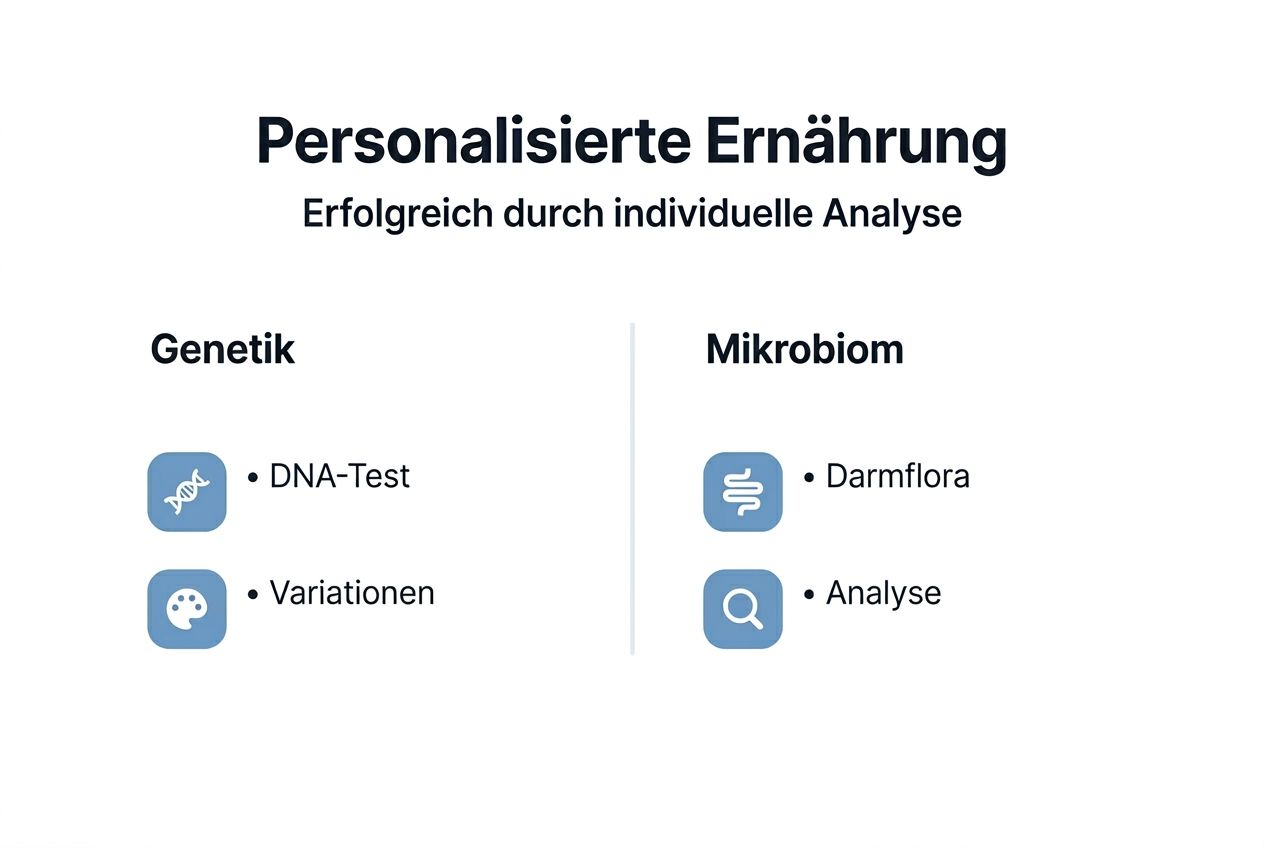
Your genes largely determine how your body processes nutrients. Genetic variations influence nutrient processing and explain why people respond differently to identical diets. Certain gene variants, such as MTHFR and APOE, play a central role in metabolic processes.
For example, the MTHFR variant affects folate utilization. People with this variant require active forms of folate rather than synthetic folic acid. The APOE variant, in turn, determines how your body metabolizes fats and responds to dietary cholesterol. Such genetic differences make personalized nutrition recommendations indispensable.
But genetics is not static. Epigenetic adaptations enable dynamic changes without altering the DNA sequence. Your lifestyle, diet, and environmental factors influence which genes are active. This flexibility shows that you can positively influence your gene expression through targeted measures.
Genetic tests are an important building block, but only part of an integrated analysis model. They reveal predispositions but do not provide a complete prediction. DNA-based nutrition combines genetic information with current health markers and microbiome analyses. A gene-based diet takes all these factors into account for optimal results.
Pro tip: Do not rely exclusively on DNA data. Consider your diet holistically and include current metabolic markers and microbiome analyses. Only combining all data sources provides precise recommendations for sustainable health optimization.
The microbiome and its influence on nutrition and health
Your gut microbiome consists of trillions of microorganisms that regulate your digestion and health. Each person has a unique composition of this gut flora, which significantly influences how nutrients are absorbed. These individual differences explain why some people tolerate certain foods better than others.

The microbiome plays a central role in numerous bodily functions. It produces short-chain fatty acids that regulate inflammatory processes. It synthesizes vitamins such as K2 and certain B vitamins. It also trains your immune system and influences nutrient absorption in the gut.
The composition of your gut flora also determines which metabolic products are produced. Some bacterial strains promote weight gain, while others protect against it. Certain microbes improve the utilization of fiber, while others produce anti-inflammatory substances. These processes are highly individual and can be optimized through targeted nutrition.
What exactly is the microbiome? It is a complex ecosystem that changes through diet, medication, and lifestyle. Personalized nutrition uses microbiome analyses to provide precise recommendations. You learn which foods strengthen your health-promoting bacteria and which reduce problematic strains.
You can optimize your microbiome through targeted dietary adjustments:
- Promoting beneficial bacterial strains through prebiotic fiber
- Reducing inflammation-promoting microbes through targeted food selection
- Improving nutrient absorption through microbiome-friendly nutrition
- Strengthening the gut barrier and reducing intolerances
Scientific studies and evidence for the effectiveness of personalized nutrition
Clinical studies provide compelling evidence for the effectiveness of personalized nutrition. A comprehensive meta-analysis shows that individualized nutrition has positive effects on weight management and cardiometabolic health. The improvements significantly surpass the results of standard diets.
The effects on blood sugar control are particularly impressive. Participants who received personalized recommendations showed significantly more stable glucose levels than control groups following general guidelines. Individualized approaches also proved more sustainable for weight loss because they are easier to integrate into everyday life.
Long-term studies also demonstrate positive effects on inflammatory markers, cholesterol levels, and insulin sensitivity. These improvements reduce the risk of chronic diseases such as type 2 diabetes and cardiovascular disease. The benefits of personalized nutrition are scientifically supported and reproducible.
| Study | Participants | Duration | Result |
|---|---|---|---|
| Zeevi et al. 2015 | 800 | 1 week | 20–25% better blood glucose control through personalized recommendations |
| Livingstone et al. 2016 | 1,607 | 6 months | Significant improvement in cardiometabolic markers |
| Celis-Morales et al. 2017 | 1,269 | 6 months | Higher adherence and weight loss with personalized plans |
| Berry et al. 2020 | 1,100 | 2 weeks | Individual glucose responses to identical meals |
Pro tip: Long-term adjustment significantly increases the success of personalized approaches. Give your body time to adapt to new eating habits. Measurable improvements in health markers often appear only after several weeks of consistent application.
Common Misunderstandings and Misconceptions About Personalized Nutrition
Many people expect immediate miraculous results from personalized nutrition. This expectation is unrealistic. Sustainable changes in metabolism and health markers require time and consistency. Promises of quick success are warning signs of disreputable providers.
Another misconception is the assumption that DNA tests alone capture all relevant factors. Genetic analyses reveal predispositions, but your current state of health depends on many other factors. Metabolic markers, microbiome composition, and lifestyle also play important roles.
A holistic approach is essential for success. Personalized nutrition does not work in isolation. Sufficient sleep, stress management, and exercise influence how your body responds to dietary adjustments. Without a holistic approach, results fall short of expectations.
Data privacy and quality are critical aspects when choosing a provider:
- Look for ISO-certified laboratories with transparent analysis methods
- Carefully review privacy policies and GDPR compliance
- Choose providers with scientifically sound recommendations
- Avoid providers who make unrealistic promises
- Make sure that personal consultation is available
Changes require continuous monitoring and adjustment. Your body changes with age, stress, and life circumstances. Regular check-ups ensure that your diet remains optimal. One-time tests are not enough for lasting success.
Comparison: Personalized Nutrition vs. Standard Diets
Personalized nutrition shows significantly better adherence than standard diets. People follow individually tailored recommendations for longer because they feel that the diet suits their body. Standard diets often fail because they ignore biological individuality.
Standard diets are based on uniform recommendations for broad population groups. They take average values into account but not individual differences in genetics, metabolism, or the microbiome. What works for one person can be counterproductive for another.
Individualization leads to more precisely tailored dietary recommendations that demonstrably deliver better results. You avoid intolerances, optimize nutrient intake, and achieve your health goals more efficiently. Investing in personalized analyses pays off through higher success rates.
| Criterion | Personalized nutrition | Standard diets |
|---|---|---|
| Data basis | Genetics, metabolism, microbiome | General guidelines |
| Individualization | High, based on biological data | Low, for broad groups |
| Adherence | Significantly higher through tailored recommendations | Often low due to a lack of customization |
| Success rate | Scientifically proven to be superior | Variable results |
| Sustainability | Long-term through continuous adjustment | Often short-term, with the yo-yo effect common |
| Cost | Higher initial investment | Usually less expensive |
| Scientific basis | Current nutrigenomics and microbiome research | Epidemiological studies |
Practical implementation and integration into everyday life
Implementing personalized nutrition takes place gradually and systematically. A systematic approach ensures sustainable results and prevents overwhelm. Follow this proven process:
-
Data collection: Conduct certified tests for genetics, metabolism, and the microbiome. Choose providers with ISO certification and transparent methods.
-
Analysis and interpretation: Have experts interpret your results or use specialized software. Understand what your biological data means for your diet.
-
Creating the nutrition plan: Develop an individualized plan based on your results. Consider preferences, lifestyle, and practical feasibility.
-
Gradual integration: Implement changes gradually, not radically. Start with the most important adjustments and expand continuously.
-
Monitoring and adjustment: Regularly check health markers and well-being. Adjust your diet when your circumstances change.
-
Long-term optimization: Stay flexible and open to adjustments. Your body changes, and your diet should evolve with it.
Recommend certified tests from trusted providers that use scientifically validated methods. Pay attention to data protection standards and personal consultation services. Quality pays off through more precise recommendations.
Regularly adjusting your diet is essential when your circumstances change. Pregnancy, age, illnesses, or new training programs require you to review your nutrition strategy. Maintaining weight with DNA-based nutrition is more successful through continuous adjustment than with rigid diet plans.
Pro tip: Patience and consistency are key to success. Do not expect immediate miracles; trust the process instead. Measurable improvements often appear only after 8 to 12 weeks of consistent application. Stay on track and document your progress regularly.
Discover personalized nutrition with mybody®x
mybody®x offers scientifically validated tests and personalized nutrition recommendations tailored to your biological data. With ISO-certified laboratory analyses of DNA, metabolism, and microbiome, you gain precise insights into your health. The personalized nutrition recommendations are based on the latest scientific findings and are continuously updated to reflect new research results.
High data protection standards and GDPR compliance ensure maximum security for your sensitive health data. All samples are pseudonymized and properly destroyed after analysis. You retain full control over your data and decide how it is used.
Getting started is easy: You can perform the tests conveniently at home, and certified laboratories handle the analysis. Personal consultation helps you understand your results and put them into practice optimally. Discover the benefits of personalized nutrition at mybody®x and start your journey toward individual health optimization.
Frequently asked questions
What distinguishes personalized nutrition from general recommendations?
Personalized nutrition is based on your individual biological data, such as genetics, metabolism, and microbiome. General recommendations are based on average values for broad population groups and ignore individual differences. This personalization leads to more precise recommendations and significantly higher success rates when putting them into practice.
What data is used for personalized recommendations?
Personalized nutrition combines three central data pillars: genetic analyses show predispositions for nutrient processing, metabolic tests capture current health markers such as blood sugar or cholesterol, and microbiome analyses assess your gut flora. This comprehensive data basis enables precise recommendations tailored to your personal health profile.
How safe are genetic tests in the context of personalized nutrition?
Reputable providers with ISO certification guarantee the highest safety standards for data processing and laboratory analyses. All samples are pseudonymized, so they cannot be directly linked to you. After analysis, samples are properly destroyed. When choosing a provider, look for GDPR compliance and transparent privacy policies.
How can personalized nutrition be implemented sustainably in everyday life?
Start with certified tests and have the results professionally interpreted. Implement changes gradually rather than radically, and integrate them into your existing lifestyle. Regular monitoring of your health markers shows progress and enables adjustments. Patience and consistency are more important than perfect implementation from the outset.
Are quick results realistic, or are changes more likely to be long-term?
Sustainable changes in metabolism and health markers take time. Initial positive effects, such as improved well-being, often appear after a few weeks. Measurable improvements in blood sugar, cholesterol, or weight usually require 8 to 12 weeks of consistent implementation. Personalized nutrition is not a miracle diet, but a long-term approach to sustainable health optimization.
What role does the microbiome play in personalized nutrition?
The gut microbiome significantly influences how your body processes nutrients and responds to food. Everyone has a unique gut flora that regulates digestion, immune function, and metabolism. Microbiome analyses show which bacterial strains are present and which foods support your beneficial microbes. These insights enable targeted dietary adjustments for optimal gut health.



Share now:
What is irritable bowel syndrome, and what really helps against it?
Understand intestinal pain and finally find its cause