
Strengthen and understand your gut microbiome
Your gut microbiome is an incredibly complex community of trillions of microorganisms that inhabit your entire digestive tract. It is best to think of it as a living ecosystem invisible to us, yet one that plays a huge role in your health—from digestion and your immune system to your mood. A healthy balance among these tiny inhabitants is the foundation of your daily well-being and helps you understand your body better.
Your gut as a living ecosystem
When you think of your gut, digestion is probably the first thing that comes to mind. But your gut is much more than just an organ for processing food. It houses what is known as the gut microbiome, an incredibly dense and fascinating collection of microorganisms that, taken together, weigh more than your brain.
This community consists of:
- Bacteria (by far the largest group)
- Viruses
- Fungi
- Archaea (special single-celled microorganisms)
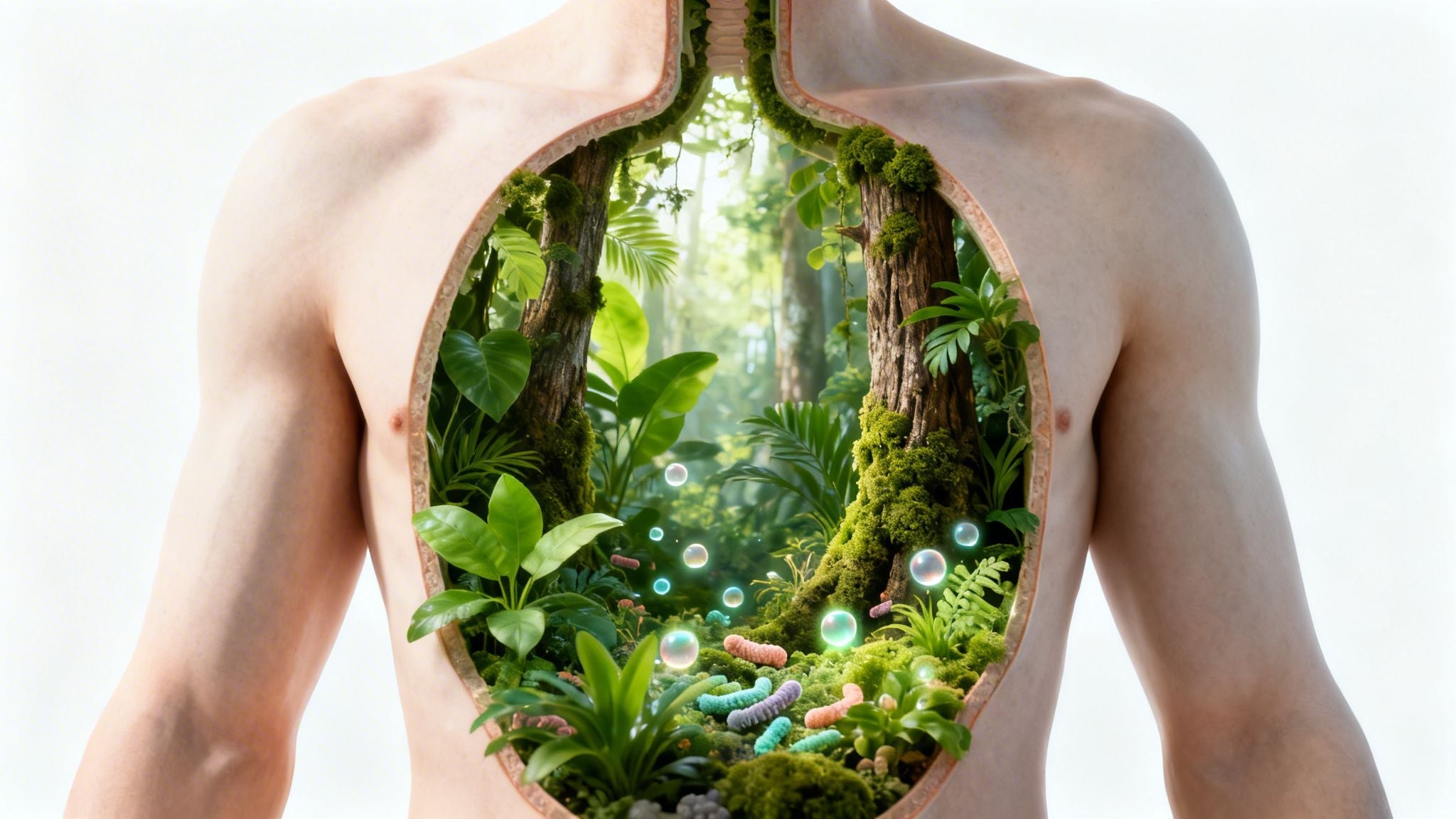
Picture your gut microbiome as a diverse and vibrant rainforest. In a healthy ecosystem, countless different plant and animal species live together in a complex balance and benefit from one another. The same is true in your gut: A high diversity of different microbes is a clear sign of a strong and resilient microbiome.
Why diversity is key
Every single bacterial species in your gut has very specific tasks. Some help you digest dietary fiber that your body could not break down on its own. Others produce essential vitamins, such as vitamin K or certain B vitamins, while still others tirelessly train your immune system.
When this ecosystem is diverse and balanced, it functions like a perfectly coordinated team. However, if it becomes unbalanced—for example, due to an unbalanced diet, stress, or medication—individual, less beneficial bacterial species can multiply rapidly and displace the “good” ones. This can have far-reaching consequences for your health.
This principle applies to the entire body, by the way. The sensitive ecosystem in the mouth also plays an important role in our health. If it becomes unbalanced, it can lead to problems such as bad breath. This shows how crucial microbial balance is throughout our bodies.
More than just digestion
The effects of your gut microbiome extend far beyond the digestive tract itself. Research in recent years has impressively shown that these tiny inhabitants have a direct influence on almost every aspect of your health. They communicate with your brain, influence your mood, and even affect your resilience to stress.
They are also a central pillar of your immune system, as around 70-80% of your immune cells are located directly in the gut. A healthy microbiome helps defend against pathogens and regulate inflammatory responses in the body. It even influences your metabolism and how your body obtains and stores energy from food, making it an important factor in weight management.
If you would like to explore the topic in greater depth and understand exactly what makes up the microbiome, you can find more valuable information here: What is the microbiome and how does it affect your health?.
How your microbiome controls your health
Your gut microbiome is so much more than just a bunch of digestive helpers. Think of it instead as a highly intelligent command center that communicates continuously with your entire body and guides crucial processes. What your countless gut inhabitants do down there directly affects how you feel, how resilient you are, and how your body functions overall.
This complex network is responsible for far more than just digestion. It is a central director of your immune system, mood, and even metabolism. Let’s take a deeper look to better understand these fascinating connections.
Your second brain in your gut
Have you heard of the gut-brain axis? It’s not esoteric nonsense, but a scientifically proven, direct data highway between your gut and your brain. Your gut bacteria produce messenger substances—so-called neurotransmitters such as serotonin and dopamine—that directly influence your mood.
In fact, an incredible 95% of the “happiness hormone” serotonin is produced by your intestinal cells and the microbes living there. An imbalance in the gut can therefore directly affect your mental well-being, leading to mood swings, concentration problems, or lower stress tolerance. Do you often feel nervous, or do you have that typical “gut feeling”? Exactly—that’s the gut-brain axis at work.
This graphic illustrates how the gut ecosystem acts as a central hub for your health, directly influencing important areas such as the immune system, mood, and weight.

The visualization makes it perfectly clear: A healthy gut is the foundation for a strong immune system, a balanced psyche, and a stable body weight.
The command center of your immune system
Your gut is the most important training ground for your body’s immune defenses. Approximately 70–80% of your immune cells are stationed here. In this strategically important location, they learn to distinguish between friend (beneficial bacteria, food components) and foe (pathogens).
A diverse and healthy gut microbiome functions like a strong, living barrier:
- Protection from invaders: Beneficial bacteria colonize the intestinal lining so densely that they leave harmful pathogens little room to settle and establish themselves.
- Regulating inflammation: Your gut flora produces anti-inflammatory substances that act not only locally in the gut but throughout the body. An imbalance, on the other hand, can fuel chronic, “silent” inflammation, which is now associated with many lifestyle diseases.
- Strengthening the immune system: Constant interaction with countless microbes keeps your immune system fit, active, and perpetually alert.
Your metabolism and your weight
Do you struggle to maintain your weight even though you pay meticulous attention to your diet? Your microbiome could be the decisive, often overlooked factor. Your gut bacteria have a direct influence on how many calories you extract from your food and how your body stores this energy.
Some bacteria are true masters at extracting every last calorie even from indigestible fiber, while others are more wasteful. The precise interplay of these microbes can therefore help determine whether you tend to be overweight or can maintain your weight with ease. On top of that, they influence your feeling of satiety and cravings for certain foods.
The enormous importance of the gut microbiome for our health is becoming increasingly clear in research as well. To better understand the role of billions of microorganisms, the EU is intensively supporting research: Professor Julio Saez-Rodriguez from Heidelberg University received €359 million as part of the ERC Synergy Grant for 37 research groups to create spatial “maps” of the gut. Previous stool sample analyses did not show exactly where specific bacteria are located or how they interact—this research aims to change that. Learn more about this exciting research into the influence of the microbiome on health at Heidelberg University.
From having more energy in everyday life and clearer skin to greater psychological resilience—caring for your gut microbiome is one of the most effective measures for your overall well-being. The first step is to understand what is really going on in your gut.
How to recognize an imbalanced gut
Do you often feel inexplicably tired, struggle with a constantly bloated stomach, or feel like your skin is acting up? Your body may be sending you signals that point directly to an imbalance in your gut microbiome. This imbalance, also called dysbiosis, is far more than just a minor digestive problem. It is a condition in which the delicate ecosystem of your gut bacteria has become unbalanced.
Many of us tend to dismiss such symptoms as “normal” or simply ignore them. But your body is trying to tell you something important. When you learn to interpret these signals correctly, you take the first and crucial step toward addressing the cause of your problems instead of merely treating the symptoms.
Clear digestive symptoms
The most obvious signs of dysbiosis naturally occur directly in the abdominal area. Your digestive tract is, so to speak, the first place where a disrupted gut microbiome becomes noticeable.
These include symptoms you have probably experienced before:
- Bloating and a distended abdomen: If you regularly look six months pregnant after eating, this may be due to excessive gas production by undesirable bacteria.
- Irregular bowel movements: Constantly alternating between constipation and diarrhea is a clear warning sign. It shows that intestinal motility and the processing of your food are not functioning optimally.
- Abdominal pain or cramps: Pain that occurs for no clear reason may indicate underlying inflammatory processes or irritation of the intestinal lining.
However, these direct symptoms are often just the tip of the iceberg. An imbalance in your gut can affect your entire body and lead to symptoms you may never have associated with your digestion.
More subtle signals from your body
Alongside the classic abdominal problems, there are a number of subtler signs that may indicate dysbiosis. As you already know, your gut communicates with your entire body through the gut-brain axis and the immune system. That is why the consequences can be so diverse.
Your body is an interconnected system. Chronic fatigue, skin problems, or constant cravings are not separate issues, but often different expressions of the same underlying imbalance—a disrupted gut flora.
Pay attention to the following symptoms, which are often overlooked:
- Chronic fatigue and lack of energy: Do you constantly feel exhausted even though you actually get enough sleep? A disrupted microbiome can impair nutrient absorption and lead to deficiencies that drain your energy. A nutrient test from mybody-x.com can provide clarity here.
- Skin problems such as acne, eczema, or rosacea: Your skin is often described as a reflection of your gut. Inflammation in the gut can directly affect your skin and promote blemishes or redness.
- Mood swings and concentration problems: A large proportion of the happiness hormone serotonin is produced in the gut. Dysbiosis can therefore negatively affect your mental well-being. A hormone test can also provide useful insights here.
- Cravings for sugar or processed foods: Certain bacteria primarily feed on sugar. If they multiply excessively, they can trigger intense cravings to secure their food source.
- Frequent infections: Since 70–80% of your immune system is located in the gut, an imbalance weakens your defenses. This makes you more susceptible to colds and other infections.
- Unexplained weight gain: Certain bacterial strains can alter how energy from food is metabolized, causing your body to store more calories than usual.
If some of these symptoms sound familiar, it is a strong sign that you should pay more attention to your gut health. The first step is recognizing that these signals must not be ignored. The next step is finding out exactly what is happening in your gut so you can take targeted action. A home self-test from mybody-x.com can help you gain clarity about the state of your individual microbiome and receive personalized recommendations.
Actively build your gut flora through diet and lifestyle
Okay, now that you know which signals from your body to look out for when there’s an imbalance, here comes the best part: the solutions. The good news is that you’re not helplessly at its mercy. You have the power to actively support your gut microbiome and restore it to a healthy balance. With the right strategies, you can specifically promote the diversity of your beneficial gut inhabitants and become your own “gut gardener.”

The key lies in a clever combination of targeted nutrition and a more mindful lifestyle. Let’s take a closer look at the most important building blocks.
Prebiotics, Probiotics and Postbiotics: What’s what?
These three terms may sound complicated at first, but the principle behind them is really simple. Imagine your gut flora as a garden that you want to nurture and care for.
- Prebiotics: This is the fertilizer. They are special, indigestible fibers that serve as food for your good bacteria. Without this “fertilizer,” your little helpers cannot grow and wither away.
- Probiotics: These are the seeds—the good bacteria themselves. You can obtain them directly through certain foods to strengthen the good teams in your gut and increase diversity.
- Postbiotics: These are the fruits of your labor. When your good bacteria (the seeds) process the fertilizer (the prebiotics), extremely useful substances such as short-chain fatty acids are produced. These are the true heroes that strengthen your gut lining and reduce inflammation.
So, if you tend to your “gut garden” by planting the right seeds (probiotics) and fertilizing them well (prebiotics), you’ll eventually harvest the valuable fruits (postbiotics) for your health.
Feed your good gut bacteria
The most direct way to positively influence your gut microbiome is through your plate. The top rule here is: Variety, variety, variety! Try to eat as many different plant-based foods as possible. A great rule of thumb is 30 different plants per week.
Prebiotic Sources (The Fertilizer):
- Vegetables: Leeks, onions, garlic, asparagus, artichokes, chicory
- Legumes: Lentils, beans, chickpeas
- Fruit: Bananas (especially those that are still slightly green), apples, berries
- Whole grains: Oats, whole-grain bread, quinoa
Probiotic Sources (The Seeds):
- Fermented dairy products: Plain yogurt, kefir, buttermilk
- Fermented vegetables: Sauerkraut (be sure it is not pasteurized!), kimchi, pickles
- Other fermented foods: Kombucha, miso, tempeh
A strong microbiome is also a powerful protective shield. Norovirus infections are among the most common notifiable diseases in Germany, and a resilient gut can make all the difference. In an outbreak involving 538 people, documented in the Epidemiological Bulletin, the composition of the microbiome was shown to directly influence the risk of infection. A strong gut is therefore anything but a minor detail.
If you want to deliberately change your diet to build up your gut flora, there's more to consider than simply swapping out a few foods. In our comprehensive guide, we'll show you how to make a gut-friendly diet truly practical for everyday life: Read here to learn how you can build up your gut flora with the right diet.
More than just nutrition: Your lifestyle matters
As important as nutrition is, your gut microbiome also responds to everything else that happens in your life. A healthy lifestyle forms the foundation on which a thriving gut ecosystem can truly flourish.
Stress management: Chronic stress is pure poison for the inhabitants of your gut. Stress hormones can negatively alter the composition of your gut bacteria and displace the beneficial helpers. So find ways to reduce stress that really work for you. Whether it's meditation, yoga, a walk in the woods, or simply taking mindful breaks during the day—anything that helps you unwind also benefits your gut.
Exercise: Regular, moderate exercise promotes the diversity of your microbiome. You don't have to run a marathon. Even daily walks, cycling, or swimming stimulate intestinal activity and create an environment where beneficial bacteria can thrive.
Getting enough sleep: Your entire body regenerates while you sleep—and your gut is no exception. Lack of sleep disrupts not only your hormones but also your microbiome. Try to get 7–8 hours of sleep per night. This gives your gut the necessary recovery phase to recuperate and repair itself.
By incorporating these three pillars—nutrition, stress management, and exercise—into your daily life, you create the very best conditions for a healthy and diverse gut microbiome.
Understand your individual microbiome—no more guesswork
You now know how important your gut microbiome is and how you can positively influence it through your diet and lifestyle. But perhaps you are now facing the crucial question: Where on earth do I start? It often feels as though you are standing before a huge buffet of advice—eat more of this, avoid that—but every gut is as unique as a fingerprint. What works for one person may be ineffective or even counterproductive for you.
Instead of continuing to grope in the dark and trying out different approaches at random, you can find out specifically what is really going on in your gut. A scientifically based home self-test, such as the one from mybody-x.com, is the logical next step. It gives you the clarity you need to understand your personal gut health and finally establish a foundation for real, lasting improvements.

How the at-home test works so easily
The thought of providing a stool sample initially puts many people off. But modern test kits are designed to make the entire process as simple and completely discreet as possible. With mybody-x.com, you can do everything conveniently from home—without the stress of appointments or waiting times at a medical practice.
The process really is incredibly easy:
- Order: Simply order your test kit online, and it will be delivered directly to your home.
- Collect your sample: The kit contains everything you need, including clear step-by-step instructions. Collecting the sample is hygienic and takes just a few minutes.
- Return it: Place the sample in the enclosed, already prepaid return envelope and send it free of charge to our certified German specialist laboratory.
There, your sample is analyzed using state-of-the-art technology to provide a precise picture of the composition of your gut microbiome.
More than just data: Your personal roadmap to gut health
A mybody-x.com test gives you so much more than just an incomprehensible list of Latin bacterial names. You receive a comprehensive yet easy-to-understand analysis that shows you exactly how diverse and balanced your gut flora is. You learn which beneficial bacterial strains may be underrepresented and whether potentially harmful species have spread too extensively.
But what really matters happens after the analysis: You don’t just receive the raw data, but specific recommendations for action tailored to your personal results. This finally tells you exactly which steps you can take to restore balance to your gut.
The enormous importance of such analyses is becoming increasingly clear through major research projects. In Germany, around 60,000 people are newly diagnosed with colorectal cancer every year. Since 2022, the PerMiCCion project has been investigating the connection between the microbiome and cancer risk by analyzing biomarkers in stool samples. This highlights the value of easy-to-perform self-tests for preventive care, as they can provide important insights into gut health at an early stage. Learn more about the research on the microbiome and cancer risk to better understand the relevance of such analyses.
Your personal guide to a healthy gut
Based on your individual analysis, the mybody-x.com gut microbiome test provides you with clear, immediately actionable guidance. These personalized recommendations include, for example:
- Targeted nutrition tips: You’ll receive specific suggestions for foods that promote exactly the bacteria that are lacking in your gut.
- Practical food lists: At a glance, you’ll see which prebiotic and probiotic foods are especially valuable for you and can incorporate them directly into your shopping.
- Valuable lifestyle adjustments: You’ll also receive practical advice on topics such as stress management and exercise, which have been proven to support your gut microbiome.
This personalized approach makes all the difference. Instead of continuing to grope in the dark, you get a clear roadmap that supports you step by step in improving your digestion, enhancing your well-being, and finally achieving your health goals. Find out more here about how to test your personal gut microbiome and take control of your gut health.
The most important questions about the gut microbiome, clearly explained
Finally, we want to answer a few of the questions that come up again and again in connection with the gut microbiome. Here, you’ll find brief, practical answers that will quickly help you and clear up common uncertainties.
How long does it take to improve my gut microbiome?
Your microbiome is incredibly dynamic and responds remarkably quickly to changes. If you deliberately adjust your diet, you can often feel the first positive effects after just a few days. That is truly motivating!
For truly stable and lasting improvement, however, you should give your body more time. Allow at least three to six months of consistency. That is roughly how long it takes for the new, beneficial bacterial communities to become firmly established in your gut. A little patience is the key to long-term success.
Are expensive probiotics from the pharmacy really necessary?
Not necessarily. The absolute foundation of a healthy gut microbiome remains a varied, high-fiber diet. If you regularly eat fermented foods such as plain yogurt, kefir, or fresh sauerkraut, you are already doing an excellent job of feeding your beneficial gut bacteria.
Specific probiotics can be a very useful addition in certain situations, such as after antibiotic treatment. A mybody-x.com gut microbiome test can provide valuable insights into whether specific bacterial strains could be beneficial for your individual situation and which ones. This allows you to take targeted action instead of supplementing blindly.
A blood test can provide indirect indications of gut-related issues, such as nutrient deficiencies (which can be measured with a nutrient test) or inflammation markers. However, a stool sample is essential for directly analyzing the composition of your gut microbiome. It is the only way to examine the bacteria directly. Combining gut and blood tests, as offered by mybody-x.com, gives you a truly comprehensive picture of your health.
By combining the direct results of a stool analysis with the indirect indications from a blood test (intolerance test, hormone test), you get the most complete picture of your health. This allows you to make truly well-informed decisions for your well-being.
Do you finally want clarity about your personal gut microbiome and targeted recommendations that are truly right for you? Discover the mybody-x.com health tests now and start your journey toward better gut health. Find the right test for you at https://mybody-x.com.


Share now:
6 Tips for Holistic Health: Practical Ways
What is irritable bowel syndrome, and what really helps against it?