

Differences between microbiome tests: What matters for your health
Many people in Central Europe wonder why their digestion sometimes gets out of balance even though they pay attention to their diet and exercise. Their personal gut microbiome is as unique as a fingerprint and affects not only digestion but also the immune system. A microbiome test opens up new possibilities for visualizing the composition of one's own bacterial diversity and making targeted health decisions.
Table of contents
- Microbiome tests explained: What is analyzed?
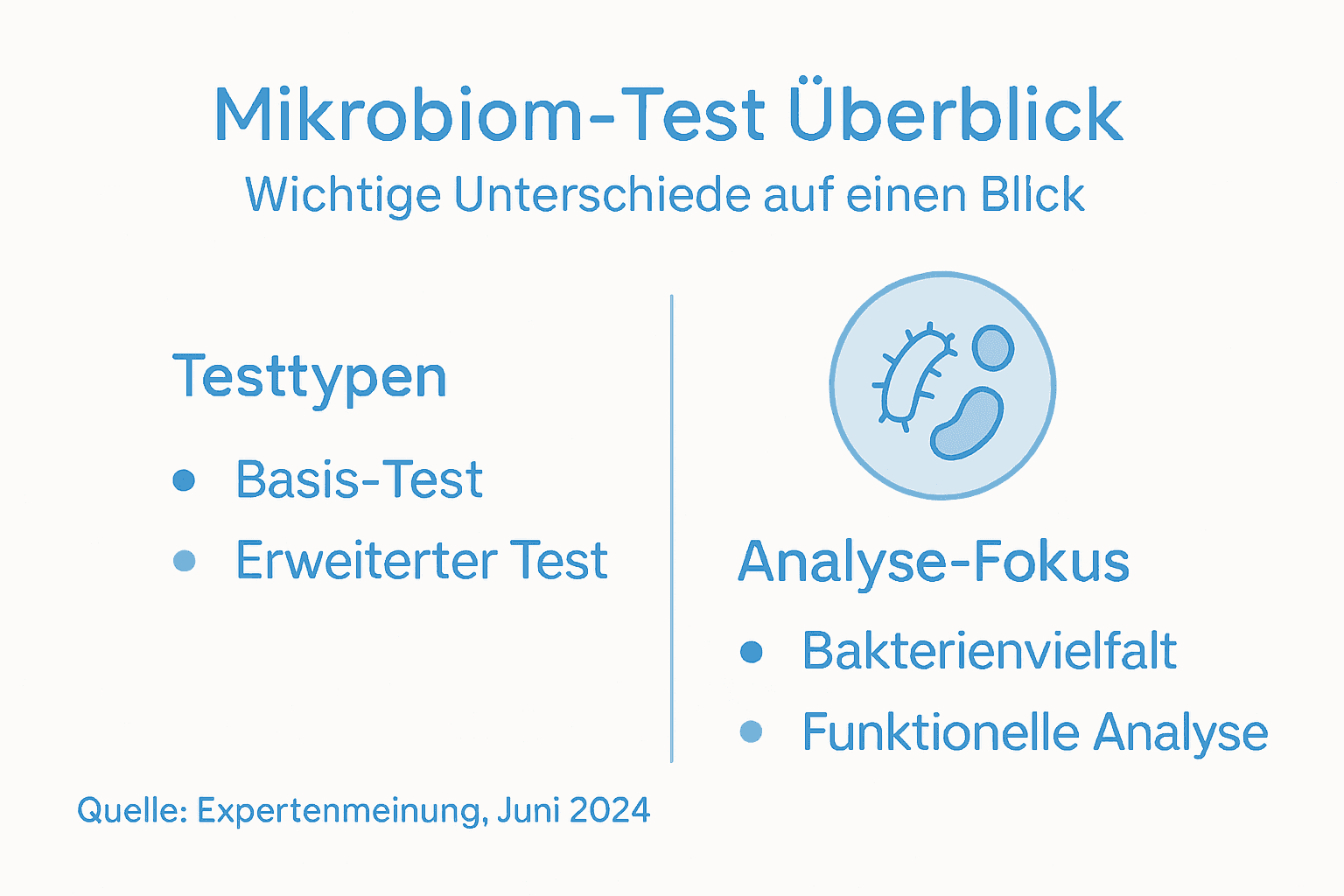
- Types of tests and their key differences
- Analysis methods: Laboratory, self-testing, and technology
- Validity, limitations, and interpretation aids
- Compare costs, data protection, and consultation options
Key findings
| Point | Details |
|---|---|
| Microbiome tests offer personalized insights | The tests analyze each person's unique gut microbiome and can provide insight into health risks and digestive problems. |
| Different types of tests with varying levels of detail | There are different types of tests, such as basic analyses and advanced genetic tests, each providing different information. |
| Choosing the right test is crucial | Look for reputable providers with transparent methods and scientifically validated results for accurate interpretations. |
| Consultation with professionals recommended | Results should be interpreted together with an expert to obtain personalized recommendations. |
Microbiome tests explained: What is analyzed?
The microbiome test is a modern method for analyzing your individual gut microbiome in detail. These tests systematically examine the bacteria in your digestive tract to provide a comprehensive picture of your gut health.
The analysis is based on scientific methods that enable complex genetic analyses of gut bacteria. Various aspects of your gut microbiome are examined in detail:
- Composition of bacterial species
- Ratio of beneficial to harmful bacterial strains
- Genetic diversity of microorganisms
- Potential metabolic activities
Central to the analysis is the finding that every person has a unique gut microbiome. It consists of billions of bacteria that play a crucial role in our health. They not only support digestion but also strengthen our immune system and influence numerous bodily functions.
Modern microbiome tests differ significantly in their scope and level of detail. While some tests provide only basic information, advanced analyses offer a comprehensive genetic examination of gut bacteria. These can provide insights into potential health risks, digestive problems, and individual dietary needs.
Pro tip: Choose a microbiome test that not only provides data but also includes personalized dietary recommendations and specific suggestions for improving your gut health.
Types of tests and their key differences
Microbiome tests differ fundamentally in their analytical approaches and examination methods. Various testing methods use DNA or RNA sequencing to determine the bacterial composition in the gut.
The main categories of microbiome tests include:
- Standard analysis tests: Basic examination of bacterial diversity
- Leaky gut tests: Specialized analysis of intestinal barrier function
- Parasite tests: Examination for parasite infestation
- Advanced genetic tests: Comprehensive genetic microbiome analysis
The quality and informative value vary depending on the test provider. Key distinguishing features include the number of bacterial species detected, the level of analysis detail, and the quality of the advisory service. Advanced tests provide not only raw data but also personalized dietary recommendations and health guidance.
Below, you will find an overview of the most important features of different types of microbiome tests:
| Test type | Analysis objective | Suitable application | Special features |
|---|---|---|---|
| Basic analysis | Overview of bacterial diversity | General health assessment | Limited data depth |
| Leaky gut test | Examination of the intestinal barrier | Investigation of chronic complaints | Focus on permeability |
| Parasite test | Detection of parasite infestation | Suspected infections | Specific pathogens |
| Advanced genetics | Comprehensive genetic analysis | Personalized prevention | In-depth results |
Professional microbiome tests are characterized by transparent methods and medically sound evaluations. They can provide insights into individual digestive health, immune function, and potential risk factors.
Pro tip: When choosing a microbiome test, look for reputable providers with scientifically validated analysis methods and comprehensive interpretation of results.
Analysis methods: Laboratory, self-testing, and technology
Microbiome analyses differ fundamentally in their examination methods. Next Generation Sequencing (NGS) enables highly precise microbiome analyses, allowing comprehensive assessment of the gut microbiome.
The main analysis methods include:
- Laboratory analysis: Professional scientific examination
- Self-test kit: Sample collection at home
- Molecular genetic analysis: Detailed DNA sequencing
- Bioinformatics analysis: Computer-assisted data analysis
Certified laboratories use advanced technologies such as 16S rRNA gene sequencing to identify bacterial species precisely. They examine not only the quantity but also the interactions and functional properties of the microorganisms.

The quality of the analysis depends decisively on the technology used. Modern methods can now detect hundreds to thousands of different bacterial species in a sample—a significant improvement over traditional cultivation methods.
The following table compares important analysis methods in terms of their advantages and limitations:
| Method | Advantage | Limitation | Typical application area |
|---|---|---|---|
| Laboratory analysis | Highest precision and safety | Time-consuming | Medical diagnostics |
| Self-test kit | Convenient at home, easy to use | Lower accuracy | Preventive care, private use |
| Molecular genetic analysis | Detailed DNA results | Costly | Research, specialized diagnostics |
| Bioinformatics analysis | Fast and handles large volumes of data | Dependent on algorithms | Data interpretation |
Pro tip: When choosing a microbiome test, look for certified laboratories using state-of-the-art sequencing technologies and providing comprehensive interpretation of results.
Validity, limitations, and interpretation aids
Microbiome tests offer interesting insights, but their scientific validity is limited. The individual gut microbiome is highly complex and influenced by numerous factors.
Key challenges in interpretation include:
- Individual variability: Every person has a unique gut microbiome
- Dynamic changes: Bacterial composition is constantly changing
- No standard definition: No clear definition of a “healthy” gut microbiome
- Complex interactions: Bacteria influence one another
Research shows that commercial tests often produce highly variable results. What is considered unusual today may look different again tomorrow. Experts therefore recommend viewing microbiome test results not as absolute truth, but as a snapshot in time.
To get the maximum benefit from the results, you should always consult an expert. Only medical professionals can correctly interpret the complex data and translate it into specific recommendations for action.
Pro tip: Consider microbiome test results an additional component of your health information, not a standalone diagnosis.
Compare costs, data protection, and consultation options
Microbiome tests vary widely in price and scope, with costs typically ranging from €100 to €300. The investment depends on the level of detail and quality of the analysis.
Pricing and consultation options at a glance:
- Basic test: Basic analysis, lower cost (approx. €100–150)
- Standard test: More comprehensive evaluation, mid-range price (approx. €150–250)
- Premium test: Detailed analysis with personal consultation (from €250)
-
Additional consultation options:
- Initial telephone consultation
- Written interpretation of results
- Individual medical consultation
Data protection is a key concern with reputable providers. Certified laboratories ensure the highest level of confidentiality and anonymize personal health data. Make sure the provider uses transparent data protection policies and procedures compliant with the GDPR.
Choosing the right test depends on your individual health goals and budget. A more expensive test does not automatically guarantee better results or insights.
Pro tip: When comparing microbiome test providers, consider not only the price but also the quality of the analyses and consultation services.
Understand and purposefully improve your microbiome with mybody®x
The variety of microbiome tests raises many questions: Which analysis is truly meaningful, why do the results vary, and how can I use the insights to support my health? This is exactly where mybody®x comes in. With certified laboratory tests, we offer precise gut flora analyses and individually tailored recommendations. This gives you a comprehensive understanding of your personal gut flora and enables you to take targeted action to support your digestive health.
Rely on modern analysis methods and benefit from our wide range of products—from the Gut Flora Analysis – For Healthy Gut Flora - mybody®x, to At-Home Intolerance Tests | mybody®x, and practical At-Home Gut Screening and Intolerance Test – mybody®x. Start your personal journey toward better health and greater well-being today—with science by your side at mybody-x.com. Don’t miss the opportunity to achieve lasting gut health and maximum data security.
Frequently Asked Questions
What are microbiome tests, and how do they work?
Microbiome tests analyze the composition of bacteria in your digestive tract. They use scientific methods to conduct a detailed examination of your individual gut flora and interpret the results for health insights.
What types of microbiome tests are available?
There are various types of tests, including basic analyses, leaky gut tests, parasite tests, and advanced genetic analyses. Each type of test has its own focus and objective regarding the assessment of gut health.
How in-depth are microbiome test analyses?
The depth of analysis varies by provider. Some tests offer only basic information about bacterial diversity, while advanced tests provide deeper insights into the genetic composition and metabolic activity of microbes.
What should I consider when choosing a microbiome test?
When choosing a microbiome test, look for providers that use scientifically validated analysis methods, offer transparent results, and provide comprehensive consultation options. Also consider the number of bacterial species covered and the level of detail in the analysis.
Recommendation
- Microbiome Test: Your Guide to Better Gut Health – mybody®x
- Microbiome Test Explained: How Gut Flora Analysis Works – mybody®x
- Gut Analysis Test: Find Your Path to Better Gut Health – mybody®x
- Gut Flora Testing: 12 Providers for 2025 Reviewed – mybody®x
- Hair Analysis Test 2025: Discover Your Health Insights | MyHair



Share now:
Benefits of microbiome tests for your health
Role of the gut barrier – key to holistic health