

The role of the intestinal barrier – key to holistic health
Digestive problems and food intolerances can undermine quality of life even with a balanced diet. The gut is our largest point of contact with the outside world and is exposed daily to harmful germs, toxins, and allergens. A strong intestinal barrier protects the body while selectively allowing nutrients to pass through and housing around 70 to 80 percent of our immune cells. Find out how the individual layers work together and what role personalized microbiome analyses play in your gut health.
Table of contents
- What is the intestinal barrier and how does it work?
- The most important layers and components at a glance
- What functions does the intestinal barrier perform?
- Common disorders and risks to the barrier
- Microbiome, diet, and protection of the gut barrier
Key findings
| Point | Details |
|---|---|
| The intestinal barrier as a protective system | The intestinal barrier functions as a complex filtering system that determines which substances enter the bloodstream. |
| Importance of diet | A balanced, fiber-rich diet supports the health of the microbiome and strengthens the intestinal barrier. |
| Risks to the intestinal barrier | Disorders such as leaky gut syndrome can lead to serious health problems. |
| Immune system and gut flora | Around 70–80% of immune cells are located in the gut, highlighting the close connection between the intestinal barrier and the immune response. |
What is the intestinal barrier and how does it work?
The intestinal barrier is a complex protective system in our body that is crucial to our health. It functions like a highly sensitive filtering system between the outside world and our interior, precisely controlling what is allowed to enter our body.
The gut is our largest point of contact with the outside world and offers a huge target for potential pathogens. The intestinal barrier comprises three crucial lines of defense:
- Gut flora: A microbiome of beneficial bacteria that compete with harmful germs
- Intestinal mucosa: Produces mucus as a mechanical barrier and contains defensins to defend against pathogens
- Gut-associated immune system: Contains around 70% of our immune cells and neutralizes harmful substances
These three components work together precisely to selectively regulate what is allowed to enter our bloodstream. The intestinal barrier literally determines what is classified as “friend” or “foe.”
From a scientific perspective, the intestinal barrier is more than just a passive protective wall. It actively communicates with our immune system and sends signals that regulate our defense responses. When disrupted, this can lead to various health problems.
How the intestinal barrier works:
- Recognition of foreign substances
- Assessment of the potential threat
- Targeted defense response
- Prevention of unwanted intruders
Pro tip: Maintain a balanced diet and reduce stress to strengthen your intestinal barrier and help it function optimally.
The most important layers and components at a glance
The intestinal barrier is a complex system with several crucial protective layers that work together to protect our health. Three main layers form this defense system, working together precisely to protect our body from pathogens and toxins.
The three central components of the intestinal barrier:
- Microbiome: The ecosystem of microorganisms that is crucial to our health
- Mucus layer: A protective barrier that nourishes microorganisms and protects the intestinal epithelium
- Intestinal epithelial layer: A single layer of cells that allows nutrients to pass through and defends against foreign substances
Each of these layers performs specific functions. The intestinal flora forms the first line of defense with numerous bacteria that support digestion and immune defense. The mucus layer acts as an important protective barrier that prevents pathogens from entering and contains immune messengers.
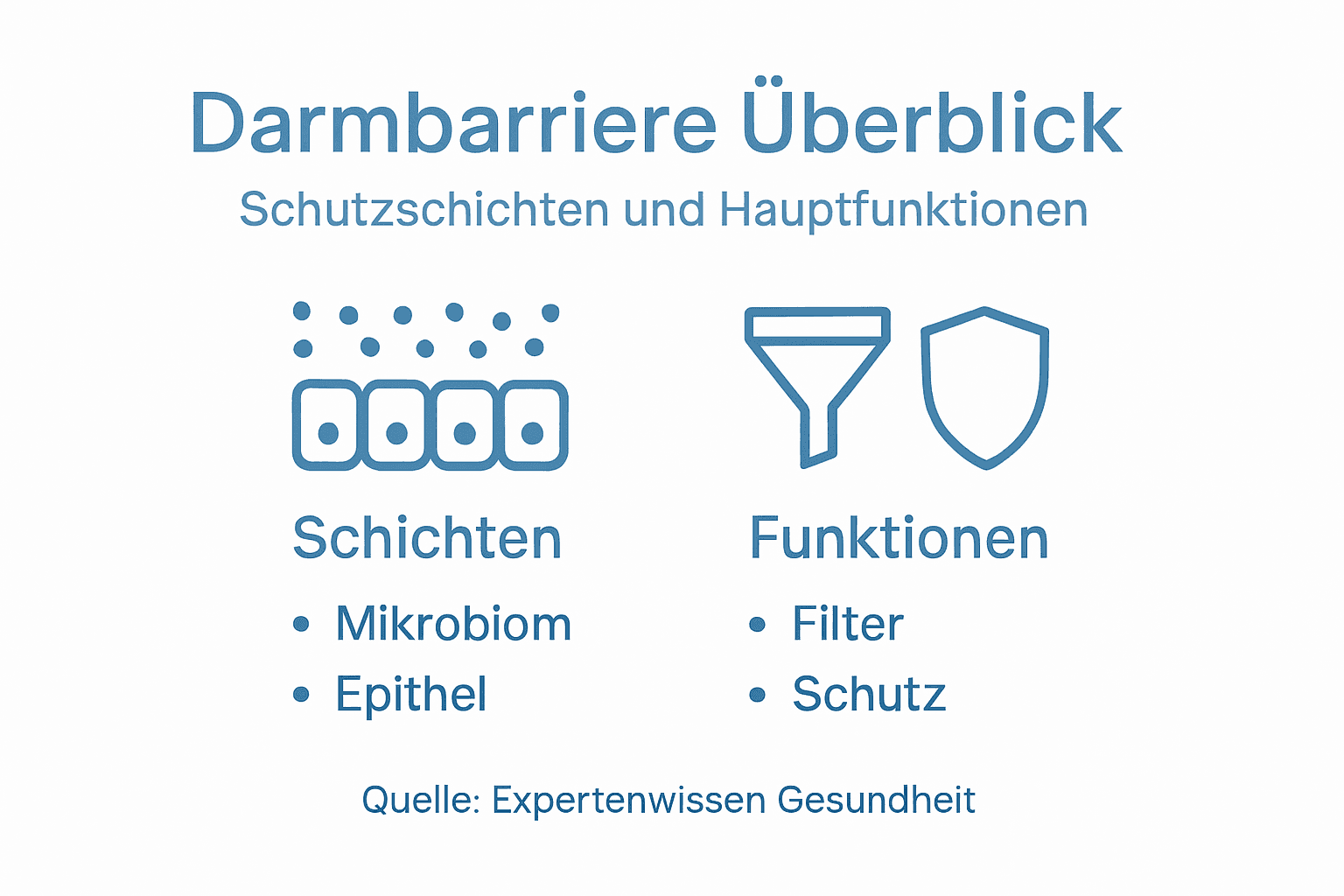
The innermost layer, the intestinal epithelium, is particularly complex. It consists of tightly connected cells called tight junctions, which work like a selective filter. These cells precisely determine which substances may enter the bloodstream and which may not.

The following table provides a concise summary of the differences and functions of the intestinal barrier layers:
| Layer | Main function | Feature |
|---|---|---|
| Microbiome | Competition with pathogens | Promotes the immune response |
| Mucus layer | Protects the epithelium | Contains immune messengers |
| Intestinal epithelium | Selective filter | Regulation of tight junctions |
Functions of the intestinal barrier layers:
- Defense against pathogens
- Regulation of nutrient transport
- Communication with the immune system
- Protection against inflammatory reactions
Around 80% of our immune cells are located in the gut, where they form a complex defense system.
Pro tip: Make sure to eat a diet rich in fiber and include probiotics to keep the layers of your intestinal barrier healthy and strong.
What functions does the intestinal barrier perform?
The intestinal barrier is far more than just a passive protective wall - it is a complex control center for our health. Its central tasks include several vital functions that both protect and nourish our bodies.
Main functions of the intestinal barrier:
- Nutrient absorption: Selective permeability for essential molecules
- Protective function: Defense against pathogens and toxins
- Immune regulation: Regulation of immune responses
- Fluid balance: Control of water transport
The intestinal barrier functions like a highly intelligent border guard. It prevents harmful substances from entering while simultaneously enabling the absorption of vital nutrients. It communicates continuously with our immune system and precisely determines which substances may enter our bloodstream.
Their ability to modulate the immune system is particularly interesting. It prevents excessive reactions to harmless substances and activates targeted defense mechanisms against genuine threats. This occurs through highly complex communication processes between the gut flora, mucus layer, and immune cells.
Approximately 70-80% of our immune cells are located directly in the intestines, where they form a sophisticated defense system.
Functions in detail:
- Nutrient selection
- Defense against pathogens
- Regulating inflammatory responses
- Maintaining microbiome balance
Pro tip: Follow a balanced diet with probiotics and prebiotics to optimally support your intestinal barrier.
Common disorders and risks to the barrier
The intestinal barrier is susceptible to various disorders that can significantly affect our health. Barrier disorders can have a wide range of causes and lead to complex health challenges.
Main causes of barrier disorders:
- Unbalanced diet
- Chronic stress
- Excessive alcohol consumption
- Long-term antibiotic use
- Environmental toxins and chemicals
One particularly significant disorder is Leaky Gut Syndrome. This barrier disorder allows harmful microorganisms to enter and can trigger inflammatory processes throughout the body. Foreign substances and toxins are transported through the damaged intestinal wall into the bloodstream, which can provoke an excessive immune response.
The symptoms of a disrupted gut barrier are varied and often develop gradually. They range from digestive problems and food intolerances to chronic inflammation. In conditions such as Crohn's disease, barrier dysfunction plays a central pathogenic role.
Risk factors at a glance:
- Genetic predisposition
- Chronic intestinal inflammation
- Autoimmune diseases
- Hormonal imbalances
A disrupted gut barrier can trigger systemic inflammatory processes throughout the body.
Pro tip: Follow an anti-inflammatory diet and reduce factors that can weaken your gut barrier.
Microbiome, diet, and protection of the gut barrier
The gut microbiome is a complex ecosystem that is crucial to our health. It consists of trillions of microorganisms that live in close symbiosis with our bodies and perform numerous vital functions.
Impact of diet on the microbiome:
- Beneficial foods: fiber-rich foods, fruit, vegetables
- Harmful foods: sugar, animal fats, highly processed products
- Probiotic foods: yogurt, kefir, sauerkraut
- Prebiotic foods: artichokes, leeks, onions
The composition of our diet directly influences the diversity and functionality of the microbiome. Fermented foods and fiber support a healthy gut environment by producing short-chain fatty acids that have anti-inflammatory effects and strengthen the gut barrier.
Communication between gut bacteria and our immune system is highly complex. A balanced microbiome regulates inflammatory processes, supports nutrient absorption, and protects against pathogenic organisms. Imbalances can lead to dysbiosis, which weakens the gut barrier and increases health risks.
Strategies for a healthy microbiome:
- A varied, nutrient-rich diet
- Regular consumption of fermented foods
- Reducing sugar and processed products
- Stress management
A healthy microbiome is the key to a functioning gut barrier and overall health.
Pro tip: Incorporate at least one probiotic and one prebiotic food source into your diet every day.
This overview shows measures to specifically support the intestinal barrier in everyday life:
| Measure | Effect on the microbiome | Benefit for the barrier |
|---|---|---|
| Probiotic foods | Increases bacterial diversity | Strengthens immune defenses |
| Prebiotic fiber | Promotes beneficial bacteria | Supports the mucus layer |
| Stress reduction | Reduces negative influences | Reduces inflammation |
| Avoiding sugar | Prevents dysbiosis | Maintains its protective function |
Strengthen your intestinal barrier for greater health and well-being
The intestinal barrier is the key to holistic health and protects you from harmful influences. If you frequently suffer from digestive problems or would like to learn more about the balance of your gut microbiome, now is the perfect time to take action. Discover how a comprehensive Gut microbiome analysis – For a healthy gut microbiome - mybody®x can help you understand the composition of your microbiome and strengthen it in a targeted way.
Identify potential disorders at an early stage with at-home intolerance tests | mybody®x and receive personalized recommendations for your diet and lifestyle based on scientific research. Visit https://mybody-x.com and start today with certified analyses from Switzerland. Together, we optimize your gut health as the foundation for your vitality and quality of life.
Frequently asked questions
What is the intestinal barrier?
The intestinal barrier is a complex protective system that shields the gut from pathogens and regulates nutrient absorption.
How does the intestinal barrier work?
The intestinal barrier works by recognizing and assessing foreign substances, followed by targeted defensive responses to keep unwanted intruders out.
What functions does the intestinal barrier have?
The main functions of the intestinal barrier include nutrient absorption, protection against pathogens, immune regulation, and fluid balance control.
What are the main causes of intestinal barrier dysfunction?
Causes such as an unbalanced diet, chronic stress, excessive alcohol consumption, and long-term antibiotic use can lead to disruptions of the intestinal barrier.



Share now:
Differences Between Microbiome Tests: What Matters for Your Health
Science Behind Microbiome Analysis: Evidence, Methods, Benefits