

Benefits of microbiome tests for your health
Many people in Germany, Austria, and Switzerland know the feeling when digestion gets out of balance and their well-being suffers. A microbiome test gives you deep insight into the complex world of your gut flora, identifies the balance between “good” and “bad” bacteria, and highlights possible imbalances. Anyone who wants to support their health proactively can learn from this article how modern testing methods can provide valuable insights for greater digestive comfort and a stronger immune system.
Table of contents
- What a microbiome test really measures
- Different testing methods and laboratory standards
- Health benefits of microbiome analysis
- Microbiome tests: Costs, quality, and data protection requirements
- Who can benefit most from microbiome tests
Key findings
| Point | Details |
|---|---|
| Microbiome test | The test provides insights into the composition and health of the gut flora, including the ratios of “good” and “bad” bacteria. |
| Testing methods | Different analysis methods offer varying levels of accuracy and are important for interpreting the results. |
| Health benefits | A microbiome analysis can reveal health risks and provide personalized recommendations for optimizing health. |
| Target groups | Microbiome tests are particularly useful for people with chronic digestive problems or unclear health concerns. |
What a microbiome test really measures
A microbiome test is a scientific analysis that provides you with detailed insight into the composition of your gut flora. Using genetic techniques, the bacterial species and their distribution in the gut are identified.
This examination involves more than just a simple list of bacteria. The test measures key aspects of your gut health:
- The diversity of microorganisms
- The ratio between “good” and “bad” bacteria
- Possible bacterial imbalances (dysbioses)
- Potential links to various health conditions
Interestingly, studies show that only around 25 to 50 percent of intestinal bacteria can actually be detected in a stool sample. This means that although the test provides valuable insights, it does not map the complete microbiome.
The analysis is performed with high precision using modern molecular genetic methods such as 16S rRNA sequencing. The genetic signatures of the various bacterial species are identified and quantified.
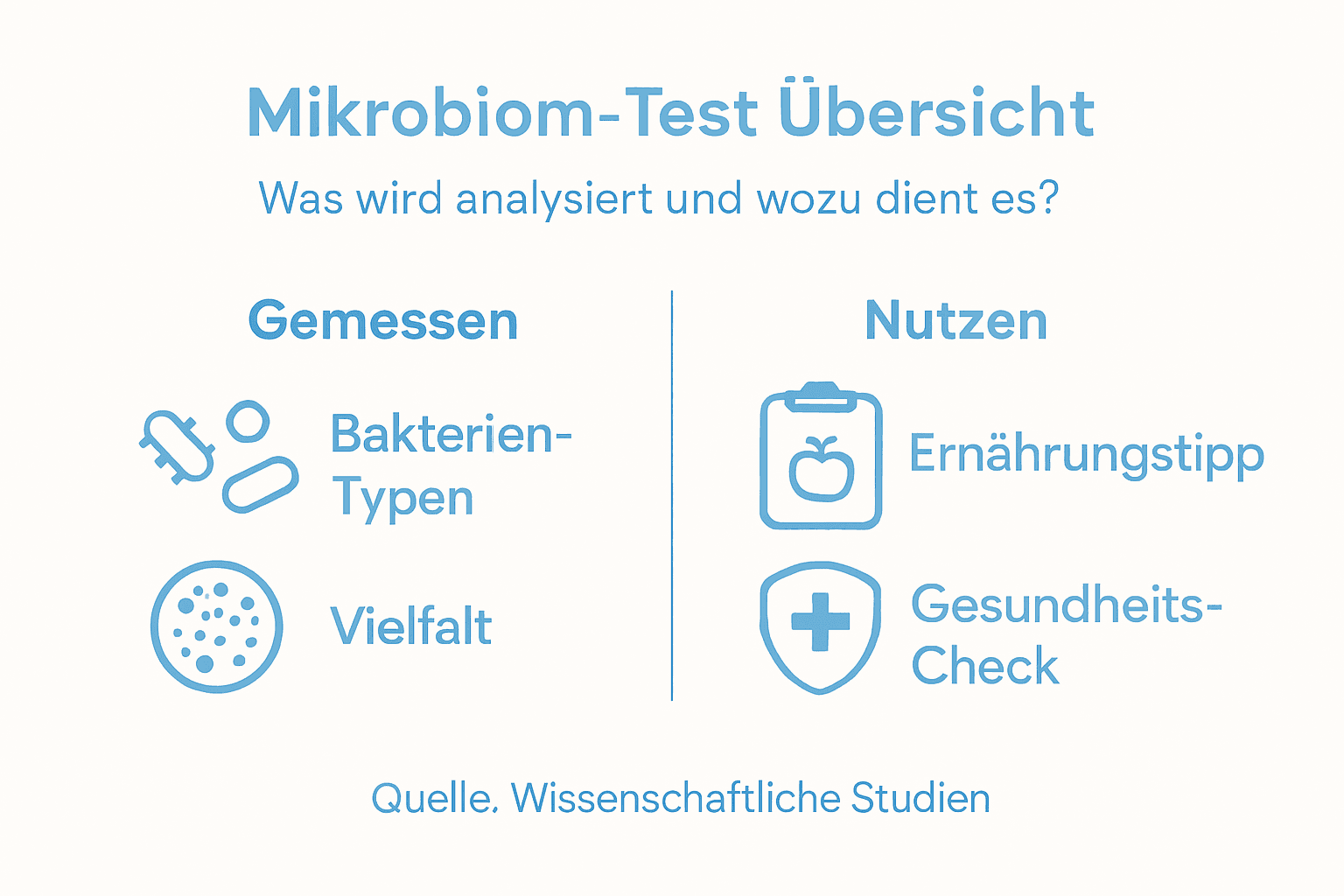
The aim of a microbiome test is to gain a comprehensive understanding of your individual gut flora and derive possible recommendations for action regarding your health.
Pro tip: After a microbiome test, always consult a nutrition expert or doctor to have the results professionally interpreted.
Different testing methods and laboratory standards
Microbiome tests differ fundamentally in their analytical techniques and quality standards. Next Generation Sequencing (NGS) has become established as a modern method for comprehensively analyzing the complex composition of the gut microbiome.
The key features of modern microbiome testing methods include:
- Molecular biology analysis methods
- Identification of non-culturable bacteria
- Quantitative determination of microorganisms
- Assessment of microbial diversity
International standardization plays a crucial role in the comparability of microbiome analyses. Research institutions continuously develop guidelines to improve methodological precision.
The analysis takes various factors into account that may influence the test result:
- Participant's nutritional status
- Current medication
- Timing of sample collection
- Laboratory-specific protocols
Modern laboratories apply strict quality standards to ensure accurate and reproducible results. The analysis is usually performed using stool samples, which are examined using highly sensitive molecular biology methods.
For a clearer overview, a comparison of the most important molecular biology testing methods:
| Method | Accuracy | Detects bacterial diversity |
|---|---|---|
| 16S rRNA sequencing | High, widely used | Focus on bacterial species |
| Shotgun metagenomics | Very high, more expensive | Captures genes from all microbes |
| Culture-based analysis | Low, specific | Limited diversity detectable |
Pro tip: When choosing a microbiome test, look for certified laboratories with internationally recognized quality standards.
Health benefits of microbiome analysis
The composition of gut bacteria has an enormous impact on our overall health. A microbiome analysis provides valuable insights into the complex world of our gut flora and can reveal important connections related to health.
The main health benefits of a microbiome analysis include:
- Detailed assessment of gut flora composition
- Identification of possible bacterial imbalances
- Early detection of potential health risks
- Personalized nutrition and lifestyle recommendations
The immune system and metabolism are significantly influenced by the microbiome. A balanced gut flora supports not only digestion but also plays a crucial role in defending against disease and regulating important bodily functions.
Potential health connections that can be identified through a microbiome analysis range from:
- Chronic digestive complaints
- Immune deficiencies
- Metabolic disorders
- Inflammatory processes
The analysis can identify individual risks at an early stage and facilitate the development of targeted preventive measures. This enables a proactive approach to your own health.

Pro tip: Always discuss the results of your microbiome analysis with a nutritionist or doctor to make the most of these insights for your health.
Microbiome tests: Costs, quality, and data protection requirements
Microbiome tests in Germany typically cost between 150 and 300 euros and raise important questions for many consumers about investment, quality, and data protection.
The key aspects to consider when selecting a microbiome test include:
- Costs and reimbursement options
- Laboratory quality and certifications
- Scientific methodology
- Data protection and sample handling
Cost structure varies depending on the provider and scope of the examination. Statutory health insurance providers generally do not cover the costs, as the tests are considered medically unnecessary.
Quality criteria for reputable microbiome tests:
- Accredited laboratories
- Evidence-based analytical techniques
- 16S rRNA sequencing
- Transparent reporting
Strict requirements must be observed regarding data protection. The samples must be pseudonymized and destroyed after analysis. GDPR-compliant processing is essential.
Key selection criteria for microbiome tests at a glance:
| Criterion | Importance in the testing process | Practical tip |
|---|---|---|
| Certification | Laboratory quality control | Check for ISO compliance |
| Data protection | Protection of sensitive sample information | Choose GDPR-compliant processing |
| Methodological transparency | Traceable analysis methods | Request complete reports |
Pro tip: Compare different providers and pay particular attention to laboratory standards, data protection policies, and the qualifications of the scientific staff.
Who can benefit most from microbiome tests
Microbiome tests are particularly useful for people with complex health challenges who have not yet received a clear diagnosis or want to specifically improve their gut health.
The target groups for whom a microbiome test can be particularly valuable include:
- People with chronic digestive problems
- Patients with autoimmune diseases
- People with recurring infections
- People with unexplained metabolic problems
- Individuals before major dietary changes
Chronic health problems can often originate in the gut microbiome. A targeted analysis can help identify previously undiscovered connections and develop personalized solution strategies.
Microbiome tests are particularly recommended for:
- People with irritable bowel syndrome or digestive disorders
- Patients with food allergies
- People with frequent inflammation
- Individuals with immune deficiencies
Important to know: A microbiome test is not a substitute for medical diagnosis, but rather a complementary tool for optimizing your health.
Pro tip: Be sure to consult a nutritionist or doctor before and after the test to professionally interpret and implement the results.
Discover the powerful benefits of microbiome analysis for your health
A healthy gut flora is the key to a strong immune system and balanced metabolism. If you are dealing with chronic digestive problems or recurring inflammation, a detailed examination of your microbiome is essential. Microbiome tests show you in detail which bacteria dominate your gut and where imbalances exist. This allows you to know exactly how to support your health in a targeted way and minimize potential risks at an early stage.
Benefit from the precise analyses and evidence-based recommendations of mybody®x Gut Flora Analysis – For a Healthy Gut Flora. Our ISO-certified laboratories provide scientifically validated results that you can conveniently obtain at home through simple sample collection. In addition, you can perfectly tailor your diet to your individual needs with DNA Metabolism Tests for Your Optimal Diet – mybody®x. Don’t wait any longer and start your journey toward greater well-being today at mybody®x. This allows you to improve your health independently and sustainably in the long term.
Frequently asked questions
What exactly does a microbiome test measure?
A microbiome test measures the composition of the gut flora, including the diversity of microorganisms, the ratio of “good” to “bad” bacteria, and possible imbalances (dysbiosis).
What health benefits does a microbiome analysis offer?
A microbiome analysis provides valuable insights into the gut flora, identifies bacterial imbalances, and enables personalized recommendations for diet and lifestyle to improve health.
How often should I have a microbiome test?
The frequency depends on individual health goals and conditions. If you have existing digestive problems or chronic health challenges, regular analysis may be useful for monitoring changes.
Are microbiome tests cost-effective?
Microbiome tests generally cost between 150 and 300 euros. The investment may be worthwhile if it helps identify health problems and take preventive measures.
Recommendation
- Microbiome Test: Your Guide to Better Gut Health – mybody®x
- Microbiome Test Explained: How Gut Flora Analysis Works – mybody®x
- Gut Analysis Test: Find Your Path to Better Gut Health – mybody®x
- Get Your Gut Flora Tested: 12 Providers Reviewed for 2025 – mybody®x
- Hair Analysis Test 2025: Discover Your Health Insights | MyHair



Share now:
7 proven tips for everyday microbiome health
Differences Between Microbiome Tests: What Matters for Your Health