
Inflammation of the stomach lining: What helps quickly and what merely provides relief
The essentials at a glance
The quickest relief for inflammation of the stomach lining mainly comes from avoiding certain things: alcohol, nicotine, anti-inflammatory painkillers, coffee, and very fatty or spicy foods. A bland diet and rest can ease the symptoms. According to IQWiG, it has barely been scientifically studied whether they affect the healing process.
The second half of the answer is less comfortable: The further course is determined not by diet but by the cause. The two most common causes are an infection with Helicobacter pylori bacteria and the regular use of anti-inflammatory painkillers. Neither can be fixed with rusks.
This article puts both into context. First, what happens in the stomach lining itself and what causes the inflammation. Then, the immediate measures that have been proven effective, three common misconceptions, and the warning signs that mean waiting is the wrong approach. Finally: how to narrow down the cause and where an at-home test reaches its limits.
What to expect in this article
1. What happens when the stomach lining becomes inflamed?
2. What causes the inflammation?
3. What really helps in the first few days?
4. Three persistent misconceptions
5. When you must not wait
6. How to find out whether a bacterium is responsible
7. What an at-home test cannot tell you
8. Is testing worthwhile for you?
9. What matters in the first few days
Frequently asked questions
Sources
What happens when the stomach lining becomes inflamed?
The stomach produces acid that is strong enough to break down food. To prevent this acid from attacking the stomach wall itself, a protective layer lies over it: the stomach lining. Inflammation of the stomach lining—known medically as gastritis—means that this very protective layer has become irritated or damaged.
“
“The stomach lining protects the stomach wall from acid and pathogens. If this protective lining becomes irritated or damaged, it can become inflamed.”
Institute for Quality and Efficiency in Health Care (IQWiG)
Inflammation of the stomach lining (gastritis), as of 2025
Why the protective layer can fail in the first place
The stomach lining has two functions. It keeps acid away from the stomach wall and holds back pathogens that enter the stomach with food. It does both through a viscous mucus layer that is continuously renewed.
As long as the formation and breakdown of this lining remain balanced, no one notices anything. Inflammation develops when this balance tips—either because the lining breaks down faster than it can regenerate or because a pathogen colonizes it from within.
This difference is not a minor detail. It explains why two people with the same symptoms may need completely different treatments. Anyone whose protective lining has been weakened by medication needs to change their medication. Anyone with a bacterium in the stomach lining needs targeted treatment. In both cases, diet only addresses the surface.
Acute and chronic gastritis differ in their course over time
Acute gastritis appears suddenly and subsides again within a few days in many cases. It is the form most people think of when they look for quick relief.
Chronic gastritis follows a different course. It develops over a longer period, often causes no symptoms for a long time, and is therefore frequently discovered by chance. Anyone with symptoms lasting for weeks is no longer looking for an immediate remedy, but for a cause.
This distinction is why the question “What helps quickly?” has two answers. For the acute form, there are sensible immediate measures. For the chronic form, there are not—the key is determining the cause.
Key takeaway
Gastritis is not a disease caused by diet, but damage to the protective lining—diet can irritate it, but in the vast majority of cases does not cause it on its own.
Typical symptoms
For acute gastritis, IQWiG lists stomach pain, a feeling of fullness, bloating, heartburn, nausea with occasional vomiting, belching, loss of appetite, and a bloated abdomen (as of 2025).
This list explains why self-diagnosis is so often wrong: Not one of these symptoms is specific to gastritis. An irritable stomach, a gastric ulcer, and reflux disease can feel exactly the same. We discuss the symptoms in more detail in the article Stomach Pain: Causes, Warning Signs, and What Helps in Everyday Life; here, we focus exclusively on the stomach lining and what actually helps during the first few days.
What causes the inflammation?
According to IQWiG, the most common causes of gastritis are an infection with Helicobacter pylori bacteria or the use of anti-inflammatory painkillers from the NSAID group (as of 2025). Both are external causes—not causes stemming from your diet.
Source: Institute for Quality and Efficiency in Health Care (IQWiG), 2025
Helicobacter pylori: widespread, but rarely the trigger
Helicobacter pylori is a bacterium that becomes established in the stomach lining and disrupts acid production. IQWiG describes the mechanism as follows: The bacteria disrupt stomach acid production, and the resulting excess acidity can damage the stomach lining and stomach wall (as of 2025).
However, the figures above also show what does not follow from this. The bacterium is widespread, but the disease is not. A positive test alone is therefore no reason for concern—it is one piece of the puzzle that must be considered together with the symptoms.
NSAID painkillers as the second leading cause
Anti-inflammatory painkillers act at the same site where the stomach lining builds its own protective layer. Anyone who takes them regularly over a prolonged period—for example, for back pain, headaches, or joint problems—increases their risk of gastritis.
This is the cause that is easiest to check and most often overlooked in everyday life. Looking through your own medicine cabinet often reveals more than a week of bland food. However, never stop prescribed medication on your own; discuss taking it with your doctor.
Who is affected, and when
The age distribution differs between the sexes. IQWiG states that most women develop the condition between the ages of 45 and 64, whereas men generally develop it after age 65 (as of 2025).
This figure is of limited help when assessing your own symptoms—a person can develop gastritis at any age. However, it indicates that the condition is not linked to the lifestyle of young adults, as suggested by the widespread narrative of a stress-related stomach.
Alcohol, smoking, stress, and diet
According to IQWiG, excessive alcohol consumption can also trigger acute gastritis. Smoking, ongoing stress, and diet—including foods high in fat and sugar or spicy foods—can cause stomach problems (as of 2025).
The linguistic distinction is crucial and gets lost in many guides: Alcohol can trigger gastritis. Stress and diet can cause symptoms. These are not the same—and this explains why changing your diet can improve symptoms without resolving the inflammation.
In brief
Die beiden häufigsten Ursachen einer Magenschleimhautentzündung sind laut IQWiG eine Helicobacter-pylori-Infektion und entzündungshemmende Schmerzmittel. Alkohol kann eine akute Gastritis auslösen, Rauchen, Stress und die Ernährung können Beschwerden verstärken. Das Bakterium ist mit schätzungsweise 40 von 100 Menschen in Deutschland weit verbreitet, führt aber nur bei 4 bis 8 von ihnen zu einer Gastritis oder einem Geschwür. Ein Nachweis ist deshalb ein Hinweis, keine Diagnose.
According to IQWiG, the two most common causes of gastritis are a Helicobacter pylori infection and anti-inflammatory painkillers. Alcohol can trigger acute gastritis, while smoking, stress, and diet can worsen symptoms. The bacterium is estimated to be widespread among around 40 in 100 people in Germany, but causes gastritis or an ulcer in only 4 to 8 of them. A positive test is therefore an indication, not a diagnosis.
What really helps in the first few days?
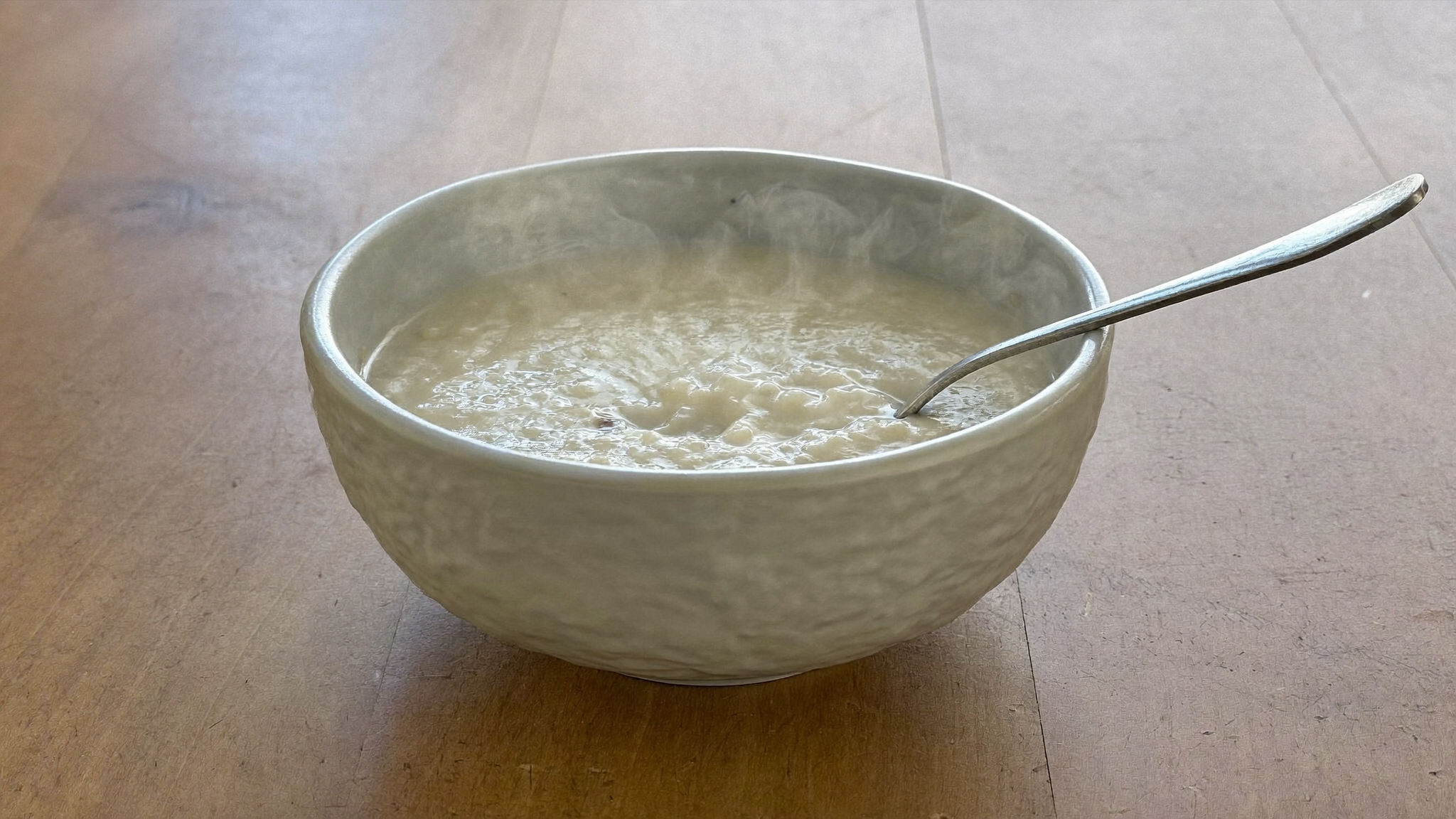
The honest answer begins with a caveat. For acute gastritis, IQWiG considers avoiding alcohol and nicotine important and lists a bland diet such as rusks or oat porridge, avoiding coffee and fatty or spicy foods, and resting as usual recommendations. The institute then writes about these exact measures:
“However, whether these measures help has scarcely been scientifically studied.” (IQWiG, 2025)
That is no reason to leave them out. They are low-risk, cost nothing, and many people report relief from them. It is a reason not to expect miracles—and not to count the time spent eating rusks as treatment.
- The immediate measures recommended by IQWiG
- ✓ Avoid alcohol and nicotine – explicitly identified as important in acute gastritis.
- ✓ Take a break from coffee – mentioned alongside fatty and spicy foods as something to avoid.
- ✓ Choose a bland diet – rusks and oat porridge are given as examples.
- ✓ Rest – listed as a measure in its own right, not as an afterthought.
✓ Review painkiller use – anti-inflammatory painkillers are one of the two main causes; their use should be discussed with a doctor.
STEP 1
Eliminate irritants
Review medications
Write down which painkillers you have taken in the past few weeks, and bring the list to your doctor’s appointment.
Monitor the progression
Keep track of when the symptoms occur and how severe they are. A simple diary beats any memory.
Have the cause clarified
If the symptoms do not improve or return, the issue is no longer immediate measures but the underlying cause.
What can specifically be changed about eating
Some practical conclusions can be drawn from the IQWiG list. Rusks and oat porridge are not included by chance: both are low in fat, mildly seasoned, and place little strain on digestion. Anyone who reads these two examples as a principle rather than a meal plan will get further than with any recipe list.
The principle is: little fat, little spice, little acidity, and nothing very hot or very cold. Anything that fits this pattern is suitable—whether it is rusks or steamed vegetables. Anything that does not fit it should be avoided for a few days.
Coffee deserves a second look because it is a firmly established part of the daily routine in many households. IQWiG explicitly lists it among the things to avoid. No substitute with a similar effect exists—tea also contains caffeine, though less. For the few days of an acute flare-up, taking a break is the more honest approach than switching to something else.
And there is one point that is regularly presented as fact in advice guides even though it is not: There is no evidence that many small meals are better than three large ones for gastritis. If this works well for you, you can continue. If it does not, you are not missing out.
Where Self-Help Ends
If the symptoms persist or are very severe, gastritis is generally treated with acid-reducing medication—this is the point at which, according to IQWiG, medical treatment takes over rather than one’s own kitchen (as of 2025).
A practical rule of thumb: If the immediate measures do not bring noticeable improvement after a few days, the cause is not what you left out. In that case, making a doctor’s appointment is more worthwhile than trying the next dietary tip.
This boundary is often drawn too late, and the reason is understandable. As long as you can do something yourself, it feels like progress. Switching to medical evaluation feels like giving up—even though it is the opposite. For the two most common causes, medical evaluation is the only path that can lead to a solution at all.
Over-the-counter stomach remedies have no place during this transition period. They can ease symptoms and thereby obscure precisely the signal that would tell you it is time to make a doctor’s appointment. If you use them, do so in consultation with a doctor and with a fixed end date—not as a long-term solution for weeks on end.
Three Persistent Misconceptions
Claims about the stomach lining circulate that sound plausible and delay the search for the cause. Three of them come up particularly often.
All three misconceptions have one thing in common: They shift responsibility onto lifestyle and thereby distract from the two causes that are actually treatable.
When you must not wait
There are signs for which the question of rapid relief is no longer relevant. They indicate bleeding in the gastrointestinal tract and require immediate medical evaluation.
These warning signs require immediate medical evaluation
- ✓ Black-colored stool – an indication of digested blood.
- ✓ Vomiting blood – vomit that is red or black in color.
- ✓ Signs of anemia – exhaustion, dizziness, paleness, or shortness of breath.
- ✓ Frequent vomiting after eating – may indicate a narrowing at the stomach outlet.
- ✓ Sudden, very severe abdominal pain – if a perforated stomach is suspected, call emergency services at 112 immediately.
This list follows the information provided by IQWiG on stomach and duodenal ulcers (as of 2025). It is deliberately brief: If you notice any of these signs, you do not need to read further—you need an appointment, or, in the last case, to call emergency services.
Why black stool is taken so seriously
Blood that comes into contact with stomach acid changes color. What reaches the lower digestive tract therefore does not look red, but black and shiny. This delay is precisely what makes the sign so deceptive: It appears when the bleeding has already been going on for some time, and it does not look like blood.
There are harmless explanations for dark discoloration—iron supplements and certain foods are among them. However, this distinction cannot be made at the breakfast table. When in doubt, it should be treated as a sign of bleeding until the opposite has been established.
What looks harmless but still requires medical attention
In addition to the acute warning signs, there is a second group: symptoms that do not seem dramatic but do not go away. A feeling of fullness lasting for weeks, recurring nausea, persistent loss of appetite, or weight loss that you cannot explain.
These signs do not create a sense of urgency and are therefore often tolerated for months. They are nevertheless relevant for evaluation, because chronic gastritis follows exactly this pattern: quietly, without a clear beginning and without a moment when you would say, now is the time.
How to find out whether a bacterium is behind it
If symptoms remain after the immediate measures, the question of their cause arises. Since Helicobacter pylori is one of the two main causes, detecting this bacterium is a logical first step.
mybody®x (MYBODY Lab GmbH) offers an at-home self-test for this purpose, which tests a stool sample for Helicobacter pylori. It does not replace medical diagnostics – it provides an indication that you can take to your doctor’s appointment instead of a suspicion.

Gastrointestinal health
At-home self-test for Helicobacter pylori from a stool sample, with results at home and no laboratory processing. What the test does not do: It does not show whether your stomach lining is inflamed, and it does not distinguish between asymptomatic colonization and an infection requiring treatment. A positive result should be medically confirmed before treatment begins.
Price: €14.50 · Sample type: stool sample · Processing time: Results in 5–10 minutes · Laboratory: no laboratory processing, evaluated at home
To the gastrointestinal self-testSelf-test or gastroscopy – which question does each answer?
The two approaches answer different questions. The self-test asks: Is the bacterium present? Gastroscopy asks: What does the stomach lining look like? Only the second question can be answered with a gastritis diagnosis.
| Criterion | At-home self-test | Gastroscopy |
|---|---|---|
| What is examined? | A stool sample for Helicobacter pylori | The stomach lining directly, with a tissue sample if needed |
| Where does it take place? | At home, without an appointment | At a medical practice or clinic, by appointment and with preparation |
| How long does it take? | Results in 5 to 10 minutes | The examination itself takes 5 to 10 minutes (IQWiG, 2025) |
| Answers the question “Do I have gastritis?” | No – only whether a possible trigger is present | Yes – the mucous membrane is assessed directly |
| Accuracy in comparison | No documented comparative information in the source material used | No documented comparative information in the source material used |
The last row of the table has deliberately been left as it is. The source material used here does not provide information on the direct accuracy of the two methods in comparison—and estimating a number here would be a worse error than acknowledging the gap.
How to prepare for your doctor's appointment
Regardless of whether you test beforehand: A well-prepared appointment significantly shortens the path to the cause. Three details are most helpful.
First, the course of the symptoms. How long have the symptoms been present, do they occur mainly on an empty stomach or after eating, and are there periods without symptoms? These patterns distinguish the possible causes more clearly than the description of the pain itself.
Second, the complete list of medications, including over-the-counter products. Anti-inflammatory painkillers are one of the two main causes, and they are often not mentioned during the consultation because they are not perceived as medication.
Third, what you have already tried and what effect it had. If giving up alcohol and coffee for more than a week changed nothing, that is useful information, not a failure.
Anyone who wants to know which types of bacteria and markers play a role in the digestive tract at all can find the relevant overview in the Gut Lexicon.
All price and performance information is current as of August 5, 2026. Prices and the scope of services may change; the respective product page is always authoritative.
What a test at home cannot do
A self-test is a tool with a clearly limited purpose. It answers a single question, and it answers it without context.
The first limitation lies in the result itself. Detecting Helicobacter pylori says nothing about whether your stomach lining is inflamed. The figures from Chapter 2 make this clear: Of an estimated 40 out of 100 people with the bacterium, only 4 to 8 develop gastritis or an ulcer.
The second limitation lies in the reverse conclusion. A negative result does not rule out gastritis. The second main cause—inflammatory painkillers—is not detected by any test for bacteria.
The third limitation is the most important: A self-test does not provide a diagnosis and does not replace a medical examination. At best, it shortens the path to one by adding concrete information to the consultation with a doctor.
And a fourth, one that is rarely stated: With acute symptoms, a test result today changes nothing. The immediate measures remain the same. The test belongs to the phase afterward, when the question of the cause arises.
Is a test worthwhile for you?
The decision depends less on the symptoms than on the question you want answered—and on whether a result would prompt a next step for you.
Makes sense for you if …
… the symptoms have persisted for weeks and the immediate measures have made no difference.
… you are planning to see a doctor anyway and want to bring specific information to the appointment.
… a Helicobacter infection is known in your circle and you want to know whether it affects you.
Probably not, if …
… you notice one of the warning signs from Chapter 5—in that case, the doctor’s appointment matters, not the test.
… you regularly take anti-inflammatory painkillers; in that case, the more likely cause lies elsewhere.
… you hope the result will give you a diagnosis—the test cannot and should not provide one.
A test result is only as valuable as the action that follows from it. If you would see a doctor after a positive result anyway—and also after a negative one—you can skip the detour and make the appointment directly.
What matters in the first few days
With gastritis, the fastest relief comes not from what you do additionally, but from what you leave out: alcohol, nicotine, coffee, fatty foods, and spicy foods. A bland diet and rest can also help, with the limitation the IQWiG itself points out: their benefits have barely been studied scientifically.
If this does not bring any improvement after a few days, the question changes. It is no longer about what helps quickly, but about what is causing the inflammation. The two most common answers—a bacterium and a box of pills—can both be investigated, but not in your own kitchen.
Your specific next step: For three days, note when the symptoms occur and write down which painkillers you have taken over the past four weeks. This single sheet of paper is worth more at your doctor’s appointment than any dietary change based on guesswork.
Frequently asked questions
What helps gastritis the fastest?
The quickest relief comes from eliminating irritants: for acute gastritis, the IQWiG explicitly mentions alcohol and nicotine, along with coffee and fatty and spicy foods. A bland diet such as rusks or oatmeal porridge and rest are also recommended, although the institute notes that their benefits have barely been studied scientifically. If the symptoms persist or are very severe, treatment generally involves acid-reducing medication.
When should I see a doctor for gastritis?
Immediately if the stool is black, if vomit is red or black, if there are signs of anemia such as fatigue, dizziness, paleness, or shortness of breath, or if you vomit frequently after eating. Sudden, very severe abdominal pain may indicate a perforated stomach—in this case, call emergency services at 112. Regardless, any symptoms that do not improve after a few days should be medically evaluated.
Can a self-test detect gastritis?
No. A Helicobacter pylori self-test shows whether the bacterium is present—not whether the stomach lining is inflamed. These are not the same thing: an estimated 40 out of 100 people in Germany carry the bacterium, but only around 4 to 8 of them develop gastritis or an ulcer. Whether inflammation is present is shown by directly examining the lining of the stomach during a gastroscopy.
How long does acute gastritis last?
Acute gastritis occurs suddenly and subsides again within a few days in many cases when the triggering irritants are removed. No fixed duration can be inferred from this, as it depends on the cause. If the symptoms persist for several days or recur regularly, this argues against a one-time trigger and suggests a cause that should be investigated.
Can painkillers cause inflammation of the stomach lining?
Yes. The IQWiG names the use of anti-inflammatory painkillers from the NSAID group, alongside Helicobacter infection, as one of the two most common causes. Anyone who regularly takes such medication over a longer period should discuss it with their doctor. Prescribed medication should never be stopped without consulting a doctor—the point is to review the medication together and adjust it if necessary.
If the symptoms persist
A Helicobacter pylori self-test clarifies one of the two most common causes—as a basis for discussion with your doctor, not as a diagnosis. If you would like to know how your gut flora is doing overall, you will find the relevant analyses in the overview.
View the stomach and intestinal self-test Overview of all gut analysesYou May Also Be Interested In
→ Stomach Pain: Causes, Warning Signs, and What Helps in Everyday Life
Provides broader context for the symptoms, including how to distinguish them from an irritable stomach and stomach ulcer.
→ Is Your Stomach Acting Up? How to Find Out Whether Helicobacter pylori Is the Cause
Explores Helicobacter pylori in greater depth, focusing on pressure and fullness.
→ Gut Encyclopedia: All Bacteria and Markers in Your Gut Flora
Reference work with more than 6,000 microbiome biomarkers—from beneficial bacteria and fiber degraders to the key metrics in your report.
Sources
- Institute for Quality and Efficiency in Health Care (IQWiG): Gastritis, as of 2025 — gesundheitsinformation.de
- Institute for Quality and Efficiency in Health Care (IQWiG): Stomach and duodenal ulcers, as of 2025 — gesundheitsinformation.de
- Institute for Quality and Efficiency in Health Care (IQWiG): What happens during a gastroscopy?, as of 2025 — gesundheitsinformation.de
The definition of the gastric mucosa, symptom list, causes, prevalence figures, immediate measures, and the note on the state of research are based on source [1]. The warning signs in Chapter 5 and the information on signs of bleeding come from source [2]. The duration of gastroscopy and the removal of a tissue sample come from source [3]. Product information comes from the mybody®x product pages, accessed on August 5, 2026.

mybody®x Editorial & Medical Team
Gut Health Stomach and Digestion Nutritional Science
This article was created and medically reviewed by the mybody®x Editorial and Medical Team. The team combines expertise in nutrigenetics, microbiome and gut science, blood analysis interpretation, nutritional science, and laboratory diagnostics.
Published on August 5, 2026 · Last updated on August 5, 2026
Medical notice: This article is for general information only and does not replace medical advice, diagnosis, or treatment. Persistent or severe stomach problems, blood in the stool or vomit, and sudden severe abdominal pain require immediate medical evaluation.




Share now:
How Much Protein per Day? Reference Values, Calculation, and Good Protein Sources
What to do about diarrhea: the plan for the first 48 hours