
What to do for diarrhea: the plan for the first 48 hours
The essentials at a glance
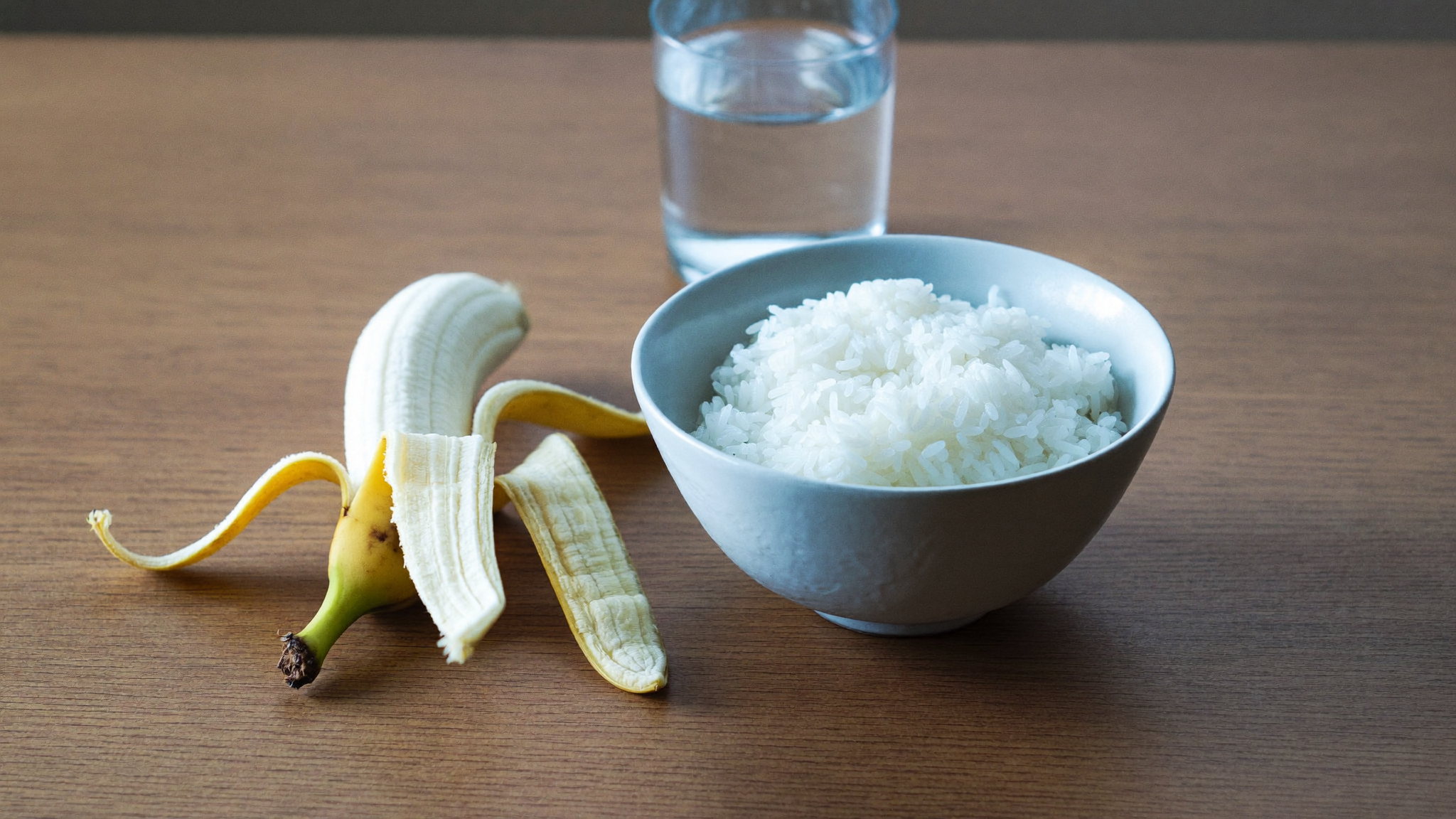
The most important thing in acute diarrhea is replacing fluids and electrolytes—not stopping the diarrhea. Sweetened tea with salty crackers or an electrolyte-glucose solution from a pharmacy provide both. Also eat stomach-friendly foods such as rice, bananas, or zwieback. According to IQWiG, acute diarrhea usually subsides after a few days to a week.
The second half of the answer is more important: There is a point at which waiting is the wrong choice. No improvement after 48 hours, a high fever, bloody stools, severe abdominal pain, or signs of severe dehydration should be medically evaluated—regardless of how well self-care has been organized.
This article proceeds step by step. First, it addresses when something is considered diarrhea at all and how acute cases differ from persistent ones. Then it covers the four steps for the first few days, each explained individually, including the timeline and warning signs. Finally, it explains what to do if it does not stop.
What to expect in this article
1. When is it actually diarrhea?
2. Acute or persistent—where do you stand?
3. Step 1: Replacing fluids and electrolytes
4. Step 2: What you can eat and when
5. Step 3: Recognizing the warning signs
6. Step 4: When it does not stop
7. What a gut flora analysis cannot do
8. What matters in the first few days
Frequently asked questions
Sources
When is it actually diarrhea?
The medical definition is narrower than everyday language might suggest. According to IQWiG, diarrhea means very soft or liquid stools at least three times within 24 hours (as of 2023).
So two factors must come together: consistency and frequency. One soft stool after a large meal is therefore not diarrhea, nor is having formed stools three times a day—according to IQWiG, some people go to the toilet three times a day, while others go only three times a week (as of 2026).
Why the body does this
As food passes through, the intestines remove water from it. That is why formed stool comes out at the end, rather than what entered at the top. The small intestine is 3 to 5 meters long, and the large intestine is another approximately 1 to 1.5 meters long (IQWiG, 2026).
With diarrhea, this process is disrupted. Either too little water is removed, additional water is released into the intestines, or the contents move through the digestive tract too quickly. In all three cases, fluid remains in the stool that the body is missing.
This mechanism directly explains why replacing fluids and electrolytes is the priority. The goal is not to prohibit anything from the intestines, but to compensate for what they are not retaining during this phase.
What is most commonly behind it
When diarrhea starts suddenly, the most common explanation is an infection. IQWiG provides a clear ranking:
“
“Gastrointestinal infections are most commonly caused by noroviruses.”
Institute for Quality and Efficiency in Health Care (IQWiG)
Preventing gastrointestinal infections, as of 2023
The same source also names bacterial pathogens such as Campylobacter, Salmonella, Yersinia, and EHEC, which are usually transmitted through contaminated food. For immediate measures, the distinction is initially secondary—but not for household hygiene.
Key message
With acute diarrhea, the goal is not to stop it but to replace what is lost—fluids and electrolytes.
What else could be behind it
Not all diarrhea is caused by an infection. Medications are one of the most frequently overlooked causes, especially antibiotics—they target not only pathogens but also the bacteria needed in the gut.
Intolerances are another possibility, such as lactose intolerance. The difference from an infection can usually be recognized from the pattern: An infection starts suddenly and then goes away, whereas an intolerance keeps recurring and is linked to certain meals.
Chronic inflammatory bowel diseases and irritable bowel syndrome are also possible. Both require medical evaluation and cannot be assessed through either a self-test or an article. This does not change anything for the first 48 hours—but after that, it makes all the difference.
Acute or persistent—which applies to you?
Before you do anything, it is worth putting the situation into context. The two courses require different responses, and confusing them means either waiting too long or not long enough.
| Criterion | Acute diarrhea | Persistent diarrhea |
|---|---|---|
| How long | Usually subsides after a few days to a week | Persists beyond that or keeps recurring |
| Most common cause | Gastrointestinal infection, most commonly caused by noroviruses | No single most common cause—the evaluation determines it |
| What takes priority | Replace fluids and electrolytes, eat bland foods, rest | Find the cause instead of suppressing the symptoms |
| When to seek medical evaluation | If there is no improvement after 48 hours or if warning signs appear | In every case |
| Role of gut flora analysis | None—it does not change the acute situation | A possible component after medical evaluation |
Timing, causes, and criteria for medical evaluation: Institute for Quality and Efficiency in Health Care (IQWiG), 2023
Step 1: Replace fluids and electrolytes
According to IQWiG, the focus in acute diarrhea is on replacing lost fluids and electrolytes. This is the one non-negotiable measure—everything else is secondary.
Drink and add salt
Sweetened tea with salty crackers or an electrolyte-glucose solution from a pharmacy.
Eat bland foods
Bland foods such as rice, bananas, or zwieback—once you are able to keep something down again.
Check for warning signs
Blood in the stool, a high fever, severe abdominal pain, or signs of dehydration mean self-care should stop.
Keep an eye on 48 hours
Without improvement after two days, self-care becomes a doctor's appointment.
Why sugar and salt belong together
The IQWiG recommendation is not simply to “drink plenty.” It mentions sweetened tea with salty snacks or an electrolyte-glucose solution from a pharmacy—in both cases, sugar and salt occur together.
This wording is not accidental. Both components appear in the same recommendation, and the ready-made solution from a pharmacy reflects exactly this combination. Anyone who drinks only water replaces the fluid, not what is lost along with it.
How to drink in practice
The most common difficulty is not what to drink, but how. Anyone who drinks a large glass all at once while nauseated will usually bring it straight back up—and then, out of frustration, may not drink anything at all.
The more practical approach is to take small amounts at short intervals. A few sips, a few minutes' pause, then a few more sips. It is more tedious, but it stays in the stomach, and that is what matters.
The ready-made solution from a pharmacy has a practical advantage over homemade versions: the ratio of salt to sugar is correct, so you do not have to calculate it. Homemade mixtures based on household recipes vary considerably, and especially with small children and older people, improvisation is the wrong approach.
What does not help during this phase
Cola and pretzel sticks are considered home remedies and are not supported by the IQWiG recommendation. The sugar content is high for this purpose, and the pretzel sticks do not provide the electrolyte profile of a rehydration solution. If you have nothing else at home, they will not make you ill—but as a plan, they are the worse option.
Alcohol and coffee should also be avoided during this phase. And medications that stop diarrhea are not something to take automatically: during an infection, diarrhea is how the body gets rid of pathogens. Their use should therefore be discussed with a doctor rather than decided on speculatively.
In brief
According to IQWiG, the focus during acute diarrhea is on replacing fluids and electrolytes. Recommended options include sweetened tea with salty snacks or an electrolyte-glucose solution from a pharmacy, along with gentle foods such as rice, bananas, or zwieback. Plain water does not replace electrolytes, and medications to stop diarrhea should be discussed with a doctor—during an infection, diarrhea is how the body gets rid of the pathogens.
Step 2: What you can eat and when
IQWiG cites rice, bananas, and zwieback as gentle foods for the stomach. What they have in common is that they are low in fat, mild, and easy to digest—that is the underlying principle, not the specific selection.
The second part of the question is more important: when. There is no reason to fast for days. As soon as you can keep something down, eating makes sense, in small portions rather than one large meal.
The principle behind rice, bananas, and crispbread
The three foods mentioned are examples, not a requirement. If you do not like bananas, you do not have to eat them—the important thing is the properties they represent.
Low in fat, because fat puts additional strain on digestion. Mildly seasoned, because spicy foods further irritate the already irritated intestine. And easy to digest, because the intestine should have as little work as possible to do during this phase. Potatoes, pasta, porridge, or clear broth meet the same criteria.
What can wait during this phase: high-fat foods, heavily spiced foods, large portions of raw vegetables, and anything that causes symptoms on its own. Here too, the relevant period is a few days, not weeks—a permanent bland diet is neither necessary nor advisable.
The typical course over the first few days
The first few hours
Drinking takes priority, in small amounts and frequently. Eating is secondary as long as you cannot keep anything down. If you have to vomit, wait before eating solid food.
Day 1
Electrolyte solution or sweetened tea with salty crackers. Also have your first small portions of easy-to-digest food as soon as you can keep them down. Rest is part of the process.
After 48 hours
The point at which to make a decision. If nothing has improved, it is time to see a doctor—this is not a matter of discretion, but the criterion specified by IQWiG.
After one week
Acute diarrhea usually subsides after a few days to a week. Anything that persists beyond that is no longer an acute case and should be treated differently.
Back to a normal diet
The return is less dramatic than many people expect. Once your stool becomes firmer again and you no longer feel weak, there is no reason not to gradually return to your usual diet.
It makes sense to proceed one step at a time rather than doing everything at once. First return to normal portions, then add higher-fat foods, and then larger amounts of raw vegetables. If you notice the symptoms returning at any step, go back one step and wait a day.
A common misconception at this point is that a cleanse or rebuilding program is necessary after diarrhea. In an uncomplicated case, digestion recovers on its own. The question only becomes relevant if it does not recover over several weeks.
Hygiene is part of the treatment
Because gastrointestinal infections are contagious, hygiene is one of the immediate measures, not something to put in an appendix. IQWiG recommends washing your hands frequently and thoroughly, immediately cleaning up stool and vomit, disinfecting the toilet, and washing textiles, towels, and dishes at a minimum of 60 degrees.
One point is regularly underestimated: The ability to transmit the infection does not end when the symptoms do. According to the IQWiG, rotaviruses continue to be shed for up to eight days after symptoms subside, and noroviruses for up to 14 days (as of 2023).
Step 3: Know the warning signs
There are situations in which self-care ends—regardless of how long the diarrhea has already lasted. This list follows the IQWiG criteria.
When medical evaluation is necessary
- ✓ No improvement after 48 hours – the clearest and most frequently overlooked point.
- ✓ High fever – suggests a more serious course.
- ✓ Bloody stool – always requires medical evaluation, regardless of duration.
- ✓ Severe abdominal pain – not the usual cramping, but significantly stronger pain.
- ✓ Signs of severe dehydration – dizziness, sunken facial features, rapid breathing, a fast heartbeat, or inelastic skin.
With acute diarrhea, the goal is not to stop it, but to replace what is lost.
How to recognize dehydration
The most difficult point on the list to assess is dehydration. It does not come with a clear signal, but develops gradually—and people who develop it themselves are the worst at assessing it.
The IQWiG lists dizziness, sunken facial features, rapid breathing, a fast heartbeat, and inelastic skin as signs of severe dehydration. The last point can be checked: A fold of skin raised on the back of the hand should return immediately and should not remain standing.
A practical additional indicator is the amount of urine. Anyone who barely needs to urinate for many hours is losing more than they are replacing. This is not a diagnostic criterion, but it is a good reason not to postpone a doctor’s appointment any further.
Who should see a doctor sooner
The 48-hour rule applies to healthy adults. For young children, very old people, pregnant women, and people with weakened immune systems or chronic illnesses, the threshold is lower because fluid loss can become critical more quickly in these groups.
The same applies after long-distance travel and after antibiotic treatment. In both cases, causes may be involved that cannot be resolved with tea and rusks—and that require targeted investigation.
Step 4: When it does not stop
From this point on, the question changes. It is no longer about what helps against diarrhea, but about where it comes from. This step should be medically supervised—and only afterward, not before, can an analysis of the gut flora be a useful component.
mybody®x (MYBODY Lab GmbH) offers a stool analysis for this purpose that examines the composition of the gut flora. It is explicitly not an acute diagnostic tool.
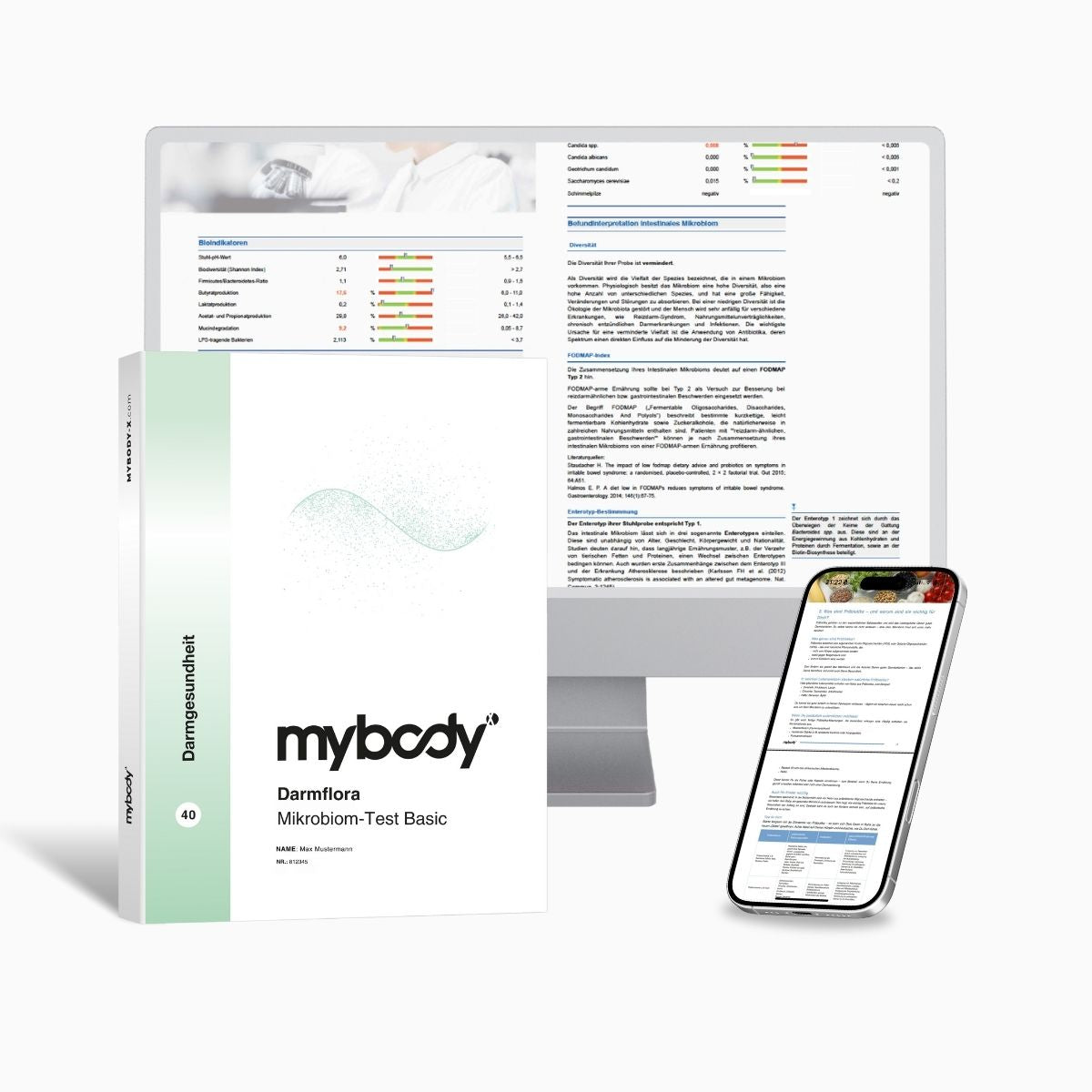
Gut Flora MICROBIOME Test | Essential
Examines the composition of the gut flora from a stool sample, the ratio of protective to problematic bacteria, the pH level in the gut, and indications of dysbiosis. What the test does not do: It does not detect pathogens, meaning it detects neither noroviruses nor salmonella. In cases of acute diarrhea, it does not change the situation and does not replace a medical evaluation.
Price: €149.00 (instead of €169.00) · Sample type: Stool sample · Processing time: Kit shipping 1–3 business days, laboratory evaluation 5–10 business days after receipt of the sample · Laboratory: ISO-certified laboratory analysis in Germany
About the Microbiome Test EssentialWhich bacterial groups in the gut perform which functions and what the figures in a report mean can be looked up in the Gut Lexicon.
What to bring to your doctor's appointment
Four details can significantly shorten the conversation. First, the onset: Exactly when did the symptoms begin, and did they start suddenly or gradually?
Second, the frequency and appearance. How many times a day, and was there blood or mucus? It is uncomfortable to describe, but it is still the information that carries the greatest weight.
Third, the surrounding circumstances: long-distance travel, antibiotic use in recent weeks, a shared meal after which others also became ill, or illnesses among people around you.
And fourth, the medication list, including over-the-counter medicines. Otherwise, diarrhea caused as a side effect can easily be treated as an infection – and therefore not stop.
All price and service information is current as of August 5, 2026. Prices and the scope of services may change; the respective product page is always authoritative.
Is an analysis worthwhile for you?
Makes sense for you if …
… the acute phase is over and your digestion has not returned to its old rhythm for weeks.
… a medical evaluation has already been completed and no cause requiring treatment was found.
… you are looking for an indication of the composition of your gut flora after antibiotic treatment.
Probably not if …
… the diarrhea is currently acute – then fluids, electrolytes, and the 48-hour limit are what matter.
… you notice one of the warning signs; in that case, no test can replace a doctor's appointment.
… you expect pathogen detection – a gut flora analysis is not designed for that.
What a gut flora analysis cannot do
The first and most important limitation is timing. A stool analysis requires shipping and laboratory evaluation. If diarrhea resolves on its own within a few days to a week, the result will arrive when the issue is already over.
The second limitation concerns the content. A gut microbiota analysis describes the composition of the bacterial community. It does not detect pathogens and will not find noroviruses, Campylobacter, Salmonella, or EHEC—the very causes that are most relevant in acute diarrhea.
The third limitation concerns what the results can tell us. An unusual composition is a finding, not a diagnosis. It does not automatically explain the symptoms, and linking it to a cause is not possible without medical interpretation.
This leads to a practical sequence that many guides present in exactly the opposite order. First provide acute care, then make the 48-hour decision, then seek medical evaluation—and only afterward, once a condition requiring treatment has been ruled out and the symptoms nevertheless persist, does an analysis of the gut microbiota become worthwhile.
Anyone who reverses this order loses time where time is short. A test ordered during an acute episode answers a question that will usually have resolved on its own by the time the result arrives.
And there is a fourth boundary that is rarely mentioned: Immediately after an infection, the gut microbiota is already altered. An analysis during this phase measures the exceptional state, not the normal one—the timing matters.
What matters in the first few days
For acute diarrhea, the answer is shorter than the effort might suggest: drink fluids with sugar and salt, eat gentle foods, and rest. That covers what the IQWiG identifies as the main focus, and usually nothing more is needed.
The real challenge lies elsewhere: not missing the point at which waiting becomes the wrong choice. No improvement after 48 hours, high fever, bloody stools, severe abdominal pain, or signs of dehydration—any one of these means self-care is no longer enough.
And one point that goes beyond your own recovery: The ability to infect others does not end when the symptoms do. Anyone living with others, working, or caring for relatives should therefore continue hygiene measures longer than feels necessary—according to the IQWiG, for up to 14 days after symptoms subside in the case of noroviruses.
Your specific next step: Write down the time when the symptoms began. Two days later, you will know without calculating whether the 48 hours have passed—and you will not have to rely on a feeling that is unreliable after two bad nights anyway.
Frequently asked questions
What helps relieve acute diarrhea the fastest?
Replacing fluids and electrolytes. The IQWiG recommends sweetened tea with salty snacks or an electrolyte-glucose solution from a pharmacy, along with gentle foods such as rice, bananas, or rusks. Plain water covers only half the need because it does not replace the lost salts. Medications that stop diarrhea should be discussed with a doctor—during an infection, diarrhea is how the body gets rid of the pathogens.
How long does diarrhea usually last?
According to IQWiG, acute diarrhea usually subsides after a few days to a week. However, the key interim point comes earlier: if there has been no improvement after 48 hours, medical evaluation is indicated. Symptoms that persist beyond a week or recur are no longer considered an acute course and are evaluated differently.
When do I need to see a doctor for diarrhea?
If there is no improvement after 48 hours, in case of high fever, bloody stool, severe abdominal pain, or signs of severe dehydration—including dizziness, sunken facial features, rapid breathing, rapid heartbeat, and inelastic skin. For small children, very old people, pregnant women, and people with weakened immune systems, the threshold is lower because fluid loss can become critical more quickly in these groups.
How long am I contagious after a gastrointestinal infection?
Longer than the symptoms last. According to IQWiG, rotaviruses can still be shed for up to eight days after symptoms subside, and noroviruses for up to 14 days. Therefore, thorough handwashing, immediately cleaning up stool and vomit, and washing textiles and dishes at a minimum of 60°C remain advisable even after you feel well again.
Is a gut flora analysis useful for acute diarrhea?
No. A gut flora stool analysis describes the composition of the bacterial community and is not a pathogen test—it does not detect noroviruses, salmonella, or Campylobacter. There is also the time factor: shipping and laboratory analysis take longer than acute diarrhea usually lasts. Such an analysis only becomes useful after some time has passed and following medical evaluation, when digestion does not settle down for an extended period.
When digestion does not settle down for an extended period
After medical evaluation and allowing some time to pass after the infection, an analysis of the gut flora can be an additional component—as a description of the current state, not a diagnosis.
View Microbiome Test Essential Overview of all gut analysesYou might also be interested in
→ Abdominal cramps and diarrhea: causes, immediate measures, and warning signs
When cramp-like pain accompanies diarrhea—understanding the combination.
→ Rebuilding your gut flora after diarrhea
What makes sense after the acute phase and what resolves on its own.
→ Gut Encyclopedia: all bacteria and markers in your gut flora
Reference work with over 6,000 microbiome biomarkers—from protective bacteria and fiber fermenters to the key metrics in test results.
Sources
- Institute for Quality and Efficiency in Health Care (IQWiG): Diarrhea, as of 2023 — gesundheitsinformation.de
- Institute for Quality and Efficiency in Health Care (IQWiG): Preventing gastrointestinal infections, as of 2023 — gesundheitsinformation.de
- Institute for Quality and Efficiency in Health Care (IQWiG): How does the intestine work?, as of 2026 — gesundheitsinformation.de
The definition of diarrhea, its duration, recommendations on fluids, electrolytes, and diet, as well as all criteria for seeking medical evaluation, are based on source [1]. The information on pathogens, hygiene, and duration of shedding comes from source [2]. The information on the normal range of stool frequency comes from source [3]. Product information comes from the mybody®x product pages, accessed on August 5, 2026.

mybody®x Editorial & Expert Team
Gut health Microbiome Nutritional science
This article was created and medically reviewed by the mybody®x Editorial and Expert Team. The team combines expertise in nutrigenetics, microbiome and gut science, blood analysis interpretation, nutritional science, and laboratory diagnostics.
Published on August 5, 2026 · Last updated on August 5, 2026
Medical note: This article is intended for general information and does not replace medical advice, diagnosis, or treatment. Bloody stool, high fever, severe abdominal pain, and signs of severe dehydration require immediate medical evaluation; the threshold is lower for young children, very elderly people, and pregnant women.



Share now:
Gastritis: What helps quickly and what only soothes
Understanding abdominal discomfort: what each symptom may indicate