
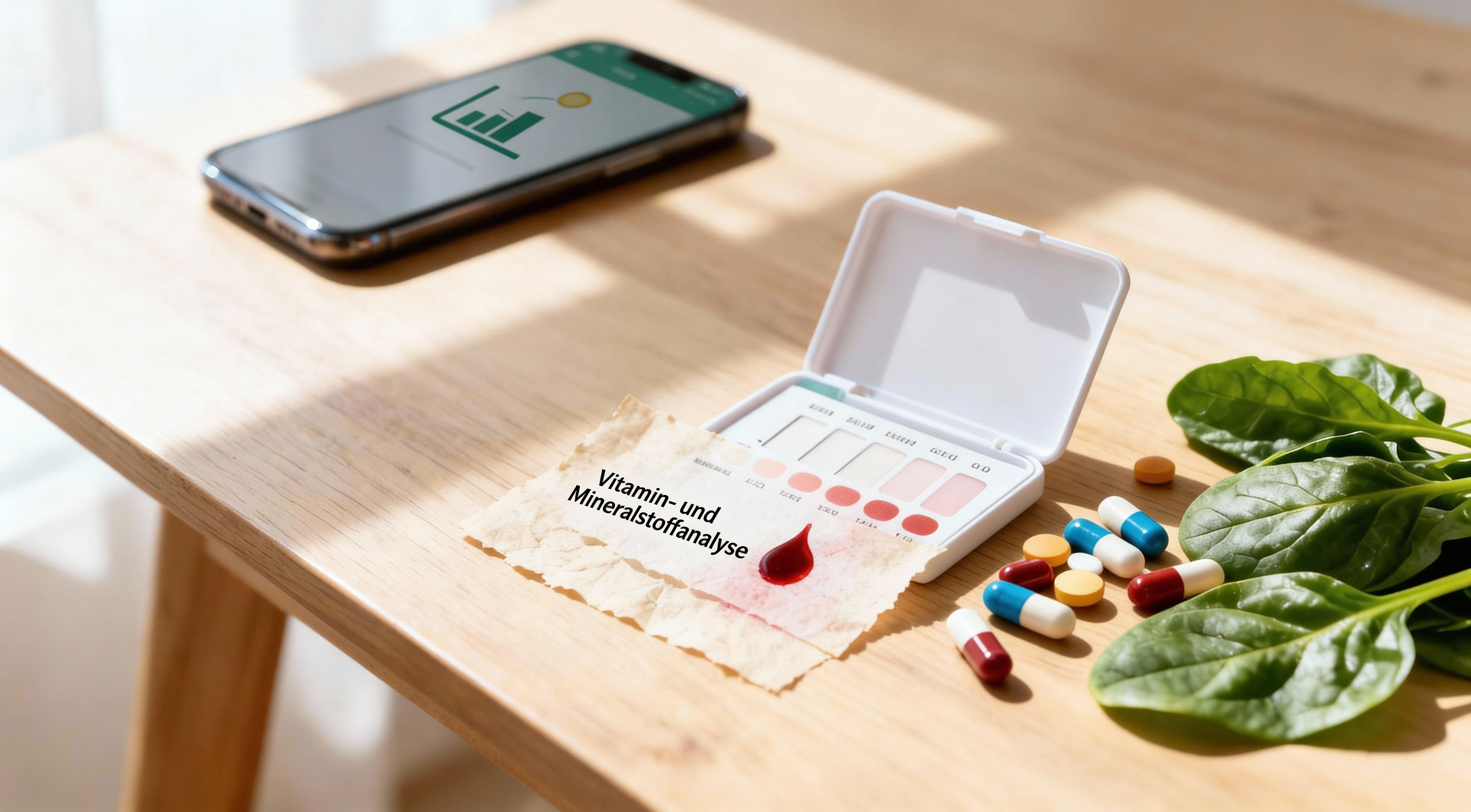
Find clarity with an at-home vitamin and mineral test
Do you often feel tired, unfocused, or simply not at your best, even though you take care of your health? A targeted vitamin and mineral test gives you scientifically sound answers about what your body is really lacking. Instead of stumbling around in the dark, you gain clear insights into your nutrient profile and can optimize your health in a targeted way.
Why a Test Is the First Step Toward Greater Well-Being
Perhaps you know the feeling: You conscientiously take your supplements, try the latest superfood bowl, and make sure you get enough sleep—and yet you still lack energy. This vague feeling that something is wrong affects many health-conscious people. The cause is often that we guess instead of knowing.
We reach for vitamin D capsules in winter or iron supplements when we feel tired, without having a data-based foundation for these decisions. This is exactly where a professional vitamin and mineral test comes in. It is the smart first step toward replacing assumptions with facts.
From Guesswork to Knowledge: The Power of Data
A blood test gives you an exact picture of your current nutrient status. Imagine it as a detailed map of your body: Instead of wandering around aimlessly, you can see exactly where action is needed and where you are already well supplied.
This precise analysis helps you target symptoms such as low energy, digestive problems, or skin irritations. You not only save money on unnecessary supplements but also invest specifically in what your body really needs.
A test takes you from general health awareness to personalized health optimization. You stop following trends and start listening to your body’s individual signals—backed by scientific data.
This clarity is especially important because many people tend to self-medicate. Despite Germany’s generally good healthcare provision, a BfR survey found that over 75 percent of the population takes supplements, yet an actual deficiency was diagnosed in only 16 percent. This shows how many people unnecessarily reach for pills instead of clarifying the true causes of their symptoms. Learn more about these findings from the Verbraucherzentrale.
Your body, your health: Take control yourself
Choosing to take a test is an act of personal responsibility. You take control of your health and make informed decisions. With a mybody® self-test, you gain these valuable insights easily from home—without making an appointment or enduring long waits in the doctor's office.
Such a test offers even deeper insights specifically for women. With mybody®, you gain in-depth insights into women's health—from hormones and nutrients to your metabolism. This helps you understand what your body truly needs to feel comfortable, balanced, and healthy in everyday life.
Learn in our guide why testing micronutrients is the key to your health. The path to greater well-being begins with understanding yourself.
Understanding the Most Important Nutrient Markers in Your Blood
A lab report full of names and numbers can seem quite intimidating at first glance. But don't worry, deciphering the key values is much easier than you think. Imagine them as the leading actors in your very own health film: each has an important role, and only their interplay determines how well you ultimately feel.
A vitamin and mineral test is, so to speak, the translator that makes your body's language understandable. It shows you in black and white where you may be lacking important building blocks and where you are already well supplied. Let's take a closer look together at the most important of these leading players.
The Sunshine Vitamins and Energy Makers
Two of the best-known and most important vitamins are vitamin D and vitamin B12. They have a direct influence on your energy, mood, and immune defenses. That's why they play a central role in almost every good nutrient test.
-
Vitamin D – Your Immune System Booster
Imagine vitamin D as the conductor of your immune system. It helps regulate your body's defense responses and is essential for absorbing calcium, which in turn keeps your bones strong. A deficiency, particularly widespread during the dark winter months, can manifest as frequent infections, low mood, and general fatigue. In Germany, an extremely large number of people do not have optimal vitamin D levels, making this value incredibly important. -
Vitamin B12 – The Fuel for Your Cells
Without vitamin B12, practically nothing happens in your energy metabolism. It is essential for forming red blood cells, which transport oxygen throughout your body, and for nerve function. Do you often feel tired, unfocused, and lacking energy? A B12 deficiency could be the cause, especially if you follow a vegan or vegetarian diet, since this vitamin is found almost exclusively in animal products.
The fundamental minerals
Besides vitamins, there are minerals—the quiet heroes working behind the scenes. They are involved in hundreds of processes, from muscle contraction to wound healing. A deficiency can have far-reaching consequences.
Some of these minerals are particularly critical and should therefore be checked regularly. Their balance is absolutely essential for your daily well-being.
A single value tells only half the story. Only the interaction of nutrients provides a clear picture of your health. Magnesium, for example, improves the activation of vitamin D, while vitamin C optimizes iron absorption.
This complex network shows why a comprehensive test is so valuable. It reveals not only individual deficiencies but also possible imbalances that may be silently affecting your health.
Iron, zinc, and magnesium in focus
These three minerals are true all-rounders and central to your performance.
Iron (ferritin)
Fatigue is one of the most common symptoms that prompts people to get tested. And very often, iron deficiency is behind it. Your ferritin level reveals how full your iron stores are. Iron is key to transporting oxygen in the blood—so empty stores literally mean you run out of breath. Women of childbearing age, athletes, and people following a plant-based diet should pay particularly close attention to this level.
Zinc
This trace element is a true all-rounder for your health. Zinc not only strengthens your immune system but is also essential for healthy skin, strong hair, and proper wound healing. If you frequently struggle with skin blemishes or small wounds take a long time to heal, a zinc deficiency could be the cause.
Magnesium
Magnesium is the relaxation mineral for your muscles and nerves. It not only helps prevent muscle cramps but is also extremely important for restful sleep. Do you often feel stressed, sleep poorly, or suffer from tension? Checking your magnesium levels could provide valuable insights.
Understanding these key markers is the first, crucial step toward regaining control of your health. Each individual value provides an important piece of the puzzle that makes up your unique nutrient profile. To explore the topic in greater depth, you can learn more about a comprehensive micronutrient analysis and its significance for vitamins in our blog post.
Which at-home test is right for you
So you’ve decided to get to the bottom of your nutrient levels—great! But now you face the next question: Which vitamin and mineral test is right for you? The world of self-tests is vast, and the methods differ. To obtain truly reliable and meaningful results, it is important to understand the differences.
The most common methods analyze blood, serum, or urine. Each method has its own strengths and is better suited to certain questions than others. Your goal is to get a clear picture of your nutritional status. Choosing the right testing method is therefore the crucial first step on your path to greater well-being.
Blood sample from the fingertip: the smart solution for home use
When you think of a blood test, you probably immediately picture the classic needle in a vein in your arm at the doctor’s office. For many analyses, however, there is now a much simpler and more convenient alternative: a capillary blood sample from the fingertip, also known as a “Dried Blood Spot” (DBS).
This is the modern, scientifically validated method mybody® uses for tests that you can easily perform at home. With a small prick to your fingertip, you collect a few drops of blood on a special test card. This sample is extremely stable and can be safely sent to our laboratory by mail.
The key advantage: You have complete flexibility and do not have to work around doctor’s appointments or crowded waiting rooms. Collecting the sample takes just a few minutes and fits perfectly into your daily routine, while the laboratory analysis is of the same quality as that of a venous sample.
This method is not only extremely practical, but also highly precise for measuring a wide range of vitamins, minerals, and other important biomarkers.
This infographic can help you decide which markers might be relevant to you, depending on how you feel.
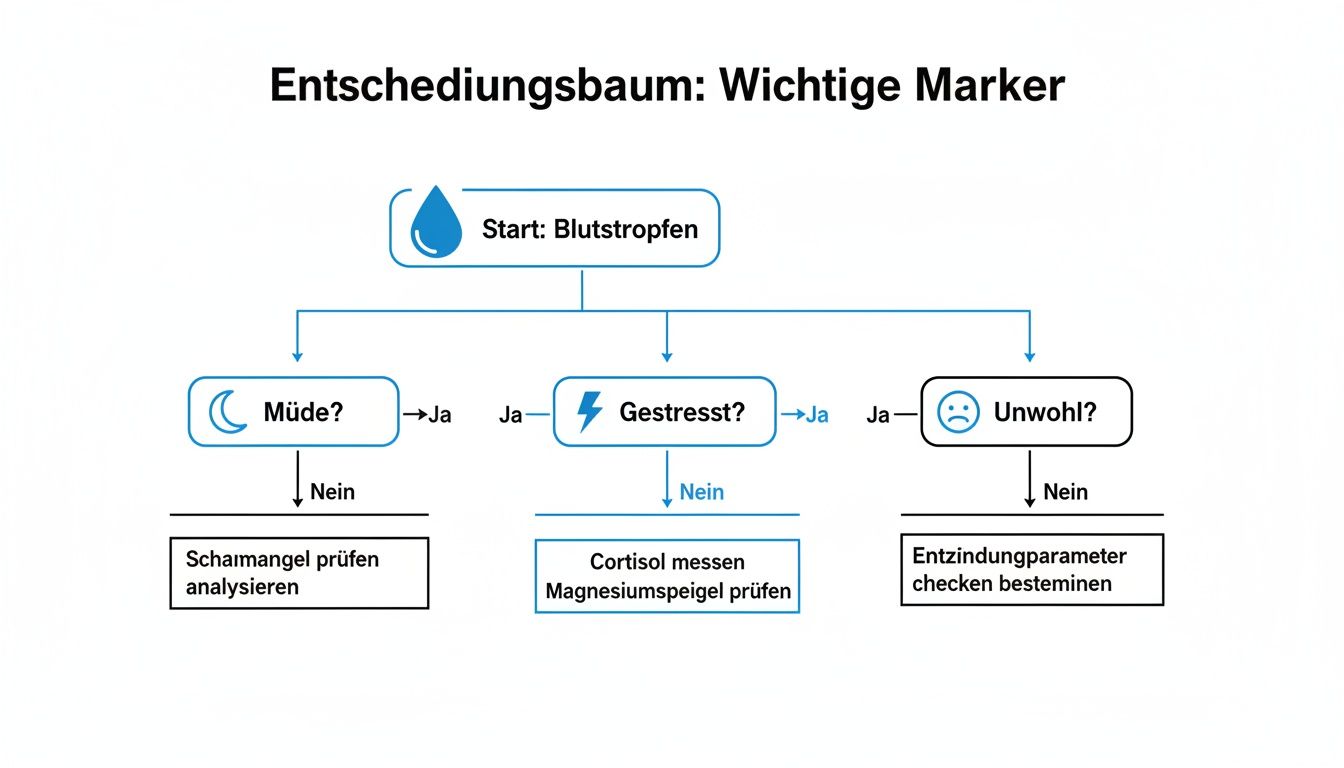
The decision tree shows how symptoms such as fatigue or stress may indicate specific nutrient deficiencies and guides you to the appropriate markers.
Serum and urine tests: when are they useful?
In addition to whole blood analysis, there are other specialized testing methods used for specific purposes. However, their significance depends heavily on exactly what you want to know.
-
Serum tests
Serum is the liquid part of the blood after the blood cells have been removed. A serum test provides a highly accurate snapshot of the concentration of nutrients freely circulating in the blood. It is ideal for determining acute conditions and the immediately available levels of many vitamins and minerals. -
Urine tests
Urine tests are often used to measure what the body excretes. They can provide clues about how the body processes certain metabolic products. However, for checking overall nutrient status, they are often less informative than blood tests. This is because urine concentration depends heavily on how much you drink and how well your kidneys function.
For a comprehensive and reliable analysis of your vitamin and mineral status, a fingertip blood analysis such as the one offered by mybody® is usually the best choice. It combines high accuracy with maximum convenience.
If you want to get a truly complete picture of your nutrient status, the mybody®x Nutrient & Mineral Check Complete is an excellent option for gaining in-depth insights. This helps you make an informed decision about your health.
Your path to clarity with mybody®—it’s this easy
Taking a vitamin and mineral test is a great first step. But what happens next? At mybody®, that’s just the beginning of your journey toward greater well-being. We won’t leave you alone with your results—we’ll support you every step of the way so that you truly understand your levels and can use them to your advantage.
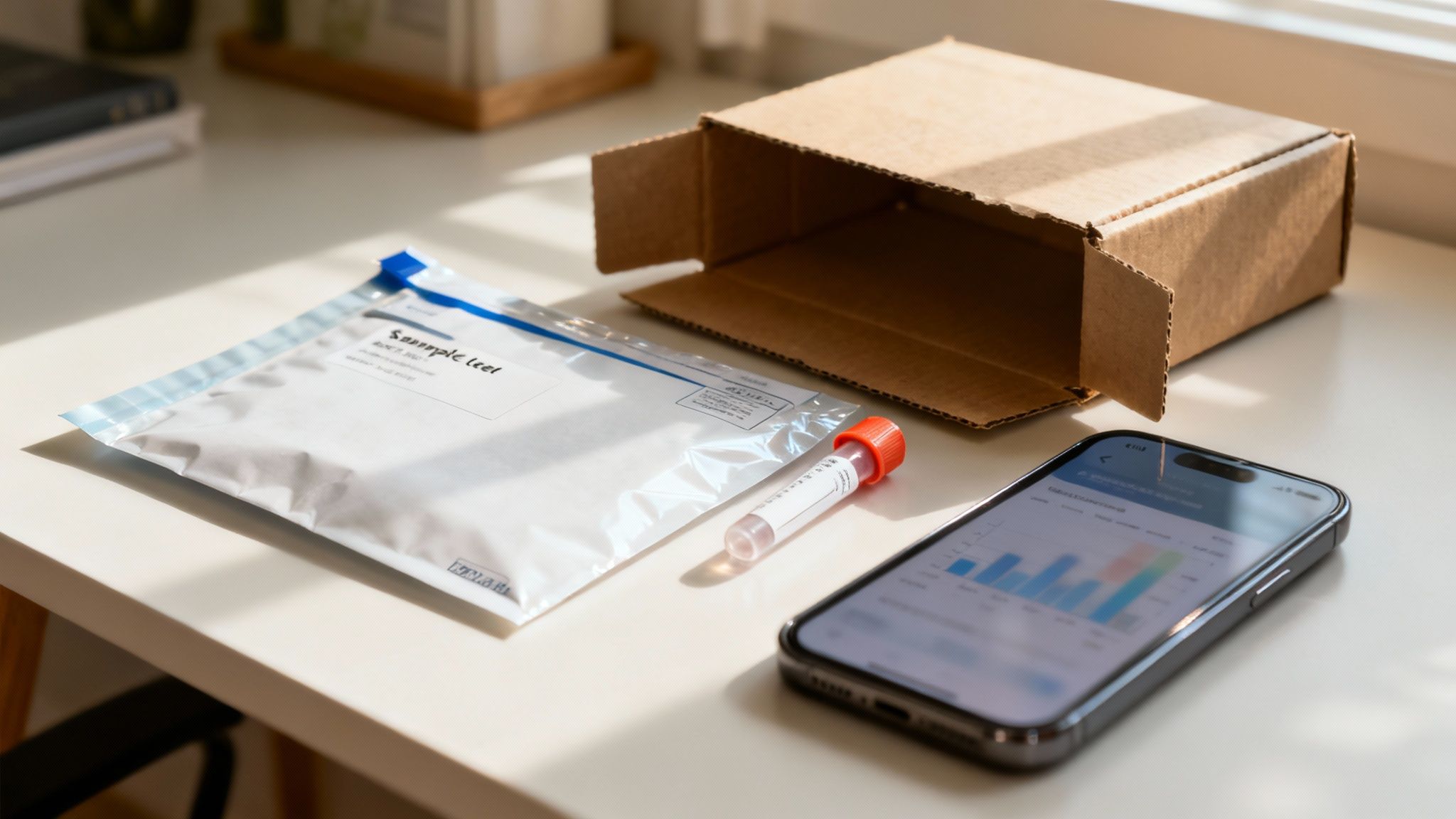
The entire process is designed to give you maximum clarity with minimal effort. From ordering to your personalized recommendations, every step is simple, secure, and completely transparent.
Your path to clarity in three steps
Imagine being able to gain deep insights into your body without having to leave your living room. That’s exactly what we make possible. The process is divided into three clear phases that seamlessly guide you from the test kit to actionable health strategies.
-
Easy at-home sample collection
After you place your order, your mybody® test kit will be delivered directly to your home. It contains everything you need, including easy-to-follow instructions. A small prick to your fingertip is all it takes – it's quick and virtually painless. Then safely place your sample in the enclosed return envelope and take it to the post office. -
Analysis in a German specialist laboratory
Your sample goes directly to our ISO-certified partner laboratory in Germany. There, experts analyze your blood using the same highly precise methods used by doctors and clinics. This gives you confidence that your results are scientifically sound and absolutely reliable. -
Your personal results report with recommendations for action
As soon as the analysis is complete, we'll notify you. Your personal results report will then be waiting in your secure online customer account. We've prepared it so that you can understand your values – from vitamin D to iron – at a glance, without any medical expertise.
With mybody®, you get more than just numbers. We translate your lab results into practical advice tailored to you and your everyday life. That's the difference between simply collecting data and truly optimizing your health.
What sets mybody® apart
We know that trust is the foundation of every healthcare decision. That's why we have developed a process that is not only scientifically excellent, but also meets the highest standards in data protection and personal support.
-
Highest level of data security: Your health data is extremely sensitive. We guarantee the strictest protection in accordance with GDPR standards and ISO 27001 certification. Your data is processed anonymously and stored with absolute security.
-
Scientifically grounded recommendations: Our recommendations are based on the latest scientific findings. We don't just tell you what you can do, but also why it makes sense for you.
-
Free coaching with experts: Personal support is at the heart of our offering. You have the opportunity to discuss your results in a free consultation with our health experts. They will help you understand the connections and develop a plan that truly fits into your life.
Insights that go further – especially for women
Health is always individual. Especially for women, factors such as the hormonal cycle play a huge role in well-being and nutrient requirements. Standard recommendations often fall short here.
We take these exact particularities into account. With mybody®, you gain in-depth insights into women's health—from hormones and nutrients to your metabolism. This helps you understand what your body really needs to feel comfortable, balanced, and healthy in everyday life. Discover how targeted analyses can take your women's health to the next level.
Our goal is to give you the knowledge and tools you need to make informed, independent decisions about your health. Because clarity is the first step toward a more vibrant life.
How to correctly decode your results and use them to your advantage
You are holding your mybody® results report in your hands—a pivotal moment on your journey toward better health. But what do all these numbers and charts actually mean for you? Think of this section as your personal guide. It will help you turn pure data into valuable, actionable insights for your everyday life.
Your report is much more than just a list of values. It is the key to finally understanding your body's signals and taking targeted action. Let's look together at how to read and interpret your results correctly and put them into practice.
Reference ranges and your personal well-being range
In your report, you will find a so-called reference range for each value. This range indicates which values are considered “normal” for a large proportion of the healthy population. It is important to understand that this is a statistical average—and not necessarily your personal optimal state.
Your individual needs can vary significantly from this standard depending on your lifestyle, age, sex, and health goals. For example, an active female athlete often needs more iron than someone with a less active lifestyle, even if both values fall within the general reference range.
Your goal should not simply be to fall somewhere within the reference range, but to reach your personal optimal range. This is where you feel most energetic, fittest, and simply at your best. mybody® helps you define this individual target range for yourself.
From results to action: Practical case studies
Theory is good, but practice is what counts. So let's take a look at how you can translate typical results from a vitamin and mineral test into concrete actions.
Case Study 1: Low vitamin D levels in winter
Your test shows a vitamin D level at the lower end of the reference range—a very typical scenario during the darker months.
- Diet: Intentionally include vitamin D-rich foods such as fatty fish (salmon, herring), egg yolks, and mushrooms in your diet.
- Lifestyle: Take every opportunity to get sunlight. Even a short walk during your lunch break can help stimulate your body's natural production.
- Supplementation: In the case of a significant deficiency, targeted supplementation is often the most effective approach. Your mybody® report provides a specific dosage recommendation that you can discuss with your doctor.
Case study 2: Depleted iron stores (low ferritin) in a female athlete
You exercise a lot and often feel tired. Your ferritin level is low, indicating depleted iron stores.
- Diet: Choose iron-rich foods. Always combine plant-based sources such as lentils, spinach, or oats with vitamin C (e.g., bell peppers or orange juice) to maximize absorption. Lean red meat is also an excellent source.
- Timing: Avoid coffee or black tea directly with meals. The tannins they contain can inhibit iron absorption.
- Medical evaluation: A low ferritin level should always be evaluated by a doctor, especially if symptoms persist. This helps rule out other causes and determine the right strategy for replenishing iron stores.
These examples show how small, targeted adjustments can often have a major impact.
When supplements make sense—and when they do not
Targeted supplementation can be extremely effective for correcting a confirmed deficiency. However, it is never a substitute for a balanced diet. The trend toward taking dietary supplements continues unabated. In 2023, magnesium, zinc, and calcium were the top 3 most popular minerals in Germany. This highlights growing awareness, but also the need not to supplement blindly and instead confirm your requirements with a test. Learn more about mineral use in Germany on Statista.com.
A vitamin and mineral test gives you the reassurance of supplementing only what your body truly needs, helping you avoid overdosing.
Nutrient-rich foods for common deficiencies
Sometimes, a smart adjustment to your meal plan is all it takes to correct or prevent a deficiency. This table gives you concrete examples of foods that can help you specifically increase your intake of important vitamins and minerals.
| Nutrient | Top food sources |
|---|---|
| Vitamin D | Salmon, herring, mackerel, egg yolk, vitamin D-fortified foods |
| Vitamin B12 | Meat, fish, eggs, dairy products, fortified plant-based alternatives |
| Iron (ferritin) | Red meat, lentils, chickpeas, spinach, pumpkin seeds, quinoa |
| Magnesium | Almonds, cashews, spinach, dark chocolate, bananas, whole-grain products |
| Zinc | Oysters, beef, pumpkin seeds, lentils, oatmeal, cashews |
| Selenium | Brazil nuts (caution: 1-2 (per day is enough!), tuna, sardines, eggs, sunflower seeds |
As you can see, nature often already has the best solutions at hand. Making conscious food choices is the first and most important step toward an optimal nutrient balance.
How to prepare for a conversation with your doctor
Your mybody® report is an excellent basis for an informed conversation with your doctor or therapist. It enables you to ask targeted questions and plan the next steps together.
Before your appointment, make a note of your symptoms and any questions arising from your report. This will turn you from a passive patient into an active partner in your own health.
Still have questions? Here are the answers.
You now have a good overview of how a vitamin and mineral test can pave the way to greater well-being. Nevertheless, a few final, very practical questions often arise before the first analysis. We want to clarify exactly those questions here so that you can get started feeling confident and secure.
Here you will find quick and honest answers that clear up any lingering uncertainties.
How often should I take a vitamin and mineral test?
The ideal frequency depends entirely on you, your lifestyle, and how you currently feel. There is no one-size-fits-all rule, but there is a good rule of thumb.
We recommend an annual check as a solid foundation. Think of it as an annual health check-up, but specifically focused on your micronutrients. This way, you can keep track of everything and identify long-term developments before they become a problem.
In some situations, however, it is absolutely sensible to test more frequently:
- When changing your diet: If, for example, you switch to a vegan or vegetarian diet, taking a test after 3 to 6 months is a great idea. This helps ensure that critical nutrients such as vitamin B12 and iron do not fall short.
- With intensive training: As an athlete, your body uses more nutrients—especially minerals such as magnesium and zinc. Regular testing helps you optimize your performance and prevent deficiencies.
- To monitor treatment: If you are specifically addressing a known deficiency with supplements, a follow-up test after a few months is essential. This is the only way to see whether your measures are working and whether the dosage is still appropriate.
- In case of ongoing stress or unclear symptoms: Do you constantly feel tired, stressed, or simply not at your best? More frequent testing can help identify the causes more precisely.
Don’t worry, you don’t have to decide this yourself. Based on your results, your mybody® report always includes a personal recommendation for when it makes the most sense for you to take the next test.
Are at-home tests just as accurate as those performed by a doctor?
Absolutely. This is one of the most important questions, and the answer is a clear yes. The accuracy of a test does not depend on where you collect the sample—whether at home at the kitchen table or in a medical practice—but rather on where and how it is analyzed.
mybody® sends your sample exclusively to ISO-certified German specialist laboratories. These are exactly the same highly specialized laboratories used by doctors, hospitals, and other medical facilities. The analysis methods are identical and follow the highest scientific standards.
Collecting blood from the fingertip (the so-called dried blood spot method) is an established and scientifically recognized method that has been used for decades. When performed correctly, it delivers extremely precise results. To ensure everything goes smoothly, each test kit includes an easy-to-follow, illustrated guide that takes you safely through the process step by step.
What should I do before collecting the sample?
To ensure your results are as meaningful and accurate as possible, there are a few simple guidelines you should follow before collecting the sample.
- Stay fasting: It is best to collect the sample in the morning, immediately after waking up. You should not have eaten anything for at least 8 hours beforehand and should have consumed only water or unsweetened tea.
- Pause supplements: Some dietary supplements, especially high-dose biotin (vitamin B7), can distort laboratory results for certain tests. We therefore recommend stopping supplement use 24 to 72 hours before collecting the sample.
- Wash your hands: This is a small but important step. Thoroughly wash your hands with warm water and soap before collecting the sample. This not only cleans the puncture site, but also stimulates circulation and makes sample collection much easier.
Every mybody® test kit includes easy-to-understand, step-by-step instructions. So you do not have to worry about doing anything wrong.
Who can benefit most from a vitamin and mineral test?
A test is essentially valuable for anyone who is health-conscious and no longer wants to guess, but finally wants to know what is really going on in their body. However, there are certain groups for whom the insights gained can be a real game-changer.
A test transforms general health assumptions into personal, tangible facts. It is the foundation for any targeted optimization of diet and lifestyle.
Those who may benefit most:
- People with unexplained symptoms: If you suffer from constant fatigue, digestive problems, hair loss, difficulty concentrating, or skin irritation.
- People with special diets: Particularly those following vegan, vegetarian, or very restrictive diets, to identify nutritional gaps at an early stage.
- Athletes: To meet increased nutrient requirements, accelerate recovery, and improve their performance.
- Women who want to have children or experience hormonal fluctuations: To ensure that the body is optimally prepared for pregnancy or to better understand hormonally related symptoms.
- Anyone who wants to take preventive action: To take proactive control of their own health and prevent deficiencies before they lead to noticeable problems.
The enormous interest in this topic is also reflected in the market: In Germany, the market for vitamins and dietary supplements reached an impressive size of €1.78 billion in 2023. This figure makes it clear how important it has become for people to manage their nutrient intake themselves. Learn more about this market development at Mintel.com.
Are you ready to finally gain clarity about your nutrient levels and put your well-being on a scientific foundation? With the self-tests from mybody®, you gain precise insights and personalized recommendations for action that are truly right for you. Discover the test that can change your life.



Share now:
Understand concentration problems and find the true causes
Low Progesterone Symptoms: Finally Understand and Take Action