
What Are Testosterone Levels? Effects on Men
Many men in Central Switzerland underestimate how strongly their testosterone levels affect their daily lives and fitness. Studies show that in men aged 30 and over, testosterone levels decline by up to 1.6 percent per year. Anyone who wants to feel energetic, strong, and vital should not leave their hormonal status to chance. This article provides clarity on the importance of testosterone levels and offers practical guidance for optimizing them to achieve greater strength and self-confidence.
Table of contents
- What exactly do testosterone levels mean?
- Normal ranges and types of testosterone values
- How and when is testosterone measured?
- The Functions of Testosterone in the Male Body
- Factors Affecting Testosterone Levels
- Consequences of testosterone deficiency and excess
Key findings
| Point | Details |
|---|---|
| Testosterone levels | Testosterone levels are crucial for men's health and can be measured with a blood test. Levels fluctuate throughout the day and are highest in the morning. |
| Measurement methods | For accurate results, several blood samples should be taken in the morning and mixed. The blood serum test is the standard method for determining testosterone levels. |
| Influencing factors | Testosterone levels are influenced by age, diet, stress, and physical activity. A healthy lifestyle can help optimize levels. |
| Consequences of deviations | Testosterone deficiency or excess can cause physical and mental health problems. Regular checks by a specialist are advisable. |
What exactly do testosterone levels mean?
Testosterone levels describe the precise concentration of the male sex hormone in the bloodstream. More specifically, they refer to the amount of testosterone circulating in the blood at a given time. This hormone is primarily produced in the testicles and plays a central role in male physiology.
When determining testosterone levels, a distinction is made between two important measurements: total testosterone and free testosterone. Hormone levels can be measured precisely with a blood test, with levels highest in the morning and fluctuating significantly throughout the day. A normal testosterone level in adult men is typically between 300 and 1,000 nanograms per deciliter.
The concentration of this hormone is influenced by various factors, including:
- Age
- Nutrition
- Stress level
- Sleep quality
- Physical activity
- Genetic predisposition
Pro tip: Have your testosterone levels checked regularly with a blood test to detect changes early and take corrective action if necessary.
Normal ranges and types of testosterone values
Testosterone values can generally be divided into two main categories: total testosterone and free testosterone. Laboratory values vary considerably depending on sex and age, with adult men typically showing values between 9.4 and 37.1 nmol/l.
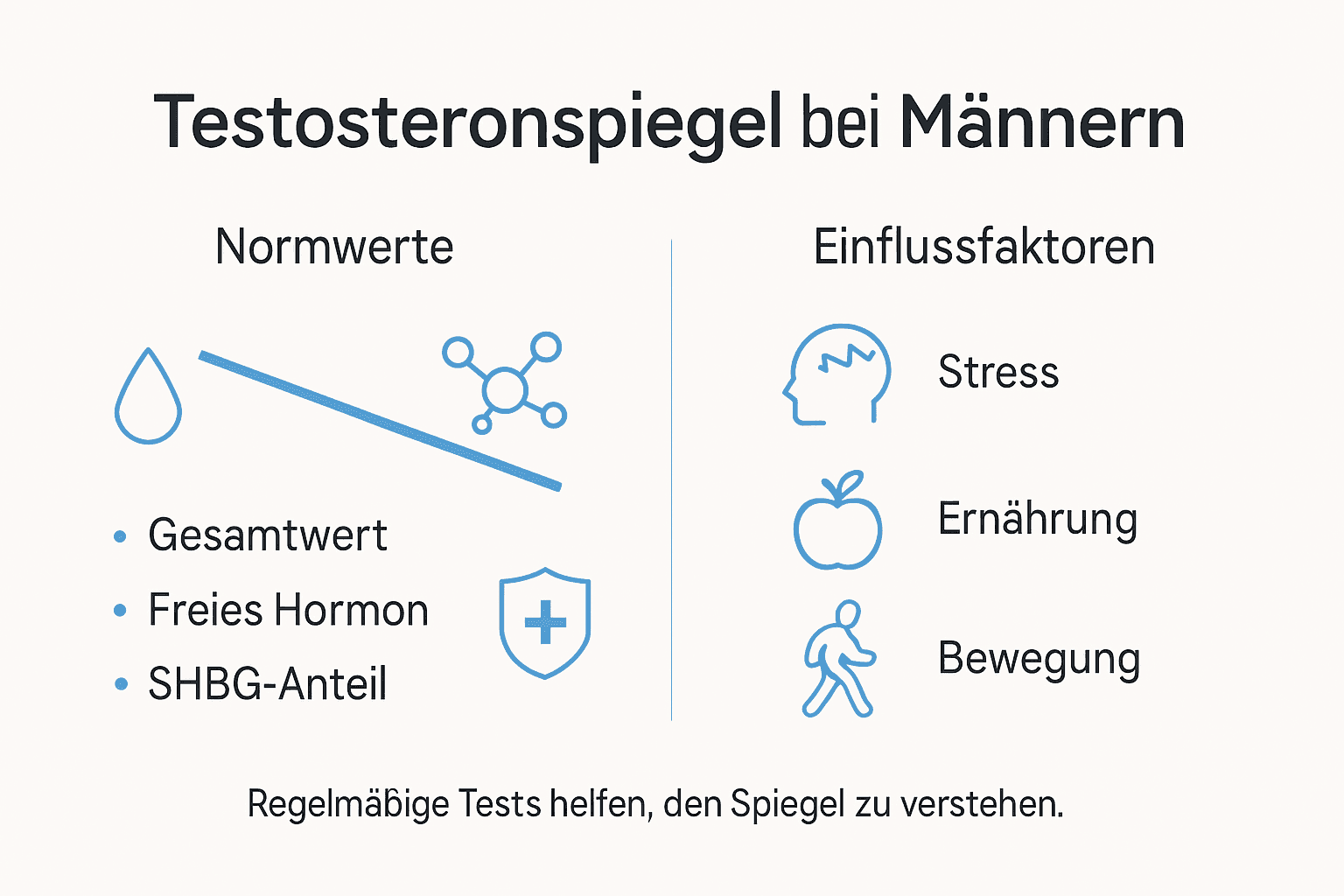
The composition of testosterone values is complex: About 60% of testosterone is bound to sex hormone-binding globulin (SHBG), while approximately 40% is bioavailable. The normal range for free testosterone should be above 0.25 nmol/l. It is important to know that the measurement is usually performed using an immunoassay and varies depending on laboratory standards.
The most important testosterone values at a glance:
To better understand the different types of testosterone, here is a clear comparison:
| Type of testosterone | Binding in the blood | Biological relevance | Typical reference range |
|---|---|---|---|
| Total testosterone | Bound and unbound | Overall assessment of the level | 9.4–37.1 nmol/l (adult men) |
| Free testosterone | Unbound | Directly active | > 0.25 nmol/l |
| Bioavailable testosterone | Loosely bound and unbound | Physiologically important | 1.8–9.0 nmol/l |
- Total testosterone: Measures the total amount of testosterone in the blood
- Free testosterone: Refers to the unbound, directly active fraction
- Bioidentical testosterone: Hormone that corresponds to the body's natural structure
Factors that influence testosterone levels include:
- Age
- Physical fitness
- Dietary habits
- Stress level
- Sleep quality
- Genetic predisposition
Pro tip: Have your testosterone levels checked regularly through a specialized laboratory test to detect fluctuations early and correct them if necessary.
How and when is testosterone measured?
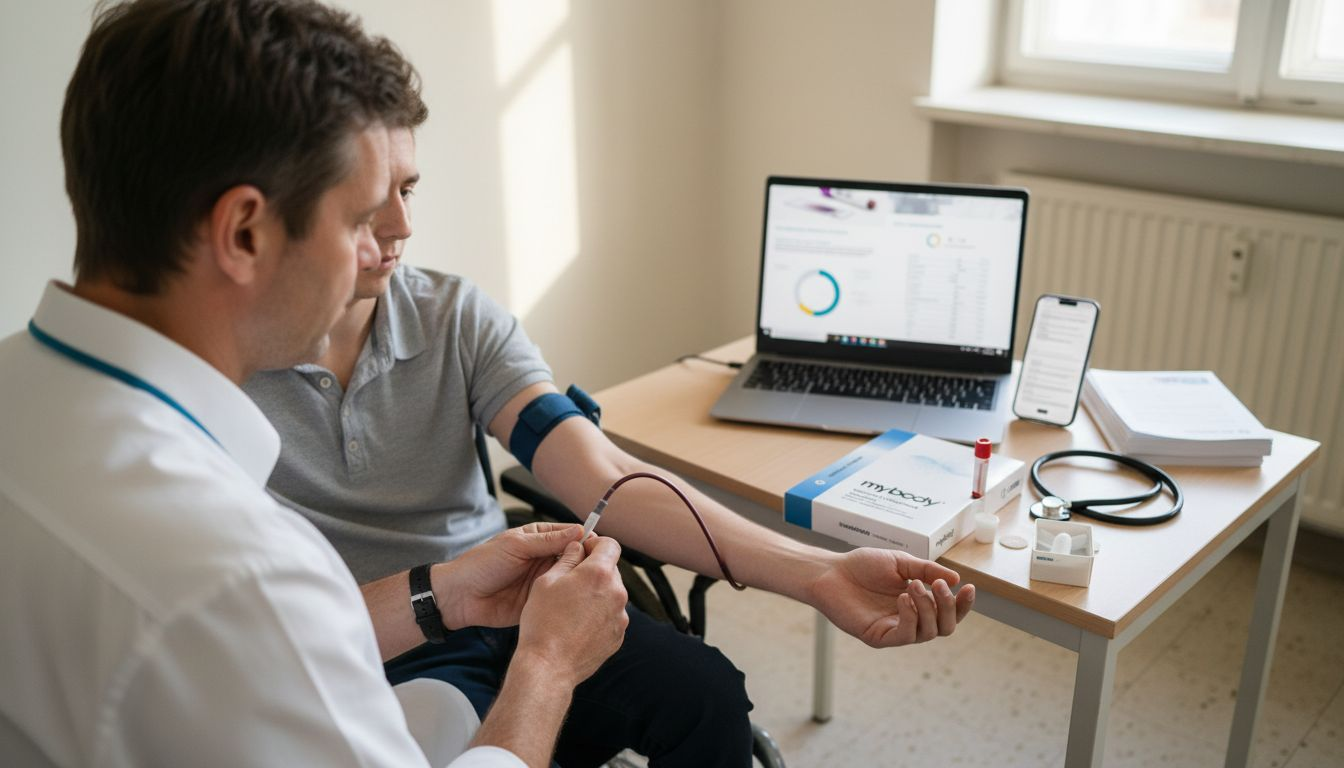
The testosterone test is typically performed through a blood test, with the optimal time being in the morning between 8 and 10 a.m. This time is deliberately chosen because testosterone levels fluctuate considerably throughout the day and reach their highest concentration in the morning.
For precise diagnostics, experts recommend taking several blood samples at intervals of 20 to 30 minutes. These samples are mixed into what is known as pooled serum to achieve more accurate test results. During the analysis, a distinction is made between different testosterone levels:
Testosterone Measurement: Testing Options
- Blood serum test: Standard method with the highest accuracy
- Saliva test: Less precise but easy to perform
- Urine test: Least accurate method
Reasons for measuring testosterone may include:
- Suspected developmental disorders
- Unintended childlessness
- Loss of libido
- Suspected hormonal disorders
- Decline in performance
- Mood swings
Pro tip: For the most accurate test results, make sure that the blood sample is taken in the morning and while fasting.
The Functions of Testosterone in the Male Body
Testosterone plays a central role in many vital processes in the male body. It is far more than just a sex hormone and influences nearly all aspects of male physiology and psychology.
The most important biological functions of testosterone include:
- Sexual development: Control of the development of male sexual characteristics
- Muscle growth: Promotion of muscle mass and strength development
- Bone health: Regulation of bone density
- Metabolic regulation: Influence on fat and energy metabolism
- Sexual functions: Regulation of libido and sperm production
Testosterone also affects psychological aspects. It influences mood, concentration, self-confidence, and overall vitality. A balanced testosterone level makes a decisive contribution to physical and mental well-being.
Hormonal balance plays a crucial role for men at every stage of life. Values that are too low or too high can cause various health problems, ranging from loss of libido to muscle loss or mood swings.

Pro tip: Maintain a healthy lifestyle with sufficient exercise, a balanced diet, and stress management to naturally support your testosterone levels.
Factors Affecting Testosterone Levels
Testosterone levels are subject to a complex regulatory system influenced by numerous internal and external factors. The fluctuations are diverse and can have both short-term and long-term effects.
The most important influencing factors can be divided into the following categories:
Biological factors:
- Age
- Genetic predisposition
- Physical constitution
- Health status
Lifestyle factors:
- Dietary habits
- Sleep quality and duration
- Stress level
- Physical activity
- Alcohol and drug use
Psychological and physical stress are particularly important. Chronic stress leads to the release of cortisol, which has been shown to lower testosterone levels. Regular exercise, a balanced diet, and sufficient recovery, on the other hand, can positively influence hormone production.
Medical factors such as illnesses, medication use, or hormonal disorders also play a crucial role in regulating testosterone levels.
Pro tip: Maintain a balanced lifestyle with regular exercise, a healthy diet, and stress management to naturally optimize your testosterone levels.
Consequences of testosterone deficiency and excess
Deviations from normal testosterone levels can have significant effects on men's physical and mental health. Both a deficiency and an excess of this important hormone can cause various symptoms and health risks.
Symptoms of testosterone deficiency:
- Reduced sex drive
- Erectile dysfunction
- Muscle weakness
- Decreased bone density
- Depressive moods
- Increase in body fat
- Reduced energy and performance
Consequences of excess testosterone:
The following tables provide a concise overview of typical symptoms and risks associated with testosterone deficiency and excess:
| Condition | Typical symptoms | Important health risks |
|---|---|---|
| Testosterone deficiency | Reduced libido, fatigue | Osteoporosis, metabolic syndrome |
| Excess testosterone | Aggressiveness, acne | Heart problems, infertility |
- Excessive body hair
- Acne
- Aggressive behavior
- Enlargement of the mammary glands
- Increased risk of cardiovascular disease
- Liver damage
- Impaired fertility
For both extremes, medical evaluation and targeted treatment are crucial. The causes can be diverse, ranging from hormonal disorders and diseases of the testes or adrenal glands to medication use or extreme lifestyle factors.
Pro tip: Have your testosterone levels checked regularly by a specialist to identify deviations at an early stage and prevent health risks.
Keep an Eye on Your Testosterone Levels and Take Targeted Action
An imbalanced testosterone level can affect many areas of men's lives For example, symptoms such as loss of libido fatigue or mood swings often lead to uncertainty and impair well-being This is precisely where accurate measurement and well-founded analysis of your hormone balance come in
With the Hormone Tests for Home Use – Triglycerides Cortisol Testosterone & More – mybody®x, we offer you the opportunity to professionally and conveniently determine your testosterone levels at home Because regular monitoring is the foundation for targeted measures to optimize your health You can also use additional tests such as our Detect and Prevent Nutrient Deficiencies – At-Home Tests | mybody® – mybody®x to comprehensively safeguard your well-being
Visit mybody-x.com and start your individual analysis now Recognize your hormonal potential at an early stage and benefit from personalized recommendations for nutrition and lifestyle This is how you can strengthen your vitality performance and quality of life in the long term
Frequently Asked Questions
What are testosterone levels?
Testosterone levels describe the concentration of the sex hormone testosterone in the blood, which is responsible for many important functions in the male body.
How are testosterone levels measured?
Testosterone levels are typically measured through a blood test, ideally in the morning when levels in the blood are at their highest.
What are the symptoms of testosterone deficiency?
Symptoms of testosterone deficiency may include reduced sexual desire, erectile dysfunction, muscle weakness, and depressive moods.
Which factors influence testosterone levels?
Testosterone levels are influenced by various factors such as age, diet, stress levels, sleep quality, and physical activity.
Recommendation
- Get Your Testosterone Tested: Easily and Discreetly from Home – mybody®x
- Hormone & Vitality Check for Men | Test Your Blood Count at Home – mybody®x
- Find Your Hormonal Balance for Greater Well-Being This Autumn – mybody®x
- Test Your Hormone Levels: Easily and Clearly Gain Insight – mybody®x
- Impotence Treatment and Symptoms - Mastering Conflict



Share now:
What your vitamin D3 25-OH-D3 level really means
Iron deficiency and diffuse hair loss: What really helps