

The role of hormones – How they control health
Unexplained fatigue, mood swings, or changes in sleep are more than just annoying everyday complaints for many people in Central Europe. They may be caused by an imbalance of endogenous messenger substances that affects the body and mind. Hormones control energy, growth, and feelings, functioning as a finely tuned communication system between organs and cells. Understanding the functions and signaling pathways of hormones enables people to find targeted ways to optimize them and receive scientifically sound tips for their own well-being.
Table of contents
- What are hormones in the human body?
- The most important types of hormones and their functions
- How hormones affect metabolism, sleep, and mental health
- Recognizing typical symptoms of a hormonal imbalance
- Evidence-based tests and optimization options
Key findings
| Point | Details |
|---|---|
| Hormones are crucial for health | They regulate vital processes such as metabolism, growth, and emotions. |
| Recognizing hormonal imbalance | Typical symptoms include weight fluctuations, fatigue, and mood swings. |
| Regular hormone tests are recommended | They help identify and correct imbalances at an early stage. |
| A holistic approach to hormone optimization | A well-balanced diet, exercise, and stress reduction are essential. |
What are hormones in the human body?
Hormones are endogenous messenger substances that play a crucial role in our health. They function like a complex communication network and control numerous vital processes in our bodies. Endogenous messenger substances are produced by specialized glands and transported through the bloodstream to various target cells.
The key characteristics of hormones include:
- Direct communication between cells and organs
- Control of metabolic processes
- Regulation of growth and development
- Influence on emotions and moods
- Coordination of complex bodily functions
Hormones are produced in various regions of the body, including:
Below you will find an overview of the most important glands and the hormones they produce:
| Gland/body region | Main hormones produced | Influence on health |
|---|---|---|
| Thyroid gland | Thyroxine, triiodothyronine | Metabolism, energy, growth |
| Pancreas | Insulin, glucagon | Blood sugar regulation |
| Adrenal glands | Cortisol, adrenaline | Stress response, blood pressure |
| Sex organs | Testosterone, estrogen | Reproduction, development |
| Brain (pituitary gland) | Growth hormone, oxytocin | Growth, bonding, regulation |
- Thyroid gland
- Pancreas
- Adrenal glands
- Sex organs
- Areas of the brain
Hormones act as precise communication signals and dynamically adapt to the body's current needs.
Each hormone has specific functions and interacts with specialized receptors on target cells. These receptors receive hormonal signals and trigger corresponding reactions in the body. Hormone release occurs as needed and with great precision.
Pro tip: Maintain a balanced lifestyle to naturally support your hormone production and keep it in balance.
The most important types of hormones and their functions
The human hormonal landscape is complex and diverse. Different hormone types perform specific tasks in our bodies and fundamentally influence our health and performance. A at-home hormone test can help provide a better understanding of your individual hormone system.
Here are the most important types of hormones and their core functions:
- Sex hormones: Control reproduction and sexual development
- Stress hormones: Regulate responses to stressful situations
- Growth hormones: Promote cell regeneration and muscle growth
- Thyroid hormones: Control metabolism and energy balance
- Insulin hormones: Regulate blood sugar levels
Some hormones have particularly important functions:
- Testosterone: Male sex hormone
- Estrogen: Female sex hormone
- Cortisol: Stress hormone
- Growth hormone: Cell regeneration
- Insulin: Blood sugar regulation
Hormones work in a complex network and influence one another.
Each hormone has a unique signaling effect and interacts precisely with specific receptors. They are produced by various glands and travel through the bloodstream to their target organs, where they trigger important regulatory functions.
Pro tip: Make sure to have regular hormone tests to identify and correct imbalances early.
How hormones affect metabolism, sleep, and mental health
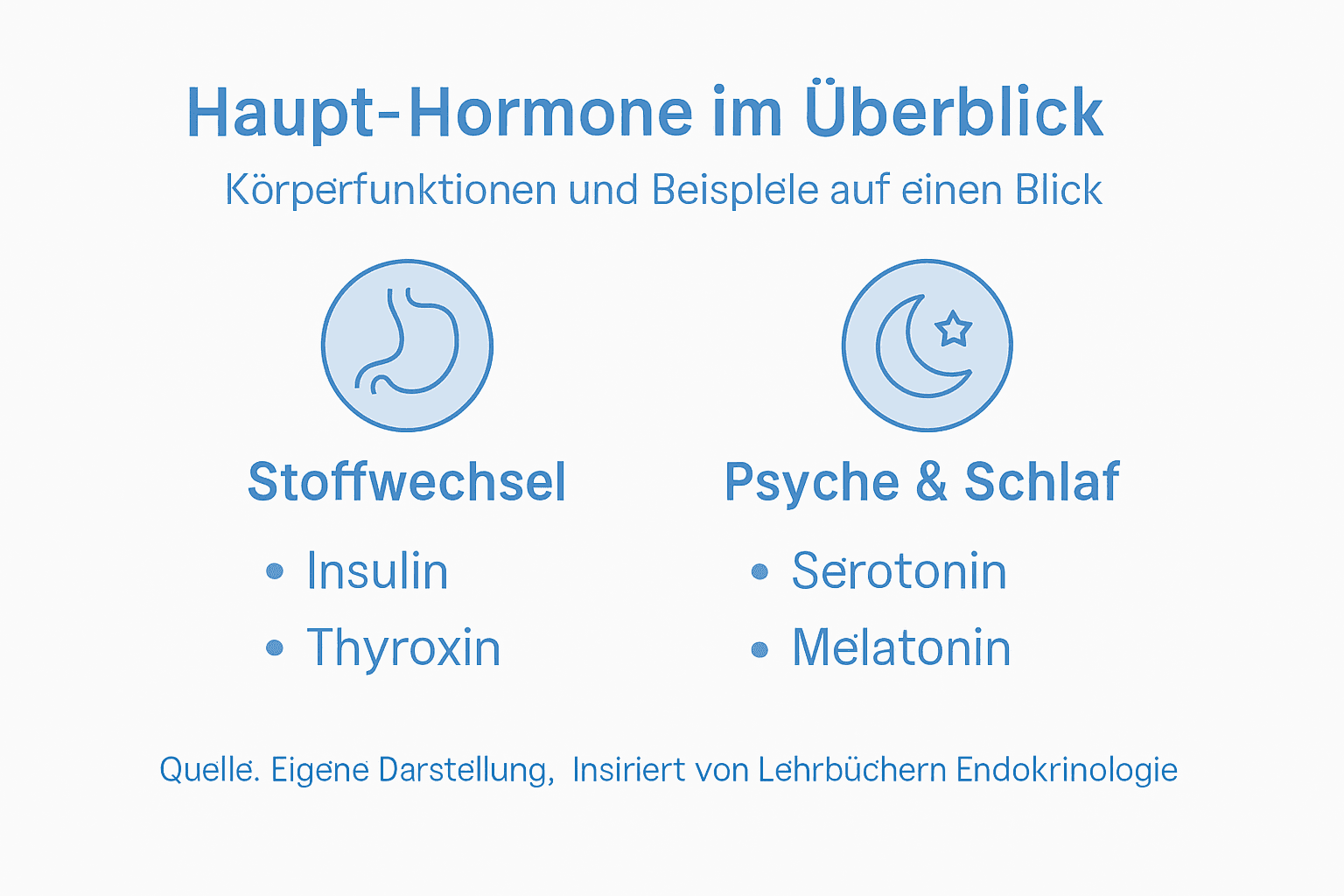
The interactions between hormones and our bodily functions are extremely complex and far-reaching. Hormones influence our daily rhythm and psyche in ways that go far beyond simple biochemical processes. They are the subtle conductors of our physical and emotional processes.
Hormones of central importance for our mental and physical balance:
- Melatonin: Regulates the sleep-wake cycle
- Serotonin: Regulates mood and emotional stability
- Cortisol: Controls the stress response
- Dopamine: Activates motivation and reward systems
- Oxytocin: Promotes social bonding
Their influence on various areas of life includes:
- Metabolic control
- Emotional regulation
- Regenerative processes
- Energy balance
- Stress management
The biochemical communication of our hormones largely determines our physical and emotional well-being.
Stress hormones such as cortisol play a particularly important role in adapting to challenges. They can have a short-term stimulating effect, but under chronic stress they can burden the body and mind. Balanced hormone production is therefore fundamental to our health.

Pro tip: Make sure you get enough sleep, exercise regularly, and reduce stress to naturally support your hormonal balance.
Recognizing typical symptoms of a hormonal imbalance
A hormonal imbalance is like a silent disruptor in our body that often goes unnoticed. Important warning signs can be varied and are often not immediately recognized as a hormonal disorder.
Typical symptoms that may indicate a hormonal imbalance:
- Unexplained weight fluctuations
- Persistent fatigue and lack of drive
- Mood swings and depressive moods
- Sleep disorders and an irregular sleep-wake cycle
- Hair loss or unusual changes in hair
- Skin problems such as acne or dry skin
- Loss of libido
- Menstrual cycle fluctuations in women
The most common signs of hormonal imbalances by severity:
- Mild symptoms: Mood swings
- Moderate symptoms: Weight changes
- Severe symptoms: Sexual dysfunction
A hormone imbalance affects not only individual bodily functions but can impair overall well-being.
The causes of hormonal disorders are complex and can range from chronic stress and diseases of hormone-producing organs to lifestyle factors. An accurate diagnosis requires medical expertise and targeted examinations.
Pro tip: Perform regular health checkups and watch for subtle changes in your body to identify potential hormone imbalances at an early stage.
Evidence-based tests and optimization options
Hormone diagnostic procedures now enable precise analysis of our hormonal balance. Modern medicine offers various scientifically validated methods for detecting hormone disorders early and treating them in a targeted manner.
The most important evidence-based testing methods include:
This table compares typical hormone testing methods and their applications:
| Test method | Measurable hormones | Ideal for |
|---|---|---|
| Blood test | Overall profile, thyroid, sex hormones | Comprehensive hormone overview |
| Saliva test | Free cortisol levels | Stress and daily profile analyses |
| 24-hour urine test | Metabolites, steroid hormones | Long-term secretion |
| Hair follicle analysis | Long-term stress hormones | Chronic changes |
- Blood tests: Comprehensive hormone profile analysis
- Saliva tests: Measurement of free hormones
- 24-hour urine test: Long-term hormone secretion
- Hair follicle analysis: Chronic hormone fluctuations
- Salivary cortisol test: Stress hormone status
Key optimization options for hormonal balance:
- Personalized dietary adjustments
- Stress reduction strategies
- Targeted exercise therapy
- Supplementation
- Behavioral medicine counseling
A holistic approach is the key to successful hormone optimization.
Interpreting test results requires medical expertise. Not every deviation automatically indicates a disorder; it may be part of individual biological variation. A comprehensive assessment that takes lifestyle, diet, and personal health history into account is essential.
Pro tip: Document your symptoms and test results carefully to enable doctors to conduct a precise analysis.
Understand your hormones and restore balance in a targeted way
Hormones regulate our health and well-being in many ways. When hormonal balance is disrupted, many people experience symptoms such as fatigue, mood swings, or unexplained weight changes. This complex interplay requires precise analyses and individualized solutions to enable early intervention. With scientifically grounded methods, mybody® offers exactly the support you need for your personal hormonal balance.
Discover our at-home hormone tests and gain a comprehensive picture of your hormonal profile conveniently and securely. In addition, we recommend combining them with our nutrient deficiency tests to understand your body holistically. Start your journey toward more energy, better metabolism, and inner balance with mybody® today. Take the opportunity to receive personalized recommendations and scientific guidance, and take action for your health now.
Frequently Asked Questions
What are hormones, and what functions do they have in the body?
Hormones are the body's own messenger substances that control important processes such as metabolism, growth, emotions, and development. They are produced by glands and influence many bodily functions.
How do hormones affect our metabolism?
Hormones, particularly thyroid hormones, regulate metabolism by controlling the production and use of energy in the body. Balanced hormone production is essential for a healthy metabolism.
Which symptoms indicate a hormonal imbalance?
Typical symptoms of a hormonal imbalance include unexplained weight fluctuations, fatigue, mood swings, sleep disorders, and changes to the skin or hair.
How can hormone tests help identify hormonal imbalances?
Hormone tests, such as blood and saliva tests, enable a precise analysis of hormonal balance and help identify imbalances early and take appropriate measures for optimization.



Share now:
What Is a Hormone Analysis – The Key to Greater Well-Being
Fatigue despite getting enough sleep: causes, tests, and clear steps