
What causes menstrual pain and how you can effectively relieve it
Menstrual pain is a monthly companion for many women, but severe pain is not something you are destined to endure. Medically, it is called dysmenorrhea, and it often has very specific causes that go far beyond a simple “tugging sensation in the lower abdomen”—causes you can understand.
Why menstrual pain is more than just “normal”
Almost every woman knows them: those cramp-like pains that spread through the lower abdomen shortly before or during a period. Although so many of us are affected, people often talk about them only behind closed doors.
For a long time, menstrual pain was regarded socially and even medically as something women simply had to endure. Fortunately, this view is finally changing, because these symptoms are caused by clear biological processes.
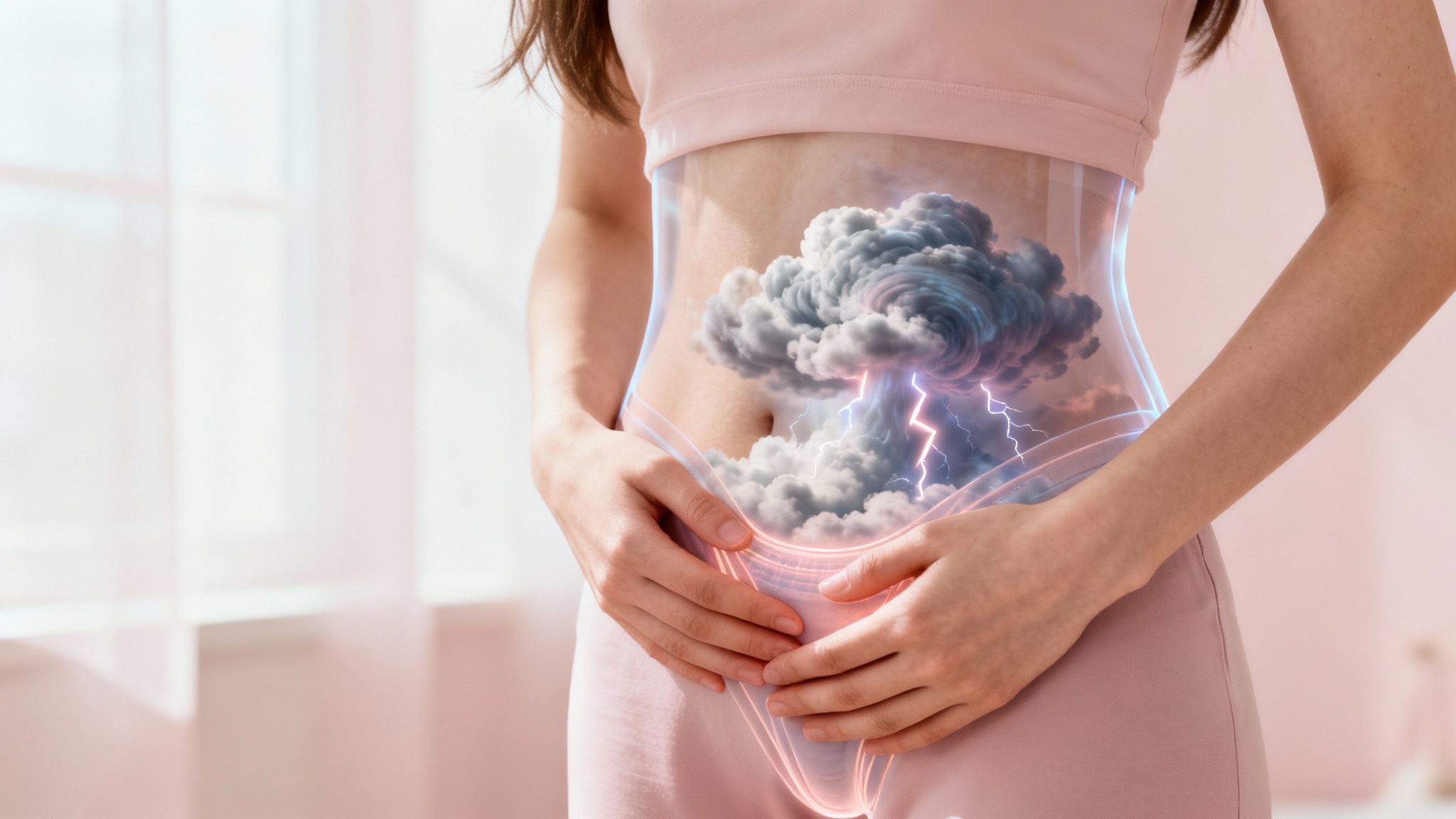
Imagine a small but quite intense storm brewing in your uterus. The main culprits are chemical messengers called prostaglandins. They cause the muscles of your uterus to contract and shed the lining that has built up. However, if your prostaglandin levels are too high, this “storm” can become so intense that the muscles cramp and blood flow is temporarily reduced—that is exactly what you feel as pain.
Understanding primary and secondary pain
It is extremely important to distinguish between the two main types of menstrual pain. They have different causes and therefore require very different treatment approaches.
- Primary dysmenorrhea: These are the “functional” pains caused by the prostaglandins described above. There is no underlying organic condition. They usually begin during adolescence and often become milder over the course of life.
- Secondary dysmenorrhea: Here, the pain is a symptom of an underlying medical condition. It often appears later in life and may even worsen over time. Possible causes include endometriosis, fibroids, or inflammation in the pelvic area.
Knowing the difference is the first and most important step toward correctly understanding your symptoms. It helps you determine whether your symptoms are part of the natural menstrual cycle or a signal from your body that deserves a closer look. You can also learn how to better understand your cycle in our comprehensive article about menstruation and the female cycle.
The figures speak for themselves: A survey by Plan International showed that 72 percent of women in Germany experience pain during their period. For about one in ten women, the symptoms are so severe that they can barely manage their everyday lives for one to three days each month.
These statistics make it clear how important it is to finally take the issue seriously and investigate the individual causes. You can read more here about the background to menstrual pain between taboo and treatment.
What is really behind your period pain?
If you feel that painkillers are only scratching the surface and that there must be more to it, you are probably right. Severe menstrual pain is rarely just a local problem in the uterus—it is often a signal that deeper processes in the body have become unbalanced. It is time to look behind the scenes of your body.
Many causes are interconnected and reinforce one another. The following graphic provides an initial overview of how biochemical triggers (the prostaglandins), the noticeable symptom (the cramps), and the different types of pain are connected.
It is clear that the issue is more complex than just “a little stomachache.” Let’s take a closer look at the three most common but often overlooked drivers.
Hormonal imbalance as an accelerant
Imagine your hormonal system as a finely tuned orchestra. If one instrument plays out of tune, the entire melody becomes dissonant. That is exactly what happens with so-called estrogen dominance, a condition in which there is too much estrogen relative to the calming progesterone.
This imbalance can really fuel your symptoms:
- More pain messengers: Excess estrogen stimulates the production of pain-triggering prostaglandins. The result is a stronger “inner storm” that intensifies the cramps in your uterus.
- Water retention and breast tenderness: Estrogen causes the body to retain water in the tissues. This leads to the uncomfortable feeling of bloating and the painful breast tenderness that many women experience before their period.
- Roller coaster of emotions: Hormones also affect the neurotransmitters in the brain. Hormonal chaos can therefore significantly intensify the typical mood swings associated with premenstrual syndrome (PMS).
Silent inflammation simmering beneath the surface
Another often-overlooked factor is chronic, low-grade inflammation in the body. You may not notice it in everyday life, but during your period, it can push you over the edge.
Silent inflammation acts like fuel on the fire of menstrual pain. It creates an environment in which pain-promoting processes can arise more easily and persist for longer.
These silent inflammations also fuel the production of prostaglandins. They can have many causes: an unbalanced diet, ongoing stress, or even undiagnosed food intolerances. As a result, your body remains in a constant state of mild alert—and during menstruation, this state can escalate.
When your body lacks essential nutrients
For your cycle to run smoothly, your body needs a whole range of vitamins and minerals. A lack of certain nutrients can directly promote cramps or weaken your body’s ability to cope with pain.
Three nutrients are particularly important here:
- Magnesium: This mineral is calcium’s natural counterpart and is essential for relaxing your muscles. When magnesium is lacking, the uterine muscles are more likely to tense up, and more intensely.
- Iron: Particularly with heavy bleeding, you lose not only blood but also a significant amount of iron. Iron deficiency makes you tired and exhausted and reduces your overall resilience, making those days even more challenging.
- Omega-3 fatty acids: These healthy fats are known for their anti-inflammatory effects. They can naturally help regulate the production of pain-promoting messenger substances.
All these factors show that the solution to your menstrual pain often doesn’t lie in taking another painkiller, but in taking a holistic look at your body. But how can you find out which of these hidden drivers play a role for you personally?
How a blood test can bring clarity to your cycle
If you suffer from severe menstrual pain month after month, you may often feel powerless. You try all sorts of things, from a hot-water bottle to painkillers, but the relief usually doesn’t last long. Instead of continuing to feel your way in the dark and merely treating the symptoms, you can take a data-driven approach and finally regain control.
A mybody-x home test works like a personal compass for your body. It helps you uncover the hidden causes of your symptoms, which often extend far beyond the uterus. This way, you can finally stop guessing and start taking targeted action.
Decode your hormonal balance
As we have seen, one of the main suspects behind severe period pain is a hormonal imbalance. In particular, estrogen dominance can literally fuel the production of pain-promoting prostaglandins, thereby significantly intensifying cramps.
A simple at-home hormone test can show you precisely what your hormonal balance is really like. It measures key hormones such as estradiol (a form of estrogen) and progesterone, revealing an imbalance that remains invisible to the naked eye. If you would like to learn more about how to test your hormone balance and restore it, you will find valuable insights here.
A blood test translates your body's signals into understandable data. Instead of speculation, you receive a clear foundation on which to build in order to improve your well-being in a targeted way.
With a clear result in hand, you know exactly where to start. Suddenly, you can adjust your diet specifically, find the right stress management techniques, or supplement certain nutrients to support your hormones naturally.
Find out what your body is lacking
In addition to hormones, micronutrients also play a crucial role in making your cycle as pain-free as possible. A deficiency in certain vitamins and minerals can directly contribute to cramps or weaken your body's ability to regulate inflammation effectively.
A nutrient test gives you a clear, objective overview of your nutrient levels:
- Magnesium: Are you lacking this important mineral, which is essential for muscle relaxation? A deficiency can noticeably worsen cramps.
- Iron: Could you be affected by iron deficiency due to heavy bleeding? That would explain the extreme tiredness and exhaustion during your period.
- Vitamin D & B vitamins: These vitamins also play a role in regulating inflammation and even pain perception. A deficiency can therefore hurt twice as much.
Intolerances as silent accelerants
Sometimes the cause of elevated inflammation markers lies somewhere completely different—namely, in the gut. Undetected food intolerances can continually irritate the immune system and lead to low-grade inflammation in the body. During menstruation, these can act like accelerants, intensifying your pain even further.
Here, too, a mybody-x intolerance test can provide clarity by analyzing your body's reactions to various foods. With these results, you can adjust your diet to specifically avoid sources of inflammation and relieve the strain on your body. This allows you to finally make informed decisions about your health based on facts, not vague assumptions.
When you should have your symptoms medically evaluated
Taking care of yourself and understanding your body is one thing. But sometimes self-care reaches its limits. Severe menstrual pain is not always just an annoying side effect of your cycle. It can be a clear warning signal from your body that you should take seriously.
Knowing when it is time to visit a gynecologist has nothing to do with fearmongering. Rather, it is about recognizing signs that could point to an underlying cause—and then standing up for yourself and your health.
Warning signs you should not ignore
Certain symptoms should make you sit up and take notice and reach for the phone right away to make an appointment. They may indicate underlying conditions such as endometriosis, fibroids, or adenomyosis that require targeted medical treatment.
Pay particular attention to these changes:
- Suddenly worsening pain: Your period pain is getting worse from month to month or suddenly occurs with an intensity you are not used to.
- Pain outside your period: Do you have severe lower abdominal pain even when you are not on your period? That is an important signal.
- Pain during sex: Intimacy should never be painful. If it hurts during or afterward, that is a clear warning sign.
- Unusual bleeding: This includes extremely heavy or prolonged bleeding, as well as spotting or bleeding between periods that is new for you.
- Extreme exhaustion: If fatigue during your period becomes so overwhelming that it brings your daily life to a standstill, there may be more to it than the usual drop in energy.
Noticing these signs is the first step. The next and most important step is to take action and seek professional help.
Your body sends you important messages. If the pain dominates your life and limits you, seeking medical advice is not a sign of weakness but a sign of strength and self-care.
How a blood test can support you and your doctor
Seeing a doctor is absolutely essential to safely rule out or diagnose organic causes. In addition, a mybody-x blood test can be a truly valuable complement. The results provide you and your doctor with concrete, data-based information about your body’s condition.
A hormone test for women, for example, can show whether a hormonal imbalance such as estrogen dominance may be further intensifying your symptoms. This provides important guidance for a holistic treatment strategy that goes far beyond simply addressing the symptoms.
Unfortunately, period pain is still far too often dismissed as “normal.” A forsa survey showed that 67 percent of women suffer from period pain, but a full 71 percent of the population cannot name a single reason for it. Only 20 percent mentioned endometriosis as a possible cause. Further details from this informative AOK survey on period pain make clear how important education and proactive action are.
Practical strategies for a more relaxed cycle
When you know the causes of your menstrual pain, you are no longer helplessly at the mercy of your cycle. Instead, you can take control yourself. Here, you will find a toolkit filled with practical, proven, and effective strategies to help you feel better—before and during your period.
Think of these tips as a valuable complement to a medical diagnosis. They are building blocks you can use to create your own personal well-being program to provide targeted support for your body.
Give your body the right building blocks
What you eat has a direct impact on how your body responds to the hormonal ups and downs of your cycle. A targeted anti-inflammatory diet can naturally reduce the production of pain-triggering prostaglandins.
Focus especially on these nutrient heroes:
- Omega-3 fatty acids: These healthy fats are like a natural painkiller. They help reduce inflammation in the body. You’ll find plenty of them in fatty fish such as salmon, as well as in flaxseeds, chia seeds, and walnuts.
- Magnesium: This “relaxation mineral” loosens the muscles of your uterus and can noticeably relieve cramps. Dark leafy greens, nuts, seeds, and whole grains are rich in it. Read more about its targeted effects in our article on magnesium for menstrual pain.
- Antioxidants: Colorful fruits and vegetables—think berries, bell peppers, and broccoli—are packed with antioxidants. They protect your cells from stress and help your body cope better with inflammatory processes.
In contrast, you should avoid foods that tend to fuel inflammation. These mainly include sugar, highly processed products, too much red meat, and alcohol.
Nutrients and foods for menstrual pain
This overview shows you which nutrients are particularly important for menstrual pain and which foods contain them.
| Nutrient | Effects in the body | Good sources (foods) |
|---|---|---|
| Omega-3 fatty acids | Have anti-inflammatory effects and regulate prostaglandins | Salmon, mackerel, herring, flaxseeds, chia seeds, walnuts |
| Magnesium | Relaxes the uterine muscles and relieves cramps | Spinach, kale, almonds, pumpkin seeds, whole-grain bread |
| Antioxidants | Protect cells from oxidative stress and fight inflammation | Berries, oranges, bell peppers, broccoli, dark chocolate |
| Vitamin B6 | Supports hormone regulation and can boost your mood | Chickpeas, bananas, salmon, chicken, potatoes |
| Zinc | Plays a role in pain regulation and reducing inflammation | Oats, lentils, beef, pumpkin seeds |
So, consciously choosing your foods can make a real difference to your well-being.
Movement that heals instead of hurts
Sure, when you have cramps, exercise is usually the last thing on your mind. But gentle, targeted movement can work wonders. It stimulates blood flow in the pelvis and helps relax tense muscles.
This isn’t about running a marathon. These activities are much better suited:
- Yoga and stretching: Gentle stretches that specifically target the lower back and hips can relieve tension and ease pain.
- Walks: A brisk walk in the fresh air not only gets your circulation going, but also lifts your mood through the release of endorphins.
- Gentle pelvic floor exercises: Targeted exercises strengthen the muscles in the pelvis and improve local circulation.
The important thing is to listen to your body. Choose a form of movement that feels good to you and does not overwhelm you. Gentle and mindful is the key to success here.
Relaxation techniques for body and soul
Stress is a well-known pain amplifier. The stress hormone cortisol disrupts the sensitive balance of your cycle hormones and can intensify your perception of pain. That is precisely why targeted relaxation techniques are so incredibly effective.
The classic hot-water bottle is a tried-and-tested remedy, as warmth relaxes the muscles and promotes circulation. But there is more you can do. Why not try some simple breathing exercises? Breathe slowly and deeply into your abdomen, hold your breath for a moment, and then slowly breathe out again. This simple technique immediately calms your nervous system and can noticeably reduce acute pain peaks.
Take control of your cycle health
Severe menstrual pain is far more than just an annoying side effect of your period. It is a loud signal from your body that you should take seriously. And the good news is: You do not have to put up with it month after month.
True health literacy begins when you stop merely treating the symptoms and start investigating the deeper causes instead. It is about taking the reins again and supporting your body in a targeted way.
A mybody-x home test can be an incredibly smart first step. It provides the facts you need to finally make informed decisions for yourself and your health. Instead of groping in the dark and trying one remedy after another, you gain clear insights into your hormone balance, possible nutrient deficiencies, or hidden sources of inflammation.
Our clear message to you: Stop guessing and start measuring. Find out what your body is really lacking to restore its balance.
With this knowledge, you can adjust the right levers. This may involve adapting your diet, taking targeted nutrients, or making conscious changes to your daily routine. This way, you become an active participant in shaping your cycle and take full responsibility for your well-being.
A life with less pain is absolutely possible when you know which levers to pull. mybody-x’s at-home blood tests are your tool on this journey—they help you decode your body’s language and give it exactly what it needs.
Now curious? To wrap up, we’ve collected the answers to the most pressing questions about period pain for you here—short, snappy, and to the point.
Can period pain get worse with age?
Yes, that can actually happen. If you notice that your menstrual pain is getting worse over the years, it could indicate secondary causes. Conditions such as endometriosis or fibroids often develop gradually and only become apparent later in life. A medical check-up is worth its weight in gold here to get to the bottom of the issue.
What role does stress play in menstrual pain?
A huge one! Stress is more than just a feeling—it really throws your body off balance. The stress hormone cortisol floods your system and can disrupt the delicate hormonal balance. The result? You perceive pain more intensely, and the cramps in the uterus may become even worse as a result.
Even so, the topic is still taboo for many people. A Forsa survey revealed something remarkable: 85 percent of women feel that the female cycle is discussed far too little in public. At the same time, 80 percent would have complete understanding if a colleague called in sick because of period symptoms. This insightful menstruation survey reveals a striking gap between personal compassion and public silence.
Does the pill always help with the pain?
The pill can often relieve symptoms, that’s true. It suppresses ovulation and artificially regulates the cycle, which is initially a relief for many people.
But be careful: The pill only treats the symptom, not the root of the problem. It does not address underlying causes such as nutrient deficiencies, low-grade inflammation, or a genuine hormonal imbalance, which are often the real culprits behind severe pain.
Are you ready to get to the root of the true causes of your symptoms? At mybody-x, you’ll find the right blood test to gain clarity about your hormones and nutrients and finally take an active role in supporting your cycle. Discover your test now at mybody-x.com

Share now:
Testosterone Normal Ranges for Men (ng/dL): Understand and Optimize Your Level
Discover the TSH hormone test: Understanding your thyroid made easy