
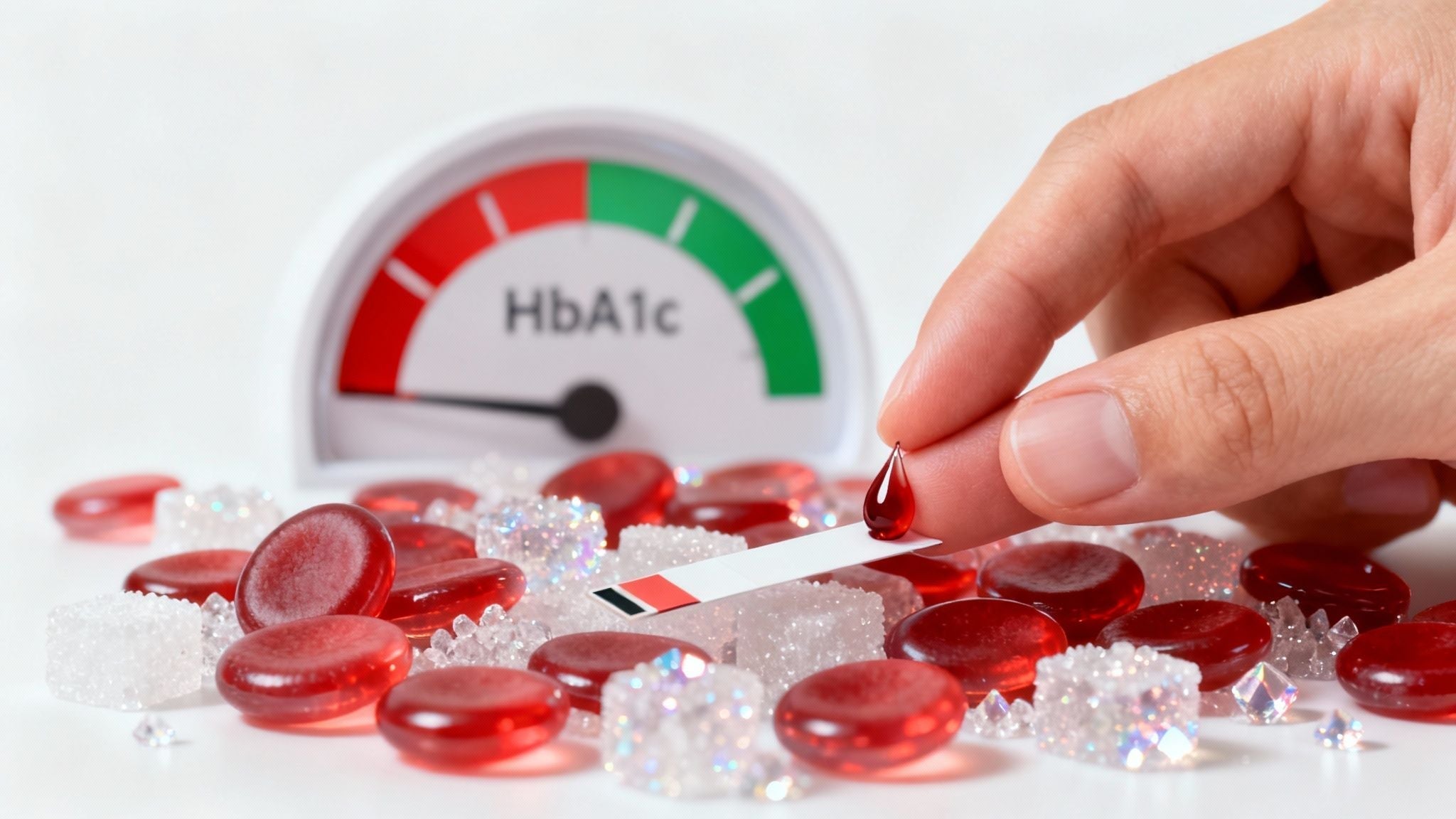
Your blood HbA1c level: Easy to understand and optimize
The HbA1c level in your blood is one of the most important values when it comes to your metabolic health. It is essentially your blood sugar’s memory, revealing how high your average blood sugar level has been over the past two to three months—far more informative than any single measurement.
What your blood HbA1c level really reveals
Imagine a standard blood sugar measurement as a single photo. It shows you only the exact moment when you measure. The HbA1c level, on the other hand, is like an entire photo album of the past 8 to 12 weeks. It gives you the full picture and reveals trends that a snapshot could never show.
Understanding your blood sugar memory
How does this memory work? Quite simply: Your blood contains countless red blood cells carrying the pigment hemoglobin. When sugar (glucose) flows through your blood vessels, some of it sticks to this hemoglobin—you could say it “glycates” it.
This process is called glycation. The more sugar circulating in your blood over an extended period, the more hemoglobin molecules become glycated. The HbA1c level measures this exact percentage. It shows how well your body has managed its blood sugar over the past few weeks.
This infographic makes the connection especially clear:
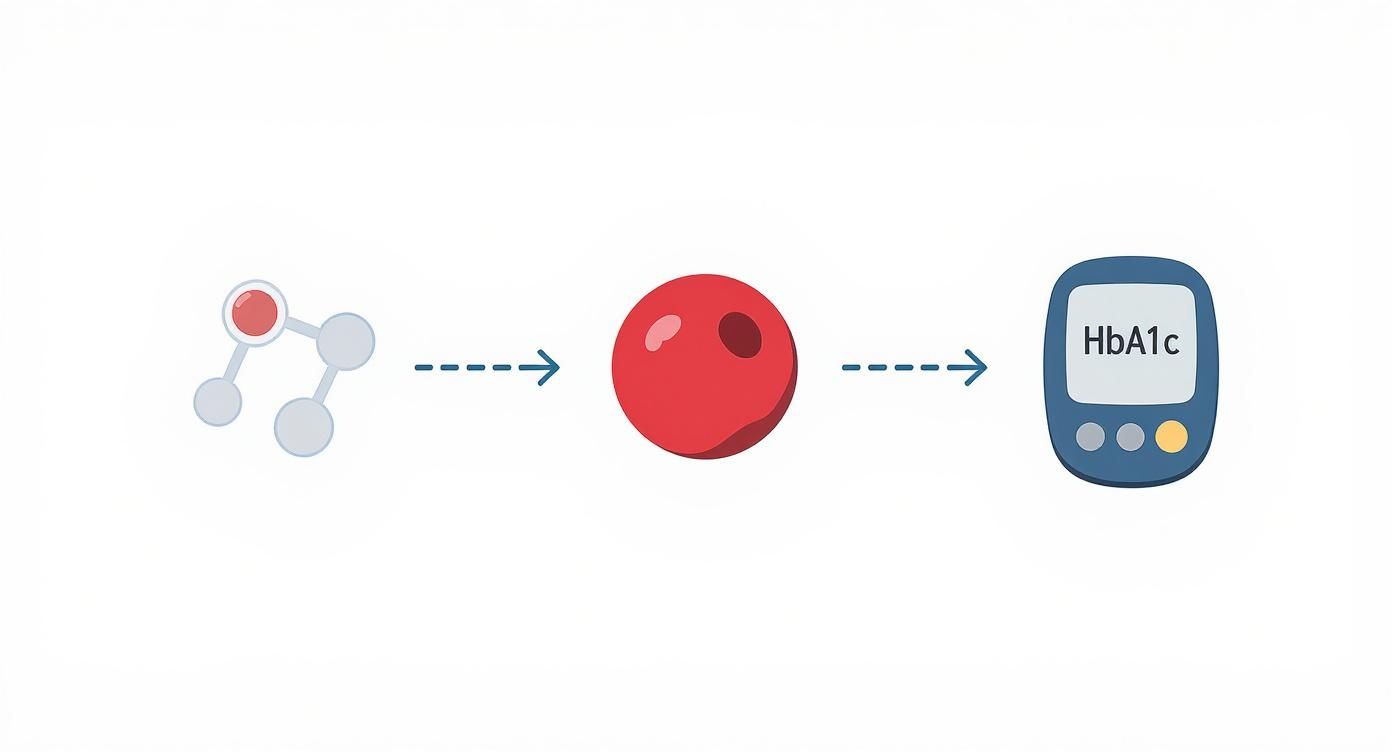
It is clear: Persistently high blood sugar directly leads to more glycated hemoglobin—and therefore to a higher HbA1c level.
Remember: Your HbA1c level is a direct reflection of your average blood sugar over the past three months. It is not affected by a single sugary meal and is therefore an extremely reliable indicator of your metabolic health.
Because red blood cells live for about three months before being replaced, this value provides a stable and honest picture. It is crucial for detecting the risk of diabetes early or checking the success of lifestyle changes. If you want to explore the topic in greater depth, read more in our article about the effects of glycation on your body.
This knowledge gives you the power to take charge of your well-being. Regularly checking your blood HbA1c level gives you the clarity you need to make the right decisions for your health—long before serious problems arise.
Interpreting HbA1c Levels Correctly
A laboratory value is initially just a number. It only gets really interesting when you understand what is behind it. Your blood HbA1c level is one such case—it is like a compass for your metabolic health. Let’s decipher together what the numbers are telling you, so you immediately know where you stand.
You usually receive the results as a percentage (%), but sometimes also in the international unit millimoles per mole (mmol/mol). But don't worry, both mean exactly the same thing: how much of your red blood pigment (hemoglobin) has become “sugar-coated.”
The three important zones of your long-term blood sugar
To keep things simple, the HbA1c level is divided into three ranges. These zones give you clear guidance, almost like a traffic light for your health.
Here you can see at a glance what your result means:
HbA1c levels at a glance
This table shows the common HbA1c reference ranges and their clinical significance for assessing your metabolism.
| HbA1c level in % | HbA1c level in mmol/mol | Meaning |
|---|---|---|
| < 5.7 % | < 39 mmol/mol | Green range: Everything is fine! Your blood sugar appears to be well regulated, with no indication of diabetes. |
| 5.7 % to 6.4 % | 39 to 47 mmol/mol | Yellow range (prediabetes): Your blood sugar is slightly elevated. This is an important warning signal and your opportunity to take action now. |
| ≥ 6.5 % | ≥ 48 mmol/mol | Red range (suspected diabetes): This level strongly indicates diabetes. Medical evaluation is now absolutely necessary. |
These thresholds are of course not rules set in stone, but they are internationally recognized reference values. They help you and your doctor quickly get a clear picture of your metabolic situation.
An elevated level as a valuable signal
If you land in the yellow range, meaning prediabetes, there is absolutely no reason to panic. On the contrary! See it as your body's early warning system. It is giving you a clear sign that your metabolism needs some support—and long before real problems arise.
A slightly elevated HbA1c level is your best opportunity to take control yourself. With targeted lifestyle adjustments, you have a very good chance of bringing the level back into the green range and preventing the development of type 2 diabetes.
Knowing your blood HbA1c level is the first and most important step. It gives you back control and allows you to make smart decisions for your health. Instead of waiting, you can take proactive action and specifically support your body. A test like the one from mybody-x gives you exactly this clarity—simply and directly from home.
Why your long-term blood sugar can fluctuate
Your HbA1c level does not appear out of nowhere—it is a direct reflection of your habits and lifestyle. If the level is elevated, your body is sending a clear signal. This is not about blame, but about understanding the connections and recognizing which factors you can influence yourself.
The HbA1c level in your blood responds to various influences that often go hand in hand. Let us take a closer look at the most important causes.

Diet as the main factor
What you eat has the greatest and most immediate influence on your blood sugar. Every meal sets the course for your metabolism.
Carbohydrates that are digested particularly quickly can become a problem here. This refers not only to the usual suspects such as sweets and soft drinks, but also to white-flour products such as white bread, pasta, and pastries. They cause your blood sugar level to rise rapidly and force your pancreas to release large amounts of insulin. If this happens constantly, this sustained strain can drive up your HbA1c level. The glycemic index provides useful guidance here, and we explain it in more detail in our article on the glycemic index table.
Lack of physical activity and insulin resistance
Exercise is the most natural remedy for high blood sugar. Think of your muscles as your body's largest sugar stores and consumers.
When you exercise regularly, your cells become more sensitive to insulin. They can absorb sugar from the blood much more easily and convert it into energy. The exact opposite happens when you lack physical activity: The cells become sluggish and respond less effectively to the insulin signal—a condition known as insulin resistance. The sugar remains in the bloodstream longer, and the HbA1c level rises.
A lack of physical activity is one of the greatest risk factors for developing type 2 diabetes. Regular exercise not only lowers blood sugar but also sustainably improves insulin function.
Stress and sleep as silent regulators
Many people underestimate this, but your mental state and the quality of your sleep also have a direct connection to your metabolism.
Chronic stress causes a constant release of hormones such as cortisol. These raise blood sugar levels to provide the body with quick energy for a supposed “fight-or-flight” situation. If this state persists, it contributes to consistently elevated blood sugar levels. The same applies to sleep deprivation: Just a few nights of too little or poor-quality sleep can reduce insulin sensitivity and throw the entire metabolism off balance.
All these factors show how honestly the HbA1c level reflects your overall lifestyle. The good news: You are in control. In Germany, type 2 diabetes accounts for over 96% of all cases, underscoring the enormous importance of these lifestyle factors. Estimates suggest that the overall prevalence is up to 10% of the population, with around 2% of cases remaining undetected for a long time. You can find more details on these figures in this DDG health report.
How to take control of your HbA1c level
Having clarity about your own body is half the battle. But true well-being only comes when you take action. An elevated HbA1c level in your blood is no reason to panic, but rather a wake-up call from your body—and your chance to make a positive change.
Forget complicated diet plans or unrealistic fitness goals. It’s about simple, practical habits that can help you get your long-term blood sugar under control in a noticeable way.
The most important step? Know your starting point. A mybody-x self-test quickly and easily gives you clarity about exactly where you stand. This allows you to make targeted adjustments in the right areas, without long waits for a doctor’s appointment.
Make your diet blood-sugar-friendly
What ends up on your plate is the greatest lever you have. Every meal helps determine how stable your blood sugar remains. But instead of strict prohibitions, it’s about making smart choices that keep your body in balance and prevent cravings from arising in the first place.
Follow these simple basic rules:
- Fiber is your best friend: You can find it in whole-grain products, legumes, nuts, and vegetables. It acts like a natural brake, slowing the absorption of sugar into your bloodstream and keeping you full for longer. A healthy gut, supported by fiber, is also a plus for your metabolism.
- Choose complex carbohydrates: Replace white bread, white rice, and refined pasta with their whole-grain counterparts. These cause your blood sugar levels to rise slowly and gently, giving you sustained energy instead of sending you into a sugar high followed by a crash.
- Healthy fats and proteins with every meal: A handful of nuts, some avocado, a piece of fish, or tofu round out your meal. They keep you feeling full for longer, stabilize your blood sugar, and provide valuable nutrients.
A simple everyday trick: Fill half your plate with vegetables at every main meal. This way, you automatically get more fiber and consume fewer quickly digestible carbohydrates.
If you want to explore the topic in greater depth and optimize your meal plan, you'll find many more tips and sources of inspiration in our guide to the right diet for diabetes.
Exercise as a natural blood sugar reducer
Don't worry, you don't have to become a marathon runner. Even small, regular activities in everyday life can work wonders for your insulin sensitivity and lower your HbA1c blood level.
Think of your muscles as small sponges that soak up excess sugar from your blood. Every movement activates these sponges.
- Take a walk after eating: Even a brisk 15-minute walk after a meal helps your body process the sugar you've consumed right away. This effectively prevents blood sugar spikes.
- Make use of small opportunities: Take the stairs instead of the elevator, run errands on foot, or get off one stop early. It's the little things that add up.
- Find something you enjoy: Whether you dance in the living room, work in the garden, or go for a swim—the main thing is to keep moving and do it regularly.
Don't underestimate stress and sleep
We tend to neglect them, but chronic stress and too little sleep are real saboteurs of your metabolism. The stress hormone cortisol raises blood sugar, while sleep deprivation makes your cells less sensitive to insulin.
So make a conscious effort to take time to recover. Relaxation exercises, deep breathing, or a warm bath in the evening can work wonders. Try to stick to a regular bedtime and turn your bedroom into a quiet, dark oasis. Even one additional hour of sleep per night can noticeably improve your insulin sensitivity.
Each of these tips is a small but effective building block on the way to better blood sugar levels. Start with whatever feels easiest for you, and be patient with yourself. Your body will thank you.
Greater clarity made easy with the mybody-x test
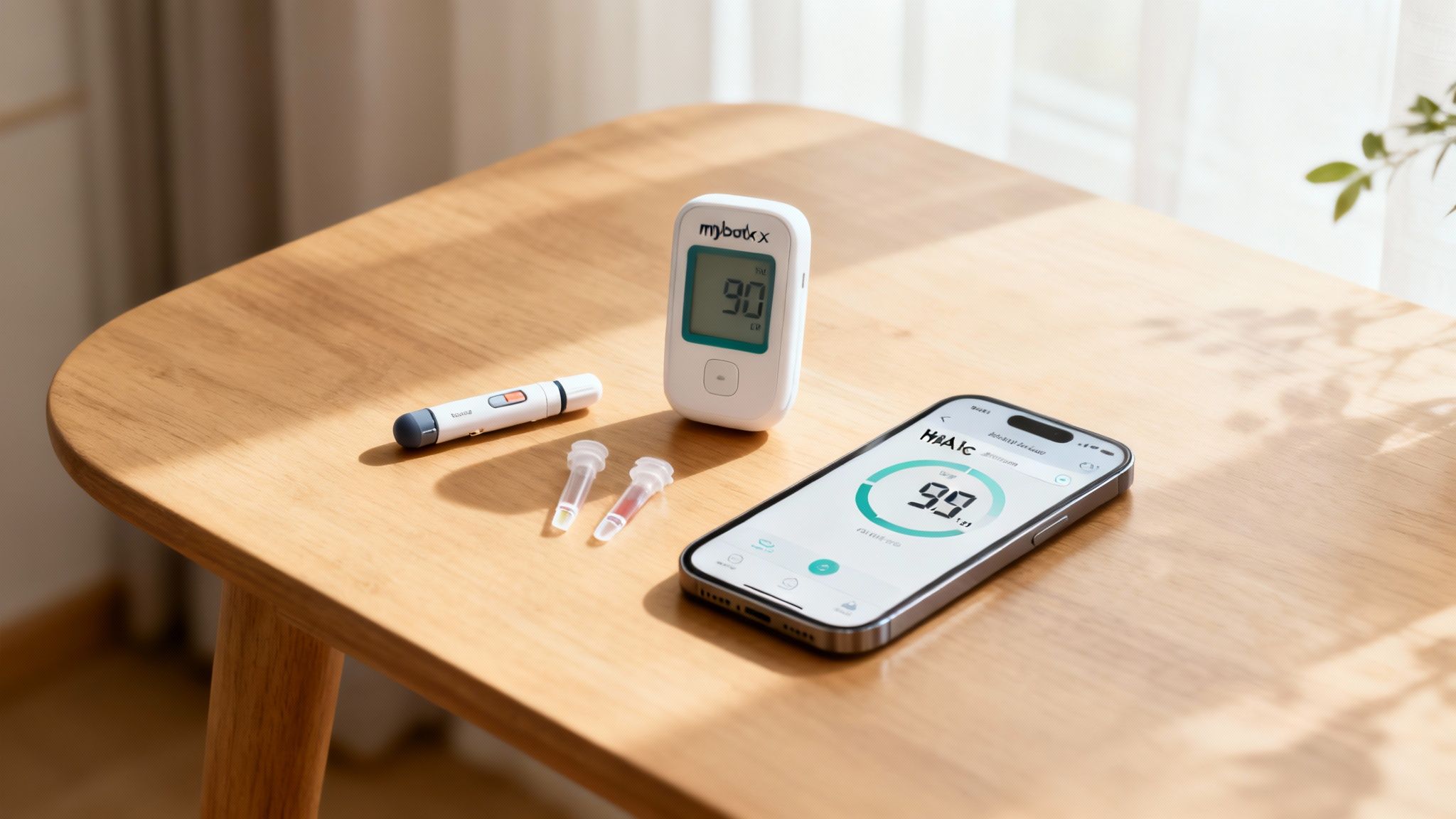
Now you know which key factors you can adjust to positively influence your long-term blood sugar. But knowledge alone does not bring about change. The first and most important step toward better metabolic health is knowing your own personal starting point.
Perhaps you're wondering where your HbA1c blood level currently stands, but want to avoid long waiting times or a visit to the doctor?
We developed the mybody-x HbA1c home test specifically for this situation. It gives you the opportunity to take control and be proactive. Instead of being left in the dark, you quickly and easily gain clarity about one of the most important indicators of your health.
Your path to clarity in three simple steps
We have deliberately designed the entire process so that you can carry it out conveniently and safely from home. No prior medical knowledge is required—we guide you through every step.
- Simple sample collection: A small, gentle prick to the fingertip is all it takes to obtain a few drops of blood. That is all our certified laboratory needs to analyze your level accurately.
- Free return shipping: You package the sample securely in the enclosed return envelope and send it free of charge to our laboratory in Germany.
- Easy-to-understand results report: After a short time, you will receive your result digitally. We do not present your HbA1c level as a dry number, however. Instead, we clearly and understandably explain what it means for you and exactly where you stand.
The entire procedure is designed to give you maximum control with minimal effort. If you would like to review the blood collection process in advance, you can find detailed instructions for the capillary blood test directly on our website.
This test is more than just a measurement. It is a tool for taking responsibility for your own health and the starting point for targeted, positive changes.
Why a home test is the right step
The mybody-x HbA1c test is by no means intended only for people with a specific suspicion of diabetes. It is aimed at everyone who lives with an awareness of their health, wants to better understand their metabolism, and would like to take preventive responsibility for their own health.
You take control of your health data and can regularly keep an eye on your HbA1c level in the blood. This allows you to identify trends early and take countermeasures in good time—long before serious problems develop. With this clarity, you can make informed decisions about your diet, lifestyle, and long-term well-being.
Your questions about HbA1c levels—our answers
When it comes to the HbA1c level in the blood, many questions often arise—that is completely normal. To help you feel confident and stay in control of your health knowledge, we have collected and clearly answered the most frequently asked questions here.
Do I need to fast for the HbA1c test?
No, and that is precisely what makes this value so incredibly useful. HbA1c is like a blood sugar memory of the past few weeks. A single meal, even if it is particularly sweet, can hardly affect this long-term result.
This means maximum flexibility in your daily life: You can take the test at any time of day, without fasting beforehand.
How quickly can I lower my HbA1c level?
This requires a little patience. Your HbA1c is a long-term value and therefore does not respond overnight to a healthier lifestyle. Think of it like a large ocean liner: It takes a while to change course.
You usually see the first truly measurable improvement in your level only after about three months. This is because your red blood cells, to which the sugar attaches, first need to be renewed. Think of it as a marathon, not a sprint—sustainable, healthy habits will take you much further than any crash diet.
Does the mybody-x at-home test replace a visit to the doctor?
An at-home test like the one from mybody-x is a powerful tool for taking the initiative for your own health. It is ideal for preventive care and regular monitoring, and gives you valuable guidance on where you stand.
A self-test is your first important step toward greater clarity. It supports you, but it does not replace a medical diagnosis or treatment if your level is in the critical range.
If your test result shows an elevated level, the next step should always be to see a doctor. Only a doctor can conduct further examinations and provide a well-founded diagnosis.
Are other blood values important besides HbA1c?
Absolutely! The HbA1c level in your blood is certainly a key piece of the puzzle, but only together with other values does a complete picture of your metabolic health emerge. Taking a holistic view helps identify risks at an early stage.
Other important markers include:
- Blood lipids: These include total cholesterol, as well as the important counterparts LDL (“bad”) and HDL (“good”) cholesterol and triglycerides. They are crucial for your cardiovascular risk.
- Liver values (e.g., GGT, ALT, AST): Your liver is your body's metabolic hub. Elevated levels may indicate that it is overworked.
- Inflammation markers (e.g., hs-CRP): Silent, chronic inflammation is often an unnoticed driver of insulin resistance and should not be overlooked.
A comprehensive understanding of your levels is the best way to take proactive care of your health.
Do you want to keep an eye not only on your long-term blood sugar, but also on other important health markers? mybody-x offers a wide range of at-home blood tests that give you a clear and easy-to-understand picture of your body. Find out where you stand with the right mybody-x blood test and take control of your well-being today.



Share now:
Omega-3 deficiency symptoms: which signs really indicate it
What hemoglobin level is normal? Your easy-to-understand guide