
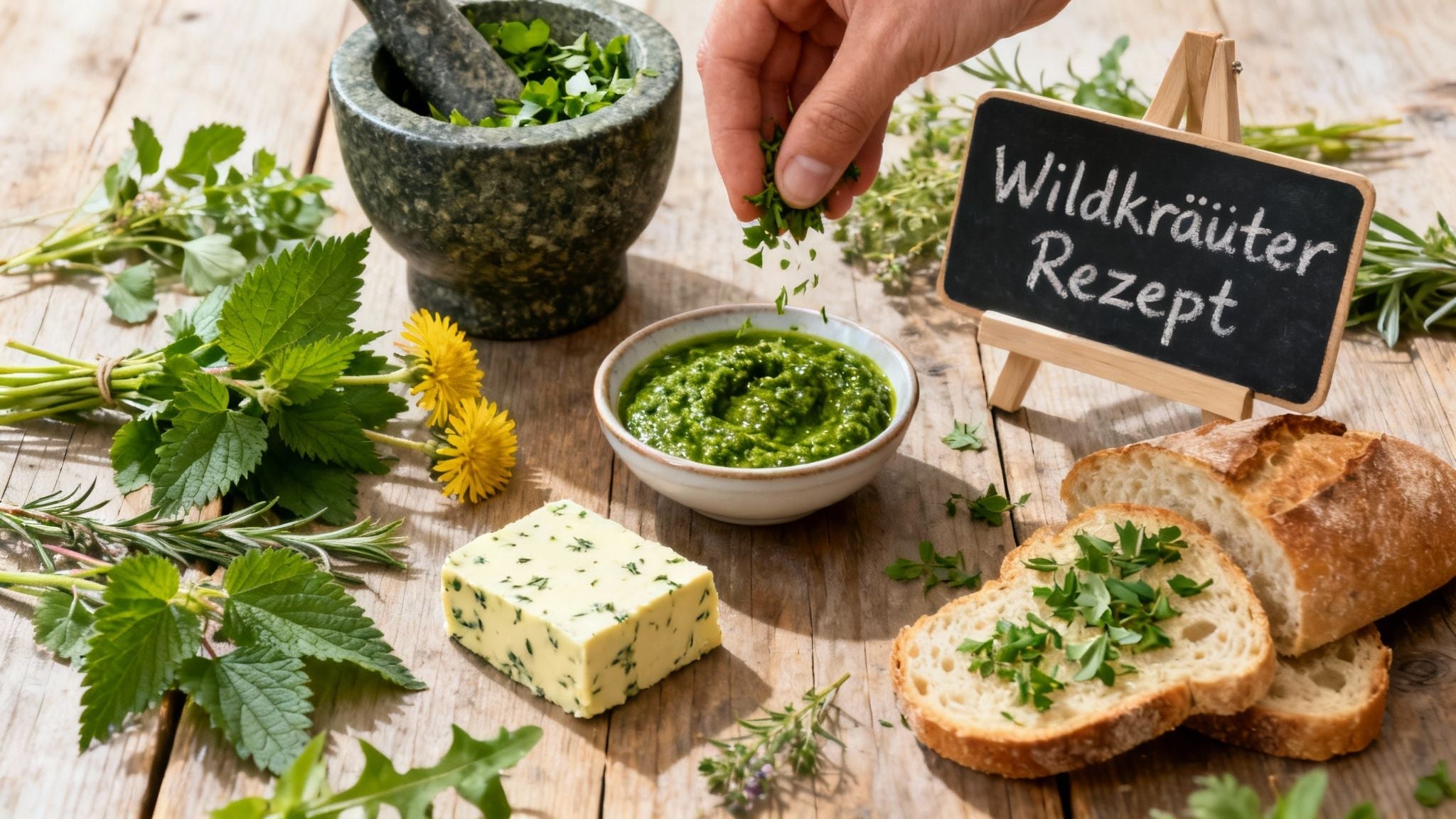
Your wild herb recipe for more energy and well-being in everyday life
A simple wild herb recipe is much more than just a meal. It is the most direct way to access nature’s pure, unadulterated nutritional power. Whether you enjoy them as pesto, in a salad, or as tea, wild herbs such as nettles and ground elder easily outshine many of our familiar cultivated vegetables when it comes to vitamins and minerals.
Why wild herbs will enrich your kitchen
Imagine finding ingredients right on your doorstep that are more nutrient-rich than almost anything you can buy at the supermarket. That is exactly the reality with wild herbs.
Often dismissed as annoying “weeds,” plants such as nettles, ground elder, and dandelion are actually true powerhouses of nature. They are perfectly adapted to their surroundings and have to thrive without any human assistance. This makes them not only especially resilient but also incredibly rich in valuable nutrients.
Unlike many overbred vegetable varieties, which are primarily optimized for size and rapid yields, wild plants channel all their energy into producing vitamins, minerals, and secondary plant compounds.
The hidden nutrient champions
A quick look at the nutritional values immediately makes it clear why a wild herb recipe is such a good idea. For example, nettles contain up to seven times more vitamin C than an orange and are a fantastic source of iron, calcium, and plant-based protein. Ground elder, often denounced as every gardener’s nemesis, is bursting with vitamin C and minerals that boost your energy and immune system.
The reason for this nutrient density is actually quite logical: wild plants have to protect themselves from predators and diseases. To do this, they produce an abundance of bioactive compounds that also offer enormous health benefits for us.
- More energy: The high levels of iron and B vitamins can noticeably counteract fatigue.
- Strong immune system: They are rich in vitamin C and zinc, providing excellent support for your immune defenses.
- Healthy digestion: Bitter compounds, such as those found in dandelion, stimulate the production of digestive juices and promote a healthy gut flora.
- Cell protection: Wild herbs are packed with antioxidants that protect your cells from free radicals. If you want to learn more, you’ll find plenty of valuable information in our guide to antioxidant-rich foods.
More than just a trend
The use of wild and medicinal plants is, by the way, deeply rooted in our culture. Did you know that in Germany, more than half of all manufactured medicines are based on medicinal plants or their ingredients?
Nevertheless, medicinal plants are cultivated on only about 0.1 percent of agricultural land. A large proportion (90 percent) of the medicinal plants used in Germany are imported, with 70 percent of them coming from wild harvesting. This shows the enormous, untapped potential lying dormant right in our native natural environment. You can find additional insights into the importance of medicinal plants on pflanzenforschung.de.
By incorporating wild herbs into your diet, you help close a gap often created by modern agriculture and highly processed foods. You give your body back exactly the micronutrients it needs for optimal well-being.
A wild herb recipe is therefore more than just a culinary journey of discovery. It is also a conscious step toward a more nutrient-rich and natural way of eating—an invitation to discover nature’s hidden treasures and support your health in the most natural way.
How to identify and collect the most important wild herbs safely
Before we look at your first wild herb recipe Before we get to that, the most exciting part comes next: foraging. And don’t worry, getting started is much easier than you might think. Forget the uncertainty—I’ll show you how to find your first wild herbs confidently and safely.
The key to success is to focus at the beginning on a handful of plants that are genuinely easy to identify. Instead of being overwhelmed by the variety out there, we’re focusing on five wonderfully uncomplicated herbs for beginners. They grow almost everywhere and are hard to confuse with other plants.
Five wild herbs for beginners that you should know
These five plants are the perfect companions for getting started with wild herb cuisine. Once you’ve internalized their characteristics, you’ll soon spot them everywhere with a trained eye.
-
Stinging nettle (Urtica dioica): Its trademark is, of course, the stinging hairs that cause the characteristic itching when touched. Look for the serrated, heart-shaped leaves, which grow directly opposite each other on the square stem. My tip: It’s best to harvest only the upper, young shoots—and don’t forget your gloves!
-
Ground elder (Aegopodium podagraria): Here, the “three is the key” rule helps: The stem is three-angled, the leaf is divided into three parts, and these are often further divided into three leaflets. Rub a leaf between your fingers and it smells wonderfully aromatic, like a mixture of parsley and carrot. This scent is the best feature for distinguishing it from poisonous lookalikes.
-
Dandelion (Taraxacum officinale): Everyone knows its bright yellow flower and, later, its dandelion clock. The leaves grow directly from the ground in a rosette and are deeply serrated—like a lion’s teeth, hence the name. The stem is hollow and releases white milky sap when damaged.
-
Ribwort plantain (Plantago lanceolata): Its long, lance-shaped leaves with clearly visible longitudinal veins are unmistakable. They also grow in a rosette directly at ground level. The rather inconspicuous flowers sit like small spikes on long, leafless stems.
-
Chickweed (Stellaria media): A delicate ground cover with small, egg-shaped leaves and tiny white flowers that look like little stars. The absolutely reliable identifying feature is a fine line of hairs running along just one side of the stem.
To give you a quick overview, I have summarized the most important information in a table.
The top 5 wild herbs for beginners at a glance
This table will help you quickly identify the most common and safest wild herbs and learn about their key nutrients and benefits.
| Wild herb | Key identifying feature | Rich in nutrients | Ideal for which recipe |
|---|---|---|---|
| Stinging nettle | Serrated leaves on a square stem with stinging hairs | Iron, vitamin C, calcium | Spinach substitute, pesto, green smoothies |
| Ground elder | Three-part leaf, three-angled stem, parsley-like scent | Vitamin C, potassium, minerals | Wild herb salad, quark, pesto |
| Dandelion | Deeply serrated leaves in a rosette, hollow stem with milky sap | Bitter compounds, vitamin A, potassium | Salad (young leaves), flowers for syrup |
| Ribwort plantain | Long leaves with parallel veins arranged in a rosette | Silicic acid, zinc, mucilage | As a “plaster” for insect bites, in salads, tea |
| Chickweed | Delicate plant with a fine line of hairs along one side of the stem | Vitamin C, potassium, magnesium | Salad, herb butter, smoothies |
As you can see, each herb has its own particular strengths and can be used in a wonderfully versatile way in the kitchen.
The following infographic nicely summarizes the main benefits of including wild herbs in your diet.

It illustrates that with every wild herb recipe Supply your body with targeted nutrients, boost your energy, and support your digestion.
Collect safely—but how?
Safety is the top priority when gathering. The most important principle to remember is: Only gather what you can identify with 100% certainty. At first, use a good identification app or book and always compare several characteristics. If in doubt, leave the plant where it is. There’s no shame in that—it’s the smart thing to do.
My tip for getting started: Join a guided herb walk. An experienced guide will show you the plants in their natural habitat and help you develop a keen eye for the details that matter. That provides an incredible sense of confidence.
Where you gather is just as important for the quality of your harvest. Avoid places that may be affected by environmental pollution.
Good places to gather:
- Meadows and forest edges far from heavily trafficked roads
- Unused corners in your own garden or in parks (where permitted)
- Areas that are not conventionally farmed or sprayed
Places you should avoid:
- Directly along roadsides because of exhaust fumes
- On or beside conventionally farmed fields (pesticide risk!)
- In nature reserves, where gathering is often prohibited
- On dog parks or popular dog-walking routes
One final but very important point: sustainable harvesting. We want to make use of nature, not exploit it. The “handful rule” is a wonderful guideline here. Always take only as much from a plant or location as you need for one meal or a small supply—about a handful. This ensures that the plant can continue to grow and that enough remains for animals and other foragers.
Three simple recipes for getting started with wild herb cuisine
Now for the good stuff! Now that you know how to safely identify and gather the most important wild herbs, we’ll bring all their power straight to your plate. We’ll start with three simple recipes that make getting started in the world of wild herb cuisine as easy and delicious as possible.
These recipes are perfect for getting started because they require no complicated techniques and immediately show you the impressive variety of flavors found in these plants. This makes your first wild herb recipe guaranteed to be a success.
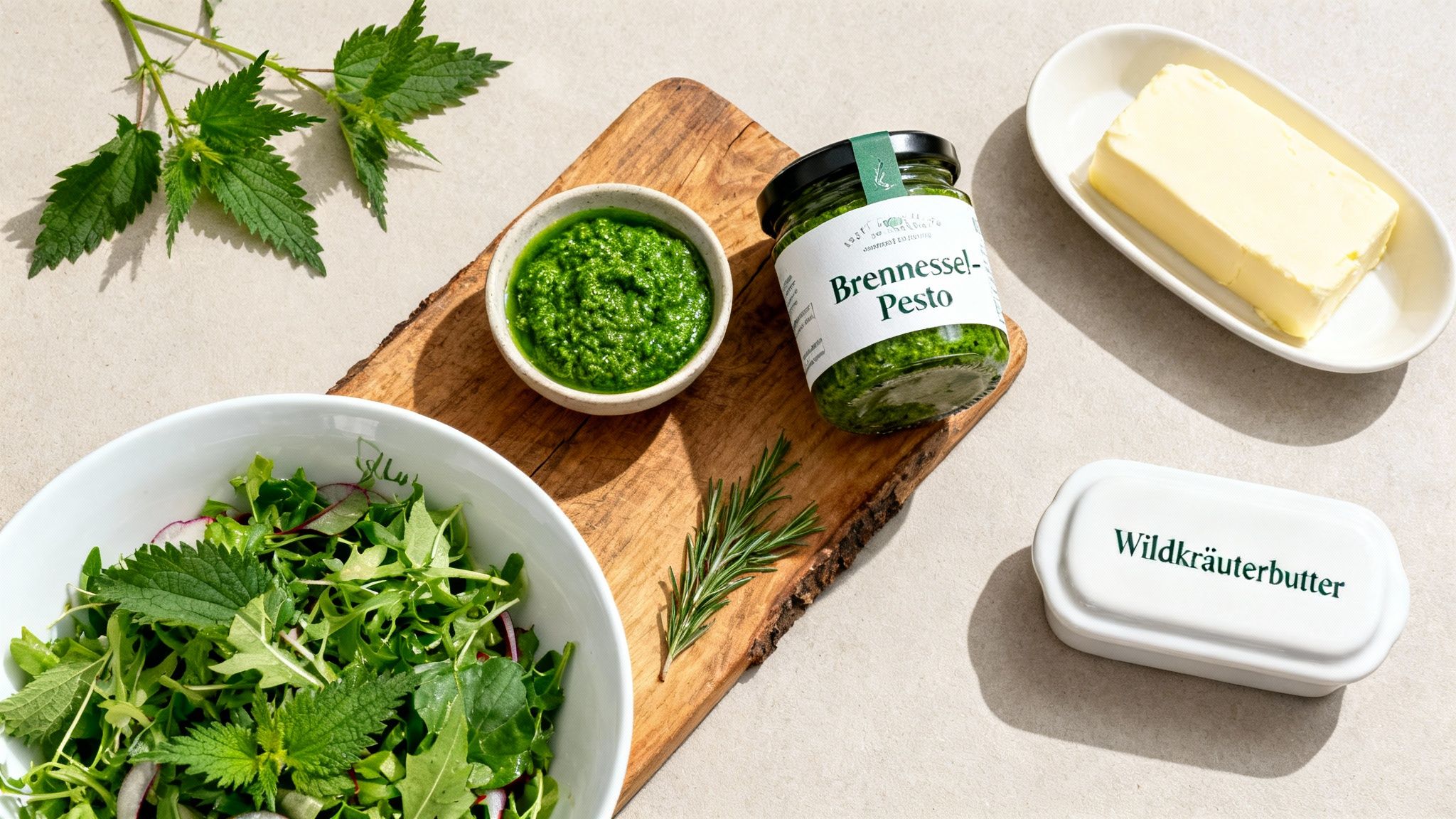
Recipe 1: Power-Packed Nettle Pesto
Nettle is a true powerhouse and ideal for your first pesto. It is packed with iron, calcium, and plant-based protein. This pesto tastes fantastic not only with pasta, but also as a spicy spread for bread or with boiled potatoes.
What you need:
- Approx. 100 g fresh, young nettle leaves (ideally just the tips of the upper shoots)
- 50 g Pine nuts or sunflower seeds
- 50 g Freshly grated Parmesan (or a vegan alternative)
- 1-2 Garlic cloves, to taste
- Approx. 150 ml high-quality olive oil
- Juice of half a lemon
- Salt and freshly ground black pepper
Here's how easy it is:
First, wash the nettle leaves thoroughly and blanch them very briefly in boiling water. This takes only about 30 seconds. This removes their nasty stinging hairs while preserving their bright green color. Then immediately plunge them into ice water and drain well.
Meanwhile, toast the pine nuts or sunflower seeds in a fat-free pan until golden brown—this intensifies their flavor enormously. Then let them cool briefly.
Now add the blanched nettles, toasted seeds, Parmesan, and peeled garlic cloves to a blender. Blend briefly, slowly adding the olive oil until a creamy consistency forms. Finally, season to taste with lemon juice, salt, and pepper.
My tip: If you do not have a powerful blender, you can also crush all the ingredients traditionally in a mortar. The result will be a little more rustic, but at least just as aromatic.
Recipe 2: Refreshing Wild Herb Salad
This salad is a true nutrient powerhouse and brings a wonderfully fresh twist to your salad bowl. The combination of slightly bitter dandelion and flavorful ground elder wonderfully stimulates digestion thanks to its bitter compounds.
Ingredients for the salad:
- 2 handfuls young, tender ground elder leaves
- 1 handful young dandelion leaves
- A few chickweed leaves or daisy flowers for decoration
- 1 apple, cut into thin wedges
- A handful of walnuts, roughly chopped
For the dressing:
- 3 tbsp apple cider vinegar
- 4 tbsp walnut oil or another mild oil
- 1 tsp mustard
- 1 tsp honey or maple syrup
- Salt and pepper
Preparation:
Wash the wild herbs carefully and spin them dry. Very important: With dandelion, you should use only the very young, tender leaves from the center of the rosette, as the older leaves can otherwise become really bitter.
Arrange the herbs and apple slices on a plate and sprinkle the chopped walnuts over them.
For the dressing, simply whisk all the ingredients together in a small bowl until a creamy vinaigrette forms. Season generously with salt and pepper, then drizzle it over the salad just before serving.
This simple wild herb recipe is not only delicious but also perfect if you are focusing on an anti-inflammatory diet. You can find more ideas in our article about anti-inflammatory recipes that pair perfectly with wild herbs.
Recipe 3: Aromatic Ribwort Plantain Herb Butter
Ribwort plantain is not only a well-known first-aid remedy for insect bites, but also a fantastic ingredient for a savory herb butter. Its slightly mushroom-like flavor pairs perfectly with grilled foods, fresh bread, or boiled potatoes.
What you need:
- 250 g soft butter (or a plant-based alternative)
- 1 large handful fresh, young ribwort plantain leaves
- 1 small garlic clove, very finely chopped
- A few splashes of lemon juice
- ½ tsp salt
Here’s how to make it:
The ribwort plantain leaves really need to be chopped very, very finely. The best way to do this is with a mezzaluna or in a small food processor. The leaves are quite fibrous, so finely chopping them is essential for a pleasant texture in the mouth.
Place the softened butter in a bowl and add the chopped ribwort plantain, garlic, lemon juice, and salt.
Mix everything thoroughly with a fork until a smooth, green butter forms. Then shape the butter into a roll, wrap it in baking paper or plastic wrap, and refrigerate it for at least one hour. This will firm it up again and allow the flavors to meld beautifully.
These three recipes are the perfect starting point. They show you how easy and enjoyable it can be to bring nature into your kitchen. Just dare to experiment and discover the flavorful variety right outside your front door.
How wild herbs become your personal health strategy
Wild herbs are so much more than just a nice addition to a salad—they’re an incredibly powerful tool that you can use to actively improve your well-being. When you combine nature’s knowledge with what modern health science can do today, every recipe becomes your own personal building block for health.
Do you often feel tired, lacking energy, or have the vague feeling that something is missing from your body? These aren’t imagined; they’re clear signals from your body telling you to take a closer look. Instead of simply reaching for random remedies, you can often find the solution right outside your front door—you just need to use it purposefully.
This turns your next pesto or wild herb salad into tailored support for your body, addressing exactly where you need it most right now.
Wild herbs as an answer to your body’s signals
Your body communicates with you nonstop. Constant fatigue, sluggish digestion, or a weakened immune system are its way of telling you: “Hey, something’s missing here!” The good news is that nature has an answer ready for many of these minor and major challenges.
-
For constant fatigue and paleness: An iron deficiency is often behind it. Instead of reaching straight for tablets, why not try nettle? It is one of the most iron-rich plants you can find here. A teaspoon of dried nettle seeds in your muesli or a smoothie with a handful of fresh leaves can naturally replenish your iron stores.
-
For bloating and sluggish digestion: The key is bitter compounds. And here, dandelion is the undisputed champion. A small salad made from its young, tender leaves before the main meal works wonders. It stimulates the production of digestive juices and can noticeably relieve bloating or that unpleasant feeling of fullness.
-
When your immune system needs a boost: Vitamin C is crucial now. Ground elder, often dismissed as a troublesome weed, is a true vitamin C powerhouse and easily outshines many citrus fruits. Finely chopped into an herbed quark dip or salad, it strengthens your defenses—without any artificial additives.
From general advice to customized nutrition
These examples show how powerful nature can be. But what if you do not know exactly where to start? If you do not just want to guess but really want to know what your body needs, self-tests finally provide clarity.
A mybody-x nutrient test is like taking a precise look behind the scenes of your body. It can show you exactly whether you are lacking important vitamins such as vitamin D or minerals such as iron or magnesium. Armed with this knowledge, you can tailor your choice of herbs perfectly to your needs.
Imagine that the test shows a magnesium deficiency. Instead of collecting just any green herb, you would specifically look for chickweed—an excellent, natural source of magnesium. Your wild herb recipe thus becomes more than a delicious meal: it becomes a customized solution for your individual needs.
The trend toward a more mindful, plant-based diet is also reflected in the growing market for culinary herbs. More and more people are recognizing the potential found in nature. Wild herbs such as nettle, which surpasses many conventional vegetables in minerals and vitamins, are an invaluable addition. Combining traditional plant knowledge with modern analyses enables incredibly precise customization of your diet. Learn more about the latest developments in the German herb market on Statista.de.
Your gut health is the be-all and end-all
Another absolutely decisive factor in your well-being is your gut. It is the center of your immune system and determines how well the valuable nutrients from your food are absorbed in the first place. With their many fibers and bitter compounds, wild herbs are a real boon to your gut flora.
But the same applies here: Every gut is different. If you keep struggling with digestive problems, an intolerance test or a microbiome analysis from mybody-x can reveal which foods are genuinely good for you and which you might be better off avoiding.
These insights can be wonderfully combined with wild herb cuisine. Perhaps it turns out that you do not tolerate certain vegetables well—in that case, wild herbs can be a nutrient-rich and much more easily tolerated alternative.
By taking your body’s signals seriously and backing them up with the right data from a test, you can transform your diet from a guessing game into a targeted strategy for greater health and energy.
This is how you preserve and properly process your harvest
Your basket is brimming with herbs, and it smells of meadow and forest—wonderful! But what now? The work after gathering is at least as important, because proper processing and storage determine whether the valuable nutrients and unique aroma of your wild herbs are truly preserved. A good wild herb recipe ultimately depends on the quality of the ingredients.
If you are careless here, much of the plants’ power will be lost. Washing with water that is too hot, leaving them out for too long, or using the wrong drying method can quickly rob the herbs of their essence. But don’t worry—with the right techniques, you can secure a valuable supply that will see you through the whole year.
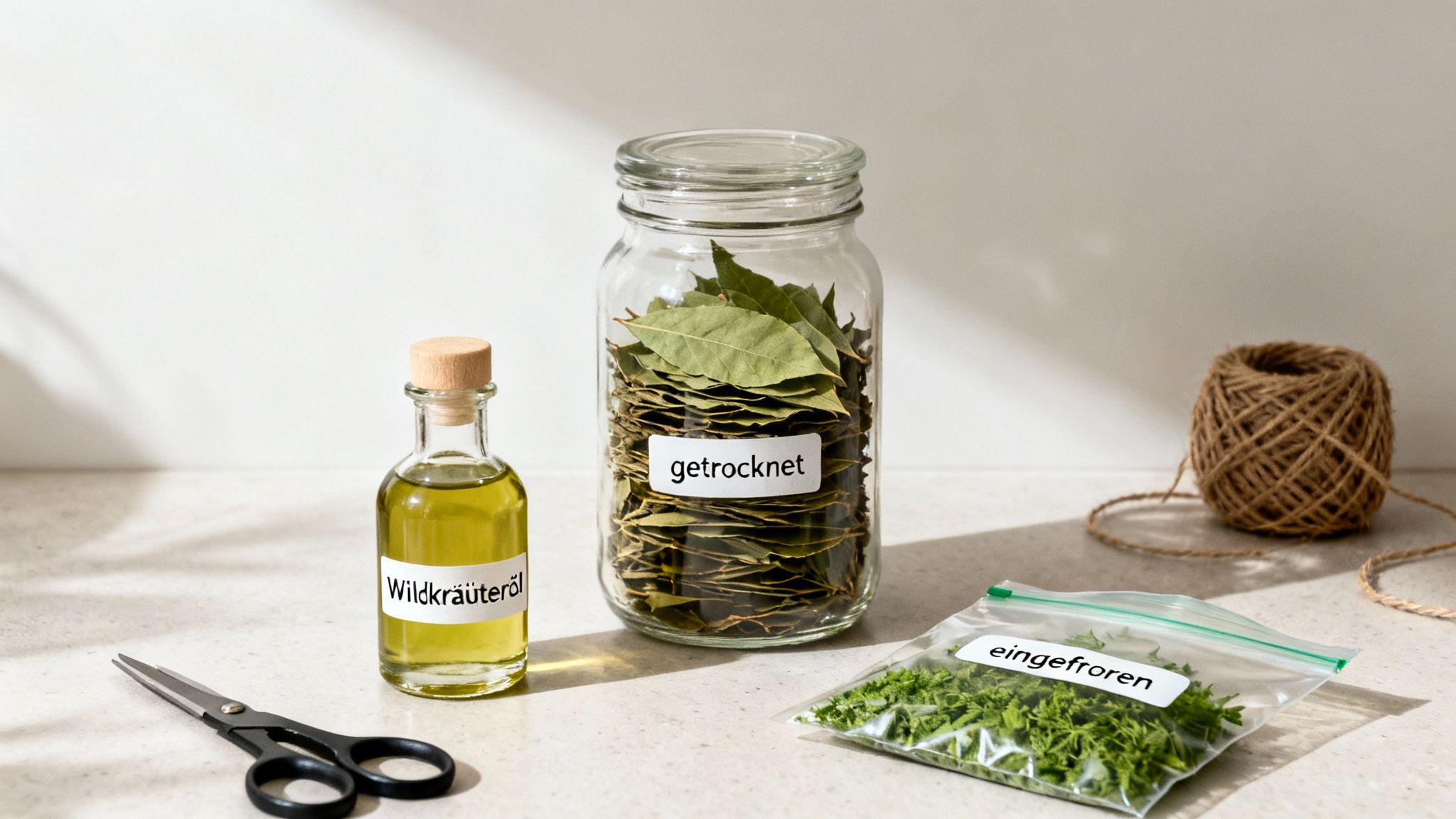
Gentle drying for teas and seasoning blends
Drying is probably the oldest method of preserving herbs. It is perfect for anything you want to use later for teas or as a seasoning. Particularly sturdy herbs such as nettles and ribwort plantain, as well as the pretty flowers of daisies, work well for this.
The key to success is slow, gentle drying in a well-ventilated but shady place. Direct sunlight is the enemy, as it destroys the valuable essential oils and bleaches the leaves.
- Preparation: Gently shake the herbs to remove small insects. Wash them only if they are really heavily soiled—and if you do, pat them extremely thoroughly dry afterwards. Residual moisture is a no-go.
- Hang up: Tie small, loose bunches and hang them upside down in a dry, well-ventilated place. An attic or covered terrace is ideal for this.
- Dry lying flat: Alternatively, you can spread the leaves and flowers out on a rack lined with baking paper or on a clean cloth.
When are they ready? It’s easy: when the leaves rustle between your fingers and crumble slightly. Depending on the herb and humidity, this can take anywhere from a few days to two weeks. After that, it’s best to put them in dark, airtight jars to protect the aroma.
Freezing for maximum freshness
If you want to capture the fresh, intense aroma of tender herbs such as ground elder, chickweed or wild garlic, freezing is the best method. This preserves the colour and flavour almost completely—perfect for pestos, smoothies or soups.
A super practical method is the ice cube trick. Simply finely chop the fresh herbs, fill the compartments of an ice cube tray and top up with a little water or olive oil.
Once the cubes are completely frozen, you can transfer them to a freezer bag. This way, you always have perfectly portioned herbs ready to use, which you can toss straight into the pan or blender—a real time-saver in everyday life.
This method prevents freezer burn and preserves the nutrients exceptionally well. Especially when you need something quick wild herb recipe during the week, this small amount of preparation is worth its weight in gold.
Making oils and vinegars for year-round enjoyment
Another wonderful way to capture the flavours of summer is to make infused herb oils or vinegars. Not only is this surprisingly easy, it also gives you fantastic seasonings for salads, marinades or finishing dishes.
Here’s how easy it is to make wild herb oil:
- Prepare the herbs: Choose aromatic herbs such as ground ivy or the sunny yellow flowers of dandelion. After collecting them, let them wilt for a few hours so excess moisture can escape. This is important to prevent the oil from going rancid later.
- Infuse in oil: Loosely fill a sparkling-clean, dry screw-top jar with the herbs and pour in a high-quality, neutral-tasting oil (e.g. sunflower or rapeseed oil) until every part of the plant is completely covered.
- Leave to infuse: Now comes the waiting. Seal the jar and leave it in a warm but not sunny place for about two to three weeks. Ideally, gently shake it once a day.
- Strain and store: Strain the finished oil through a fine-mesh sieve or a clean cloth and pour it into a dark bottle. If stored in a cool, dark place, it will easily keep for several months.
A similar method works with vinegar, with apple cider vinegar being an excellent base. This means you can still enjoy the pure flavor of your wild herb harvest even in the depths of winter. Incidentally, this method of preserving through fermentation is also very popular for beverages. If you would like to explore the topic further, take a look at our simple water kefir recipe.
The most important questions about wild herb recipes
The idea of simply going outside and gathering your own food is fascinating. But of course, it also raises questions. That is not only normal, but actually a good thing! It shows that you are approaching the matter with respect and the necessary safety awareness.
So that you feel safe and can start your culinary adventure with confidence, here we answer the most frequently asked questions about your new wild herb recipe.
Can I eat wild herbs despite having allergies or intolerances?
Basically, yes, but this definitely calls for sensitivity. Many wild herbs are surprisingly well tolerated, but if you already struggle with allergies, you should take it slowly.
Especially if you have a known allergy to aster family plants (which include daisies and dandelions, for example), it is wise to start by trying only tiny amounts. Observe very carefully how your body reacts.
Every person is different. You may tolerate stinging nettles very well but react sensitively to ribwort plantain. The only way to really find out is to approach it cautiously.
If you want to play it safe, an intolerance test from mybody-x can provide clarity. It analyzes your body’s response to many different foods and can provide valuable indications of whether certain plant-based substance groups could be problematic for you. This way, your
wildherb recipebecomes a safe delight.
How can I be absolutely sure that I am not collecting the wrong herb?
Safety comes first. The most important rule is: Only collect and eat what you can identify with 100% certainty. If in doubt, leave the plant where it is. Being unsure is nothing to be ashamed of—it is a sign of responsibility.
To build this confidence, there are a few tried-and-tested strategies:
- Focus: Start with just two or three very easy-to-identify herbs, such as stinging nettle or dandelion. Once you can recognize them in your sleep, add the next one.
- Use multiple sources: Never rely on just one app. A good, up-to-date identification guide with detailed photos and accurate descriptions is essential.
- Compare all the characteristics: Don’t look only at the leaf. Examine the stem (round, angular, hollow?), the arrangement of the leaves, the shape of the flowers, and the smell when you rub a leaf between your fingers.
- Learn from experts: The best and safest way is to go on a guided herb walk. An experienced guide will show you the plants in their natural environment and point out the key identifying features and potentially poisonous look-alikes.
How can I best integrate wild herbs into my daily routine?
The key is to start small and keep things simple. It’s not about creating elaborate meals overnight. A small, regular dose makes all the difference.
Why not try these simple habits:
- The morning smoothie boost: Simply add a handful of mild herbs such as chickweed or a few young ground elder leaves to your smoothie.
- The green topping: Finely chop fresh wild herbs and sprinkle them like parsley over salads, soups, scrambled eggs, or a slice of bread with butter.
- The energy boost in your muesli: A teaspoon of dried and ground nettle seeds in your yogurt or muesli is a true nutrient powerhouse.
This way, you gradually get used to the new, more intense flavors while also providing your body with an extra portion of vitamins and minerals. Consistency is much more important here than quantity.
What time of day is best for gathering wild herbs?
Yes, the harvesting time also plays an important role in the quality of your herbs. Ideally, you should head out on a dry, sunny morning.
Why exactly then? Once the morning dew has been dried by the sun, the concentration of valuable substances such as essential oils in the plants is at its highest. This means maximum flavor and maximum health benefits for your wild herb recipe.
Avoid collecting herbs on rainy days or immediately after a shower. Wet herbs not only spoil faster, but are also more difficult to clean. They also lose their beautiful color and aroma more easily when dried. So choosing the right moment makes a noticeable difference.
Would you like to know exactly which nutrients your body needs to feel full of energy instead of merely guessing? The health analyses from mybody-x give you precise insights into your body. Discover with a nutrient or intolerance test how you can specifically optimize your diet and take your well-being to a whole new level.



Share now:
Water Kefir Recipe for Home: Your Probiotic Power Drink
Healthy eating weekly plan that truly suits you