
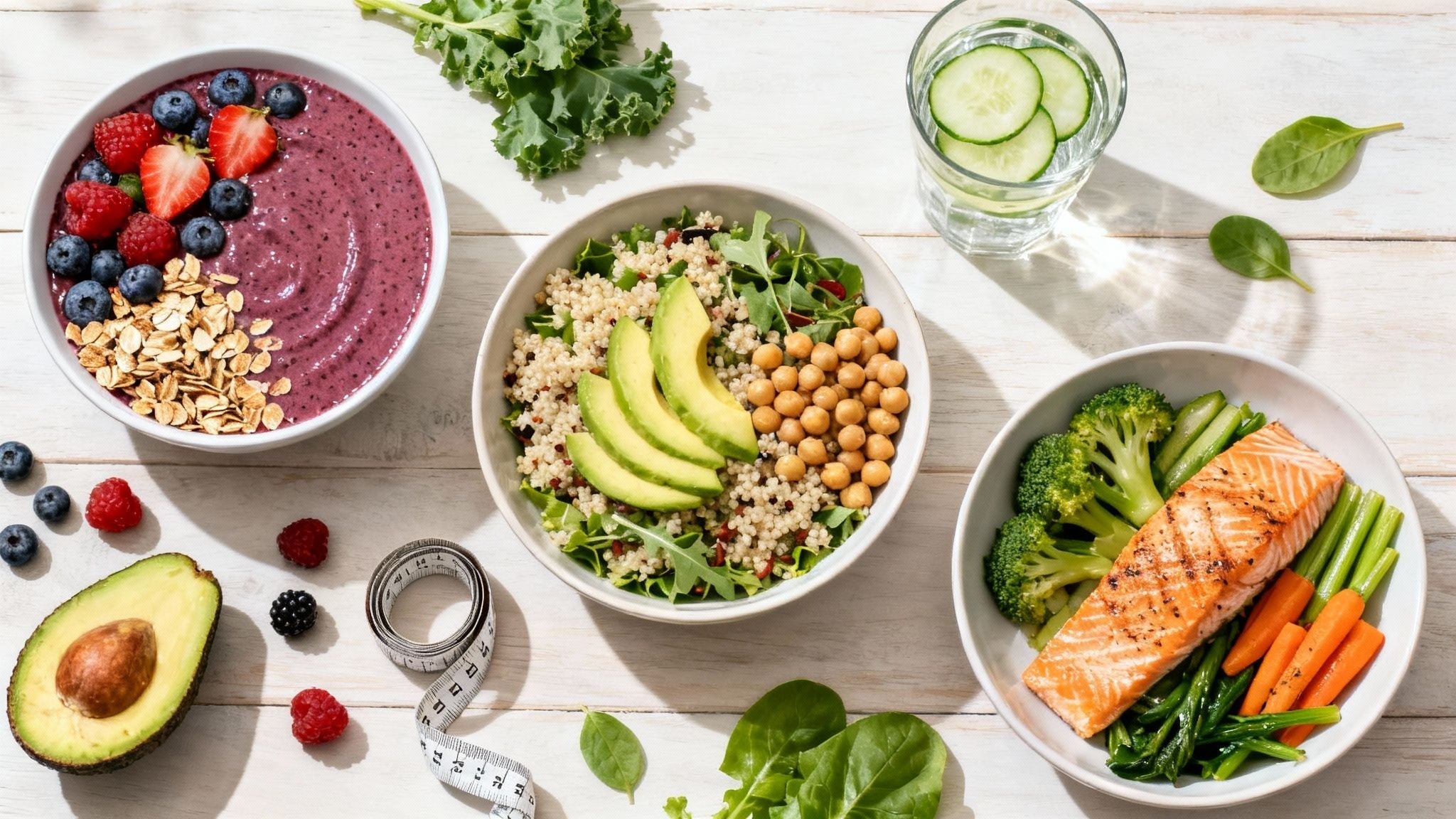
10 Smart Weight-Loss Recipes: Your Plan for 2025
Do you want to lose weight without constant hunger, complicated diet plans, and the dreaded yo-yo effect? The key to success often lies not in eating less, but in eating the right things. The right meals provide your body with important nutrients, keep you full for a long time, and boost your metabolism at the same time. That’s exactly where our weight-loss recipes come in: They’re not only delicious and easy to prepare, but also designed to optimally support you on your journey toward a healthy weight.
In this guide, you’ll find a collection of effective, practical recipes for every time of day—from protein-rich breakfasts and light lunches to low-carb dinners and healthy snacks. We provide not only ingredients and preparation instructions, but also specific nutritional information and meal-prep tips.
But we take it one crucial step further. We show you how to adapt your diet to your unique biology. What is ideal for one person may not necessarily work just as well for you. Your metabolism, hormone balance, and individual nutrient requirements are unique. Insights from a targeted blood test, such as the mybody-x metabolic or nutrient tests, can help you discover which food combinations are personally most effective for you. This way, your diet becomes not just a diet, but a personalized strategy for sustainable success and greater well-being. Let’s start the journey toward your goal together—with enjoyment, science, and recipes that truly suit you.
1. High-Protein Breakfast (Protein-Rich Breakfasts)
How you start the day has a major impact on your energy level, satiety, and weight-loss success. A protein-rich breakfast is one of the most effective strategies. Proteins are complex macronutrients that your body digests more slowly. The result: You stay full longer, your blood sugar level remains stable, and mid-morning cravings barely stand a chance. These meals also boost your metabolism because the body has to expend more energy (calories) to process protein—an effect known as the “thermic effect of food.”
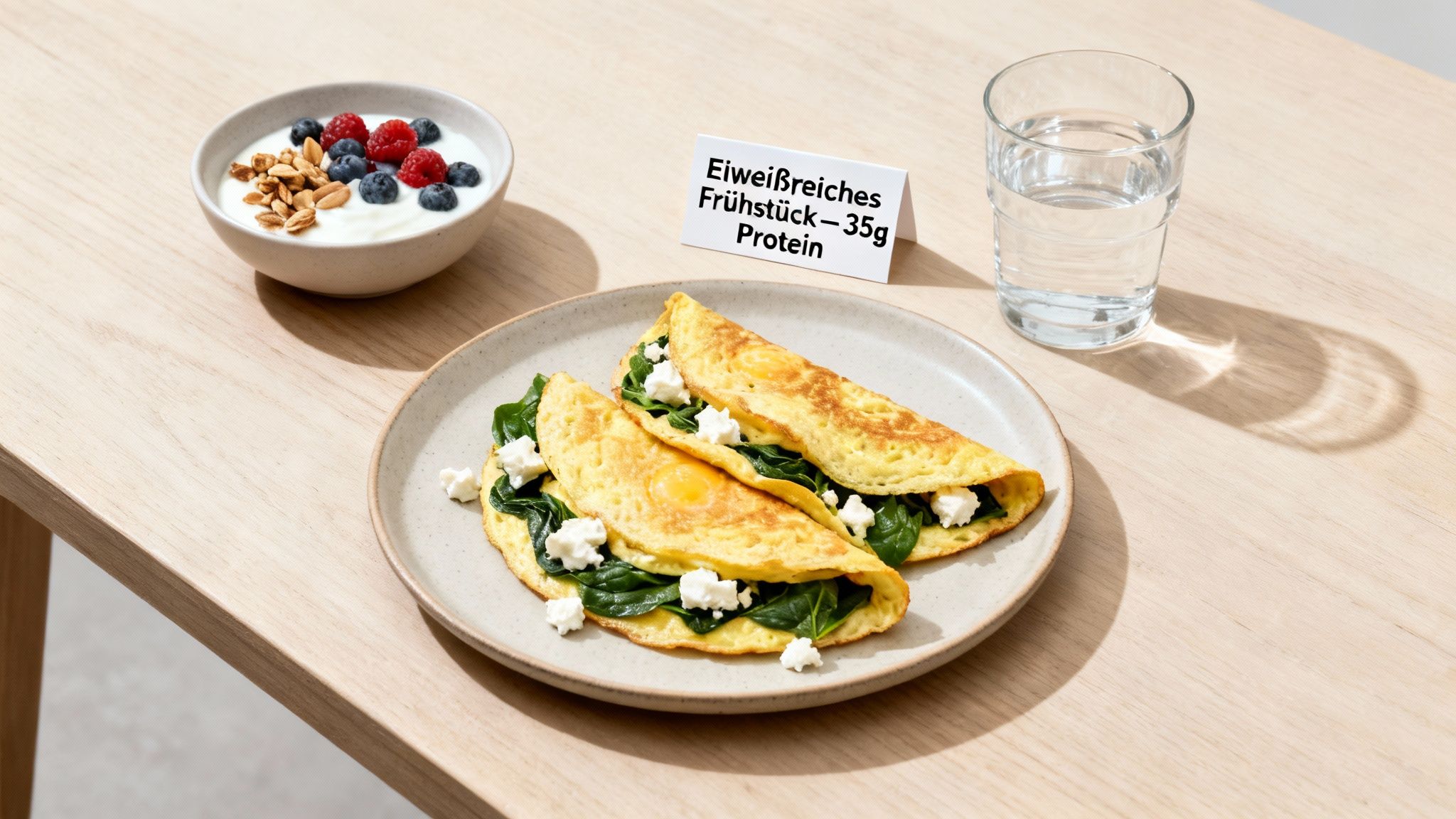
These weight-loss recipes are not only effective but also versatile and delicious. They help you maintain muscle mass, which is especially important to prevent your basal metabolic rate from declining during a diet.
Why a High-Protein Breakfast Works
The benefits go far beyond simple satiety. A protein-rich morning lays the foundation for better food choices throughout the day. By avoiding cravings, you are less likely to reach for sugary snacks or oversized portions at lunch. It is a simple yet profound change that sustainably supports your weight-loss goals.
Practical examples for your everyday life
- Three-Egg Omelet with Spinach and Feta: approx. 35 g protein, 250 kcal
- Greek Yogurt (250g) with Nuts and Berries: approx. 30 g protein, 280 kcal
- Protein Pancakes Made with Low-Fat Quark and Eggs: approx. 35 g protein, 290 kcal
- Smoked Salmon Frittata with Vegetables: approx. 40 g protein, 320 kcal
Tips for optimal implementation
- Meal prep is your friend: Prepare frittata muffins or boiled eggs the night before. That way, you have a protein-rich option ready to go even on busy mornings.
- Combine wisely: Always add a source of fiber to your protein (e.g., vegetables in an omelet, flaxseeds in yogurt) to maximize satiety and digestion.
- Know your body: Not every metabolism processes macronutrients in the same way. A hormone or metabolic test from mybody-x can help you determine whether your body makes better use of a protein-focused, carbohydrate-focused, or fat-focused diet. This allows you to personalize your breakfast routine for maximum results.
- Add variety: Rotate your protein sources (eggs, yogurt, quark, salmon, chicken breast) to consume a broad spectrum of amino acids and micronutrients.
2. Low-Carb Dinner (Low-Carb Dinner Recipes)
Dinner plays a crucial role in fat burning during the night. A low-carb dinner minimizes the release of the hormone insulin, which is responsible for storing energy. When insulin levels are low, your body can more easily access its fat stores as an energy source while you sleep. This strategy therefore supports natural fat burning and prevents excess carbohydrates from being stored as fat.
These weight-loss recipes combine high-quality proteins for satiety and muscle maintenance with healthy fats and fiber-rich, non-starchy vegetables. The result is a filling meal that keeps your blood sugar levels stable and prevents late-night cravings.
Why a low-carb dinner works
By avoiding large amounts of carbohydrates such as pasta, bread, or rice in the evening, you promote a state in which your body is forced to use fat as its primary energy source. This not only optimizes nighttime recovery and fat burning but can also contribute to deeper, more restful sleep, as your body is not busy digesting heavy, carbohydrate-rich meals.
Practical examples for your everyday life
- Grilled salmon with green asparagus: approx. 8 g carbohydrates, 520 kcal
- Chicken breast stuffed with spinach and feta: approx. 10 g carbohydrates, 420 kcal
- Zucchini noodles with Bolognese sauce: approx. 15 g carbohydrates, 480 kcal
- Fish curry with coconut milk and cauliflower rice: approx. 18 g carbohydrates, 450 kcal
Tips for optimal implementation
- Timing is important: Ideally, eat your last meal 2–3 hours before going to bed to support digestion and maximize sleep quality.
- Increase fiber: Include plenty of fiber-rich vegetables such as broccoli, leafy greens, or mushrooms to ensure good digestion and stay full for longer.
- Pay attention to electrolytes: Reducing carbohydrates can affect your electrolyte balance. Make sure you consume sufficient salt, magnesium, and potassium.
- Personalize your approach: Not every body responds to a low-carb diet in the same way. A metabolic analysis for weight loss can show you how your body metabolizes fats and carbohydrates and help you optimize your evening meal for maximum results.
3. Salads (salad recipes and salad bowls)
Salads are the epitome of a light and healthy meal, but modern salad bowls are much more than just leafy greens. They are complete, nutrient-dense dishes that provide optimal satiety through their high volume and low calorie density. The clever combination of varied vegetables, high-quality proteins, and healthy fats ensures that you receive all the important nutrients without exceeding your calorie budget. This approach not only supports weight loss but also provides your body with vitamins, minerals, and valuable fiber.
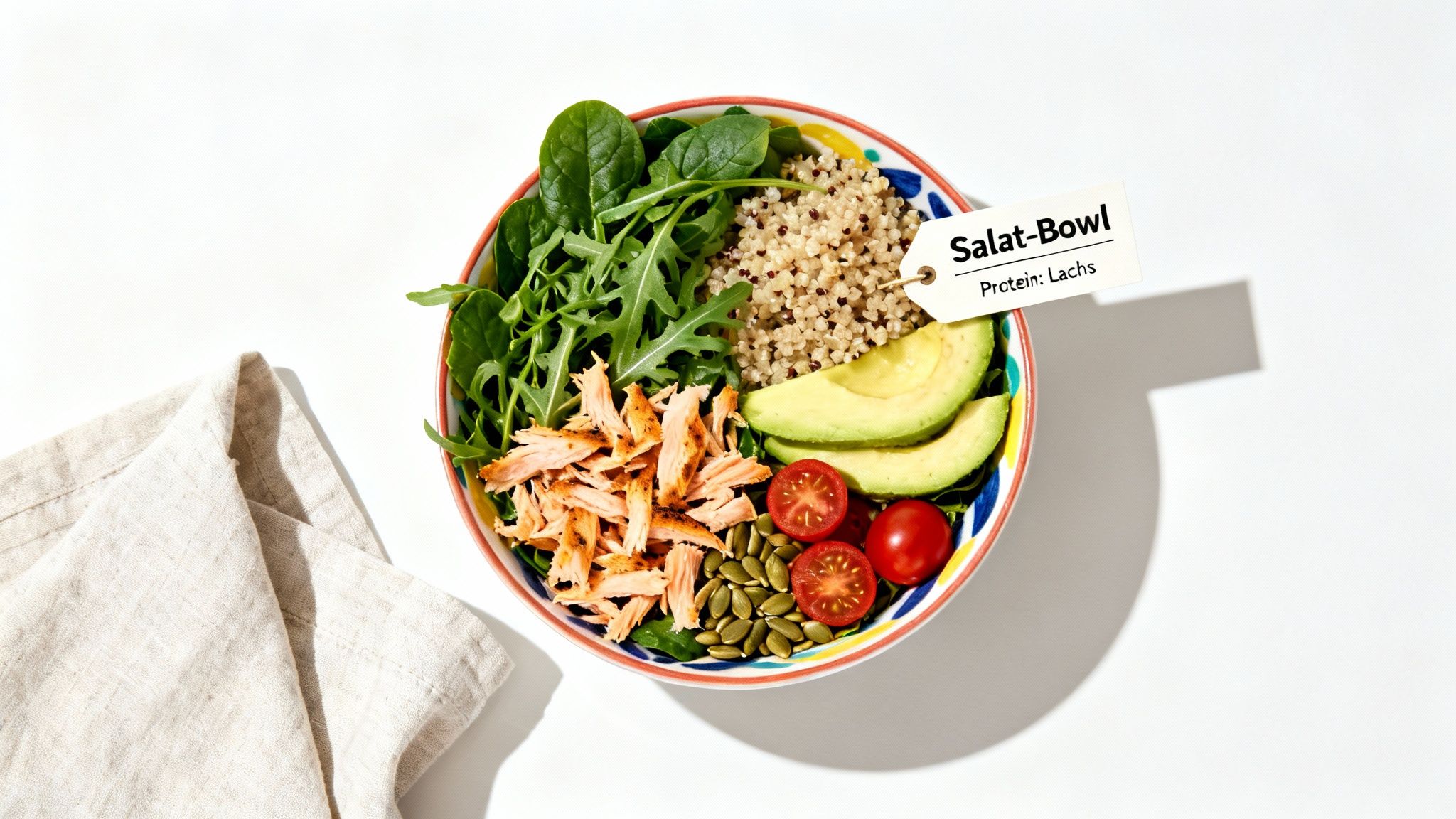
These weight-loss recipes are ideal for addressing individual needs thanks to their versatility. They allow you to choose exactly the ingredients your body processes best and provide you with lasting energy without the typical feeling of fullness after a heavy meal.
Why salads and bowls work
The key to success lies in the intelligent combination of ingredients. A base of fiber-rich vegetables supports digestion and provides a long-lasting feeling of fullness. Proteins (such as chicken, fish, or legumes) stabilize blood sugar and prevent cravings, while healthy fats (from avocado, nuts, or olive oil) provide essential fatty acids and improve the absorption of fat-soluble vitamins. This turns a simple salad into a complete meal that stimulates the metabolism.
Practical examples for your everyday life
- Buddha bowl with quinoa and chicken: approx. 40 g protein, 420 kcal
- Mediterranean salad with grilled fish and feta: approx. 35 g protein, 380 kcal
- Asian slaw bowl with salmon and edamame: approx. 42 g protein, 450 kcal
- Warm salad with grilled vegetables and beans: approx. 30 g protein, 410 kcal
Tips for optimal implementation
- Store the dressing separately: Prepare your dressing and pour it into a small container. Add it to the salad just before eating to prevent soggy leaves.
- Prepare the components: Chop vegetables, cook quinoa, and fry proteins 3–4 days in advance. This way, you can assemble your bowl fresh each day.
- Optimize fiber: Everyone reacts differently to fiber. If you tend to experience bloating after eating raw vegetables, briefly blanching hard-to-digest vegetables such as broccoli or kale may help. A mybody-x intolerance test can show you exactly which foods you tolerate well, helping you support your digestion in a targeted way.
- Ensure completeness: A salad is only a complete meal if it contains a source of protein and a source of healthy fats. This combination is essential for satiety and nutrient absorption.
4. Soups (soups and stews)
Soups and stews are true powerhouses when it comes to losing weight. Their high water content fills the stomach and provides a quick, long-lasting feeling of fullness, while keeping calorie density relatively low. This combination makes it easier to achieve a calorie deficit without constantly feeling hungry. Cooked vegetables are also particularly easy to digest, making them an ideal choice for people with sensitive stomachs or digestive issues.
These weight-loss recipes are not only comforting and nutritious, but also perfect for preparing larger quantities (meal prep). They provide vitamins, minerals, and fiber in an easily digestible form, optimally supporting your body during weight loss.
Why soups and stews work
The key lies in nutrient density and volume. A large bowl of vegetable soup can make you just as full as a higher-calorie solid meal. The warmth of the soup also has a calming effect on the digestive system and can enhance well-being. Cooked nutrients are often more bioavailable and can be absorbed better by the body.
Practical examples for your everyday life
- Lentil and pumpkin stew with spinach: approx. 320 kcal, 18 g protein
- Chicken and vegetable soup with bone broth: approx. 280 kcal, 28 g protein
- Thai coconut fish soup with vegetables: approx. 380 kcal, 35 g protein
- Beef stew with root vegetables: approx. 350 kcal, 32 g protein
Tips for optimal implementation
- Cook and freeze in advance: Cook a large pot of your favorite soup over the weekend and freeze it in convenient portions. That way, you always have a healthy meal ready.
- Bone broth as a base: Use high-quality homemade or store-bought bone broth. It provides valuable collagen, amino acids, and minerals.
- Add herbs at the end: Add fresh herbs such as parsley or cilantro shortly before serving to preserve their valuable enzymes and vitamins.
- Find your favorites: A mybody-x intolerance test can show you which vegetables and legumes your body tolerates best and which you may want to avoid to prevent digestive discomfort.
5. Smoothies (Protein Shakes and Green Smoothies)
Smoothies are a quick and efficient way to provide your body with important nutrients without spending much time in the kitchen. They are liquid meals or snacks that offer high nutrient density and are easy to digest. By combining fruit, vegetables, protein, and healthy fats, you create a filling, portable meal that is ideal for a busy lifestyle and helps keep blood sugar levels stable.
These liquid weight-loss recipes are perfect for consuming large amounts of vitamins, minerals, and fiber. Green smoothies, especially those based on vegetables such as spinach or kale, help you meet your nutritional needs without consuming many calories or much sugar.
Why Smoothies Work
The greatest advantage lies in their speed and versatility. A smoothie can replace a complete meal, prevent cravings, and support recovery after exercise. By adding protein powder and healthy fats such as almond butter or avocado, a simple fruit shake becomes a wholesome, blood-sugar-stabilizing meal that keeps you full for hours.
Practical examples for your everyday life
- Protein smoothie: yogurt, strawberries, vanilla protein, spinach (approx. 35 g protein, 320 kcal)
- Green smoothie: spinach, banana, almond milk, almond butter (approx. 18 g protein, 280 kcal)
- Post-workout shake: whey protein, banana, oats, peanut butter (approx. 45 g protein, 420 kcal)
- Superfood smoothie: spinach, berries, coconut yogurt, hemp seeds, collagen (approx. 30 g protein, 350 kcal)
Tips for optimal implementation
- Ensure satiety: Always add a protein source (e.g., protein powder, quark) and a source of fat (e.g., nuts, MCT oil). This stabilizes your blood sugar and provides long-lasting satiety.
- Vegetables as a base: Use vegetables such as spinach, cucumber, or zucchini as a base to keep the sugar content low and maximize nutrient density.
- Enjoy slowly: Drink your smoothie slowly instead of gulping it down. This supports digestion and promotes satiety.
- Find your tolerance: Not everyone tolerates large amounts of raw vegetables. A nutrient test from mybody-x can show you whether nutrient deficiencies are present that you can specifically address with your smoothie. Observe which ingredients work well for you and adjust your recipes accordingly.
6. Healthy Snacks (Healthy Between-Meal Snacks and Snack Options)
The time between main meals is often the key to success or failure when it comes to losing weight. Healthy snacks are not calorie bombs, but strategically used, nutrient-dense small meals that keep your blood sugar levels stable and effectively curb cravings. They provide you with consistent energy and prevent you from eating excessively large portions at your next main meal out of sheer hunger. A smart snack bridges the gap, nourishes your body, and keeps your metabolism on track.
These weight-loss recipes in snack form are essential for keeping your energy levels high and your food choices rational. They are a conscious choice, not uncontrolled snacking.
Why healthy snacks work
A well-planned snack prevents the dreaded blood sugar crash, which often leads to cravings for readily available, sugary, high-fat foods. Combining protein, fiber, and healthy fats provides long-lasting satiety and helps you avoid the typical afternoon slump. This not only stabilizes your mood and concentration but also helps you better control your daily calorie intake.
Practical examples for your everyday life
- Greek yogurt with nuts and berries: approx. 15 g protein, 150 kcal
- Hard-boiled egg with vegetable sticks and hummus: approx. 12 g protein, 140 kcal
- Peanut butter with apple slices or celery: approx. 8 g protein, 160 kcal
- Tuna salad on cucumber slices: approx. 18 g protein, 100 kcal
Tips for optimal implementation
- Plan your snacks: Consciously incorporate snacks into your daily plan to avoid impulse purchases of unhealthy options from vending machines or bakeries.
- Combine wisely: A good snack always contains a protein source combined with fiber (vegetables, fruit) or healthy fats (nuts, avocado).
- Listen to your body: Distinguish real hunger from emotional eating or boredom. A glass of water can often help. Sometimes there is more behind the feeling of being unable to lose weight than just the calorie balance. Learn more about why you are not losing weight and the role hormones and nutrients play.
- Timing is everything: Avoid late-night snacking after 7:00 p.m. to give your digestive system a break and avoid affecting your sleep quality.
7. Meal Prep (Meal Planning and Preparation for the Week)
The biggest enemy when losing weight is often not a lack of willpower but a stressful daily routine. When hunger and time pressure collide, quick, often unhealthy decisions are inevitable. Meal prep is the strategic answer: by deliberately planning and preparing your meals for several days, you take full control of your diet. You determine portion sizes, ingredients, and nutritional values in advance, eliminating spontaneous, high-calorie temptations.
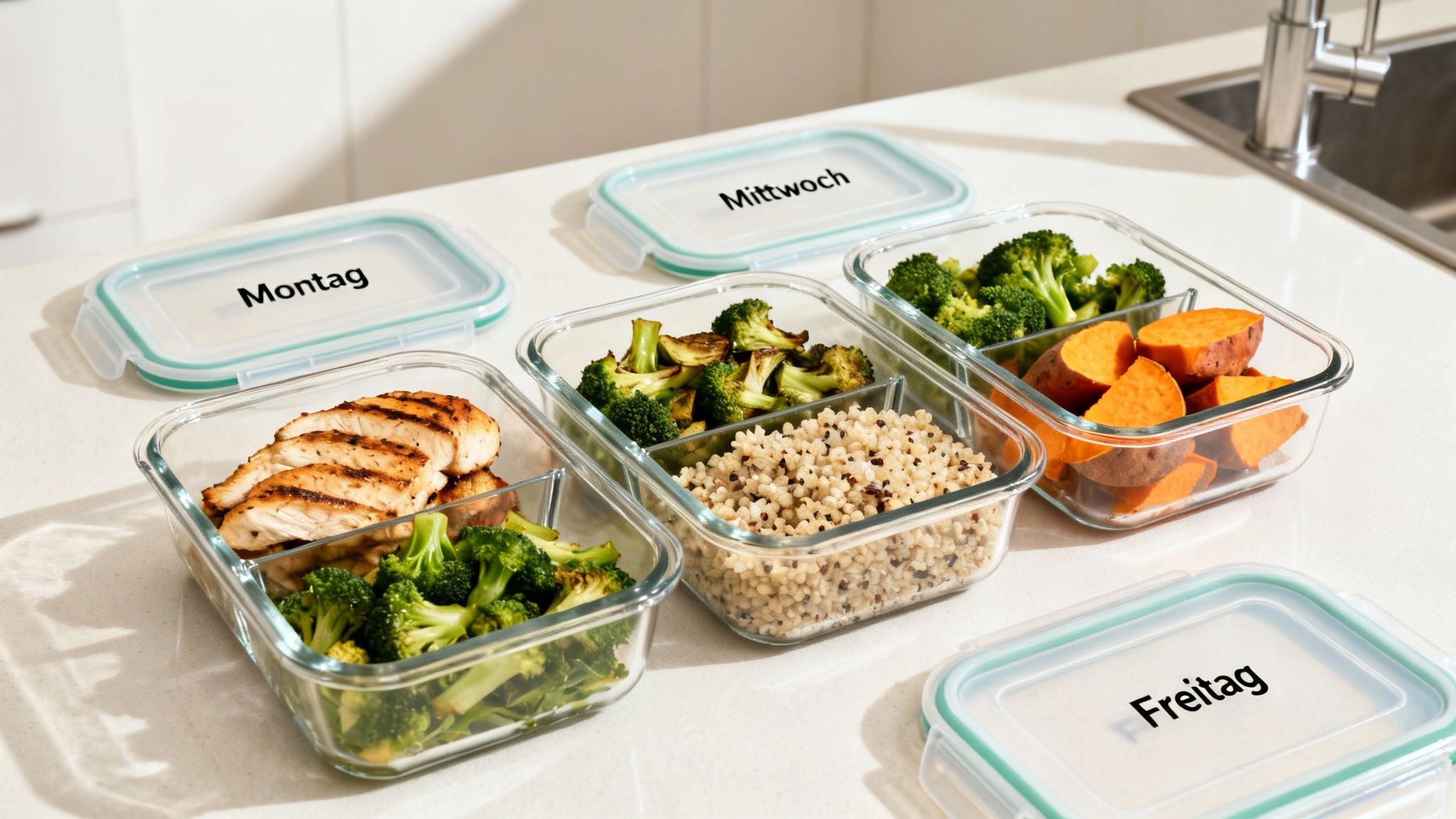
These weight-loss recipes thus become a regular part of your week, saving you not only time and money but also ensuring the consistency that is crucial for sustainable success. You build a routine that makes healthy eating an easy habit instead of seeing it as a daily challenge.
Why Meal Prep Works
Meal prep is about more than just cooking ahead. It is a conscious decision that protects you from common diet pitfalls. By preparing your meals in advance, you avoid reaching for fast food, cafeteria meals, or sugary snacks. At the same time, you ensure a consistent intake of important nutrients and effortlessly maintain your calorie deficit. This structure reduces the mental stress often associated with the question, “What am I going to eat today?”
Practical examples for your everyday life
- Lunches for the workweek: 3x chicken, rice, and broccoli (approx. 500 kcal), 2x salmon, sweet potato, and spinach (approx. 480 kcal)
- Breakfast prep: 5x protein overnight oats in jars (approx. 380 kcal) or 2x large frittatas, cut into pieces (approx. 320 kcal per serving)
- Dinner components: Prepare cooked quinoa, sautéed chicken, and roasted vegetables separately, then combine them flexibly in the evening.
- Snack boxes: Pre-portioned nut mixes, vegetable sticks with hummus, and hard-boiled eggs.
Tips for optimal implementation
- Start small: Begin by preparing only lunch for three days. Once you feel confident, expand your repertoire.
- Choose the right containers: Invest in leakproof glass or BPA-free plastic containers that are microwave- and freezer-safe.
- Rely on building blocks: Cook staple ingredients such as quinoa, rice, chicken, or lentils in larger quantities. This allows you to quickly put together a variety of dishes, such as bowls, salads, or wraps.
- Know your needs: Not every body processes nutrients in the same way. A mybody-x nutrient test can show you whether you're lacking important vitamins or minerals that you should specifically include in your meal prep. This ensures that your prepared meals are not only low in calories but also optimally tailored to your body.
8. Breakfast Prep (Meal Prep Options for Breakfast)
Mornings can be hectic, and that's exactly when many people reach for quick but unhealthy options. Meal prep for breakfast is the strategic answer. By preparing your first meal of the day, you not only save valuable time but also ensure that you start with a nutrient-rich and filling meal that supports your weight-loss goals. This effectively prevents blood sugar spikes and the morning energy slump that often leads to uncontrolled snacking.
These prepared weight-loss recipes ensure that you stay on track even when you're under time pressure. A planned breakfast provides consistent energy and helps you make more mindful food choices throughout the day.
Why Breakfast Prep Works
The greatest benefit lies in control and consistency. When your healthy breakfast is already waiting in the fridge, you eliminate the morning decision—and with it the temptation to reach for sugary cereal or pastries from the bakery. You start the day with a balanced meal that combines protein and fiber, providing long-lasting satiety and optimally activating your metabolism.
Practical examples for your everyday life
- Protein oatmeal jars: Oats, protein powder, berries, and nuts in a jar (approx. 30 g protein, 380 kcal)
- Vegetable frittata muffins: Eggs, spinach, bell pepper, and feta in muffin tins (approx. 25 g protein, 320 kcal)
- Frozen smoothie packs: Pre-portioned bags with fruit, spinach, and chia seeds (approx. 15 g protein, 250 kcal, supplement with protein powder)
- Greek yogurt parfait in a jar: Layers of yogurt, berries, and nuts (approx. 28 g protein, 300 kcal)
Tips for optimal implementation
- Plan ahead: Set aside an hour on Sunday to prepare your breakfast for the entire week.
- Use transparent containers: This lets you see what you have at a glance and make a choice more quickly.
- Always combine protein and fiber: This combination is the key to long-lasting fullness and stable energy.
- Know your nutritional needs: A mybody-x nutrient test can reveal whether you are lacking important vitamins or minerals that are crucial for an active metabolism. This allows you to enhance your breakfast prep specifically, for example with magnesium-rich nuts or vitamin C-rich berries.
9. Lunch & Dinner Prep (Meal Prep Strategies for Lunch and Dinner)
The biggest obstacles to losing weight often arise in the stressful routine of everyday life: at lunchtime, there is no time for a healthy meal, and in the evening, there is no energy left to cook. This is where meal prep comes in—the strategic preparation of lunch and dinner. By planning, cooking, and portioning meals in advance, you no longer leave your diet to chance. You ensure that you always have a balanced, calorie-controlled option on hand that keeps you full and supports your nutritional goals.
These thoughtfully designed weight-loss recipes are the key to avoiding cravings for fast food or ready-made meals. You retain full control over ingredients, portion sizes, and nutritional values, which is essential for sustainable weight loss.
Why Lunch & Dinner Prep Works
Meal prep is more than just cooking in advance; it is a conscious decision for your health. It eliminates the daily question, “What should I eat?” and replaces it with a prepared, healthy answer. This helps you avoid unhealthy impulse purchases and ensures you always have a meal ready that is perfectly aligned with your goals and provides you with essential nutrients.
Practical examples for your everyday life
- Grilled salmon with green asparagus and quinoa: approx. 450 kcal, 40 g protein, 35 g carbohydrates
- Beef, quinoa, and vegetable bowls with balsamic dressing: approx. 480 kcal, 35 g protein, 40 g carbohydrates
- Low-carb: Stuffed chicken breast with feta and spinach, served with roasted vegetables: approx. 420 kcal, 45 g protein, 15 g carbohydrates
- Portioned lentil soup with plenty of vegetables (frozen): approx. 350 kcal, 20 g protein, 45 g carbohydrates
Tips for optimal implementation
- Component prep: Cook proteins (chicken, salmon), carbohydrates (quinoa, sweet potatoes), and vegetables separately. This way, you can assemble a fresh bowl each day according to your mood.
- Keep sauces and dressings separate: Always store dressings in a separate small container and add them to your food shortly before eating. This keeps everything fresh and crisp.
- Know your nutrient needs: What is optimal for one person may be less effective for another. A comprehensive nutrient test can show you which vitamins and minerals you should specifically get through your meals to prevent deficiencies and optimally support your metabolism.
- Season smartly: Use different spice blends (Mediterranean, Asian, Middle Eastern) to create exciting new flavor experiences from the same basic ingredients again and again.
10. Personalization & Testing (Personalization through Testing)
The recipes presented so far are an excellent foundation, but the key to sustainable success lies in personalization. No two bodies are alike. What works for one person may be less effective for another. Modern at-home blood tests allow you to go beyond general recommendations and tailor your diet precisely to your unique biological makeup. Instead of guessing, you make data-driven decisions that maximize your weight-loss success.
These personalized weight-loss recipes thus become your very own success plan. You understand which nutrients your body really needs and how your metabolism reacts to certain foods. The result is not only more effective weight loss, but also improved overall well-being.
Why personalization through testing works
Personalized nutrition, supported by blood tests, eliminates the frustrating “trial-and-error” approach. Instead of blindly following a diet, you learn exactly which macronutrients (carbohydrates, fats, proteins) your body metabolizes best, which foods you tolerate well, and whether a nutrient deficiency is slowing your progress. This targeted adjustment leads to fewer cravings, more energy, and faster, visible results.
Practical examples for your everyday life
- Hormone test shows insulin resistance: You reduce pasta and bread and replace them with zucchini noodles and protein-rich lentil salads to stabilize your blood sugar.
- Intolerance test shows a reaction to gluten: You adapt your recipes by choosing gluten-free alternatives, which reduces bloating and fatigue and makes losing weight easier.
- Nutrient test reveals a vitamin D deficiency: You supplement your diet specifically with fatty fish such as salmon or mackerel and make sure to get targeted sun exposure to support your metabolism.
Tips for optimal implementation
- Start with the basics: A DNA nutrition test is an ideal starting point for understanding your genetic predisposition regarding metabolism. Learn more here about the DNA test for your nutrition on mybody-x.com.
- Combine test results: Use insights from different blood tests (e.g., hormones, nutrients, intolerances) to gain a comprehensive picture of your body and fine-tune your diet even further.
- Combine data with how you feel: Pay attention to how you feel. You achieve the best results when you combine test results with your own observations of energy levels, digestion, and satiety.
- Review periodically: Your body changes. Repeat relevant blood tests at regular intervals to review the positive effects of your dietary changes and make adjustments if necessary.
10-point comparison: recipes for weight loss
| Option | 🔄 Implementation effort | ⚡ Resource requirements | 📊 Expected results | 💡 Ideal use cases | ⭐ Main benefits |
|---|---|---|---|---|---|
| High-protein breakfast | Low–Medium: simple recipes, some prep | Medium: high-quality proteins, little time | Stable satiety, muscle preservation, blood sugar stability | Morning routine, weight management, muscle building | ⭐ High satiety; supports metabolism |
| Low-carb dinner | Medium: adaptation phase (2–3 weeks) | Medium–High: healthy fats/proteins, potentially higher costs | Low insulin levels, nighttime fat burning | Evenings, insulin resistance, keto approach | ⭐ Improved sleep/hunger profile |
| Salad recipes / salad bowls | Low: quick preparation, good prep benefits | Low–Medium: seasonal vegetables, basic ingredients | High micronutrient density, fiber, volume | Calorie reduction, meal prep, fresh meals | ⭐ Nutrient-rich; calorie-efficient |
| Soups & stews | Medium–High: long cooking time possible for broths | Low–Medium: Inexpensive ingredients, time-intensive | High satiety, hydration, easy to digest | Meal prep, sensitive digestion, cooler seasons | ⭐ Filling due to volume; cost-effective & shelf-stable |
| Smoothies (Protein & Green) | Low: Very quick preparation (3–5 min) | Medium: Blender, protein powder can be costly | Rapid nutrient intake, lower long-term satiety | Post-workout, on the go, people who avoid vegetables | ⭐ Quick; high bioavailability |
| Healthy Snacks | Low: Easy to plan/portion | Low–Medium: Minimal preparation | Blood sugar stability, reduced cravings | Snacks, daytime energy needs | ⭐ Flexible; easy to implement |
| Meal Prep (Weekly Planning) | High initially: Planning & batch cooking | Medium: Time investment, containers, storage | Consistency, portion control, time savings | Working professionals, lack of time, structured diets | ⭐ Efficient; precise calorie control |
| Breakfast Prep (Breakfast Prep) | Medium: Pre-portioning/freezing | Low–Medium: Simple ingredients, freezer compartment | Time saved in the morning, consistent nutrient intake | Morning grouches, weekly planning | ⭐ Quick access; consistent breakfasts |
| Lunch & Dinner Prep | Medium: Prepare components separately | Medium: Keep dressings separate, freezer | Balanced, reheatable main meals | Lunch/dinner routine, family meals | ⭐ Versatile; fresh portions throughout the week |
| Personalization & Testing | Medium: Order tests + evaluation | Medium–High: Testing costs, specialist interpretation if necessary | More precise adjustments, better individual results | Stagnation, specific metabolism questions | ⭐ Data-driven individualization |
Your next step: From Knowledge to Action
You now have an impressive collection of ideas, strategies, and delicious recipes for weight loss at your disposal. From protein-rich breakfasts that keep you full for a long time, to light, low-carb dinners and clever meal-prep techniques that make everyday life easier—you are well equipped to achieve your goals. We have seen how important a balanced distribution of nutrients is and how easy it can be to make healthy choices without sacrificing flavor.
But the true magic begins beyond general recommendations. Every body is unique. What boosts one person's metabolism may be less effective for another. The key to sustainable success and a deep understanding of your well-being therefore lies in personalization. It is not about blindly following a diet or meal plan, but about deciphering your own body's signals and giving it exactly what it needs.
From Guessing to Targeted Action
Instead of experimenting and hoping that the selected weight-loss recipes will have the desired effect, you can make informed decisions. Modern science gives you the tools to understand your individual metabolism and nutrient needs. These insights are not a luxury, but the foundation for nutrition that truly suits you.
Imagine if you knew exactly:
- What type of metabolism you have: Does your body process fats or carbohydrates more efficiently? A hormone or metabolism test from mybody-x can answer this question and help you distribute your macronutrients optimally. Perhaps a low-carb dinner is an absolute game changer for you, while someone else does better with complex carbohydrates.
- Which nutrients you are lacking: Fatigue, cravings, or a weight-loss plateau may indicate a deficiency in certain vitamins or minerals. A simple nutrient test from mybody-x gives you clarity and enables you to enrich your recipes with the right foods.
- Which foods you cannot tolerate: Unnoticed food intolerances can hinder your metabolism and lead to water retention. An intolerance test from mybody-x reveals which foods you should avoid to support your weight-loss efforts.
The crucial step is not just what you eat, but why you eat it. When you base your decisions on your own body data, you transform a general nutrition plan into your very own strategy for success.
This personalized approach takes the guesswork out of the process. You no longer have to feel frustrated when a popular method does not work for you. Instead, you build a plan based on facts—your body's facts. This leads not only to better and faster weight-loss results, but also to more energy, improved digestion, and an overall greater sense of well-being. Your journey is unique, and your nutrition should be too.
Are you ready to take your nutrition to the next level and truly understand your body? With at-home tests from mybody x Gesundheit, you gain precise insights into your metabolism, nutrient levels, and potential intolerances, allowing you to tailor your weight-loss recipes perfectly to your needs. Discover the right tests for your individual health goals now at mybody x Gesundheit.



Share now:
Healthy Christmas Dinner: Two Light & Festive Recipes
Your top 8 anti-inflammatory diet recipes for greater well-being