
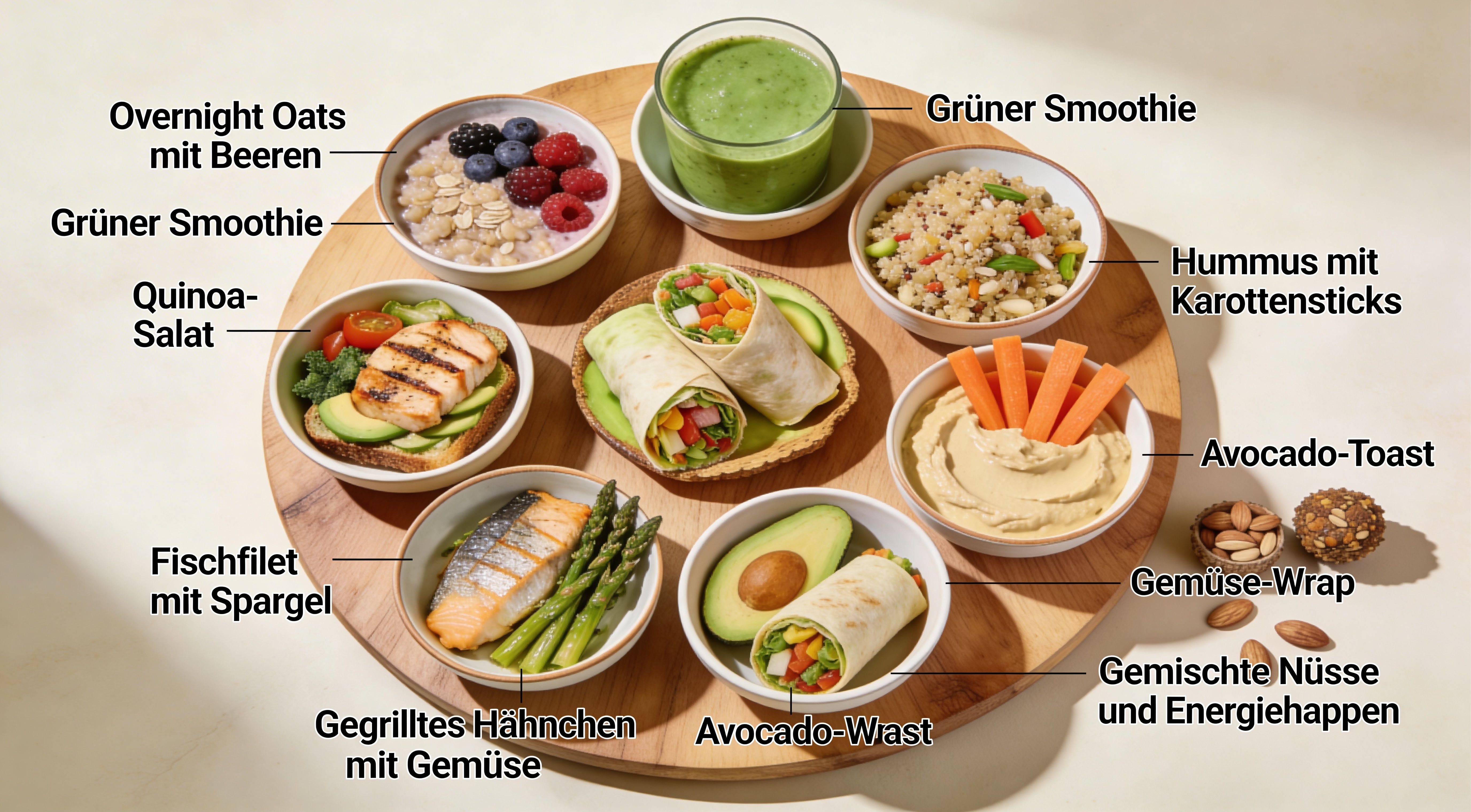
10 Healthy Dishes You Should Know
You come home in the evening, you are hungry, have little time, and still want to eat something that makes you feel good. This is exactly when healthy eating often fails—not because of a lack of good intentions, but because of execution. Between work, shopping, and cooking, many nutrition tips seem theoretical. Everyday meals need something else. They need to be easy to plan, filling, and suited to your body.
That is exactly where the difference begins between just any healthy recipe and a dish that truly works for you.
Many guides treat healthy dishes as a fixed template. In practice, they are more like a toolkit. Two people can eat the same bowl, the same soup, or the same breakfast and feel completely different afterward. One person stays full and focused for a long time. The other quickly becomes hungry or tired again, or notices that their stomach reacts. This does not mean that a dish is objectively good or bad. It shows that healthy eating is about more than calories, buzzwords, and beautiful photos.
Personalization helps put these differences into better perspective. A metabolic analysis as a guide to your eating style, for example, can show why you may cope better with certain macronutrient distributions than with others. This is not a substitute for good basic guidelines. It is more like fine-tuning a bicycle. The frame stays the same, but the seat height, handlebars, and gearing need to suit the person riding it.
There is also a practical everyday point that many articles leave out. A healthy dish must not only make nutritional sense. It must also be affordable, repeatable, and easy to cook without much thought. If a meal only works under ideal conditions, it is of little help in real life.
That is why this article is not about general standard tips, but about ten specific approaches to healthy dishes that you can adapt to your goals, tolerance, performance needs, and stage of life. This turns healthy eating from a rigid set of rules into a system that works in everyday life.
1. Personalized macronutrient bowls based on DNA metabolic type

Bowls are one of the most practical healthy dishes because you can easily customize them. You assemble them from a few building blocks: a source of carbohydrates, a protein, vegetables, fat, and a dressing. The difference lies in the proportions.
Some people do well with more carbohydrates. Others feel more stable when protein and fat make up a larger proportion. Personalization becomes interesting, for example with a metabolic analysis from mybody®, which can serve as a guide for your eating style.
This is what sensible bowl variations look like
A vegetarian protein bowl can consist of quinoa, tofu, edamame, cucumber, bell pepper, and tahini.
A fat-focused version can include leafy greens, salmon, avocado, olive oil, and roasted seeds.
If you tolerate carbohydrates well, sweet potato, brown rice, chicken, and broccoli often work well together.
What matters is not that a bowl looks perfect. What matters is that it keeps you calm, satisfied, and productive after eating.
Keep it simple. Cook rice or quinoa ahead on Sunday, prepare two protein sources, and wash vegetables right after shopping. Then, during the week, you can make a decent meal in five minutes instead of a spontaneous stopgap.
A practical everyday example: You come home tired in the evening. Instead of having bread with sweet treats, take a bowl, add a prepared base, and then simply add fresh ingredients. This turns meal prep into a decision-making aid.
2. Microbiome-optimized anti-inflammatory meals with prebiotics and probiotics

You have a large raw vegetable salad with beans, whole-grain bread, and kombucha for lunch. Sounds healthy. If your stomach feels tight or rumbles afterward, or you feel heavy rather than clear-headed, it is often not because of a "bad" food, but because of too many gut-active stimuli at once.
Two terms are important for a microbiome-friendly meal. Prebiotics are dietary fibers that feed beneficial gut bacteria. Probiotics provide live microorganisms from fermented foods. The overview of Probiotics and Prebiotics at mybody® explains the difference clearly and practically.
In this context, anti-inflammatory does not mean complicated. The meal should calm rather than overwhelm your gut. This often works better with cooked components, small amounts of fermented foods, and a source of fiber that you tolerate well.
A practical setup looks like this: Start with a warm, gentle base such as rice, potatoes, or oats. Add steamed vegetables, for example carrots, zucchini, or fennel. Then add a protein source such as tempeh, plain yogurt, fish, or soft lentils. Use fermented foods more like a seasoning than the main component. One or two forkfuls of sauerkraut or a spoonful of yogurt are often enough.
Many articles leave out precisely this step.
Anyone who significantly increases prebiotics and probiotics at the same time can easily confuse “healthy” with “more is better.” But for the gut, the dose is often the crucial factor. A small portion of lentils may work well, whereas a large bowl plus raw vegetables and sauerkraut on the same day may be too much.
Two practical examples:
- Warm rice bowl with steamed carrots, zucchini, tempeh, a little olive oil, and 1 teaspoon of sauerkraut
- Pumpkin and lentil soup with herbs, a dollop of plain yogurt, and ground flaxseeds
Both dishes combine food for gut bacteria with preparation methods that are easy to tolerate. This is often more sensible than a cold “superfood” plate that looks good but leaves you dealing with it afterward instead of feeling full.
If you are often unsure whether bloating, fatigue, or inconsistent digestion is more likely due to your gut or a nutrient deficiency, checking for possible deficiencies may help. In that case, it makes sense to look into how to test for a nutrient deficiency.
If fermented foods quickly make you feel bloated, start with one teaspoon per meal and observe your reaction for a few days.
3. Nutrient-deficiency-compensating meals based on laboratory analyses
You cook sensibly, do not skip meals, and still feel mentally drained in the afternoon. In precisely these situations, less nutrition ideology and more precision can help. Lab values do not replace a good basic understanding, but they can turn guesswork into a clear plan of action.
That is why healthy meals often work best when they address a specific deficiency. If you would like to check your levels, mybody® provides information on how to test for a nutrient deficiency.
The practical point that many articles skip is translating the test result onto your plate. A low value does not simply mean that you should eat “more healthy food.” It usually means that you need to incorporate certain nutrients more regularly, in better combinations, and in portions that work in everyday life.
With iron, for example, the logic is fairly simple. You increase iron-rich foods and combine them with vitamin C because this often improves absorption. A lunch with lean beef, potatoes, steamed spinach, and bell peppers is therefore more useful than a randomly assembled salad with many good ingredients that miss the actual problem.
For vitamin D, B12, or omega-3, the solution looks different again. Salmon, eggs, and mushrooms can be good options depending on your needs. If you eat a predominantly plant-based diet, plan more carefully with legumes, nuts, seeds, fortified products, and, where appropriate, supplements coordinated with a doctor. It is similar to training. You do not automatically eat the same way for endurance and strength, so it often helps to review the basics of nutrition for athletes.
A practical everyday example is a sheet-pan meal with potatoes, broccoli, and salmon. The dish does not cover everything, but it demonstrates a sound principle: a reliable protein base, a filling carbohydrate source, vegetables, and a clear nutritional focus.
It becomes even more practical when you think in patterns rather than individual ingredients.
A lab result is not an order to find a miracle cure, but more like a checklist in the kitchen. If you are low in iron, plan two or three suitable iron-rich meals per week. If you are low in B12, pay deliberate attention to suitable animal-based or fortified sources. If magnesium is an issue, check whether nuts, seeds, legumes, and whole-grain products really appear regularly in your everyday life or merely “technically do.”
This is how healthy dishes become concrete. Not spectacular, but sustainable.
4. High-performance meals for athletes based on genetic performance markers

You have just finished a hard session, you are tired and hungry, and you simply want to eat something—anything. That is precisely when it becomes clear whether a meal merely fills you up or genuinely supports your performance at your next workout.
Genetic performance markers are often misunderstood. They do not provide a ready-made meal plan or a verdict such as “you are an endurance type” or “you need lots of carbohydrates.” Rather, they offer clues about what you should test more closely: Do you tolerate larger amounts of carbohydrates around training well, do you benefit more from a slightly higher protein density, or do you need more structure around timing and portion size during intense sessions? For the basics, take a look at the guide to nutrition for athletes.
This only becomes practical in real meals.
A good starting point is to build sports meals around training demands, not fitness trends. Before training, food should above all be easy to digest. After training, it should replenish and repair. On quieter days, the meal can be slower-digesting, richer in vegetables, and slightly higher in fat.
Three simple patterns help in everyday life:
Before a fast or intense session, a small, easily digestible combination such as a banana with yogurt or toast with a little nut butter is often suitable. The goal here is readily available energy, not culinary perfection.
After strength training or intervals, a plate following the building-block principle often works well: an easily tolerated carbohydrate source, a clear protein source, vegetables, and some fat. That is why chicken with potatoes and broccoli is so common. Not because it is magical, but because the components each serve their purpose effectively.
On rest days, a different focus is worthwhile. More vegetables, somewhat more legumes or whole grains, and less emphasis on quick energy directly around exercise.
One example that many articles leave out is the question of portion size. A pasta skillet with tofu, zucchini, and tomatoes can be a very good choice after a long training session. The same portion immediately before exercise can sit in your stomach like a fully packed backpack. So the dish is not inherently good or bad. Timing is also a deciding factor.
This is exactly where genetic markers become interesting. If someone is more prone to muscle soreness, slower recovery, or energy crashes during high-intensity exercise, the meal can be tailored more precisely: a more deliberate emphasis on protein after exertion, more predictable carbohydrates before hard sessions, and no experiments with very high-fiber or fatty foods shortly before training.
A practical high-performance plate could look like this: rice or potatoes as a base, salmon, chicken, or tempeh as a protein source, along with cooked carrots or zucchini and a small amount of olive oil or avocado. It seems simple. For many athletes, that is precisely the advantage, because the meal is predictable, easy to prepare in advance, and does not cause unpleasant surprises before the next training session.
5. Personalized allergy- and intolerance-friendly meals
If you regularly notice stomach pain, pressure, fatigue, or skin reactions after eating, you do not need “perfect superfoods”; you need clarity. Many symptoms occur not because you eat poorly, but because certain ingredients do not suit you well.
Healthy dishes that are consistently simplified are helpful here. Not boring. Just thoughtfully structured. A meal for sensitive phases could consist of rice, chicken, cooked carrots, and a little olive oil. If that works well, gradually add more ingredients.
Fewer ingredients, more insight
This approach is often more useful than constantly trying new trends:
- Choose a clear foundation: one source of starch, one protein, and one well-tolerated vegetable
- Observe symptoms: not just your stomach, but also your skin, energy, and sleep
- Use substitute products consciously: not everything that is gluten-free or lactose-free is automatically a sensible choice
- Pay attention to quantities: sometimes the portion is the problem, not the food itself
A typical everyday example: You supposedly cannot tolerate salad. In fact, the problem may be raw onions, a large portion of chickpeas, and a rich dressing. A small amount of cooked vegetables with a simple protein source may work perfectly well.
This is how personalized healthy dishes are created—not through prohibitions, but through observation. First, things are reduced; then they are deliberately added back.
6. Hormone-optimized meals for women and men
You eat lunch as usual. One day you feel stable and focused afterward; the next, you feel empty, irritable, or constantly hungry. This is not always due to the dish itself. The hormonal context often changes how your body responds to the same meal.
Hormones act like a pacemaker for hunger, fullness, blood sugar, sleep, and recovery. That is why no rigid nutritional principle works here. It makes more sense to choose meals that adapt to exertion, time of day, and, for women, the phase of the menstrual cycle.
For women, this is often noticeable around the menstrual cycle. During phases with more fatigue or cravings, warm, filling dishes often work better than cold, light snacks. One example is a bowl of potatoes, lentils, cooked spinach, pumpkin seeds, and a little yogurt or tahini. It provides carbohydrates, protein, minerals, and volume. This exact combination is often overlooked when people focus only on calories or individual superfoods.
For men, it is usually less about a monthly rhythm and more about stress, sleep, and training load. Those who sleep poorly and train hard are often more sensitive to long gaps between meals and very sugary meals. In that case, a plate of salmon, broccoli, and potatoes is often more sensible than eating nothing at first and then snacking indiscriminately later.
The practical point is simple. Hormone-friendly often means blood-sugar-friendly and predictable.
A good basic template looks like this: one filling source of carbohydrates, 25 to 35 grams of protein, vegetables, and a small source of fat. It works like a table with four sturdy legs. If one is missing, the meal is more likely to lead to cravings, fatigue, or overeating later.
For stressful days, it is worth having a rescue meal that is ready in 10 minutes. For example, potatoes, eggs, frozen vegetables, and olive oil. Or prepare oats with skyr, berries, nuts, and cinnamon in the evening. Such simple combinations may seem unspectacular, but they solve an everyday problem that many articles leave out: Good decisions are easier when the right food is already available.
7. Anti-aging and longevity-focused meals with autophagy support
Longevity often sounds complicated, but it starts with the basics. Regular meals with plenty of vegetables, healthy fats, sufficient protein, and few highly processed ingredients are the foundation. Healthy dishes in this area do not have to be ascetic. They should instead be nutrient-rich and easy to plan.
Practical meals combine color, bitter compounds, herbs, and different plant sources. A salad with spinach, berries, walnuts, and olive oil is a simple example. Lentil soup with herbs, onion, vegetables, and high-quality oil is another.
What is often overlooked
Many people focus on individual nutrients and forget the system as a whole. Sleep, stress, eating patterns, and tolerability strongly influence how beneficial a dish really is in everyday life.
The market is also moving toward more convenient but healthier options. According to a NielsenIQ analysis for Lebensmittel Zeitung, sales of refrigerated pasta products such as pasta and gnocchi rose by 6.9 percent from April 2024 to April 2025. This is interesting because it shows that convenience and healthy dishes are not mutually exclusive. Good longevity nutrition can be practical too.
A realistic example is quick whole-wheat pasta with broccoli, olive oil, white beans, and herbs. Not a miracle meal, but a solid meal with substance.
8. Weight-loss meals with a metabolic advantage
Lunch is over, and two hours later you reach for cookies or another pastry with your coffee. The problem is often not a lack of discipline, but a dish that keeps the body occupied only briefly. For weight loss, meals that prolong satiety, keep blood sugar steadier, and can be repeated in everyday life without much friction are helpful.
A good illustration is a fireplace. Paper burns up quickly, while logs last longer. On the plate, protein, fiber, and volume provide that longer burn time. Plenty of vegetables fills the stomach. Protein slows down the quick return of hunger. An appropriate amount of carbohydrates provides energy without turning the meal into a pure calorie trap.
This is what the basic principle looks like in practice
Start with the foundation of satiety. About half the plate should consist of vegetables, cooked or raw, depending on what is better tolerated. Add a clearly recognizable protein source such as chicken, skyr, eggs, fish, tofu, tempeh, or lentils. Only then add the carbohydrate side in an amount that suits your activity level and hunger, such as potatoes, rice, or whole-wheat pasta.
This third component in particular often causes confusion. Many people first cut carbohydrates sharply. This can work in the short term, but in practice it often fails because of fatigue, snack cravings, or compensatory overeating later. For many people, a smaller, deliberate portion is easier to stick to than complete avoidance.
The texture of the dish is also important. A thin vegetable soup usually provides a different level of satiety than a thick, chunky lentil stew. A yogurt dip with herbs, a few nuts, or beans in a salad often turn a light meal into a satisfying, substantial one.
An everyday weight-loss plate could look like this: pan-fried chicken or tofu, a large tray of zucchini, bell peppers, and carrots, plus a small portion of rice and a yogurt-herb dip. Another example is a baked potato with herbed quark and a cucumber-tomato salad. Both are simple, affordable, and easy to repeat. This is often underestimated. A meal only provides a metabolic benefit if it not only looks good on paper but also works on an ordinary Tuesday.
9. Plant-focused anti-inflammatory dishes with an optimized protein profile
You come home hungry at lunchtime, want to eat something light, and end up with a large bowl of vegetables. An hour later, your energy is low, and reaching for bread, snack bars, or sweets becomes more likely. This is exactly where it is not just the amount of vegetables that matters, but also how the meal is composed.
Plant-focused healthy dishes work best like a well-built shelf. The vegetables provide volume, color, and many secondary plant compounds. The protein components ensure that the meal is satisfying and provides lasting fullness, rather than only making you feel full temporarily. If one of these elements is missing, the food can quickly seem “healthy” but not practical for everyday life.
Particularly practical are dishes in which protein is not included by chance, but clearly planned. Lentils with some quinoa, roasted pumpkin seeds, and roasted vegetables are a good example. Tempeh with rice and pak choi works similarly, because the soy provides the protein base here and the vegetables complement the meal. A thick bean soup can also be a complete main course when the amount of beans, additions, and topping are chosen deliberately.
What matters in plant-based protein profiles
- Choose one clear main source: for example, tofu, tempeh, lentils, beans, edamame, or chickpeas
- Complement rather than overload: grains, seeds, or a dip make the dish more well-rounded without requiring five protein sources
- Often easier to tolerate when cooked: warm components are more comfortable for many people in everyday life than very large portions of raw vegetables
- Use spices strategically: ginger, turmeric, cumin, rosemary, or parsley add depth and help keep plant-based dishes from tasting flat
One point many articles leave out: the amount of protein alone does not solve the problem. A chickpea salad may look substantial on paper and still be unsatisfying if it consists only of cold ingredients without any contrast. A combination of soft, crunchy, and creamy elements is better. Roasted chickpeas, warm vegetables, and a tahini-lemon dip turn similar ingredients into a much more complete meal.
A practical example is a tray bake with chickpeas, cauliflower, and carrots seasoned with turmeric and cumin. It pairs well with a yogurt or tahini dip, optionally topped with some hemp seeds or pumpkin seeds. If you need more protein, add tofu cubes or edamame instead of simply adding more rice.
This is how “lots of vegetables” becomes a dish that sustains you even on a long workday.
10. Sleep- and recovery-optimized evening meals with melatonin and magnesium
It is 8:30 p.m., the day has been long, and your body wants to wind down while still being nourished. At precisely this point, dinner often determines whether you go to bed feeling satisfied and calm or with a heavy stomach, cravings, or inner restlessness.
In the evening, dishes usually work well when they are warm, straightforward, and easy to digest. The principle is simple: a well-tolerated source of carbohydrates for calm, a moderate portion of protein for satiety and recovery, plus magnesium-rich ingredients such as spinach, pumpkin seeds, beans, or oats. Foods containing melatonin, such as tomatoes, eggs, or certain grains, can complement dinner. But the point is not to chase individual nutrients in isolation. What matters is how the entire dish affects you in the evening.
Many people confuse a sleep-friendly meal with the smallest meal possible. That often does not work. An overly light dinner is like a phone charged to only 15 percent. It lasts briefly, but not through the night. A moderate, complete meal that satisfies you without sitting heavily in your stomach is better.
A simple example is a baked potato with steamed spinach and some turkey breast or tofu. Potatoes provide well-tolerated carbohydrates, spinach supplies magnesium, and the protein source curbs typical late-night snacking. A vegetarian option is chickpea pasta with green vegetables and some hard cheese, or alternatively plain tofu.
What often works better in the evening than “healthy on paper”
It is not just the ingredients that matter, but also their form. Raw vegetables, very spicy foods, greasy pan-fried dishes, or huge salads work well for many people during the day, but can often be taxing late in the evening. Cooked vegetables, soft textures, and mild seasoning are frequently the more practical choice, especially after stressful days.
A small portion of carbohydrates in the evening is also not a problem for many people. On the contrary. Together with protein, it can round out the meal and promote a feeling of calm. That does not mean everyone will react the same way. If pasta leaves you feeling heavy, potatoes, oats, or rice are often better tolerated.
One detail many articles leave out: recovery meals rarely fail because of a lack of magnesium, but because they are difficult to put into practice. If you only have ten minutes in the evening, you need building blocks rather than ideal recipes. Cooked potatoes from the day before, frozen spinach, two eggs or a piece of salmon, plus some yogurt-herb dip. This creates a dinner in a short time that is calming yet still substantial.
If you get home late and would otherwise reach for bread, sweets, or takeout, a simple standard combination in the fridge can help. A cooked starch source, a prepared vegetable, and a quick protein source. This exact preparation makes sleep-friendly eating practical for everyday life.
10 healthy dishes compared
| 🔄 Implementation complexity | ⚡ Resources & effort | 📊 Expected results | ⭐ Ideal use cases | ⭐ Main benefits | 💡 Quick tip |
|---|---|---|---|---|---|
| Moderate - DNA analysis + recipe scaling | Medium - DNA test required, standard ingredients, meal prep | Optimized macro distribution, higher compliance, more stable energy | Metabolism optimization, weight goals, individual macro needs | Personalized macros; less trial and error; scalable | Prepare components on Sundays; use mybody® DNA |
| High - microbiome analysis + gradual introduction | Medium-high - fermented ingredients, time to adapt | Improved gut health, reduced inflammatory markers, better nutrient absorption | Digestive issues, immune support, longevity focus | Promotes a healthy microbiome; reduces inflammation; better absorption | Introduce fermented foods slowly; use mybody® microbiome analysis |
| Moderate to high – laboratory interpretation & targeted combination | Medium – blood/saliva tests, specific foods | Correction of specific deficiencies, higher energy, improved health (months) | People with a confirmed deficiency, prevention-focused individuals | Effective correction of deficiencies; reduces unnecessary supplements | Conduct follow-up tests after 3–6 months |
| High – timing + genetic markers + training plan | High – high-quality proteins, precise planning, increased costs | Improved muscle growth, faster recovery, increased performance | Competitive athletes, fitness enthusiasts, performance optimizers | Optimized protein/carbohydrate timing; better recovery | Timing 2–3 hours before / 30–60 minutes after training; use mybody® DNA |
| Moderate – test-based elimination principle | Medium – specialty products, limited selection | Rapid symptom reduction, better tolerance, improved nutrient absorption | People with allergies, IBS sufferers, people with intolerances | Safe elimination of triggers; clear dietary structure | Keep a food diary; mybody® intolerance tests |
| High – cycle/hormone tests + phase-based planning | Medium to high – regular tracking, possible testing | More stable mood, reduced PMS/menopause symptoms, better energy | Women with cycle issues, men with testosterone goals | Cycle-synchronized nutrition; improved recovery | Track the cycle for 2–3 months; use mybody® hormone tests |
| Moderate – long-term implementation & organic ingredients | Medium – high-quality/organic ingredients, potentially more expensive | Reduced biological age, increased autophagy, improved cognitive scores | People interested in longevity, ages 40–70, prevention-focused individuals | Rich in antioxidants; supports cellular repair and prevention | Combine with intermittent fasting; use mybody® longevity tests |
| Moderate – macro focus with an emphasis on protein | Medium – high-quality protein, discipline in planning | Higher thermic effect, better satiety, muscle preservation during dieting | People losing weight, metabolism optimizers, those following failed diets | Increased TEF; stable blood sugar; fewer hunger attacks | Gradually increase protein; use the mybody® metabolic test |
| Moderate – planning for complete amino acids | Low to moderate – legumes, seeds; possible supplements | Reduced inflammation, better heart and gut health profile, sustainable | People transitioning to a vegan/vegetarian diet, ethically motivated individuals | Anti-inflammatory; high in fiber; environmentally friendly | Combine protein sources; conduct mybody® nutrient checks |
| Low to moderate – timing + specific nutrients in the evening | Low – readily available ingredients, time discipline | Improved sleep quality, faster recovery, better REM | People with sleep problems, sports recovery needs, and shift workers | Easier to fall asleep; improved overnight recovery | Eat 3–4 hours before sleep; combine tryptophan + carbohydrates |
Final Thoughts
Healthy dishes are not just a collection of appealing recipe ideas. They are tools for your everyday life. They help you maintain more stable energy levels, better understand discomfort, support your training effectively, and make eating more predictable.
The most important point is this: A healthy dish is not the same for everyone. What agrees with you depends on your daily routine, digestion, activity level, goals, and sometimes also on individual factors such as intolerances, nutrient status, or genetic tendencies.
General recommendations are still useful. They provide a foundation. Plant-focused meals, sufficient protein, few highly processed products, and good preparation help in almost every case. At the same time, it is worth looking more closely if you are not making progress despite your efforts. If you often feel tired after “healthy” meals, if certain foods regularly cause you discomfort, or if you cannot find a clear direction despite your discipline, personalization can make the difference.
This is where tests and analyses come in. Not as a replacement for good cooking, but as a complement. A DNA-based approach can provide insights into how you structure your meals, which macronutrient distribution may suit you better, and why standard solutions only work to a limited extent for you. For people who want to understand their bodies better, this can be significantly more helpful than the next generic diet plan from the internet.
If you take away just one thing from this article, let it be this: Don’t start with perfection. Start with one dish you can make twice this week. A bowl. A soup. An oven-baked dish. Then honestly observe how it makes you feel. Healthy dishes work not through theory, but through repetition.
In this context, MYBODY Lab GmbH is a relevant option if you want to personalize your diet more. This is especially true if you are not just looking for recipe ideas, but want to understand how your body might respond to different dietary approaches.
If you no longer want to plan your diet based only on general advice, but instead on the basis of your individual predisposition, take a look at the MYBODY Lab GmbH DNA Nutrition Test. The test can help you better adapt healthy dishes to your metabolism and personal goals.



Share now:
Healthy eating weekly plan that truly suits you
Weight-loss meal plan: Your path to your comfortable weight