
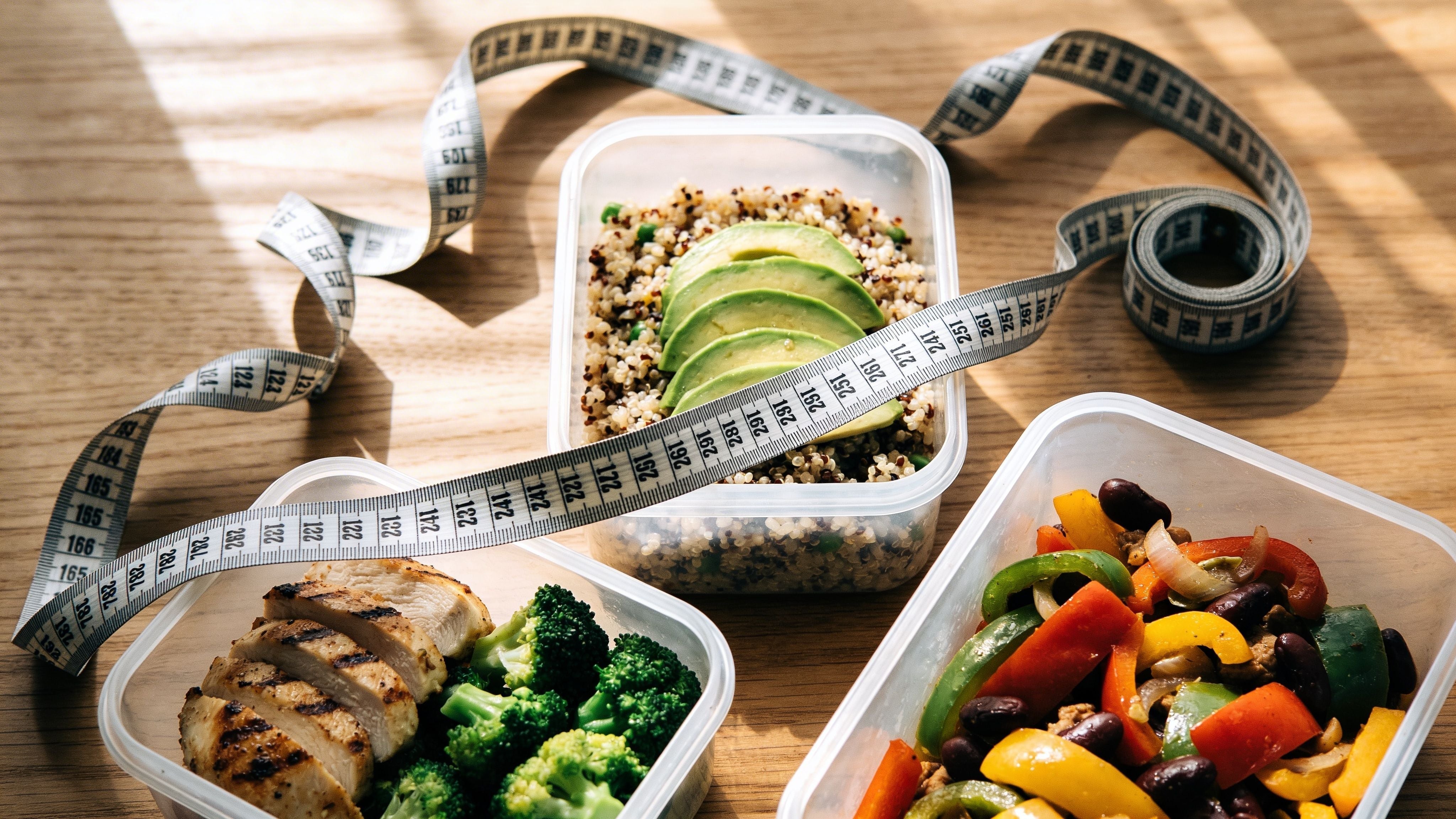
Diet plan for weight loss: Your path to a comfortable weight
You are sitting on the sofa in the evening, actually motivated, and searching once again for a diet plan for weight loss. Perhaps you have already counted calories, collected points, skipped meals, or eliminated entire food groups. It often works for a short time. Then everyday life returns. Hunger, stress, invitations, fatigue. And suddenly everything feels difficult again.
If this sounds familiar, it is not necessarily due to a lack of discipline. Often, the plan simply does not fit your life, your sense of fullness, or possibly your metabolism. That is where things get interesting. A good diet plan is not a rigid set of rules, but a system you understand and can adapt.
Why most diets fail and how to do better
Many people start with a clear resolution. Monday is the start. A light breakfast only, salad for lunch, and as little as possible in the evening. The first few days feel controlled. A week later, it becomes difficult because the plan is strict but not practical for everyday life.

A typical example is switching from one extreme diet to the next. First low fat, then low carb, then intermittent fasting. Each method has its own logic. But if you do not know how your body responds to specific proportions of carbohydrates, fats, and protein, you are often just trying things at random.
The real problem is often not willpower
Many standard plans treat everyone the same. They assume that the same rules work for every person. That is often exactly where the problem lies.
You may know phrases like: “Just eat less” or “Move more.” That sounds simple, but it helps little if, despite your efforts, you keep slipping back into the same patterns. Some people stay full longer with a lower-carbohydrate diet. Others cope much better in everyday life with more complex carbohydrates.
Important: A plan often fails not because you are “too weak,” but because it does not take your biology, daily life, and habits into account.
What works better instead
A sensible diet plan for weight loss answers three questions:
- How much you really need: Not based on how you feel, but guided by your needs.
- What reliably keeps you full: So you do not have to constantly fight hunger.
- What fits into your everyday life: A plan is useless if it only works on perfect days.
That is exactly why personalized nutrition is becoming more important. If you want to understand more deeply why blanket recommendations often fall short, mybody® offers a good introduction to the topic of personalized nutrition.
The good news is: You do not have to eat perfectly. You only need a plan that you can stick to for more than ten days. That is the difference between a short-term diet and real change.
The foundations of your success – calorie needs and deficit
Weight loss is often explained in an unnecessarily complicated way. At its core, it means that your body receives slightly less energy over a longer period than it uses. This shortfall is called a calorie deficit.
Historically, it is fascinating to see how much dietary recommendations have changed. One of the first quantitative approaches in Germany was the Voit dietary standard from 1881, with 118 g of protein, 56 g of fat, and 500 g of carbohydrates for an average worker. Today, recommendations are quite different and focus more strongly on prevention and a moderate deficit (ernährungsdenkwerkstatt.de on the Voit dietary standard and the evolution of recommendations).
Why extreme cuts often backfire
If you reduce your intake too much, it usually works only briefly in everyday life. You feel tired, become irritable more quickly, and constantly think about food. Many people then lose control not because they lack motivation, but because the plan is biologically difficult to tolerate.
A moderate deficit is usually more sensible. It gives you more flexibility for normal meals and makes it easier to stay on track.
How to proceed in practice
Instead of starting directly with a complicated nutrition plan, proceed in this order:
-
Estimate your needs roughly
Use a calculator as a starting point. It does not provide absolute truth, but it does offer a good basis for planning. -
Choose a moderate deficit
Not maximal, but manageable. Your plan should still be feasible on stressful days. -
Observe first, then adjust
If you are very hungry, sleep poorly, or constantly think about food, your deficit is often too aggressive.
For an initial estimate, you can use the calorie needs calculator and compare your values with your activity, daily routine, and satiety.
How to recognize a good start
A sustainable start does not feel spectacular. That is usually a good sign.
| Signs | What it means |
|---|---|
| You have normal energy | Your deficit is probably not too large |
| You feel full after meals | The meals are sensibly structured |
| You can plan for invitations | Your plan fits real life better |
| You do not have to keep compensating | Your everyday life remains stable |
Key takeaway: The strictest plan does not win; the one you can follow calmly and consistently does.
Understanding macronutrients and using them to your advantage
Calories determine the direction. Macronutrients often determine how easy or difficult the journey is for you. They influence satiety, everyday energy, and whether you follow your plan willingly or only reluctantly.
Protein, fat, and carbohydrates in simple terms
Protein mainly helps with satiety and preserving muscle mass while losing weight. Typical sources include skyr, quark, yogurt, eggs, fish, legumes, tofu, and lean meat.
Fats are important for flavor, enjoyment of food, and many bodily functions. They are found, for example, in nuts, seeds, olive oil, avocado, and fatty fish.
Carbohydrates provide energy. They are not automatically “bad.” What matters is which ones you choose and how well they work for you in everyday life. Potatoes, oatmeal, whole-grain products, fruit, and legumes are often much more helpful than highly processed snacks.
Why the distribution can be individualized
The old way of thinking often goes like this: There is one correct distribution for everyone. It is not that simple. A meta-analysis in The Lancet showed that low-carb groups lost about 1 kg more weight on average than low-fat groups in the first year. This shows that macronutrient distribution can make a difference, but not in the same way for everyone (Reader's Digest, referring to the meta-analysis).
A simple structure for your meals
If you do not want to track your intake, you can build each main meal according to a simple pattern:
-
A satiety base with protein
For example, skyr, eggs, lentils, tofu, fish, or chicken. -
Volume from vegetables or salad
This makes the plate more substantial and the meal more practical for everyday life. -
An energy source that suits you
Potatoes, oatmeal, whole-grain rice, or simply fewer carbohydrates if that works better for you. -
A source of fat for flavor
Nuts, olive oil, seeds, or avocado.
Where readers often get confused
Many people wonder: Should I reduce carbohydrates or not? The honest answer is: maybe, but not blindly. If you are constantly hungry with more carbohydrates, it may be worth adjusting the balance. If you feel sluggish with very few carbohydrates, that is also a signal.
Practical tip: After each main meal, observe three things: satiety, energy, and your urge to snack in the afternoon. These three signals are often more useful than rigid rules from the internet.
Your plan becomes personal with a DNA analysis
This is the point at which a general plan becomes personal. Even if two people are the same height, eat similarly, and exercise a similar amount, their bodies do not necessarily respond in the same way. This is where bio-individuality comes into play.

Why generic plans are often frustrating
General recommendations overlook the fact that metabolic pathways can vary from person to person. According to the provided data, up to 70% of weight-loss attempts in Germany fail, often because generic plans do not take into account that, for example, a low-carb diet may work better for around 40% of Germans due to genetic predisposition (DAK on the right diet for weight loss).
This explains why you can feel great on a plan while your friend constantly experiences cravings on the same plan. Not every recommendation suits every metabolism.
What a DNA analysis changes in practice
A good DNA analysis does not replace habits. However, it can help you make better decisions. For example, with questions such as:
- Do you tend to respond better to a lower-carbohydrate or lower-fat diet?
- How important is a stronger focus on protein to you?
- Where is it worth taking a closer look instead of blindly following trends?
If you would like to explore the topic in greater depth, the article on DNA analysis explains the basics clearly.
A sober look at the relevance of the test
A concrete example of this approach is the mybody® DNA Test Ernährung. The test is designed to evaluate genetic indications related to nutrition and derive personalized recommendations from them. This can be especially useful if you have already tried several diets and finally want to understand why your body does not respond to standard plans as hoped.
When personalization is particularly useful
Not everyone needs a genetic analysis right away. It can be particularly helpful if you recognize yourself in one of these points:
| Situation | Why personalization can help |
|---|---|
| You constantly switch between diet types | You need less guesswork and more direction |
| You only stick to plans for a short time | Satiety and practicality in everyday life probably aren’t right |
| You are losing weight slowly or irregularly | Your macronutrient distribution may not be suitable |
| You want to take a sustainable rather than radical approach | Individual rules are often easier to implement |
Important thought: Personalization does not mean perfection. It means adapting your diet better to your body instead of constantly adapting yourself to other people’s rules.
Practical 7-day plans for inspiration
A good diet plan for weight loss doesn’t have to be complicated. It needs structure, enough satiety, and foods you genuinely enjoy. The following ideas are not rigid rules, but templates. You can swap dishes, adjust portion sizes, and adapt individual elements to your daily routine.
A high-protein, high-fiber diet can be very helpful for weight loss. In the data provided, a protein intake of approximately 1.5 g per kg of body weight combined with a high-fiber diet is associated with sustainable weight loss. In studies, participants lost up to 12.9% of their body weight within one year, with fat loss being the primary focus (Men's Health on the focus on protein and fiber).
How to use the plans correctly
Don’t think in terms of “allowed” and “forbidden.” Think in building blocks.
A successful day usually includes:
- a clear source of protein,
- plenty of vegetables or other fiber-rich components,
- a suitable source of energy,
- and meals that keep you from slipping into snack mode.
Sample high-protein daily plan
| Meal | Dish | Short description |
|---|---|---|
| Breakfast | Skyr with oats and berries | Filling, high in protein, and good for a calm start |
| Lunch | Chicken or tofu with roasted vegetables and potatoes | Plenty of volume, clear structure, easy to prepare in advance |
| Dinner | Omelet or lentil bowl with salad | Light, but not too little |
| Snack | Yogurt, edamame, or cottage cheese with cucumber | Helps prevent impulsive snacking |
7 days high-protein
Day 1
Skyr with berries for breakfast. Chicken with broccoli and potatoes for lunch. A large salad with egg or tofu for dinner.
Day 2
Oats with yogurt. Lentil stew for lunch. Roasted vegetables with herb quark for dinner.
Day 3
Scrambled eggs with vegetables. A tuna or bean bowl for lunch. Chickpea soup for dinner.
Day 4
Quark with apple and nuts. For lunch, turkey strips or tempeh with rice and vegetables. For dinner, cottage cheese with tomatoes and whole-grain bread.
Day 5
Yogurt with oats. Chili with beans for lunch. Omelet with mushrooms for dinner.
Day 6
A high-protein breakfast of your choice. For lunch, salmon or tofu with salad and potatoes. For dinner, vegetable soup with lentils.
Day 7
Keep it relaxed. Use familiar building blocks and plan one meal that you particularly enjoy.
7 days plant-based
For the vegan option, pay particular attention to protein sources such as tofu, tempeh, soy yogurt, lentils, beans, and chickpeas.
- Days 1 to 3 with porridge, lentil bowl, tofu and vegetable stir-fry
- Days 4 to 5 with soy yogurt, chili sin carne, roasted vegetables with hummus
- Days 6 to 7 with whole-grain bread plus a spread, chickpea salad, miso soup with tofu
7 days of low carb as an option
If you feel fuller with fewer carbohydrates, a low-carb week can be a good test. Still, make sure you get enough vegetables and protein.
- Breakfast ideas eggs, yogurt, quark, tofu scramble
- At lunchtime large salads with fish, eggs, chicken, or legumes
- In the evening vegetable stir-fries, soups, casseroles with a protein source
If you're looking for more practical everyday ideas, you'll find many useful combinations in the weekly healthy eating plan.
What matters is not the perfect meal plan. What matters is getting through the day feeling full, calm, and in control with your meals.
From plan to routine – shopping, tracking, and adjusting
Most good intentions fail not because of a lack of knowledge, but because of implementation in real life. When your refrigerator is empty and you have to make a spontaneous decision after a long day, the easiest option often wins. That's why preparation makes a huge difference.

A simple shopping list that almost always works
You don't have to plan every meal exactly seven days in advance. It's enough to have suitable basic ingredients at home.
Protein sources
Skyr, yogurt, eggs, tofu, tempeh, cottage cheese, lentils, beans, fish, or lean meat.
Vegetables and fiber
Frozen vegetables, salad, cucumber, bell peppers, tomatoes, carrots, broccoli, berries, apples, oats, whole-grain products.
Fats and extras
Olive oil, nuts, seeds, avocado, spices, herbs, mustard, vinegar.
Track without driving yourself crazy
Tracking is a tool, not a judgment. It should help you recognize patterns.
For example, track:
- Weight over time, not just individual days
- Measurements, if the scale makes you anxious
- Energy and satiety after meals
- Sleep and snack cravings, because both reveal a lot about how well your plan fits
If you notice that you regularly overeat in the evening, it is often not a character flaw. Frequently, the day was planned too restrictively beforehand.
Meal prep, but realistic
You don't need perfectly organized containers for the whole week. Often, three small preparations are enough:
- Pre-cook one protein for several meals.
- Wash vegetables or prepare roasted vegetables.
- Set two quick breakfast options.
Mini-rule for stressful weeks: Always keep an emergency meal on hand. For example, yogurt with oats, frozen vegetables with tofu, or a simple lentil soup.
When you should adjust your plan
If you are constantly hungry, always thinking about food, or feeling sluggish, something is not working yet. Do not change everything at once. First, check one thing. More protein, more vegetable volume, a different distribution of carbohydrates, or better meal timing.
This is how a theoretical plan becomes a routine that supports you instead of placing an additional burden on you.
Avoid common mistakes and break through plateaus
A plateau does not automatically mean that nothing is working anymore. Often, it is simply a sign that your current routine needs adjusting. Usually, it is small, inconspicuous details that add up.
Typical stumbling blocks
-
Liquid calories
Drinks are often underestimated. Juice, alcohol, lattes, or soft drinks can quickly shrink a calorie deficit. -
Too little structure in the morning
Those who barely eat in the morning are more likely to experience cravings or uncontrolled snacking later. -
Overly strict rules during the week
That is often when the system falls apart over the weekend.
Meal timing is an often-underestimated lever
Chronobiology studies show that a time-based diet plan focused on breakfast can almost double weight loss, for example, 6.7 kg versus 3.4 kg in 5 months. A normalized regulation of hunger is cited as the reason; this is disrupted in 70% of people who are overweight (AOK on nutrition, exercise, and chronobiology).
This does not mean you have to force yourself to eat breakfast. It means checking whether an earlier, protein-rich start makes your day more stable than a large dinner.
How to respond sensibly to a plateau
If your progress stalls, test only one change at a time:
- Give breakfast higher priority
- Take a more honest look at drinks
- Make dinner simpler and more predictable
- Increase protein and fiber
Plateaus are not proof that you have failed. They are feedback. Those who interpret them correctly often make more stable progress than someone who starts completely over every time.
If you do not want to try yet another standard diet but would rather understand your body better, a data-driven approach may be worthwhile. MYBODY Lab GmbH offers health analyses covering DNA, metabolism, the microbiome, and nutrition. Especially when it comes to a diet plan for weight loss, this can help you make decisions based not only on trends but also on your personal circumstances.



Share now:
10 Healthy Dishes You Should Know
Balanced Diet Plan: Your Guide for 2026