

Have your hormones tested: Your guide to greater clarity and well-being
Do you often feel tired or moody, or gain weight for no apparent reason even though you have not really changed your lifestyle? If these words make you nod inwardly, you are definitely not alone. Many women attribute such signs to everyday stress. But the cause is often much deeper: A hormonal imbalance could be the real reason why you no longer feel like yourself.
Understand your body's signals

Your body sends you signals continuously, but in the hectic pace of everyday life, it is all too easy to overlook them. A hormone test can help you finally interpret these signs correctly and gain clarity. Instead of continuing to grope in the dark and wondering why you do not feel well, you can investigate the causes specifically.
Deciding to have your hormones tested is an important step toward taking greater responsibility for your health. It is about taking a proactive approach and gaining a better understanding of your body.
Signs that may indicate a hormonal imbalance
Some of these symptoms may sound all too familiar. They can occur individually or combine into an unwelcome cocktail that significantly affects your quality of life. A test makes perfect sense if you regularly experience the following symptoms:
- Menstrual irregularities: Your period comes irregularly, is particularly painful, or is heavier or lighter than usual.
- Unexplained weight gain: You gain weight even though you have not changed your diet—especially around your abdomen.
- Mood swings: You often feel irritable for no apparent reason, suddenly feel anxious, or experience low moods.
- Persistent fatigue: Despite getting enough sleep, you constantly feel exhausted and simply lack energy.
- Skin problems: You suddenly struggle with acne, extremely dry skin, or notice increased hair loss.
- Sleep problems: You have trouble falling asleep or staying asleep, or you constantly wake up during the night.
A hormone test is far more than just a measurement of laboratory values—it is a tool that helps you understand your body's language and regain control over your well-being.
Stages of life when a test is particularly informative
In addition to very specific symptoms, there are also certain stages of life when your hormonal balance is particularly susceptible to fluctuations. During these times, having your hormones tested as a woman can be incredibly helpful in finding your bearings again.
The perimenopause and menopause years in particular are a phase of great uncertainty for many women. In fact, the German Menopause Society estimates that around 9 million women in Germany are currently going through menopause. Countless women between 40 and 55 years old experience symptoms such as hot flashes, sleep disturbances, or weight gain and wonder whether they are all hormonally related. While medical guidelines recommend checking hormone levels only in certain cases—for example, in women between 40 and 45 with typical symptoms—the desire for personal responsibility and clarity is growing. You can read more about the current recommendations in the information provided by the German Menopause Society.
A mybody-x at-home hormone test gives you the opportunity to take action yourself and gain data-based insights into your body—all conveniently and without months of waiting. This gives you a sound foundation for planning targeted next steps for your health.
The Most Important Hormones at a Glance
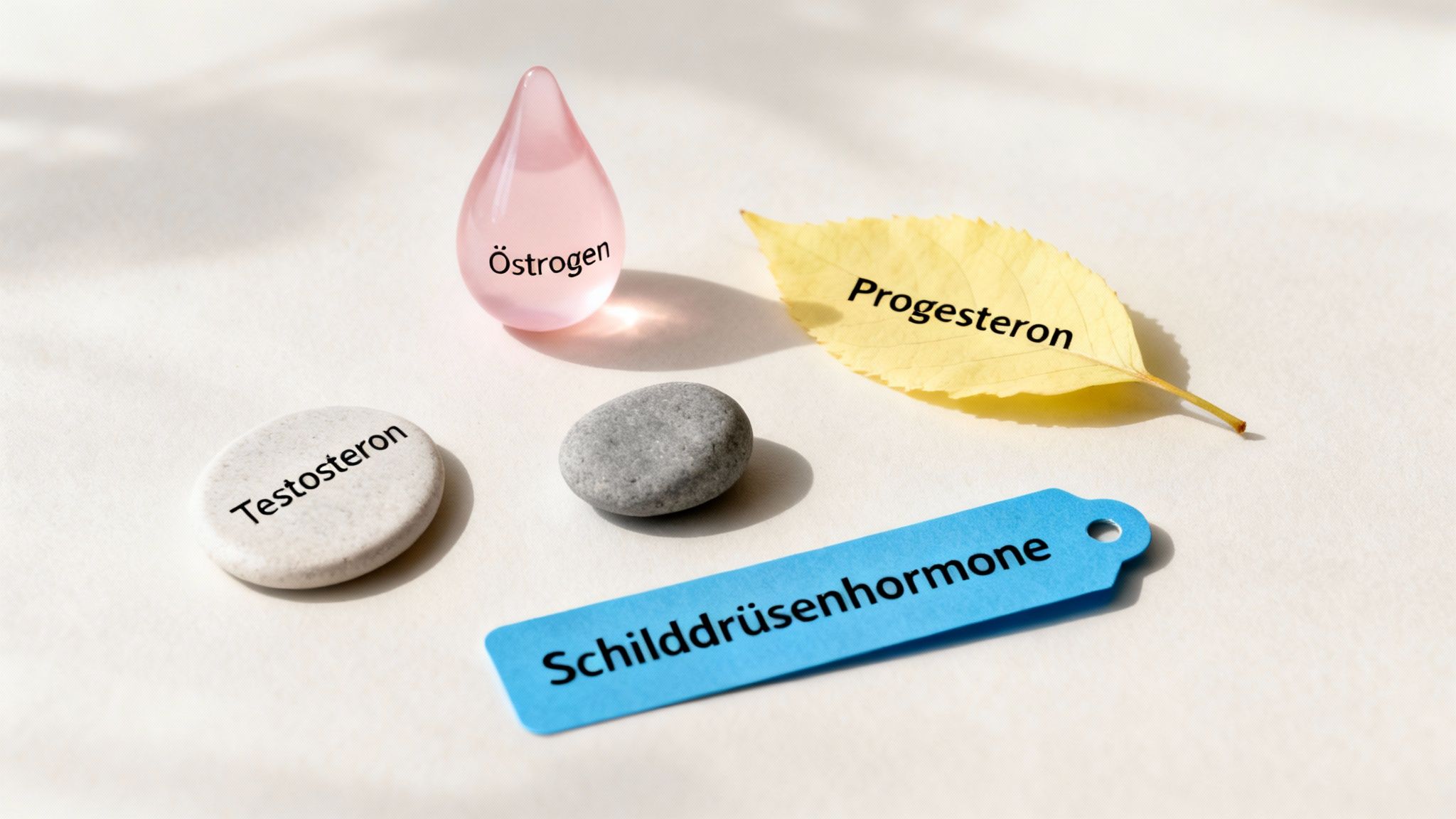
Imagine your hormonal system as a perfectly coordinated orchestra. Each hormone is an instrument that must play its part at the right moment so that the melody—your well-being—sounds harmonious. If even one instrument falls out of rhythm, the entire piece suffers.
To understand why you may not feel centered, it is essential to know the main players in this orchestra. When you understand the language of your hormones, you can interpret your body’s signals much better and assess the causes of your symptoms more clearly.
The Female Sex Hormones: Estradiol and Progesterone
Estradiol, the most active form of estrogen, is the hormone that makes you a woman. It shapes your cycle, supports healthy skin and strong bones, and promotes a positive mood. You could describe it as your “energy and drive hormone.”
Progesterone, on the other hand, is your “calm and serenity hormone.” It acts primarily after ovulation in the second half of your cycle, prepares your body for a possible pregnancy, and promotes restful sleep. It is estrogen’s natural counterpart and keeps its effects in balance.
An imbalance between these two is very often at the root of many complaints. Just think of typical premenstrual syndrome (PMS): A relative progesterone deficiency in relation to estrogen can lead to irritability, breast tenderness, and water retention.
The ratio of estrogen to progesterone is often more important than the individual absolute levels. Many women experience estrogen dominance even when their levels are within the normal range. This is exactly where a mybody-x hormone test can provide clarity.
If you would like to learn more about how this key hormone affects your health, we recommend our detailed article on what estrogen does in the body.
The often-underestimated testosterone
Testosterone is often dismissed as a “male” hormone, but it is also absolutely essential for us women. It plays a central role in your libido, muscle building, energy, and assertiveness.
A deficiency can manifest as a lack of motivation, reduced sex drive, and difficulty building muscle. An excess, as often occurs with PCOS, can lead to skin blemishes, hair loss on the scalp, and increased hair growth in unwanted areas.
The executive suite: Thyroid hormones
Your thyroid is the engine of your metabolism. The hormones TSH, fT3, and fT4 regulate how quickly or slowly your body burns energy. They influence your weight, body temperature, digestion, and overall energy levels.
Imagine sitting in your car in winter, but the heater isn’t working properly—that’s what hypothyroidism feels like. Typical signs include:
- Weight gain despite an unchanged diet
- Constantly feeling cold and sensitivity to cold
- Fatigue and lack of motivation
- Dry skin and brittle nails
Hyperthyroidism, on the other hand, revs the engine up to full speed, which can lead to inner restlessness, a racing heart, and unexplained weight loss. Because these symptoms are so nonspecific, when considering “Should I get my hormones tested?”, it is essential to keep your thyroid levels in mind as well.
Before we continue, here is an overview table to help you better identify the possible causes of your symptoms. It shows at a glance which hormones may be behind common women’s health concerns such as fatigue, weight gain, or cycle problems.
Typical symptoms and their possible hormonal causes
| Symptom | Possible hormonal imbalance | Hormones involved (examples) |
|---|---|---|
| Unexplained fatigue | Hypothyroidism, cortisol imbalance, low testosterone levels | TSH, fT3, fT4, cortisol, testosterone |
| Weight gain/loss | Thyroid problems, estrogen dominance, insulin resistance | Thyroid hormones, estradiol, progesterone, insulin |
| PMS & cycle problems | Sex hormone imbalance, often progesterone deficiency | Estradiol, progesterone |
| Sleep disorders | Low progesterone levels, high cortisol | Progesterone, cortisol |
| Skin problems & hair loss | High testosterone levels, thyroid dysfunction | Testosterone, DHEA-S, TSH, fT3, fT4 |
| Low libido | Low testosterone or estrogen levels | Testosterone, estradiol |
| Mood swings | Sex hormone fluctuations, cortisol imbalance | Estradiol, progesterone, cortisol |
This table is, of course, only a starting point. A hormone test such as the mybody-x home test takes these connections into account and gives you a clear picture of your hormonal status. This helps you finally understand which “instrument” in your body’s orchestra is out of tune and take targeted steps to restore harmony.
Blood test or saliva test—which is right for you?
Once you have decided to take a hormone test, you are usually faced with the next important question: Should you choose a blood test or a saliva test? Both have their place, but they measure different things and are therefore ideal for different questions. The choice depends entirely on which hormones you are looking at and what exactly you want to find out.
A blood test, like the one most people know from the doctor, is the undisputed gold standard for certain values. It measures the total concentration of a hormone in the body—that is, both the free, active components and those firmly bound to transport proteins.
Imagine these bound hormones as passengers in a taxi. Although they travel through the bloodstream, they cannot simply get out and attach to cells to exert their effects. Only free hormones are, so to speak, traveling “on foot” and can act directly where they are needed.
When a blood test is the right choice
A blood test is essential when it comes to hormones for which the total amount in the bloodstream is decisive. These primarily include:
- Thyroid hormones (TSH, fT3, fT4): Blood provides the most precise values here for determining whether the thyroid is overactive or underactive.
- Hormones for assessing fertility: Levels such as follicle-stimulating hormone (FSH), luteinizing hormone (LH), and anti-Müllerian hormone (AMH), which provides information about your ovarian reserve, are traditionally measured in the blood.
- Prolactin: An elevated level of this hormone can disrupt the menstrual cycle and is also reliably measured in the blood.
For these specific areas, a blood test is the method of choice. The mybody-x self-tests use a precise blood analysis for these values from a small fingertip sample—easy and virtually pain-free to perform at home.
The benefits of a saliva test for sex hormones
And this is precisely where the saliva test’s major strength comes into play. Saliva measures almost exclusively the free, biologically active hormones—that is, exactly those that exert their effects on your cells. This makes it the ideal method for determining the status of your sex and stress hormones, whose effectiveness is directly decisive in the tissue.
In Germany, saliva testing is becoming increasingly important as a non-invasive, painless method that can be performed at home. Laboratory service providers and studies confirm its high significance, particularly for hormones such as progesterone and estradiol.
This makes it possible, for example, to create time-of-day cortisol profiles, which are extremely valuable for women with stress symptoms or sleep problems. If you would like to learn more, our guide explains how a saliva test works. You can also read more about the exact reference values here from the LADR experts.
A saliva test gives you direct insight into what actually reaches your cells. It is ideal for assessing the delicate balance between estrogen and progesterone or the progression of your stress hormone cortisol throughout the day.
Precisely because sample collection is so easy, you can perfectly align it with your cycle—which is absolutely crucial for meaningful results for sex hormones.
Blood or saliva: A direct comparison
| Feature | Blood test (serum) | Saliva test |
|---|---|---|
| What is measured? | Total concentration (bound & free hormones) | Almost exclusively free, active hormones |
| Ideal for | Thyroid hormones, FSH, LH, AMH, prolactin | Sex hormones (estradiol, progesterone, testosterone), stress hormones (cortisol, DHEA) |
| Sample collection | Invasive (blood draw), requires medical personnel | Non-invasive, painless, and easy to perform at home |
| Timing | An appointment with a doctor is required | Flexible at home, perfectly adaptable to your cycle |
| Significance for sex hormones | May be distorted by bound components | Very high, as only the active hormones are measured |
For a comprehensive analysis that can genuinely help you identify the causes of symptoms such as PMS, fatigue, or mood swings, a saliva test is often the better choice. The hormone tests from mybody-x use the appropriate method depending on the question and enable you to conveniently, accurately, and stress-free analyze your most important hormones from home, so you can finally gain clarity about your hormonal well-being.
How to properly prepare for your hormone test
A hormone test only provides truly meaningful results when it is performed at the right time and under the right conditions. Timing is especially important for us women, because our hormone levels perform a fairly complex tango throughout the month.
So that you don’t end up staring at unclear results without knowing what to do, this guide will walk you through the process. It removes all uncertainty and ensures that you receive reliable results you can actually use.
The journey from deciding to take a test to receiving the final results is more straightforward than many people think. Essentially, it involves just three simple steps.
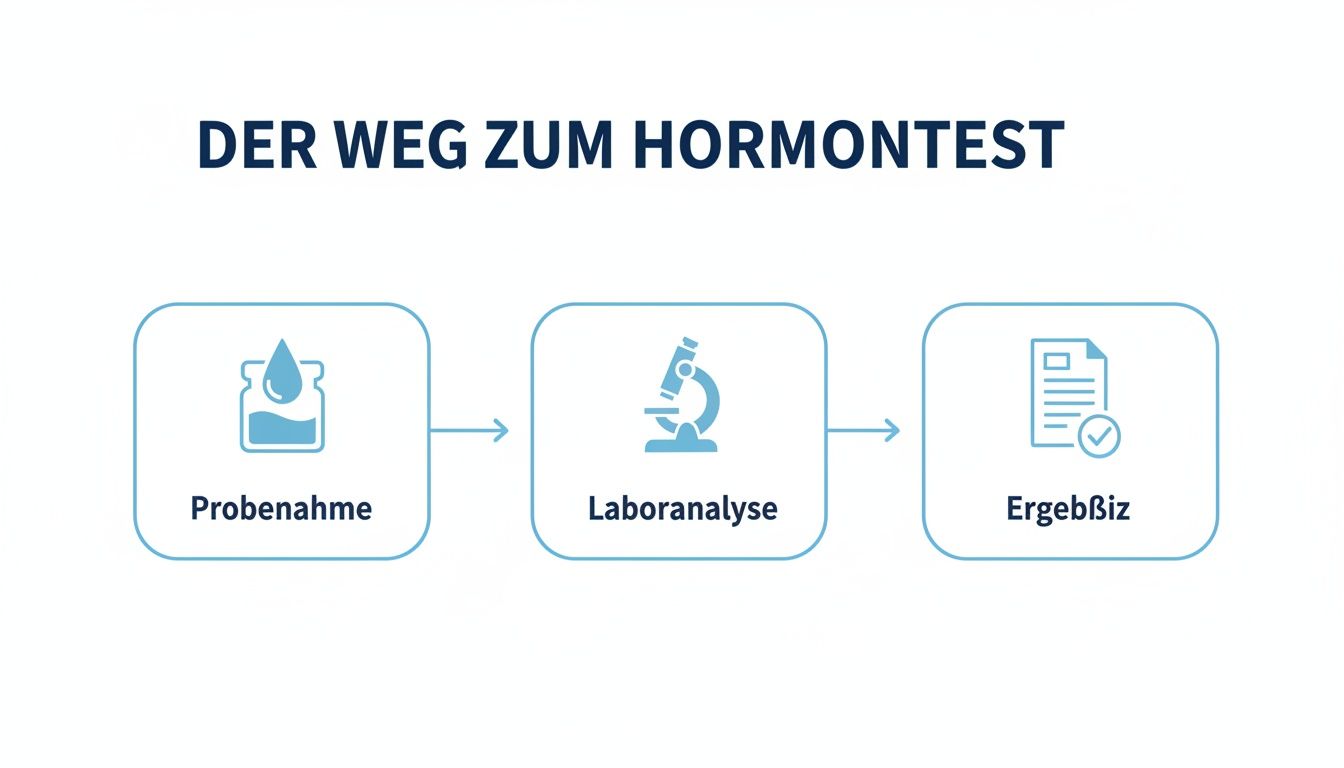
As you can see, it all starts with collecting the sample at home, continues with professional laboratory analysis, and ends with an easy-to-understand report that gives you clarity.
The right time in the cycle
By far the most important factor is the day on which you take the sample. Estrogen and progesterone levels fluctuate considerably throughout the cycle. To get a meaningful picture—especially when it comes to a possible imbalance—choosing the right time is crucial.
The ideal time to measure progesterone and estradiol is in the second half of the cycle, known as the luteal phase. This is when your progesterone level should reach its peak to balance out estrogen.
What does this mean for you specifically?
- With a regular 28-day cycle: It’s best to take the test between cycle days 18 and 21. As a reminder: The first day of your period is always cycle day 1.
- With shorter or longer cycles: As a rule of thumb, take the sample about 6 to 8 days before your next expected period begins.
What should you do with an irregular cycle or no period?
Not every woman has a textbook cycle, and that’s completely okay. Perhaps you have polycystic ovary syndrome, are in perimenopause, or have irregular or absent periods for other reasons. No problem—there are solutions for this too.
- With irregular cycles: Try to estimate the second half of your cycle as accurately as possible. Look for bodily signs that could indicate ovulation (e.g. mittelschmerz or changes in cervical mucus), then take the sample about a week later.
- No cycle (e.g. after menopause or with amenorrhea): In this case, it’s very simple: You can take the test on any day. Your hormone levels are relatively stable and low, but a test can still provide important insights into your baseline levels.
An important note: If you use hormonal contraception, such as the pill, ring, or hormonal IUD, testing sex hormones is unfortunately of limited value. These methods suppress your natural cycle and hormone production. To obtain meaningful results, you would need to stop using contraception, after consulting your doctor, for at least three months so that your body can readjust.
Your checklist before collecting the sample
To make sure your results are not distorted by external factors, there are a few simple rules you should follow on the day of sample collection. This is particularly important for a saliva sample, such as the one used for the mybody-x hormone test.
- Time of day: Collect the sample first thing in the morning, immediately after waking up.
- Remain fasting: Please do not eat or drink anything beforehand (a sip of water is okay). Coffee and tea are also off-limits.
- Don’t brush your teeth: Brush your teeth only after collecting the sample, as toothpaste can contaminate it.
- No exercise: Avoid intense physical exertion immediately before the test.
- Medications & creams: In the morning, avoid taking non-essential dietary supplements. You should not apply hormone-containing creams (e.g., progesterone cream) to your hands or arms the evening before.
By following these simple steps, you create the best conditions for a precise and meaningful hormone test. This gives you the opportunity to obtain clear results—a valuable foundation for all further steps toward greater well-being.
Understanding your report and planning the next steps

The moment has arrived: You are holding your hormone report in your hands. Perhaps you feel a mixture of curiosity and slight apprehension. But what do all these numbers, abbreviations, and reference ranges really mean? Don’t worry—simply see this section as your personal translator. We’ll go through everything calmly so that you can understand what your body is trying to tell you.
The most important thing first: A value outside the so-called normal range is no reason to panic. It is a clue, a puzzle piece that helps you finally better interpret your body’s signals.
Interpreting reference ranges correctly
On your report, alongside your personal values, you will always find a “reference range” or “normal range.” This range indicates the spectrum in which the values fall for most healthy people. You can think of it as a wide river in which the majority of fish swim.
What matters, however, is that this range is not set in stone. It can vary slightly from one laboratory to another and depends on important factors such as your age and cycle phase. So if your value falls somewhat outside this range, it does not automatically mean that something is wrong. It is simply an indication that deserves closer examination.
Your individual well-being is often much more informative than a rigid laboratory value. Many women already feel unwell even though their values are still just within the normal range. A test report must therefore always be viewed in the context of your personal symptoms.
Typical values and what they mean in context
To make this a little more tangible, let’s look at a few specific examples. Certain patterns are particularly revealing in hormone tests for women.
- Estrogen dominance example: Your estradiol level may be within the normal range, but your progesterone is very low in relation to it. This imbalance is called estrogen dominance—a common cause of PMS, water retention, or irritability, even when both values appear “normal” on their own.
- Thyroid example: A TSH level that is still within the reference range but near the upper limit may already indicate early hypothyroidism in some women, which can manifest as fatigue and weight gain.
- Stress-axis example: High cortisol in the morning is normal and important for starting the day. However, if the level is still elevated in the evening, this may indicate chronic stress and significantly disrupt your sleep.
These reference ranges play a particularly important role for women. The normal level of anti-Müllerian hormone (AMH), a marker of ovarian reserve, typically falls between 1 and 8 ng/ml. A level below 1 ng/ml may indicate diminished ovarian reserve. The thyroid hormone free T4 is considered to be in the optimal range at 0.9–1.7 ng/dl.
Your report as a starting point for positive changes
Your test result is not a verdict, but an extremely valuable starting point. With this data-based foundation, you can now plan your next steps deliberately and finally stop groping in the dark.
Based on your individual hormone profile, the next steps could look like this:
- Targeted lifestyle adjustments: Often, even small changes to your diet, stress management, or sleep can make a huge difference. Your report shows you exactly where you can start.
- Support from micronutrients: Sometimes the body simply lacks the right building blocks to produce hormones optimally. Your result may indicate a possible need for certain vitamins or minerals.
- Informed conversation with experts: With your results in hand, you are perfectly prepared for a conversation with your doctor or therapist. You can ask targeted questions and work together to develop a plan that is truly right for you.
Your results put you back in control, empowering you to take responsibility for your well-being. If you would like to explore the topic in greater depth, you will find more practical tips in our guide 7 Effective Tips for Hormonal Balance.
See your results as an opportunity—the first, most important step on your path to greater energy and balance has been taken.
Frequently asked questions about hormone testing
After all this information, you probably still have a few very specific questions on your mind. That's completely normal. That's why we've compiled answers here to the questions we receive most often about hormone tests for women. This way, you can quickly gain the clarity you need for your next steps.
How much does a hormone test for women cost, and does health insurance cover it?
Costs can vary significantly depending on exactly what you have tested and where. If your doctor measures individual hormone levels in your blood, this is often classified as an individual healthcare service (IGeL). Each value can quickly cost between 20 and 50 euros. More comprehensive hormone profiles that give you the complete picture are correspondingly more expensive.
Statutory health insurance generally only covers the costs if there is a concrete medical suspicion of an illness—for example, in cases of an unfulfilled desire to have children or severe menstrual irregularities. A test intended simply to support your well-being or find the cause of vague symptoms is usually a self-pay service.
The key advantage of a mybody-x home test is complete cost transparency. You know exactly from the outset how much you will pay for a complete, meaningful hormone panel—with no hidden additional costs for consultation or blood sampling.
Can I have my hormones tested if I take the pill?
This is one of the most important questions of all. The short and honest answer is: Testing your sex hormones is not useful. Hormonal contraceptives such as the pill, the ring, or the hormonal IUD shut down your natural cycle and thereby suppress your body's own production of estrogen and progesterone.
The values obtained from a test would not reflect your true, natural hormone status, but only the influence of the artificial hormones. For a meaningful result, you would need to stop using hormonal contraception for at least three months in consultation with your doctor, so that your body can return to its own rhythm.
There are exceptions, however: Hormones that do not directly depend on the female cycle can of course also be tested meaningfully while taking the pill. These include, for example, thyroid hormones or the stress hormone cortisol if you suspect an imbalance.
How long does it take to receive the results of my hormone test?
The waiting time can vary. At a doctor's office, it can take anywhere from a few days to a week for the report to arrive and for you to receive a follow-up appointment to discuss it.
With an at-home test from mybody-x, the process is often significantly faster. Once your sample has arrived at our certified partner laboratory, the analysis usually takes just a few business days. As soon as your detailed, easy-to-understand report is ready, you will be notified immediately by email.
You can then access your results, their interpretation, and initial recommendations for action directly online—conveniently from home and without having to wait for the next available appointment.
What specific next steps can I take after a hormone test?
A hormone test is never an endpoint, but always the starting point for positive change. Your mybody-x report provides a valuable, data-based foundation that you can build on. Instead of continuing to grope in the dark, you now know where to start.
Based on your results, we provide you with personalized recommendations for action. These may affect very different areas of your life:
- Dietary adjustments: Perhaps your body needs more of certain nutrients for progesterone production, or you should avoid foods that promote estrogen dominance.
- Lifestyle changes: This often involves targeted stress management, optimizing your sleep, or incorporating suitable forms of exercise into your daily routine.
- Targeted nutrient support: Sometimes the body lacks specific vitamins or minerals that serve as building blocks for healthy hormone production.
If your values deviate significantly, the next logical step is, of course, always to speak with a doctor or therapist. Your test result provides the perfect, informed basis for developing the best strategy for your health together.
Are you ready to finally gain clarity about your hormonal balance and take control of your well-being? With the at-home tests from mybody-x, you receive precise insights and concrete recommendations for action to better understand your body and sustainably improve your quality of life.



Share now:
7 scientifically proven tips for more energy in everyday life
Difference Between Blood and Saliva Tests: Effects and Applications