
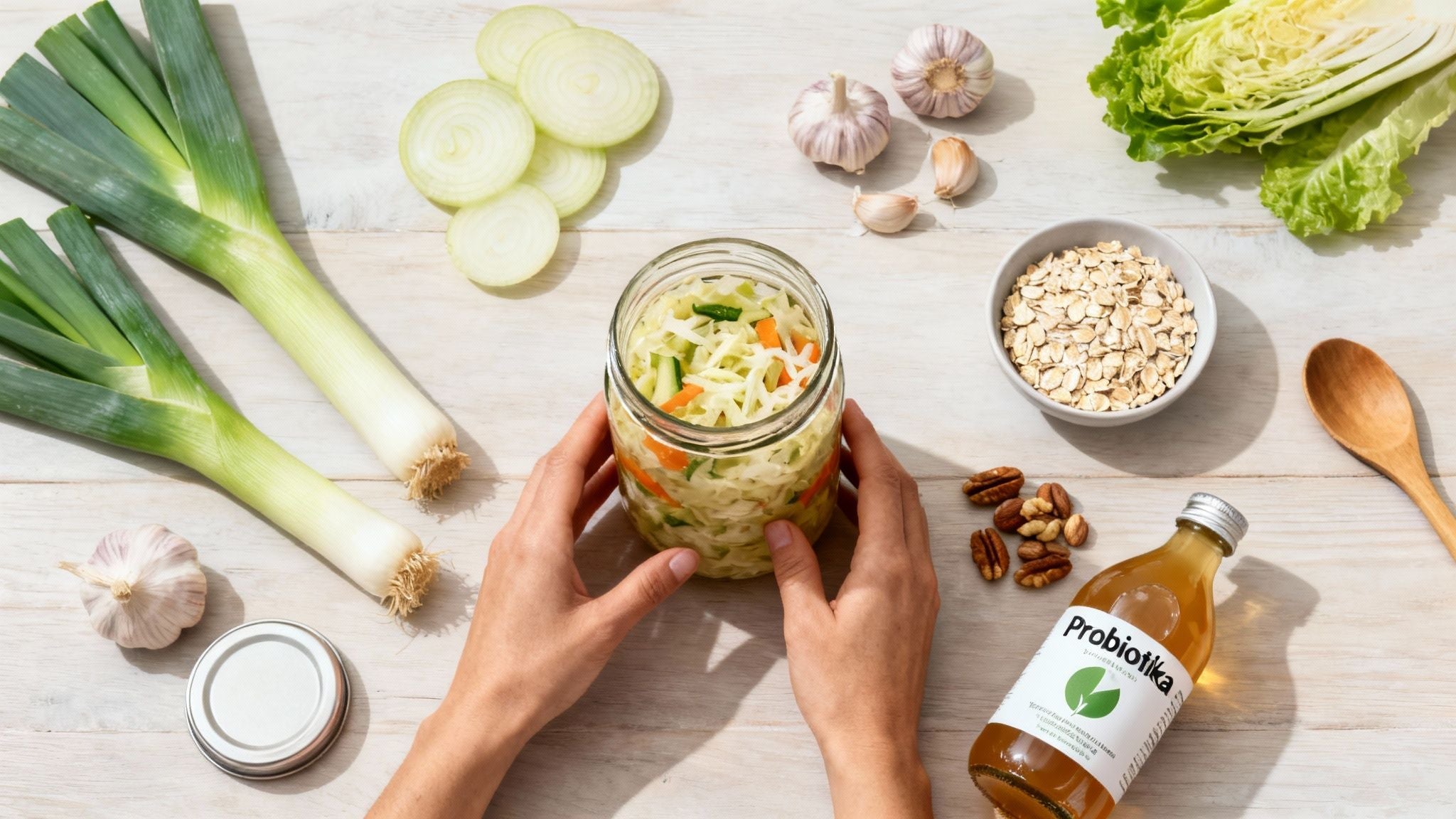
Naturally build up your gut flora: Your plan for healthy digestion
Would you like to naturally build up your gut flora? The way to do so is through a fiber-rich diet with plenty of prebiotic and fermented foods, less stress, and enough sleep and exercise. This combination is the key to providing your beneficial gut bacteria with the perfect home so they can multiply and strengthen your well-being from within.
Why your gut flora is the key to your health
Do you often feel tired, bloated, or simply out of balance? The cause lies in the gut far more often than you might think. Your gut is much more than just a digestive organ—it is the epicenter of your well-being. Trillions of microorganisms live there, forming your so-called microbiome and directly influencing almost every aspect of your health.
Many people look for solutions in the wrong place because they completely underestimate this profound connection. Yet the facts speak for themselves: A healthy gut microbiome is absolutely crucial for your immune system, mood, and even the appearance of your skin. When you understand what is going on in your gut, you can target the root cause of your symptoms.
Understanding the hidden world in your gut
Your microbiome is as unique as your fingerprint. It is a vast community of bacteria, viruses, and fungi. In a healthy gut, “good” bacteria such as lactobacilli and bifidobacteria live in harmonious balance with potentially harmful ones. They help you absorb nutrients, produce important vitamins, and train your immune system.
However, when this sensitive ecosystem becomes unbalanced—a condition known as dysbiosis—harmful microorganisms can gain the upper hand. This can manifest in a wide range of symptoms that go far beyond digestive problems alone.
You shouldn’t take the consequences of dysbiosis lightly. A weakened intestinal barrier can allow unwanted substances to enter the bloodstream and cause low-grade inflammation throughout the body. This is often the underlying root of chronic fatigue, skin problems, or mood swings.
Modern lifestyle factors as disruptive forces
Our modern everyday lives are often the greatest enemy of a healthy gut flora. Factors such as chronic stress, lack of sleep, and a diet full of processed foods and sugar can seriously disrupt the balance. This lifestyle promotes the growth of harmful bacteria while weakening the beneficial ones.
The prevalence of digestive problems is now alarming. A recent study shows that three out of five Germans suffered from such complaints in the past twelve months. This highlights how important it is to build up your gut microbiome naturally rather than waiting until serious problems arise. Read the full study on the prevalence of gut problems in Germany on mintel.com.
Your body often sends very clear signals when your gut microbiome needs help. Perhaps you recognize this:
- Persistent bloating and a feeling of fullness, even after light meals.
- Irregular bowel movements that alternate between constipation and diarrhea.
- Unexplained fatigue and lack of energy that leave you dragging yourself through the day.
- Skin problems such as acne, eczema, or redness that simply refuse to go away.
- Constant cravings for sugar because harmful bacteria practically feed on it.
Interpreting these signs correctly is the first step toward regaining control. When you understand the importance of the microbiome for your health, you can support your body in a targeted way. An intolerance test or nutrient test from mybody-x.com can help you identify the exact causes of your symptoms and better understand your body.
Your roadmap to a healthy gut microbiome in three phases
Now it's time to get practical. Forget radical diet plans and rigid rules that no one can stick to anyway. The key to success lies in a clear, manageable plan that fits naturally into your everyday life. That is exactly the kind of roadmap we have developed for you—it gradually brings your gut back into balance without overwhelming you.
The whole process is divided into three logical, successive phases spanning a total of 12 weeks. This structured approach gives your body time to adjust to the change and helps you stick with it in the long term. Each phase has its own specific focus to set the right foundations for a resilient gut microbiome.
Phase 1: Weeks 1–4 – Calming your gut
The first four weeks are primarily about one thing: giving your digestive system a well-deserved break. Imagine creating a new flower bed. Before you can sow the beautiful seeds, you first have to pull out the weeds. That is exactly what we are doing with your gut now.
The focus is clearly on consciously reducing foods that promote inflammation and are difficult to digest. This does not mean that you should go hungry. It is about giving your system a break from certain things that put a strain on it.
What you should cut back on during this phase:
- Highly processed foods: Ready meals, fast food, and snacks with endlessly long ingredient lists often contain additives that can throw your microbiome out of balance.
- Sugar and refined carbohydrates: Sugar is like fast food for the wrong bacteria and fuels inflammation. So cut back on sweets, sodas, and white-flour products.
- Alcohol and excessive coffee: Both can irritate the sensitive intestinal lining and disrupt the balance.
Instead, focus on easily digestible, nutrient-rich meals. Steamed vegetables, lean protein such as chicken or fish, and easy-to-digest carbohydrates such as sweet potatoes or quinoa are your best friends now. Homemade chicken or vegetable broth can work wonders—it soothes and supplies the intestinal lining with valuable nutrients.
This phase is not about perfection. It is about giving your gut a break. Pay close attention to how your body reacts. You will often notice after just a few days that bloating and feelings of fullness noticeably subside.
Phase 2: Weeks 5–8 – Targeted nourishment
Your gut has now calmed down—perfect. In phase two, we start actively rebuilding it. Now you are specifically feeding the beneficial bacteria so that they can multiply and crowd out the unwanted troublemakers. The magic word here is: prebiotics.
Prebiotics are special fibers that we humans cannot digest. But for our beneficial gut bacteria, such as bifidobacteria and lactobacilli, they are absolutely their favorite food. So you are specifically strengthening your little helpers from within.
The following infographic clearly shows how external influences such as stress can disrupt your inner balance and lead to symptoms. This highlights how important a stable microbiome is for your overall resilience. It is clear to see: A resilient gut flora is a crucial step toward breaking this negative cycle and strengthening your own resilience.
Slowly but steadily incorporate more prebiotic foods into your diet. It is really important to start slowly here to avoid bloating. Your gut first needs to get used to the increased fiber intake.
Excellent sources of prebiotics include:
- Vegetables: Chicory, artichokes, garlic, onions, leeks, and asparagus.
- Fruit: Slightly green bananas and apples (preferably with the peel).
- Legumes & grains: Lentils, chickpeas, rolled oats, and flaxseeds.
A highly practical tip from everyday cooking: Eat cooled potatoes, pasta, or rice. Cooling produces resistant starch, another form of prebiotic that your gut bacteria love. So yesterday’s potato salad is not only delicious but also a true superfood for your gut flora.
Phase 3: Weeks 9–12 – Increasing diversity
The final phase is about actively increasing the diversity of your microbiome. A diverse microbiome is significantly more resilient and can perform its many functions more effectively. The best way to achieve this is to gradually introduce probiotic, or fermented, foods.
These foods contain live bacterial cultures that settle in your gut and enrich your microbial community. In a sense, you are bringing new, beneficial inhabitants into your gut ecosystem.
The same applies here: Start with small amounts, such as one tablespoon per day, and then slowly increase the amount.
Great probiotic foods include:
- Sauerkraut: Make sure to buy fresh, unpasteurized sauerkraut from the refrigerated section. Only then will the live cultures still be present.
- Plain yogurt or kefir: These are classics and provide valuable lactic acid bacteria.
- Kimchi: This Korean fermented cabbage is often somewhat spicy, but extremely effective.
- Kombucha: A fermented tea drink that can be a great alternative to sugary soft drinks.
The goal of this phase is to regularly consume a variety of fermented foods in order to take in as broad a range of beneficial bacterial strains as possible. By the end of these 12 weeks, you will not only have given your gut a complete overhaul. You will also have established new, healthy habits that will help you maintain the balance you have achieved over the long term.
Overview of your 12-week gut health plan
To make it easier for you to get started, we have summarized the entire process in a clear table.
This plan divides the process of building up your gut flora into three logical, successive phases to achieve sustainable improvement.
| Phase | Weeks | Focus | Example measures |
|---|---|---|---|
| Phase 1: Calming | 1–4 | Relief & reducing irritation | Avoid sugar, alcohol, and highly processed foods. Focus on steamed vegetables, lean protein, and bone broth. |
| Phase 2: Nourishment | 5–8 | Building up beneficial bacteria | Slowly introduce prebiotic foods such as leeks, onions, cooled potatoes, and rolled oats. |
| Phase 3: Diversity | 9–12 | Expanding the microbiome | Gradually introduce probiotic foods such as sauerkraut, plain yogurt, kefir, or kimchi in small amounts. |
This roadmap gives you a clear and, above all, practical path to sustainably improving your gut health.
Choosing the best foods for your gut
What exactly should you eat to truly make your countless gut inhabitants happy? The answer lies in consciously choosing certain foods that either serve as “food” for your beneficial bacteria or directly bring in new, useful microorganisms. Once you understand the difference between these two groups, your shopping basket becomes an extremely powerful tool for building your gut flora.
The goal is to deliberately support your inner ecosystem. Imagine that you are the gardener of your gut: You need to nourish the soil as well as plant new, robust plants.

Prebiotics: Food for your beneficial bacteria
Prebiotics are special, indigestible fibers. They pass unharmed through the upper part of your digestive tract and arrive directly at the hungry, beneficial bacteria in the large intestine. These bacteria eagerly ferment them and produce valuable short-chain fatty acids such as butyrate, which strengthens the intestinal lining.
By eating prebiotic foods regularly, you actively promote the growth of your beneficial bacterial strains, such as bifidobacteria and lactobacilli. This makes them stronger and better able to keep harmful germs in check.
Your shopping list for prebiotics:
- Vegetables from the allium family: Onions, garlic, and leeks are true powerhouses. They contain inulin, a particularly effective prebiotic fiber.
- Root vegetables: Chicory, Jerusalem artichokes, and parsnips are also excellent sources of inulin.
- More fiber heroes: Asparagus, artichokes, oats, and flaxseeds are the perfect additions to your diet.
Practical tip for bloating: If you have eaten little fiber so far, start slowly. Steam or cook onions and garlic at first instead of eating them raw. This makes the fibers easier to digest and gives your gut time to adjust to the new food source.
Probiotics: Living helpers for greater diversity
While prebiotics are the food, probiotics are the living microorganisms themselves. You find them in fermented foods, in which bacteria or yeasts have converted sugars and starches into lactic acid, gases, or alcohol. This process not only preserves the foods but also enriches them with countless beneficial bacteria.
With probiotic foods, you actively establish new, beneficial bacterial strains in your gut. This increases the diversity of your microbiome and makes it more resilient. The selection goes far beyond classic yogurt.
Powerhouses from the world of fermentation:
- Sauerkraut: A classic and extremely effective. A spoonful with lunch can already support digestion.
- Kefir: This fermented milk drink contains a particularly wide variety of bacterial and yeast strains. Learn more about why kefir is so healthy in our detailed article.
- Kimchi: The fermented napa cabbage from Korea is a spicy, probiotic addition to many dishes.
- Kombucha: A fermented tea that can be a great, low-sugar alternative to conventional soft drinks.
What to look for when buying
The crucial point about probiotic foods: They must be alive. Many products on supermarket shelves, such as sauerkraut in cans or jars, are pasteurized—that is, heated—to extend their shelf life. However, this process kills all the valuable microorganisms.
Therefore, always look in the refrigerated section for products labeled “unpasteurized” or “live cultures”. This is the only way to ensure that the little helpers actually reach your gut and can unfold their beneficial effects. With this targeted selection, you lay the foundation for a healthy and resilient gut.
How lifestyle factors affect your microbiome
Have you changed your diet and are already feeding your good gut bacteria the best foods? That is a huge and important step! But to build a truly healthy gut flora for the long term, we need to look beyond the plate. Your entire lifestyle has a direct and often underestimated impact on the delicate balance in your gut.
A healthy gut flora does not develop through proper nutrition alone. Think of it like a carefully tended garden bed: You can use the best fertilizer (prebiotics) and the finest seeds (probiotics)—but if hail (stress) is constantly pelting the bed, it never rains (sleep deprivation), or the soil is never loosened (lack of exercise), nothing will grow anyway.

That is precisely why we are now highlighting the three most important pillars that, alongside food, are crucial: stress management, exercise, and sleep. Only when you integrate these areas into your routine can you create an environment in which your microbiome can truly flourish.
The direct connection between stress and the gut
Have you ever had a stomachache before an exam or an important appointment? It’s not a coincidence. Your brain and gut are directly connected via the so-called gut-brain axis, a kind of information highway over which information is constantly exchanged. Chronic stress is like a permanent traffic jam on this highway.
When you’re stressed, your body releases stress hormones such as cortisol. These can negatively alter the composition of your gut flora, make the gut barrier more permeable (“leaky gut”), and promote inflammation. This means that even the healthiest diet cannot have its full effect when your body is in a constant state of alarm.
Stress is not just a feeling in your head; it is a real physical burden on your microbiome. Effective stress management is therefore not a nice extra, but a central building block for naturally building a healthy gut flora.
Fortunately, you don’t have to become a meditation guru right away. Small, practical exercises that fit into everyday life can already make a big difference:
- The 4-7-8 breathing technique: Inhale through your nose for 4 seconds, hold your breath for 7 seconds, and slowly exhale through your mouth for 8 seconds. Repeat this 3–5 times whenever you feel overwhelmed.
- Short walks: A 15-minute walk during your lunch break or after work can help clear your head and reduce stress hormones.
- Digital detox: Consciously put your phone away for an hour in the evening. The constant bombardment of information is an often-unnoticed source of stress.
Exercise is good, but please keep it moderate
Exercise is fantastic for your digestion. It stimulates intestinal peristalsis—the muscle movements that transport food through your digestive tract. Regular, moderate activity can help prevent constipation and has been shown to increase the diversity of your gut bacteria.
But here’s the crucial point: it’s about finding the right balance. While moderate exercise such as brisk walking, cycling, or yoga strengthens your microbiome, exercising too intensely can have the opposite effect.
Extreme endurance sports or high-intensity training can put the body into a state of stress, redirect blood flow away from the intestines to the muscles, and temporarily weaken the gut barrier. So find a balance that feels good for you. A walk after eating is often more effective than a sweat-inducing workout right afterward.
Sleep: the regenerative power for your gut
Perhaps the most underestimated pillar of a healthy gut flora is sleep. While you sleep, important repair and regeneration processes take place in your body—including in your gut. Your microbiome essentially has its own internal clock and follows a circadian rhythm.
Lack of sleep disrupts this rhythm. Studies show that just a few nights of insufficient sleep can reduce the diversity of beneficial gut bacteria and promote the growth of unwanted bacteria.
Simple tips for better sleep hygiene:
- Consistent sleep times: Try to go to bed and get up at the same time, even on weekends.
- A dark and cool environment: Make sure your bedroom is completely dark and relatively cool.
- Screen-free time before bed: The blue light from your phone and laptop inhibits the production of the sleep hormone melatonin. Read a book instead.
By giving stress, exercise, and sleep the same attention as your diet, you are taking a truly holistic approach. This ensures that you support your gut on every level and create the best conditions for rebuilding your gut flora naturally and, above all, sustainably.
When you should take the next step with targeted tests for your gut
Have you already tried a lot—changing your diet, paying more attention to relaxation, and exercising—but persistent symptoms such as bloating, irregular bowel movements, or that exhausting fatigue simply refuse to go away? That is incredibly frustrating and a clear sign that a general plan may not be enough for you. Sometimes you simply need to take a closer look behind the scenes to find the true cause.
When you reach a point where, despite all your efforts, you are still stuck, it is time to stop guessing and start taking targeted action. Targeted tests are your personal compass here. They help you understand what is happening exactly in your body instead of continuing to feel your way around in the dark.
A closer look: A microbiome test
A microbiome test is essentially an inventory of your inner ecosystem. By analyzing a stool sample, it provides a detailed picture of your gut flora. You learn which bacterial strains are dominant, whether important helpers such as lactobacilli and bifidobacteria are present in sufficient numbers, and whether unwanted microbes may have taken hold.
Such a test can finally give you concrete answers to troubling questions:
- Why am I constantly bloated? You may be lacking bacteria that can properly process fiber.
- Why does my immune system feel so weak? Perhaps the diversity of your gut bacteria is too low.
- Does my diet really suit me? The test shows how well your gut flora is equipped to process certain nutrients.
With this information, you can adjust your diet and lifestyle much more precisely. To explore the topic in greater depth and understand how to interpret the results, see our comprehensive guide to the microbiome test at mybody-x.com.
When the gut blocks nutrient absorption
Often, however, it is the consequences of impaired gut function that reveal much more than the composition of the bacteria themselves. A chronically irritated intestinal lining, often caused by dysbiosis, can no longer do its job properly. One of its most important tasks is absorbing vital nutrients from food.
A nutrient test from mybody-x.com can provide clarity here. Through a simple blood analysis that you perform at home, you can find out whether you have deficiencies in vitamins and minerals such as vitamin B12, iron, zinc, or magnesium.
These deficiencies are often an indirect but very clear indication that your gut needs help. Constant fatigue, for example, could indicate an iron deficiency whose actual cause is a gut that can no longer absorb nutrients efficiently.
A nutrient deficiency is rarely an isolated problem. It is usually a symptom of an underlying cause—and very often, that cause can be found in the gut. A test gives you the certainty to replenish the right nutrients in a targeted way while addressing your gut health at the same time.
Unnoticed disruptive factors caused by intolerances
Sometimes certain foods are quietly burdening your system and causing constant, low-level irritation. These ongoing “attacks” keep your immune system on alert and prevent your gut flora from recovering.
A food intolerance test from mybody-x.com can uncover these hidden triggers. It analyzes whether your body reacts to certain foods by producing IgG4 antibodies. Knowing which foods you should temporarily avoid can give your gut the necessary break to regenerate and reduce inflammation.
With an at-home blood test, you can easily find out which foods are good for you and which are not. This allows you to adjust your diet in a targeted way and give your gut the chance to recover and build healthy gut flora.
Targeted tests help you better understand your body and make your plan for building up your gut flora even more effective.
Frequently asked questions about building up gut flora
Many questions often arise on the way to healthy gut flora. That’s completely normal, because every body is unique and reacts differently. To help you follow your personal path safely and with the right information, we’ve gathered the most frequently asked questions here and provide clear, easy-to-understand answers based on practical experience.
How long does it really take for the gut flora to recover?
This is probably the question we hear most often, and the honest answer is: it depends. The duration depends greatly on where you’re starting, how consistent you are, and what your overall lifestyle looks like.
You’ll often notice the first positive changes, such as less bloating or a more comfortable feeling in your abdomen, after just two to four weeks. Your body usually responds quite quickly when you reduce sugar and highly processed foods.
However, a profound and, above all, lasting change in your microbiome is a longer process. Expect it to take around three to six months. This is the time beneficial bacterial strains need to become firmly established and sustainably increase the diversity in your gut.
Patience is your most important companion here. Don’t think of building up your gut flora as a quick sprint, but as a marathon. The goal is to establish new, healthy habits that will stay with you in the long term.
Do I have to give up sugar or coffee completely?
The idea of giving up your morning coffee or a piece of chocolate forever is off-putting to many people. The good news: you don’t have to! It’s not about strict abstinence, but about finding a healthy and mindful balance.
Especially during the initial “calming phase” of your plan, significantly reducing sugar and coffee is very beneficial. This gives your gut a chance to settle down and allows inflammation to subside.
In the long term, the 80/20 rule has proven to be extremely practical for everyday life. This means that 80% of your diet consistently supports gut health, while the remaining 20% is reserved for moments of enjoyment. Complete abstinence is not sustainable for most people and often only leads to cravings.
Are probiotics from a pharmacy better than fermented foods?
Both have their place, but they serve different purposes. One is not categorically “better” than the other—it is more a question of your goal.
-
Probiotics from a pharmacy: These often contain highly concentrated, specific bacterial strains. They can be particularly helpful after antibiotic treatment or for specific issues, helping to quickly introduce a large number of beneficial bacteria. Think of them as a special unit for a specific mission.
-
Fermented foods: Products such as kefir, kimchi, and sauerkraut offer a much greater variety of different bacterial strains. They also provide vitamins, enzymes, and other valuable nutrients produced during the fermentation process. In a sense, they are the colorful, diverse ecosystem for your gut.
The best strategy is often a combination. A gut-friendly diet always forms the foundation, regularly supplemented with various fermented foods. When needed, for example after an illness, carefully selected, high-quality probiotics can provide additional support.
What are common mistakes when rebuilding the gut flora?
Many people start highly motivated, but small mistakes can hinder their progress. If you know these typical pitfalls, you can avoid them from the very beginning.
A very common mistake is impatience. The gut flora needs time to reorganize. Don't expect miracles overnight. Another classic mistake is focusing on just one aspect—for example, taking only probiotic capsules while completely ignoring your diet and lifestyle. Rebuilding the gut flora is a holistic process.
A third common mistake is incorporating too many fiber-rich foods into your diet too quickly. This can completely overwhelm an untrained gut and lead to severe bloating and discomfort. So increase the amount of lentils, cabbage, and whole-grain products slowly, and give your body time to adjust.
Are you ready to move from guesswork to well-founded knowledge? A targeted blood test can give you valuable insights into whether an imbalanced gut flora is already affecting your nutrient absorption or whether unnoticed intolerances are putting a strain on your system. At mybody-x.com, you can find the right at-home test (e.g., intolerance test, nutrient test) to specifically support your journey toward greater well-being. Find out now what your body really needs.


Share now:
The 10 best tips for curbing cravings that really work
Blood Test for Nutrient Deficiencies: 5 Steps to Clarify Your Deficiencies