
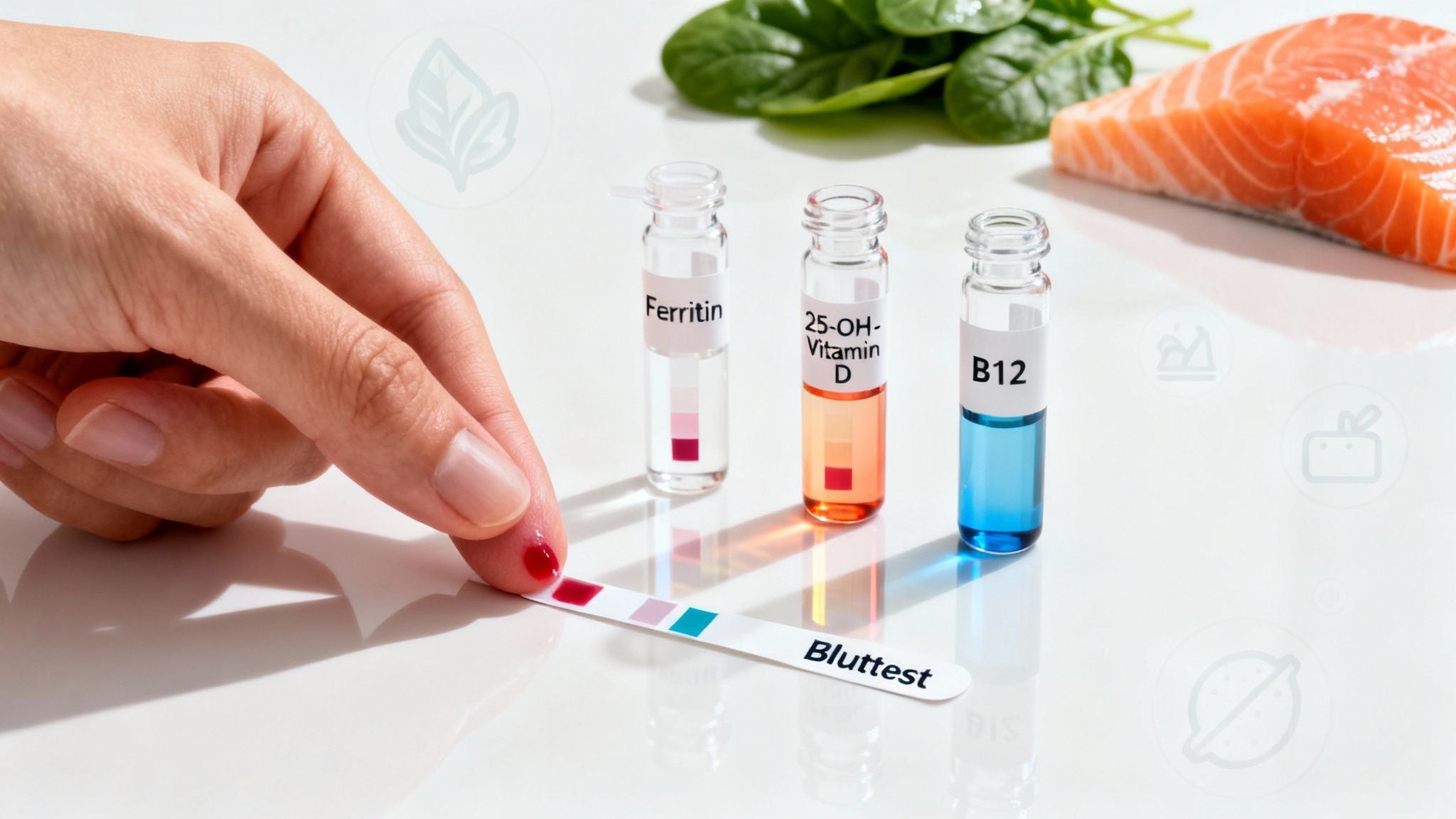
Blood test for nutrient deficiencies: 5 steps to clarity about your deficiencies
Do you constantly feel tired or unfocused, or are you prone to every infection? These could be your body's subtle cries for help, indicating a hidden nutrient deficiency. A targeted blood test for nutrient deficiencies is not merely an option here, but the only sensible way to finally achieve clarity instead of assumptions and take control of your health again.
Why a blood test is the first step for nutrient deficiencies
Imagine a warning light flashing in your car. You wouldn't blindly start replacing random parts, would you? You'd probably drive straight to a repair shop to have the fault memory read. That's exactly what a blood test does for your body: It provides precise data instead of vague assumptions.
Nevertheless, when experiencing symptoms such as fatigue or hair loss, many people initially reach for random dietary supplements from the drugstore. But that's like groping around in the fog. Without knowing which nutrient stores are actually depleted, taking them is useless at best and may even be harmful at worst.
Put an end to the guesswork
A blood test is your personal compass in the jungle of health advice. It shows you in black and white where the real deficiencies lie. Instead of spending money on unnecessary pills and powders, you invest specifically in what your body needs most urgently right now.
A blood test translates your body's signals into understandable facts. It is the basis for any meaningful action to optimize your nutrient intake and well-being.
With a blood test for nutrient deficiencies, you suddenly recognize connections you might otherwise have overlooked. Suddenly, it makes sense why you feel sluggish despite getting enough sleep or why you simply can't concentrate.
The benefits are clear:
- Precision instead of guesswork: You find out exactly which vitamins or minerals are lacking.
- Efficiency: You tailor your diet and supplementation specifically instead of blindly trying out products.
- Safety: You avoid overdosing on nutrients, which can also be harmful in excessively high concentrations.
- Motivation: Having concrete results in hand gives you the motivation you need to stick with it and truly make a change.
mybody®x’s at-home nutrient tests make this crucial step easier than ever. You can take control of your health directly from your sofa—without any waiting time at the doctor’s office. You get more than just laboratory values: you receive a well-founded basis for sustainably improving your diet and lifestyle. In our related article, you can find out everything important about the comprehensive blood nutrient analysis. It is the first logical step on your journey to more energy and well-being.
Interpreting Your Body’s Signals Correctly
A nutrient deficiency rarely develops overnight. Instead, it quietly creeps into your daily life—with stubborn fatigue that just will not go away, or brittle nails that you dismiss with a shrug. Perhaps it is also the feeling that your immune system raises the white flag at every gust of wind.
Your body is a master at showing you when something is wrong. It simply speaks its own unique language. Persistent concentration problems? That could be a quiet whisper from your iron stores. Recurring muscle cramps after exercise may be more than just overexertion—you might simply be lacking magnesium.
The Quiet Heroes of Your Well-Being
To understand these messages, we need to take a closer look at the main players: vitamins and minerals. They are the invisible helpers working tirelessly behind the scenes to keep your system running smoothly. If even one is missing, the whole machine starts to stall.
- Vitamin D: The famous “sunshine vitamin” is about much more than just healthy bones. It is a central regulator of your immune system. If you are deficient—especially during the darker months—your defenses run on low power, and you become more susceptible to every infection.
- Iron: Think of iron as the oxygen delivery service in your blood. If there is too little of it, not enough oxygen reaches your cells, especially in your brain. The result: You feel sluggish, look pale, and can hardly concentrate.
- Vitamin B12: This vitamin is essential for your nerves and blood formation. A deficiency can manifest as unusual tingling in your hands and feet, as well as unexplained fatigue or memory problems.
- Zinc: A true all-rounder, zinc is involved in hundreds of metabolic processes. It is crucial for wound healing, a strong immune system, and healthy skin and hair. If your nails keep breaking or your skin is prone to blemishes, a zinc deficiency could be behind it.
The following infographic shows you at a glance how you can finally gain clarity about your health, moving from unclear symptoms to a targeted blood test.
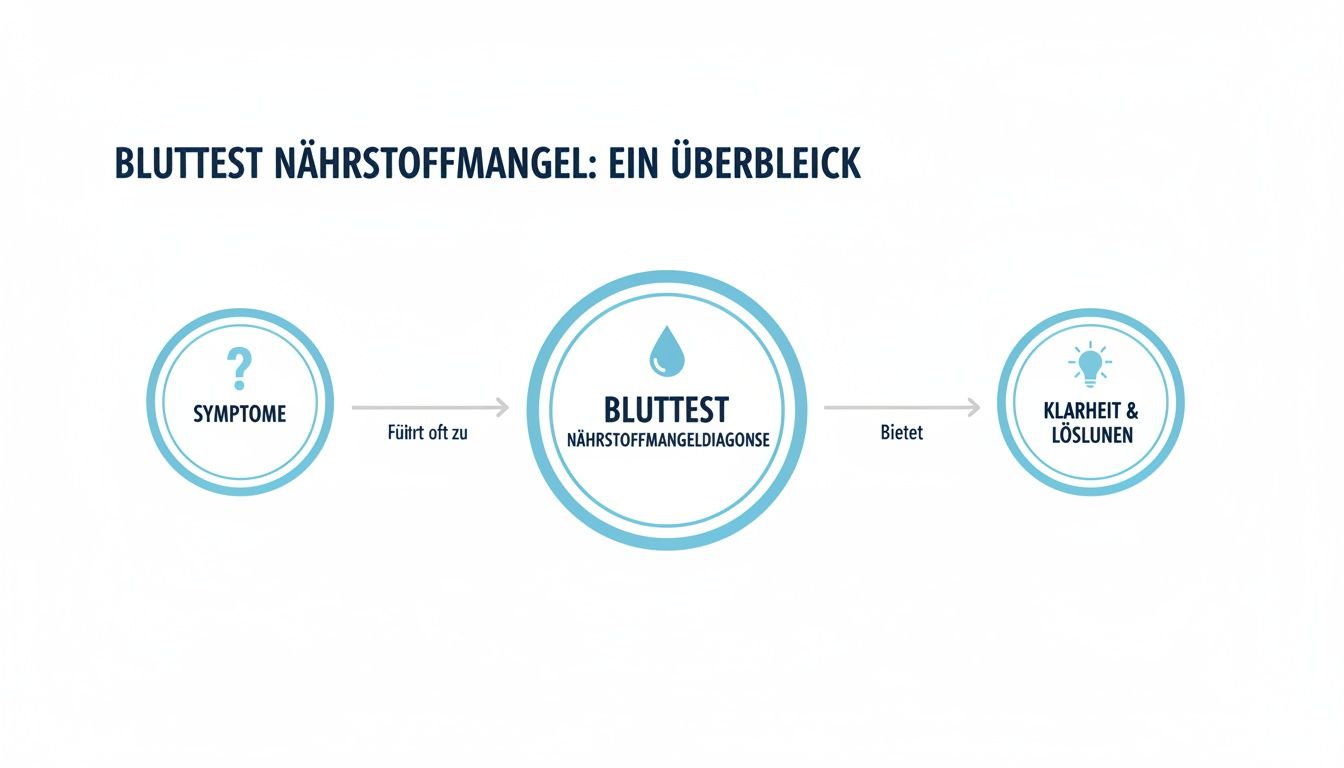
A nutrient test from mybody®x bridges the crucial gap between vague suspicions and solid knowledge. It provides the facts you need to take targeted action.
A widespread phenomenon
If you recognize yourself in these signs, you’re not alone. Nutrient deficiencies are far from rare in Germany. Current data paints a fairly clear picture: A staggering 82% of men and 91% of women do not reach the recommended daily intake of vitamin D. The situation is very similar for folic acid (vitamin B9), with 79% of men and 86% of women receiving insufficient amounts.
These figures make it clear why taking a closer look at your own nutrient levels is so important. If you want to learn more, read our article on the common symptoms of nutrient deficiencies.
Your body doesn’t lie. Persistent fatigue, frequent infections, or pale skin aren’t normal conditions you simply have to accept. They are valuable clues that you should investigate.
A blood test for nutrient deficiencies is the logical next step here. It not only confirms a suspicion but also makes it measurable. You learn not only whether you are deficient in something, but also how much. And that precision is the key to replenishing your stores in a targeted and effective way.
Your blood test for nutrient deficiencies explained step by step
The thought of having blood drawn can be daunting for many people at first. Needles, waiting rooms, appointment stress—it doesn’t have to be that way. Modern at-home tests from mybody®x have revolutionized the entire process and make it incredibly easy to gain clarity about your nutrient levels. A home blood test for nutrient deficiencies is now the simplest way to get certainty.
We’ll guide you through the process and show you how straightforward it is. You’ll see: this important step for your health is easier and more accessible than ever.
Preparing for your test
Good preparation is essential for reliable results. Your body isn’t a clockwork mechanism; what you eat, drink, or how you move can temporarily affect your blood values.
That’s why the best time for a blood draw is almost always in the morning and on an empty stomach. Specifically, you should not eat anything for about 8 to 12 hours beforehand. A glass of water or unsweetened tea is usually fine, though.
Imagine you want to measure the water level in your swimming pool. The best time to do that is when the water is completely still, not while someone is making a huge wave. The same applies to your blood values in the morning—they are most stable then and best reflect your actual condition.
But other factors also play a role:
- Intense exercise: Avoid strenuous workouts immediately before collecting your blood sample. They can significantly disrupt certain values.
- Medications and supplements: It is best to briefly consult your doctor about whether you should pause taking certain preparations before the test. Biotin in particular is known to distort laboratory results.
- Stress: Try to keep the morning of the test as relaxed as possible.
How a mybody®x home test works
mybody®x has optimized the process so that you can complete it safely and conveniently in your own home. It really is easier than you think.
- Order the test: Choose the right nutrient test online to match your questions, and receive the complete kit delivered straight to your home. No waiting, no hassle.
- Collect the sample: This is the crucial moment. Instead of a needle in the crook of your arm, all you need is a tiny, nearly painless prick in your fingertip. Using a small special lancet, you collect a few drops of blood in a sample tube. It is quick and straightforward.
- Activate and send in the test: You activate your test online using your personal ID and send your sample directly to a certified German specialist laboratory in the enclosed, prepaid envelope.
- Receive your results: The analysis is complete after just a few days. You will receive a notification and can view your results digitally in your secure customer account—presented in an easy-to-understand format with specific, actionable recommendations.
This simple process makes it easy for you to take control of your health yourself. If you want to know even more, take a look at our guide on how to perform a blood test at home to achieve the best possible results.
Thanks to modern technology, a comprehensive blood test for nutrient deficiencies is no longer a major undertaking, but a simple, self-directed step toward learning more about your own body.
Understanding your blood values: What your results really mean
You are holding your laboratory report in your hands—a sheet full of numbers and technical terms such as “ferritin,” “25-OH vitamin D,” or “Holo-TC.” At first, this can seem quite cryptic. But don’t worry—just think of this section as your personal interpreter, translating “lab Chinese” into clear, easy-to-understand insights.
Imagine your lab report as a map of your body. Every number is an important signpost that shows you exactly where you currently stand health-wise. A blood test for nutrient deficiencies from mybody®x gives you the unique opportunity to plan targeted routes toward greater well-being.

Decoding important blood markers
Every individual value on your lab report tells a small story about your health. To understand the bigger picture, it is important to understand what lies behind the most important markers.
Let’s take a closer look at a few key players:
- Ferritin: This is essentially your iron-storage manager. A low ferritin level is a clear sign that your iron stores are running low—often long before your hemoglobin (the red blood pigment) drops and anemia is diagnosed. It is therefore an extremely important early-warning indicator.
- Holotranscobalamin (Holo-TC): This is the active form of vitamin B12 that the body can use directly. A test that measures only total B12 levels can be misleading because it also detects inactive forms. Holo-TC gives you a much more accurate and honest picture of your actual supply.
- 25-OH vitamin D: This is the lab value used to check your vitamin D status. It shows how well your stores are filled with the “sunshine vitamin,” which plays such a crucial role in your immune system, bones, and mood.
It is important to understand that being within the normal range does not automatically mean optimal. The reference values provided are often very broad and reflect only the population average—not necessarily a state of optimal health.
The dilemma with reference values
On every lab report, you’ll find a so-called reference range for each value. If your result falls within this range, it is officially considered “normal.” But this is exactly where caution is needed. A value that just barely falls within the lower end of the normal range may already indicate a functional deficiency for you personally and trigger symptoms such as persistent fatigue or difficulty concentrating.
A great example is ferritin. The reference range for women can go as low as 15 µg/l. From a preventive medicine perspective, however, a level of at least 50–70 µg/l is often targeted today. Why? Because this not only prevents anemia but also ensures enough iron for energy, concentration, and healthy hair growth. If you want to delve deeper into the fundamentals, you’ll find all the key information in our guide “What Is a Blood Analysis?”.
Vitamin D deficiency is a widespread phenomenon in Germany. Approximately one-third of the population has levels below 30 nmol/l, and only just 40 percent are truly sufficiently supplied. The situation becomes particularly acute in winter, when levels often fall to 20–38 nmol/l—well below the target of at least 50 nmol/l. The only reliable way to determine your status is through a blood analysis.
Your mybody®x nutrient test is so much more than just a list of numbers. It is a powerful tool in your hands. It gives you the opportunity to better understand your body and take the right next steps for your health based on well-founded recommendations.
From knowledge to action: How to replenish your nutrient stores
You’re finally holding your test result in your hands—don’t see it as a verdict, but as your very own opportunity. It’s the starting point for taking targeted and effective action for yourself. But what exactly comes after a blood test for nutrient deficiency? Here, you’ll get a clear roadmap that you can put into practice in your everyday life right away.
Your test result is the basis for everything that follows. It shows you exactly where you need to start. The good news is that not every deficiency means you have to immediately turn to high-dose tablets. Often, small but deliberate adjustments in your everyday life can make a huge difference.
Your diet as the foundation
The most powerful tool is in your hands every day: your diet. It is your nutritional foundation. For mild deficiencies or to keep your levels stable in the long term, a nutrient-conscious diet is the absolute key to success. This isn’t about complicated diet plans, but about deliberately incorporating the right foods into your meal plan.
Let’s look at three common examples:
-
For iron deficiency: Red meat (in moderation), lentils, chickpeas, pumpkin seeds, and spinach are excellent sources of iron. A pro tip: Always combine these foods with vitamin C—for example, by drinking a glass of orange juice or eating fresh bell peppers. This boosts the body’s iron absorption many times over!
-
For vitamin B12 deficiency: This vitamin is found almost exclusively in animal products. Fish (such as salmon or trout), eggs, and dairy products are excellent sources. For vegans and vegetarians, supplementation after testing is often unavoidable because plant-based sources simply aren’t sufficient.
-
For magnesium deficiency: Whole-grain products, nuts (especially almonds), seeds, and leafy green vegetables are true magnesium powerhouses. A bowl of oatmeal with nuts and a banana in the morning is the perfect start to the day to replenish your stores.
When dietary supplements are genuinely useful
Sometimes diet alone is not enough to quickly get a pronounced deficiency under control. Imagine your nutrient stores as an almost empty bank account. With small, regular deposits (your diet), you slowly get back into the black. But if you want to be able to function normally again quickly, a larger deposit (a supplement) is the most effective solution.
High-quality dietary supplements are a good idea when:
- A severe deficiency has been detected in a blood test.
- The stores need to be replenished quickly to rapidly relieve symptoms such as exhaustion.
- Special circumstances, such as pregnancy, high levels of stress, or chronic illnesses, cause an increased need.
- A vegan or vegetarian diet makes it more difficult to obtain certain nutrients, such as vitamin B12.
Nutrient deficiencies are a widespread problem, especially among older people. Blood tests reveal deficiencies in 5–10% of seniors living at home, 20% of nursing home residents, and even 40% of hospital patients. At this stage, a normal diet is often no longer enough. Targeted supplementation is then essential to strengthen health and resilience in old age. You can find out more about how to recognize and treat nutrient deficiencies in old age at BARMER.
A blood test gives you the certainty that you’re not supplementing blindly. You take exactly what you need, in the right dosage and for a clearly defined period.
Your mybody®x test result is the perfect foundation for developing a personalized health plan based on precise data and effectively replenishing your nutrient stores.
Your easy path to greater certainty with a home test
Who doesn’t know the feeling? You don’t feel quite yourself, suspect a nutrient deficiency, but the next available doctor’s appointment is weeks away. This waiting doesn’t have to be necessary. With mybody®x nutrient tests, you can take matters into your own hands—quickly, easily, and from the comfort of your own home.
The biggest advantage is obvious: you save yourself the trip to the doctor’s office and time in the waiting room. Instead of putting your health on the back burner, you can take action immediately, whenever it fits into your daily routine.
Control and privacy in your hands
A home test from mybody®x gives you full control again. You decide when and where to collect your sample, discreetly and without stress. A small prick to your fingertip is all it takes to collect a few drops of blood—it’s minimally painful and completed in just a few minutes.
This approach makes it easy for you to keep an eye on your levels regularly without having to deal with a major organizational effort every time. This transforms you from a passive patient into an active shaper of your well-being.
Behind this simple process lies the highest level of medical quality. Your sample is analyzed exclusively in certified German specialist laboratories. These are the same laboratories used by medical practices, working according to the same strict standards. Your results are therefore absolutely precise and reliable.
A home test combines the best of both worlds: the convenience and privacy of testing at home with the medical accuracy of a professional laboratory. This gives you direct access to facts you can trust.
But the truly decisive difference from a standard laboratory report only becomes apparent when you receive your results.
More than just numbers: Results you can understand
Instead of leaving you alone with a cryptic lab report full of technical terms, mybody®x translates your data into easy-to-understand language. You receive not only your raw blood values, but also clear explanations of what they mean for you and your body.
On top of that, you’ll receive personalized, scientifically grounded recommendations for action. They help you take the right next steps immediately—whether by making targeted adjustments to your diet or recommending suitable supplements. This turns a blood test for nutrient deficiencies from a purely diagnostic tool into a direct springboard toward better nutritional care. You’ll receive clear guidance on how to specifically optimize your health.
Still have questions? Here are the answers
We keep receiving the same questions about blood tests for nutrient deficiencies. To make sure you’re well informed and clear up any uncertainties, we’ve collected the most important answers for you here—briefly, clearly, and to the point.
How often should I actually get my nutrient levels checked?
This is a very personal matter and depends entirely on your situation. Are you currently actively addressing a known deficiency? Then a follow-up test after three to six months makes perfect sense. This lets you see in black and white whether your dietary changes or supplements are actually making a difference.
If you simply want to proactively monitor your health, an annual check of the most important levels is generally sufficient. This helps you identify changes early and take countermeasures long before any initial symptoms appear.
I take medication—can I still take a test?
In the vast majority of cases, the answer is: Yes, absolutely! Common nutrient markers are unaffected by most medications. However, there are a few exceptions—for example, high-dose biotin (vitamin B7), which can interfere with laboratory results.
Not sure? Then it's best to speak briefly with your doctor or therapist before taking the test. A short conversation is often enough to ensure that your results are truly meaningful.
Does health insurance cover the cost of a nutrient test?
Normally, statutory health insurance providers cover such a blood test only when there is a specific, medically diagnosed suspicion of a deficiency disease. So if you want to have your levels checked purely as a preventive measure, out of personal interest, it is generally a self-funded service.
The nutrient tests from mybody®x are a great alternative here. Their pricing is transparent, often even cheaper than visiting a doctor, and you can easily gain clarity about your nutrient levels from the comfort of your home.
A home test is more than just a test. It's an investment in your own knowledge and health. You don't just get numbers, but a tool to take charge of your well-being.
How quickly are the results available for a home test?
That's one of the biggest advantages: speed. As soon as you've taken your sample and sent it to the laboratory, everything moves quickly. The analysis usually takes only a few working days.
With mybody®x, for example, you often have your results digitally in your personal, secure customer account after just a few days. And the best part: The results aren't presented as mere dry numbers, but are explained clearly and come with practical recommendations you can implement. That means you can get started right away!
Are you finally ready to gain clarity and take your health into your own hands? With a mybody®x blood test, you get precise insights into your nutrient levels—simply, quickly, and reliably from the comfort of your home. Discover the right test for you now at mybody-x.com.



Share now:
Naturally rebuild your gut flora: Your plan for healthy digestion
Microbiome Analysis: Key to Modern Gut Health