

What Is a Nutrient Profile? Your 2026 Guide
You read food labels and think you understand your nutrition? The truth is more complex. A nutrient profile goes far beyond the simple information on packaging and forms the foundation for true nutrition literacy. It precisely defines which nutrients are contained in your food and in what quantities, enabling you to make informed decisions for your health. In this guide, you will learn how nutrient profiles are created, what role they play in personalized nutrition, and how to use them to achieve your health goals in 2026.
Table of contents
- Key takeaways
- What is a nutrient profile and why is it important?
- Methods for determining the nutrient profile of food
- Nutri-Score and its role in the nutrient profile
- Personalized nutrition and the importance of individual nutrient profiles
- Risks of nutrient overdosing and bioavailability
- Discover your personalized nutrition with mybody®x
- What is a nutrient profile? Frequently asked questions
Key takeaways
| Point | Details |
|---|---|
| Nutrient profile definition | A nutrient profile describes the exact composition of all important nutrients in a food and serves as the basis for correct labeling. |
| Determination methods | Database calculations and laboratory analyses provide different levels of accuracy; combining both methods is recommended. |
| Nutri-Score rating | The Nutri-Score translates nutrient profiles into consumer-friendly letters from A to E, but is suitable only for comparing similar products. |
| Personalized nutrition | Genetic variations such as LCT and CYP1A2 significantly influence individual nutrient needs and require tailored nutrition strategies. |
| Overdose risks | Up to 60% of adults use dietary supplements, but incorrect dosing poses health risks, particularly with fat-soluble vitamins. |
What is a nutrient profile and why is it important?
A nutrient profile describes the exact composition of the most important nutrients in a food and forms the basis for correct nutrition labeling. Unlike the simplified table on the packaging, it records macronutrients such as proteins, fats, and carbohydrates in detail, as well as micronutrients including vitamins, minerals, and trace elements. This precise documentation is not only required by law but also essential for making informed dietary decisions.
The legal significance is considerable. The European Food Information Regulation (LMIV) requires packaged foods to carry a nutrition table. This must state the energy content and amounts of fat, saturated fatty acids, carbohydrates, sugars, protein, and salt per 100 g or 100 ml. Without an accurate nutrient profile, manufacturers risk fines and product recalls.
For you as a health-conscious person, a transparent nutrient profile means genuine freedom of choice. You can:
- Compare foods based on their actual nutritional value
- Identify hidden sugars, salts, or unhealthy fats
- Plan your macro- and micronutrient intake precisely
- Prevent deficiencies through targeted food selection
- Pursue personalized nutrition goals based on scientific evidence
Accurate nutrient profiles are essential, especially in online retail and exports. Platforms such as Amazon require complete nutritional information, and international markets have different labeling requirements. A professionally prepared nutrient profile ensures compliance across national borders.
Pro tip: When shopping, look for manufacturers that provide detailed nutrient profiles beyond the minimum requirements. This transparency signals a commitment to quality and makes planning your personalized diet considerably easier.
Methods for determining the nutrient profile of food
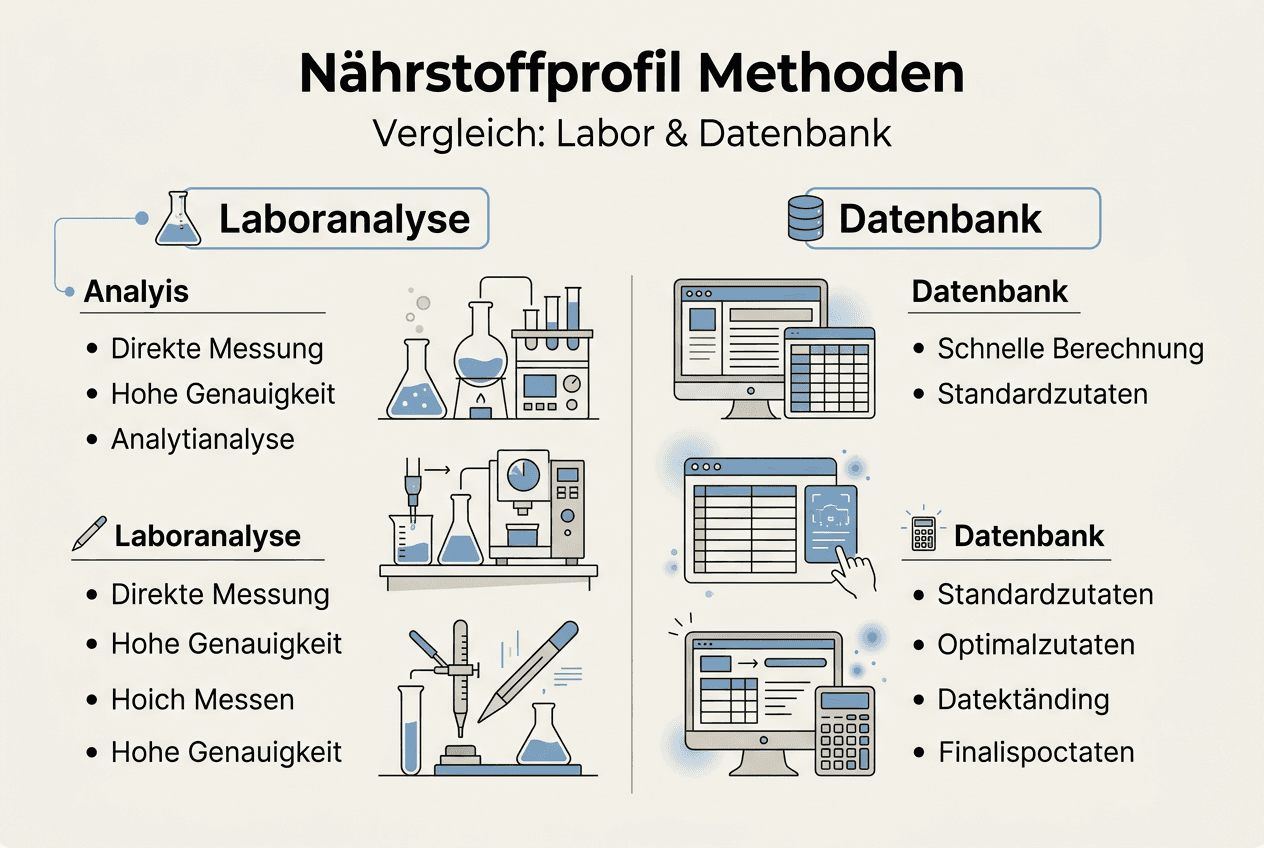
Two main methods determine nutrient profiles: database-based calculation and laboratory analysis. Both have specific strengths and limitations that you should know.
The database-based calculation method is suitable for products with standardized ingredients, but it varies with growing conditions. It uses average values from national nutrient databases such as the German Food Code (BLS). For example, an apple contains an average of 52 kcal per 100 g, but its variety, degree of ripeness, and growing region affect the actual value. For processed products, the nutritional values of all ingredients are calculated proportionally and added together.
The advantage lies in speed and cost efficiency. For standard formulations with known ingredients, this method provides reliable estimates. Its weakness becomes apparent with natural variations: seasonal vegetables, different feed used for animal products, or soil conditions can shift nutrient levels by 20 to 30%.
Laboratory analyses directly measure nutrient content, which is especially important when processing changes nutrients, for example through heating or fermentation. Accredited laboratories use standardized methods such as high-performance liquid chromatography (HPLC) for vitamins or atomic absorption spectrometry for minerals. These analyses capture the nutrients actually present and bioavailable after all production steps.

For innovative products, functional foods, or dietary supplements, laboratory analysis is essential. It precisely documents whether fortified vitamins are still present in the declared amounts after processing. For health claims, meaning health-related advertising statements, the EU also requires laboratory evidence.
Combining both methods is recommended for reliable nutritional labeling. Manufacturers initially calculate values using databases and then validate critical nutrients in the laboratory. This hybrid strategy optimally balances cost and accuracy.
| Method | Advantages | Disadvantages |
|---|---|---|
| Database calculation | Fast, cost-effective, suitable for standard products | Natural variations, inaccurate after processing |
| Laboratory analysis | Highest precision, measures actual bioavailability | More expensive, time-consuming, requires specialized expertise |
| Combined approach | Balanced cost-benefit ratio, legally compliant | Requires strategic planning of testing points |
For personal dietary optimization, micronutrient analyses are particularly valuable. They show which nutrients your body actually absorbs and where deficiencies exist. A step-by-step laboratory analysis reveals individual metabolic patterns that generalized nutrient profiles cannot capture.
Pro tip: If you use dietary supplements or pursue specific health goals, invest in a personal laboratory analysis of your nutrient status. The results show you exactly where your body needs support instead of supplementing indiscriminately.
Nutri-Score and its role in the nutritional profile
The Nutri-Score rates foods based on their nutritional profile using letters from A to E. This color-coded label translates complex nutrient data into a consumer-friendly scale: dark green A represents the most favorable nutritional composition, while red E represents the least favorable within a product category.
The calculation is based on a points system. Unfavorable nutrients such as sugar, saturated fatty acids, salt, and energy density accumulate negative points. Positive components such as fiber, protein, and fruit, vegetables, and nuts earn positive points. The overall balance determines the rating. A yogurt with a lot of sugar moves toward D or E, while a protein-rich, low-sugar plain yogurt can achieve a B or A.
The formula updated in 2026 rates salt and sugar more negatively and gives greater credit to fiber. This adjustment responds to scientific findings on cardiovascular disease and diabetes. Products with a high salt content, such as many ready meals, now receive lower ratings. Whole-grain products rich in fiber benefit from the reassessment.
The Nutri-Score takes the following into account positively:
- Fiber content (promotes digestion and satiety)
- Protein content (important for muscle maintenance and metabolism)
- Proportion of fruit, vegetables, legumes, and nuts
- Use of healthy oils such as rapeseed or olive oil
The following are rated negatively:
- High energy content (calories per 100 g)
- Sugar in all forms
- Saturated fatty acids
- Sodium content (salt)
The Nutri-Score is a voluntary label for comparing similar product categories, not a general health rating. This is the most common misunderstanding: A Nutri-Score A does not automatically mean “healthy”; it only means “best choice within this category.” Olive oil, for example, often receives a C because it is energy-dense, even though it provides healthy unsaturated fatty acids. You should not compare olive oil with soft drinks, but with other oils.
Likewise, a breakfast cereal with a score of B may still contain 15 g of sugar per serving, but it rates better than competing products with 25 g. The score does not replace critical thinking; it supports it. Use it as a guide when comparing yogurts, mueslis, or frozen pizzas, not as an absolute health judgment.
For your personalized nutrition, the Nutri-Score is a useful quick filter, but not a substitute for individual nutrient analyses. Your genetic predisposition, activity level, and health goals require more nuanced assessments than a blanket letter-based system can provide.
Personalized nutrition and the importance of individual nutrient profiles
Standardized dietary recommendations are limited because they do not establish an individual connection. The recommendation “Eat five portions of fruit and vegetables every day” ignores the fact that your body may process nutrients completely differently from your neighbor’s. Personalized nutrition takes your unique biology into account.
Genetic factors such as the LCT gene and CYP1A2 significantly influence individual metabolic responses. The LCT gene controls lactase production: people with certain variants digest lactose without problems well into old age, while others develop lactose intolerance after childhood. For them, lactose-free alternatives are not merely a convenience but a medical necessity.
The CYP1A2 gene affects caffeine breakdown. Fast metabolizers break down caffeine quickly and can tolerate several cups of coffee without side effects. Slow metabolizers accumulate caffeine, which can trigger a rapid heartbeat, sleep disturbances, or elevated blood pressure. For them, moderate coffee consumption is healthier, while fast metabolizers may even benefit from higher consumption.
Other relevant genetic variations include:
- MTHFR gene: affects folate utilization, relevant to pregnancy and cardiovascular health
- FTO gene: associated with feelings of satiety and weight regulation
- APOE gene: influences cholesterol metabolism and cardiovascular risk
- VDR gene: controls vitamin D receptors and calcium absorption
Digital twins combine vital parameters and nutritional data to create dynamic profiles. These virtual models integrate genetic data, blood values, microbiome analyses, activity tracking, and food diaries. Algorithms use this information to calculate precise predictions of how your body reacts to specific foods.
For example, a digital twin could identify that your blood sugar rises sharply after eating white bread but remains stable after whole-grain bread. Or that your iron levels remain low despite adequate intake because genetic factors hinder absorption. These insights enable interventions before symptoms occur.
Personalized nutrition offers you:
- Precise nutrient recommendations based on your genetic profile
- Avoidance of intolerances through early identification
- Optimization of nutrient absorption through timing and combination
- Prevention of deficiencies through proactive monitoring
- More efficient goal achievement in weight management or performance enhancement
Genetic nutritional factors reveal why some people lose weight on a ketogenic diet while others fail with it. DNA-based nutrition uses these insights to create tailored strategies that suit your body instead of working against it.
Pro tip: Invest in a DNA test for nutrition and metabolism before making radical dietary changes. Genetic insights show you which approaches have the highest chances of success for your individual biology and where you need to pay particular attention.
Dangers of nutrient overdosing and bioavailability
Up to 60% of adults in Europe use dietary supplements, but overdosing can cause health problems. Many people combine multiple supplements without medical advice and unknowingly exceed safe upper limits. The assumption that “more is better” is dangerously wrong when it comes to micronutrients.
“More than half of all adults regularly take vitamins, minerals, or other supplements. Yet the line between benefit and harm is often narrower than expected. Overdoses remain unnoticed for a long time, until serious symptoms appear.”
Acute overdoses manifest as nausea, vomiting, diarrhea, or headaches. Chronic overdoses are more insidious: they develop gradually over months or years and permanently damage organs. Vitamin A overdose can cause liver damage, while too much vitamin D leads to hypercalcemia with kidney stones and heart rhythm disturbances.
Fat-soluble vitamins are particularly critical:
- Vitamin A: Overdosing causes headaches, vision problems, and liver damage
- Vitamin D: Excessive doses lead to calcium deposits and kidney damage
- Vitamin E: In high doses, it increases the risk of bleeding and impairs vitamin K
- Vitamin K: Overdosing disrupts blood clotting and interacts with medications
Water-soluble vitamins such as B and C are considered safer because excess amounts are excreted in the urine. However, there are limits here too: megadoses of vitamin B6 damage nerves, while extremely high amounts of vitamin C cause kidney stones in susceptible individuals.
Bioavailability determines how much of a nutrient your body actually absorbs and can use. It varies enormously depending on the chemical form and accompanying substances. Magnesium oxide has low bioavailability of around 4%, while magnesium citrate is better absorbed, at up to 25%. A supplement containing 400 mg of magnesium oxide effectively provides only 16 mg of usable magnesium, whereas 200 mg of magnesium citrate provides 50 mg.
Factors that affect bioavailability:
- Chemical form: Chelates and organic compounds are generally better than inorganic salts
- Timing: Take fat-soluble vitamins with meals and iron on an empty stomach
- Interactions: Calcium inhibits iron absorption, while vitamin C promotes it
- Gut health: Inflammation, dysbiosis, or medications reduce absorption
- Genetics: Polymorphisms influence transport proteins and enzymes
This is how to avoid overdoses:
- Determine your current status through blood analysis before supplementation
- Choose preparations with bioavailable forms (citrates, chelates, methyl forms)
- Observe maximum amounts: follow Tolerable Upper Intake Levels (UL)
- Document all supplements, including multivitamins and fortified foods
- Monitor blood values regularly, especially when taking supplements long term
- Consult healthcare professionals when combining supplements or in case of pre-existing conditions
Identifying nutrient deficiencies through professional testing is the first step toward safe supplementation. Only when you know what your body needs can you supplement selectively and safely instead of experimenting blindly.
Discover your personalized nutrition with mybody®x
Now you understand how nutrient profiles work and why individual differences are crucial. The next logical step is to discover your personal nutrient profile. mybody®x offers DNA-based metabolism tests, micronutrient analyses, and microbiome checks that precisely show what your body really needs. With ISO-certified laboratory tests for saliva, blood, and stool, you receive scientifically validated reports including personalized nutrition recommendations and lifestyle tips. More than 11,300 satisfied customers already trust the combination of Swiss laboratory quality, expert knowledge, and transparent data protection in accordance with the GDPR. Optimize your nutrition, weight management, and health with methods tailored to your unique biology.
What is a nutrient profile? Frequently asked questions
What is the difference between a nutrient profile and a nutrition facts table?
A nutrient profile is the complete scientific documentation of all the macronutrients and micronutrients in a food. The nutrition facts table on the packaging shows only a legally required selection of this data: energy, fat, saturated fatty acids, carbohydrates, sugars, protein, and salt. The complete profile also includes all vitamins, minerals, trace elements, amino acids, and secondary plant compounds.
How does a nutrient profile contribute to personalized nutrition?
Nutrient profiles form the data basis for personalized dietary strategies. If DNA tests or blood analyses show that, for example, you absorb vitamin D poorly or cannot tolerate lactose, you can use detailed nutrient profiles to select foods that specifically meet your individual needs. Digital tools combine your personal metabolic profile with food nutrient profiles to provide tailored recommendations.
How reliable are nutrient profile data from databases?
Database values are averages from many measurements and provide useful guidance for standard foods. Natural variations due to variety, cultivation, storage, and preparation can shift values by 20 to 30%. For precise dietary planning with specific health goals or deficiency conditions, individual laboratory analyses of your actual nutrient status are more reliable than general food data.
Can I rely solely on the Nutri-Score?
No, the Nutri-Score is a simplified comparison tool within a product category, not a comprehensive health assessment. It ignores important factors such as additives, degree of processing, allergens, and your individual nutrient needs. Use it as a guide when comparing products, but also consider the complete ingredient list and your personal dietary goals.
How can I avoid overdosing on dietary supplements?
First, determine your actual nutrient status with a blood test before taking supplements. Document all preparations, including multivitamins and fortified foods, to avoid duplication. Follow scientifically established maximum levels (Tolerable Upper Intake Levels), and monitor blood values regularly during long-term use. Genetic influences on nutrient metabolism may require individual adjustments.
Which nutrients have the narrowest safety margins?
Fat-soluble vitamins A, D, E, and K, as well as minerals such as iron, selenium, and iodine, have narrow ranges between the therapeutic dose and the toxic amount. Vitamin A becomes problematic at five times the recommended daily allowance, while selenium becomes problematic at three times the recommended daily allowance. You should take these nutrients in high doses only after a confirmed deficiency and ideally under professional supervision.
Recommendation
- What is a nutrient? Simply explained for your health – mybody®x
- Micronutrient analysis: What your body really needs – mybody®x
- Nutrient analysis for your optimal health – mybody®x
- Recognize nutrient deficiency symptoms – Your guide to greater well-being – mybody®x
- School Nutrition Policies Canada: Complete Guide - Probe IT
- Maju, the nutritional rebalancing bowl, our review - HUBY INNOVATION



Share now:
If your gut is sick: symptoms, signs, and what you can do
Diet Type Test 2026: Your Ideal Eating Type