

Dietary Type Test 2026: Your Ideal Eating Type
Many people try numerous diets but repeatedly fail because they do not know their personal dietary type. Standardized eating plans ignore individual differences in metabolism, eating habits, and lifestyle. A dietary type test helps you identify your specific needs and adjust your diet so that weight management and health improve sustainably. With targeted insights into your type, you can finally make dietary choices that truly suit you.
Table of Contents
- What is a dietary type test, and why is it important?
- How does a nutrition type test work? Methods and process
- How to properly use nutrition type tests: preparation, administration, and common mistakes
- Expected results and how to optimize your diet
- Discover personalized dietary tests from mybody®x
- Frequently asked questions
Key Insights
| Point | Details |
|---|---|
| Personalized Eating Habits | Dietary type tests accurately capture individual preferences and metabolic characteristics. |
| More Effective Weight Management | An adapted diet supports sustainable success in weight and health. |
| Combined Testing Methods | Questionnaires and laboratory analyses provide differentiated, reliable results. |
| Implementation Is Crucial | Success depends on consistently following the personalized recommendations. |
| Limitations of Standard Diets | Universal plans rarely meet the individual requirements of the metabolism. |
What is a dietary type test, and why is it important?
Your dietary type is based on your individual eating habits, values, and lifestyle. Psychological studies identify different dietary types with characteristic traits, such as naturalists who value organic quality or salad singles who prefer fresh, light food. These differences show that there is no universal eating plan that suits everyone. Every person has different needs influenced by genetics, metabolism, and personal preferences.
A dietary type test provides concrete insights into your personal eating patterns and behaviors. You learn which foods your body processes most effectively and which eating habits benefit you in the long term. Individual eating habits vary considerably, so general recommendations often miss the mark. With a test, you can adjust your diet purposefully instead of constantly trying new diets that do not suit you.
Understanding your dietary type forms the basis for healthier and more sustainable food choices. You gain a better understanding of why certain foods make you feel energized, while others leave you feeling tired or bloated. These insights help you plan meals that truly benefit your body. In the long term, this supports not only your weight management but also your overall health and quality of life.
“Adapting your diet to your individual type is crucial for sustainable success in health and well-being.”
The key benefits of a nutrition type test:
- Precise assessment of your personal eating habits and preferences
- Scientifically grounded recommendations instead of general advice
- A better understanding of how your body responds to different foods
- A foundation for long-term dietary changes that really work
If you want to learn more about the different nutrition type test methods, you’ll find detailed information there about the different approaches and how they are applied.
How does a nutrition type test work? Methods and process
Nutrition type tests combine different methods to create a comprehensive picture of your individual needs. The methodology includes questionnaires, physical assessments, and laboratory tests that capture your unique metabolism. This combination delivers significantly more precise results than simple online quizzes that only scratch the surface. The tests take factors such as metabolic rate, genetic predisposition, environment, and lifestyle into account.
The typical process consists of three steps:
- Assessment of eating habits through detailed questionnaires about preferences, portion sizes, and meal patterns
- Analysis of physical and biochemical parameters such as blood sugar, insulin response, or body composition
- Classification into nutrition types such as protein type, carbohydrate type, or mixed type, with specific recommendations
However, self-assessments have their limitations. Questionnaires can be subjective and may not accurately reflect your actual metabolic processes. That’s why additional medical examinations, such as blood tests or DNA analyses, are useful for obtaining objective data. These laboratory values show precisely how your body metabolizes nutrients.
The test provides you with specific recommendations for nutrition and lifestyle based on your individual results. You’ll learn which macronutrient distribution is optimal, which foods you should prioritize, and which meal times are ideal for your metabolism. These personalized recommendations go far beyond general dietary guidelines.

Pro tip: Answer all questions honestly and without sugarcoating. This is the only way to get results that reflect your actual needs. Even minor inaccuracies can distort the recommendations and reduce the usefulness of the test.
If you would like to learn more about the metabolism type testing procedure, you will find a detailed overview there of the various analysis methods and their scientific foundations.
How to properly use nutrition type tests: preparation, administration, and common mistakes
Thorough preparation significantly improves the quality of your test results. Set aside enough time to answer all the questions with concentration, without rushing. Gather relevant medical information in advance, such as current blood values, known intolerances, or chronic conditions. This data helps create a more complete picture of your health situation.
Careful attention is crucial when taking the test. Answer each question step by step and check your responses for completeness and accuracy. Avoid skipping questions or answering them in general terms. The more precise your information, the better the recommendations can be tailored to your actual needs.
Common mistakes you should avoid:
- Providing incomplete or inaccurate information about eating habits and portion sizes
- Ignoring important lifestyle factors such as sleep quality, stress levels, or amount of physical activity
- Overemphasizing individual results without considering the bigger picture
- Expecting immediate results without a willingness to follow through in the long term
The effectiveness depends on your willingness to consistently implement the recommended dietary and lifestyle changes. A test alone changes nothing. You need to take action and integrate the insights into your everyday life. Document your progress regularly to see what works and where adjustments are needed.
Pro tip: Use additional tests such as blood tests or DNA analyses to gain a more comprehensive picture of your metabolism. This objective data validates the questionnaire results and may reveal hidden factors that influence your diet.
Being willing to actually implement nutritional insights in everyday life is key to your success. Start with small, realistic changes and progress gradually. A detailed guide to determining your metabolic type will help you interpret the results correctly and apply them in practice.
Expected results and how to optimize your diet
The test results show you which dietary type you are and which foods your body processes particularly well. You receive a clear classification of whether you are, for example, a protein type that needs a protein-rich diet or a carbohydrate type that makes optimal use of complex carbohydrates. Personalized nutrition based on metabolic types can significantly improve weight management and health.
The results help you precisely adapt your eating habits to your metabolism. You will learn the ideal distribution of proteins, carbohydrates, and fats for your type. You will also receive recommendations on meal frequency, portion sizes, and suitable mealtimes. These adjustments support sustainable weight management, increase your energy levels, and may reduce health risk factors such as elevated blood sugar levels or inflammatory markers.
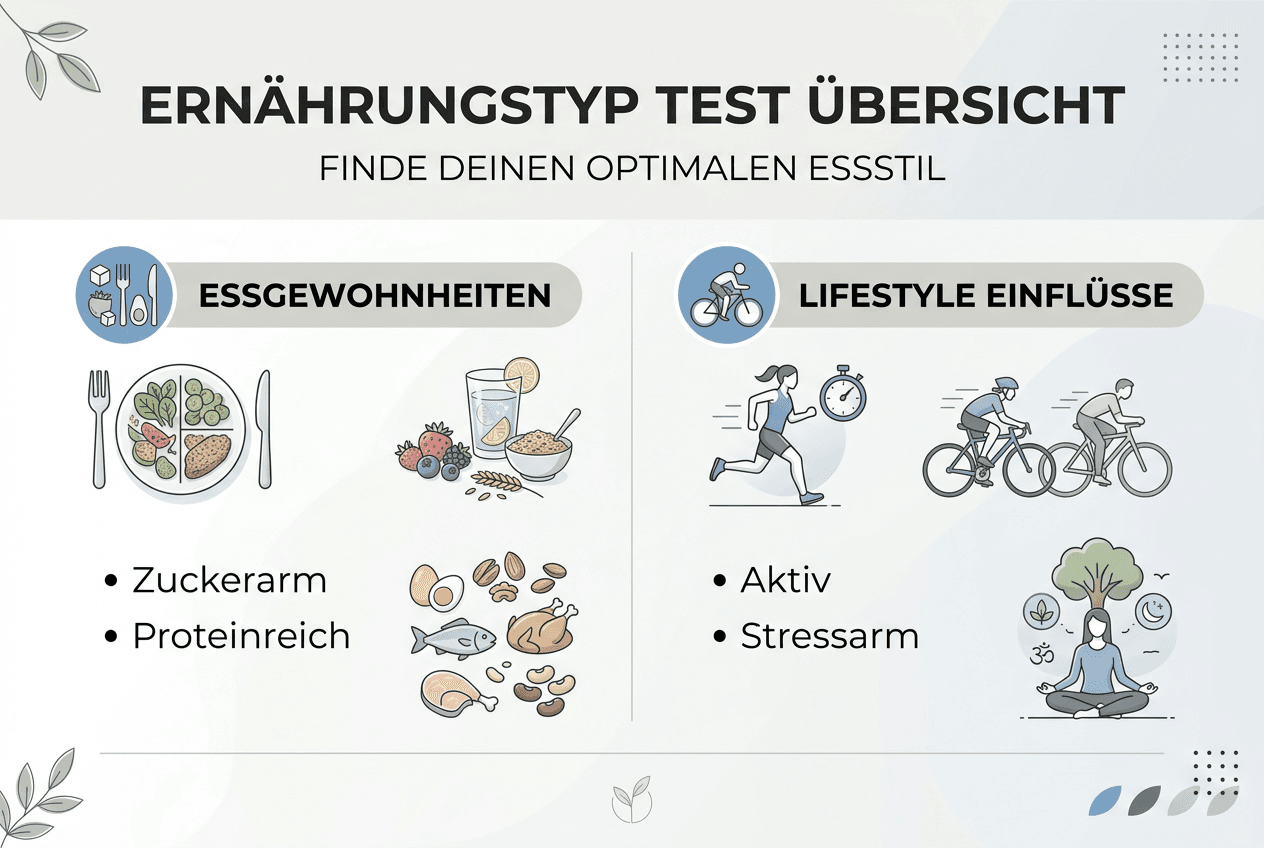
Individual metabolic responses to food vary considerably, which often makes blanket dietary guidelines ineffective. Your test takes these differences into account and provides tailored advice. The following table shows typical dietary types and their characteristic features:
| Dietary type | Metabolic characteristic | Recommended foods | Foods to avoid |
|---|---|---|---|
| Protein type | Slow oxidation, needs lots of protein | Meat, fish, eggs, nuts, avocado | Sugary snacks, white-flour products |
| Carbohydrate type | Fast oxidation, tolerates more carbohydrates | Whole-grain products, fruit, vegetables, legumes | Fatty meats, cream |
| Mixed type | Balanced metabolism | Balanced mix of all macronutrients | Extreme one-sided diet |
Steps for successful implementation:
- Understand the results thoroughly and ask questions or do research if anything is unclear
- Adjust your nutrition plan step by step, starting with the most important recommendations
- Review your behavior regularly and adjust it as needed
- Document successes and challenges to identify patterns
Consistently applying these insights leads to measurable improvements. You will notice your energy levels stabilizing, digestive problems decreasing, and weight management becoming easier. Further information on practical application can be found at optimizing personalized nutrition, where you will find detailed strategies for implementation in everyday life.
Discover personalized dietary tests from mybody®x
If you want to determine your dietary type based on scientific evidence, mybody®x offers professional solutions. The tests combine modern DNA analyses with comprehensive questionnaires to provide you with a precise picture of your individual needs. You receive not only your test results, but also detailed, personalized recommendations for sustainable improvements to your health.
The personalized dietary tests from mybody®x are based on ISO-certified laboratory analyses and scientifically validated methods. Online tests are combined with DNA analyses to effectively support you with nutrition and weight management. You benefit from free personal consultation, a money-back guarantee if no results are achieved, and the highest data protection standards in accordance with the GDPR.
Use these offers as the next step toward your optimal dietary type. With more than 11,300 satisfied customers and an average rating of 4.77 stars, mybody® is one of the established providers in personalized health. The metabolic type test from mybody®x provides the scientific basis for optimizing your individual diet.
Frequently asked questions
How reliable are dietary type tests?
Dietary type tests are a helpful tool, but their reliability varies depending on the method and the user. The accuracy of metabolic type tests depends on the quality of the test and how consistently you follow the recommendations. Questionnaires alone can be subjective, while laboratory tests such as DNA analyses or blood tests provide objective data. You will achieve the best results by combining different methods with medical diagnoses to create a complete picture of your metabolism.
Can I change my dietary type over time?
Yes, nutrition types are not set in stone and can change as a result of lifestyle changes. Metabolic types are not static and adapt to changes in diet, exercise, stress, and age. If you fundamentally change your eating habits or significantly alter your activity level, your type may also shift. Regular tests every one to two years help ensure that you always receive up-to-date and suitable recommendations.
How can I integrate the results of a nutrition type test into my daily life?
Start planning your meals according to the recommendations and use shopping aids such as customized lists. Document your progress in a food diary to identify patterns and improvements. Success depends on consistent implementation, so set realistic interim goals. Combine dietary adjustments with healthy exercise and sufficient sleep for optimal results, because lifestyle factors influence your metabolism just as much as food does.
What costs are associated with a nutrition type test?
Costs vary considerably depending on the scope of the test and the provider. Simple online questionnaires are sometimes free, while comprehensive DNA analyses or laboratory tests can cost between 100 and 400 euros. Invest in tests with scientific validation and professional evaluation to obtain meaningful results. Many providers offer packages with consultations and nutrition plans, which significantly increase the added value.
Do I need medical supervision for a nutrition type test?
Medical supervision is not strictly necessary, but it is recommended if you have existing health problems. If you have chronic conditions, metabolic disorders, or allergies, you should discuss the test results with a doctor or nutritionist. They can put the recommendations into the context of your medical situation and ensure that the dietary change is safe and effective. For healthy people without specific risk factors, the test reports are usually sufficient as a guide.
Recommendation
- What is my nutrition type? Find out now – mybody®x
- What is your metabolic type? Find out with a DNA test – mybody®x
- What is my metabolic type? Discover your path to optimal nutrition – mybody®x
- What is my metabolic type? Guide to determining your type – mybody®x
- Food Trend Predictions 2025 – Impact on Canadian Menus - Probe IT
- Order a ready-made Christmas goose – A trend in Berlin too



Share now:
What is a nutrient profile? Your 2026 guide
Perform a self-test correctly: comprehensive guide 2026