

Metabolic Analysis Costs: What You Really Get for Your Money
You’re probably wondering: How much does a metabolic analysis actually cost? The short answer: Prices can vary widely—from €100 for simple tests to over €400 for an in-depth DNA analysis. This wide range shows one thing above all: It all depends on what you expect from the test and how deeply you want to understand your body.
Your Guide to the Cost of a Metabolic Analysis
If you finally want to truly understand your body and optimize your diet, a metabolic analysis is a brilliant first step. But what exactly is your metabolism? Quite simply, it is the sum of all the biochemical processes that take place in your cells. It converts the food you eat into energy your body needs to live, breathe, and move. How efficiently this process works varies from person to person—and this is exactly where an analysis comes in.
There is no one-size-fits-all answer to the question of cost, because the price directly reflects the value you receive—from a simple snapshot to a genetic blueprint for your health that remains valid for life.

Don’t worry—we’ll shed some light on the subject. In this article, we break down the different price ranges for you and show you which factors really affect the cost.
What You Can Expect for Your Money
The price of an analysis is not arbitrary. Less expensive tests often provide only basic information, while more expensive analyses give you deeper, truly personal insights. Here are the key factors that determine the price:
- Analysis method: Is it a breath analysis, a blood test, or a DNA analysis? Each method provides completely different levels of insight and depth.
- Scope of the evaluation: Are just a few values measured, or are a large number of genes analyzed? A comprehensive report naturally requires more work.
- Laboratory quality: Certified laboratories work to the highest standards, guaranteeing precise and reliable results—this naturally comes at a price.
- Additional consultation: Is a personal discussion of your results included? Even the best data is of no use without an understandable explanation.
To give you a better idea, we have compared the most common methods and their costs for you.
Overview of Different Types of Metabolic Analysis and Their Costs
This table compares common metabolic analysis methods, their typical price ranges, the scope of the analysis, and who they are suitable for.
| Analysis type | Typical cost | What is measured? | Suitable for |
|---|---|---|---|
| Breath gas analysis (spirometry) | 50 € - 150 € | Basal metabolic rate, fat versus carbohydrate burning (snapshot) | Athletes who want to optimize their training intensity; quick status quo analysis. |
| Blood test (basic) | 80 € - 200 € | Blood sugar, cholesterol, thyroid levels (TSH), liver values | Health check-up, initial indications of metabolic disorders. |
| Blood test (comprehensive) | 200 € - 400 € | Detailed hormone profiles, vitamins, minerals, and inflammation markers | People with specific complaints, those seeking deeper investigation into the causes, and those looking to optimize their nutrient intake. |
| DNA analysis (genetic) | from €250 | Genetic predisposition for metabolism, nutrient utilization, and intolerances | Anyone looking for a lifelong, personalized strategy for nutrition and health. |
As you can see, there is an option for almost every budget. The only question is what your personal goal is.
A well-founded metabolic analysis is more than just a test—it is an investment in your future well-being. Instead of spending money on countless diet attempts, you receive clear, scientifically based guidance tailored specifically to your body.
Ultimately, it is not just about the price itself, but about the long-term benefits for your health. A DNA-based analysis, such as the one offered by mybody®, is the most precise way to find a truly sustainable nutrition strategy. Similar considerations regarding value for money also apply to other genetic tests, as you can read in our article on the cost of a genetic test.
Why metabolic analyses cost either 100 or 400 euros
Anyone looking into metabolic analyses will immediately notice one thing: the huge price range. A simple test is available for under 100 euros, while a truly in-depth analysis can quickly cost several hundred euros. But where do these huge differences come from?
Quite simply: The price is not accidental. It directly reflects how in-depth, accurate, and above all useful the result ultimately is for you. Basically, four factors determine the price.
The analysis method: Snapshot or blueprint?
The “how” of the analysis is crucial. A simple breath gas analysis (spiroergometry), for example, measures your current energy expenditure. This is great for athletes who want to optimize their training, but it is only a snapshot of your body in action. Blood tests work similarly: They show important values such as blood sugar or hormones, but these can change from day to day depending on what you eat or how much stress you are under.
A DNA analysis is in a completely different league. It does not examine what is happening right now, but deciphers your genetic blueprint—the fixed, unchangeable instructions of your body. That is precisely why it is the most accurate way to develop a truly long-term, personalized nutrition strategy and, logically, falls into a higher price category.
Scope and depth: one puzzle piece or the complete picture?
The second major price driver is the scope of the analysis. An inexpensive test often only scratches the surface and examines a handful of biomarkers. A high-quality analysis goes much, much deeper and paints a complete picture of your genetic predisposition.
Imagine that an inexpensive test gives you a single puzzle piece. A comprehensive DNA analysis gives you the complete puzzle. Only when all the pieces are put together can you recognize the connections and understand how your body really works.
For example, in a DNA analysis by mybody®, we examine a whole range of genetic markers. They reveal not only which metabolic type you are, but also how strong your predisposition to being overweight is and how your feelings of hunger and satiety are genetically regulated. This level of detail is the basis for recommendations you can implement immediately and that truly make a difference.
Laboratory quality and consultation: data or genuine knowledge?
You should not compromise on laboratory quality. ISO-certified laboratories work according to strict scientific standards and deliver results you can rely on. Of course, that comes at a price. Inexpensive providers often cut costs precisely here, calling the accuracy—and therefore the usefulness—of the entire analysis into question.
And then comes perhaps the most important point: consultation. What good are dozens of pages filled with scientific data if you do not understand them? Professional, easy-to-understand interpretation of the results is worth its weight in gold. Only an explanation from experts turns raw data into applicable knowledge for your everyday life.
In Germany, you can typically expect to pay between 300 and 400 euros for a genetic metabolic analysis, with some packages even including a medical consultation. Cheaper at-home tests, often based on blood or saliva samples, are available for as little as 50 to 150 euros—but they also provide significantly less information. You can also read more about the price differences between metabolic analyses at Bitterliebe. Ultimately, you decide how deeply you want to dig and how much you want to invest in your goals.
Blood, breath gas, or DNA—which method is right for you
When you look into the cost of a metabolic analysis, you quickly realize that the method is the decisive factor. It is a bit like checking the weather. A quick glance out the window shows you what it is like right now. The weather app gives you a forecast for the next few hours. But only climate data reveal the fundamental patterns of your region—that is, what is reliable.
The same applies to the analysis methods. Each has its place, but they tell you completely different stories about your body. So the right choice depends entirely on what you want to achieve.
Snapshots from breath gas and blood
The breath gas analysis, also known as spiroergometry, measures your current energy expenditure. It shows you in real time whether your body is currently burning more fat or carbohydrates. This is extremely practical for athletes who want to fine-tune their training. The problem: The result is merely a snapshot. It depends heavily on how you feel that day, your last meal, and even your stress level.
A blood analysis works similarly. It provides you with valuable data about biomarkers such as blood sugar, cholesterol, or thyroid hormones—important pieces of the puzzle for your current health status. However, these values also fluctuate constantly. They only show what is happening in your blood right now, but not necessarily why it is happening.
The following decision tree summarizes the key factors that affect the cost and significance of your analysis.
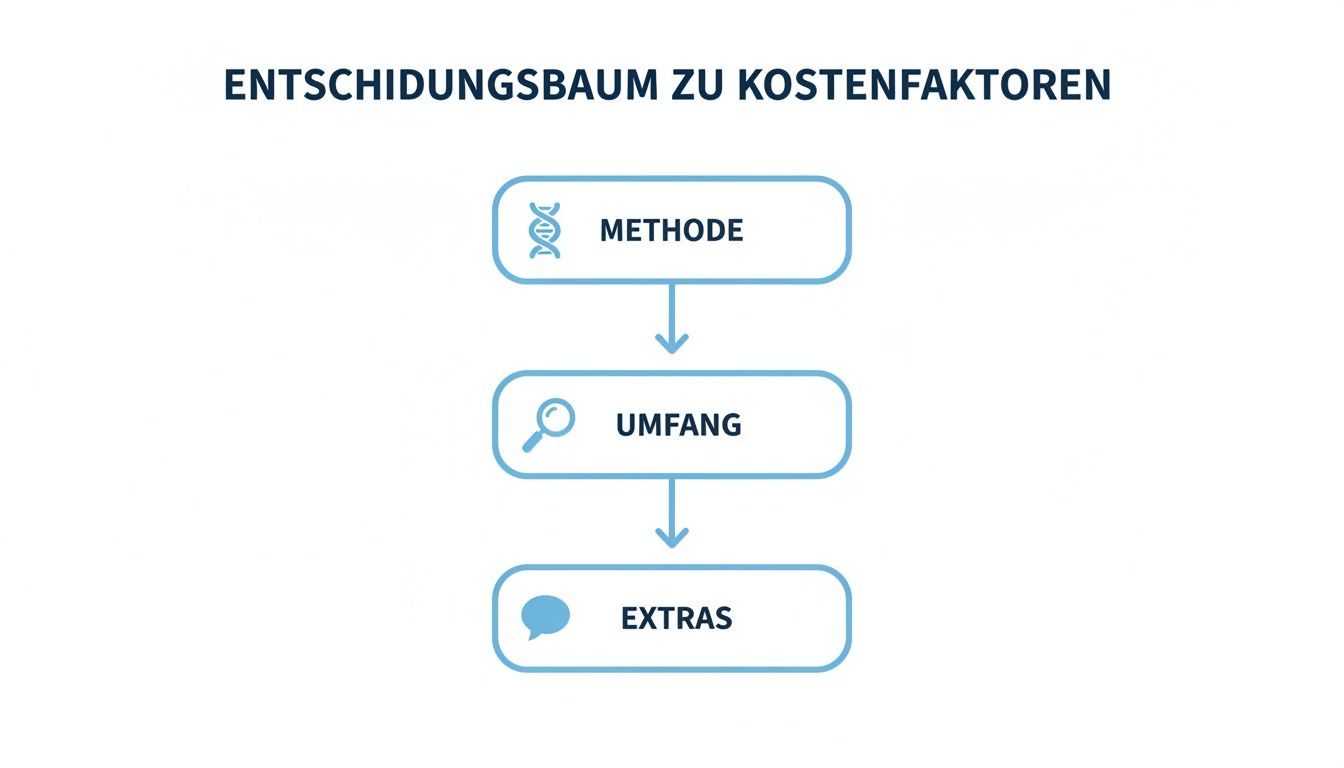
You can see: Choosing the method is the very first step and determines everything that follows—the scope, the depth, and whether you need any additional services at all.
Comparison of analysis methods and their significance
To make the decision easier for you, we have directly compared the most common methods. The table shows how the approaches differ and who they are suitable for.
| Method | Basis | Significance | Cost | Advantage | Disadvantage |
|---|---|---|---|---|---|
| Breath gas analysis | Measurement of O₂/CO₂ in exhaled air | Snapshot of energy expenditure | Low to medium (from 50 €) | Good for managing training | Highly dependent on how you feel on the day |
| Blood analysis | Measurement of biomarkers in the blood | Current health status | Low to medium (from 30 €) | Detects deficiencies & inflammation | Values fluctuate significantly and must be repeated |
| DNA analysis | Analysis of relevant gene variants | Lifelong blueprint of metabolism | Medium to high (from 150 €) | One-time investment, stable foundation | Does not provide acute status values |
Every method has its strengths, but only one provides the foundation for truly long-term change.
The DNA analysis as your personal blueprint
The DNA analysis is completely different from these snapshots. It is not today’s weather, but the climate zone in which you live. Your DNA is the unchanging blueprint of your body—it determines how your metabolism works from the ground up. It tells you whether you have a genetic predisposition to being overweight, how your hunger and satiety are regulated, and which nutrients your body can absorb particularly well or poorly.
Your genes are the instruction manual for your body. A DNA analysis reads this manual and translates it into clear, practical recommendations for your diet and lifestyle.
This information is valid for life. While you would need to repeat a breath analysis or blood test regularly to track changes, you invest in a DNA analysis only once. It gives you the most stable and sustainable foundation for permanently adapting your diet to your needs.
If you would like to explore the comparison in greater depth, our article explains what really distinguishes a breath analysis from a DNA test. That is precisely why we at mybody® rely on genetic analysis. We are convinced that real change begins at the root—with your unique genetic code.
Why a DNA metabolism analysis pays off in the long term
You may be wondering why you should invest in a DNA analysis when the initial cost seems higher than that of other methods. The answer is simple: It is not an ongoing expense, but a one-time, lifelong investment in your health.
Think of it like buying a house. You could save money on the surveyor and skip a thorough inspection of the foundation. In the long term, however, you risk costly repairs that ultimately cost you much more. A DNA analysis is precisely this fundamental inspection for your body.
Invest once, benefit for a lifetime
Your DNA does not change. This means that the results of your genetic metabolism analysis are valid for life. It allows you to decode your personal “blueprint” once and for all and gives you lasting clarity on the questions that really matter:
- Which nutrients (carbohydrates, fats, proteins) do you process particularly well?
- How pronounced is your genetically determined sense of hunger and satiety?
- What kind of athlete are you by nature—more of an endurance type or more of a strength type?
These insights are your very own compass for a diet that finally suits you. You receive a scientifically sound foundation that you can return to again and again.
An end to expensive diet failures
Honestly, who doesn't know the feeling? You try a diet that has worked wonders for your friends, but nothing happens for you. That is not only frustrating, but also costs a great deal of time and money. The reason often lies in our unique genetic predisposition.
A DNA analysis puts an end to expensive guesswork. Instead of spending your money on unsuitable diet plans, unnecessary dietary supplements, or the next yo-yo effect, you are investing in clear, practical knowledge about your body.
Add up the costs that accumulate over the years through failed diet attempts. In the long term, a DNA analysis is often the significantly cheaper and, above all, more successful alternative. It helps you make targeted decisions and finally achieve sustainable results.
Since 2009, the Genetic Diagnostics Act in Germany has set clear requirements for genetic tests. While medically necessary analyses must be ordered by a doctor, lifestyle metabolic tests like this one are freely available. Prices for such DNA-based diet analyses start at around 189 euros. A comprehensive genetic metabolic analysis including consultation often costs approximately 329 euros. If you would like to get a sense of market prices, you can, for example, find out more about the genetic metabolic analysis at Dr. Kurscheid.
Ultimately, the mybody® analysis is much more than just a test. It is your personal user manual for a healthier, more energetic lifestyle—an investment that pays off every single day.
Does health insurance cover the cost of a metabolic analysis?
A question we receive time and again: Does health insurance contribute to the cost of a metabolic analysis? Unfortunately, there is no blanket answer, as it depends heavily on your personal situation and the type of analysis. We will shed light on the matter for you honestly and transparently.
As a general rule, statutory health insurance funds (GKV) are only required to cover the costs of medical services when there is a clear medical necessity. This means that a metabolic analysis is generally only covered if it is used to diagnose or treat an existing illness.
When reimbursement is possible
A classic example would be the assessment of severe overweight (obesity) or suspected metabolic disease such as diabetes. In such cases, a doctor can order an appropriate analysis, which can then also be billed to the health insurer.
However, most DNA-based metabolic analyses, such as mybody®'s, are designed as preventive lifestyle analyses. They are intended to help you optimize your diet and lifestyle before health problems arise. Such preventive measures are generally considered out-of-pocket expenses by statutory health insurance (GKV) and are therefore not reimbursed. Private health insurance (PKV) often handles them similarly, although the exact conditions depend heavily on your individual plan.
Important note: Consider a preventive metabolic analysis an investment in your health. It gives you the tools to take proactive action instead of merely reacting to symptoms.
Ways to save and alternative subsidies
Even if the analysis itself is usually paid for out of pocket, there are still smart ways to benefit indirectly. Many health insurers subsidize measures based on the results of your analysis.
- Subsidy for nutritional counseling: Many insurers subsidize certified nutritional counseling by up to several hundred euros per year. Your analysis results are the perfect basis for making such counseling as effective as possible.
- Company health promotion: Ask your employer. Some companies offer subsidies for preventive measures as part of their health management programs.
By the way, coverage of costs is not only an issue with metabolic analyses. If you would like to get a better understanding of how health insurers generally decide on modern health tests, our article on health insurance coverage of microbiome tests offers valuable insights.
Your simple path to personalized nutrition with mybody®
Now that you have an overview of the different methods and their costs, let's get specific. How can you easily develop your personal nutrition strategy with mybody®? Our approach is simple: minimal effort for you, maximum benefit for your health. Everything is scientifically sound and immediately actionable in everyday life.
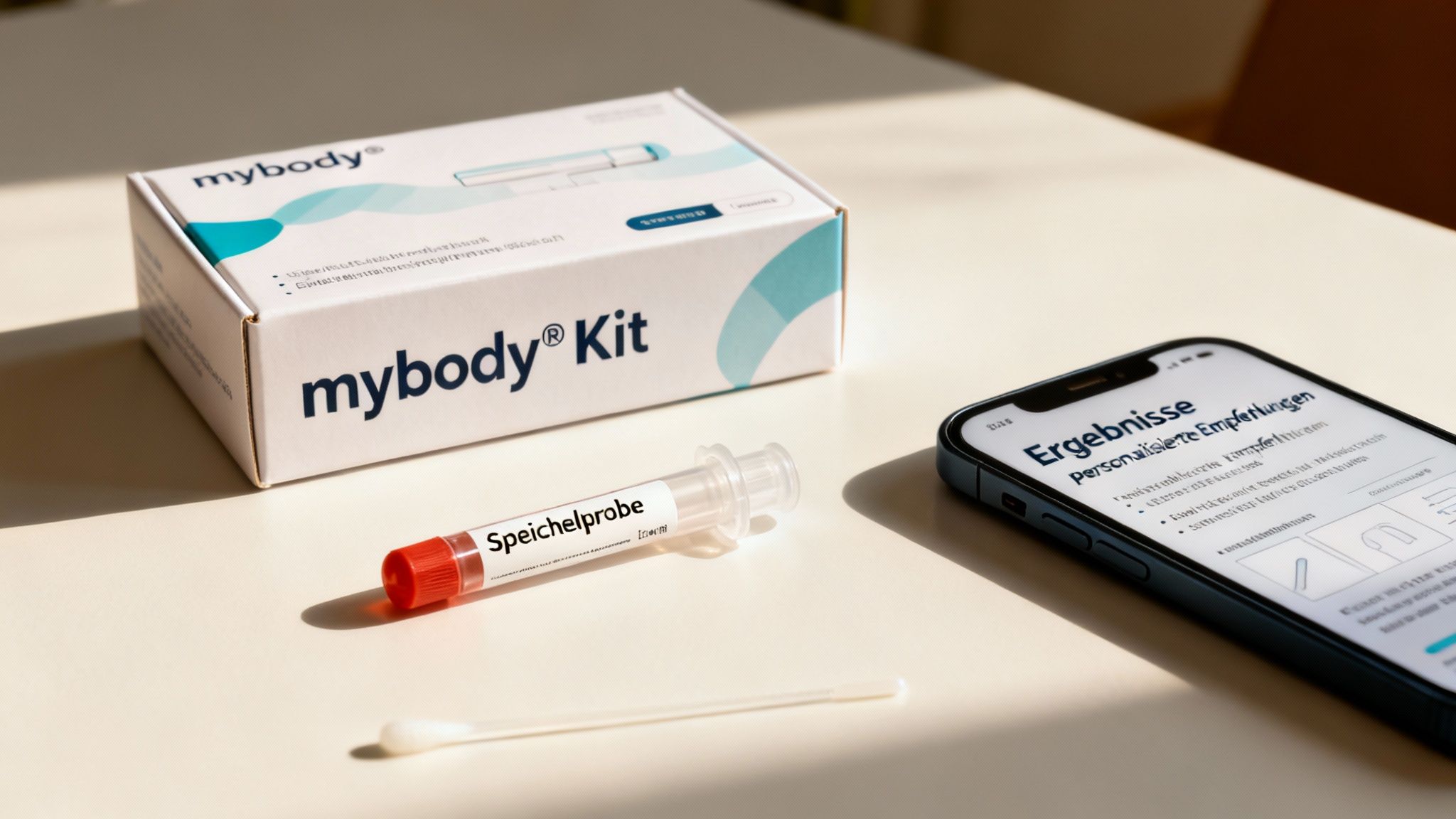
The path to your genetic blueprint is truly incredibly simple. Forget doctor’s appointments or complicated preparations.
Three steps to reach your goal
The entire process is designed to fit seamlessly into your everyday life. Our mybody® test kit provides everything you need to start developing a new awareness of your health.
- Easy to order: You order your test kit conveniently online. It arrives discreetly packaged directly at your home.
- Collect your sample: Using a simple cotton swab, you collect a saliva sample from the inside of your cheek. It only takes a few minutes and is completely painless.
- Analysis & evaluation: You send the sample to our ISO-certified laboratory in the enclosed return envelope. After the analysis, you receive a comprehensive, easy-to-understand report with specific recommendations for action.
With mybody®, you get more than just data. You receive a lifetime-valid user manual for your body that finally puts an end to costly guesswork and frustrating diet experiments.
What sets mybody® apart
We combine scientific precision with maximum practicality for everyday life. Your analysis is based on your unique genetic code—and therefore provides you with results valid for your entire life. This means you only need to take the test once.
Based on your genes, you receive detailed and, above all, actionable recommendations for your diet and lifestyle. For example, you’ll learn which macronutrients your body processes most effectively and how to optimally support your feeling of fullness.
This gives you complete control over your health—based on facts, not vague assumptions. If you’re ready to take this crucial step, you can find all the information about our mybody® NutriCare DNA metabolism test here. This is your starting point for a sustainable and truly successful health strategy.
All clear so far? The most frequently asked questions about the cost of a metabolism analysis
Finally, let’s clear up the typical questions many people have about the cost of a metabolism analysis. Here you’ll find clear, honest answers so you can make a confident decision for yourself and your health.
How much does a good metabolism analysis cost?
There is no one-size-fits-all answer, as the cost depends heavily on the method and depth of the analysis. A reliable, scientifically sound DNA metabolism analysis that provides results valid for your entire life usually costs between €250 and over €400.
Of course, there are less expensive methods, such as breath analysis or basic blood tests, available from around €50. The catch is that they only provide a snapshot. If you want to track your progress, you have to repeat them again and again, which also adds up over time.
Think of it this way: A high-quality analysis is a one-time investment in your genetic blueprint. It helps you avoid expensive and frustrating diet experiments in the future—and pays off many times over in the long term.
Is DNA analysis really worth the higher price?
Absolutely. Even if the investment seems higher at first, DNA analysis is the smartest and most cost-effective method in the long run. Your genetic predisposition does not change, which means you invest only once in learning about your body.
You’ll learn how your metabolism works from the ground up, which nutrients you process best, and what controls your sense of hunger. This knowledge is the perfect foundation for a nutrition strategy that works in the long term—without the yo-yo effect.
Why are there such large price differences?
The price range is no coincidence; it depends on several factors that directly influence the quality and usefulness of your analysis.
- Analysis method: A DNA analysis performed in a laboratory is many times more complex than a simple breath analysis.
- Scope: How many genes or biomarkers are examined? The more in-depth the analysis, the more informative and useful the results are for you.
- Laboratory quality: ISO-certified laboratories guarantee precise and reliable results. Naturally, this quality comes at a price.
- Evaluation & counseling: An easy-to-understand report and the option to contact someone with questions transform raw data into practical knowledge for your everyday life.
Does health insurance cover the cost?
Unfortunately, usually not. Preventive lifestyle analyses designed to optimize your diet and well-being are generally considered an out-of-pocket expense. Health insurance providers often only contribute when there is a clear medical necessity, for example, to diagnose a condition such as obesity.
One tip: It’s worth asking your health insurance provider whether it subsidizes subsequent nutritional counseling. Your analysis results would be the ideal basis for this.
Are you ready to stop guessing and finally find out what your body really needs? At mybody®, you get a scientifically based DNA analysis that shows you the way to your very own nutrition and health strategy.



Share now:
Determine your metabolism: Find out what your body really needs
What is a metabolic analysis? How it affects your well-being