
Microbiome test health insurance: When your insurance covers the costs
Are you considering a microbiome test and wondering if your health insurance will cover the costs? To put it simply: in most cases, unfortunately not , but there are important exceptions you should be aware of. For statutory health insurance companies, a detailed analysis of your gut flora is simply not part of the standard coverage, which is why it's usually considered a self-pay service.
Microbiome testing and health insurance: The most important facts at a glance
Your gut is a fascinating universe – and the interest in understanding it better is growing rapidly. A microbiome test can give you deep insights into the state of your gut bacteria. But before you get started, the question of cost naturally arises.
To be perfectly honest: In Germany, statutory health insurance companies (GKV) rarely cover the costs of a microbiome analysis. Such tests often fall under the category of so-called IGeL services (individual health services), which you as the patient have to pay for yourself. Expect costs between 150 and 300 euros . If you would like more detailed information, krankenkasseninfo.de explains very well why health insurance companies are often hesitant to cover gut tests .
The small but important difference: statutory health insurance vs. private health insurance
When it comes to cost coverage, the wheat is separated from the chaff – depending on whether you have statutory or private health insurance.
- Statutory health insurance (GKV): Coverage is extremely rare. The test must be deemed medically necessary by a doctor. In practice, this usually only happens in cases of severe, chronic bowel diseases or when it is necessary to specifically detect certain infections.
- Private health insurance (PKV): As a privately insured individual, your chances are often better. Depending on the plan, extended preventative care and diagnostic services are sometimes included, which may also cover microbiome analysis. A quick look at your policy documents or a call to your insurance company will quickly clarify this.
The magic word for any chance of cost coverage is: "medical necessity". Without a crystal-clear medical justification that substantiates a specific diagnosis, an application to the statutory health insurance (GKV) has virtually no chance of success.
Prevention or treatment – that's the crux of the matter.
That's precisely the crucial difference: Most at-home microbiome tests, including the mybody®x Gut Microbiome Test , are designed for prevention. They help you proactively understand and improve your gut health before serious problems even arise.
Health insurance companies, on the other hand, usually act reactively. They pay for treatment once an illness has already been diagnosed.
For this reason, preventative testing is an incredibly valuable investment in your own well-being. You take your health into your own hands and gain the knowledge to actively do something for yourself. Would you like to delve deeper into the fascinating world of your gut? Then learn more about the importance of the microbiome for your health in our article .
How to convince your doctor to do a microbiome test
A doctor's referral is your key to getting your health insurance to cover the cost of a microbiome test . But how do you convince your doctor to certify its necessity? It's simple: prepare thoroughly and present yourself as an informed partner who cares about their health.
The most important step is to document your symptoms clearly. Many doctors hear vague statements like "I often have abdominal pain" every day. This is understandable, but it makes it difficult for them to recognize the urgency for a more precise diagnosis.
Your symptom diary – the strongest argument
A detailed symptom diary is invaluable. In it, you not only record what happens, but also when and in what context . This creates a solid, data-based foundation for the conversation.
Record the following points over a period of at least two to four weeks:
- Type of symptoms: Are they bloating, diarrhea, constipation, cramps, or rather vague abdominal pain?
- Timing and frequency: When do the symptoms appear? Immediately after waking up, after certain meals, or perhaps during periods of stress?
- Intensity: Rate the severity of your symptoms on a scale of 1 (barely noticeable) to 10 (very severe).
- Circumstances: What exactly did you eat? What was your stress level? Were there any other unusual symptoms such as fatigue or skin problems?
This structured preparation helps your doctor enormously to recognize patterns and understand that your problems are chronic.
A well-maintained symptom diary transforms your subjective feelings into objective facts. It shows that you take your health seriously and are actively seeking solutions – the perfect basis for a conversation on equal footing.
Confident and well-prepared for the doctor's appointment
With your diary in hand, you can confidently go into the appointment. Explain objectively why you feel that previous treatment attempts have been unsuccessful and that a detailed analysis of your gut flora is the next logical step.
Try using phrases like: "I have closely observed my symptoms and notice that they are not improving even after changing my diet. I would like to investigate the cause more thoroughly in order to find a more targeted therapy."
You're far from alone with your problems. An analysis by the KKH health insurance company showed that in 2022, around 11 percent of their insured members were receiving treatment for irritable bowel syndrome (IBS) – a figure that is rising, especially among young adults. You can find more information about these health trends directly from KKH . These figures underscore how important a thorough diagnosis has become.
The following graphic shows you the typical process – from the doctor's visit to possible cost coverage.
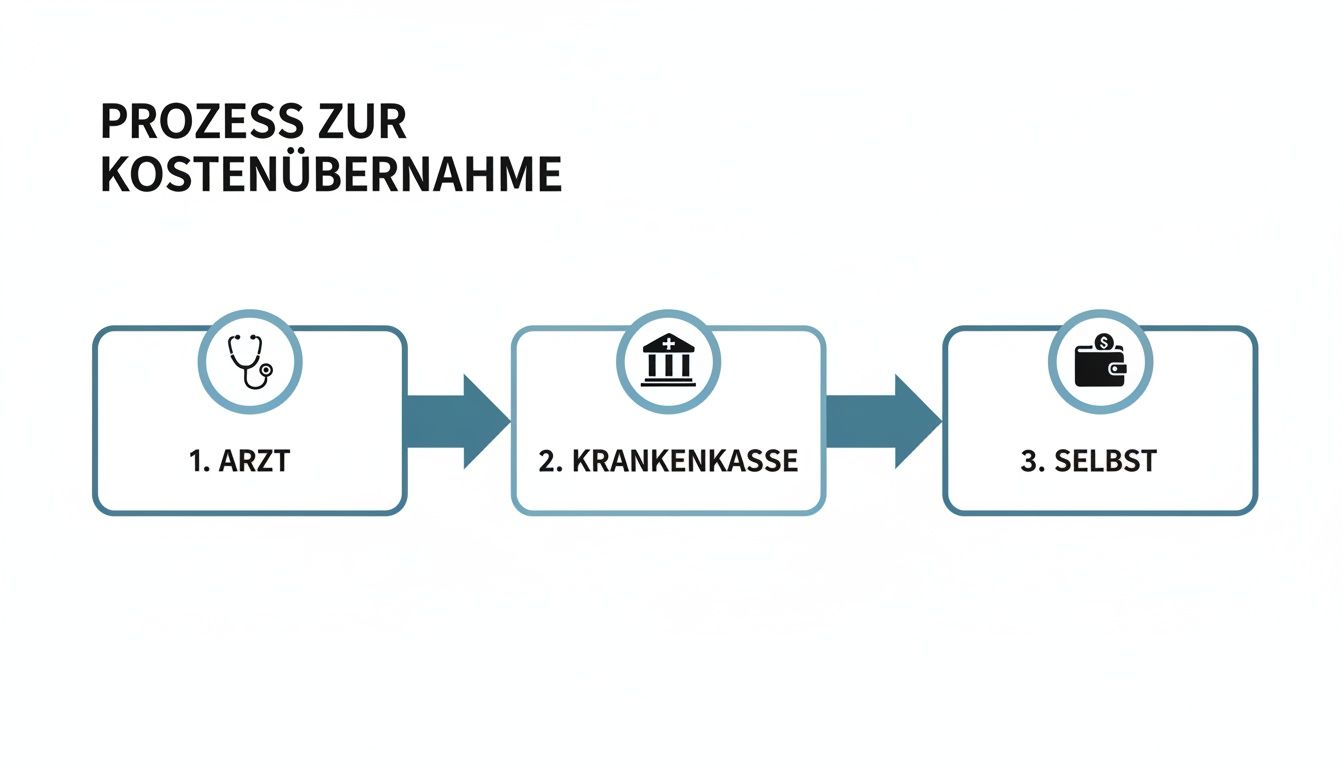
The diagram makes it clear: your doctor is the first and most important step before the health insurance company even gets involved. Only with a sound medical justification do you have a realistic chance of successfully initiating the process.
Want to know how such a test works? In our step-by-step guide to microbiome testing, you'll learn everything you need to know about the practical implementation.
How to correctly formulate your application for reimbursement of costs
A convincing application is much more than just a form you fill out. See it as your chance to clearly explain to your health insurance company why a microbiome test is medically essential in your specific case. With the right preparation and compelling arguments, you significantly increase your chances of success.
Before you even begin writing, you should gather all the important documents. Without these documents, your application will hardly make it past the first desk. Professionalism and completeness are absolutely essential here.

These documents are indispensable
To ensure your application is sound, you should have the following documents ready. They form the foundation for a positive decision.
- Medical certificate of necessity: This is the core of your application. Your doctor must clearly and in detail explain why the analysis of your microbiome is crucial for further diagnosis or treatment.
- Cost estimate: Ask the provider of the test – whether a laboratory or a doctor's office – for an official cost estimate. This must clearly state which services are provided and at what price.
- Personal cover letter: This is where you come in. Describe your situation in your own words. This makes your application more tangible and gives it a personal touch.
- Copies of relevant findings: Collect everything that documents your medical history so far. Doctor's letters, lab results, or reports showing that previous treatments have been unsuccessful are invaluable.
This collection of documents demonstrates to the case worker that your request is well-considered and medically sound. You are essentially providing them with all the facts they need to give a "yes".
Your personal cover letter is your stage. Tell your story here: How long have you had these symptoms? What treatments have you already tried? And why do you see the microbiome test as a chance to improve your quality of life? Remain factual, but authentic.
To keep track of everything, you can use the following checklist.
Checklist for your application to the health insurance company
Use this checklist to ensure that your application for reimbursement contains all the necessary documents and information.
| document or information | Completed | Important instructions |
|---|---|---|
| Medical certificate of necessity | ☐ | Must clearly and understandably explain the medical reasoning. |
| Detailed cost estimate | ☐ | All items must be listed individually and be traceable. |
| Personal cover letter | ☐ | Describe your suffering and the therapies that have been unsuccessful so far. |
| Copies of all relevant findings | ☐ | Doctor's letters, lab results, reports – the more complete, the better. |
| Fully completed application | ☐ | Make sure that all fields in the official form are filled in. |
If you can check off all the points on this list, you have created a solid foundation to convince your health insurance company.
Concrete examples of wording for your cover letter
A good cover letter connects your doctor's professional assessment with your personal story. It's about building a logical and coherent chain of reasoning.
Example of a strong introduction: "Dear Sir or Madam, for [number] months/years I have been suffering from chronic digestive problems that severely restrict my quality of life. As you can see from the enclosed findings, various medical examinations and treatment attempts have so far been unsuccessful. My attending physician, Dr. Mustermann, therefore sees a comprehensive microbiome analysis as the next logical diagnostic step in order to finally be able to initiate targeted therapy."
Example of a compelling main argument: "The enclosed medical certificate of necessity indicates that there is a well-founded suspicion of severe dysbiosis as the cause of my symptoms. A precise analysis of the gut flora is essential to confirm this suspicion and develop an individualized treatment that goes beyond the usual standard therapies. In the long term, this could even help to avoid further, significantly more expensive diagnostic procedures or treatments."
This approach isn't just effective for microbiome tests, by the way. You'll find similar tips in our article on micronutrient analysis at your family doctor's office and insurance coverage . The basic principles are usually the same: a sound justification and complete documentation.
What to do if your health insurance company rejects your application?
The letter has arrived, and it's a rejection. That's frustrating, no doubt. But don't give up right away! Don't see the letter as a final "no," but rather as an invitation to sharpen your arguments. Appealing is your right and often the crucial second attempt that leads to success.
The first step? Take a deep breath and examine the rejection letter very carefully. Health insurance companies often use standard justifications to reject a microbiome test . You'll frequently see phrases like "not included in the benefits catalog" or "medical necessity not sufficiently proven." These are precisely the points you can address in your appeal.
Deciphering the rejection notice
Don't be intimidated by the formal, bureaucratic language. Your task is to pinpoint the exact reason for the rejection. Ask yourself:
- Is the health insurance company referring to the benefits catalog? Then you must convincingly explain why your case is an exception and requires an individual decision.
- Is the medical necessity being questioned? Here's your chance to provide further evidence with new findings or a more detailed medical statement.
- Perhaps some documents were simply missing? Sometimes it's just a small formal hurdle that you can quickly overcome.
If you know the weak point, you can formulate your objection precisely and refute the arguments of the health insurance company point by point.
How to formulate a convincing contradiction
Your letter of appeal should be above all else: factual, clear, and well-reasoned. You need to show the case worker why the initial decision should be reconsidered. Focus on providing new information or reinforcing your existing arguments.
Here is an example of an effective argument: "You justify your refusal by stating that the examination does not conform to generally accepted medical standards. I would like to point out that in my case, all standard diagnostic procedures have already been exhausted without result. My treating physician sees the microbiome analysis as the last remaining option to find the cause of my chronic symptoms and to begin effective therapy. This could potentially prevent significantly more expensive treatments in the future."
This approach shows that you have truly considered the rejection and are offering a constructive solution.
A good appeal is not an emotional complaint, but a factual argument. Use the opportunity to point out the discretionary power the health insurance company has in individual case decisions. Emphasize that it's about restoring your health and ultimately your ability to work.
Additional arguments for your appeal
Sometimes you need an ace up your sleeve to convince the insurance company. Consider whether one of these options might be suitable for you:
- Second opinion or expert report: A further specialist medical statement confirming the necessity of the test can give your appeal enormous weight.
- Recent studies: Are there any new scientific publications that demonstrate the importance of microbiome analysis for your specific condition? A brief, understandable summary can strengthen your argument.
- The economic factor: Make it clear that the costs of the test are negligible compared to the potential costs of untreated chronic conditions (e.g., lost work time or expensive long-term medication).
A rejected application is no reason to give up. With a smart strategy and the right arguments, you have a good chance of turning the decision in your favor. Keep at it – your health is at stake!
mybody-x as a clever alternative for your gut health
No matter how your health insurance company decides, ultimately your health is always in your own hands. Hoping for coverage or fighting your way through a jungle of applications and appeals is not only stressful, but above all, a waste of valuable time. This is precisely where you can take action, become proactive, and take control yourself.
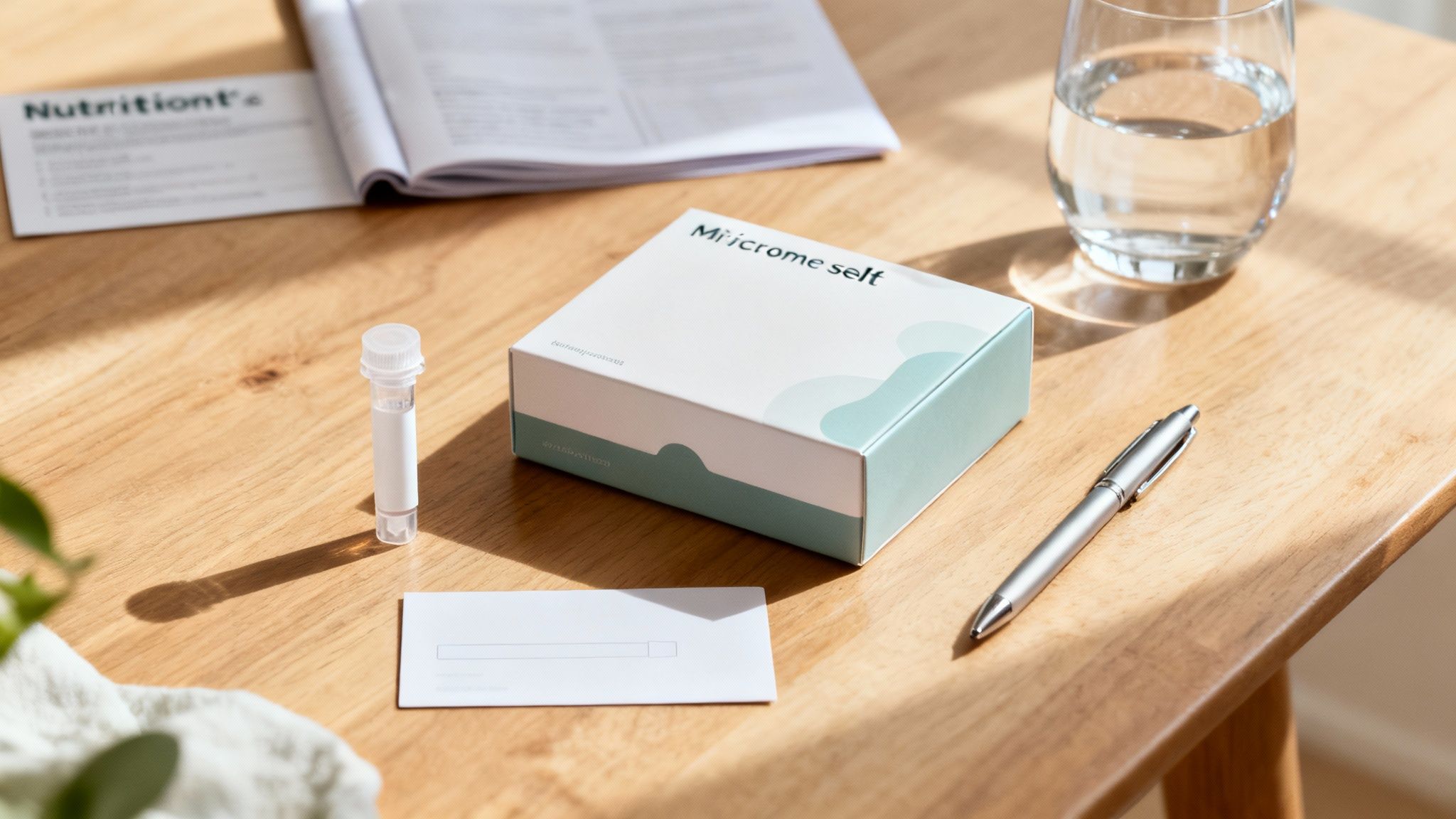
A self-test is the smart, quick, and direct way to finally get clarity. Instead of waiting weeks for a specialist appointment or approval from your health insurance company, you can act immediately and gain valuable insights into your body.
Why a high-quality self-test makes the difference
The market for microbiome tests is booming, but the quality of the offerings is often inconsistent. Many commercial tests suffer from a lack of scientific standardization, which severely limits their reliability. Researchers point out that there is still no universally accepted gold standard for a "healthy" microbiome, which can lead to inconsistent and difficult-to-compare results. You can read more about these challenges at krankenkassen.de .
That's why it's so crucial to choose a provider that prioritizes scientific rigor and transparency.
- Certified laboratory analysis: Ensure that your sample is analyzed in a specialized laboratory certified according to ISO standards . This is the only way to guarantee that the results are precise and reliable.
- In-depth analysis: A good test provides more than just a long list of bacterial names. You need a clear explanation of what this data specifically means for your health, digestion, and well-being.
- Concrete action recommendations: This is the most important point. The best diagnosis is useless without a clear plan. You need personalized, actionable tips for your diet and lifestyle that you can start using immediately.
These criteria are your checklist to ensure that you are not just collecting data, but gaining real, applicable knowledge for your health.
Don't view a self-test as merely a cost factor, but as an investment in your most valuable asset: your health. You avoid waiting times and immediately receive the tools to actively improve your well-being.
From result to transformation with mybody-x
The mybody®x gut microbiome test was developed precisely for this direct approach. You not only receive a detailed analysis of your gut ecosystem, but also a clear roadmap that guides you step by step. The results show you exactly where potential imbalances lie and which of your beneficial bacteria strains might need some support.
Imagine discovering you're deficient in certain bacteria responsible for producing B vitamins. With this knowledge, you can specifically incorporate prebiotic foods like leeks, asparagus, or oatmeal into your diet to "feed" these beneficial bacteria. Or perhaps your test reveals an overgrowth of bacteria that are causing persistent bloating. Our recommendations will then help you choose the right foods to restore balance.
This is how you transform from a passive observer into an active shaper of your own health. The test provides you with the scientific basis, and you take the reins to take immediate action – quickly, easily, and without any bureaucracy. Find out here how the mybody®x gut microbiome test can pave the way to greater well-being .
Your most frequently asked questions
Here we have compiled the answers to the questions we most frequently receive regarding microbiome testing and health insurance . This way you get the information you need quickly and concisely.
Can I deduct the cost of a mybody®x test from my taxes?
That's a very good question, because under certain circumstances it is indeed possible. You can claim healthcare costs as "extraordinary expenses" on your tax return. The key here is usually a doctor's certificate confirming the medical necessity.
However, there's a catch: your total expenses must exceed a so-called reasonable burden threshold. This threshold is individual and depends on your income and marital status. To be sure whether this is worthwhile for you, it's best to have a quick chat with your tax advisor. They can calculate it precisely for your situation.
Which other mybody®x tests can help with bowel problems?
Excellent point! Gut problems are rarely caused by a single factor; often several factors play a role. The microbiome test is a fantastic starting point, but sometimes a holistic approach is worthwhile.
Here are some tests that can complete the picture:
- Food intolerance test: Could a specific food be triggering your bloating or abdominal pain? Sometimes the cause isn't primarily in the gut flora, but rather in a reaction to certain foods that put additional strain on your gut health.
- Nutrient test: If your gut is out of balance, it can disrupt the absorption of important vitamins and minerals. A nutrient deficiency, in turn, can affect your overall energy levels and well-being – a real vicious cycle.
- Hormone testing: Hormone levels, especially the stress hormone cortisol, can significantly impact gut health. Combining different tests provides a much more comprehensive picture of your health and reveals the true connections.
Are private health insurance companies more likely to cover the costs?
Yes, our experience shows that the chances are often better with private health insurance (PKV). Many private plans include extended benefits for preventative care and diagnostics, which can include a microbiome test.
However, there's no guarantee here either. The safest way is to check your policy documents or call your private health insurance company directly and ask. Again, having a doctor's recommendation significantly increases your chances of approval.
What distinguishes a microbiome test from a normal stool sample taken by a doctor?
This is a crucial difference that you should be aware of. When your doctor sends a standard stool sample to the lab, they are specifically looking for acute pathogens – that is, for specific bacteria, viruses, or parasites that are causing an infection. This is purely for acute diagnostics.
A comprehensive microbiome test, like the one from mybody®x , goes much deeper. It analyzes the entire diversity and composition of your gut ecosystem . You gain detailed insight into the complex balance of beneficial and harmful bacterial strains. This allows long-term imbalances, which are often the true cause of chronic ailments, to be uncovered.
Take control of your gut health now. With the precise and easy-to-understand self-tests from mybody®x , you'll finally get the clarity you need for targeted improvements. Discover the right analysis for you at https://mybody-x.com .


Share:
What is a self-test? Scientifically safe at home
DNA test for diet: Can your genetics reveal your weight loss secret?