
Leaky Gut Test: How to find out if your gut is permeable
Do you often feel tired, struggle with skin problems, or have a constantly rebelling stomach without a doctor being able to find a clear cause? If you're at this point, a leaky gut test could provide the crucial answers. These tests, which you can now even conveniently perform at home, measure specific values like zonulin and thus give you valuable insights into the health of your intestinal barrier.
Could leaky gut explain your symptoms?
I know how confusing and frustrating it can be when you have symptoms but don't get a clear diagnosis. You sense that something is wrong, you might run from doctor to doctor, but you keep hearing the same thing: "We can't find anything." This uncertainty is exhausting and eventually makes you doubt your own perception.
But what if your gut feeling has been leading you down the right path all along? What if the true cause of your discomfort lies much deeper – namely in your gut? Many nonspecific symptoms that at first glance seem unrelated can point to a common problem: leaky gut syndrome.
Your gut: The most important gatekeeper of your body
Imagine your intestinal lining as the strictest bouncer at an exclusive club. His job is to let in only the invited guests – in this case, vital nutrients. At the same time, he must consistently keep all troublemakers out: toxins, incompletely digested food residues, and harmful bacteria.
A healthy gut is the absolute foundation for your well-being. Its protective function is crucial for nipping inflammation and systemic problems in the bud.
In leaky gut syndrome, this gatekeeper is essentially overwhelmed. The tight connections between the intestinal cells, the so-called tight junctions , loosen. The protective barrier becomes permeable, developing "holes." Suddenly, substances that have absolutely no business being there can enter your bloodstream. Your immune system immediately sounds the alarm and launches a massive defense response, which can manifest as inflammation throughout the body.
This table summarizes common symptoms that are often overlooked but are associated with increased intestinal permeability.
Common symptoms of a possible leaky gut
| category | Possible symptoms |
|---|---|
| digestion | Bloating, abdominal pain, diarrhea, constipation, distended abdomen |
| skin | Acne, eczema, rosacea, skin rashes |
| Mind & Energy | Chronic fatigue, brain fog, concentration problems |
| immune system | New food intolerances, frequent infections |
| Generally | Joint pain, headaches, unexplained weight gain |
Do you recognize yourself in any of these points? This is not uncommon and a clear signal to take a closer look. You are not alone in these concerns. Recognizing that your gut is key to your well-being is the first and most important step towards improvement.
The connection between your gut and your symptoms
It is precisely this constant state of alert of the immune system that can trigger the chaos you may already know all too well. This is why a problem in the gut manifests not only as abdominal pain, but also through:
- Skin problems: Acne, eczema or rosacea can be directly triggered by systemic inflammation.
- Persistent fatigue: Your body is using up huge amounts of energy to keep the constant "invaders" at bay.
- Brain Fog: Difficulty concentrating and the feeling of being foggy-headed can be the result of inflammatory messengers that even reach your brain.
- Food intolerances: You suddenly can no longer tolerate foods that you used to be able to eat without any problems.
A leaky gut test can help you finally leave your uncertainty behind and gain clarity. It gives you a solid foundation for taking targeted steps to improve your health. You can learn more in our article "Why Your Gut Is Key to Your Well-being and How You Can Strengthen It ."
What really happens in the intestines during leaky gut
To understand why a leaky gut test can provide so much clarity, we need to take a little trip inside your gut. But don't worry, this won't be a dry biology lesson. Just imagine your intestines as a well-guarded, high-tech fortress.
The inner wall of your intestine is lined with a single, wafer-thin layer of specialized cells. Together, they form one of your body's most important protective barriers: the intestinal barrier . This barrier isn't simply impermeable, it's intelligent. It constantly makes decisions about which nutrients from your food—vitamins, minerals, and amino acids—are allowed into the bloodstream and which must stay out.
The guardians on the intestinal wall
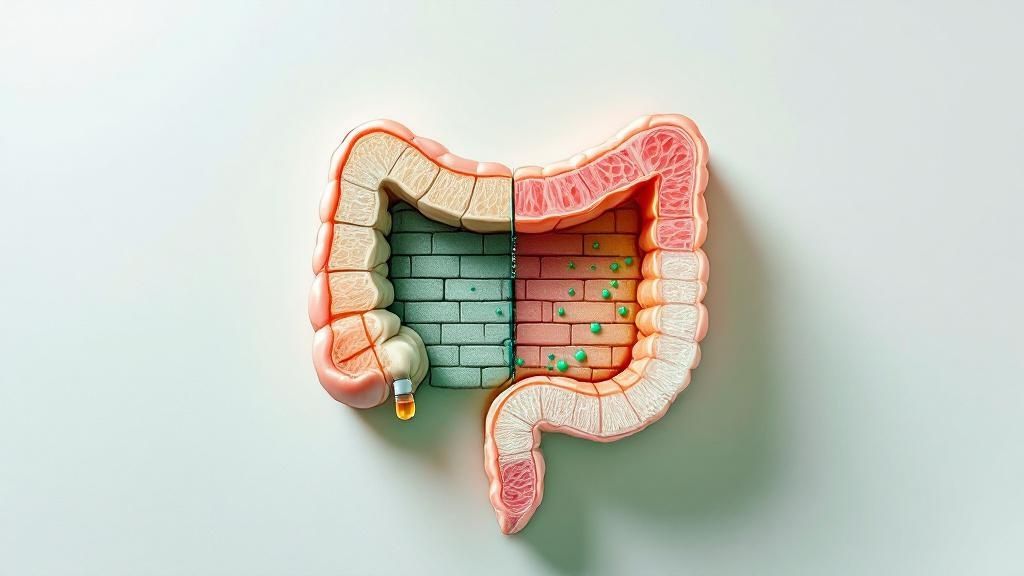
To keep this wall stable, the individual cells are connected by tiny but incredibly strong protein junctions. Experts call them tight junctions . You can think of them like the mortar between the bricks. As long as this mortar is intact, the wall remains tight and protects you from anything that could harm your body.
Your intestinal barrier is the crucial boundary between the outside world (what you eat) and your internal system. Its health is fundamental to your overall well-being.
In leaky gut syndrome, exactly what the name suggests happens: the mortar becomes brittle. The tight junctions loosen, and tiny gaps form between the cells. Suddenly, the protective wall is as porous as Swiss cheese. Substances that have absolutely no place in your bloodstream can now seep through.
- Undigested food particles: Larger protein molecules that would normally simply be excreted.
- Toxins and metabolic waste: poisons that your body actually wants to get rid of.
- Harmful bacteria: Pathogens that thrive in the intestines.
This "leakage" is the core problem. Those who wish to delve deeper into the connections will find fascinating insights into the anatomy of the internal organs .
What weakens the intestinal barrier?
It is rarely a single trigger that weakens this important protective barrier. Most often, it is a combination of various factors that eventually cause it to overflow.
- Diet: High sugar intake, highly processed foods, and in some people also gluten can exacerbate inflammation in the intestines and directly attack the tight junctions.
- Chronic stress: People who are constantly under pressure put their bodies in a permanent state of alert. The stress hormone cortisol has been proven to weaken the intestinal barrier.
- Medications: Frequent use of antibiotics or painkillers such as ibuprofen can disrupt the delicate balance of the intestinal flora and irritate the intestinal mucosa.
- Gut flora imbalance (dysbiosis): When harmful bacteria gain the upper hand, they produce substances that directly damage the cells of the intestinal wall. Learning more about the function of your microbiome is a crucial step in restoring this balance.
As soon as these unwanted invaders enter the bloodstream, your immune system sounds the alarm and launches a massive defense response. The result: chronic, low-grade inflammation throughout the body.
These silent inflammations are precisely why a leaky gut manifests not only as abdominal pain or bloating, but also as skin problems, joint pain, constant fatigue, or brain fog. Your body is tirelessly fighting on a front that should never have been opened in the first place. Knowing whether this internal barrier is weakened is the first and most important step toward regaining control.
How to gain clarity with a leaky gut test at home
Okay, so now you understand what happens in your body when the intestinal barrier is compromised. But the crucial question is: How do you find out if your intestinal wall is actually more permeable than it should be?
The good news: You don't have to wait weeks for a specialist appointment. You can easily and discreetly perform a leaky gut test from the comfort of your own home.
These tests have focused on a very specific biomarker that is considered a key indicator of intestinal permeability: zonulin .
What is zonulin and what does it reveal about your gut?
Think of zonulin as the top bouncer of your intestinal wall. It's a protein whose job is to regulate the gates between intestinal cells—the so-called tight junctions. When needed, it loosens these connections to allow water and nutrients to pass through, for example. This is a completely normal and important function.
Problems only arise when zonulin levels remain consistently elevated. It's like a doorman being instructed to leave the gates permanently wide open. A high zonulin level in stool or blood is therefore a clear indication that your intestinal barrier is no longer properly fulfilling its protective function – it has essentially become leaky.
This is precisely where a modern leaky gut test comes in. It measures the concentration of zonulin and gives you a concrete, measurable value that shows you where you stand.
Your leaky gut test at home: explained step by step
The term "medical test" might sound complicated or even unpleasant to you. But I can reassure you: the entire process is really simple and designed so that you can carry it out in your familiar surroundings without any outside help.
This is how a typical at-home test works:
- Order the test kit: Simply order the kit online and receive it in neutral packaging directly to your home.
- Taking a sample is easy: The kit contains everything you need – including very simple instructions. A tiny stool sample is usually sufficient for a zonulin test.
- Free return shipping: Simply pack the sample securely in the enclosed return envelope and send it to a certified partner laboratory. Postage is usually already included.
- Results received: After a few days, the lab will have analyzed your sample. As soon as your results are ready, you will be notified and can view them securely and clearly online or via the app.
This graphic clearly illustrates the straightforward process – from ordering to receiving the result in your hands.
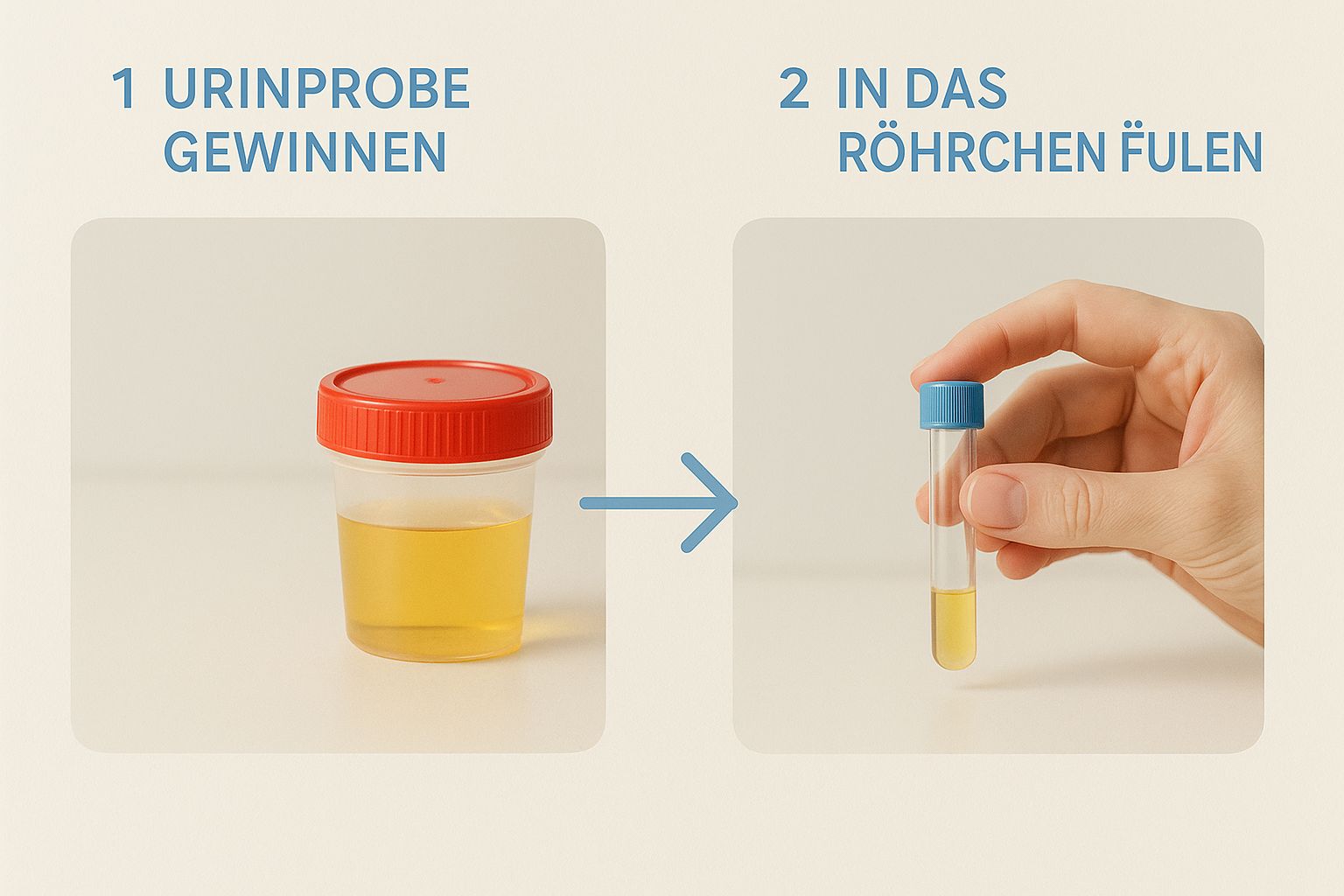
It's immediately clear: the entire process is designed to give you control and make it as convenient as possible for you. You can therefore take the first step towards clarifying your symptoms yourself.
A home test removes the hurdle of having to visit a doctor and provides you with a valuable, scientifically based snapshot of your gut health. It's your personal starting point.
Leaky gut syndrome is a concept that receives particular attention in alternative and functional medicine, but it is not yet scientifically defined. Nevertheless, many laboratories and providers in Germany rely on zonulin levels as a measurable indicator. Elevated levels are often associated with symptoms such as digestive problems, chronic inflammation, or even autoimmune reactions. Providers like for you eHealth make these laboratory analyses available for home use.
The biggest advantage of these tests? You get a concrete answer to the question of whether a disrupted intestinal barrier could be the cause of your discomfort. Instead of continuing to grope in the dark, you have a clear indication that finally allows you to take action.
What your test result means for you
Finally, the envelope has arrived. You open it, perhaps with a little trepidation, and hold the results of your leaky gut test in your hands. A sheet of paper, full of numbers, technical terms, and reference values. And now what? If you feel a little overwhelmed at this moment – that's perfectly normal.
But take a deep breath. This diagnosis is not a final judgment, but rather your own personal guidepost. It translates your body's signals into a language you can now learn.
Let's break this down together. The focus is usually on the zonulin level . Remember? Zonulin is that one protein that acts like a gatekeeper, controlling the gates of your intestinal wall. Your lab report shows you a reference range – that's the corridor within which the levels fall in healthy people. Right next to it is your personal value.
What an elevated zonulin level really means
If your value is above this reference range, it means, in plain terms: your intestinal barrier is currently more permeable than it should be. This is concrete proof that the barriers in your intestinal wall are currently somewhat overwhelmed, and potentially unwanted substances can more easily enter your body.
Now comes the crucial point: how you interpret this information. An elevated value is neither an illness nor a dead end.
Don't see the result as a problem, but as a huge opportunity. It's extremely valuable information that finally gives you a concrete starting point. You now know that your gut health needs more attention – and you can start right there.
Instead of letting a number unsettle you, see it for what it is: a single, but incredibly important piece of the puzzle in the overall picture of your health.
The three scenarios of your test result
A lab result is rarely simply black and white. Most of the time, your result falls into one of three categories. Here's what they mean for you:
-
Your test results are in the green zone: Congratulations! This is a strong indication that your intestinal barrier is currently stable. If you are still experiencing discomfort, the primary cause is probably not increased intestinal permeability. This is a crucial insight, as it allows you to focus on other potential causes.
-
Your value is slightly elevated: your result is at or just above the upper limit. This is a gentle wake-up call from your body. It indicates an incipient or mild disruption of the intestinal barrier. Often, you can achieve a lot here with targeted lifestyle adjustments – such as a more conscious diet or better stress management.
-
Your level is significantly elevated: This is a clear signal. Your intestinal barrier is currently unable to optimally perform its protective function. Decisive action is advisable here. But again: don't panic. You now have certainty about where the root of your symptoms might lie and can take targeted countermeasures.
No matter what your result is, always consider it in context. It's a snapshot in time. Did you have a stressful week, take antibiotics, or eat a particularly unhealthy meal shortly before the test? All of these things can influence the result.
The best news comes last: The cells of your intestinal lining are constantly renewing themselves. This gives you the fantastic opportunity to actively support this regeneration with the right measures. Perhaps now is the perfect time to dig even deeper and understand how your gut bacteria community shapes your health. A comprehensive microbiome test , for example, offers a detailed analysis – an ideal addition to complete the overall picture.
Specific measures for your gut health

A positive result on your leaky gut test can feel quite discouraging at first. But I want to offer you a different perspective: See it as the starting signal. You finally have the valuable information you need to regain control and work specifically on your well-being.
Your body possesses an incredible capacity for self-healing. This is especially true for the cells of your intestinal lining, which renew themselves approximately every 5 to 7 days . You can actively support this process and promote the regeneration of your intestinal barrier. The following measures are your personal toolkit for doing so.
Nutrition as a foundation
What ends up on your plate has the most direct impact on your gut health. Don't worry, it's not about changing everything overnight. It's about making conscious and healthy choices.
Focus on anti-inflammatory foods: Your goal is to soothe the low-grade inflammation in your body. Therefore, consciously choose foods rich in omega-3 fatty acids and antioxidants.
- Fatty fish: Salmon, mackerel and herring are true powerhouses of Omega-3.
- Vegetables in all colors: broccoli, spinach, kale and colorful bell peppers provide valuable vitamins and secondary plant compounds.
- Healthy fats: Avocados, olive oil, as well as nuts and seeds such as flaxseeds or walnuts help to reduce inflammatory reactions.
Less is more – reduce irritants: At the same time, you should try to avoid foods that further irritate your intestinal wall and can actually fuel inflammation.
- Sugar and white flour: They feed the wrong gut bacteria and can directly fuel inflammation.
- Highly processed products: Ready meals and fast food often contain additives and unhealthy fats that put a strain on your intestinal barrier.
- Alcohol: It can directly damage the tight junctions and thus increase the permeability of the intestinal wall.
Every bite is a decision: You can either put further strain on your intestines or provide them with the building blocks they urgently need for regeneration.
This change doesn't have to be perfect, really. Start with small, manageable steps. Replace the sugary snack with a handful of nuts. Choose whole-wheat bread instead of a white roll. Every single one of these choices counts.
Adjusting lifestyle and managing stress
Have you ever heard of the gut-brain axis? It's the reason why your gut and brain are inextricably linked. Chronic stress is therefore one of the biggest enemies of a healthy gut barrier. The stress hormone cortisol has been proven to weaken the protective cell connections.
Stress reduction techniques:
- Breathing exercises: Even just a few minutes of deep, conscious breathing can noticeably calm your nervous system.
- Exercise: Gentle activities such as yoga, walks in nature or cycling effectively reduce stress hormones.
- Mindfulness and meditation: These practices help you to step out of the constant cycle of thoughts and arrive in the here and now.
Find out what makes you feel good. It's not about adding another item to your to-do list, but about consciously integrating oases of calm into your everyday life.
Targeted nutrient support for your gut
Sometimes, in addition to a good diet and a mindful lifestyle, your gut needs targeted support to properly kick-start its repair processes. Certain nutrients have proven particularly helpful for regenerating the intestinal lining.
Three important helpers for your intestinal barrier:
- L-Glutamine: This amino acid is the main energy source for your intestinal cells. You can think of it as a special "cell fuel" that is essential for repairing and rebuilding the intestinal lining.
- Zinc: This trace element plays a crucial role in stabilizing the tight junctions – the "mortar" of your intestinal wall. A zinc deficiency can directly lead to increased permeability.
- Probiotics: High-quality probiotic cultures help restore the balance of your gut flora. They suppress harmful germs and produce short-chain fatty acids like butyrate, which nourish and strengthen the intestinal lining.
A holistic approach that combines diet, lifestyle, and targeted nutrients is the most effective way. If you'd like to delve deeper into the world of nutritional support, you'll find many valuable products and further information in our overview of gut health and the microbiome .
Always remember: You are in control. Every step you take today is an investment in your future well-being.
Frequently Asked Questions about the Leaky Gut Test
The journey to gut health often raises many questions. This is perfectly normal and a good sign – it shows that you are actively engaging with your body. To dispel any remaining uncertainties, I have compiled the answers to the most frequently asked questions that I encounter in connection with the leaky gut test .
With so much information out there, it's easy to feel lost. Let's work together to bring clarity so you can make the best decisions for yourself and your well-being.
Is the leaky gut test scientifically recognized?
A perfectly valid and important question. The situation is somewhat complex: Leaky gut syndrome, as a clearly defined clinical picture, is not yet established in conventional medicine. Therefore, the scientific relevance of the syndrome and the associated tests is still a subject of controversial debate.
At the same time, functional and integrative medicine is increasingly recognizing that a disrupted intestinal barrier – i.e., increased permeability – can be a key factor in many chronic health problems. The zonulin test has proven to be a valuable indicator in this context.
An elevated zonulin level is considered a strong indicator of leaky gut. Therefore, the test is less of a definitive diagnosis and more of a crucial clue – a piece of the puzzle that shows you where to start.
It gives you a solid foundation to understand why you might not feel well and provides the starting point for very targeted measures.
For whom is a leaky gut test particularly useful?
A test isn't necessary for everyone. However, for certain groups of people, it can provide absolutely groundbreaking insights. You should especially consider a leaky gut test if you recognize yourself in the following descriptions:
- You are suffering from diffuse symptoms: You have been struggling for a long time with chronic fatigue, skin problems such as acne or eczema, brain fog or joint pain, and so far no cause has been found.
- You have persistent digestive problems: bloating, irregular bowel movements or abdominal pain are your constant companions, even though organic diseases have already been ruled out.
- You suspect food intolerances: You notice that you suddenly can no longer tolerate more and more foods.
- You have an autoimmune disease: There is increasing evidence that a leaky gut plays an important role in the development or progression of autoimmune diseases.
In these cases, a test is a valuable tool to move from mere assumptions to concrete knowledge.
How often should I repeat a leaky gut test?
That's a very good question, because it shows that you're taking a long-term view of your health. If your first test showed an elevated value and you've taken active steps – for example, by changing your diet and managing stress better – a follow-up test can be extremely motivating.
I recommend a follow-up test after about three to six months . This period gives your body enough time to react to the changes and regenerate the intestinal lining. A decreasing zonulin level is then the best confirmation that you are on the right track.
For purely preventive monitoring, an annual test is usually not necessary unless new or recurring symptoms occur that worry you.
Can I heal a leaky gut through diet alone?
Nutrition is undoubtedly the most important factor and the absolute foundation for the regeneration of your intestinal lining. It has the most direct and rapid impact. But it is often only one part of the overall solution.
A holistic approach is almost always the most effective way. Your gut reacts not only to what you eat, but also to what you feel and do. Therefore, a successful strategy usually consists of three pillars:
- Anti-inflammatory diet: Focus on nutrient-rich, unprocessed foods.
- Consistent stress management: Find ways to reduce chronic stress in your everyday life.
- Healthy lifestyle: Make sure you get enough sleep and moderate, regular exercise.
Sometimes, targeted intake of nutrients like L-glutamine or zinc can significantly accelerate the healing process. Think of it as a project where different aspects of your life need to work together harmoniously to give your gut the best possible support.
Are you ready to take the first step and finally gain clarity about your gut health? At MYBODY Lab GmbH, you'll find scientifically sound tests that you can easily and discreetly perform from the comfort of your own home. Receive a clear and understandable report and specific recommendations tailored to your needs.

Share:
Celiac disease test: The path to clarity in gluten intolerance
At-home stool test: Your discreet path to better gut health