
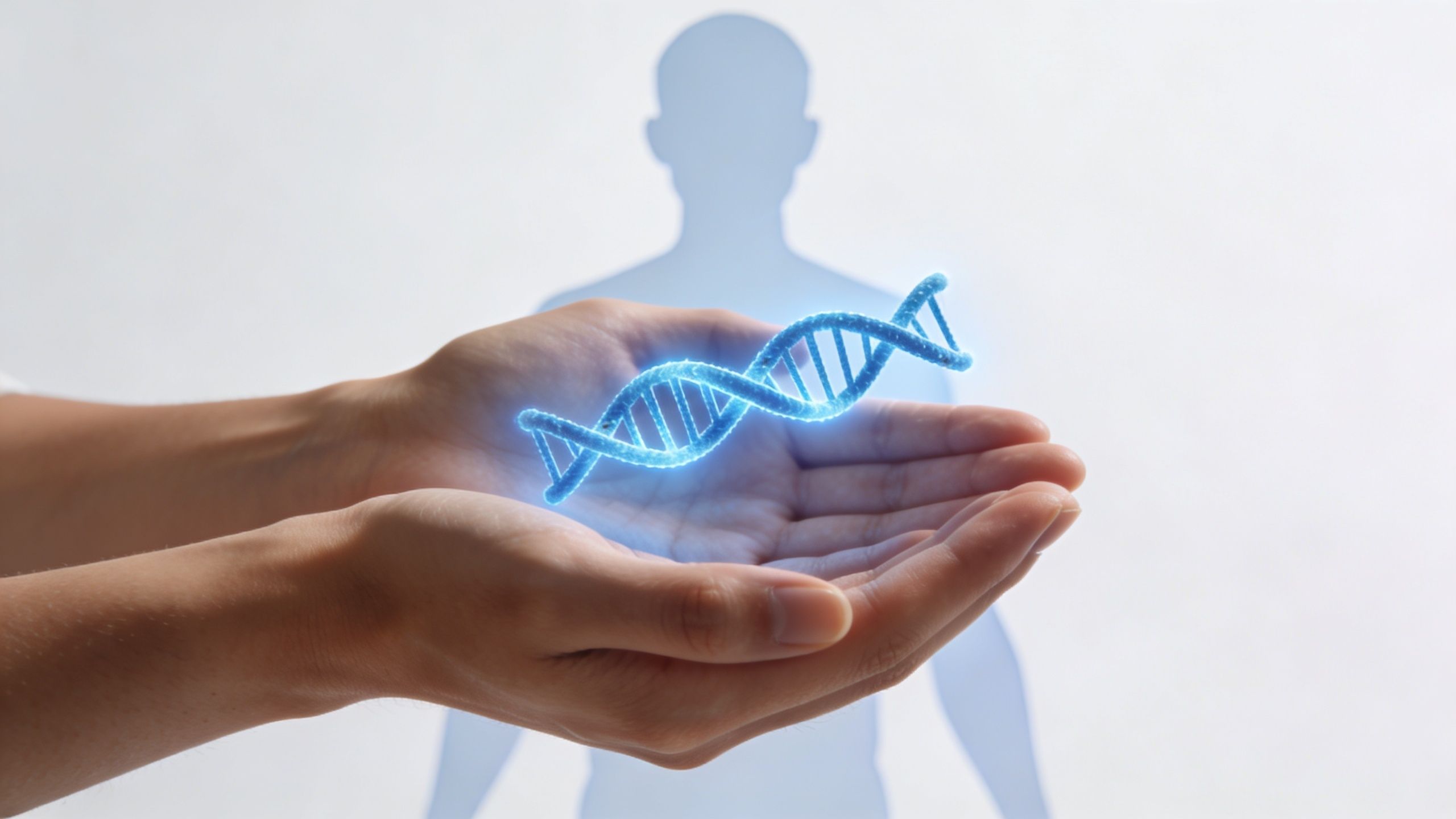
Genetic Predisposition: Your Personal Code
You pay attention to your diet, exercise regularly, and sleep reasonably well. Yet, sometimes your body seems to play by its own rules. Perhaps you gain weight just by looking at pasta, while someone in your circle eats anything and stays slim. Or you react to coffee, carbohydrates, or stress completely differently from others.
This is precisely where the topic of genetic predisposition becomes interesting. Not because your genes dictate everything, but because they can help you understand why your body reacts to certain stimuli the way it does. Once you see this clearly, health often becomes much less frustrating and significantly more concrete.
Why Your Body Has a Mind of Its Own
You probably know such a duo: two friends simultaneously start "living healthier." Both cook more often, both go for walks or to the gym, both want to get fitter. After a few weeks, one person feels lighter, more energetic, and more balanced. The other wonders why, despite their efforts, they notice hardly any changes.

This seems unfair. And many then jump to a premature conclusion: "I just have bad genes." But it's not that simple. Often, it's a mixture of genetic predisposition, lifestyle, daily routine, stress, sleep, and digestion.
Why Standard Advice Often Doesn't Work the Same for Everyone
General health rules are sensible. More vegetables, enough protein, exercise, good sleep. The only problem is: people react differently to the same strategy.
One person stays full for a long time after a big breakfast. The other gets hungry again shortly thereafter. Some fall asleep easily after an afternoon coffee, others lie awake in bed. Such differences are not just a "state of mind." They can be related to your body's biological settings.
You don't have to "break" your body with more discipline. Often, understanding its patterns is more beneficial.
What This Means for You
If you've treated health like a general plan until now, that could be your stumbling block. Your body isn't average. It operates according to its own prerequisites.
These prerequisites are not a punishment. They are more like a personal instruction manual that has been folded up in a drawer until now. As soon as you can read it, you make more targeted decisions. Not because everything suddenly becomes perfect, but because your diet, your training, and your daily life fit you better.
A practical analogy helps a lot here:
- Two people eat the same. One stays full for a long time, the other snacks continuously.
- Two people train the same. One recovers quickly, the other feels drained for days.
- Two people follow the same diet. One loses weight, the other struggles with cravings.
This is often the moment when the question becomes relevant: What is going on differently in my body in the background?
What Your Genetic Predisposition Really Is
Genetic predisposition does not mean that your fate is set in stone. A better way to think about it is: your genes are like the factory settings of a car. They determine the basic equipment. But how the car drives, how well it is maintained, and on which road it is traveling also determines how it behaves in everyday life.

Someone with a predisposition to a stronger appetite, more sensitive blood sugar, or slower caffeine breakdown is not "defective." This person simply needs different strategies than someone with different basic settings.
Strong Hereditary Factors and Subtle Tendencies
When it comes to health topics, one must distinguish carefully. There are rare, strong genetic risks and there are common, complex predispositions.
A strong hereditary predisposition can be seen, for example, in certain cancer risks. In Germany and Switzerland, only about 5 to 10 percent of all cancer cases are directly attributable to a strong hereditary genetic predisposition, such as mutations in the BRCA genes, as explained by the Cancer League regarding genetic predisposition.
However, for most everyday issues that probably concern you more, something else applies. Weight, metabolism, satiety, energy, or reaction to certain nutrients are usually not dependent on a single gene, but on many small influences simultaneously.
How to Think More Helpfully About Genes
A useful distinction:
| Type of Predisposition | How it works | What this means for you |
|---|---|---|
| Monogenic | A single strong genetic factor plays a major role | This is particularly medically relevant and requires medical classification |
| Polygenic | Many small variations jointly influence a tendency | Daily life, diet, and lifestyle often make the decisive difference |
The fallacy often lies here: people hear "genetic" and translate it to "unchangeable." In fact, it usually means more likely rather than inevitable.
Key takeaway: Genes often set the direction. Your behavior helps determine how far you go in that direction.
What This Means for You
If you previously thought your genes were just an excuse or a judgment, you can let go of both. They are neither irrelevant nor omnipotent. They provide clues.
And it is precisely these clues that are valuable in everyday life. Because if you know that your body reacts somewhat more sensitively to fats, carbohydrates, hunger cues, or stress, you can build your plan more realistically. Not more strictly, but more suitably.
How Your Lifestyle Directs Your Genes
This is where the topic often becomes truly liberating. Your genes are not a rigid script. They are more like a sheet of music, and your daily life helps determine which passages are played loudly and which remain quiet.
Science calls this epigenetics. Simply put: environment and lifestyle influence how active certain genes are. Diet, sleep, exercise, stress, and environmental stimuli act like light switches.

The Switches in Everyday Life
You don't have to imagine this in complex biochemical terms. A more practical image is this:
- Nutrition can provide the body with signals that promote or inhibit metabolic processes.
- Exercise changes how muscles use energy and how well your body responds to stress.
- Sleep influences regeneration, hunger regulation, and stress responses.
- Chronic stress can push bodily processes in a direction that is unfavorable in the long term.
If you want to understand in more detail how these switches work, you can find a good in-depth explanation in the article on epigenetics explained simply.
Why Environment Matters So Much
It's particularly interesting that it's not just diet and exercise that count. Social and everyday living conditions also play a role. Studies show that socio-economic factors can epigenetically alter gene expression. Children from disadvantaged families often have difficulties fulfilling their full genetic potential, according to the Deutschlandfunk report on the role of genes and environment.
This is important because it dispels a common misconception. Health is not just willpower. People live in different circumstances, and these circumstances have biological effects.
Knowing your genetic predisposition doesn't grant perfect control, but often significantly better levers in everyday life.
What This Means for You
You are not at the mercy of your genes. At the same time, you are not completely free from biological predispositions. The helpful truth lies somewhere in between.
If you take this seriously, your perspective on health changes. Then you no longer just ask, "What's the best diet?" But instead, "Which habits help my body to access its good potentials more often?" This is precisely how personalized prevention emerges.
The Genetic Code for Metabolism and Weight
When it comes to weight, genetic predisposition quickly becomes personal. Many people feel they just need to be more consistent. But in metabolism, differences actually play a role that you can neither see nor feel.
A well-known example is the FTO gene. A risk variant in the FTO gene can increase daily calorie intake by up to 300 kcal and raise the risk of obesity by 20 to 30 percent, because it influences appetite regulation in the brain, as summarized by Cerascreen's explanation of metabolic analysis.
Why this is so relevant in everyday life
Such genetic variants do not automatically mean obesity. However, they can explain why some people struggle more with hunger, appetite, or portion sizes.
This is a big difference. If you understand that your body may send hunger impulses more quickly, you look for different solutions. Then you tend to work with satiety, meal structure, protein, fiber, and daily routines, instead of always relying on sheer willpower.
A practical look at this might be:
| Everyday observation | Possible meaning |
|---|---|
| You get hungry quickly again | Appetite regulation might react more sensitively in your case |
| You snack particularly under stress | Genes, stress patterns, and habits can interact |
| Standard diets frustrate you | A general plan may not suit your metabolic reality |
Those who want to delve deeper into the topic can find an understandable classification in the article about your metabolism in your genes.
And what about longevity?
Many people immediately think of a long or short life when they hear about genetic predisposition. It is precisely here that a sober look is worthwhile. Contrary to earlier assumptions, which ranged from 20 to 30 percent, genes contribute only about 7 percent directly to lifespan, according to a mega-analysis of 400 million datasets. The remaining 93 percent are determined by lifestyle and environment, as described in the Focus report on the mega-analysis.
That's the good news about genetics. Even if you have certain tendencies, a lot can still be influenced in everyday life.
What This Means for You
If losing weight is harder for you than for others, it doesn't have to be due to a lack of discipline. It can mean that your body reacts differently to hunger, satiety, or certain nutrient patterns.
Then the right question is not: "Why am I so undisciplined?" But: "Which diet works with my metabolism instead of against it?" This is where genetic knowledge becomes practical.
How a DNA Test Deciphers Your Personal Guide
Many people imagine a DNA test to be more complicated than it is. For nutrition-related questions, it's usually not about a burdensome examination, but about a simple at-home saliva sample.

How it works in practice
The process is usually straightforward:
-
Take a sample
You provide a saliva sample at home. This is uncomplicated and possible without a doctor's visit. -
Laboratory analysis
The laboratory examines genetic markers related to topics such as metabolism, nutrient utilization, or reactions to specific dietary factors. -
Read the results report
You don't receive a vague genetic code, but understandable clues. For example, whether your body processes certain stimuli more sensitively. -
Translate recommendations
The crucial question then is: What does this mean for your meals, your daily rhythm, and your habits?
Those who want to get an overview of how such offers are generally structured can read up on the overview of DNA tests to find out which types of analyses exist.
What Nutritional Tests Are About and What They Are Not
A nutrition-related DNA test is not a crystal ball into the future. It doesn't tell you what will happen tomorrow. It provides clues about biological tendencies that you can translate into concrete decisions.
This is important because many readers here confuse two things:
- Medical diagnostics inquire about diseases or strongly elevated risks.
- Nutrition-related gene analyses focus more on how your body processes food and metabolic stimuli.
Such an analysis can therefore help to personalize nutrition. However, it does not replace a medical examination when it comes to complaints or suspected illnesses.
From Analysis to Action with Your Diet Plan
The real benefit isn't in the lab report, but in your daily life. A result is only valuable if it leads to an action you can truly implement.
Let's take a simple example. Suppose your report shows that your body reacts more sensitively to certain dietary stimuli than average. Then the consequence isn't to panic and eliminate entire food groups. It's more sensible to structure meals so they better suit your reaction.
From Gene Knowledge to Everyday Logic
Here's how the translation might look:
-
More susceptibility to hunger
Then you plan meals that keep you full longer, instead of relying on small, "light" snacks. -
More sensitive reaction to certain macronutrients
Then the distribution of carbohydrates, fats, and protein is no longer arbitrary, but strategic. -
Tendency to cravings during stressful everyday life
Then meal timing and preparation suddenly become as much a part of the solution as food choices.
A personal plan takes a lot of the thinking out of it for you. It becomes particularly helpful when recommendations are translated directly into concrete dishes. The product DNA Test Nutrition with individual cooking and recipe book is all about this: translating genetic insights into nutrition and metabolism into everyday meal suggestions.
Why the Cookbook Is More Than an Extra
Many people fail not because of knowledge, but because of implementation. They understand in theory that they should eat differently, but then they stand in front of the refrigerator and think: "Okay. But what do I cook now?"
This is exactly where an individual cookbook and recipe book becomes practical. It translates analysis into decisions. This saves friction, especially on workdays or during phases when motivation fluctuates.
Added to this is a point that is often underestimated. Current studies show that the effect of genes like the FTO gene can be influenced by the composition of the gut microbiome by up to 40 percent, as described in the Max Planck Institute's contribution on the interplay of genes and aging. A meaningful nutrition plan therefore doesn't just think in terms of genes, but holistically. You can find more on this in the article about the Metabolism Nutrition Plan.
Good personalized nutrition doesn't make your life more complicated. It reduces unnecessary guesswork.
What does this mean for you?
If you've tried several nutritional approaches and still feel like you're going in circles, you might not need more rules. You need more suitable rules. A plan that fits your genetic predisposition often doesn't feel harder, but more consistent.
Frequently Asked Questions about DNA Tests and Genetics
Does a DNA test make me a prisoner of my genes?
No. The opposite is usually true. Many people feel more relaxed when they understand why their body reacts more sensitively to certain things.
This is especially important when it comes to longevity. Contrary to earlier assumptions, which estimated 20 to 30 percent, genes contribute only about 7 percent directly to lifespan, according to a mega-analysis of 400 million data sets. The remaining 93 percent are determined by lifestyle and environment, showing how much influence your daily life still has.
What if my results show unfavorable tendencies?
Then you don't have bad news, but useful information. A predisposition is not a judgment. It doesn't say: "This is how it must be." It rather says: "It's worth looking closer here."
This is the same difference as with a car that reacts more sensitively to poor maintenance. You don't panic it into the garage and give up. You treat it smarter.
How secure are my data and samples?
When it comes to health data, skepticism is reasonable. That's why you should always pay attention to how a provider handles samples and data. Transparent information about pseudonymization, GDPR-compliant processing, and the handling of the sample after analysis is important.
If a company doesn't clearly explain what happens to your data, I would be cautious. If it clearly explains it, that removes a large part of the uncertainty.
Is the science behind it reputable?
Yes, if you clearly distinguish between the areas of application. There are very well-researched gene markers for certain metabolic and nutritional questions. At the same time, it would be disreputable to derive a complete future prediction from DNA.
That's why a good test is neither hocus pocus nor a miracle cure. It's a tool. Its value depends on whether the results are understandable and whether you can take actionable steps in your daily life based on them.
The most sensible attitude is neither blind faith nor reflexive rejection. Always ask: Does this information help me make better decisions?
If you want to use your genetic predisposition not just as an abstract theory, but as practical guidance, take a look at the analyses from MYBODY Lab GmbH. Especially for nutrition and metabolism, a DNA-based view can help turn general health knowledge into a plan that truly suits you.



Share:
L-Glutamine Leaky Gut: Science & Effects 2026
10 Personal Eating Tips for Your Health