

Elevated CRP level: Causes and tips for lowering it
An elevated CRP level is often the first indication that inflammation is occurring in your body. But what exactly does that mean? It is best to imagine C-reactive protein (CRP) as a quiet but highly efficient alarm sensor. Your liver produces it, and as soon as inflammation flares up somewhere in your body—whether due to an infection, an injury, or a chronic illness—production rises sharply.
The CRP level is therefore a crucial, although nonspecific, marker of inflammatory processes.
CRP: Your body's alarm sensor
Have you ever received a lab report and wondered what this “CRP level” actually tells you? Think of it as a sensitive smoke alarm: As soon as a fire starts somewhere, it goes off. CRP works in much the same way. When your immune system is under strain, your liver releases more CRP into your blood and signals: “Warning, something is wrong here!”
However, it is important to remember that an elevated CRP level alone is not a diagnosis. It tells you that something is going on, but not what the exact cause is. The reasons can vary widely—from a harmless cold and gum inflammation to serious chronic diseases. That is why it is so important not to consider the numbers in isolation, but as a starting point for a more detailed examination.
What the numbers on the CRP scale really mean
Doctors use the CRP level to assess the extent of inflammation. It is measured in milligrams per liter (mg/l) and can be roughly divided into different ranges that provide a quick initial overview.
Here is a simple guide:
- Normal range (below 5 mg/l): Everything is in the green zone. There is no significant inflammatory activity in your body. Levels up to 10 mg/l are often still considered harmless.
- Mild to moderate inflammation (10–50 mg/l): Such levels often indicate localized bacterial infections, viral infections, or ongoing chronic inflammatory processes.
- Severe inflammation (over 50 mg/l): Such high levels are usually a sign of a serious bacterial infection, an acute illness, or severe chronic inflammation.
The following graphic will help you better assess CRP levels and understand how they are related to the intensity of inflammation.
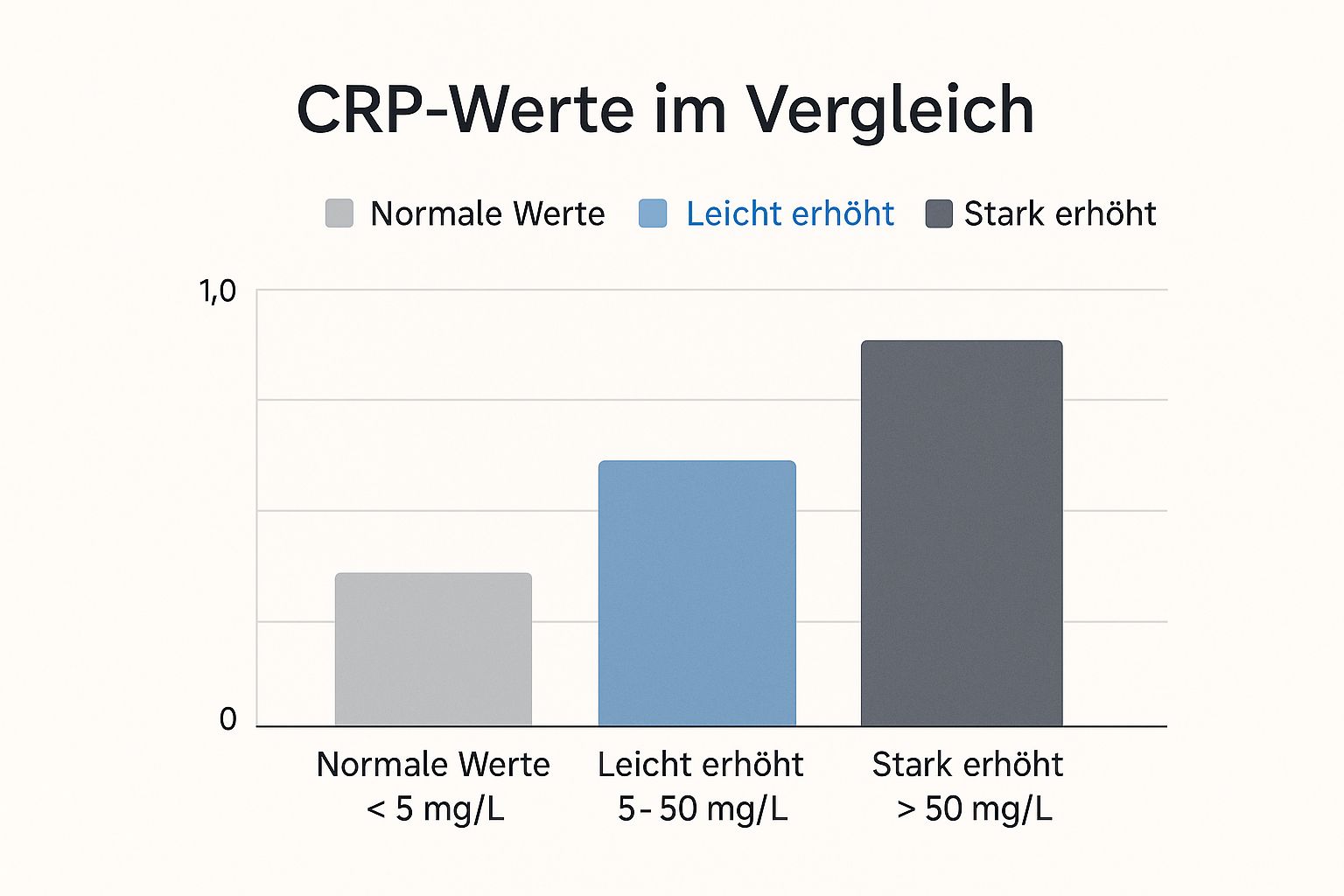
As you can see, the level rises significantly with more severe inflammation. This makes it a very useful tool for monitoring the progression of an illness.
The following table gives you a quick overview of how the different CRP levels are typically interpreted and what causes may be behind them.
CRP levels at a glance: What the numbers mean
| CRP level (mg/l) | Interpretation | Possible causes |
|---|---|---|
| < 5 mg/l | Normal range | No indication of acute inflammation. |
| 5 - 10 mg/l | Slightly elevated | Minor local inflammation, viral infections, sometimes also in smokers. |
| 10 - 50 mg/l | Moderate inflammation | Bacterial infections (e.g., bronchitis, urinary tract infection), chronic inflammatory diseases. |
| 50 - 200 mg/l | Severe inflammation | Severe bacterial infections, acute phase after surgery or injuries. |
| > 200 mg/l | Very severe inflammation | Severe systemic infections (sepsis), severe burns, acute pancreatitis. |
This table is intended as a guide, but it never replaces a medical diagnosis. However, it can help you better interpret the numbers in your test results and ask targeted questions.
A single CRP value is always just a snapshot. What often matters is how it changes over time and how it combines with other symptoms and laboratory values to provide a complete picture.
The good news is that you don’t have to rely solely on medical examinations to gather initial clues. If you want to explore the topic in greater depth and better understand the significance of the different CRP levels, you’ll find valuable information in our related article.
If you suspect that an unnoticed inflammation could be behind your symptoms, tests such as the mybody-x Silent Inflammation Test offer a simple way to gain clarity. It measures not only the standard CRP level but also high-sensitivity CRP (hs-CRP), which can detect even the mildest chronic inflammatory responses that often go unnoticed.
The most common causes of inflammation in the body

As you already know, an elevated CRP level is a fairly clear alarm signal from your body. But this signal is only the beginning of the detective work. The causes of inflammation are as diverse as life itself—they range from a brief infection to deep-seated, chronic problems.
To take targeted action against it, you need to understand where the fire is actually burning. Let’s take a closer look at the most common triggers.
Acute infections as short-term triggers
The most common and often most obvious reasons for a rapidly rising CRP level are acute infections. Think of the typical illnesses that can catch you out in everyday life: a bacterial bladder infection, purulent tonsillitis, or bronchitis. All of these challenge your immune system and trigger a rapid, strong inflammatory response.
Viruses, such as those involved in the flu or a gastrointestinal infection, can also drive the level upward, though usually not quite as dramatically as bacterial infections. Your body sounds the alarm to fight off the invaders—and the CRP level rises as part of this defense strategy.
Chronic diseases as a constant burden
Less obvious but all the more persistent are chronic inflammatory diseases. Rather than causing a brief, sharp increase, they can keep CRP levels slightly to moderately elevated over the long term—a constant burden on your body.
The best-known include:
- Autoimmune diseases: In conditions such as rheumatoid arthritis or lupus, the immune system mistakenly attacks the body itself, thereby causing persistent inflammation.
- Chronic inflammatory bowel diseases (IBD): Crohn’s disease and ulcerative colitis cause persistent inflammation of the intestinal lining, which is also reflected in elevated CRP levels.
- Other chronic conditions: Conditions such as asthma or certain skin diseases (e.g., psoriasis) also have an inflammatory component that affects CRP levels.
In Germany, the CRP level is a key component of diagnostics. While levels up to 5 mg/l are considered normal, increases indicate mild to moderate inflammation, such as that typical of urinary tract infections or colds. Levels above 100 mg/l, on the other hand, often signal severe bacterial infections or acute flare-ups of diseases such as Crohn’s disease. In German hospitals, around 15 to 20% of patients with inflammatory diseases have CRP levels above 50 mg/l, underscoring the importance of this marker in everyday practice.
Silent inflammation – the invisible enemy
Perhaps the most insidious form of inflammation is what is known as silent inflammation (Silent Inflammation). It causes no acute pain or clear symptoms, but smolders unnoticed in the body and leads to a persistently slightly elevated CRP level. The trigger is often our modern lifestyle.
These include, above all:
- Chronic stress: Constant tension puts the body in a continuous state of alarm and fuels inflammation.
- Unhealthy diet: A diet high in sugar, trans fats, and processed foods acts like an accelerant.
- Overweight: Abdominal fat in particular produces pro-inflammatory messenger substances.
- Sleep deprivation: Too little or poor-quality sleep weakens the immune system and paves the way for inflammatory processes.
- Lack of exercise: An inactive lifestyle can also contribute to chronic inflammation.
Silent inflammation is like a smoldering fire that can cause extensive damage unnoticed. Recognizing and extinguishing it is a crucial key to long-term health and your well-being.
These “silent” processes are often not immediately apparent in a blood count either. If you would like to learn more about which diseases a complete blood count can detect, you will find further information in our related article. This knowledge will help you interpret your body's signals more effectively.
How to track down the cause of your inflammation
You have your test result in hand: an elevated CRP level. This number may be unsettling at first, but see it for what it really is—a starting signal. This is the moment when you can take action and, like a detective, track down the cause of your body's warning signal.
This value alone is not a diagnosis, but it is a valuable indication that inflammation is smoldering somewhere in your body. The first and most important step is therefore always to speak with your doctor. They will take a close look at your symptoms, living circumstances, and medical history to gain a comprehensive picture.
Additional blood tests are often ordered for further evaluation to complete the puzzle. These typically include a complete blood count, liver values, or other specific inflammatory markers. These additional puzzle pieces help narrow down the cause. But you don't have to wait passively—you can do valuable preparatory work yourself.
Take action yourself with targeted tests
In addition to medical diagnostics, you can gather some important initial clues yourself. Especially if you suspect that an unnoticed “silent inflammation” could be behind your symptoms, self-tests offer a simple and discreet way to gain more clarity.
This is where mybody-x's targeted analyses come in. They are designed to give you well-founded insights into your body and prepare you optimally for your doctor's appointment.
-
The Silent Inflammation Test: This test was specifically developed to detect unnoticed, chronic inflammatory processes. It measures not only standard CRP but also high-sensitivity CRP (hs-CRP). This value is significantly more sensitive and can detect minor but persistent inflammation that contributes to many chronic symptoms and diseases.
-
Hormone testing for women: Did you know that your hormone balance can also play a crucial role in inflammatory processes? An imbalance, for example in estrogen or progesterone, can promote inflammation in the body. This test provides insight into your hormonal balance and can offer another important clue to the cause of your elevated CRP level.
These self-tests are not an alternative to visiting a doctor. Rather, they are a valuable supplement—your tool for entering your next conversation with well-founded data and targeted questions.
The results of the mybody-x tests provide you with a solid foundation. They enable you and your doctor to test hypotheses and initiate the right diagnostic steps more quickly. Instead of groping in the dark, you shed light on the situation and take active control of your health. This allows you to turn a worrying laboratory result into a clear roadmap for your well-being.
When a high CRP level can even be a good sign
Sometimes an elevated CRP level is no reason to panic, but rather a completely normal and even necessary response from your body. Think of it like a planned construction site: before something can be repaired, the excavators have to arrive. It gets noisy and dusty. Your body reacts in much the same way to targeted procedures or acute emergencies—with a strong but completely controlled inflammatory response.
A classic example is the period immediately after an operation. Every surgical procedure is essentially a planned injury to which your body responds with a sophisticated healing process. A key part of this is acute inflammation, which breaks down damaged tissue and initiates repair. That is why it is completely normal for the CRP level to rise sharply during the first few days after surgery.
When inflammation is a sign of healing
In Germany, hospital data shows that after operations, such as treatment for a femoral fracture, peak CRP levels of 136 to 154 mg/l are not uncommon and are part of normal healing. So, at first, such levels are a good sign that your body is working at full speed on recovery. It only becomes critical if the level does not start falling again after the third day or continues to rise. That could indicate a complication such as a wound infection. This shows how important the CRP trend is for doctors when correctly interpreting the healing process. You can read more about the clinical significance of these values here on Wikipedia.
Even during a heart attack, the CRP level rises dramatically. The heart attack destroys heart muscle tissue, triggering a massive inflammatory response to remove the dead cells. In such cases, levels can climb as high as 200 mg/l, providing doctors with valuable information about the extent of the damage.
The small but important difference: standard CRP vs. hs-CRP
So far, we have mainly talked about the standard CRP value, which shoots up during acute events. But there is another, much more sensitive value: high-sensitivity CRP (hs-CRP).
- Standard CRP: Measures severe, acute inflammation, such as that caused by infections or occurring after surgery. Think of it as a fire alarm system.
- High-sensitivity CRP (hs-CRP): It is more like a highly sensitive microphone that can detect even the quietest chronic inflammatory processes (“silent inflammation”) in the body.
The hs-CRP level in particular is extremely important for prevention. A persistently slightly elevated hs-CRP level can be a warning sign of a long-term increased risk of cardiovascular disease, even if you feel completely healthy.
Your standard CRP level can be completely unremarkable while your hs-CRP level is already indicating an unnoticed, chronic inflammation. It is precisely these silent processes that can lead to serious problems over time.
So if you want to know whether such unnoticed processes are taking place in your body, a standard blood test is often not informative enough. The mybody-x Silent Inflammation Test specifically measures hs-CRP and gives you clarity about these hidden risks. And because your hormone balance can also influence inflammation, a checkup with the Hormone Test for Women often provides additional valuable insights.
How you can actively lower your CRP level

An elevated CRP level is a clear warning signal from your body. But the good news is that you are not simply at its mercy. On the contrary, you can actively take countermeasures and get the inflammation under control. This section is your practical toolkit—filled with effective strategies you can implement right away.
To do this, we rely on the three most important pillars of an anti-inflammatory lifestyle: nutrition, exercise, and mental balance. Each of these areas directly affects inflammatory processes in the body. See it as your opportunity to give your body exactly what it needs to regain balance.
Using nutrition as medicine
Your daily diet is probably the most powerful tool you have for regulating inflammation. Some foods act like a fire extinguisher for smoldering fires in the body, while others actually fan the flames.
The basic rule is surprisingly simple: Eat as naturally and as little processed food as possible.
These anti-inflammatory foods belong on your meal plan:
- Fatty fish: Salmon, mackerel, and herring are packed with omega-3 fatty acids, which have been shown to reduce inflammation.
- Colorful berries: Blueberries, raspberries, and strawberries are packed with antioxidants that protect your cells from stress.
- Leafy greens: Spinach, kale, and Swiss chard provide essential nutrients that strengthen your immune system.
- Healthy fats: Avocados, quality olive oil, and nuts are top sources of monounsaturated fats with anti-inflammatory power.
- Powerful spices: Turmeric (with the active compound curcumin) and ginger (with gingerol) have long been known for their powerful anti-inflammatory properties.
On the other hand, there are foods you should avoid. These include sugar, trans fats (hidden in many ready-made meals and fried foods), and highly processed products in particular. They act like accelerants for inflammation. A balanced diet also helps prevent deficiencies—because, interestingly, nutrient deficiencies can fuel inflammation as well. You can read more about what you can do if you have an iron deficiency in our guide.
Make exercise your best friend
Regular exercise is another crucial factor. And no, you don't have to run a marathon. Even moderate activity can noticeably lower your CRP level. Think brisk walking, cycling, swimming, or yoga.
Exercise works on several levels:
- Reduces abdominal fat: Fat tissue around the abdomen in particular produces substances that promote inflammation.
- Improves insulin sensitivity: This helps stabilize blood sugar and thus prevents inflammation.
- Releases anti-inflammatory substances: When you exercise, your body produces substances that actively fight inflammation.
Consistency is key. Try to be active for at least 30 minutes on most days of the week. But be careful: You should avoid overtraining. Extreme exertion can even temporarily increase your CRP level.
Don't see exercise as a chore, but as a daily date with your health. Find something you genuinely enjoy—because that's the only way you'll stick with it in the long term.
Manage stress and get restful sleep
The connection between the mind and body is profound. Chronic stress and sleep deprivation are two of the biggest drivers of silent inflammation. If you are constantly under pressure, your body releases stress hormones such as cortisol, which promotes inflammatory processes over time.
Good sleep is just as important. While you sleep, your body repairs itself and brings the immune system back into balance. Good sleep hygiene is therefore worth its weight in gold.
Practical tips for greater mental balance:
- Relaxation techniques: Incorporate small rituals into your day. Whether meditation, deep breathing, or progressive muscle relaxation—just 10 minutes can make a huge difference.
- Consistent sleep schedule: Try to go to bed and get up at roughly the same time, even on weekends.
- Digital detox: Put your phone or tablet away at least an hour before bed. The blue light can disrupt the production of the sleep hormone melatonin.
By firmly incorporating these three pillars—nutrition, exercise, and mental balance—into your everyday life, you create the best foundation for actively lowering your CRP level and sustainably improving your well-being.
Your path to greater clarity and well-being
As you now know, an elevated CRP level is far more than just a number on a lab report. Do not see it as a verdict, but as an honest signal from your body—a personal wake-up call urging you to take a closer look and take responsibility for your health once again.
Use this insight as a genuine opportunity. It is the perfect chance to reassess your habits and proactively care for your well-being. The strategies from the previous sections—from an anti-inflammatory diet and moderate exercise to consciously managing stress—are your personal roadmap to a healthier life.
Take control with the right tools
You are not alone on this journey. There are tools that can support you and give you peace of mind. Self-tests such as mybody-x’s Silent Inflammation Test can play a crucial role here, as they are far more than mere monitoring tools.
Such a test helps you determine your starting point and see the results of your efforts in black and white. It can be a powerful motivator, objectively showing you that your changes are paying off and your CRP level is falling. This clarity is priceless and gives you the strength to keep going.
An elevated CRP level is not an endpoint, but the starting point for a mindful journey toward a deeper understanding of yourself. It gives you the opportunity to take control and reset the course for your long-term health.
In addition, the women’s hormone test can provide valuable insights. As you have learned, hormonal imbalances can also promote inflammation in the body. With this knowledge, you can close potential information gaps and work with your doctor to take more targeted action.
Start your journey toward a healthier, more balanced, and less inflamed life today. You have the power to take control.
Frequently asked questions about CRP levels
To conclude, we want to answer a few questions we receive time and again about CRP. We have selected the four most common points and provide clear, easy-to-understand answers to summarize the key insights from this article.
Can stress alone increase my CRP level?
Yes, absolutely—and this is a crucial point that many people underestimate. Chronic stress puts your body into a constant state of alarm. As a result, it continuously releases the stress hormone cortisol, which over time can lead to subtle but persistent inflammatory processes. This is also known as “silent inflammation.”
Even though stress alone may not cause extremely high CRP levels like those seen with a severe bacterial infection, it can definitely contribute to a persistently mildly elevated CRP level. Think of it as a clear signal from your body that its system is overloaded.
How quickly does the CRP level drop after a lifestyle change?
That depends entirely on what caused it and how consistently you implement your new habits. With an acute infection treated with antibiotics, the level can often drop significantly within just a few days.
With chronic inflammation caused by lifestyle factors, the process is more of a marathon than a sprint. However, with a consistently anti-inflammatory diet, regular exercise, and effective stress management, you can often see a measurable improvement after just four to six weeks. The only important thing is to stick with it. Changes like these simply take time to truly take effect in the body.
Is every high CRP level immediately dangerous?
No, a high CRP level is not automatically a reason to panic. A significantly elevated level after surgery or with a flu-like infection is a completely normal and even necessary reaction of your body. It only becomes truly concerning when the level is high for no apparent reason or simply does not fall again despite a known cause.
A high CRP level is always an important signal that should be medically evaluated. However, it is primarily a source of information—not immediately a diagnosis of a serious illness.
By the way, undetected food intolerances can also lead to inflammatory reactions. If you would like to learn more about how diet and physical reactions are connected, take a look at our article on celiac disease and gluten intolerance.
Which mybody-x test should I take if I suspect silent inflammation?
If you feel that an unnoticed, chronic inflammation could be behind your symptoms, the Silent Inflammation Test is the ideal first step. It specifically measures high-sensitivity CRP (hs-CRP), which can detect even the smallest inflammatory reactions that a standard blood test often misses.
Since hormonal imbalance can also fuel inflammation, the Hormone Test for Women is a very useful addition. Combining both tests gives you a comprehensive picture and an excellent, data-based foundation for your next conversation with your doctor.
Do you want to gain clarity about your inflammation status and take an active role in your health? The self-tests from mybody-x provide scientifically sound results delivered straight to your home. Visit us at https://mybody-x.com and discover how you can better understand and specifically support your body.



Share now:
7 C-reactive protein levels you should know
C-reactive protein too high? Here’s how to lower your CRP level effectively